bodies

Bodies found in ‘advanced deterioration’ at under-fire Nottingham trust

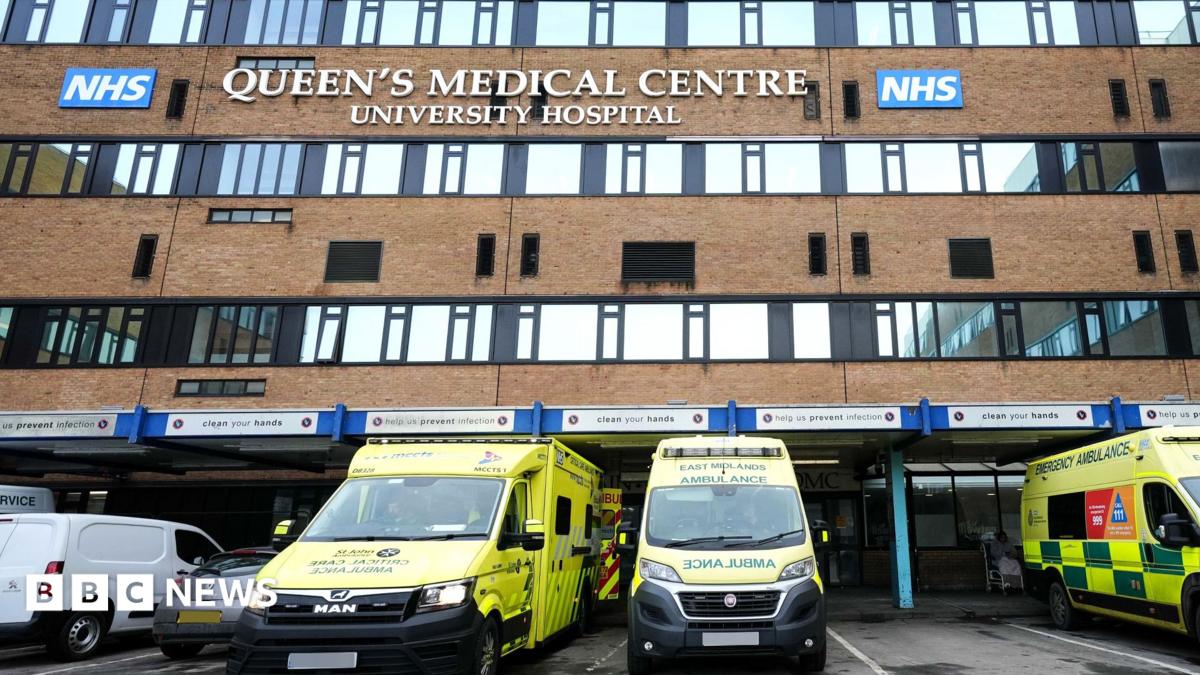
Problems with after-death care came to light after the parents of Harriet Hawkins, who was stillborn at NUH in 2016, discovered her body had been allowed to decompose so badly that it had to be triple-bagged for her funeral.

A subsequent investigation found 17 areas of concern and prompted an examination by the independent maternity review into the after-death care provided to 16 other babies and one mother.

They found that one early gestation baby had been disposed of as clinical waste, the wrong baby had been passed to funeral directors and a mother who died had deteriorated so badly that her family were advised not to see her prior to her funeral.

“The Review found evidence of recurring examples of failure to protect the dignity of the deceased… including inadequate arrangements for undertaking paediatric post-mortems,” Ockenden said in her report.

The problems prompted the Human Tissue Authority (HTA), which regulates mortuary care in England, Wales and Northern Ireland, to examine the trust’s services.

In an unannounced inspection, external, which was carried out in March 2026 but only published this week, it found three critical, six major and one minor shortfalls against its standards at the two hospitals run by the trust, the QMC and City Hospital.

The HTA found lack of freezer space at both Nottingham hospitals meant some bodies had been put in a refrigerated area instead.

Eight of the bodies were showing “advanced deterioration” because they had not been transferred to a freezer in time.

Instead of being conducted in a post-mortem suite, some baby post-mortem examinations were carried out in a lab that was inadequately ventilated, with support staff who had not been trained in mortuary care, the HTA found.

An accompanying audit found just more than half of the 145 recorded incidents that should have been escalated to the regulator were not.

Source link

Niger suspends nine French media bodies: Watchdog slams ‘abusive’ decision | Censorship News

Niger’s military government has banned many local and foreign reporters since seizing power in 2023.

Media watchdog Reporters Without Borders (RSF) has condemned Niger’s suspension of nine French media publications as the military government continues to crack down on journalists.

Niger announced the suspension on Friday, citing “repeated dissemination of content likely to seriously jeopardise public order, national unity, social cohesion, and the stability of the institutions of the Republic”.

Recommended Stories

list of 3 itemsend of list

The suspended organisations are France 24, RFI (Radio France Internationale), France Afrique Media, LSI Africa, AFP (Agence France-Presse), TV5 Monde, TF1 Info, Jeune Afrique and Mediapart, according to a TV statement from the National Communication Observatory (ONC).

It added that the decision was “immediate” and it included “satellite packages, cable networks, digital platforms, websites and mobile applications”.

RSF described the decision as “abusive”.

“RSF condemns a coordinated strategy to repress press freedom within the AES [Alliance of Sahel States] and calls for the immediate reversal of this abusive decision,” said a statement posted on X, referring to Niger and allies Mali and Burkina Faso, all ruled by military governments.

Niger’s military seized power in July 2023, toppling the democratically elected government of President Mohamed Bazoum and detaining him.

The government has since targeted local and foreign media outlets, particularly those critical of its policies, by issuing bans or suspensions.

RFI and France 24 were suspended a few days after the coup, and the BBC from Britain was suspended in December 2024.

The targeting of French and other foreign media comes as Niger’s military government has largely severed ties with its former colonial power, France, and turned away from Western allies.

In late 2023, Niger asked leaders in Paris to withdraw thousands of troops involved in missions against armed groups operating in Niger, neighbouring Mali and Burkina Faso.

The three AES states have since secured defence partnerships with other countries, notably Russia.

All three have regularly denounced France’s “imperialism”, saying they want to assert their “sovereignty”. French media and other foreign outlets have similarly been suspended or banned by the governments in Bamako and Ouagadougou.

Local journalists have also been affected. Two Nigerien journalists, Gazali Abdou, a correspondent for German broadcaster Deutsche Welle, and Hassane Zada, a regional newspaper editor, were released this week after being detained for months.

In 2024, leaders in the capital Niamey strengthened a law that criminalises the digital dissemination of “data likely to disturb public order”.

The United Nations said in November that 13 journalists were arrested in Niger and urged the government to release them. Local media organisations say six journalists are detained for allegedly “undermining national defence” and for “conspiracy against the authority of the state”.

According to AFP, Niger suspended nearly 3,000 local and foreign NGOs in 2025, accusing them of lacking transparency and supporting “terrorists” and armed groups.

Niger dropped 37 places in this year’s RSF World Press Freedom Index and now ranks 120th out of 180 countries. RSF and Amnesty International have repeatedly voiced concerns about the “decline” in press freedom in Niger.

Source link

Dodgers’ Edwin Díaz knew about ‘loose bodies’ in elbow in 2012

Dodgers closer Edwin Díaz said Monday that he’s known about the five loose bodies in his elbow — which were removed in an operation Wednesday — since he was drafted in 2012.

Last week in Colorado was the first time it affected him. He gave up three runs without recording an out on April 19. And the next day, he told the team his arm felt “weird.”

On Monday, he described the feeling as “tired and tight.”

Before his arm started giving him problems, Díaz was unavailable for four straight games because of fatigue in his knee. His legs felt “good” in Colorado, Díaz said.

Results from an MRI scan suggested that the loose bodies in his elbow were to blame for the discomfort in his arm. Díaz said he was confident the operation would resolve the problem.

“The tightness and the soreness was where the loose body was,” Díaz said. “So that’s why we ended up getting the surgery because it was in the same spot I’ve always had them.”

He’s hoping to return after the All-Star break. So, the Dodgers will have to come up with an alternate ninth-inning plan for the next two-and-a-half months.

“That sucks to miss the first half with the team,” Díaz said. “I’m new with this team. But that’s something I can’t control. Everyone here is supporting me. All of my teammates they’re supporting me, they’re happy that I’m doing way better than before. They just can’t wait to see me on the mound in the second half.

“They say, take your time, we need you in October. But I want to come back as soon as possible and help this team to win games.”

Díaz is still waiting to have his stitches removed, but he expects to start playing catch in a couple weeks.

“My arm is feeling way better than it did on Sunday,” he said. “That’s a good sign. Right now, just a couple days after surgery, I can move my arm really good. My range of motion is coming back to normal. So that’s something I like. And just get stronger and be ready for the second half.”

Source link