bob iger

Jeanie Buss seeks court help keeping her family’s share of Lakers

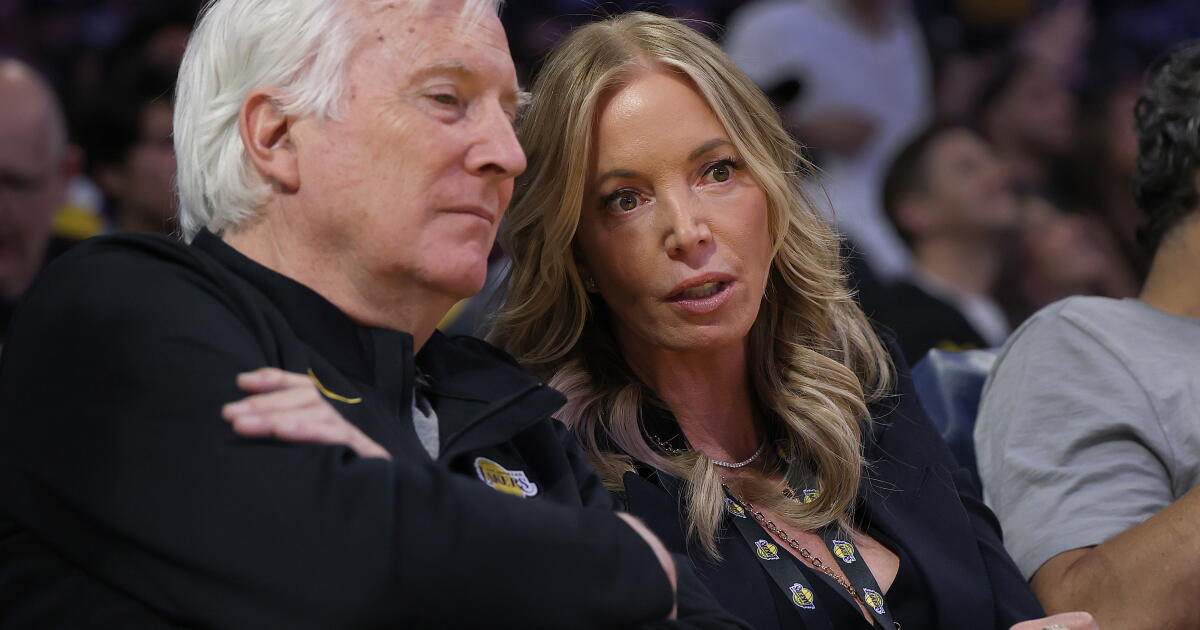
Jeanie Buss is taking her siblings to court. Again.

Attorneys representing the Lakers’ controlling governor filed a petition in Los Angeles Superior Court on Wednesday to block her five siblings from trying to sell the family’s remaining 17.82% of the NBA franchise the Buss family has owned since 1979.

Jeanie contends that her siblings should abide by a 2017 court order that mandated the family’s co-trustees to “take all actions reasonably available to ensure that Jeanie is appointed and remains as the NBA controlling owner of the Lakers.” The 2017 legal battle installed Jeanie’s younger siblings, Janie and Joey, as her fellow co-trustees, two roles that were previously held by her older brothers Jim and Johnny, who were ousted after a failed attempt to wrestle control away from Jeanie.

The 97-page petition accuses Janie, Joey and the other siblings Jim, Johnny and Jesse of “devious behavior” for not including Jeanie in discussions to sell the family’s last stakes in the team earlier this month. While the other siblings elected to sell soon after Bob Iger and Joshua Kushner agreed to a record-breaking transaction with Mark Walter and released a statement attributed to the Buss family, Jeanie “never agreed to any sale, was never consulted and was never even informed,” the petition states.

“Jeanie thought she had put all of her siblings’ scheming and manipulations behind her in 2017,” the petition reads. “Sadly, that was not the case — and Jeanie must respectfully request relief from this Court a second time.”

Among five points on the petition, Jeanie hopes to declare her siblings’ votes to sell the team void, remove Janie and Joey as co-trustees for “breach of fiduciary duty” and hold both in contempt of court and hold Jim, Johnny and Jesse in contempt and liable for “aiding and abetting.”

Jeanie, the third-oldest child of former Lakers owner Jerry Buss, was hand-picked by the family patriarch to oversee his prized investment that grew from a $67.5-million purchase into a $12.5-billion world-renowned brand. Iger, the former Disney chief executive, and Kushner, founder of a venture capital firm, bought a majority stake of the Lakers from Walter earlier this month at a record valuation, and reports of five of the Buss siblings’ plans to sell their ownership stake in the team came days later.

To remain on the NBA board of governors, Jeanie would need to own at least 15% of the team. She was to stay in the leadership role for at least the next four seasons after the Buss family relinquished control of the team to Walter in 2025.

That unique aspect of the 2025 sale “demonstrated the co-trustees could fulfill their duties under the trust — and honor Dr. Buss’s intent — while also delivering extraordinary financial returns to the beneficiaries,” the petition states.

Jeanie contends that not only is her latest fight to maintain her governor role a way to “enforce of her parents’ intent,” but the petition says Jeanie also believes remaining the governor can “protect the strategic decision by the trustees less than a year ago to sell a portion of the team and retain an interest sufficient to maintain control and to benefit from the continuously skyrocketing value.”

Since Jerry Buss built the Lakers into the NBA’s most glamorous franchise during four decades of stewardship, the team will now have a third controlling owner in as many years. Walter, who previously owned a minority stake in the team, took majority control in 2025 when the team was valued at $10 billion. His reign was short-lived; he shockingly sold his shares of the team to Iger and Kushner for a 25% profit 14 months after Walter’s purchase offer was accepted by the Buss family trust.

The sale from Walter to Iger and Kushner is not expected to be affected by the Buss family’s legal proceedings, according to a source close to the matter but not authorized to speak publicly.

The petition adds that Lakers minority owners Patrick Soon-Shiong, who owns the Los Angeles Times and said he plans to hold onto his 4% stake in the Lakers, and real estate developer Ed Roski Jr. believe Jeanie is “the right person to continue as controlling owner and NBA governor of the Lakers to help preserve and continue to grow the value of the Lakers stock investments.”

The Lakers functioned as a family-run business for decades under the Buss family. Each child held different roles, but Jeanie is now the only one left at the organization. Jim and Johnny were ousted in 2017. Janie, Joey and Jesse were all fired soon after Walter’s sale was approved in November. Joey was the chief executive of the G League affiliate South Bay Lakers and Jesse was the Lakers’ director of scouting. Janie led the organization’s charity efforts. ESPN reported that Jim and Johnny had returned to roles with the team and were among those fired in November.

After Jeanie and her legal team announced their intention to contest the siblings’ attempt to sell, the five other siblings released a statement saying they were “united” in their decision and intended to “move forward thoughtfully, respectfully and through appropriate process.”

“The Los Angeles Lakers have never been just a basketball team,” the statement released Aug. 18 continued. “They have been one of the greatest privileges of our lives. Our focus has always been on what we believe is best for the Lakers, the fans who have supported this franchise for generations and the greater Los Angeles community.”

A court hearing to review the request is scheduled for Nov. 5, according to the petition. The Lakers will be two weeks into their season at the time.

Source link

Joey and Jesse Buss, sons of Lakers owner, now own stake in Padres

An investment firm owned by the two youngest sons of late Lakers owner Jerry Buss has bought into the new ownership group of the San Diego Padres.

Buss Sports Capital, which was started in September by Jesse and Joey Buss, joins a Padres ownership group that includes husband-and-wife controlling owners José E. Feliciano and Kwanza Jones. Although neither the team nor the firm supplied financial details of the deal, multiple media outlets are reporting that the Buss brothers’ stake in the Padres is around 5%.

“We are honored to join Kwanza and José and have the opportunity to contribute to the future of a team that Jesse and I have loved since we were kids growing up in San Diego,” Joey Buss, 41, said in a statement. “Sports have always been a part of our family’s story, and great organizations have a unique ability to bring people together and create a lasting sense of community. …

“The Padres are on the cusp of something special, and through Buss Sports Capital, we look forward to bringing our experience and perspective to the ownership group and doing our part to build on the strong foundation already in place.”

Like their four older siblings, Jesse and Joey Buss took part in the family business of running the Lakers. When the Buss family sold the controlling stake to Mark Walter for $10 billion last year, team controlling governor Jeanie Buss told ESPN, the siblings were told their roles with the team wouldn’t change for five years.

In November, however, Jesse and Joey Buss, as well as the rest of their siblings except for Jeanie, were let go by the Lakers. At the time of their dismissal, Jesse had been the team’s assistant general manager and Joey was vice president of research and development.

Earlier this month, Joshua Kushner and Bob Iger agreed to buy the majority ownership of the Lakers from Walter for $12.5 billion. Soon after, ESPN reported that the Buss siblings had agreed to sell their remaining 17.8% stake in the team to Kushner and Iger. Jeanie Buss, however, filed a petition in Los Angeles County Superior Court on Wednesday to block such a sale.

The Padres are the first major acquisition for the brothers’ investment firm.

“Joey and I had the privilege of learning from our father and then spending nearly two decades building our own careers in professional basketball operations,” Jesse Buss, 38, said. “We saw firsthand what it takes to build a championship organization, and throughout our careers have applied those lessons across talent evaluation, roster construction, player development and long-term organizational planning. While every sport is different, we believe the principles behind building sustained success are universal. …

“We look forward to bringing that experience to the ownership group, supporting Kwanza and José’s vision for the Padres and doing everything we can to help bring a World Series championship to San Diego.”

Source link

Jeanie Buss contests family sale of Lakers ownership stake

For more than four decades, the Lakers were a family-run business. The sibling rivalries still remain.

Jeanie Buss is fighting back after her siblings reportedly voted to sell the family’s remaining stake in the Lakers on Monday. The team’s governor, Buss sent a letter through her attorney to her brothers’ attorneys stating any votes to sell the family’s remaining 17.8% stake in the team to new majority owners Bob Iger and Joshua Kushner are void because the sale cannot be completed without approval of the other trustees: Jeanie and her younger siblings, Janie and Joey.

ESPN reported Monday that the six Buss family siblings, who took over team ownership after their father, Jerry Buss, died in 2013, are selling their shares of the Lakers to Iger and Kushner following a family vote. Iger, the longtime Disney chief executive, and Kushner, a venture capitalist and entrepreneur, agreed last week to buy Mark Walter’s controlling stake of the Lakers for a record valuation of $12.5 billion.

The transactions still need to be approved by the NBA board of governors. Jeanie Buss, who was to remain the Lakers governor for at least five years after Walter’s purchase of the team was approved last October, no longer would be eligible to serve on the board if the Buss family sells its shares. Governors are required to own at least a 15% stake.

“The co-trustees are bound to vote the Los Angeles Lakers, Inc. shares to ensure that the minimum 15% ownership requirement is maintained in order to ensure that Jeanie Buss may remain controlling owner,” the letter from Buss’ attorney reads, citing a 2017 court ruling outlining Jeanie Buss’ role. “Any attempt by the co-trustees to do otherwise and any attempt to aid or abet the co-trustees as such would constitute a breach of trust, breach of fiduciary duty and be in contempt of court.”

The trust was revised in 2017 after a series of legal battles between Jeanie and her older brothers, Johnny and Jim. It stipulated that co-trustees “would take all actions reasonably available to them, including voting the trust’s shares to ensure that [Jeanie Buss] is elected as the controlling owner of the Lakers on an annual basis during [her] lifetime.”

The statement to ESPN attributed to the Buss family regarding the sale read: “We have decided as a family to sell the remaining Buss Family Trust shares to the Bob Iger group as part of the ongoing transaction. We love the Lakers, Laker fans and will continue to support Los Angeles; but it is time to use this opportunity to move on and exit gracefully while we still can.” ESPN didn’t report a price for the shares.

The Buss family has owned the team since 1979, when Jerry Buss bought the franchise, the Forum and the Los Angeles Kings for $67.5 million. The family patriarch leveraged Hollywood glamour with entertainment spectacle to elevate the Lakers into an internationally recognized brand. The NBA’s biggest stars shone brightest in L.A.; Jerry West, Kareem Abdul-Jabbar, Magic Johnson, Shaquille O’Neal and Kobe Bryant helped pile up 10 championships under Buss. The Laker Girls became a harbinger of sports dance teams to come. Celebrities flocked to the courtside seats. Books and TV shows told the team’s Hollywood story.

Each of Buss’ six children — Jeanie, Jim, Johnny, Janie, Joey and Jesse — held titles in the organization. Jeanie was her father’s hand-picked successor. She fought to maintain her position against Johnny and Jim, who tried to reorganize the board of directors to push Jeanie out in 2017. She eventually ousted them from team operations. Joey and Jessie, the two youngest, were fired by the new owners last November. Joey was the team’s alternate governor and vice president of research and development, and Jesse was the assistant general manager. Janie held an administrative role directing the team’s charitable services.

The booming sports business quickly caught up to the team that once held the attention of the city with the league’s biggest stars, iconic “Showtime” style and old Hollywood feel. The Lakers slogged through a six-year playoff drought from 2013-19. The team started falling behind in resources and revenue compared to other organizations that controlled their own arenas and could maximize alternative revenue streams. The Buss family voted to relinquish a majority ownership of the team last year, bringing in Walter, who also owns the Dodgers.

Walter then shockingly flipped the NBA’s crown jewel franchise for a profit of $2.5 billion last week. The investment mogul who is under federal investigation for unpaid loans agreed to sell his stake in the Lakers to Kushner and Iger. Kushner is a co-founder of Thrive Capital, which started a permanent holdings company, Thrive Eternal, this year to invest in sports and cultural brands. Iger is the longtime Disney CEO who already owns Southland soccer club Angel City FC and previously flirted with NFL ownership by trying to build a stadium in Carson before the project ultimately went to the Stan Kroenke-led group that built SoFi Stadium in Inglewood.

Before including the Buss shares, the deal for the Lakers’ majority stake already was the largest sum paid for any professional sports franchise, surpassed only by Walter’s $10-billion purchase of the team. It still sits below Sportico’s estimate for the most valuable franchise, with the outlet listing the Dallas Cowboys’ valuation at $15.5 billion.

Minority stakeholders Dr. Patrick Soon-Shiong, who also owns the Los Angeles Times Media Group; real estate billionaire Ed Roski; and Walter business partner Todd Boehly own about 14% of the Lakers, according to Sportico.

How Iger and Kushner will finance the Lakers deal is unclear.

When the duo agreed to buy Walter’s share last week, Kushner and Iger released a statement that in part praised the Buss family’s work with the Lakers.

“We have immense respect for the leadership and vision of Jerry and Jeanie Buss,” the statement read. “Our long-term commitment is to build on that foundation, compete at the highest level, and serve this extraordinary team, its fans, and the city of Los Angeles.”

Source link

Some questions (and answers) about Mark Walter selling the Lakers

In 2012, on the day after Mark Walter and his partners bought the Dodgers, I sat next to Walter in a conference room. To the sports fan, Walter was virtually anonymous: a super rich guy who had made his money running investment and insurance companies.

Walter’s purchase valued the Dodgers and its related assets at a then-record $2.15 billion. That value stunned the sports world. Mark Cuban had bowed out of the bidding, believing the Dodgers were not worth even $1 billion.

I asked Walter why he believed it made business sense to pay three times as much as any major league team had sold for.

“I think you have a few moments in life where you have the opportunity to own an asset and really be a custodian of something that should be multigenerational and iconic,” he said then. “I understand it’s a lot of money. But it’s not as if you can go buy another one tomorrow. … We hope we never, ever are going to sell it.”

That was essentially the point that someone who travels within the inner circles of pro sports made to me Wednesday morning, as news broke that Walter had sold the Lakers to Bob Iger, the former Disney chief, and Joshua Kushner.

The Steinbrenner family has owned the New York Yankees for 53 years. Jerry Jones has owned the Dallas Cowboys for 37 years. The Buss family owned the Lakers for 46 years.

These trophy assets are few and far between. Walter had agreed to sell the Lakers after less than one year of ownership — and not through a comprehensive bidding process, but to an inquiring caller during the weekend?

“This has more red flags than a May Day parade,” an industry insider said, speaking on condition of anonymity so as not to jeopardize his professional relationships.

The deal, which valued the Lakers at $12.5 billion, was motivated by the spiraling price for an NBA expansion team in Las Vegas, according to ESPN’s Ramona Shelburne. After all, if Iger and Kushner might have to pay $10 billion for a startup team, why not call and see if Walter might accept a bit more for one of the marquee franchises in American sports?

Was this a blind call or was Walter looking to sell?

“It was suggested to us that maybe Mark Walter would be interested in selling his stake in the Lakers,” Iger told the California Post.

What did Dodgers president Stan Kasten have to say about that?

“I never knew that. He never said that to me,” Kasten said. “I think he was surprised by it. That’s what he has expressed to me. Mark had no plan to do this. This just came up, and he thought about it and said yes.”

Why might Walter have been interested in selling?

Mark Walter, chairman and controlling owner of the Dodgers, acknowledges a fan before a game in Chicago on Aug. 4.

Mark Walter acknowledges a fan before a game against the Cubs in Chicago this month.

(Melissa Tamez / Associated Press)

Only he can say for sure, but his companies are under federal investigation for failing to disclose and properly account for billions of dollars of loans among related entities. Bloomberg reported Wednesday that Walter’s holding company is trying to raise money that could help pay off or at least pay down those loans, and the Financial Times reported that company assets could be sold or restructured.

No charges have been filed, and investigations can conclude without charges. No allegations of wrongdoing have been made against Walter.

Is there a baseball angle to this?

Among the investment firms Walter’s holding company approached about “deals to raise cash,” according to Bloomberg: the asset management firm owned by New York Mets owner Steve Cohen.

Cohen’s firm passed, according to the Financial Times.

When Walter and his partners bought the Dodgers, the runners-up: the bid team of Cohen and Los Angeles Times owner Patrick Soon-Shiong.

“No, that never came up. And Mark and I discussed it,” Kasten said. “So, no, we don’t have any reason to think that. I certainly have no reason to think that.”

What does Walter’s sale of the Lakers mean for the Dodgers?

“It means nothing for the Dodgers,” someone who speaks regularly with Walter said, speaking on condition of anonymity. “He owned them long before the Lakers and will own them long after.”

If Walter should later sell the Dodgers, what might have the greatest impact on the team?

Shohei Ohtani has an out clause in his contract if Mark Walter sells the team.

Shohei Ohtani has an out clause in his contract if Mark Walter sells the team.

(Eric Thayer / Los Angeles Times)

Shohei Ohtani’s 10-year, $700-million contract with the Dodgers includes an unusual escape clause: If Walter is no longer the controlling owner, or if Andrew Friedman is no longer running the Dodgers’ baseball operations department, Ohtani can opt out of the contract.

Would he?

Way too soon to tell. If major league owners get their way in collective bargaining, the proposed salary cap would mean Ohtani at $70 million could eat up just about one-third of any team’s payroll. And, in his third year with the Dodgers, he has yet to complete a full season as a pitcher, and a left knee in which manager Dave Roberts says Ohtani suffers from “wear and tear” could make him less of a two-way player as the contract winds down.

On the other hand, playing salary might be less of an issue for him than for any other player in baseball. Ohtani is making more than his annual salary from sponsorships and endorsements — an estimated $125 million this year — and he famously deferred $68 million of each year’s salary so the Dodgers could spend more freely on players that could help him and the team win. After six losing years with the Angels and two World Series championships in two years with the Dodgers, a losing team might not entice Ohtani, no matter how much room it might have under a proposed cap.

Iger used to run Disney. How did Disney’s experience owning the Angels and Mighty Ducks go?

Disney chairman Michael Eisner and NHL commissioner Gary Bettman blow duck calls announcing the name of the team in 1993.

Disney chairman Michael Eisner, left, NHL commissioner Gary Bettman, NHL chairman Bruce McNall and Mighty Ducks chairman Jack Lindquist blow duck calls announcing the name of the team in 1993.

(Doug Pizac / Associated Press)

Disney dressed the Angels in uniforms derided by one player as “pinstripe pajamas,” put cheerleaders on the dugout roof and installed a loud “countdown to first pitch.” This all seemed awful at the time but, given the plagues of in-game hosts and teams sporting jerseys in colors far beyond home white and road gray, perhaps Disney was just ahead of its time. And, for the first few years of the franchise, Mighty Ducks gear was some of the hottest merchandise in American sports.

Ultimately, Disney wanted the Angels and Mighty Ducks to launch an “ESPN West” regional sports channel. When that channel collapsed, Disney no longer needed the teams and eventually sold them. The Angels were such a minimal part of Disney’s portfolio that then-chief executive Michael Eisner showed up in the clubhouse and the players had no idea who he was.

Who owned the Angels when they won their only World Series championship?

Angels players wave to fans during the World Series title parade in Anaheim in 2002.

Angels players wave to fans during the World Series title parade in Anaheim in 2002.

(Jean-Marc Bouju / Associated Press)

Disney. The company hired an investment banker to sell the team in the final month before the Angels won the 2002 World Series and agreed to sell to Arte Moreno in the first month of the following season.

One more try: Why did Walter really sell the Lakers?

“I think it was opportunistic and he found something that made sense to him,” Kasten said. “Mark’s a very sensible guy. But that’s really the only way I can explain it.

“You’ll have to talk to Mark about a more in-depth explanation, and good luck.”

Times staff writer Maddie Lee contributed to this report.

Source link

Too many questions. Lakers sale doesn’t pass smell test

The Lakers are being sold … again?

The Lakers are being sold … by the Dodgers owner who was supposed to save them?

The Lakers are being sold … to one guy who owns an underachieving women’s professional soccer team and another guy who owns a piece of the hated San Francisco Giants?

What in the name of Luka is going on here?

Los Angeles sports fans awoke Wednesday to the news that one of their two crown jewels was being sold for the second time in a year, a transaction valued at $12.5 billion and accompanied by at least that many worries.

This doesn’t feel good. This doesn’t feel right. Something stinks here, and it might just be the future of a franchise that once seemed in such good hands.

On Wednesday it was stunningly and ingloriously fumbled, and for what?

There are two main unknowns here, and both should send shivers through a Laker fan base that could be watching their team become the Portland Trail Blazers.

First, why did Mark Walter sell just 10 months after buying? Yes, he made a $2.5 billion profit, but 10 months? Who owns a major sports franchise for just 10 months?

Second, what sort of owners will Bob Iger and Josh Kushner be? Iger is known for running Disney, and Kushner is known for running with President Trump’s son-in-law, who happens to be Kushner’s brother, Jared.

So crazy. So scary.

Does all this mean the Dodgers are also for sale? Will courtside seats be converted to spinning teacups? Is President Trump going to show up for a ceremonial opening tip?

Mark Walter, chairman and controlling owner of the Dodgers, acknowledges a fan before a game in Chicago on Aug. 4.

Mark Walter, chairman and controlling owner of the Dodgers, acknowledges a fan before a game in Chicago on Aug. 4.

(Melissa Tamez / Associated Press)

Lots to dig in here, starting with Walter, who brought much hope to the struggling franchise after buying it from the Buss family last summer.

In his short tenure the Lakers racked up a bunch of off-court wins. They revamped their scouting department, increased a focus on analytics and rid themselves of LeBron James without the usual noise of an ugly breakup.

Under Walters, the Lakers didn’t fire Rob Pelinka, didn’t fire JJ Redick, brought back Austin Reaves, and actually set the team up for a pretty exciting playoff run next season.

Walter was clearly building the Lakers into the image of the Dodgers, which makes it so shocking that he would so easily cast them aside.

Could this be the result of outside forces? Walter is under federal investigation for tax fraud by companies controlled by the billionaire, and perhaps he sold the Lakers as a peace offering to the feds. The fact that he sold to somebody so close to President Trump could also help his federal case.

Remember last month when Walter embarrassingly groveled at Trump’s feet during the Dodgers visit to the White House, even giving the president a championship ring? It feels like the Lakers sale to a group co-led by Kushner is an outgrowth of that pandering.

Sources told The Times’ Bill Shaikin that the Dodgers are not for sale, but if Walter was troubled enough to sell arguably America’s most glamorous sports franchise after owning it for less time than it takes for Edwin Díaz to walk to the mound, who knows if the Dodgers are really safe?

In Walter, the Lakers had a proven champion who forged a partnership with the fans and rewarded them with sustained success.

In Iger and Kushner, the Lakers have two rich guys who have never been the majority owners of a team, never run a team and never done much more than cheer for a team.

Iger, 75, an entertainment genius who ran Disney for much of the last 20 years, has failed in his previous attempts to buy a sports team. A decade ago, he was in the finals to bring an NFL team to Los Angeles, but lacked the gravitas to pull it off.

In 2024, Iger and his wife, USC journalism dean Willow Bay, bought a controlling stake in the Angel City Football Club in the National Women’s Soccer League. But the team has yet to make any sort of local splash, missing the playoffs in each of the last two seasons.

Bob Iger, former Disney CEO in a white shirt, sits in a courtside seat for a Clippers game in 2025.

Former Disney CEO Bob Iger, in white shirt, has been a longtime basketball fan. In 2025 he sat courtside for a Clippers game at Intuit Dome.

(Allen J. Schaben / Los Angeles Times)

Kushner, meanwhile, is a 41-year-old billionaire venture capitalist who is best known for his brother’s father-in-law and his super-model wife Karlie Kloss. He owns a minority stake in not only the Giants, but the Miami Heat, which he must sell.

There is no indication whether they will be good owners, and they will clearly have to hire a seasoned NBA executive to serve as president to run the show. The identity of this person will be the first sign of their seriousness in restoring a championship culture, but there will be other signs as well, and not all could be positive.

There should be fear that these new wonders will follow the path of the most recently minted NBA owner, Portland’s Tom Dundon, who unapologetically cheapened the organization by doing everything from firing 70 business employees to bucking NBA tradition by refusing to pass out free T-shirts to the fans during playoff games. He even showed the door to both the club’s radio and TV play-by-play announcers in a dramatic cost-cutting move that could be a blueprint for other struggling teams.

Which is to say, nobody has any idea how Kushner and Iger will run things. They have no history here. They have no experience. They have no credibility. This isn’t Disney. This isn’t some hedge fund.

These are the 17-time NBA champion Lakers. This is a national monument forged on the sweat of everyone from Jerry West to Magic Johnson to Kobe Bryant.

This is a community’s heartbeat. This is a region’s touchstone.

Handle with care.

A city will be watching.

Source link

Bob Iger could be the Imagineer to lead the Lakers back to glory

So instead of the Dodgerfication of the Lakers, we’re getting the Disneyfication of the Lakers.

Hakuna Matata?

Yes, it’s weird and distressing, watching billionaires play catch with our ballclubs.

But this high-stakes game of hot potato that resulted in Bob Iger and Joshua Kushner acquiring the Lakers for $12.5 billion from Mark Walter less than a year after the Dodgers owner bought the NBA team?

For the Lakers, it really could end happily ever after.

Because we’re realizing you probably shouldn’t put all your proverbial eggs — or both of a city’s most beloved sports teams — in one guy’s basket. Especially if that one guy happens to be at the center of a federal loan investigation.

And if all it took, really, to get Walter to relinquish his ownership of the Lakers was $2.5 billion more than the reported figure he paid for them, then he wasn’t the right owner for the franchise anyway.

He wasn’t actually going to spin blue into purple and gold.

And Disney did give us some pretty great stories under Iger, didn’t it?

A native New Yorker, Iger, 75, grew up a Knicks fan. But he has also long been an L.A. basketball fan — though he has identified as a Clippers supporter. (Sorry, Clips, I think you’re down a fan.)

Lakers great Magic Johnson said he’s known Iger since the Showtime era, and gushed in an interview Wednesday with The Times’ Broderick Turner: “The great thing for Laker fans is Bob Iger loves basketball, loves the Lakers and I think that we couldn’t have a better person.

“Somebody that don’t know the Lakers, the tradition, that don’t know the city, that don’t know the passion that the fans have for the Lakers here in L.A.? Then I would have been like, ‘Oh man. They gotta learn all that.’

Bob Iger, CEO of Disney, addresses the media during the Star Wars: Galaxy's Edge media event in 2019.

Bob Iger, then chief executive of Disney, addresses the media during the Star Wars: Galaxy’s Edge media event in 2019.

(Allen J. Schaben / Los Angeles Times)

“Well there’s no learning curve for Bob.”

And Angelenos know Iger. We don’t know Kushner except for his family ties. But Iger, we do.

Walter isn’t selling the Lakers to some rich guys without any L.A. cred. He’s selling to a basketball fan whom we’ve seen courtside at Lakers games. Someone who joined us in sharing our heartbreak on social media when Kobe Bryant died in 2020, calling him “a friend and a fan of ours, full of life and taken from us too soon.”

We recognize Iger; he’s the Disney guy. We know him for his successful tenures as chief executive of that beloved company, which were highlighted by innovative storytelling, savvy investment and expansion — including into sports. We know he helped turn ESPN into a TV juggernaut.

Before the sale to Walter, the Buss family, which owned and ran the Lakers for 46 years, was having trouble keeping up in a booming NBA. Player salaries are capped, but ownership’s resources matter much in terms of creating a competitive infrastructure of coaches, basketball operations, medical and scouting staffs.

So we were looking forward to seeing sweeping improvements when Walter took control and provided the organization with a much-needed financial infusion. After all, his Dodgers have won three World Series crowns and clinched the National League West in 12 of 13 seasons since 2012, when he and his partners bought the club for a then-MLB record $2.15 billion.

But as of Wednesday morning, we were still looking.

We thought the new Lakers’ regime would get to work without a second to spare. Yeah, they added a second row of seats courtside. And laid off more than a dozen employees.

We expected they’d beef up their scouting department. But they moved the G League team from the South Bay way out to the Coachella Valley, so even the most ardent fans in L.A. will have a hard time keeping an eye on the team’s prospects.

We expected, under Walter, that the Lakers would give their basketball brain trust an obvious boost.

But they’ve only flirted with filling the job of second assistant general manager. And they failed to poach anyone from the league’s most innovative front offices like the Dodgers did when they hired Andrew Friedman. Their big get was Rohan Ramadas, from the … New Orleans Pelicans, a team that made the playoffs only twice in the last eight seasons.

Iger and Kushner can do better. They better do better.

Joshua Kushner speaks onstage during the Big Bets panel at the Fortune Global Forum 2024.

Joshua Kushner, founder and chief executive of Thrive Capital, speaks onstage during the Big Bets panel at the Fortune Global Forum 2024.

(Jemal Countess / Getty Images for Fortune Media)

I think they will.

This isn’t a fly-by-night proposition for Iger, who headed an effort by the Chargers and Raiders to build a stadium in Carson before Stan Kroenke built $5-billion SoFi Stadium in Inglewood.

In 2024, Iger and his wife, Willow Bay, who is dean of the USC Annenberg School for Communication and Journalism, acquired a controlling stake in the Angel City Football Club of the National Women’s Soccer League for $50 million, pushing its valuation to $250 million, a record for a women’s sports team.

Angel City hasn’t been winning, but they doubled the staff and wasted no time setting up a sizable new performance center at California Lutheran University in Thousand Oaks. The WNBA’s Sparks, which Walter has owned since 2014, are still waiting for their own practice facility, which is now finally under construction in El Segundo.

“As lifelong NBA fans,” Kushner and Iger said in a statement, “we are deeply honored for the opportunity to become stewards of the Los Angeles Lakers, one of the most iconic sports franchises in the world.”

Iger knows as much as anyone about successfully stewarding an iconic brand.

Now he could be the Imagineer to bring the 17-time champion Lakers back to the happiest place on earth — the NBA’s mountaintop.

Source link

How Bob Iger’s stake in Angel City can inform Lakers acquisition

Bob Iger’s purchase of the Lakers isn’t the former Disney boss’s first foray into ownership of a professional sports franchise in Southern California: Twenty-five months ago Iger and his wife, Willow Bay, dean of the Annenberg School for Communication and Journalism, acquired a controlling interest in soccer club Angel City for $50 million.

And while the NWSL is a long way from the NBA — and $50 million is a long way from the $12.5 billion the basketball team sold for Wednesday — the Iger family’s management of the women’s soccer team may hint at what’s in store for the Lakers.

Spoiler alert: it’s not all good.

Iger’s investment pushed Angel City’s valuation to $250 million, making it the world’s most valuable women’s professional sports franchise. And six months after taking over the team, Bay cut the ribbon on a multi-million-dollar training complex at Cal Lutheran University in Thousand Oaks, which added to the team’s worth.

“Bob and I were very clear about investing the resources in this team and the people who lead and manage it. And most certainly the women who play for it,” Bay said at the time. “We know how important it is to do our best to bring a championship to this city.”

Yet also under Iger and Bay’s leadership, Angel City’s average attendance has fallen more than 20% and the team has yet to make the playoffs or post a winning record. The roster does not have a superstar player or even a regular starter on the women’s national team — with the salary of defender Gisele Thompson, the team’s highest-paid player, ranked 19th in the 16-team league. And the club is on its fourth manager, including interim coaches, and its second president of business operations in two years as Bay maneuvers to put her own stamp on the team.

However Mark Parsons, Iger and Bay’s hand-picked sporting director, lauds the team’s new owners, saying his staff has doubled in his 20 months at Angel City and the club is finally headed in the right direction.

“They gave us the resources,” said Parsons, who previously built struggling teams into NWSL finalists in Washington and Portland. “They’ve delivered upon that. We are investing in sporting staff and resources and facilities and consultants and experts around the world to support our athletes.

“Probably as good as anyone right now.”

Parsons said he speaks frequently with Bay, who has been hands-on in running Angel City. Iger will likely be the more active partner in managing the Lakers.

“Willow is one of the best leaders I’ve ever been around in my life, never mind my career,” Parsons said. “Spending time with Willow and Bob is an education in leadership and life. They are really special leaders.

“The best compliment I could give them is when I was in my final interview, who they were in that moment was the same people I’ve met when we’ve had good moments or stressful moments to navigate together.”

Source link

Bob Iger and Joshua Kushner eye Las Vegas NBA expansion team bid

Former Walt Disney Co. Chief Executive Bob Iger and Thrive Capital founder Joshua Kushner have hired investment bankers and discussed making a bid for the National Basketball Assn. expansion team in Las Vegas, according to people familiar with their plans.

The bid would be for a majority investment in the team, according to the people, who asked to not be identified because the discussions are private. The NBA’s board of governors approved the exploration of a potential franchise expansion in Las Vegas and Seattle in March.

Iger and Kushner are discussing making the bid through Thrive Eternal, a company set up by Kushner’s firm to invest in iconic brands and cultural assets. The company operates as a holding company, structured to raise new capital and make investments into businesses without a set exit timeline. Iger is involved with Thrive as an advisor.

It’s unclear what the size of the bid and the valuation of the franchise would be. Representatives for Thrive Capital and Iger declined to comment.

Iger, who took over as CEO of Disney from 2005 to 2020 and then again from 2022 to March of this year, had a tenure marked by acquiring marquee entertainment franchises and expanding them, including Pixar, Marvel Entertainment, Lucasfilm and 21st Century Fox. The executive previously bought a controlling stake in Angel City Football Club, a women’s soccer team, with his wife, Willow Bay. A big basketball fan, he’s had a lot of experience with the NBA through Disney’s ESPN sports networks.

Kushner, meanwhile, has been building an investment portfolio of tech startups for decades, from investing early into OpenAI and Instagram, and working on dozens of incubations through his venture firm, Thrive Capital. The venture firm has total assets under management of more than $50 billion, according to a regulatory filing. Earlier this year, the firm raised more than $10 billion for its largest fund ever. The NBA discussions show the latest iteration in how Thrive is expanding beyond its roots of investing in technology startups, into also influencing culture through entertainment and sports.

Announced in April, Thrive Eternal, which operates a permanent capital vehicle, raised its initial capital from existing Thrive investors. “These are assets with qualities that cannot be replicated by technology,” Kushner said in a social media post. “In a world shaped by abundant intelligence where creation scales and distribution fragments, we believe they will matter even more.”

Thrive Eternal’s first investment, though not a controlling stake, was backing a Major League Baseball team, the San Francisco Giants. The capital of that deal is set to go toward the Giants’ Oracle Park and its surrounding real estate, according to a person familiar with the matter, Bloomberg previously reported.

Mascarenhas writes for Bloomberg.

Source link