
Blue Origin

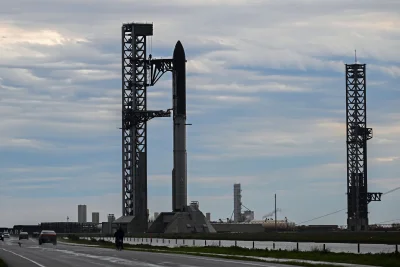
SpaceX launch of updated Starship V3 ‘delivered’ on first flight

May 22 (UPI) — SpaceX successfully launched an updated version of its Starship on Friday evening, meeting all goals the company said it was aiming for.

The launch was the first of the company’s V3 version of both the booster rocket and “Ship” upper stage, which is a key part of NASA’s Artemis series of missions to the moon and, potentially, to Mars.

SpaceX commentators said during the company’s official broadcast that the updated Starship, which delivered 22 simulator Starlink satellites into orbit and converted flight adjustments it will need when it lands instead splashing down in water, “delivered.”

The company had scrubbed the first attempted launch of the megarocket, the largest ever built, on Thursday because of an engineering issue that could not be fixed in time to make the scheduled launch window.

The mission for the 408-foot-tall Super Heavy rocket, which is powered by 33 newly redesigned Raptor engines, the same as Starship, was to successfully launch, ascend, separate from the second stage — Starship — and then perform boost back and landing burns before splashing down in the Gulf of Mexico.

After separation, Starship’s goals were to light its engines, enter a sub-orbital path and release a series of dummy Starlink satellites before performing a series of maneuvers and testing its newly designed heat shield.

When Starship splashed down in the Indian Ocean after its tests, SpaceX commentators said during the broadcast that the fireball when it hit the Indian Ocean was the goal, “as weird as that sounds.”

Kevin Warsh takes the oath of office as he is sworn-in as the new chairman of the Federal Reserve by Supreme Court Associate Justice Clarence Thomas in the East Room of the White House on Friday. Photo by Yuri Gripas/UPI | License Photo

This version of Starship is not the final one, but rather is a prototype of one of several that are planned for NASA’s return of Americans to the moon.

NASA’s planned Artemis III mission in 2028 is expected to test connecting the Orion crew capsule — which was tested on its first crew mission earlier this year — to both Starship and Blue Origin‘s Blue Moon space vessel, which has yet to take its first flight.
Source link

SpaceX scrubs planned launch of newly upgraded Starship V3 megarocket

May 21 (UPI) — SpaceX on Thursday scrubbed the planned first test flight for its redesigned Super Heavy megarocket, the largest rocket ever built, from its new Texas launch pad.

Following several delays of the countdown at 40 seconds remaining, SpaceX spokesman Dan Huot announced the launch would be delayed due to engineering issues which could not be immediately remedied.

“We are expecting to be able to make another flight attempt tomorrow, but obviously stay tuned to our social media,” he said.

In addition to trying out the redesigned Super Heavy propulsion system, the launch is meant to assess upgraded systems on Starship, including the deployment of 22 Starlink satellite simulators, intentionally stressing its new flight control flaps and attempting the “dynamic banking maneuver” that it eventually will use to land back on its pad.

When it takes off, the uncrewed mission will be the 12th flight for Starship as SpaceX develops what is expected to be a primary vehicle for NASA’s Artemis missions to the moon.

“The flight test’s primary goal will be to demonstrate each of these new pieces in the flight environment for the first time, with each element of the Starship architecture featuring significant redesigns to enable full and rapid reuse that incorporate learnings from years of development and testing,” SpaceX said on its website.

The V3, which is 408 feet tall and more powerful than previous Super Heavy rockets, includes 33 redesigned Raptor engines — Starship has six of its own — will take off from South Texas for a round of primary tests similar to previous launches.

The rocket, SpaceX said, is hoped to successfully launch, ascend, separate from the second stage — Starship — and then perform boostback and landing burns in the Gulf of Mexico.

“As this is the first flight test of a significantly redesigned vehicle, the booster will not attempt a return to the launch site for catch,” the company said.

During the hot-stage separation, Starship will light its engines to enter a sub-orbital path, performing tests and then splashing down in the Indian Ocean.

Tests of the space vessel are important as NASA’s Artemis III mission in 2028 is expected to test connecting the Orion crew capsule to both Starship and Blue Origin‘s Blue Moon, although Blue Moon has yet to be launched for its first test flight.

Starship also is expected to be the ship that delivers Americans back to the moon in the next several years.

Source link

FAA grounds New Glenn rocket after botched satellite release

The FAA has grounded Blue Origin’s New Glenn rocket because although its launch was successful, one of the engines on its second stage did not fire properly when it got to space, which resulted in the spacecraft releasing a communications satellite in too low of an orbit to be useful. Photo by Joe Marino/UPI | License Photo

April 20 (UPI) — The Federal Aviation Administration grounded Blue Origin‘s New Glenn rocket after it botched the release of a satellite following its successful launch two hours earlier.

The third launch of New Glenn and second landing of its reusable booster stage “Never Tell Me The Odds” on a drone ship in the Atlantic Ocean was a success in those terms, but the spacecraft delivered AST SpaceMobile’s BlueBird 7 satellite to an orbit too low for it to operate properly.

Blue Origin said Monday that it is leading an investigation into one of New Glenn’s engines producing insufficient thrust to reach the mission’s target orbit.

“While we were pleased with the nominal booster recovery, we clearly didn’t deliver the mission our customer wanted, and our team expects,” Blue Origin CEO Dave Limp said in a post on X.

The FAA, NASA, the National Transportation Safety Board and the U.S. Space Force also have been monitoring the situation and will require Blue Origin to complete its investigation and report on the engine anomaly, the Orlando Sentinel reported.

“A return to flight is based on the FAA determining that any system, process or procedure related to the mishap does not affect public safety,” the FAA said in explaining why it grounded the rocket.

The New Glenn-3 rocket launched around 7:30 a.m. EDT on Sunday morning, nailing the flight and landing portion of its mission, and successfully released the BlueBird 7 satellite once it reached orbit.

Because one of the two BE-3U engines that power New Glenn’s upper stage didn’t produce sufficient thrust on its second engine burn, which is meant to boost the spacecraft to its target orbit above Earth, it never got there.

Although the satellite was released and powered on properly, the off-nominal orbit — which was too low for it to be useful — AST said it would be jettisoned.

BlueBird 7 is one of 45 satellites that AST SpaceMobile hopes to get in orbit by the end of 2026 as part of a satellite-based cellular network designed to operate with standard smartphones.

The satellite would have been the companies eighth to reach orbit, and it’s share price Feller by more than 6% on Monday, The BBC reported.

Limp said Blue Origin is analyzing data as it conducts the investigation and is “in steady communication with the team at AST SpaceMobile.”

“We appreciate their partnership, and we’re looking forward to many flights together,” Limp said.

NASA’s Orion spacecraft, with the four-member Artemis II crew aboard, is seen under parachutes as it lands in the Pacific Ocean off the coast of California on Friday after its nearly 10-day journey around the Moon and back. NASA Photo by Bill Ingalls/UPI | License Photo

Source link

Blue Origin launches New Glenn rocket, puts satellite in wrong orbit

April 19 (UPI) — Blue Origin successfully launched its New Glenn rocket and landed its booster stage, but it delivered a communications satellite into an orbit too low to be useful.

New Glenn-3, the third launch of the company’s rocket, cleared the tower just before 7:30 a.m. EDT on Sunday morning and roughly six minutes later its first stage touched down on the “Jacklyn” drone ship in the Atlantic Ocean.

The fully reusable booster, called “Never Tell Me The Odds,” was making its second landing as the mission hit its second stage engine cutoff, entered orbit and released AST SpaceMobile’s BlueBird 7 satellite successfully.

The release was successful and the satellite powered up properly, but had been placed into “an off-nominal orbit,” Blue Origin said in a post on X.

“During the New Glenn 3 mission, BlueBird 7 was placed into a lower than planned orbit by the upper stage of the launch vehicle,” AST said in a press release.

“While the satellite separated from the launch vehicle and powered on, the altitude is too low to sustain operations with its on-board thruster technology and will de-orbited,” the company said. “The cost of the satellite is expected to be recovered under the company’s insurance policy.”

AST’s BlueBird 7 satellite is part of a space-based cellular broadband network the company is building that will be accessible using normal smartphones.

The satellite would have been the eighth the company has put in orbit for the network, has satellites number through 32 in production and expects BlueBird 8, BlueBird 9 and BlueBird 10 to be completed in the next month.

AST said that it plans to continue launching satellites roughly every other month for the rest 2026 using “multiple launch providers,” with a goal of 45 satellites in orbit by the end of the year.

Blue Origin, in addition to launching satellites for commercial and government entities, is also building a prototype MK1 “Endurance” lander as a test vehicle in an uncrewed moon landing later this year, Space.com reported.

The prototype is a test run for its MK2 lunar lander that will be used in NASA’s Artemis program to explore the moon and establish a permanent human presence there.

NASA’s Orion spacecraft, with the four-member Artemis II crew aboard, is seen under parachutes as it lands in the Pacific Ocean off the coast of California on Friday after its nearly 10-day journey around the Moon and back. NASA Photo by Bill Ingalls/UPI | License Photo

Source link