

blow

Katie Price hit by new financial blow

KATIE Price has suffered more financial woe – she’s closed down her horse-riding clobber brand and dissolved the firm, we can reveal.

Her KP Equestrian Ltd firm sold items including riding leggings, body warmers and a range of T-shirts and other tops for women, men and kids.

Katie Price’s KP Equestrian Ltd firm has been closed down Credit: Getty
The former glamour model has long been a lover of horses Credit: Getty Images – Getty

The outfit company was removed from the register at Companies House this week.

Katie had previously been spotted flogging the £34 hoodies on stalls set up at horse riding events.

But she’s now stopped selling the gear and shut the firm’s website – which until recently had ex-lover Carl Woods modelling clothes.

The brand’s Instagram page hasn’t been updated for two years and a link to the company website is now dead.

face off

Katie Price and Peter Andre to come face to face for first time in 16 YEARS


worth the price

Katie Price still has Peter’s clothes stashed in her overflowing garage

She launched the venture – designed to “dazzle in the saddle” – after it was revealed she owed more than £3 million.

Latest books for KP Equestrian Ltd filed to Companies House show the outfit company had just £1,000 in its bank balance and was worth a total of £15,000.

In 2022, it was worth £26,269.

This comes as Katie’s husband, Lee Andrews faces mounting prison fines and financial demands exceeding £100,000 to £120,000 from his detentions in Dubai’s Al-Awir prison.

Katie made it clear in an interview with us that she would not cover the cost.

She stated to us in a chat with our very own Clemmie Moodie: “There’s nothing I can do. I’m not here to pay anything for anyone.

KP Equestrian first launched in September 2008, closed in 2017, and was officially relaunched in December 2021 Credit: Getty – Contributor
This comes as Katie says she won’t pay for her husband Lee’s prison fees Credit: wesleeeandrews/instagram

“I’ve got my own life. Even though he’s part of my life.”

Back to her clothing brand, Katie told would-be buyers on her website: “Horses have always been a big part of my life since I was a little girl. 

“I used to spend hours at the yard when I was a teenager grooming, mucking out, learning to ride, trimming, practising my plaiting, hanging out with friends, grooming again and just being around the horses.

“As my life got busier and more hectic, I always made time for the horses, as it’s the only place where I could fully switch off and just enjoy my hobby.

“Horses are my happy place and where I can take time out and calm my soul.  I love their company, feel, presence and even their smell. 

“There’s nothing quite like the feeling when you turn up to the yard.

“With horses having been such a large part of my life for so long I’ve focused on getting my KP Equestrian range ready for you all, as it means so much to me. 

“So you too can Dazzle in the Saddle and we can all share in our riding experiences.

“Our clothing has been developed with the comfort & style of riders in mind. 

“Kids, menswear & horsewear to follow soon.

“It’s a process I have really loved. Designing the products that I have always wanted with my own sparkle added.”

But the enterprise has failed to dazzle customers.

Source link

Angels waste strong start by Reid Detmers, blow save in loss to Tigers

Hao-Yu Lee lined a two-run double with two outs in the ninth inning to lift the Detroit Tigers over the Angels 2-1 on Friday night.

Detroit reliever Keider Montero (6-5) struck out five in 3⅓ scoreless innings to earn the win, getting Denzer Guzman to ground out with runners on second and third to end the game.

Tigers third baseman Kevin McGonigle preserved the lead when he leaped to grab Oswald Peraza’s high chopper behind the bag with two on and made a long throw to first for the second out of the ninth.

Angels reliever Kirby Yates (0-5) hit a batter with a pitch to open the top of the ninth, walked another with one out and got Kerry Carpenter to fly to shallow left field for the second out. But the right-hander couldn’t put away Lee, whose clutch hit gave Detroit (45-52) its 10th win in 13 games.

Angels starter Reid Detmers, a top target of contenders looking to acquire a starter before the Aug. 3 trade deadline, gave up four hits, struck out seven and walked none in six shutout innings, effectively mixing his 95-mph fastball with an 86-mph slider and 72-mph slow curve.

Ryan Zeferjahn retired the side in order in the seventh, and Sam Bachman struck out three of four batters in a scoreless eighth for the Angels, who have lost 11 of 13.

Tigers starter Troy Melton, a 25-year-old right-hander who attended nearby Anaheim Canyon High School, gave up one run and four hits in 5⅔ innings. He struck out nine and walked four in his first appearance at Angel Stadium.

Zach Neto‘s leadoff single and two walks loaded the bases for the Angels (38-60) in the first inning, and Josh Lowe drove in Neto with a grounder to second.

Before the game, the Angels announced they signed first-round draft pick Jared Grindlinger, a two-way standout from nearby Huntington Beach High School who will start his pro career as an outfielder.

Up next: Tigers LHP Tarik Skubal (5-5, 3.09 ERA) will oppose Angels RHP Grayson Rodriguez (3-2, 7.55) on Saturday night.

Source link

Legendary Television City may be be sold in further blow to Hollywood

Television City, one of the most famous studios in the entertainment industry where generations of TV shows have been created, is expected to hit the market again as its owner grapples with debt.

It’s the latest sign of distress in Hollywood as the film and TV industry struggles from a sharp falloff in production activity across Southern California.

Television City’s owner, Hackman Capital Partners, is already in the process of selling the historic Radford Studio Center, which gave L.A.’s Studio City neighborhood its name. Hackman defaulted on a $1.1-billion mortgage in January and investment bank Goldman Sachs took over the property, which is now escrow for a sale to Netflix.

The sprawling Television City property is one of the most desirable locations in Los Angeles, sharing fences with the Original Farmers Market and the luxury Grove outdoor shopping center, each of which attracts millions of visitors every year.

If the studio at Beverly Boulevard and Fairfax Avenue where “American Idol,” “All in the Family” and scores of other shows were filmed becomes available as expected, the owners of the Grove and the Farmers Market would be among the likely contenders for the property for potential expansion of their businesses, said sources familiar with the matter who were not authorized to comment.

Grove owner Rick Caruso was among the bidders for Television City, formerly known as CBS Television City, last time it was on the market and could emerge as a possible bidder.

The highest bid when broadcaster CBS sold the studio in 2019 came from Hackman Capital Partners, an international movie studio operator and commercial property landlord that paid $750 million for the 25-acre site that is near Hollywood, Beverly Hills and and the Sunset Strip.

Hackman Capital’s plan to recoup its investment included continuing to operate Television City as a studio for rent while adding new revenue-generating features.

Last year the city approved Hackman Capital’s $1-billion plan to add 980,000 square feet of offices, sound stages, production facilities and retail space.

The original studio designed by famed Los Angeles architect William Pereira erected in 1952 has city landmark protections, but newer structures on the property do not and there are acres of surface parking that could be converted to other uses.

Both Caruso and Farmers Market owners A.F. Gilmore have sued to limit the planned expansion of the studio, calling it a “massively scaled” development that “would overwhelm, disrupt, and forever transform the community.”

The debate over the development has played out amid a serious downturn in the region’s entertainment industry, with studios shifting film and television production to Georgia, New Mexico and other out-of-state locations.

L.A.’s entertainment industry also suffered a series of blows including the COVID-19 shutdown, strikes by writers and directors in 2023 and cutbacks at studios that reduced demand for sound stages.

A group of Hackman Capital’s lenders led by Deutsche Bank filed a notice of default last month, saying they’re owed more than $357 million. Hackman Capital is still trying to renegotiate its debt.

“The studio market is evolving, and the financing environment for studio assets remains complex,” Chief Executive Michael Hackman said in a statement. “We are engaged in active discussions with our lending partners and are carefully evaluating all of the alternatives.”

A person familiar with the process but not authorized to speak about it publicly said Hackman Capital will be hard-pressed to pay its debt in light of challenges facing the industry. The notice of default is “the baby step to put Television City in play” for new buyers, the source said, “and it is in play.”

Already in play is Manhattan Beach Studios, another Hackman Capital property encumbered by a $240-million loan from Deutsche Bank that the lender is in the process of selling. A buyer could foreclose on the property and potentially change its use to advanced manufacturing such as aerospace or defense, which is in high demand in Southern California.

Brokerage Cushman & Wakefield, which is managing the sale, emphasized in marketing materials that the 22-acre site has “significant available power capacity” and “offers flexible uses” on “some of the most irreplaceable underlying land in the South Bay.”

Source link

John Torode’s wife Lisa Faulkner suffers another devastating blow after cancer op as ITV axes show

LISA Faulkner and John Torode have been dealt another blow following her breast cancer diagnosis earlier this week.

The TV couple have reportedly learned that their cookery show, John & Lisa’s Weekend Kitchen, has been shelved after ten series.

Lisa and John’s Weekend Kitchen has reportedly been shelved after ten series on ITV Credit: PA
The couple have become familiar faces on ITV thanks to their long-running cookery series Credit: Shutterstock Editorial

Amid ongoing budget cuts at ITV, the show is notably absent from upcoming schedules.

According to The Mirror, the couple remain hopeful that the popular cookery programme could return to the channel at a later date.

An insider told the publication: “John remains a regular contributor to This Morning, where he has been fully supported by everyone, including hosts Ben Shephard and Cat Deeley.

“The truth is there are no current plans for series 11 of Weekend Kitchen but no final decision has yet been made over whether it will return in the future.

CANCER SHOCK

John Torode’s wife Lisa Faulkner, 54, gives fans update after cancer diagnosis


END OF TORODE

John Torode’s ITV cooking show with wife set to be axed after BBC sacking

The couple have fronted their popular weekend cookery show together for ten series Credit: PA
The latest blow comes after Lisa revealed she had been diagnosed with breast cancer Credit: Instagram

“And John is very much a part of the ITV family through his role as a regular chef on This Morning.”

ITV confirmed that no final decisions have been made yet regarding the future of the show.

The news comes after John suffered a major career setback last year when he left MasterChef.

An inquiry, ordered by MasterChef’s production company, upheld a claim that the chef had used an “extremely offensive racist term”, which he said he had “no recollection of”, and he subsequently departed the show.

His wife Lisa announced her shock cancer diagnosis on Thursday, revealing that she had already undergone surgery and was awaiting a course of radiotherapy.

Lisa is best known for her acting roles in shows including Holby City and EastEnders, and in recent years has carved out a successful career as a TV chef.

She won Celebrity MasterChef in 2010 before going on to front John & Lisa’s Weekend Kitchen alongside her husband.

Source link

Nations Championship: Wales suffer Dafydd Jenkins injury blow

Cardiff loose-head prop Rhys Barratt and Dragons back-row forwards Harri Keddie and Ryan Woodman all made their international debuts in Twickenham, but miss out on the squad for the three Tests.

Wings Gabriel Hamer-Webb and Tom Rogers, centres Bryn Bradley and Joe Roberts, fly-half Jarrod Evans, scrum-half Ellis Bevan, lock or flanker Freddie Thomas and back-row forward Olly Cracknell also miss out.

Leicester open-side flanker Tommy Reffell makes the cut after being overlooked by Tandy for the autumn internationals and Six Nations.

“We have selected a squad of 33 players for the Nations Championship to mirror what will be required for the World Cup in 2027,” said the head coach, who cut 11 players and lost Jenkins.

“We are building a lot of competition among our group of players, which is what we want to have, and there were some tough calls to make.

“We have an exciting opportunity over the next three weeks in a brand-new competition and can’t wait to get our campaign started against Fiji on Saturday.”

Louis Rees-Zammit, Max Llewellyn, Tomos Williams, Rhys Carre, Nicky Smith, James and Reffell could not face the Baa-Baas because they play for English clubs, but all return for the Nations Championship fixtures.

The loss of Jenkins means that Tandy is down to three specialist locks – Ben Carter, Teddy Williams and Adam Beard, who is included fresh from playing for Montpellier in their Top 14 final defeat by Toulouse on Saturday.

The former Ospreys second-row forward, who lost his starting spot to Carter during the Six Nations, came on in the final quarter in Paris.

“He has been with us for two campaigns, is battle-hardened and is really experienced,” said Tandy about Beard.

Wales had already lost centre Louie Hennessey, tight-head prop Keiron Assiratti and hooker Liam Belcher to injury before cutting down their squad.

Source link

War deals heavy blow to Lebanon’s economy, disrupts recovery efforts

Damaged vehicles are seen following an Israeli airstrike that targeted an apartment in Choueifat, south of Beirut, Lebanon, on May 28. File Photo Wael Hamzeh/EPA

BEIRUT, Lebanon, June 16 (UPI) — Lebanon’s economy, shattered by the 2019 financial collapse, has suffered another major shock from the Israel-Hezbollah war, which has disrupted recent recovery efforts and hit the tourism sector — the country’s main revenue generator — particularly hard.

The war, which began in October 2023 when Hezbollah opened a support front for Gaza, escalated as Israel intensified its attacks and the Iran-backed regime resumed fighting in solidarity with Iran last March after 15 months of inactivity. It further deepened Lebanon’s economic crisis and left the country grappling with its repercussions.

Direct and indirect losses are initially estimated at $20-30 billion, reflecting extensive destruction and mass displacement caused by the conflict, along with severe disruptions to economic activity. Inflationary pressures have also intensified due to the closure of the Strait of Hormuz.

Nearly every sector of the economy has been affected.

The escalation in March dramatically expanded the scale of destruction, with more than 70 villages in southern Lebanon reduced to ruins by advancing Israeli troops. Entire neighborhoods were leveled, while businesses, public infrastructure, schools, hospitals, and roads suffered extensive damage.

Beirut’s southern suburbs and parts of the Bekaa Valley in eastern Lebanon were also heavily targeted by Israeli airstrikes, resulting in similar devastation.

Beyond the heavy casualty toll of 3,826 killed and 11,851 injured since March 2, the widespread physical destruction, and the displacement of 1.2 million people forced to flee their homes and villages under Israeli evacuation orders, the war has also resulted in significant indirect losses.

Unemployment rose as job losses mounted, while recession and inflation eroded household purchasing power, making people poorer.

The tourism sector was also badly hit, and the economy is expected to contract by between 7% and 10% in 2026 if the war continues, according to estimates by Finance Minister Yassine Jaber.

More critically, the recent escalation came as the reform-minded government of Prime Minister Nawaf Salam had begun putting the country on a path to recovery, and the economy was starting to pick up.

Despite the war — largely concentrated in southern Lebanon at that time — 2025 ended on a positive note, with the World Bank reporting modest GDP growth of 3.5 percent and a rebound in tourism.

A key highlight was a visit by Pope Leo XIV, which raised hopes and called for peace, alongside approximately 1.63 million visitors; an increase of 44.6% compared with the previous year.

“That showed that demand for Lebanon was returning… The escalation in March interrupted that momentum,” Tourism Minister Laura Khazen Lahoud told UPI.

Lahoud explained that the collapse became visible in cancellations, empty restaurants, very low hotel occupancy, and travel agencies shifting from selling trips to managing cancellations.

According to figures released by the relevant syndicates, travel and tourism activity declined by around 80%, while hotel occupancy in Beirut fell to roughly 7-10%, occasionally reaching 12%.

Tourism activity became concentrated in “a very small number of spots,” where hotels sought to attract displaced people seeking refuge in safer areas, according to Lahoud.

Charles Arbid, President of Lebanese Economic Social and Environmental Council, explained that the country was in “a state of stagflation,” with little economic activity or production, inflation reaching 20%, and businesses closing down or partially operating.

“This is a catastrophic economic situation, following a prolonged period of weak growth and the accumulation of structural economic problems,” Arbid said in an interview with UPI, referring to the drop in government revenues due to the inability to pay taxes and the complete halt of economic activity in southern Lebanon.

He was particularly concerned about the impact of the war on the population, as many were losing their jobs and depleting their remaining savings to cope with the spiraling inflation.

He said Lebanon is facing “a social and societal crisis,” exacerbated by the massive displacement, and would need a “Marshall Plan” for reconstruction, rehabilitation of its crumbling infrastructure, securing the return of the displaced to their villages, and supporting economic recovery.

In the meantime, many are struggling to keep their businesses afloat and secure an income.

Mohammad Farid, who has been displaced three times with his wife and son from their home in Beirut’s southern suburbs since 2024, has not given up despite suffering heavy losses: $250,000 after an Israeli strike destroyed a solar panel project he had co-partnered in the village of Ansar in southern Lebanon, and about $100,000 from two shops badly damaged in Israeli strikes in Beirut’s southern suburbs.

Farid and his wife, Malak, had started a new business, Oilganic, specializing in cold-pressed organic oils shortly before the 2023 war erupted, importing oil press machines from China and renting their first shop.

Their business began to flourish, expanding into online sales and building a strong reputation.

“That came to a halt when the war extended to our area, forcing us to leave and then return after a truce was reached, rent a new shop, and see it destroyed again months later,” Farid told UPI.

They were again displaced, taking refuge at their friends’ house in the mountains, where they resumed production on a smaller scale using small oil-press machines.

“We are doing our best so as not to lose our clients,” Farid said, determined to grow his business and relocate to his native border village of Naqoura in southern Lebanon after the war ends. “I want to go back to the south, rebuild our house, and continue my oil business there. This is our land, and we will never give it up.”

A glimmer of hope for ending the longest and most devastating war between Israel and Hezbollah emerged after the United States and Iran reached a memorandum of understanding, which was due to be signed in Geneva on Friday.

The agreement includes a full ceasefire in Lebanon, which has not yet been fully observed by either side.

A cessation of hostilities, or even a durable de-escalation, could bring much-needed relief, starting with salvaging part of the summer tourism season, largely relying on Lebanese expatriates and the diaspora.

Lahoud said the diaspora would help sustain the sector but noted that a very large segment of the diaspora, whether in West Africa or northern Europe, originates from southern Lebanon and would be less likely to visit this year.

She explained that the tourism sector has survived repeated shocks, but emphasized that “businesses cannot absorb losses indefinitely,” with hotels, restaurants, travel agencies, transport companies, event organizers, and seasonal workers remaining under real pressure.

As the region is being reshaped by major developments, Lebanon is looking to close the chapter of war and move into a period of peace, engaging in U.S.-mediated direct negotiations with Israel for the first time.

Arbid appeared confident that Lebanon “is heading into a better phase,” one that would require a new political understanding and security stability.

“That would pave the way for reconstruction and recovery… It will be a long journey, but we will make it in the end,” he said.

Source link

67 things to do with tweens and teens in L.A. that will blow their minds

I was warned in the waiting room of Pasadena’s WeFly: “This is not an arcade,” said flight trainer Corry Joyce. No, what WeFly offers is a professional-grade simulator, one that is traditionally used to train pilots. I am not a pilot, or a pilot-to-be, but I wanted a sense of how planes work, and maybe a chance to fly over my hometown. Only once I strapped into my seat, I found myself to be incredibly nervous. There was no danger here. Joyce, thankfully, would intervene at any mistake, and would helpfully remind me that, unlike real planes, “This one has a pause button.”

And yet to set foot in a WeFly cockpit is to be alternately in awe and overwhelmed. I was in a near 1:1 replica of the insides of a Boeing 737 Max. Buttons, knobs, switches and flashing lights surrounded me. And to fly a plane, I would have to let go of everything I knew about driving a car. Turning in the air, for instance, is much different than turning on a runway. And do I watch the screen, or look out the windshield? Often the former, even though I enjoyed buzzing Long Beach’s Queen Mary, flying under the Golden Gate Bridge and circling Chicago’s Wrigley Field. When it came time to land however, my palms got a little sweaty. Navigating height, winds and the steadiness of my plane was a challenge, one akin to handing a grade-schooler a calculus book, summarized Joyce. Let’s just say I needed his co-piloting skills. And I’m not great at math.

Typically, WeFly’s clientele, says Joyce, are a mix of aviation aficionados or non-commercial pilots. The space also gets a fair share of those with a fear of flight, arriving at WeFly with the hopes to conquer it. “They want a sense of control,” Joyce tells me. But WeFly is also ideal for anyone who is amazed by air flight, or those who may someday dream of being a pilot. Though it uses “Microsoft Flight Simulator,” it is no game. Sessions for 30 minutes start at $129, and WeFly’s trainers will tailor it toward one’s experience. I made sure, for instance, that crashing was turned off. But I forgot, however, to turn with the brakes when it came time to land. Yet the plane was intact, and, as Joyce reminded me, “At least you’re on airport property.”

Source link

Spanish hotel chain Meliá to shutter hotels in Cuba in latest blow to island’s tourism sector

Spanish hotel chain Meliá has joined a growing list of companies with a long-standing presence in Cuba that are withdrawing or limiting their operations on the island after the U.S. announced new sanctions while upholding an oil embargo.

Meliá will cease operations at 15 of the 34 hotels it manages on the island, according to state website Cubadebate, dealing a blow to Cuba’s vital tourism sector, which has plummeted since its 2018 peak.

The report on Wednesday stated that Meliá’s decision was based on “a sense of corporate responsibility and external factors that have significantly affected the operation, legality and security of these establishments.”

The decision was announced May 26, just weeks after President Trump signed an executive order expanding sanctions against the island. Most of the sanctions targeted Grupo de Administración Empresarial S.A., a business conglomerate operated by the Cuban Revolutionary Armed Forces, with the U.S. asserting it was a threat to its national security.

The executive order freezes the assets of foreign companies, seizes their accounts in the United States and prohibits travel by their shareholders, investors and employees— virtually eliminating their activity in the U.S. financial system.

GAESA, a Cuban conglomerate created in the 1990s, owns a wide range of businesses, from car rentals and retail stores to transportation companies. It is Meliá’s partner in hotel management through one of its subsidiaries, Gaviota.

Meliá deals new blow to Cuba’s crumbling tourism sector

Meliá is one of Cuba’s most important partners in its vital tourism sector. Until its partial withdrawal, it operated some 14,000 rooms.

Spanish and Canadian firms are the biggest investors in Cuba’s hotel sector, noted Lee Schlenker, a research associate at the Quincy Institute’s Global South program, a Washington think tank.

“With the lack of international tourism, the fuel shortages, and just the broader decline since COVID…I’m sure that these companies will be rethinking their operations in Cuba with major implications for the people of Cuba, not just GAESA,” he said. “There are thousands of Cubans who work in these hotels.”

Several of the hotels that Meliá abandoned in idyllic destinations like the resorts of Varadero, Cayo Santa María and Jardines del Rey “were already closed and inactive due to energy problems and the drop in demand in Cuba,” according to Cubadebate.

Cuba’s government has blamed the U.S. energy blockade for prolonged blackouts, water shortages, supply problems, deficiencies in the healthcare system and disruptions in all aspects of daily life.

Those who work in Cuba’s crumbling tourism sector lamented Meliá’s announcement.

“It’s going to affect us, our families, and everyone involved in tourism. Our pay and income depend on this,” said Erich López, a driver of a green 1950s Dodge who has been driving for two decades to support his family.

For Carlos Luis Carbonel, a 62-year-old parking attendant who works in front of the giant Meliá Cohiba hotel in Havana, the situation “is going to be a blow.”

“This is terrible for everyone: for tour guides, for parking attendants, for hotel workers, for everyone,” he said.

Other major hotel chains including Canadian-owned Royalton and Spain’s Iberostar have limited or suspended operations in Cuba in the past week.

Tourism in Cuba, which reached a peak of 4.3 million visitors in 2019, saw a significant drop in the number of tourists arriving in the first quarter of this year, 48% lower than in the same period in 2025.

Only 298,000 tourists arrived in Cuba in January, February and March, compared to 573,300 international visitors during the same period last year, according to government data.

Cuba struggles to breathe

On Wednesday, the enormous and iconic sign of the Royalton Paseo del Prado hotel at the entrance of Old Havana was removed, as confirmed by The Associated Press during a visit. Meanwhile, the 500-room Iberostar Selection — also known as Tower K — the most modern and luxurious of the hotels slated to open in 2025, standing over 490 feet tall, has remained closed for days.

Airlines including World2Fly, Air France and Iberia have canceled flights to and from Cuba.

Also on Wednesday, Cuba’s Central Bank announced that Visa and MasterCard operations on the island would be suspended following the termination of relationships between foreign entities and FINCIMEX S.A., a Cuba-based agency affiliated with GAESA.

Last month, Canadian miner Sherritt International Corp. signed a non-binding agreement with Gillon Capital LLC, a family office linked to a former Trump adviser, to sell its stake in a mining business in Cuba.

In late January, Trump threatened tariffs on any country that sells or supplies oil to Cuba, as his administration pressures for a change in its political system and government. The move has deepened a crisis caused by seven decades of U.S. sanctions.

While U.S. and Cuban officials held talks earlier this year, tensions have risen. In late May, former President Raúl Castro was charged in a U.S. indictment for his alleged role in the downing of two civilian aircraft operated by Miami-based exiles in 1996 in Cuban waters.

Rodríguez writes for the Associated Press.

Source link

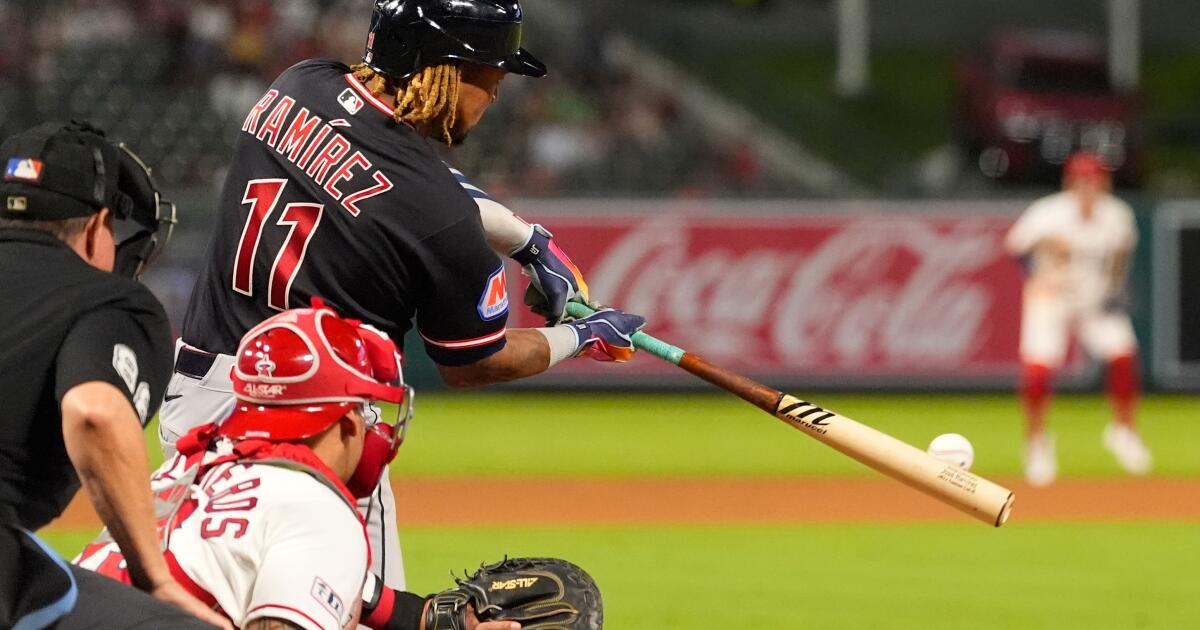
Angels blow lead to Rockies in eighth inning, lose in ninth

TJ Rumfield hit a go-ahead sacrifice fly in the ninth inning and the Colorado Rockies used a five-run eighth to rally past the Angels 9-8 on Monday night.

Hunter Goodman put Colorado ahead 8-6 with a three-run homer in the eighth. Jake McCarthy homered earlier for the Rockies, who have won more games this season (23) than they did before the All-Star break last year.

Jorge Soler’s two-run triple for the Angels tied it 8-8 in the bottom of the eighth.

McCarthy doubled in the ninth to move Kyle Karros to third before Rumfield drove him home with a sac fly to right field for a 9-8 lead. McCarthy finished two for four at the plate, including a solo homer in the third for a 2-0 lead.

Troy Johnston plated Colorado’s first run with an RBI single in the first, and Sterlin Thompson added an RBI single in the fifth to pull the Rockies to 5-3.

Karros’ RBI double in the eighth sparked the five-run rally. Tyler Freeman tacked on an RBI single and Goodman capped the outburst with his 14th homer — a three-run drive over the left-field wall.

Antonio Senzatela (5-0) threw 1 2/3 scoreless innings for the win. Kyle Freeland gave up six runs, five earned, and seven hits in 5 2/3 innings.

Kirby Yates (0-1) gave up the go-ahead run in the ninth.

José Soriano pitched the first 4 2/3 innings for the Angels, giving up three runs on three hits and striking out seven. He also hit two batters with pitches and walked seven — a career high. He became the first Angels pitcher to issue seven free passes in a game since Garrett Richards on Sept. 2, 2013.

Jo Adell hit an RBI single in the third before Jose Siri drilled his second career grand slam to put the Angels up 5-2 in the third. Vaughn Grissom scored on a throwing error by Goodman in the fifth for a 6-3 lead.

Source link

Senate parliamentarian deals blow to $1-billion security proposal for White House

A proposal to fund $1 billion in security additions for the White House campus and President Trump’s new ballroom fails to meet procedural rules, according to the Senate parliamentarian, dealing a blow to Republican plans to include it as part of a bill to fund immigration enforcement agencies for the next three years.

The parliamentarian’s ruling, described late Saturday by Senate Democrats, said that funding for a project as large and complex as Trump’s massive East Wing renovation is too broad to be included in the narrow GOP budget bill, which cannot be filibustered and needs only a simple majority to pass.

It’s unclear whether Republicans will be able to immediately salvage any part of the billion-dollar Secret Service proposal, which would fund security for Trump’s ballroom along with other parts of the White House, including a new visitor screening center, additional training for agents and extra reinforcements for large events. Republicans said Saturday night that they are revising the legislation based on the parliamentarian’s advice.

Ryan Wrasse, a spokesman for Senate Majority Leader John Thune (R-S.D.), wrote in a post on X that “none of this is abnormal” during the complicated budget process that Republicans are using to try to pass the immigration enforcement and White House security money on a partisan basis.

“Redraft. Refine. Resubmit,” Wrasse said in the post.

Democrats say they’re ‘ready to stop them again’

Democrats have seized on the security request, accusing Republicans of dedicating federal resources to the ballroom project instead of focusing on helping Americans with rising costs. Republicans have insisted that private donations will be used to build the ballroom and that the federal dollars are focused just on much-needed security enhancements.

Senate Minority Leader Chuck Schumer (D-N.Y.) took credit for the ruling after Democrats argued to the parliamentarian that the security money doesn’t belong in the bill.

“Republicans tried to make taxpayers foot the bill for Trump’s billion-dollar ballroom,” Schumer said Saturday evening. “Senate Democrats fought back — and blew up their first attempt.”

Schumer added that Democrats “will be ready to stop them again” as Republicans say they will revise the bill.

The ruling from the Senate parliamentarian is advisory, but such rulings are rarely if ever ignored when lawmakers put together legislation that can pass with a simple majority. Most bills are subject to a filibuster and thus need 60 votes for passage — meaning Republicans must find some Democratic support in the 53-47 Senate.

Part of immigration bill

Republicans are looking to approve a roughly $72-billion package to fund Immigration and Customs Enforcement and Customs and Border Protection until the end of Trump’s term after Democrats have blocked the money for months.

As part of that package, Republicans included $1 billion for White House security enhancements, part of it connected to Trump’s ballroom. The Secret Service had requested the money after a man was charged with trying to assassinate Trump at the White House Correspondents’ Assn. dinner last month.

The overall budget package is providing another boost of funding for Trump’s immigration and deportation agenda, fueling operations through September 2029. It comes on top of Immigration and Customs Enforcement and Border Patrol funds Congress provided last year in the One Big Beautiful Bill Act that Trump signed into law.

The parliamentarian kept most of the immigration portion of the legislation intact, though some minor provisions were blocked, including Customs and Border Patrol funds to hire, train and pay Border Patrol agents. Republicans said those were only technical fixes.

Oregon Sen. Jeff Merkley, the top Democrat on the Senate Budget Committee, said Saturday evening that “Democrats are prepared to challenge any change to this bill.”

Americans shouldn’t spend “a single dime” on Trump’s “Louis XIV-style ballroom and throw tens of billions more at two lawless agencies,” Merkley said.

Jalonick and Freking write for the Associated Press. AP writer Lisa Mascaro contributed to this report.

Source link

Blow for Harper Beckham, 14, after ‘little entrepreneur’s’ beauty brand REFUSED naming rights in US

HARPER Beckham has been refused naming rights for her beauty brand in the US.

David and Victoria’s 14-year-old girl has got UK approval for Hiku By Harper.

Harper Beckham has been refused naming rights for her beauty brand in the US Credit: Instagram
Harper is the youngest daughter of David and Victoria Beckham Credit: Shutterstock

But the US Patent and Trademark Office issued an “initial refusal” against the name because of the “likelihood of confusion” with existing companies.

It said “Harper” was already trademarked for the sale of brooms and scrubbing brushes, while “Haiku” is registered for fragrance and toiletry products.

Harper has been working on the project for more than a year and hopes to sell products for spot-prone teens.

The US application covers make-up and acne medications, as well as footwear and clothing, keyrings, stickers, hair decorations and brushes.

posh point

Victoria hits back at Brooklyn’s ‘brand Beckham’ claim & tried to ‘protect’ kids


JUMP THE GUN

David Beckham slams Arsenal referee as Atletico controversially denied penalty

The entrepreneur has been working on the project for more than a year and hopes to sell products for spot-prone teens Credit: Instagram
Victoria has described her daughter as ‘very ambitious’ and ‘a little entrepreneur’ Credit: Instagram/@emmagrede

She and her parents have six months to respond, after applying for the trademark in November.

Fashion designer Victoria, 52, this week spoke about her daughter’s plans, describing her as “very ambitious” and “a little entrepreneur”.

She said Harper came to her “two or three years ago and she was really struggling with her skin”.

She added: “I suffered with child acne, teenage acne, adult acne, every acne under the sun, I’ve been there. So I could really relate to her.

“And she said, ‘I want to create a brand because I don’t want other people to have to go through what I’ve been through’.”

Source link