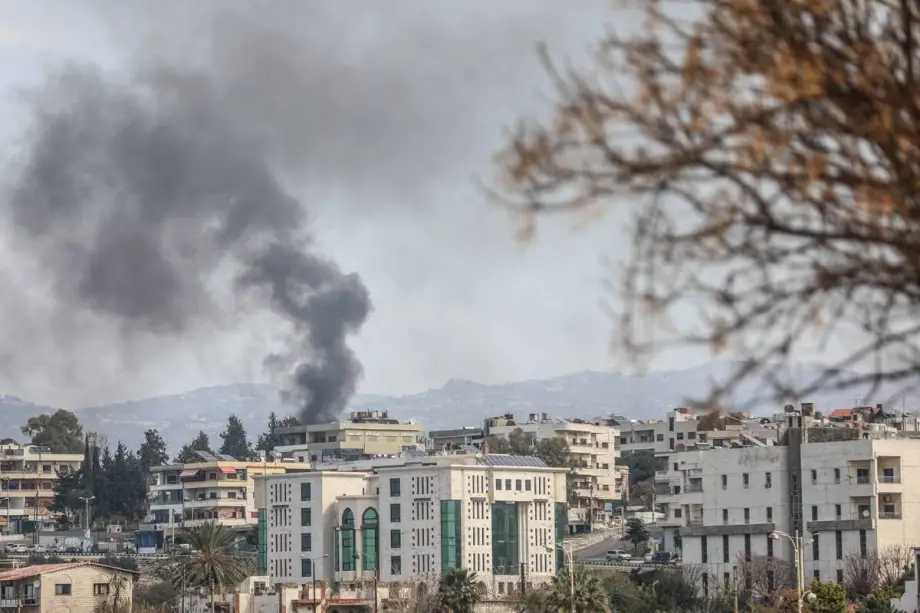
Syria has suffered its worst bloodshed since Bashar Al-Assad was ousted in December, with more than 1,000 people reported killed in violence that has swept the coastal region of the country since Thursday. The violence has pitted the Islamist-led government’s security forces against fighters from Assad’s Alawite minority.
The dead include hundreds of Alawite civilians, whom the a British-based organisation that reports on the conflict, the Syrian Observatory for Human Rights, reported were killed in reprisals after attacks on security forces.
What has driven the violence; how has interim President Ahmed Al-Sharaa reacted; and what have world powers said?
The violence began to spiral on Thursday, when the authorities said that their forces in the coastal region came under attack from fighters aligned with the ousted Assad regime. The interim government poured reinforcements into the area, which is heavily populated by Alawites, to crush what it described as a deadly, well-planned and premeditated assault by remnants of the previous regime.
As government reinforcements deployed, mosques in regions loyal to the new administration began calling on people to wage jihad, or holy struggle, in support of security forces.
By Friday afternoon, reports began emerging of scores of civilians being killed in sectarian reprisals in Alawite towns and villages. As of Sunday evening, the Syrian Observatory for Human Rights said that 973 civilians were killed in reprisal attacks carried out by government forces or fighters aligned with them. More than 250 Alawite fighters were killed and more than 230 members of government security forces were also killed, it added. Reuters has not been able to independently verify the tolls.
The Alawites are the second-largest religious group in Syria after Sunni Muslims. Their faith is an offshoot of Shia Islam. The Assad regime recruited heavily from the Alawite community for its army and security apparatus, which was notorious for its brutality during more than five decades of the family’s rule.
This put many Alawites on the front lines of the civil war that erupted out of protests against Assad’s rule in 2011. The conflict took on a sectarian dimension as Sunni Muslim rebel groups sought to topple the Assad government which was backed by Shia Iran, Lebanon’s Shia Hezbollah movement and others.
Al-Sharaa led the most powerful Sunni group fighting Assad. Known as the Nusra Front, the group was part of Al-Qaeda until he severed ties with the jihadist network in 2016 and renamed his organisation. In a 2015 interview with Al Jazeera, Al-Sharaa described the Alawites as part of a sect that “moved outside the religion of God and of Islam” and urged them to renounce Assad and change their beliefs to remain safe.
Since Assad was ousted, the interim president has pledged to run Syria in an inclusive way. But while he has publicly engaged Kurds, Christians and Druze, there have been no declared meetings between him and senior Alawite figures. Many Alawites say that they suffered like other Syrians under the rule of Assad and his father, both of whom came from the sect.
Prior to Thursday’s escalation, Alawite activists had reported violence and attacks on their community following Assad’s ouster, particularly in rural Homs and Latakia.
In a speech on Sunday, Al-Sharaa said that remnants of the Assad government, supported by external parties, were seeking to create strife and drag Syria back into civil war with the aim of dividing it. He promised to form a fact-finding committee and said its findings would be made public, vowing to bring to account anyone involved “in the bloodshed of civilians” or mistreating them.
He has also announced the formation of a committee aimed at preserving civil peace, which would be tasked with communicating with the people on the coast and providing them with the support they needed to guarantee their protection.
The violence has prompted international alarm.
The United States, which imposes sanctions on Damascus, urged the Syrian authorities to hold accountable the “radical Islamist terrorists” [sic] that had killed people in Syria and said it stood with Syria’s religious and ethnic minorities.
Israeli Defence Minister Israel Katz said on social media that atrocities committed against the Alawites showed that Al-Sharaa had revealed his “true face” as a jihadist.
However, Saudi Arabia and Turkey, allies of Damascus, both signalled their backing for the interim administration as violence was escalating last week. Riyadh condemned “crimes being undertaken by outlaw groups” in Syria and their targeting of security forces.
Turkish Foreign Minister Hakan Fidan, whose country has forces on the ground in north-west Syria, has urged calm and said unnamed foreign elements were partly to blame.
Iran, which backed Assad through the war, has warned that the violence in Syria could cause regional instability.
Wrapped in a black cloth stained with her own blood, a three-month-old baby in a light green shirt was lowered into a grave beside eight other members of her family. They had all been killed in an overnight attack on Kum, a village in Riyom Local Government Area of Plateau State, in North Central Nigeria.
Residents said the attack began at about 11:30 p.m. on Saturday, July 11, and continued into the early hours of Sunday, July 12. By the time the attackers left, nine members of one family were dead, and the community head, Pam Yohanna, was critically injured.
Pam and his family were fast asleep when a loud bang jolted them awake. It did not sound like a knock, but like someone trying to force the door open. “The door was strong, so they couldn’t break in,” a resident, who declined to give his name, said.
Unable to force the door open, the attackers smashed a window and fired into the darkness, striking Yohanna. His screams for help alerted other residents of Kum village. Residents alleged that the attackers had blended into the area during the day by posing as herders before launching the attack at night.
The attackers then moved to the neighbouring compound, which was Pam’s larger family house. Unlike Yohanna’s house, the doors there could not withstand the assault, and the attackers forced their way inside. “They wiped the entire family,” the resident said.
When residents entered the compound after the incident, they found the corpses and sleeping spaces – mattresses, walls, and mosquito nets – soaked with blood, revealing where members of the household had been attacked while they slept.
Nine members of the family were killed. They were identified as Celina James, 38; James Yohanna, 21; Janet Yohanna, 18; Baby Jennifer Yohanna, three months; Sele James, 18; Melody James, 16; Reto James, 10; Endurance James, 8; and Peace James, 3. James and Janet had recently married and were the parents of the baby, Jennifer. Their daughter was buried alongside them and the other members of their family who were killed.
The family lived on the outskirts of the community, behind the Riyom Local Government Council Secretariat, and not far from a base of Operation Enduring Peace, a joint military task force in the region. The community is also located along the Jos–Kaduna–Akwanga highway.
Pam, who is also the community head, sustained life-threatening injuries and is receiving treatment in hospital.
“This is not the first time we are experiencing such an attack,” the youth leader said.
The attack, residents said, did not come entirely without warning. In the days leading up to it, residents had received intelligence about groups of people moving into the area with cattle. Rwang Tengwong, spokesperson for the Berom Youth Moulders Association (BYM), said he believes some of those moving into the area had been displaced from neighbouring Barkin Ladi and Bokkos local government areas following recent security operations by the Department of State Services and other security agencies.
Residents also raised concerns about the presence of drones during attacks in the area. Chollom Dung, the community leader of Kum, said drones were often seen flying overhead during such incidents, but residents did not know who was operating them. “We don’t know who flies them,” Dung said. “We are not safe.”
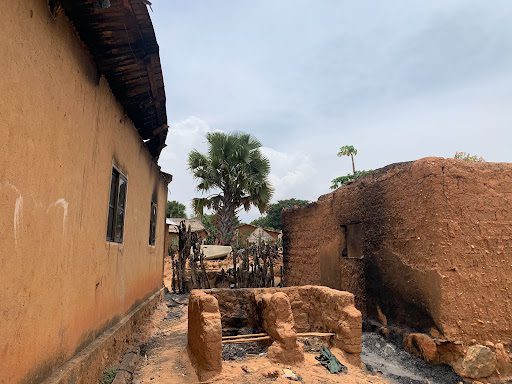
File: A destroyed house in the aftermath of a terror attack on a community in Plateau State. Photo: Johnstone Kpilaakaa/HumAngle.
Rwang said the attackers came from neighbouring Fass and Mahanga communities, areas he described as having previously been inhabited by indigenous residents before they were displaced in 2004 and 2012. In 2025, the Plateau State Government said that at least 64 communities in Bokkos, Barkin Ladi, and Riyom local government areas had been forcibly displaced and taken over by criminal groups.
“They have been taken over, renamed, and people are living there conveniently on lands they pushed people away from to occupy,” Plateau State Governor Caleb Mutfwang said.
Several residents and community leaders who spoke to HumAngle described the attack as “unprovoked” rather than a reprisal or communal clash, as such incidents are often labelled. “We have not had any issue of cattle rustling in this community,” Rwang said. “…As a youth association, when we notice criminal elements, even if they are from our communities, we hand them over to the authorities, because if we shield them, they will terrorise us tomorrow.”
More than 48 hours after the attack, no official statement had been issued by the Plateau State Government or the Plateau State Police Command. “We have lost hope in the government,” the youth leader said.
At the time of reporting, residents said there was no permanent security presence in the community. Police officers and soldiers visited briefly on Sunday morning, a day after the attack, before leaving. No arrests had been made.
The attack came despite repeated assurances from government officials, including President Bola Tinubu, that efforts would be intensified to end the killings and restore security in Plateau State. However, for residents of communities such as Kum, the continued violence has deepened frustration and raised questions about the effectiveness of those measures.
President Tinubu during a meeting with present and past governors of Plateau State and other stakeholders. Photo: Aso Villa
“There is no way that we have a big security base nearby and attacks happen and no one attempts to stop them,” said Dalyop Mwantiri, BYM’s chairperson. “We are calling for accountability, justice; we are calling for security to step up.”
For residents of Plateau, the concern over delayed security response is not new. In April 2025, after a similar attack in Zike, in Bassa Local Government Area, HumAngle visited residents who complained about the lack of response from security operatives despite a nearby military base.
Get our in-depth, creative coverage of conflict and development delivered to you every weekend.
Subscribe now to our newsletter!
The graves in Kum are among the newest markers of a season of relentless bloodshed across Plateau State. Data compiled by the Berom Youth Moulders Association shows that at least 121 people were killed in attacks across several communities between May and July 11, 2026. The killings cut across Barkin Ladi, Riyom, Bassa, Jos South, Pankshin, and other local government areas, with 62 deaths recorded in May, 43 in June, and another 16 in the first 11 days of July alone. HumAngle verified some of the incidents by comparing the records with media reports of individual attacks.
Competing accounts in Benue State
The violence was not confined to Plateau. While residents of Kum in Riyom were still coming to terms with the aftermath of Saturday night’s attack, two communities – Akpachi-Ogbuju village and Otukpo-Nobi, both in Otukpo Local Government Area of Benue State – came under attack on the same night, with violence reported on the evening of Saturday, July 11, and into the early hours of Sunday, July 12.
In Otukpo-Nobi, armed attackers struck members of the Inalegwu family at about 5:00 a.m., according to Eric Amodu, a resident who spoke to HumAngle from the Accident and Emergency Ward of the Federal University of Health Sciences Teaching Hospital, Otukpo.
“Six of them were attacked,” he said, adding that the mother died while the five others sustained varying degrees of injuries. Two of them were in critical condition at the Accident and Emergency Ward of the teaching hospital.
The Benue State Police Command confirmed that eight people were killed in the attack, while residents and local sources who spoke to HumAngle reported a higher toll.
Eric said security operatives arrived in the community hours after the attack. “This is not the first time this community has been attacked,” he said. “It is not the second, third, or fourth. It is probably the fifth.”
File: Security operatives patrolling an area within the Turan district in Benue State. Photo: Alex Barbir/Facebook
Similar to residents in Kum, Plateau State, residents of Otukpo-Nobi said they had raised concerns with security agencies before the attack. Simeon Ikulonu, a youth leader in the community, said residents noticed unusual movements on the Monday before the attack and reported their concerns to security officials. They returned on Thursday to inform them that the suspicious presence had continued.
The attack has since triggered competing accounts about its cause and those responsible. In a statement, Tersoo Kula, Chief Press Secretary to the Benue State Governor, described the attackers as “armed herders”.
Eric, who was conducting ward rounds at the teaching hospital during the interview with HumAngle, said one of the survivors told him that one of the attackers she saw was a woman. HumAngle could not independently verify the claim.
Cletus Nwadiogbu, the Benue State Police Commissioner, described the incident as a “terrorist attack” and said the attackers used guerrilla tactics, striking communities before retreating into nearby forests. “They operate in the guerrilla warfare style. Once they attack, they immediately disappear into the woods, making it difficult to apprehend them,” he said.
Several reports have linked the attack to the killing of Ardo Risku Muhammad, the Benue State chairperson of the Miyetti Allah Cattle Breeders Association of Nigeria (MACBAN), an umbrella organisation representing cattle breeders in the country. However, Eric disputed the suggestion that the violence was only connected to that incident. “Even the route he was attacked on is a no-go route. You can’t go there without security,” he said.
Ardo was ambushed and killed on June 26 on a highway in Otukpo Local Government Area while returning from a peace meeting in nearby Ohimini Local Government Area.
The police have since arrested local leaders in the area as suspects linked to Ardo’s death.
MACBAN has also rejected suggestions linking its members to the attack. Ibrahim Galma, the state secretary of the association, said conclusions should not be drawn before investigations were completed. “Making such conclusions at this stage will only compromise the ongoing investigation being carried out by the Nigeria Police Force and other security agencies,” he said. He added that “Fulani residents” in Otukpo and surrounding areas had previously been displaced from the area.
Following the attack, residents protested, demanding greater protection from security agencies.
Benue has experienced repeated attacks on rural communities in recent years, contributing to widespread displacement across the state. A recent HumAngle investigation documented how several communities have been deserted after repeated assaults, with hundreds of thousands of people forced into displacement camps or temporary shelters.
“The attackers keep attacking, and people flee, and they take over, and it continues,” Eric said, echoing concerns raised by residents in Plateau State.
Benue State Governor Hyacinth Alia described the attack as a “barbaric and inhuman assault on the sanctity of life and the collective soul of the people”.
“We will not allow our communities to be turned into battlefields,” he said.
Human rights organisations, including Amnesty International, have called on Nigerian authorities to conduct an independent, impartial, and effective investigation into the attack on Otukpo-Nobi and Akpachi-Ugboju. The organisation said the violence had deepened fear and panic across Otukpo Local Government Area and urged the government to fulfil its responsibility to protect lives and property.
“The protests by youths in the aftermath of the attack show that people have had enough and seek an end to frequent attacks and abductions that have made life a hell in many parts of Benue State,” Amnesty International said.
The organisation also called for urgent measures to protect rural communities and hold suspected perpetrators accountable, warning that repeated attacks across the region have contributed to widespread displacement and a growing humanitarian crisis.