In the event of an emergency, the U-turn is the fastest way home in the first 36 hours after the TLI. After that it can be just as quick, and often simpler, to stay on course around the Moon and fall back to Earth, Orion programme manager Howard Hu said before the launch.
Umar Muhammad Mustapha had just stepped out of the mosque when he heard someone say an explosion had gone off in the Maiduguri Monday Market area on the evening of March 16. He panicked and asked when. “Just a moment ago,” someone replied, “while we were praying.”
Immediately, Umar began dialling his nephew’s number as he rushed toward the scene without first returning home. “The phone kept ringing, but he did not answer. A few moments later, it prompted ‘switched off’,” he recalled.
That was when the panic deepened.
“I began dialling those whose shops were close to ours.”
Umar sells gabgab at the market. His nephew, Muhammad Ibrahim, makes the local incense while he sells it. The 27-year-old has been with Umar since he was nine.
As he moved through the city that Monday evening, his thoughts raced ahead of him. “I began to imagine the condition in which I would meet him,” Umar said. “Is he alright? Is he alive? Is he dead? Is he injured? And how bad his injuries might be.”
They both work at the market, but that day, Umar stayed at home.
That night, at around 7 p.m., three explosions simultaneously rocked parts of Maiduguri, the Borno State capital in northeastern Nigeria, including the Monday Market, the Post Office area along Ahmadu Bello Way, and the entrance of the University of Maiduguri Teaching Hospital (UMTH).
As he hailed a tricycle to rush to the market, Umar was restless. “I felt as though the keke was not going fast enough and kept urging the driver to go faster,” he said.
From the market to the ward
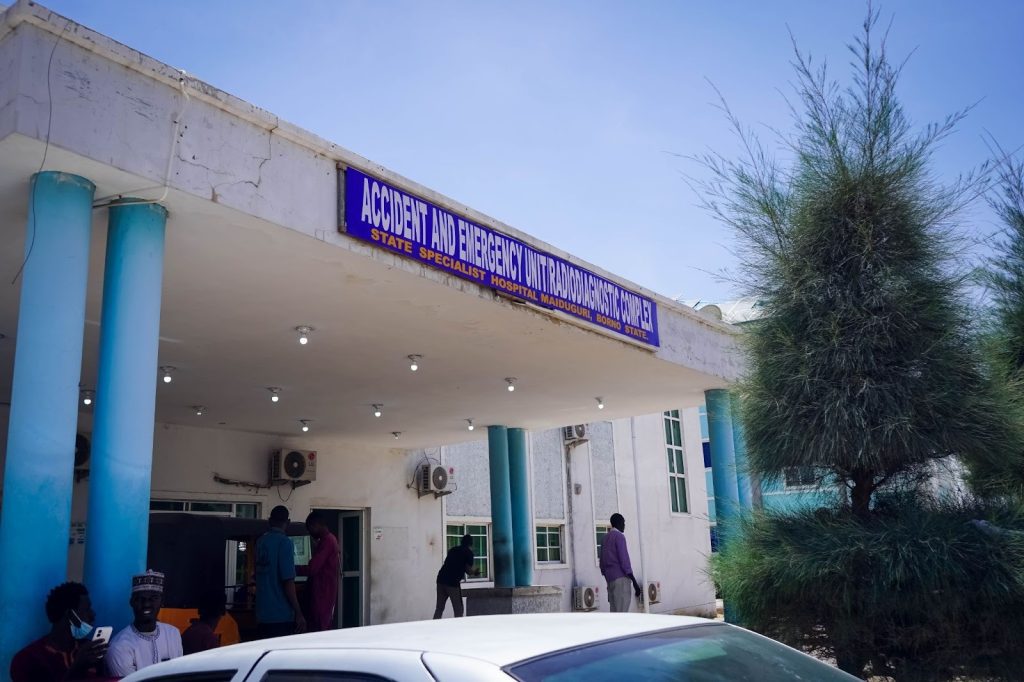
Before he reached the market, Umar’s phone rang, and Muhammad’s name was displayed. But when he answered, a different voice spoke. “Come to the emergency ward of General [State Specialist Hospital],” the person said.
In that moment, uncertainty gave way to reality. “An explosion occurred; he was affected,” the person continued. “He was brought to the hospital. You are the last person he talked to, so we are reaching out.”
Immediately after the explosions at the Monday Market and Post Office area, victims were rushed to the emergency ward of the State Specialist Hospital, Maiduguri. Photo: Al’amin Umar/HumAngle.
The blasts at the market and the Post Office were especially devastating. The two locations sit minutes apart. Traders had closed for the day and were heading home when the first explosion tore through the Elkanemi junction, near the market.
Following the explosions the next morning on March 17, the Monday Market was locked, and traders had delayed entry. Security operatives, including the police and NSCDC, scan the site for leftover explosives while sanitation workers clean the site of blood stains. Photo: Al’amin Umar/HumAngle.
In the immediate aftermath of the first blast, many people scattered and ran towards the Post Office area. Muhammad was among them. At the time Umar was trying to reach him, he had already escaped the market blast. In the confusion, he could not hear his phone. As he ran towards the Post Office area, another explosion went off.
It caught him, and he sustained injuries to his chest and legs.
When HumAngle visited the hospital on Tuesday, March 17, Muhammad could not speak, only nodding when spoken to. Umar said he was scheduled for surgery later in the evening.
Muhammad lies on his hospital bed on the morning of March 17. He sustained injuries on his right leg and chest. Photo: Al’amin Umar/HumAngle.
Other survivors also carry similar stories.
Mohammed Babagana Bukar had just bought a pair of shoes for Eid al-Fitr, which is in a few days, with money he earned as a porter at the market. When the blast happened, the 15-year-old said, “We panicked and began running towards the Post Office when another one went off, close to where the flyover is being constructed.”
He was brought to the hospital by a stranger. “He carried me as I could not walk.”
Fantami Modu didn’t escape the first blast that rocked the market; he was injured.
“It affected my leg,” the 40-year-old said. “We were brought to the hospital by the police.” Fantami sells clothing materials and earns about ₦7,000 daily. It is what he uses to feed his family.
Get our in-depth, creative coverage of conflict and development delivered to you every weekend.
Subscribe now to our newsletter!
Now, he cannot work. Beside him, his brother, Babagana, said they are contributing to support the household until he recovers.
According to the Borno State Police Command, 23 people were killed, and 108 were injured in the multiple bomb blasts. No terror group has claimed responsibility for the attacks, but the Nigerian Army said they were “carried out by suspected Boko Haram terrorist suicide bombers”.
“Preliminary information further indicates that the terrorists may have deployed multiple suicide bombers into Maiduguri with the intention of carrying out coordinated suicide bombings at crowded locations,” Lieutenant Colonel Sani Uba, Media Information Officer of the Joint Task Force North East Operation Hadin Kai, said in a statement.
At the State Specialist Hospital, where victims were first rushed to, HumAngle counted 13 survivors on admission. The hospital is less than two kilometres from the scenes. Of these 13, 11 were males and two females, with varying degrees of injuries to the arm, leg, and chest.
Nurses at the hospital said at least 40 people were brought to the emergency ward that night, with many later referred to the UMTH. Only 14 survivors were eventually admitted, but one died on arrival.
Many of the over 40 survivors that were rushed into the State Specialist Hospital on the night of the attack were later referred to the University of Maiduguri Teaching Hospital. Photo: Al’amin Umar/HumAngle.
UMTH was also targeted that night. An explosion that went off at the hospital’s entrance. Although no civilian casualties were recorded, sources said that a suspected suicide bomber, who tried to enter the hospital on a bicycle before he was stopped by security operatives, died in the incident.
A city remembering fear
For some residents, the events revived familiar anxieties.
“We had just broken our fast and were waiting for a tricycle to return home when we heard the explosion close to the Monday Market,” Sulaiman Muhammad, a resident, recounted. “Less than 20 minutes after, we heard another one from the Post Office area. In panic, we scattered.”
He did not go to the scene. “It is dangerous,” he said. “I remember in one explosion like this inside the market at the peak of the [Boko Haram] insurgency, another explosion went off immediately people gathered to help victims.”
The second explosion on the evening of March 16 occurred at the Post Office area, near a flyover construction site. Most people fleeing the Monday market blast were caught here. Photo: Al’amin Umar/HumAngle.
Now, those memories are resurfacing. “People are in panic,” he said. “We had begun to experience relative calm until the past few days.”
Sulaiman has sold shoes at the market for more than 20 years. He believes the attacks will affect business. “As you can see, no one is out [to sell],” he said.
These incidents are part of a broader pattern of escalating violence.
The explosions came barely 24 hours after terrorists attacked a military base in Kofa, a community close to Ajilari on the outskirts of Maiduguri, on March 16. Joint security operatives repelled the attack, leaving many terrorists dead.
However, before then, there had been attacks by terror groups across Borno State, including assaults on rural military bases and resettled communities like Ngoshe and Dalwa. Also, on Dec. 25, 2025, a suicide bomber detonated at a mosque in the Gamboru Market area of Maiduguri. Five people were killed, and 35 others were injured.
Taken together, these incidents point to what observers describe as a violent resurgence. HumAngle has reported that the terror groups operating in the region have undergone several technological shifts that have aided their expanded attacks and operations, including the use of artificial intelligence and drones.
For Umar, the incident has narrowed into something smaller, more personal.
Muhammad, he said, loves to read.
“He would read verses from the Qur’an after his morning prayer. And after breakfast, he would head to the market. And by evening, he would return home. He would read in the evening too, before going to bed.”
When asked what he hopes for, Umar paused.
“I would have hoped for more security or for more vigilance,” he said. “But what would an empty hope solve? Authorities know what to do. They would act properly if they intend to.”
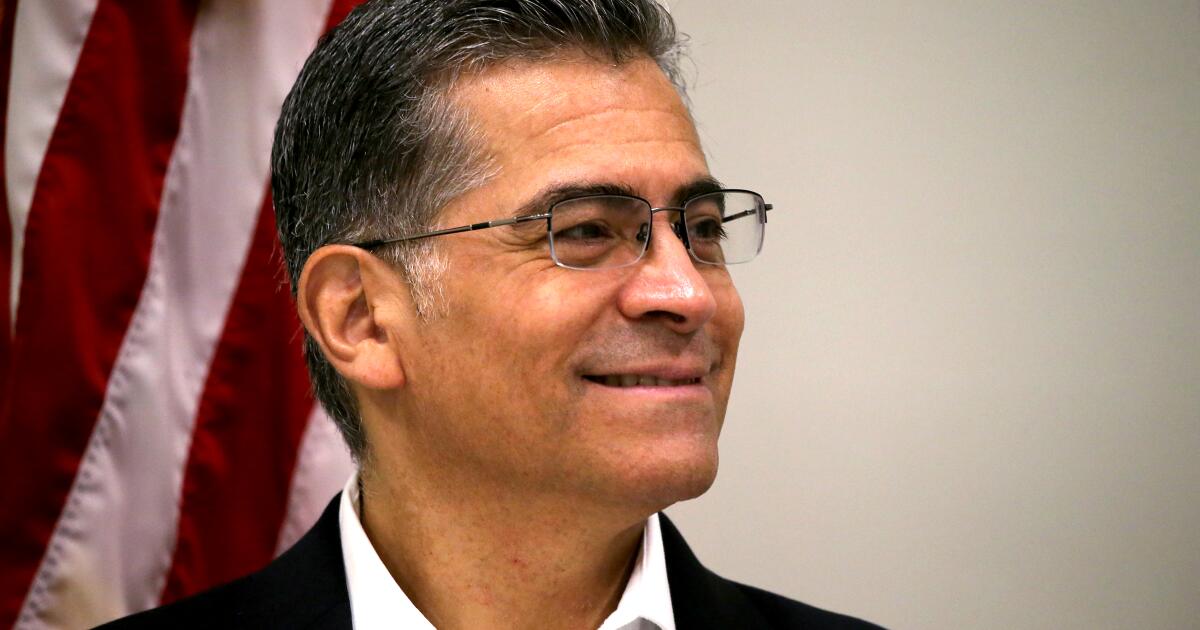
Former U.S. Health and Human Services Secretary Xavier Becerra, one of the top Democrats running for California governor, on Friday blasted USC and the ABC affiliate in Los Angeles for hosting a debate that he argues purposely excludes all candidates of color.
Becerra said he and the other candidates were excluded from the televised debate unfairly, a decision that he said “smells of election rigging” in a hotly contested race less than three months before the June primary.
“My father used to tell me of the days when he would encounter signs posted outside establishments that read ‘No Dogs, Negroes or Mexicans Allowed,’” Becerra wrote in a public letter to USC President Beong-Soo Kim. “USC’s actions may not seem so transparent. But, you have deliberately chosen to selectively filter the voters’ view of the field of gubernatorial candidates in what all observers characterize as a wide-open race.”
The university said in a statement that it authorized a political expert to create the formula to determine who would be included in the debate.
“At the request of the Center for the Political Future, Dr. Christian Grose, Professor of Political Science and International Relations, independently established the methodology that determined eligibility for the debate,” according to a statement from the center. “No one in the USC administration had any role in developing, reviewing or approving those criteria.”
The center later said in a statement on Friday that it reiterated the criteria that determined which candidates were invited to participate in the debate, and that nothing had changed since the forum was first planned.
The criteria for gubernatorial candidates to participate considered opinion polling and campaign fund raising. Six candidates were asked to participate in the March 24 debate, which is cosponsored by ABC7 Los Angeles and Univision.
There was conflicting information about USC’s stated criteria, however. The methodology says that the fundraising totals considered were based on semi-annual reports campaigns filed with the California Secretary of State’s office. However, the document later says that the fundraising figures also includes large donations that campaigns are required to immediately report.
This is a critical difference, because San José Mayor Matt Mahan did not enter the race until late January, and thus far has not been required to file any semi-annual fundraising disclosures with the state. However, he has received significant donations since he entered the race.
Mahan agreed with Becerra, saying that he ought to be part of public forums about who will lead the state.
“The former Secretary is absolutely correct, he should be included in the debate,” Mahan said in a statement. “His long record of service to California has earned him a place on every debate stage in this campaign for Governor.”
USC officials said they are clarifying how they selected candidates to participate in the race.
“We are reissuing the criteria to make clear that they include current fundraising totals, including semi-annual and late reports, which were always part of the formula,” the Center for the Political Future said in a statement. “We are not changing the criteria. We have updated even as of today and the rank order includes the same top 6 candidates.”
Grose said that the selection of candidates was based upon polling and fundraising numbers, and that the sentence about semi-annual fundraising reports was inaccurate.
“It was just a wording issue. It’s not a methodology issue,” he said.
Six candidates are scheduled to appear at the debate: Republicans Riverside County Sheriff Chad Bianco and conservative commentator Steve Hilton; and Democrats Northern California Rep. Eric Swalwell, former Orange County Rep. Katie Porter, billionaire hedge-fund founder Tom Steyer and Mahan.
The kerfuffle occurs after Democratic candidates of color accused state party leaders of trying to oust them from the race in favor of white candidates, who have more support in opinion polls.
In addition to Becerra, other prominent Democratic candidates excluded from the debate include former state Controller Betty Yee, state Supt. of Public Instruction Tony Thurmond and former Los Angeles Mayor Antonio Villaraigosa, who also condemned the candidate-selection formula.
“Californians deserve a fair process, and voters deserve to hear from all qualified voices,” Villaraigosa, who taught public policy at USC for three years after leaving office, said in a statement. “But this biased and bigoted action by USC to manipulate the data to exclude every qualified Black, Latino, and API candidate in favor of a less qualified white candidate is shameful.”
Becerra said USC went to great lengths to justify the candidates that were excluded, but the bias was clear.
“You can’t escape the detestable outcome: you disqualified all of the candidates of color from participating while you invited a white candidate who has NEVER polled higher than some of the candidates of color, including me,” he said.
Becerra was clearly referring to Mahan, who recently entered the race and has received millions of dollars of support from Silicon Valley leaders. Becerra noted that veteran GOP strategist Mike Murphy, co-director of the USC Center for the Political Future, which is a sponsor of the debate, is assisting an independent expenditure committee backing Mahan.
Murphy said he had recused himself from anything involved in the debate, and that he was a volunteer for the outside group backing Mahan. If he becomes a paid advisor to the independent expenditure committee, he said he has requested unpaid leave from the university through the June 2 primary.
“I’ve been transparent that I’m personally a Mahan supporter,” Murphy said. “I’ve had zero to do with the debate.”
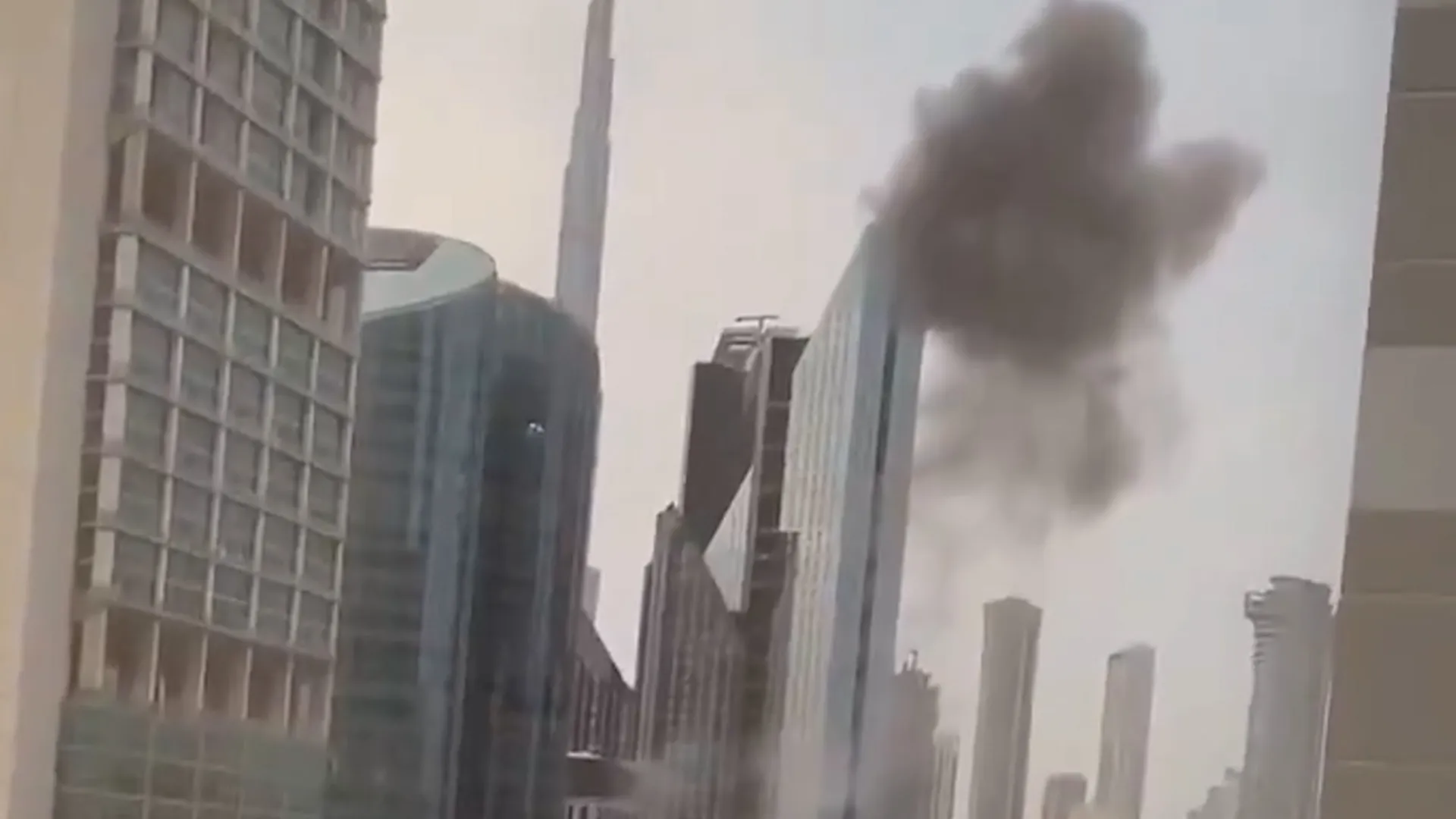
Black smoke could be seen in Dubai’s financial district where witnesses reported hearing explosions on Friday morning. Authorities there said a building was hit by debris from an intercepted missile.