It was TikTok’s biggest feud but is Charly Anne considering trying to get back in the fold?Credit: Instagram/charlyannecInsiders have spilled how Charly thinks it could be a good business decision to make amendsCredit: Tik Tok
The Sun were the first to lay bare the feud between Charly and the other four members of the Welsh 5 – Cory, Lea, Kane and Ieuan – last year and told how it had even led to a devastating fallout between Charly and her own mother, Trudi Anne.
The rift originally began with a row over Charly’s relationship with girlfriend Emily Woodfin, with the other four members claiming she was controlling – an accusation which both Charly and Emily deny.
But bridges were left officially burned when Trudi sided against her own daughter by uploading a series of dance videos she made with Cory and Lea as well as Becki Jones, who also fell out with Charly amid the feud.
Now it seems that Charly may finally be having something of a change of heart – but is it all for the right reasons?
Her feud with the gang, and their celeb accomplice Becki Jones, has dominated her TikTok careerCredit: Instagram/corysworldddBut privately she thinks it could be a wise business move to be seen with them againCredit: Instagram/charlyannec
Sources close to Charly have told The Sun how the Welsh influencer is secretly considering publicly reuniting with her sworn enemies as part of a savvy business decision.
Our insider told us: “Things have all gone quiet on the Welsh 5 feud front in recent months.
“Everything exploded last year and it seemed there was zero chance of reconciliation when Charly’s own mother snubbed her in favour of the others.
“But amid the silence in the months that have followed it seems that some very interesting conversations have been going on.”
One of Charly’s pals has conceded that, since separating herself from the group, potential work opportunities have begun to slowly dry up.
Industry experts suggest that, for brands, the appeal of the Welsh 5 as a group is what drew them in – with Charly now no longer having a piece of that pie.
Our source told us: “Charly views her life as a business – like many influencers do.
“She was at the top of her game amid the Welsh 5 hype but things have certainly been slower since then.
The rest of the Welsh 5 have continued on without Charly after the shocking rowCredit: Tik TokBecki Jones has also become the number one target of Charly’sCredit: Instagram/beckijonesxx
“After the split, it is almost like she has ended up becoming the ‘problem child’ – and it has put people in the industry off wanting to work with her.
“For the first time, she has quietly been considering if now could be a good time to publicly reunite with her former pals but not necessarily because she wants to build relations but in order to continue building her career.
“Charly knows deep down that if everyone is seen to be on friendly and amicable terms, the interest in her could ramp up again.
“Her followers would have a field day if she started sharing content with Cory and Lea again!”
Her pals admit it is a sting every time she sees Becki’s success as she always felt she was destined for the same fate.
They told us: “Charly is determined to become as well-known as Becki – even all these months on.
“If a reunion with the Welsh 5 is what it takes – she thinks she’d be ready to do it.
Charly has enjoyed a quiet few months with her partner – but she is craving the spotlight once again, say palsCredit: Instagram/emilyjwoodfinCould this year prove to be a turning point?Credit: Instagram/charlyannec
“But, ultimately, this is all just private talks at the moment.
“It is very much speculative thoughts that Charly is having – no one knows if it is something she will actually go through with.
“Plus, the others in the Welsh 5 might also not be ready to make amends.
“The channels for a reunion are definitely there though. They still have the same team around them, it wouldn’t take much for a few strings to be pulled behind-the-scenes.
“It has all been a bit of a mess but for the first time it seems that the mess may be ready to come to an end.
“Only time will tell but it is certainly closer than ever to happening.”
The Sun has reached out to the Welsh 5 and Charly’s reps for comment.
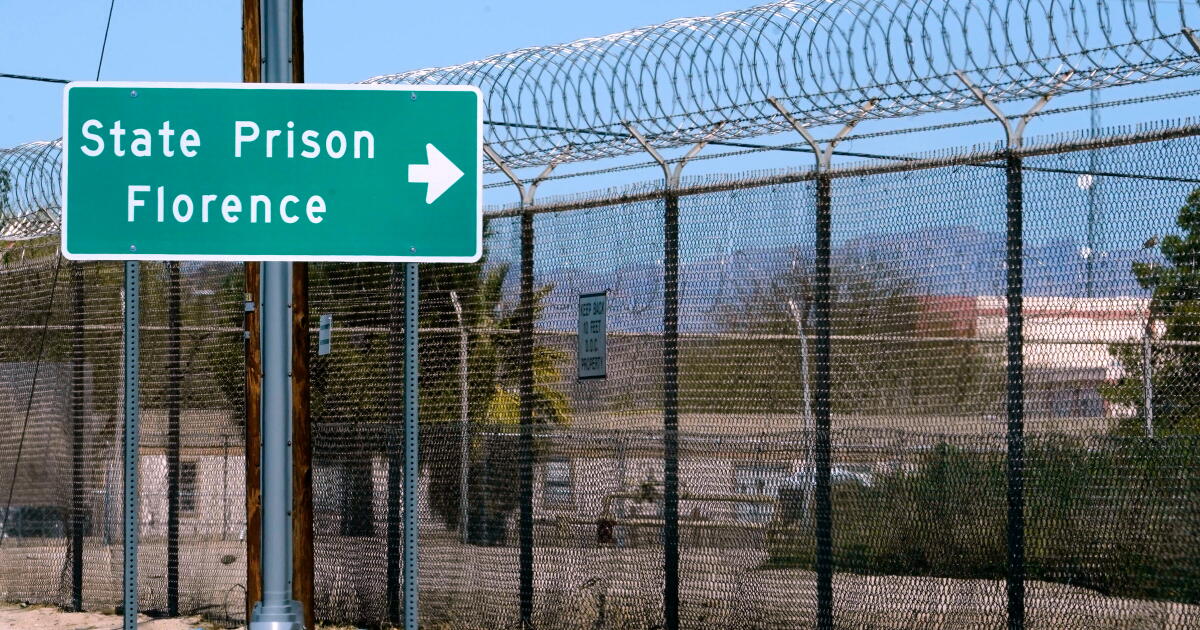
PHOENIX — The U.S. Supreme Court has rejected Arizona’s eleventh-hour bid to block the upcoming start of a court-ordered takeover of healthcare operations in its prisons after the state was found to have provided constitutionally inadequate care to incarcerated people and dragged its feet for over a decade in making required improvements. Justice Elena Kagan denied the state’s request Thursday, leaving an outside corrections professional set to take over healthcare management for 25,000 incarcerated people on Oct. 19.
Arizona had asked the courts to delay the takeover while it appealed that decision and the appointment of former Ohio corrections director Annette Chambers-Smith to lead the effort. The state sought the delay from the Supreme Court after lower courts rejected by the request.
Over the past 14 years, Arizona has been dogged by complaints that its prison healthcare system was run shoddily and callously and that it repeatedly failed to improve a system found to have exposed prisoners to harm and preventable deaths.
Under a 2014 settlement, the state pledged to overhaul medical and healthcare services for prisoners but was soon accused of failing to make promised improvements. That led to more than $2 million in contempt-of-court fines and the eventual revocation of the agreement by U.S. District Judge Roslyn Silver, who said corrections officials had shown little interest in making required changes.
After a 2021 trial, Silver ruled against the state, issuing an injunction that required corrections authorities to address the constitutional violations. Earlier this year, she ordered the takeover after concluding the state hadn’t gotten a semblance of compliance with court-ordered changes and the U.S. Constitution after more than a decade of litigation. Silver found that prisoners remained exposed to grave threats of harm and suffering because of systematic deficiencies in their health care.
The Arizona Department of Corrections, Rehabilitation and Re-entry did not immediately respond to a request for comment on Thursday’s decision.
In a statement, Corene Kendrick, an American Civil Liberties Union attorney who represents prisoners in the lawsuit, applauded the court’s refusal to delay the takeover, also known as a receivership. She said Arizona fought accountability at every turn while prisoners suffered. “Today’s decision clears the way for a receiver to do what the state has failed to do for more than a decade,” Kendrick said.
In seeking a delay, Arizona’s attorneys said Silver adopted a drastic takeover remedy without first trying intermediate fixes to speed compliance. They also said the judge hadn’t given the corrections department enough time to continue making progress and argued that the official appointed to run healthcare operations wouldn’t be politically accountable. They said the agency is committed to improving health care in prisons, has made significant progress since 2023 and that the prisoners won’t suffer harm if the start of the takeover were delayed by a few months.
Lawyers for prisoners said the state was minimizing its noncompliance, disputed its claim it had not been given enough time to comply after 14 years of litigation and said Silver had already tried less-intrusive remedies. They also said the state’s proposal of a months-long delay in the takeover “grievously minimizes” the harm prisoners face from the state’s inability to provide adequate care.
Complaints about health care in Arizona’s prisons have spanned both Republican and Democratic administrations.
The lawsuit was filed in 2012 during Republican Gov. Jan Brewer’s administration and continued under Republican Gov. Doug Ducey, when both contempt fines against the state were issued. Under Ryan Thornell, the corrections director in Democratic Gov. Katie Hobbs administration, the department has complained that its progress in overhauling health care operations in recent years hasn’t been acknowledged.
The lawsuit over healthcare for incarcerated people covers Arizona’s nine state-run prisons but not the nearly 10,000 Arizona inmates held in private prisons.
Brussels and Beijing are fighting over quotas that would limit Chinese imports to the EU market, as the Europeans seek to rebalance their trade relationship with China, Euronews has learned.
ADVERTISEMENT
ADVERTISEMENT
Both started intense negotiations last June over EU and Chinese access to each other’s markets, with an October deadline set by the European Commission to reach “tanglible” results. However, China is pushing hard against the EU’s attempts to protect its market.
According to one person familiar with the matter, the Commission, which is negotiating on behalf of the 27 EU countries on trade issues, wants China to accept quotas on specific products.
However, it is unclear how China would accept and respect such quotas.
Trade defence mechanisms delayed
According to media reports, so-called “voluntary export restrictions” have been pushed by the Commission for electric vehicles. But Beijing’s trade minister rejected them in a statement earlier this month.
If China accepted such a system of restrictions, it would mean that it voluntarily limits its exports to the EU on the basis of a deal negotiated with the Commission, sparing the EU from adopting defensive trade measures that might be seen as an aggressive move by China.
Technical negotiations are in their final stretch as the October deadline is approaching.
Director General of DG Trade at the Commission, Ditte Juul Jørgensen, travelled to China last week for two days of heated discussions, and EU Trade Commissioner Maroš Šefčovič is due to be in Beijing on 8 and 9 October for political talks, ahead of a key meeting of EU leaders in Brussels.
To give negotiations a chance, the Commission has delayed the adoption of trade defence mechanisms aiming to protect the EU chemical industry, according to another person familiar with the matter. The chemical industry is one of the sectors most threatened by Chinese competition in the EU.
However, the threat also targets other sectors, making the rebalancing of the trade relationship “existential” for the Europeans, EU Industry and Trade Commissioner Stéphane Séjourné told Euronews last week.
According to the Commission, the EU already lost 250,000 industrial jobs last year, particularly concentrated in energy-intensive sectors and automotive supply chains.
Shares in Australia’s Northern Star Resources (NESRF) rose more than 9% on Monday after the gold miner rejected a $27B takeover proposal from South Africa’s Gold Fields (GFI).
Gold Fields proposed acquiring 100% of Northern Star through a combination of
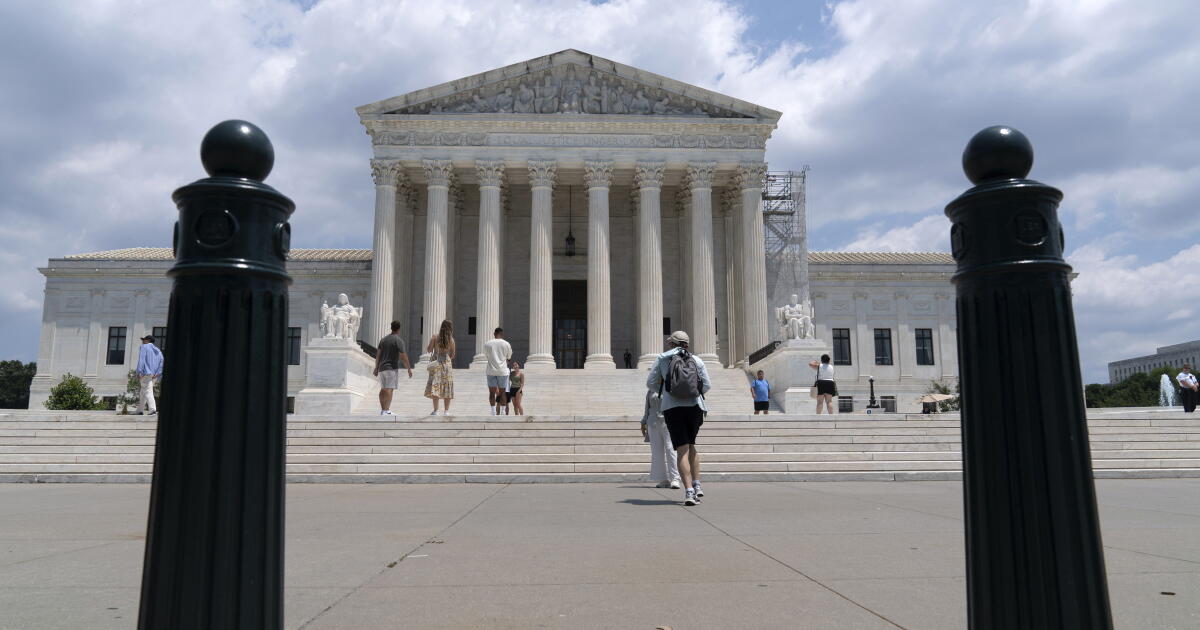
WASHINGTON — For the third time this month, the Supreme Court has rejected Missouri’s bid for one more Republican-leaning congressional district.
With no dissents, the justices upheld a state court order requiring the use of a 2022 election map, which favors Republicans in six of the eight districts.
“At this late date, ordering reversion to the 2025 map in the midst of an ongoing election would usher in electoral chaos,” the justices wrote.
The GOP, with the backing of conservative federal judges, wanted to use a new 2025 election map that redrew the district in Kansas City that had elected a Black Democrat.
That would have given Republicans a 7-1 advantage, but the Supreme Court stood in the way.
“As a matter of state law, the 2022 map — not the 2025 map — must be used in the 2026 congressional election,” the justices said in an unsigned opinion. “This Court has repeatedly cautioned that lower federal courts should not ‘alter the election rules of a state on the eve of an election.”
Each side in this messy dispute accused the other of seeking to change the voting districts on the eve of the election.
On Tuesday, the opponents of the newly drawn GOP-friendly map appealed to the Supreme Court for the third time. They said it is too late to switch the districts because ballots had gone out based on the existing map.
They said the Republicans “demand a new map after votes have already been cast. Ballots using the 2022 map have been printed and mailed, and absentee voting, both by mail and in-person, began today.”
But the state’s Republican attorneys said the primary elections took place under the new 2025 map, and that argues for keeping those districts in place for the general election in November.
Last September, the Missouri General Assembly, following President Trump’s lead, voted to redraw its eight congressional districts. In recent years, the state had sent six Republicans and two Democrats to Congress.
The Legislature’s goal was to flip one more seat in favor of Republicans. The new map would do that by breaking up the Kansas City district that had elected Rep. Emanuel Cleaver, a Black Democrat, with a new district that favored a Republican.
But a group called People Not Politicians and its executive director, Richard von Glahn, gathered more than 300,000 signatures for a referendum to challenge the new law before it took effect.
After waiting nine months to respond, Missouri Secretary of State Denny Hoskins, a Republican, denied the referendum in early August on the same day the primary elections got underway.
Von Glahn and his group of voters sued and won a unanimous decision from the Missouri Supreme Court on Sept. 3. Its judges said the state Constitution authorizes such a referendum and a new election map cannot take effect until the voters have spoken.
Hoskins filed an emergency appeal at the Supreme Court and cited the “chaotic fallout” from the state court “irresponsible decision.”
Justice Brett M. Kavanaugh, who oversees appeals from the 8th Circuit Court based in St. Louis, denied the appeal without comment on Sept. 8.
But shortly after his decision was issued, U.S. District Judge Stephen R. Clark, a Trump appointee, issued a temporary restraining order that prohibited the state from using the any voting map other than the new one.
People not Politicians appealed that decision to the Supreme Court.
On Sept. 10, Kavanaugh and the full court granted the appeal and blocked the judge’s order from taking effect.
The justices did not explain their reasoning, but the meaning of the order was clear. The state Supreme Court ruling meant the new map could not be used for this year’s election.
But that did not stop the 8th Circuit Court from ruling the state must use the new map.
Siding with several Republican candidates, a 2-1 majority said the use of 2022 map was unconstitutional because the primary elections were held under the new map. Its decision ordered the elections to be held using the new map.
This was a surprising ruling, since the Supreme Court’s order on Sept. 10 barred judges in Missouri from intervening further in the dispute over the voting maps.
But after a third trip to the court, the justices said the state must use the 2022 map.
In April 2022, Moore tested positive for nandrolone and boldenone at a WTA 250 event in Bogota, with an independent tribunal ruling in December 2023 that contaminated meat was the source.
Moore, who was Britain’s leading women’s doubles player at the time of the failed test, was found to bear “no fault or negligence”, but the International Tennis Integrity Agency (ITIA) appealed against the decision.
Last year, the Court of Arbitration for Sport (Cas) ruled in favour of the ITIA and Moore was banned until 2028.
Moore then initiated proceedings with the American Arbitration Association, in which she claimed the WTA’s “failure to warn against eating meat in Colombia was a direct cause of her positive test result and the harm that followed”.
The arbitrator supported the ruling made by Cas and dismissed the case against the WTA.
In response, Moore filed a motion against the decision at the United States District Court in New York.
Moore, who was ranked a career-high 77th in the world in 2022, claimed she was denied a fair hearing by the arbitrator.
The motion detailed how Moore was seeking “no less than $20m in compensatory damages” after claiming the WTA “stayed silent in the face of a known and specific danger and then shifted the blame for its own negligence” to the player.
On Friday, United States district judge Andrew Carter found Moore’s challenge was “not justified” on a legal basis.
The WTA and ITIA have been approached for comment.
101 East meets innovators across East Asia using digital technology to transform how we grieve those we love.
East Asia is facing a demographic reckoning, with societies in Japan, South Korea and Taiwan ageing rapidly.
With a drastic shortage of burial space, a lucrative new market is emerging.
From AI avatars to DNA gems, technology is bringing loved ones back to life – in digital forms – raising questions about whether it will help heal or hinder the grieving process.
101 East investigates how new technology is transforming the way we bid farewell to those we love.
Schools in England are to get around £500 million in extra funding towards the teachers’ pay award this school year, reducing the risk of a strike ballot by the largest education union.
Daniel Kebede, the General Secretary of the NEU, said the offer of more funding was a “significant” step in negotiations.
In a letter to the union on Wednesday, which has been seen by the BBC, the government said the increase would be funded by savings in employers’ contributions to the local government pension scheme.
The letter said the 4.9 percentage point drop in what employers are expected to contribute will deliver “significant savings” on the pay bill for support staff, which will not be clawed back by central government.
The National Education Union said it expected the extra money to be around £500m, which schools can now use towards teachers pay this year.
In July, ministers accepted the recommendation of the independent pay review body for teachers and agreed a 3.5% increase from September 2026 would be followed by 3% the following year.
The pay increase had been partly funded by an additional £700m for 2026-27 and £1.1bn for the following year.
Independent economists at the Institute for Fiscal Studies (IFS) said that left schools facing a shortfall of around 1% between rising costs and funding this year.
Luke Sibieta, IFS research fellow, said the extra money would mean the pay increase this year was fully funded – and on top of other funding increases, schools would be £1.6bn better off by next year than they had expected this summer.
The additional money could potentially bring the uplift for this year into line with next year.
Kebede said schools has been “running on empty” and the funding signalled “a welcome return to reality, and a message of hope for the entire school community”.
Paul Whiteman, General Secretary of the National Association of Headteachers, said the decision is “certainly welcome”, putting schools in a “better position”.
He said his union would look carefully at the detail “to determine whether this means the pay uplift is genuinely fully funded” for schools.
Pepe Di’Iasio, General Secretary of the Association of School and College Leaders, said he was “pleased” at the announcement of additional funding but “the wider pressure on school and college budgets remains intense”.
Similarly, the NASUWT union welcomed the news. General Secretary Matt Wrack added schools needed “a sustainable, long-term injection of extra funding” to meet the needs of young people.
In an indicative ballot by the NEU in April, 90% of teachers who voted said they would be prepared to take industrial action over funding and pay, on a turnout of 48%.
A formal ballot was due to begin on 3 October and close 15 December, raising the prospects of teachers pay strikes early in 2027.
The national executive of the NEU will meet on 24 September to consider whether to call that off following the additional funding on offer from the government.
A spokesperson for Education Secretary Lucy Powell said the government was “confident schools can now meet the costs of the award at a national level”.
“The Secretary of State has been clear from day one that supporting teacher recruitment, retention and wellbeing, and rebuilding the relationship with the profession, are among her top priorities.”
In one corner is bnb-side, a six-room bed and breakfast on the Isle of Portland – a tiny wedge of limestone tied by a narrow ribbon of shingle to the Dorset coast – that was created to help secure the future of the rock’s much-loved arts festival, b-side.
On the other is Airbnb, the San Francisco-based booking colossus. The battle between them is over the three little letters they share.
bnb-side, a six-room B&B on the Isle of Portland, has received legal letters from booking titan Airbnb. Photograph: Pete Millson
b-side says the “bnb” in bnb-side means what it has always meant: bed and breakfast. But lawyers for the Silicon Valley titan say the name of the guesthouse, perched on an outcrop just 4 miles long by 1.5 miles wide, threatens the global brand of the $100bn heavyweight.
“We thought the name was both really obvious and really cool,” said Rocca Holly-Nambi, director of b-side. “b-side was founded almost 20 years ago, so when we set up our BnB in 2024 to raise money for the festival, we just popped the ‘bn’ in front because it’s a universally recognised description of what we’re offering.”
Airbnb doesn’t agree. In May, it sent the first of three legal letters to the tiny social enterprise to demand it cease its attempt to register the B&B using the name it had used since it opened its doors.
“They won’t let us compromise by using a different case, an ampersand or an ‘and’,” said Holly-Nambi. “According to Airbnb, we can’t describe our BnB as a BnB at all.”
A creative retreat held at bnb-side – the social enterprise was set up in 2024 to raise money for the b-side festival. Photograph: Handout
For bnb-side, losing the argument could mean more than abandoning a clever name. It would mean replacing signage and rewriting websites, social media and all other material referencing and advertising the B&B.
“That’s not just a huge waste of money – of which we don’t have much – and of the equally valuable time of our volunteers, but it would throw b-side’s core income stream into chaos,” said Holly-Nambi. “We’d have to painstakingly build our reputation and brand back up from scratch all over again.”
Raina Summerson, chair of b-side, is fuming and incredulous. “We opened bnb-side because we were completely dependent on public funding and wanted to be more financially secure,” she said. “bnb-side now generates almost half the festival’s annual £250,000 turnover. If it loses its name, we risk having to establish it all over again.”
Airbnb has opposed the name on three separate legal grounds: that consumers will confuse the two brands, that bnb-side could benefit from or damage Airbnb’s reputation, and that bnb-side will financially profit by misrepresenting itself as an official Airbnb service.
b-side is asking the Intellectual Property Office to reject Airbnb’s opposition in full, with costs awarded in their favour. The case is still under way, with no ruling having yet been made.
‘It’s pretty bitter,’ said Cat Wightman, pictured at bnb-side, describing the legal battle with Airbnb, a company that has ‘conquered’ Portland. Photograph: Handout: bnb-side, Portland
Airbnb’s claim has hit a nerve on the proud, windswept outcrop. Cat Wightman, manager of bnb-side, said: “It’s pretty bitter. We’ve watched other small, local hospitality businesses go under, and local people unable to afford homes here, who have been negatively affected by the force with which the Airbnb market has conquered Portland. One person owns eight properties on the island, all of which are rented out on Airbnb.”
b-side obtained pro bono advice and is working with the law firm Stevens Hewlett & Perkins to defend them, but the process is still intimidating. “It’s terrifying but we’re not going to back down,” said Holly-Nambi. “We do things differently here in Portland.”
Craig Beaumont, a trademark attorney and senior associate at Barker Brettell, a law firm that specialises in intellectual property, said that for all Airbnb’s might, this would not be an easy or straightforward win for them.
“This feels like an uphill battle they’re embarking on,” he said. “BnB has long been widely understood as shorthand for a descriptive phrase, and descriptive phrases are available for the public to use.”
bnb-side are not the only company who agree with Beaumont: Companies House records show that in the past decade 14 accommodation companies with “bnb” in their name successfully registered their businesses.
The Airbnb logo on display at its San Francisco HQ – the colossus may be facing an ‘uphill battle’ as it seeks to stake a claim to the letters ‘bnb’. Photograph: Gabrielle Lurie/Reuters
Darren Meale, a partner and trademark litigation specialist at Simmons & Simmons, said it was no surprise the term was used so often. “It’s quite punchy of Airbnb to say they’re so well-known that they can monopolise a term that they only incorporated into their name in the first place because it was a descriptive one that everyone immediately understood, and then say that someone else using the term is going to confuse customers and damage them.”
Lee Curtis, a partner and chartered trademark attorney at IP law firm HGF, agreed that Airbnb “may be testing the limits” of the law. But he pointed to another risk for the lodging colossus.
“There’s a public relations angle to take into account,” he said. “Some companies may welcome getting a reputation for aggressive enforcement but that can backfire when the target is a community organisation, like this one.”