bestselling novelist silvia moreno

Why Caitlin Moran never wants ‘to take advice from someone who isn’t making jokes’

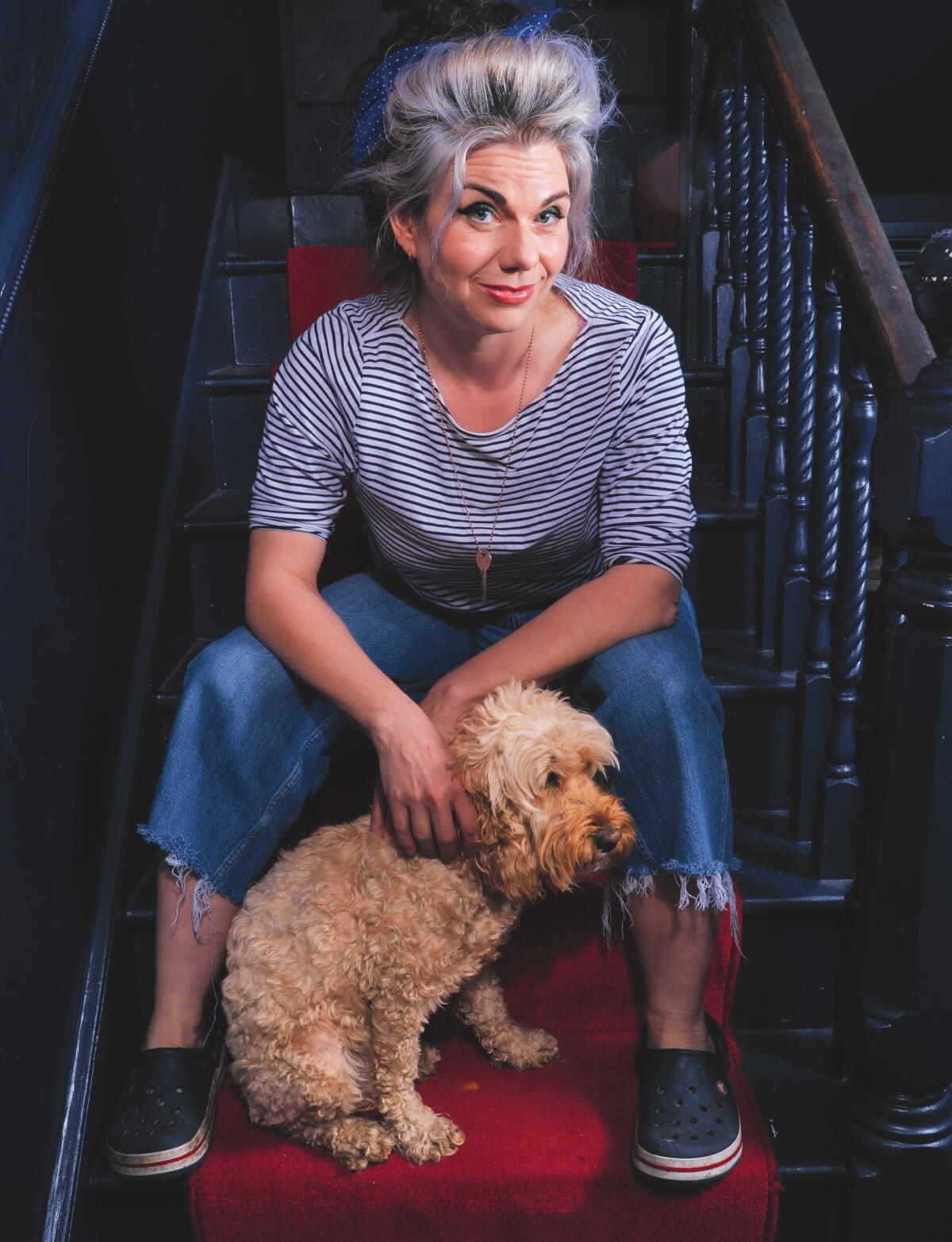
For years, stress followed Caitlin Moran around like bad weather. She liked it that way, as anxiety became a spur to productivity in her career as an author and columnist. While it’s hard to find fault with the results — nine bestselling books, household name status in her native England, a passel of awards for her sharply amusing take on modern life and its discontents — Moran was starting to fall into the deep end of her bruised and battered psyche.

Her new book “How to Be Hopeful” details how Moran threw herself a lifeline and pulled out of her self-made abyss. I recently chatted with Moran about health, happiness and the benefits of having a pet.

You’re reading Book Club

An exclusive look at what we’re reading, book club events and our latest author interviews.

✍️ Author Chat

How is your anxiety these days?

For the last 10 years, it felt like my life could be over at any minute because I never felt safe. I didn’t realize how abnormal that was. Now that I’m talking to readers at events about this book, I realize how common it is. A good half of the people that approach me at readings tell me that I have described their anxiety exactly as it is. But they have never talked about it or shared it with anyone. I have had a few people tell me they were planning on killing themselves. There’s a lot of crying, a lot of hugging. It’s quite intense.

I feel like your fan base wouldn’t be inclined to buy self-help books.

Self-help books are often quite dry and humorless. Those books seem to have all the answers, which they then drill into their readers. You know, “You must do this one thing in order to feel better.” My book is a memoir, and I’m not exactly someone who has it all sorted out. So it’s not impersonal and I hope it’s funny. I don’t ever want to take advice from someone who isn’t making jokes.

Caitlin Moran talks about her new memoir, telling The Times that she is "not exactly someone who has it all sorted out."

Caitlin Moran talks about her new memoir, telling The Times that she is “not exactly someone who has it all sorted out.”

(Dora Paphides)

You write about how your anxiety was a great source of productivity, that it allowed you to generate pages. How is that working out now that you’ve quelled your stress somewhat?

Anxiety was a good friend to me and it fueled my writing, but it wound up being the sort of friend you have to say goodbye to. Panic and anxiety turn up when your brain thinks you need it to save yourself, and it releases these powerful neurotransmitters like cortisol into your brain. But I never just stepped back and asked myself, do I need to be anxious right now? Or have I in fact gotten out of the trouble that caused the anxiety to begin with? When I figured out how to turn off the anxiety, and turn off the drug tap that was feeding me these chemicals, I thought I would never be able to write. But it turned out I didn’t need it. I’m writing more than ever before, because I’m not spending all my time battling these voices in my head.

You target social media, specifically Twitter/X, as a driver of anxiety. But you are a public figure, so I’m assuming you have some obligation to have a social media presence.

I had over a million followers on Twitter at one point, but then it started to get dark. You’re always going to offend or upset someone, no matter how hard you try not to. No one on social media has ever said, “You know what? I agree with you and I’ve changed my mind.” If you want to change things in the world, social media is not the way to do it. If you are fighting the good fight on Twitter, the anxiety attrition rate is horrible, whereas if you are contributing to a local charity, the attrition rate is much healthier.

In the book you talk about getting a dog, and how that has helped you.

Yes, she’s sleeping here on the couch as we speak. When we first brought her home as a puppy, I just kept praising her, and I realized I’ve been nicer to this dog than I’ve ever been to myself. Dogs are the best. They don’t care about Trump, or Zelensky, or interest rates. They will just remind you, we need to play. We need to go for a walk. We need to feel excited about the fact it’s raining. Simple things.

This Q&A was edited for length and clarity.

📰 The Week(s) in Books

Book jacket for "Look at Me" by Dustin Hoffman

Book jacket for “Look at Me” by Dustin Hoffman

(Los Angeles Times illustration; book jacket from Simon Six)

Dustin Hoffman’s memoir “Look at Me” is a “gossipy, entertaining compendium of stories” that doesn’t leave out some of the uglier episodes of the film icon’s career, including his #MeToo moment in 2017, writes Julia M. Klein.

Klein also reviews Sam Wasson’s exhaustive biography of film director Frank Capra, which is “fond and admiring, even gushing at times” without papering over Capra’s missteps, including his “weak-kneed response to the anti-Communist crusade that roiled 20th century Hollywood.”

Novelist Alexander Maksik has written a father-daughter story called “Passengers” that takes place in LAX, of all places. “When my daughter was born, like many new parents, I found I could only think in clichés, and I didn’t try to resist them,” he tells Bethany Patrick. “But as time went by, I started to toy with the idea of writing a novel about a father and daughter in which the battle against cliché would become central, would take on huge, even life-saving, importance.”

Malcolm Gladwell has written a book called “The American Way of Killing,” about gun violence in America, and in typically Gladwellian fashion, he upends our expectations about the subject. “Gun violence isn’t just about gun violence,’ he tells Shelby Hartman. “It encompasses so many aspects of the human experience. Every time someone dies, somebody grieves, a mother, a partner is bereft. It involves violence which is a source of great horror and fascination.”

📖 Bookstore Faves

Zibby's Bookshop is on Montana Avenue in Santa Monica.

Zibby’s Bookshop is on Montana Avenue in Santa Monica.

(Photo from Zibby Media)

In the three years since Zibby Owens opened Zibby’s Bookshop on Santa Monica’s Montana Avenue, the inviting, carefully curated space has become a vital gathering place for bookish Westsiders. Owens, who has written three books and hosts the podcast “Totally Booked,” is committed to creating an intuitive space that functions as a curiosity incubator for committed bibliophiles and casual readers alike. I recently asked Owens what’s flying off her shelves.

How did you come to open the store?

I had essentially been testing out the concept of a bookstore in my apartment. I was having frequent events and I had book fairs twice a year. I would invite over everybody I knew, and people would leave with books. So I was testing out curation and events and book sales without even knowing it. And it had always been my dream to own a brick-and-mortar store.

You organize your inventory according to how people tend to shop for books, which is according to mood, or perhaps a genre they are interested in.

We have curation by emotion and topic. It’s designed for discoverability. So we have individual shelves of 20 books or so, which will focus on different topics. Perhaps you feel like being outdoors, or you saw a film but you want to read the book that it was adapted from, or you want a book to make you cry, or to cope while you’re reeling from divorce. We make it easy for you to find what you need.

You also feature books that might otherwise slip between the cracks.

I wanted to put better known books alongside undiscovered gems. Because having been on the other side of the equation, I know how hard it is to get discovered if the big publishing machine is not pushing you.

What’s selling right now?

“Hollywood, Ending” by John Green, “A Court of Splintered Harmony” by Sarah J. Maas, “Peck and Peck” by Bonnie Garmus and Gloria Steinem’s memoir “An Unexpected Life.”

Zibby’s Bookshop is located at 1113 Montana Ave. in Santa Monica.
Source link

Long live the liberal arts! In this new heist novel, academics get the last laugh

In Jim Ruland’s twisty and mordantly funny novel “Mightier Than the Sword,” four academics toiling in the English department at a tiny college in Flagstaff, Ariz., fall way off the tenure track by committing heists. Beset by a college culture that venerates football and disparages the liberal arts, Ruland’s working class strivers are barely scraping by, and vent their frustration by striking at the very heart and soul of a rah-rah student body that venerates jocks and can’t distinguish Billy Collins from Phil Collins.

Ruland is also an acclaimed nonfiction writer; his book “Corporate Rock Sucks” is the definitive history of L.A.’s great punk record label SST. I recently talked to Ruland about Flagstaff, fiction and football.

You’re reading Book Club

An exclusive look at what we’re reading, book club events and our latest author interviews.

✍️ Author Chat

What is it about heist stories? They have eternal appeal, it seems.

The idea of people getting away with something is always appealing, right? There’s a mixture of motives, and many of the stories have characters that you don’t expect to be involved in such a thing, which is the case in my novel.

It’s even more engaging for the reader when it’s poor lovable saps trying to pull off something big.

In my book, the main characters aren’t even very good writers. I didn’t want this to be the kind of story where their exceptional literary gifts make them master criminals. These are working-class teachers who are victims of the class struggle, and they are being exploited by the university. They have this pretense of respectability, but they are treated poorly.

Your novel takes place at a fictional college in Flagstaff, Ariz. You taught at Northern Arizona University in Flagstaff, right?

I did teach for three years in Flagstaff — two years as a teaching assistant, and one year full time, because how could I turn down the allure of a low five-figure salary?

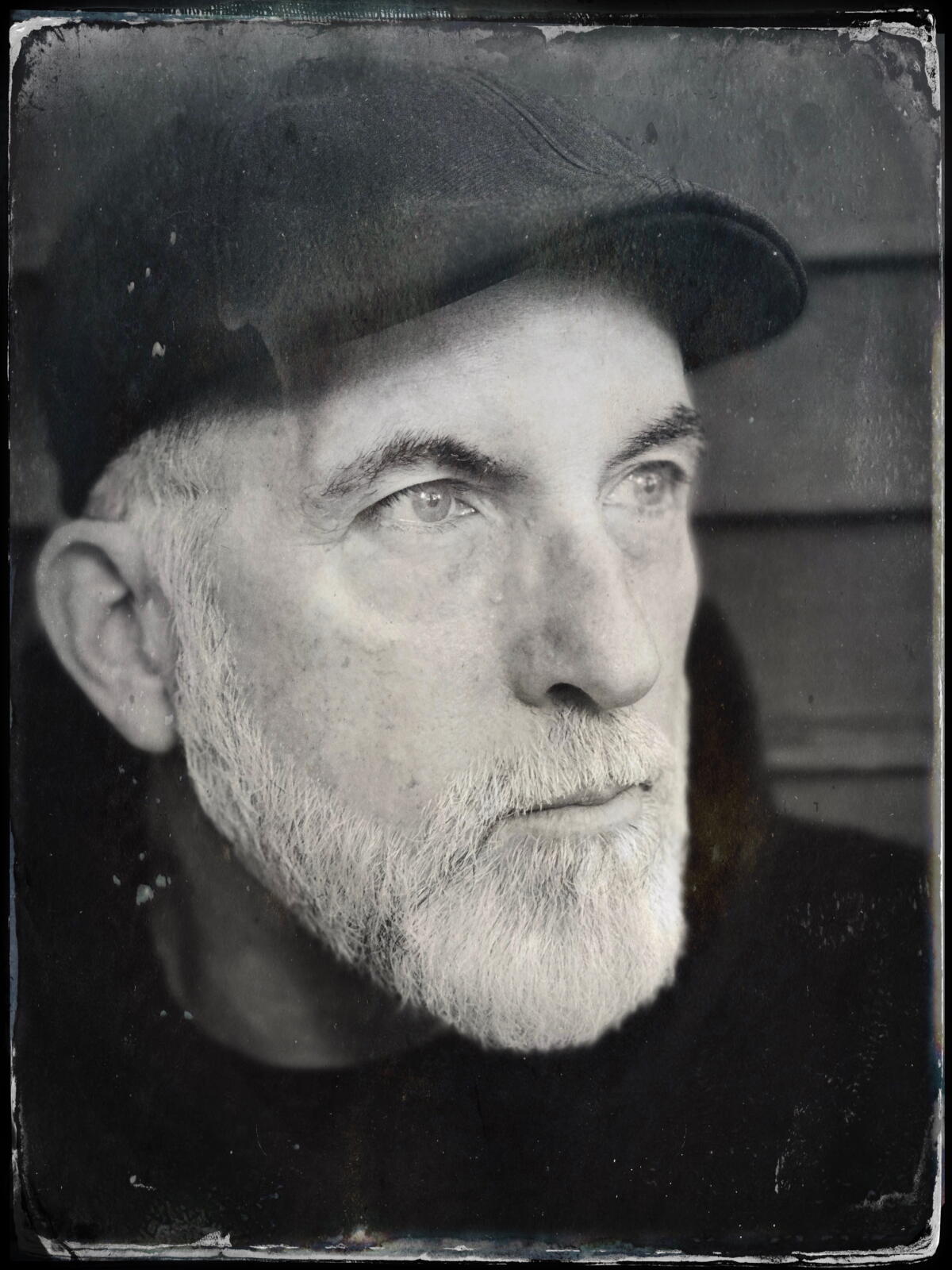
Author Jim Ruland

Author Jim Ruland

(Edward Colver)

In the novel, the school is all about sports culture. The administration pumps all their money into the football team, while the English department languishes.

The book is set in 1993, and that was the beginning of the growth of creative writing classes at colleges. And it was a big money maker for a while in the ‘90s until the growth stalled, and all of that stopped. The idea of a heist at a football game was that it was the next step up from robbing a bookstore. I like unusual settings for big heists, like Steven Soderbergh’s film “Lucky Logan” where the characters rip off a racetrack. Or [Stanley] Kubrick’s “The Killing,” which is also a racetrack theft that I allude to in the book. I’m not so much trying to critique football other than make the obvious swipes at it. It’s more like: Here’s this venue where you’re going to have a lot of money and people who are enthusiastic about violence.

Your novel is an ensemble piece, shifting between four major characters. How is that for you?

I really love that aspect of it. It’s almost cinematic. You can get someone in trouble and then move to the next point of view, then some time passes and you can go back.

You tend to toggle between fiction and nonfiction. Does one inform the other, or are they different muscles?

I think they help each other. When I run into something in fiction that I don’t know, I’m more apt to just push forward, instead of getting lost in a research hole, which can happen in nonfiction. I’ll just dig in and know I can figure out the answer later.

It’s definitely a case of the grass being greener. When I’m in the middle of a fictional story, I’m like, “Man, it would be really easy just to write what actually happened here.” And then when I’m working on a nonfiction book and hit a snag, I think, “I’d really love to make something up right here.”

What crime novels do you admire?

The Richard Stark novels by Donald Westlake. I loved those and reread them all before writing my book.

This Q&A was edited for length and clarity.

📰 The Week(s) in Books

The book cover for "Redemption" shows a power lines disappearing into the sunset.

(Los Angeles Times photo illustration; book jacket from Knopf)

Lawrence Wright, one of America’s greatest investigative journalists, turns his forensic eye to the death penalty in the U.S. in his new book, “Redemption.” Yet according to Julia M. Klein, Wright’s book makes for a baggy read. “Wright sometimes loses the thread, indulging in digressions that detract from his study of transformation and redemption,” she writes.

Anna Holmes, founder of influential feminist website Jezebel, has written a slim, potent book called “The Power of No,” about the power of a woman’s right of refusal in the public and private spheres. “I don’t purport to be good at it,” she tells Meredith Maran. “But I’m more cognizant now of wanting to say it, at least.”

A scant four years after publishing her Pulitzer Prize-winning stunner “Demon Copperhead,” Barbara Kingsolver has returned with “Partita,” a love story about musicians that is also “a meditation on how a composition is different each time a musician plays it,” according to Heather Scott Partington.

Finally, Catapult Books, a beloved local indie publisher with a national reputation, is being sold, reports Emily St. Martin.

📖 Bookstore Faves

Sunlight shines into a book store.

Annabelle’s Book Club L.A.

(Felicia Lasala)

Annabelle’s Book Club L.A., the brainchild of Annabelle Chang, is decked out like a birthday cake at a “sweet 16” party, all bright pastels and a beribboned book display shaped like a flowing Victorian dress. The store’s inventory is primarily geared to young readers, the inventory subdivided by categories like “Riveting” and “Intoxicating.” Annabelle’s location on a busy stretch of Studio City’s Ventura Boulevard has made it one of L.A.’s most Instagrammable bookstores. In an email exchange, Chang tells us what’s selling at her store.

What prompted you to open the store?

I’ve always been an avid reader, and during the pandemic, I received so many requests for book recommendations that I decided to start an Instagram account and blog to share some of my favorite books. In early 2022, I also started selling books at pop-up events like the L.A. Times Festival of Books. After seeing the overwhelmingly positive response, I started to think about creating a store where my curation would be more permanent. As I researched bookstores in L.A. and across the country, I realized that there weren’t any Y.A.-focused ones, and I wanted to fill that gap in the market.

Romance and Romantasy are the hottest genres in publishing. Why do you think that is so?

I think romance has always been popular because love, connection and the desire to be understood are fundamental to the human experience. Women’s stories, especially those focused on their desires, have historically been dismissed as unserious, but romance has always had a huge, loyal readership. Now, the publishing industry recognizes that these books aren’t just culturally relevant, they’re commercially successful.

As for romantasy, I think BookTok has been a huge catalyst. TikTok really gave users a way to share their enthusiasm for these books and find a community of like-minded readers. What might once have felt like a niche interest has become a total cultural phenomenon.

Who are your customers?

Our store is young adult-focused, but we truly aim to have something for everyone. I’m thrilled that our customers are readers of all ages, whether it is kids who are just beginning to discover their love of reading, teenagers coming by with their friends after school, or adults shopping for their book clubs.

What’s selling right now?

“Hollywood Ending” by John Green, “Threshing Day” by Rebecca Yarros and “Exit Party” by Emily St. John Mandel.

Everyone seems to be writing off books, yet it seems that those obituaries are highly premature. Why will books continue to prevail in a digital world?

In a digital world, teenagers and young adults are gravitating toward physical media and the genuine connection it offers more than ever. Every day, teenagers visit Annabelle’s Book Club L.A. to browse new titles with their friends, attend our author events or simply unplug from their phones and read in our book nook. It’s also been so exciting to see the resurgence of independent bookstores in L.A. and beyond. It’s a true testament to the unmatched power of storytelling to bring us together, especially in a digital world.

Annabelle’s Book Club L.A. is located at 12200 Ventura Blvd., Studio City

Source link