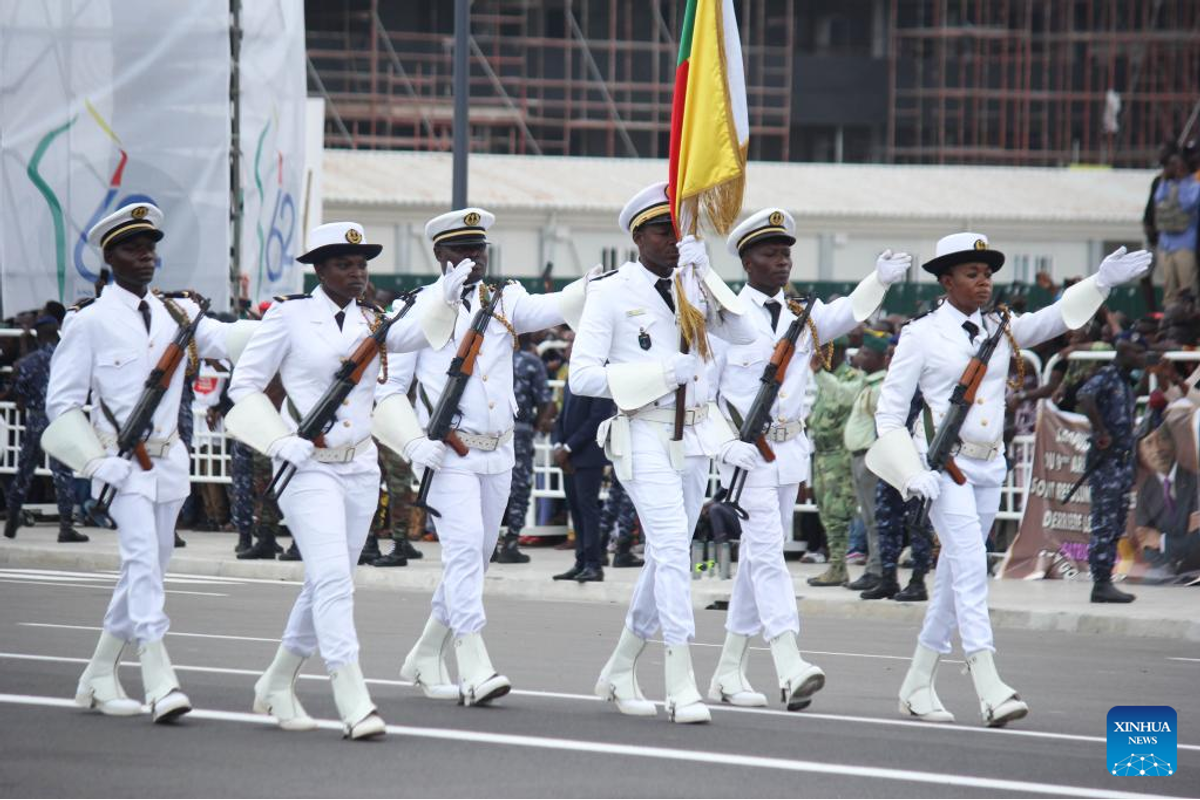
Benin is voting for its next president. The election is between Benin’s current Finance Minister Romauld Wadagni and the opposition candidate, Paul Hounkpe.
Al Jazeera’s Ahmed Idris is in Cotonou, explaining what’s at stake.
Benin is facing harsh economic conditions and security challenges that its new leader will have to address.
Published On 12 Apr 202612 Apr 2026
Voting is under way in Benin’s presidential election with long-serving Finance Minister Romuald Wadagni expected to win in the absence of a major challenger.
Polls opened at 7am (06:00 GMT) on Sunday and will close at 4pm (15:00 GMT). More than 7.9 million people are registered to vote, including 62,000 in the diaspora.
Recommended Stories
list of 3 itemsend of list
Backed by the two main parties in the governing coalition and the outgoing president, Patrice Talon, Wadagni, a 49-year-old former Deloitte executive, is being challenged by Paul Hounkpe, an opposition figure and former culture minister whose campaign has been low-key.
The member of the Cowry Forces for an Emerging Benin party got on the ballot with help from lawmakers of the two main ruling coalition parties after they refused to endorse the candidacy of Rene Agbodjo, head of the opposition Democrats party.
Talon, 67, is barred from running again after two terms in office and is expected to step down with a legacy of mixed results: economic growth, which reached 7 percent last year, but also a clampdown on the opposition and his critics. In December, a group of military officers also tried and failed to overthrow Talon’s government.
The new president will have to address major challenges, including a huge gap between the poor and well-off. The poverty rate is estimated at more than 30 percent, and many Beninese complain that the benefits of the economic growth over the past decade have not trickled down to them.
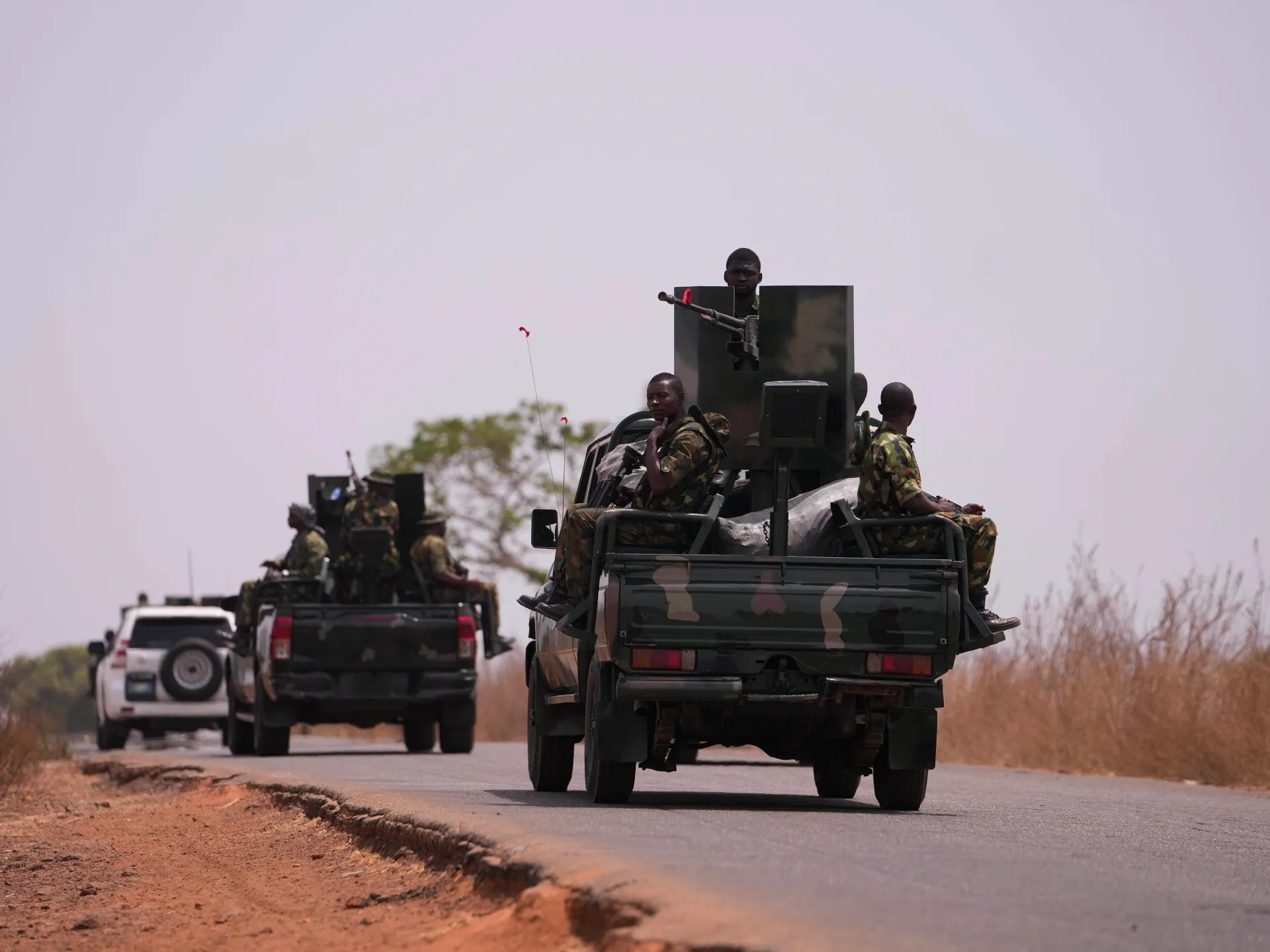
Benin’s economic growth will also depend on improving security and stabilising the country. Benin has been the hardest hit among coastal West African states by armed fighters from the Jama’at Nusrat al-Islam wal-Muslimin (JNIM), an al-Qaeda affiliate that has made major gains in the central Sahel region.
Wadagni has promised to deliver on bread-and-butter issues like expanding access to potable water and guaranteeing emergency healthcare regardless of ability to pay.
“The next phase of the country’s development will be the eradication of extreme poverty. That is one of his priorities,” one of Wadagni’s close associates told the AFP news agency.
‘A climate of fear’
Hounkpe has noted that the situation for many of Benin’s nearly 14 million people has not improved under previous leaders and has promised to bring about change.
“If we make progress but none of us can afford three meals a day, we haven’t made any progress. Yes or no?” he asked at a rally this month.
He has also decried what he described as a climate of fear as the political space for the opposition shrinks and the ruling coalition holds every seat in the National Assembly after the Democrats failed to win 20 percent of the vote in the last legislative elections, the threshold needed to enter the National Assembly.
Provisional results are expected on Tuesday in an election in which many people said they will not vote.
“I won’t go and vote. This election is not inclusive. You cannot talk about genuine democratic competition when some key political players are barred,” Arnold Dessouassi, a 39-year-old teacher, told AFP.
Reporting from a polling station in the port city of Cotonou, Al Jazeera’s Ahmed Idris said voting has been slow and none of the ballot boxes is full.
“There is a low turnout of voters on election day,” he said.
He added that this low turnout is due to controversies surrounding the accreditation for candidates to run in the election.
Other voters have spoken of the presidential election as a formality and urged Wadagni to deliver on his platform.
“Once President Romuald Wadagni is at the head of this country, I would like him to promote and help young people to find work because we have many young graduates on the streets driving ‘zem’,” 34-year-old teacher Marcel Sovi told the Reuters news agency, using local slang for motorcycle taxis.
Christelle Tessi, a 40-year-old trader, added that Wadagni should focus on improving security in the north, where JNIM killed 54 Benin soldiers in one attack a year ago and another 15 in an attack last month.
“What is happening in northern Benin is that our brothers are being killed, and if a soldier goes there on a mission, it is his body that comes back,” she said.
Benin will elect a new president on Sunday in a race that is shaping up to favour the chosen successor of the governing party, which has been in power for the past decade.
Outgoing President Patrice Talon, 67, is barred under the constitution from running again after two terms in power, and will step down with a legacy of mixed results: economic growth, but also a clampdown on the opposition and critics.
Recommended Stories
list of 3 itemsend of list
The small West African nation with a population of 14 million has also seen increasing numbers of attacks in its north as Sahel-based armed groups expand their territories towards the Atlantic coast.
Benin is sandwiched between its bigger neighbour, Nigeria, to the east and Togo to the west. The coastal country has increasingly gained attention as a tourist destination as more people from the African diaspora flock to its windy beach towns.
A former French colony, Benin retains French as its official language. Fon, Yoruba, Bariba, and Fulfulde are among the largest local languages spoken in the country.
Here’s what to know about Sunday’s election:
What’s happening?
About eight million eligible voters will choose a president for the next seven years.
Candidates will need to secure at least 50 percent of the votes; otherwise, a run-off will be called on May 10 between the top two candidates.
There are only two candidates, however.
The main opposition party, the Democrats, failed to get enough lawmakers to sponsor a candidate, so it is not on the presidential ballot. It earlier failed to win any seats in legislative elections in January.
Reporting from a governing party campaign event in the commercial capital, Cotonou, this week, Al Jazeera’s Ahmed Idris said the mood there was lively, but that it did not represent feelings in all of Benin after the main opposition party was sidelined.
“Most supporters of President Talon feel that this is a walkover …The only question will be whether the voting population will turn out in huge numbers. The last election we had only 50 percent,” he said.
Romuald Wadagni, Benin’s finance minister and the governing party’s candidate for the presidential election, speaks during the presentation of his platform in Cotonou, Benin, on March 21, 2026 [Charles Placide Tossou/Reuters]
Who is running?
Romuald Wadagni: The 49-year-old is presently the country’s finance minister and is the candidate of the governing alliance between the Progressive Union Renewal (UPR) and the Republican Bloc (BR).
A former Deloitte executive, he is expected to take a comfortable lead on Sunday, having been endorsed by current leader Talon, with whom he says he has a “father-and-son” relationship.
Wadagni, in his campaign, has touted the benefits of continuity that would come with his win. He has highlighted achievements under Talon, like tripling the national budget and posting the cotton-exporting country’s highest GDP growth rates in more than two decades.
He is also proposing new development hubs and expanding healthcare access.
Under Talon, “I had the honour of managing one of your most precious assets: your money,” Wadagni told supporters on the campaign trail in March. “I will do the job with the same seriousness and dedication,” he said.
On Friday, the final day of campaigning, he told supporters in Cotonou: “We are going to move forward, go even further with what began before your very eyes,” referring to a decade of economic transformation in the country.
People ride past an electoral campaign billboard of Presidential candidate Paul Hounkpe of FCBE (Force Cauris pour un Benin Emergent) ahead of the presidential election scheduled for April 12, in Cotonou, Benin, on April 2, 2026 [Charles Placide Tossou/Reuters]
Paul Hounkpe: The 56-year-old is the only opposing candidate.
A former teacher, he represents the Cowry Forces for an Emerging Benin party (FCBE).
He was formerly the culture minister under the government of ex-leader Thomas Boni Yayi of The Democrats. He also ran as a vice presidential candidate in the 2021 elections.
He is seen as a moderate, and has pledged to reduce the price of basic products and to secure the release of opponents imprisoned under Talon’s administration.
Hounkpe has campaigned on the perceived sidelining of citizens despite economic growth and flashy tourism projects under the current government.
What are the key issues?
Continuing Talon’s economic legacy
Economic growth sustained for a decade has been among Talon’s strongest achievements, and Beninese will be looking for a president who can sustain or improve on that.
Benin’s economy grew 7 percent in 2025 according to the International Monetary Fund, making it one of the region’s steadiest economies.
That’s driven by investments in trade, agriculture and infrastructure, including port expansions in Cotonou.
On the other hand, benefits have not been equally distributed across the country as poverty remains widespread in rural areas, especially in the poorer north.
Rising insecurity and political stability
Benin made headlines in December after a group of military officers attempted but failed to seize power. About 100 alleged coup planners are still in jail awaiting trial.
The coup leaders’ key complaints were the deterioration of security in northern Benin, where al-Qaeda and ISIL(ISIS)-affiliated armed groups from neighbouring Sahelian countries have increasingly launched attacks on communities. They said soldiers were “neglected” on the front lines.
Benin’s north is close to the tri-border area, a hotbed for armed violence. Lack of security cooperation with Niger and Burkina Faso, both now led by military leaders, has worsened the situation.
An attack by the al-Qaeda-backed Jama’at Nusrat al‑Islam wal‑Muslimin (JNIM) on Benin military posts last year killed 54 soldiers. Last month, another 15 were killed.
Candidate Wadagni has promised to defend the north by creating municipal police forces to guard border towns.
Shrinking democratic space
Talon has also been accused of dragging the country back into an era of autocracy, especially after authorities shut down cost-of-living protests in April 2024.
Beninese treasure the country’s reputation as one of West Africa’s most stable democracies in recent times, but critics say that has changed under Talon, and opposition groups accuse him of using the justice system to undermine other parties.
A constitutional reform in November extended presidential terms from five to seven years. It also established grounds for the president to nominate candidates to the Senate, which further raised the bar for opposition parties to enter parliament.
In January’s parliamentary election, Talon’s two allied parties controlled all 109 seats in the National Assembly.
Rights groups like Human Rights Watch and Amnesty International have meanwhile accused Talon’s government of cracking down on dissent through arbitrary detentions, restrictions on demonstrations, and pressure on independent media.