FDA expands sunscreen options, adds bemotrizinol

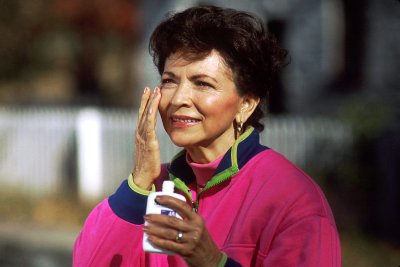
A woman applies sunscreen to her face. On Tuesday, the U.S. Food and Drug Administration said it will allow the first new permitted ingredient in over-the-counter sunscreens in 20 years. File Photo by Bill Branson/National Cancer Institute
June 9 (UPI) — The U.S. Food and Drug Administration on Tuesday added bemotrizinol to the list of permitted active ingredients in over-the-counter sunscreens, the first addition to that list since the 1990s.
The Department of Health and Human Services “is advancing innovation by bringing a new sunscreen ingredient to the U.S. market for the first time in 20 years,” HHS Secretary Robert F.Kennedy Jr said. “Bemotrizinol has been used safely in Europe for decades, and FDA’s action will increase competition and consumer confidence in sunscreen products.
The FDA said the ingredient has low levels of absorption through the skin and into the body and is generally recognized as safe and effective for adults and children 6 months old and older.
The American Chemical Society said that BEMT blocks ultraviolet A and ultraviolet B light rays and was first used in sunscreens in the European Union in 2000, with Canada, Australia and some countries in Asia following suit soon after.
UV B rays have more energy, cause visible sunburns and are the ones blocked by most U.S. sunscreens today. However, UV A rays can also cause skin cancers, the American Cancer Society said. They also cause skin cells to age and can cause indirect damage to cells’ DNA. The ACS said about 95% of the UV rays that reach the ground are UV A rays.
The FDA said an over-the-counter monograph drug, such as a sunscreen product, can enter the market without an approved drug application if it meets certain requirements. DSM Nutritional Products LLC submitted an OTC monograph order request to add BEMT, at concentrations up to 6%, as a new active ingredient in the OTC monograph for sunscreens. The FDA proposed to add BEMT in December, and the public could submit comments through Jan. 26.