A scenic train journey from London to Geneva via Paris offers some of Europe’s best views – and can cost half the price of a plane ticket at around £135 return
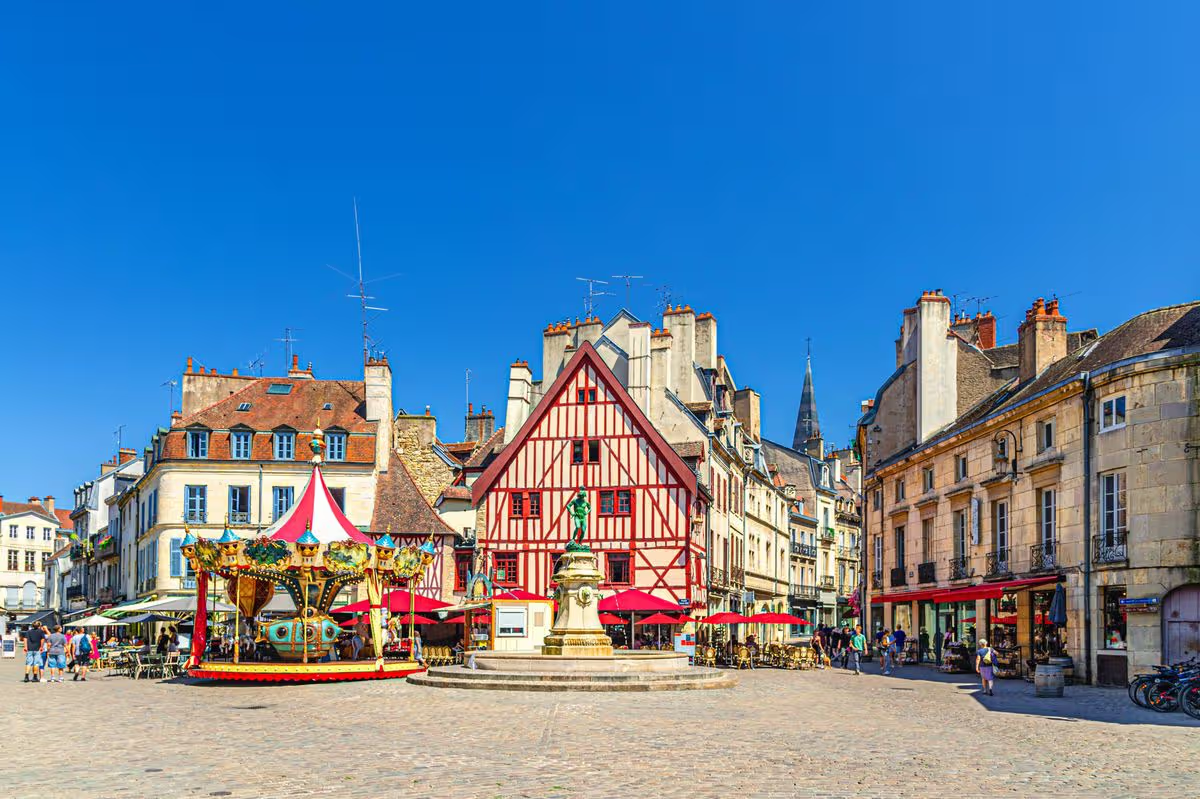
The service trundles through charming towns including Dijon(Image: Aliaksandr Antanovich via Getty Images)
A rail journey linking three capital cities boasts some of Europe’s most breathtaking scenery—and could set you back half the price of a flight.
The Eurostar and France’s TGV whisk passengers from London to Geneva, making the very most of a trip that spans three nations. The train departs from St Pancras with a change in Paris before heading onwards to the Swiss capital.
It’s a nearly six-hour journey in total, passing through Montbard, Dijon and Bourg-en-Bresse, offering stunning vistas of national parks and rolling countryside. Passengers can hop off in Paris to discover the city—with landmarks including the Eiffel Tower, Notre-Dame, the Champs-Élysées, Sacré-Cœur and the Louvre.
Once the train pulls into Geneva, visitors can take in Lake Geneva, Cathédrale de Saint-Pierre, the Palais des Nations, the botanical gardens and the Brunswick Monument.
From there, it’s also a brief trip to the nearby Alps, with day excursions available from the city to ski or snowboard on the slopes and savour the local restaurants. The train can be half the price of a plane ticket. According to Skyscanner, return flights this month cost up to £394.
During the same period, return train tickets cost around £135, half the price of a flight, according to Trainline.
Families can also cut costs by purchasing Interrail passes—£482 for a family of four to travel on four days within one month, plus seat reservation charges. And expense isn’t the sole advantage.
According to the Times, four passengers journeying from London to Geneva and back by rail produce approximately 44kg of carbon emissions, compared with 108kg by car and 1,608kg by plane. The Intergovernmental Panel on Climate Change states that, to maintain climate change within sustainable limits, each person has a carbon “budget” of 1,500kg of carbon emissions per year.
Although there are a number of factors that determine how polluting different forms of travel are, such as the type of electricity production used to power trains, riding the rails is typically greener than flying.
Back in 2023, carbon calculations made by the Rail Delivery Group found that travelling by rail from London to Edinburgh creates 10 times fewer carbon emissions than by car and 13 times fewer than by plane.
One of the tricky considerations for passengers is generally cost, with budget airlines such as Ryanair, easyJet and Wizz Air typically offering cheaper plane tickets than the equivalent train tickets.
The route from London to Geneva shows that it is not always the case. The price gap between the two forms of transport may also be getting smaller.
Travellers are facing rising airfare costs and reductions in flight schedules as the conflict in the Middle East causes oil prices to soar, with concerns that ticket prices could remain elevated for months even if the war de-escalates. Cathay Pacific, AirAsia and Thai Airways are among a growing number of airlines increasing fares to offset the hikes.
While train services are also impacted by rising oil prices, fuel tends to be a much smaller proportion of their operating margins than with airlines.
While Sinead McIntyre and her family found bliss on the Turkish Riviera.
Sign up for the Travel newsletter
Thank you!
En-Joia the view from your hotelCredit: Supplied by hotel.
Tenerife
Senior Writer Donna Smiley discovered foodie heaven in the Canary Islands.
As three pilot whales playfully leap in and out of the sea, everybody on our boat is grinning.
Have a whale of a time on a boat tripCredit: Getty Images/iStockphoto
We’re only 30 minutes into our two-hour boat trip from Puerto Colón, so there’s still plenty of time to have a dip in the crystal waters ourselves, before we sip wine and eat tropical fruit as the sun sets on our journey back to shore.
A two-hour boat trip costs £51 per person for up to nine people (Bluejacksail.com).
We’re staying at Joia El Mirador by Iberostar in Costa Adeje, 10 minutes’ drive away, where all rooms are suites with four-poster beds.
With its lagoon-style pool dotted with palm trees and setting right on one of Tenerife’s best golden-sand beaches, this five-star adults-only hotel makes quite the impression.
So too does the family-run artisanal goat’s cheese farm, Quesería Montesdeoca in Adeje, 15 minutes’ drive away.
With lush green fields and a glimpse of neighbouring islands La Palma and La Gomera from its rooftop, we learn all about the cheese-making process, which is done by hand, and meet the goats and sheep who love being stroked, before the all-important tasting.
Back at the hotel’s gourmet restaurant El Cenador, we tuck into a 10-course tasting menu, £72 per person.
The Japanese menu at Kensei is not to be mist!Credit: Kensei Japanese / Instagram
Every course is delicious and crafted with local produce, and it ends in style with a passion fruit cake served under a cloud of candy floss, which dramatically dissolves when the sauce is poured over.
Come morning, cooked-to-order eggs benedict, pastries and cappuccinos made with coffee beans from a local farm don’t disappoint, either.
The bus to the island’s capital of Santa Cruz takes 50 minutes, where we find a branch of Zara with prices cheaper than at home, plus more foodie gems.
We wander the charming streets of the old town and grab a barraquito – a local-speciality coffee of condensed milk, Licor 43 (a Spanish vanilla liqueur), espresso and frothed milk, at rooftop cafe La Escala (@Laescala tenerife).
Then we make our way to Colmado 1917, a tiny Michelin-flagged restaurant offering delights such as salted fish with black potatoes and anchovies, £6, and beef tartare, hand-chopped before each serving, £11, with a red from northern Tenerife, £5 a glass (Colmado1917.com).
Finishing our getaway in style, we hit Japanese restaurant Kensei, a short stroll along the beach from our beds (Kenseijapanesetenerife.com).
Its low-temperature wagyu with teriyaki sauce, celeriac purée and lotus root chips, £40, is a delicious end to an equally delicious mini-break.
FYI
Seven-night B&B stays at Joia El Mirador by Iberostar cost from £1,210 per person, with flights and transfers (Easyjet.com/en/holidays).
Tourist travel cards cost £8 a day for unlimited buses and trams (Titsa.com).
Turkey
Editor-in-Chief Sinead McIntyre, husband Alistair and twins Riley and Harris found bliss on the Turkish Riviera.
Diving into the clear-blue sea, my 14-year-old twins are in holiday heaven.
Playa on the beach right outside your hotelCredit: Supplied by hotelGet all decked out at Corendon Playa KemerCredit: Supplied by hotel
After trying to outdo each other holding their breath underwater, they emerge to slump in our cabana and have their fill of the nuts and fresh fruit on offer.
As I have learned over the past year or so, keeping two teenagers happy on holiday can be a challenge.
But Corendon Playa Kemer on the Turkish Riviera, close to Antalya, has risen to the challenge – and then some.
We arrive at our five-star hotel, a 45-minute drive from Antalya airport, in the early hours of the morning after flight delays, so don’t really take in our surroundings as we wearily check in.
It’s only when we wake and head to breakfast at the main Zephyranthes restaurant that we marvel at the view – outside is a terrace with two sparkling swimming pools and, just beyond, the pristine sandy beach.
The hotel is all-inclusive and the food is excellent.
For breakfast, we feast on eggs, pastries, yoghurt and mountains of fruit, while lunch and dinner consist of grilled fish and meat, salads and desserts, including melt-in-the-mouth chocolate mousse and sticky-sweet baklava.
Playa Kemer beach has a series of wooden jetties jutting out to the sea, lined with luxe four-poster sunloungers and cabanas.
We decide to splash out and book a cabana, from £18 per day, and it proves a winner with Riley and Harris.
Turkish Rivier-aah vibes are guaranteedCredit: Getty Images/iStockphoto
They especially enjoy taking selfies with the view behind them to send to friends, as well as seeing who can jump the furthest into the sea off the jetty.
Every afternoon, chilled music plays and there are also live performances, all contributing to a feeling of total relaxation.
As does the on-site spa, where I have a Turkish hammam massage, leaving me feeling completely rejuvenated.
Treatments cost from £61 for 90 minutes.
One evening, we indulge in fresh prawns, mussels and calamari, with Turkish bread, dips and salads at the alfresco Pier Seafood A La Carte restaurant, surrounded by twinkling lights.
The day after is spent parasailing around the bay, £157 for two people.
Riley and I head high into the air on a tandem pulled behind a speedboat and can see for miles – a scary, but exhilarating experience.
And no trip to Antalya is complete without a visit to 40m-high Karpuzkaldiran Waterfall, where the Düden River plunges over a cliff into the Mediterranean.
We look in awe at the men fishing far below on the rocks as the spray from the waterfall covers them.
From there, we head to the old town and browse the bustling bazaar for amazing spices and Turkish Delight, before heading back to our hotel with two delighted teens in tow.
FYI
Seven-night ultra all-inclusive stays at Corendon Playa Kemer for a family of four cost from £1,500 (Corendonhotels.com).
Visit this beautiful seaside which is a wonderful place to spend time by the coast, with the countryside nearby. There are beaches, forests and so many cultural activities to do
Christine Younan Deputy Editor Social Newsdesk
04:10, 04 Apr 2026
If you’re coming from London, it’s less than an hour by train(Image: Getty Images)
Fancy a little adventure where you can enjoy the sights and smell of the coast? Whether you’re up for a walk in the forest or to visit the village named the “prettiest in England”, it’s nice to venture outside of the borough at times.
Now with spring in full swing, there’s no better way to spend your long bank holiday weekend than by heading to the seaside. This location has been named the “most beautiful in the UK” with beaches, forests and so much more to enjoy. Not only can you spend time by the coast, it’s also close to the countryside. And the place people are raving on about is Folkestone, Kent.
This is a wonderful place to spend time by the beach where you can visit gorgeous little cafes along the cobbled streets, tuck into some fish and chips by the sea, and take in the views.
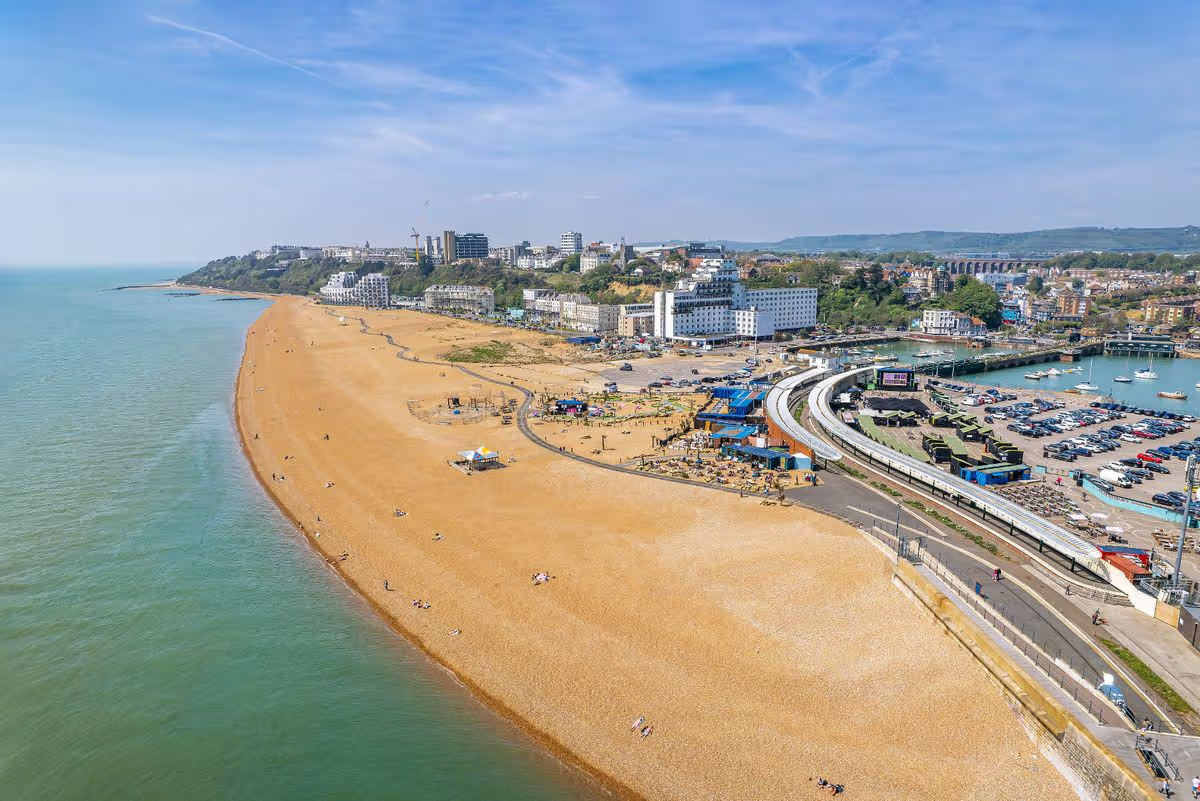
Folkestone is a coastal town on the English Channel, it lies on the southern edge of the North Downs at a valley between two cliffs.
A travel account on TikTok recently named the location as the “most beautiful seaside in the UK”.
In the caption, the user added: “Is this the cutest seaside town in the UK?” Meanwhile a lot of people in the comments section claimed to “love Folkestone”, while another added: “How beautiful.”
Content cannot be displayed without consent
How to get to Folkestone:
If you’re travelling by car from London, it’s around 75 miles (about a 1 hour and 40 minute drive). It’s along the M20 which includes tolls.
Meanwhile, the fastest journey would be a train from London St Pancras to Folkestone Central, which takes about 56 minutes. A return ticket could cost around £30-£40 depending on times.
London Charing Cross is also another option to take the train from, although this adds nearly an hour onto the travel time.
What to do in Folkestone:
The seaside town offers a mix of sandy beaches, creative art and pure coastal charm.
There are many attractions for all members of the family, from the bustling Harbour Arm for food and drinks to the scenic Lower Leas Coastal Park.
Also the Creative Quarter’s has the Old Street for cafes, independent boutiques and coffee stops.
And don’t forget the Zig Zag Path where you can walk the restored Victorian path which offers dramatic views through the shady, landscaped greenery.
You can also check out the Folkestone Artworks where there’s over 70 contemporary artworks dispersed across towns, beaches and cliffs.
The island is said to have more pubs per capita than anywhere in Ireland, and perhaps the British Isles. It also has a nightclub run by two OAPs that opens on demand
Every June, hundreds of teenagers descend on Pub Island.
The youth of Donegal leave their hilltop farms, hop on a ferry and head to this mythical land of pints and pork scratchings.
On the busiest days, when Coláiste Árainn Mhóir’s summer Irish course is in full, céilí-practising swing, hundreds of teenagers fill the island’s youth hostels, B&Bs and campsites. In the evenings, once lessons end, they head for the pubs.
The island, actually called Arranmore, is said to have more pubs per capita than anywhere in Ireland, and perhaps the British Isles.
Alongside the hordes of youngsters, the island’s 480 permanent residents, mostly sheep farmers and fishermen, sustain six pubs and an iconic nightclub that opens at midnight if the boozers close.
Smugglers is an institution on Arranmore, introducing generations of islanders and visitors to disco at its late-night parties. Opening hours are irregular.
Partygoers either check Facebook for a “disco this Friday” post or knock on the door at the witching hour and hope. The OAP pals who run it have been known to give in and open up.
An unusual quirk of the island is its lack of police. That leaves plenty of scope for debauchery and no need to call last orders until everyone is done.
“The morning after is like D-Day,” one mainland resident told me, recalling teenage nights on the island before her group caught the ferry home, trying to hide seasick hangovers from parents waiting at the other end.
In the UK, the miserable state of the pub industry is well known. Rising costs and falling demand mean hundreds close each year. The Republic is faring little better. More than 2,100 pubs have shut since 2005, about a quarter of the total. An average of 112 close annually, rising to 128 a year between 2019 and 2024, leaving 6,498 licensed pubs.
Against this backdrop, I travelled to Arranmore to see why this Atlantic community is bucking the trend.
Before arriving, the ferry weaved through an archipelago of islands that narrowed the channel to a handful of meters, providing a view of the derelict Rutland. The once-booming island of over 1,000 was deserted when the herring fisheries collapsed, leaving a crumbly but intact high street. Although officially population-less, it is possible to rent a holiday home on the abandoned island.
Aaranmore hoved into view a minute later, a patchwork of fields dotted with sheep rising up on the hill above Leadgarrow port. The island’s main attraction is the lighthouse, which stands on the western cliffs above sea whipped into a deadly froth. It’s a striking scene, but one that requires a fair tolerance for cold and wind.
Unlike the main strip over in the east, which is protected from the worst of the weather. Here you will find the pubs.
My crawl began up the hill at the charming pods at Aaranmore Glamping, my home for the weekend, which came complete with an incredible sea view and a hot tub. From there, a short walk took me to Neilys.
The only inland pub, it has two sides. In winter, it serves locals dropping in for a quick drink after work. In summer, it caters to tourists with cocktails, craft beer and a pizza van.
Next was Early’s, closest to the ferry and opening onto the beach. A three-generation family business spanning 60 years, it is now run by sisters Kayla and Aisling, who recently took over from Jerry. It is the place for generous plates of food and a chat with the owners, whatever the weather. On quiet evenings, the refurbished band and darts hall sits empty while punters gather around the fire.
At 9.30pm, I made my way to Phil Bans, roughly 10m down the road. It was packed to the rafters with well over 100 people of all ages, many of them wearing football jerseys in support of the national team. Even Ireland’s eventual penalty heartbreak wasn’t enough to kill the good vibes in the cheery room.
Sadly, that was all the pubs I was getting for the night. Smugglers wasn’t opening, and the other pubs have given way to Phil Ban’s superior big-screen setup.
So how does a place support so many pubs?
Being a beautiful island with a lot of weather means many visitors come and are then pushed inside for a warming tipple.
But more than that, Aaranmore is just a very friendly place. In 2017, the community council wrote an open letter to the world, urging people to move there to stop the dwindling population from falling even further. Many, from across Ireland’s 80 million diaspora and beyond, answered the call.
It’s a place that’s used to people from all over coming and staying for more than a quick drink.
This European city has been crowned the world’s best destination for food lovers
Isobel Pankhurst Audience Writer
08:26, 03 Apr 2026
This city has been named the best destination for foodies(Image: Getty)
One European city has been crowned the ultimate travel destination for food lovers. A new study by Titan Travel examined cooking class availability, ratings, pricing, and worldwide search demand, concluding that the Italian city of Florence reigns supreme for gastronomically-inspired getaways.
Florence wasn’t the only Italian gem to feature on the list either, with Italy dominating all three top spots: Palermo claiming second place and Bologna taking third. Rome then tied for fourth alongside Portuguese capital Lisbon, with Venice, Brussels and Barcelona all sharing fifth place.
Researchers discovered that Florence boasts a staggering 213,300 culinary experiences, encompassing 231 cooking classes, 74.5% of which hold a four-star rating or above.
And depending on when you book, Skyscanner has flights to Florence starting from just £31.
Weighing in on the growing trend of foodtourism, and how it has become an increasingly significant factor for holidaymakers when planning their trips, Cassie Stickland, Product Manager at Titan Travel, said: “Today, travellers want to do more than just see the sights.
“They want to really experience a destination. Food is such a fantastic way to do that, because it connects you directly to local life and tradition. Taking a cooking class abroad allows you to do something, learn something, and return with a valuable skill.
“When planning your 2026 travels, look for tours that include a hands-on cooking experience. The best ones start with a market visit to get ingredients and end with you sitting down to enjoy what you’ve created.
“The most rewarding experiences tend to come from local chefs and family-run kitchens, where you’ll not only learn recipes but hear the stories behind them.”
World’s best cities for food
1. Florence, Italy
2. Palermo, Italy
3. Bologna, Italy
4. Lisbon, Portugal and Rome, Italy
5. Brussels, Belgium, Barcelona, Spain, and Venice, Italy
The city could be an affordable option for those who want to work from home or start a remote business, as it’s more affordable than some of the surrounding areas, and offers access to beautiful countryside
Remote workers looking for a new home should consider this city(Image: Mike Kemp/In Pictures via Getty Images)
A city in the south west that offers affordable housing, a pretty centre, and easy access to the countryside for lunchtime walks has been named the UK’s best place to start a remote business.
A study that looked at factors including rent prices, number of post offices, business survival rates, and other information useful for remote workers identified Gloucester as the top place to work from your laptop.
The Roman city topped the list, compiled by payment provider Dojo, narrowly beating Norwich and Southampton. Carlisle and Swansea.
The average private rent in Gloucester came in at £1,069 in January 2026, and three-bedroom homes can be bought for under £200k according to Rightmove listings. The city has a five-year start-up survival rate of 43% thanks to local support networks, meaning entrepreneurs have a better chance of their business succeeding in this area.
Gloucester’s Forum in the Kings Quarter is one example of projects being run by the council to support local businesses. A multi-million-pound regeneration scheme has seen co-working spaces and offices open in the area, so if you get bored with homeworking, you can rent a desk.
Best Cotswolds holiday cottage deals
This article contains affiliate links, we will receive a commission on any sales we generate from it. Learn more
The Cotswolds is famous for its rolling hills, honey-coloured villages and quintessential English charm. Sykes Cottages has a wide range of places to stay, starting from £38 per night.
Just a short walk away is Gloucester Quays, another area of the city that has been given a complete makeover. Once an industrial wasteland, it has been turned into a pleasant waterfront promenade full of shops, restaurants and cafés, perfect for a lunchtime walk.
Around 88% of the Gloucester area also has access to ultrafast broadband – over 100 Mbps – a practical consideration that many homeworkers need to take into account.
If you’re just passing through the city, there’s plenty to see. Visit Gloucester Cathedral, a grand, imposing building that dates back to the 11th century and is the resting place of King Edward II. History buffs will also love the National Waterways Museum on the docks, where they can see vintage narrowboats up close and a replica lock.
Nature in Art is also worth a visit. Set in the grounds of a 17th-century mansion, this unique art trail includes paintings, sculptures, and many unique works.
Perhaps best of all, Gloucester is set within the Cotswolds, an area of outstanding natural beauty made up of rolling green hills, meadows, and charming traditional villages. You’re just a short drive away from country walks and cosy pubs to explore after work or at weekends.
Visit Haresfield Beacon just south of the city, a walk that combines woodland and grassland, with a one-mile circular walk that enjoys beautiful views. WWT Slimbridge is nearby on the banks of the River Severn. This wetland wildlife reserve includes flocks of flamingos, pretty swans, and mischievous otters, which can be seen in their natural habitat. The best way to see it is on a canoe safari. Grab a paddle and follow the trails to see wetland creatures up close.
Have a story you want to share? Email us at webtravel@reachplc.com
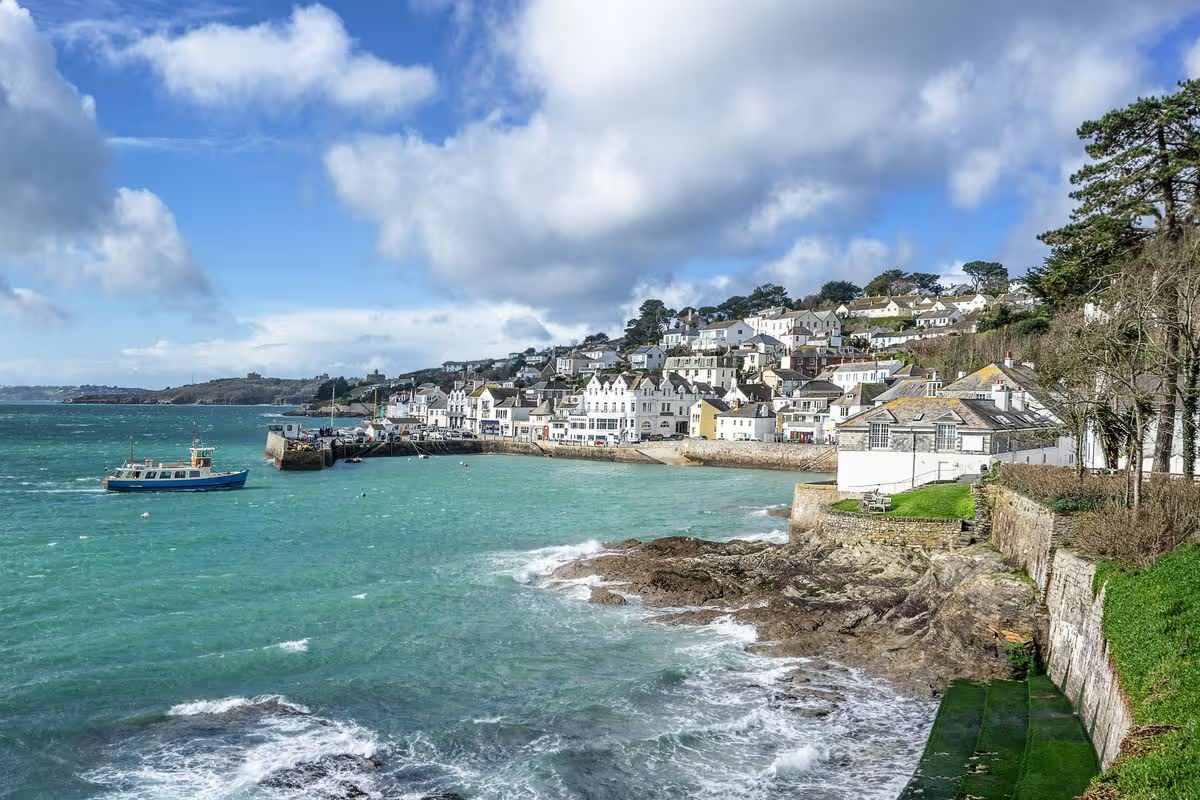
This stunning Cornish village is a must-visit destination with breathtaking views, award-winning Michelin Guide dining, and a vibrant community spirit
This stunning Cornish village is a must-visit destination with breath-taking views, award-winning Michelin Guide dining, and a vibrant community spirit(Image: GordonBellPhotography via Getty Images)
We won’t describe this village as a ‘hidden gem’ because its gloriously stylish existence is hardly a secret – in fact, its appeal among the wealthy and well-known only adds to its elusive allure. Nestled snugly at the very tip of a breathtaking peninsula, when we say the vistas stretching out from this hamlet are unrivalled – we mean every word.
If the promise of extraordinary views isn’t sufficient to tempt you into paying a visit, there’s a wealth of further attractions to consider: fresh locally-sourced produce, Michelin guide restaurants serving world-class cuisine, a spectacular waterfront setting and a vibrant community spirit in abundance. All of this and more make the fishing village of St Mawes in Cornwall a certified must-visit destination.
Situated at the furthest point of the Roseland Peninsula, this jewel in South Cornwall ranks among Britain’s most coveted holiday spots, frequently earning the nickname ‘the St Tropez of England ‘. It has everything you could possibly desire in a short break – a crystal-clear cove with waters reminiscent of the Caribbean, charming and colourful cottages brimming with seaside character, eateries impressive enough to leave you in a food coma, and the ribbon topping off an already remarkable package – a castle.
It comes as little shock, then, that The Times recently named it among the ‘most beautiful places to visit’ in England. What is shocking is that it hasn’t yet been completely swamped with tourists – unlike St Ives or Padstow – and that’s likely due to its remote location, which takes time to reach.
Getting to this Cornish village isn’t impossible by any stretch, though – a picturesque car ferry or 40-minute journey from St Austell or Truro will transport you there with ease, reports the Express.
What makes the seaside village special
St Mawes boasts a rich maritime history, having been constructed around a beautiful sheltered harbour on the eastern side of the Fal Estuary – undoubtedly one of Britain’s finest sailing locations.
Upmarket waterfront eateries enhance this hamlet’s irresistible charm, with one of the hotels (Hotel Tresanton) even providing its own yacht, Pinuccia, for charter.
If you need convincing, look to the royals. St Mawes has become a certified Royal Family favourite, with King Charles and Queen Camilla regularly visiting the village during their yearly trips to the area as the Duke and Duchess of Cornwall.
St Mawes appeared to have won over the previous generation of royals, too, with the village described as one of Queen Elizabeth II and the Queen Mother’s preferred destinations during their journeys aboard the Royal Yacht Britannia. The appeal is universal (and spans the generations), it seems, as in recent years, Prince William and Princess Kate have also been spotted bringing their family to this coastal gem.
Foodie heaven
For a village with a population of roughly 700 people, give or take, St Mawes punches well above its weight when it comes to dining options, enough to make even the most food-obsessed cities envious.
Dishing up gloriously fresh seafood using locally sourced Cornish produce alongside stunning harbour views, The Idle Rocks is a Michelin Guide restaurant that’s guaranteed to leave a lasting impression if you pay it a visit.
Another waterfront treasure, Hotel Tresanton, was awarded one of the inaugural Michelin Keys in 2024, celebrating extraordinary hotels worldwide. The cocktails and ambience of the venue are frequently described by guests as ‘top-tier,’ and the spectacular view of St. Anthony’s Lighthouse is the cherry on top.
St Mawes Bakery is another essential stop, particularly for lunch, while the neighbouring St Mawes Seafood Bar serves… well, unrivalled seafood. Evening drinks can be savoured at The Rising Sun or the more traditional Victory Inn, while the St Mawes Hotel is equally brilliant for a sit-down meal. Cafe Chandlers is a fantastic spot for coffee and delectable, freshly baked goodies. Harbourside dining at The Watch House in St Mawes is, quite simply, a no-brainer.
Things to do in the seaside haven
Top of the agenda is exploring St Mawes’ distinctive, clover leaf-shaped St Mawes Castle – a magnificent example of Tudor craftsmanship and engineering. Nearly circular in design, this stunning historical landmark was constructed by Henry VIII.
Children, in particular, will be captivated by the numerous cannons positioned across the castle’s terraced lawns, which command views over the beautiful bay. Boutiques and galleries add an artistic flair that any prosperous village needs to truly distinguish itself, and the Waterside Gallery is an excellent destination.
Summers Beach offers a wonderful sheltered location for swimming (not always guaranteed in Cornwall), while Tavern Beach, nearer to the castle, is ideal for some traditional rock-pooling.
Harbour Beach, situated right in the heart and only reachable at low tide, is the spot to visit with your four-legged friends. It’s worth noting that there are no lifeguards on duty in St Mawes. Be sure to visit Lamorran House Gardens, featuring its charming bridges and cascading waterways.
There’s no shortage of activities in this Cornish village, making it the perfect choice for your next UK break.
A QUAINT English village that feels “like stepping into a postcard” has been named among the most beautiful in the world.
With no new houses since the 1600s, Castle Combe at the southern edge of the Cotswolds is already one of the most stunning in the UK.
Sign up for the Travel newsletter
Thank you!
Castle Combe has been named one of the most beautiful small towns in the world, by Conde Nast TravellerCredit: GettyThe small village is on the southern edge of the Cotswolds and features honey-coloured stone buildingsCredit: Getty
And now the southwest Wiltshire village has been named by Conde Nast Traveller as one of the most beautiful small towns in the world, and out of 53 destinations on the list, was the only UK spot to feature.
Conde Nast Traveller stated: “[T]he town is a well-preserved stretch of Cotswold stone cottages and old pubs and churches.”
The village has even played a star role as a set in some films, including Stardust, Steven Spielberg‘s War Horse and the original Dr Doolittle film.
One of the best ways to experience the village is to set off on a walk.
Key points to stop by include Water Lane, where you can see a good example of the local architecture using Cotswolds stone.
One recent visitor even said it was “like stepping into a postcard”.
In the centre of the town, drop by The Market Cross – a four-column stone structure that used to act as the focal point for the village’s weekly wool markets.
Perhaps the most popular spot in town with tourists is the historic stone bridge that crosses the River Bybrook.
The bridge is Grade II listed and can be found in the lower village.
If you fancy something sweet but don’t want to sit inside, then visit Ellen’s Cottage where you will find a small cake stand in front of a charming brown cottage door.
Visitors can help themselves to cake from the stand and pop payment through the letterbox.
There’s usually a bucket full of cold drinks as well, though if you want a hot drink you can knock the door and ask for one, with a cappuccino costing £2 and a latte costing £2.50.
If you want somewhere where you can sit inside and drink your coffee, then head to The Old Stables Coffee Shop which serves a variety of cakes for £4 a slice.
The best walk to explore the village is by walking, and on the way you can grab a cake from Ellen’s CottageCredit: Google mapsThere are also a couple of pubs where you can grab a tipple, such as The White HartCredit: Getty
If you are more in the mood for an alcoholic beverage with a side of pub grub, then you can head to The White Hart or The Castle Inn – both of which are just a few steps from the Market Cross.
You can also stay at The Castle Inn if you want to spend a night in the idyllic village.
Rooms cost from £145 a night and you can expect period features in each room, such as original beams.
For another option of where to stay, Conde Nast Traveller recommends booking into The Manor House.
Dating back to the 14th century, The Manor House boasts quiet gardens, a Michelin restaurant and an 18-hole golf course.
Rooms in The Manor House feature dark, wood panelling and ornate wallpaper and a one-night stay in April costs from £276.
If you want to enjoy a night in the village you can by staying at The Castle Inn from £145 per nightCredit: Alamy
Our favourite UK hotels
*If you click on a link in this box, we will earn affiliate revenue.
Margate House, Kent
This stylish boutique hotel is in a seaside townhouse, a short walk from Margate’s coolest bars and restaurants. Decked out with plush velvet sofas, candles flickering and striking independent art, inside feels like a warm welcome home. Rooms are stunning, especially the ones that give you a glimpse of the sea.
The Alan looks extremely grand, being built into a beautiful Grade II listed building. Spread across six floors, with 137 rooms, each one looks like a fancy design magazine. From the concrete coffee tables to the pink plastered walls, the industrial-inspired designs perfectly replicate the history of the city.
This historic hotel has welcomed the likes of Charles Dickens and Lillie Langtry through its doors. Rooms have richly-patterned carpets with super soft bed linen and premium toiletries in the bathroom. Go for a superior room for extra goodies including bathrobes and snack boxes.
This Cambridge hotel is in the ideal spot, within walking distance to bars, shops and hotspots like the university colleges and Parker’s Piece. The inside couldn’t be prettier, with huge stained glass windows, grand chandeliers, and rooms with enormous clawfoot bath tubs.
There are a number of things you can do in the surrounding area as well.
For example, you could use the village as a base for a Cotswolds walk, through Bybrook Valley and the North Wiltshire hills.
Just four minutes down the road, you will find Castle Combe Racing Circuit where you can watch karting races for as little as £10 per person.
Like adrenaline? Well, the race circuit also offers a number of experiences where you can drive a car of your choice from movie cars, classics and supercars from £84.
The market town of Chippenham is a 14-minute drive away as well, where you can browse independent shops, have a walk through Monkton Park next to the River Avon and learn about the town’s history at Chippenham Museum.
To include a city in your trip, you could head to Bath, just half-an-hour away.
Alternatively, you could stay at The Manor House from £276 per nightCredit: Alamy
The UNESCO World Heritage city is famous for its Roman baths and honey-coloured architecture, using the same stone found in Castle Combe.
Chippenham is just over an hour on the train from London, with a single ticket usually costing £25 per person.
To then get to Castle Combe, you can either jump in a taxi for 20 minutes or hop on one of the regular local Faresaver buses that take about 24 minutes to reach the village and cost a maximum of £3 per way.
Or if you want to keep exploring the Cotswolds, there is a tiny village with a popular garden centre and ‘dinosaur’ tree that welcomed a very famous A-lister this week.
Castle Combe is around 30 minutes from Bath or around an hour and a half on the train, then bus, from LondonCredit: Getty
IF YOU are looking for your next holiday spot, then you could head to a European city two hours from the UK that has just got new flights from a major airport.
Budget airline easyJet has launched flights from Manchester Airport to Montpellier in France.
Sign up for the Travel newsletter
Thank you!
easyJet has launched new flights to Montpellier in FranceCredit: GettyThe flights to the French city will operate twice a week on Mondays and FridaysCredit: Getty – Contributor
The flights will operate twice a week on Mondays and Fridays, throughout the summer season and cost as little as £26.99 per way.
The historic city of Montpellier is found in southern France, around six miles from the Mediterranean Sea.
The city is often dubbed one of the sunniest in France thanks to boasting an average of 300 days of sunshine per year.
The city’s Mediterranean climate means that it has mild winters and hot, dry summers.
Because the city has a lot of sunshine, there is a lot to do outdoors in Montpellier including heading to the medieval Old Town where you will find narrow, winding streets with historic townhouses and a number of independent boutiques.
Another highlight of the Old Town is heading to Place de la Comédie, which is a lively square with the Three Graces fountain.
You can also head to Saint-Pierre Cathedral which dates back to the 14th century and has a fortress-like appearance.
In the Antigone district, which is mostly pedestrianised, has lots of fascinating architecture to explore, including copies of famous Greco-Roman sculptures.
For a mix of nature and history, venture to the Botanical Garden, which is the oldest one in France, founded back in 1593.
The garden features a bamboo forest, orange trees, a lotus pond where you might spot some carp and a greenhouse with a myriad of cacti.
You can even make a wish in the wishing tree called Phallaire.
If you fancy a nice walk, head to the Saint-Clément aqueduct.
Built in the 18th century, the dual-level aqueduct is responsible for the fountains littered across the city.
The city benefits from over 300 days of sunshine a yearCredit: Getty
Each Tuesday and Saturday, you will also be able to catch a market at the foot of the aqueduct.
If you don’t mind heading slightly out of the city, then there are a number of chateaux you can explore, including Château De Flaugergues – a 19th-century chateau with Flemish tapestries and pretty gardens.
It costs £9.98 per person to visit.
The city has a number of hotels to choose from, including Pullman La Pléiade Montpellier Centre, which costs from £166 per night.
The hotel can be found in the centre of the city and features a panoramic rooftop pool and restaurant.
Alternatively, you could head to the Radisson Blu Hotel for £107 per night, which also boasts an outdoor pool as well.
When out and about in the city, you can expect to spend about €55 (£47.75) on a mid-range three course meal for two and between €4 (£3.47) and €5 (£4.34) for a beer.
The flights cost from just £26.99 per wayCredit: Getty
Kevin Doyle, easyJet’s UK Country Manager, said: “We are really pleased to be celebrating our inaugural flights to the fantastic city of Montpellier, just a stone’s throw from the Mediterranean coast.
“By introducing new connections from Manchester on our unrivalled leisure network, customers from across the northwest can now enjoy even more choice this summer to book and travel with ease.”
Stephen Turner, Chief Commercial Officer at Manchester Airport, said: “Montpellier is not currently served by any other airline so passengers planning a holiday to the south of France this summer will have even more choice of destinations when flying from Manchester.
“We’re sure this new route will prove extremely popular.”
AS Brits frantically try and choose their summer holiday destination this year amid the Middle East crisis, let me sell you a slightly different place to go.
Lima, the capital of Peru, almost feels European, and has much cheaper food, hotels… and booze.
Sign up for the Travel newsletter
Thank you!
The city of Lima feels European but barely any Brits goCredit: GettyI visited last year and it became my new favourite destinationParque del Amor (Love Park) was inspired by BarcelonaCredit: Getty
The seaside city is the second largest desert city in the world (after Cairo) meaning barely any rain, and highs of 27C.
It is often overlooked as a travel destination, especially those heading straight over to Machu Picchu instead.
But despite just spending a few days in Lima myself, it became one of my favourite cities.
First up, safety – most of Peru is still safe to travel to, which includes Lima.
And as a young woman, I never felt unsafe while walking around early for a coffee or late at night for a drink.
Our guide told us this huge change in recent years – when it wasn’t so safe – is due to the number of community officers around, who are on hand to help tourists who visit.
When it comes to exploring the city, I was transported to the surf towns of Portugal by the huge surfing community in Lima.
It has some of the best waves in the world, and the sheer number of cyclists with boards on their bike and surf shacks offering lessons was huge.
Then there is the colourful Barranco neighbourhood, named one of the best in the world and known for its colourful street art that is everchanging.
Here is where you’ll feel its Latin American routes, with live music on the streets and bars selling the famous Pisco Sour cocktails.
Time Out said: “It’s long had a bohemian vibe, famously fantastical murals, world-class art galleries, boutique hotels and hopping bars.
“And while it’s lost none of its wild roots, the area is now incubating some of the best restaurants in the world”.
Maido was named the no.1 restaurant in the world last year, while I headed to Mayta which often makes the top 40.
I opted out of the tasting menu, but still managed to enjoy a delicious deconstrusted paella, a side and a glass of wine for under £50.
The ‘godfather of modern Peruvian cuisine’ Gastón Acurio told local media: “Lima is a gastronomic destination coveted by kitchen lovers.
“Not only because of its restaurants, which compete equally with Europe, but because behind this recognition there is something deeper — a city that has made its cuisine parallel to everyday life.
“From award-winning restaurants to carts, from ceviche shops to chifas, eating in Lima is one way to travel the entire country in a single day.”
Want to eat on a budget? You can easily get snacks and drinks for under £5 from food stalls.
I managed to find an Emoliente (a sugary hangover drink) as well as a famous pork sandwich and sweet doughnuts called ‘Picarones’ for under a fiver altogether.
Or some restaurants offer the “menú del día” or menu of thte day for not much either.
Usually including a drink, soup and main dish, this can be found for under £4.
Beers can also be found for around £1.50 in local bars as well.
Picarones, a typical Peruvian dessert cost a few poundsCredit: GettyBarranco was even named one of the world’s coolest neighbourhoodsCredit: Getty
Our favourite loveholidays deals
*If you click on a link in this box, we will earn affiliate revenue.
Belpoint Beach Hotel, Antalya, Turkey
This hotel is surrounded by the forests of the Toros Mountains, giving your outdoor swim a pretty impressive backdrop. With a pool decorated with colourful parasols and a waterslide, this pretty resort also has plenty to do indoors, including a sauna and a Turkish bath to unwind in.
The huge resort has 363 rooms, each with a balcony or terrace overlooking the sea or gardens. All-inclusive food includes three daily meals in the main buffet restaurant, as well as drinks and snacks such as pizza, hot dogs and burgers at the pizzeria snack bar. If you fancy getting out and exploring, the town centre is a 10 minute drive away.
Terramar Calella puts you right in the thick of the action, with the sea on one side and the buzzing promenade on the other. Here, days start with sea swims and end with sunset drinks. Platja Gran Calella is the area’s largest beach, and here it’s right on your doorstep.
This Corfu resort was built for families, buzzing with entertainment and activities. With four adult pools, three kids pools, a mini waterpark and a beach on your doorstep, there’s plenty of spots for you to stretch out on a sun lounger and for the kids to splash around. And as the day winds down to a close, the party starts with mini discos, Greek dancing, lively quiz nights and karaoke.
Otherwise make sure to try fantastic chocolate and coffee shops, with Lima being one of the top exporters to the rest of the world for both.
Free activities include the Spanish-style Love Park, inspired by Park Güell in Barcelona or the Museum of Art (MALI) on Tuesdays.
And the Historic Centre of Lima has elements of European architecture too, dating between the 16th and 19th centuries.
If you don’t mind sharing a room, you can find hostel beds for as little a £13 a night.
But if not, even hotels can be found for around £33 a night, such as Ibis – so £16.50 each a night when sharing.
The only thing getting in the way of Lima becoming a popular destination with Brits is the getting there.
LATAM previously had direct flights from London Heathrow to Lima but these were suspended back in 2023, with no current plans on when they will return.
Instead, Brits have to fly via Europe so with changes in Madrid, Amsterdam or Paris.
This takes the trip from around 12 hours to 16 hours, and costing around £500 return.
But there is some good news – the new Jorge Chávez International Airport in Lima opened last summer, which is likely to encourage airlines to launch flights.
And airline LEVEL is launching direct flights from Barcelona to Lima from June.
So if you want to visit a unique city with surfing vibes, colourful neighbourhoods and insanely cheap food and drink? Add Lima to your 2026 list.
Being a seaside city, expect lots of surfers tooCredit: Imágenes del PerúThe best way to get to the city is via Madrid, Paris or AmsterdamCredit: Getty
THERE are plenty of beautiful islands around Greece, but you might not have heard of Andros.
It’s the second-largest island in the Cyclades and is considered to be one of the most beautiful, and underrated.
Sign up for the Travel newsletter
Thank you!
Andros is the second-largest island in the CycladesCredit: AlamyBeaches on the island look like they’re in the Caribbean, like Zorkos BeachCredit: Alamy
Andros has it all, with mountain landscapes, beaches with bright blue waters, lush greenery with waterfall trails, and a town classically painted in Greece‘s blue and white.
Visitors arriving by ferry will first come to Gavrio, on the northwest coast which historically was a fishing village.
Now it’s a lot busier and vibrant with plenty of tavernas, bars and hotels – however this isn’t the capital of the island.
An hour’s drive away from Gavrio is Chora, which literally means ‘main village’.
One visitor who blogged about their recent trip named Verde as a top place to grab a bite there.
Their top tip was to taste the Miss Pink cocktail, which is a mix of champagne, lime and grapefruit.
When it comes to drinks, on Andros, you can pick up a glass of wine from €3 (£2.60).
Along with its pretty village to explore, the real gems of this island are the beaches that are dotted along the coastline.
There are beautiful beaches too with white sands and bright blue seas.
One of the most popular north of Chora is called Zorkos Beach, which is also one of the island’s biggest.
One visitor said: “One of the best beaches I have visited in general in my life! Incredible waters, clear and a very quiet place even though it has a beach bar there!”
Another added: “Zorkos beach is just fantastic! Clean water and a very relaxed atmosphere. Perfect place to escape and enjoy the sea without a lot of people. We will definitely visit again.”
Other popular spots include Vitali Beach on the north eastern side of the island.
The beach is always fairly empty as it’s secluded and can only be accessed by a narrow dirt track – so it’s recommended to get there by motorbike or jeep.
Another spot which has crystal clear waters is Tis Grias to Pidima Beach, which has a huge rock stack off its shore.
The beach can be reached via a dirt road and steep trail, but lots of visitors say it’s worth a visit thanks to its beautiful views.
A glass of wine in Greece can cost as little as £2.50Credit: AlamyPithara Waterfalls is considered a ‘hidden paradise’Credit: Alamy
Heading inland, one popular activity for tourists on Andros is hiking to its waterfalls.
One of the easiest trails that takes around 10-minutes is to the Pithara Waterfalls, which is dubbed a ‘hidden paradise’ in Apikia.
Visitors say there’s enough water for a small swim, along with plenty of pretty viewing points from above the falls.
For those staying on the island, some hotels cost as little as £36 per night, which you can find on Booking.com.
The Ostria Hotel & Apartments has an outdoor pool, and is a few minutes walk away from Gavrio.
On Airbnb, pretty apartments start from £67 per night.
This one in Chora is within walking distance to the sea, as well as restaurants, bars, cafes, museums and art galleries.
When it comes to getting to the island, Brits will have to fly to Athens, which in May can be done for £25 with Ryanair.
From there, take a ferry across to the island which can be as quick as one hour with Seajets (with tickets from £30).
FROM the Highlands of Scotland down to the shores of Cornwall, Britain has plenty of historical sites and stunning nature to explore, featuring everything from fairytale castles to historic coastal houses.
Thanks to our Hols from £9.50, you can do it without breaking the bank too.
Sign up for the Travel newsletter
Thank you!
Find out where you can book a UK break from £9.50 to see some of Britain’s best natureCredit: Alamy
And what better time to book a scenic staycation, when thousands of new Sun holidays from £9.50 are set to be released this coming week?
Hols from £9.50 are set to be restocked this Tuesday, with thousands of new holidays AND new holiday parks – and you can get priority access with Sun Club.
If you fancy signing up to Sun Club to access the £9.50 Hols deals early, head tothesun.co.uk/club and join for £1.99 a monthor £12 for a year.
Once you’re a member, go to the Sun Club Offers huband find the Hols From £9.50 page.
Follow the link from the offers page, and you can book your break from midnight on Tuesday, March 31.
If you’re looking for some holiday inspiration, here’s our pick of some of the most beautiful sites across the UK that are oozing with history – plus where to stay nearby with Hols from £9.50.
Welsh countryside
With 17 holiday parks to pick from in Wales, Sun Hols from £9.50 has got you covered when it comes to finding a staycation in the Welsh countryside.
In North Wales, history buffs can take a trip to Conwy Castle (£11.80 per adult, £8.20 per child 5+) or Gwrych Castle (£11.50 per adult, £7 per child).
Meanwhile UNESCO-listed Conwy Castle is one of the best preserved medieval castles in the world.
The medieval Conwy Castle is a UNESCO World Heritage Site close to Parkdean Ty Mawr resortCredit: Alamy
The medieval fortress is over 700 years old, and you can climb its staircases to the top for fantastic views over the River Conwy.
Conwy Castle is only a 20-minute drive from Parkdean Resorts Ty Mawr, which boasts both seaside and mountain views.
Over in West Wales, you can explore magnificent landscapes listed as Outstanding Areas of Natural Beauty.
Sun reader Ian Peabody, 67, visited the Devil’s Bridge Waterfalls in the Cambrian Mountains – just half an hour’s drive from his stay at Parkdean Resorts Brynowen.
He said: “The waterfalls were spectacular. The path is very steep in places, so you do need some level of fitness and decent footwear.
“We did both sides, including the Punchbowl, which was easier to navigate and also provided better views of the Three Bridges.”
The Punchbowl and Three Bridges trail is a quick 15-minute route, which Ian recommends over the circular gorge trail. The Punchbowl is also the cheaper option – costing £2pp instead of £4.75 in peak seasons.
This quick but beautiful walk takes you to a breath-taking viewpoint where you can see three bridges built on top of one another, with waves crashing against rocks underneath.
Explore the rocky natural waterways of Cambria in WalesCredit: Alamy
In Porthcawl, South Wales, popular resort Trecco Bay is close to the stunning 850-acre estate Margam Country Park.
Chantelle Hawkins, Guest Experience Manager at Trecco Bay, has tips for holidaymakers who want to make a dent in exploring this sprawling estate.
She said: “At Margam Country Park, all you need to pay for is parking (around £7.70 all day), and then you have the whole thing for free.
“There are adventure playgrounds, wildlife, walking trails, you can take your dogs and they’ve even got a little cafe.
Plus if you’re got some spare change in your pocket for paid activities, there’s paddle boarding, kayaking and a Go Ape Treetop Challenge available too.
Stay with Hols from £9.50 at your pick of 17 holiday parks in Wales.
Scottish countryside
There’s a reason Scotland consistently ranks among the most beautiful countries in the world.
With waterfalls, lochs, mountains and caves to explore, there’s adventure waiting at every corner.
Plus you don’t need to be by the seaside to swim out in nature.
Daniel Start, author of Wild Swimming Britain, recommends the rivers river pools in Glen Etive in the Scottish Highlands for a true wilderness dip.
Author of Wild Swimming Britain Daniel Start recommends exploring Glen EtiveCredit: Michael Schofield
He said: “The river here winds through a dramatic glen, surrounded by soaring peaks and breathtaking Scottish scenery, offering a series of deep, clear pools with smooth rock ledges perfect for jumping.
“The water, crisp and tinged with peat, is invigorating and wonderfully clean, making for an unforgettable swim.”
Further south, on the edge of Loch Lomond and The Trossachs National Park, Rob Roy’s Bathtub is a massive plunge pool fed by the spectacular Falls of Falloch.
Daniel says: “Surrounded by woodland and steeped in Highland history, this inviting spot is named after the famed Scottish folk hero who is said to have hidden out here.
“Easy access just off the A82 and the beauty of the falls make it a great introduction to wild swimming in Scotland.”
You could try out wild swimming in the seas and rivers of ScotlandCredit: Alamy
Lossiemouth is known as “the Riviera of the North”, and its stunning waters are best explored by kayak, paddleboard, or even surfboard when the waves are large enough.
Silver Sands has a Blue Flag, golden beach to enjoy on hot days, as well as the scenic Fife Coastal Path which spans from Kincardine to Newburgh.
Stay with Hols from £9.50 at your pick of six resorts in Scotland.
Devon
Devon is packed full of natural and historic attractions, making it a top pick for your £9.50 holiday.
Devon is blessed with natural wonders such as its two national parks, Dartmoor and Exmoor, complete with its dark sky status.
You’ve also got five Areas of Outstanding Natural Beauty (AONB) to explore: Blackdown Hills, East Devon, North Devon Coast, South Devon and the Tamar Valley.
These are packed with natural and historical attractions, like the Tamar’s rich mining heritage landscape and the North Devon Biosphere, England’s largest sand dune system located around Braunton Burrows.
The Valley of the Rocks in North Devon is full of unique formations to explore by footCredit: Alamy
Among the top-rated historic attractions in Devon are Saltram, a Georgian house and gardens in Plympton, the 600-year-old Dartmouth Castle and Coleton Fishacre, a 1920s house with a grand garden in Kingswear.
Surrounded by Croyde’s crashing waves and spectacular cliffs, Baggy Point is an impressive headland in North Devon.
The 300-ft-high site has an interesting history.
During the Second World War, it was used by the American forces to train for the Normandy Landings (lookout for the telltale remnants of this past, including dummy pillboxes on the plateau).
Devon also has two national parks, Exmoor and Dartmoor.
Both free to visit, they are incredible places to explore whether on foot, by bike or even on horseback (guided rides available).
While landlocked Dartmoor is famous for its granite “tors” and ponies, in north-east Devon, Exmoor meets the coast, and is also the UK’s first dark skies conservation area.
Exmoor National Park is home to free-roaming herds of wild poniesCredit: Alamy
During the day, keep your eyes peeled for rare species, including butterflies, wild ponies and birds such as red grouse.
The Valley of Rocks and Lynton circular walk offers plenty of wildlife spotting and coastal views.
Stay with Hols from £9.50 at your pick of seven resorts in Devon.
All the ways to book a holiday from £9.50
There are five routes to book our Hols From £9.50
Book online: Simply collectcodewords printed in The Sun paper up until Wednesday, April 1. Then enter them at thesun.co.uk/holidays to unlock booking from April 1.
Book with Sun Club: Join Sun Club at thesun.co.uk/club for £1.99 per month or £12 for the year. Go to the Sun Club Offers hub and click through to the Hols from £9.50 page. You do not need to collect any codewords or Sun Savers codes. Booking opens for Sun Club members onTuesday, March 31.
Book with Sun Savers: Download the Sun Savers app or register at sunsavers.co.uk. Then go to the ‘Offers’ section of Sun Savers and click ‘Start Collecting’ on the ‘Hols From £9.50’ page. Collect TWO Sun Savers codes from those printed at the bottom of the Sun Savers page in the newspaper up until April 1. Then enter or scan the codes on Sun Savers to unlock booking.
Book by post: Collect TWO of the codewords printed in The Sun each day up until Wednesday, April 1. Cut the codeword out and send it back with the booking form – found in paper onApril 1 or online at thesun.co.uk/holidays.
Book with The Sun Digital Newspaper: Sign up to The Sun Digital Newspaper at thesun.co.uk/newspaper. Then download the Sun Savers app or sign up at sunsavers.co.uk, log in to Sun Savers with your Sun account details (the same email and password you use for your Digital Newspaper) and enjoy automatic access to Hols, without the need to collect Sun Savers codes daily. Booking opens onApril 1.
THERE’S no better way to make the most of the sun coming out than heading off on a beach holiday.
2026 is shaping up to be a record year for staycations, with Brits keen to stay close to home and explore the coastal gems across the UK.
Sign up for the Travel newsletter
Thank you!
You could stay at Sandaway Beach or Combe Martin Beach resort with Hols from £9.50Credit: Alamy
Plus with thousands more breaks being added to the Hols from £9.50 website, including dates in the spring and summer, its not too late to bag that last-minute holiday.
Hols from £9.50 are set to be restocked this Tuesday, with thousands of new holidays AND new holiday parks – and you can get priority access with Sun Club.
If you fancy signing up to Sun Club to access the £9.50 Hols deals early, head tothesun.co.uk/club and join for £1.99 a monthor £12 for a year.
Once you’re a member, go to the Sun Club Offers huband find the Hols From £9.50 page.
Follow the link from the offers page, and you can book your break from midnight on Tuesday, March 31.
If you’re looking for some inspiration on where to book, here’s some of our favourite beach resorts across the UK, plus our pick of £9.50 holiday parks nearby…
Combe Martin, Devon
Combe Martin is a small seaside resort in North Devon, home to Combe Martin Bay.
Combe Martin Bay is split into two main beaches: the sandy beach by the harbour, and the stony Newberry beach. Both are beautiful, with calm shallow waters protected by the cove.
As an Access for All beach, Combe Martin Bay is fully accessible. There’s plenty of parking, loos and even beach wheelchairs to rent with easy access down to the shore if needed.
This village also sits on the edge of Exmoor National Park, where wild horses roam the rolling hills and moorland.
Bring your bikes and cycle one of the many paths, go fishing in the rivers, or rent a canoe at Wimbleball Lake.
In the village itself, take your pick of cosy pubs like The Dolphin and The Pack O’Cards – pub culture is very big here, and you’ll be welcomed in to enjoy a local pint.
The coastal town of Looe is a working fishing port split into two halvesCredit: Getty
Looe, Cornwall
If you’re looking for a classic Cornish escape, Looe is the ultimate catch.
This traditional fishing town is split into two by a large arched bridge. The east side full of shops and pubs, and the west has a quieter feel with rockpools and beach walks.
Over in East Looe you can walk the Banjo Pier (named after its shape) and laze out on East Looe Beach, the main and largest beach in the area.
Or for somewhere quieter, head towards Hannafore Point in West Looe.
On the way you will come across a small stretch of sand which is also home to Nelson, the bronze seal statue that overlooks the village.
Popular pubs include The Jolly Sailor Inn and The Fishermans Arms, both of which serve local pints and food with a home-cooked feel.
The pink, thatched-roof cottage in Shanklin Old Village is the Old Thatch TeashopCredit: GettyThe beach at Shanklin in the Isle of Wight is accessible via a giant lift down from the townCredit: Getty
Shanklin, Isle of Wight
Shanklin in the Isle of Wight is popular for its pretty Old Village with thatched roof houses, as well as picturesque beach with dramatic cliffs.
Shanklin Beach sits on the south east coast of the Isle of Wight, and has a bustling seafront with arcades, fish and chip shops and an ice cream parlour.
Here you can have a go at the colourful Caddyshack 18-hole mini golf, which costs £8.50 per adult, £7.50 per child or £30 for a family of four.
The beach is just as colourful as the village behind it, lined with colourful beach huts and blooming flowers.
You can get up to the Old Village from the beach via a giant lift. Here you can wander its famous old-fashioned streets – plus the famous pink thatched-roof cottage which you’ll see on postcards.
The pink cottage is a tearoom called the Old Thatch Teashop, where inside you can sit down to traditional afternoon tea or cream tea starting at £7.95. Plus there’s even a fairy garden inside.
Tenby in Pembrokeshire, Wales is a coastal gem that offers boat trips to a nearby islandCredit: Getty
Tenby, South Wales
Tenby is a walled Welsh seaside town, famous for its rows of pastel-coloured houses and three soft sand beaches.
There’s several beaches to pick from at Tenby, from the two-mile long golden stretch of the South Beach to the smaller Castle Beach, which is popular for watersports.
There’s lots of family attractions here too, like the Folly Farm Adventure Park with its vintage fairground, and go-karting or bumper boating at Heatherton World of Activities.
For something more relaxing, you can wander the historic harbour, which runs regular boat trips to Caldey Island from April through to October.
It’s well worth taking a day trip to the island, where you’ll find forests with red squirrels and the magnificent Caldey Abbey.
Food and drink in Tenby is both budget-friendly and tasty. Tuck into a Neopolitan pie at Top Joe’s Pizza, or listen to live music with sea views at Salty’s Beach Bar and Restaurant.
Dumfries is a coastal resort with plenty to do for both adults and childrenCredit: Alamy
Dumfries, Scotland
In south west Scotland, Dumfries is a Scottish seaside town with plenty of activities for kids and fascinating history for grown-ups.
Southerness beach is a vast stretch of sand overlooked by a striking white lighthouse, which is one of the oldest in Scotland.
The shallow waters are ideal for paddling or swimming, and at low tide plenty of rockpools are revealed, which make for fun family explorations.
Another option in Sandyhills Bay, a quiet, sheltered cove surrounded by greenery. The giant rock arch here, called the Needle’s Eye, makes for a great photo spot.
For families, Dumfries is a total playground.
Dalscone Farm Fun (admission £10) and (£12) offer soft play and animal feeding, while the nearby Dino Park (adults £6, kids £12) lets kids hunt for fossils among life-sized dinosaurs.
If you want to take in the history of the town, you can wander down the River Nith past the 15th-century Devorgilla Bridge, or explore the Robert Burns House to see where the famous writer penned his last works.
Whitley Bay has a long sandy stretch of beach overlooked by St Mary’s lighthouseCredit: Alamy
Whitley Bay, North Tyneside
Whitley Bay is a traditional North East seaside town, with an unspoilt Blue Flag beach where you can paddle, swim or surf.
The beach is the star of the show here, and runs from the main promenade north to St Mary’s Lighthouse, which sits on a tiny island.
You can visit the lighthouse by walking across a causeway – just make sure to check the tide times so you don’t get stranded!
For a bit of local history, head into Spanish City. Once a fairground, it’s now a beautiful building full of restaurants and tea rooms.
Inside you can grab try award-winning fish and chips at Trenchers, or enjoy an ice cream looking out over the sea.
Families will love the dinosaur-themed Lost World Adventure Golf, which is £5 per adult and £6 for children. There are also plenty of traditional arcades along the seafront to dip into.
If you like a coastal walk, follow the coastal path south to the trendy coastal village of Tynemouth to see the historic Priory and Castle.
Book online: Simply collectcodewords printed in The Sun paper up until Wednesday, April 1. Then enter them at thesun.co.uk/holidays to unlock booking from April 1.
Book with Sun Club: Join Sun Club at thesun.co.uk/club for £1.99 per month or £12 for the year. Go to the Sun Club Offers hub and click through to the Hols from £9.50 page. You do not need to collect any codewords or Sun Savers codes. Booking opens for Sun Club members onTuesday, March 31.
Book with Sun Savers: Download the Sun Savers app or register at sunsavers.co.uk. Then go to the ‘Offers’ section of Sun Savers and click ‘Start Collecting’ on the ‘Hols From £9.50’ page. Collect TWO Sun Savers codes from those printed at the bottom of the Sun Savers page in the newspaper up until April 1. Then enter or scan the codes on Sun Savers to unlock booking.
Book by post: Collect TWO of the codewords printed in The Sun each day up until Wednesday, April 1. Cut the codeword out and send it back with the booking form – found in paper onApril 1 or online at thesun.co.uk/holidays.
Book with The Sun Digital Newspaper: Sign up to The Sun Digital Newspaper at thesun.co.uk/newspaper. Then download the Sun Savers app or sign up at sunsavers.co.uk, log in to Sun Savers with your Sun account details (the same email and password you use for your Digital Newspaper) and enjoy automatic access to Hols, without the need to collect Sun Savers codes daily. Booking opens onApril 1.
The Victorian Pavilion in West Sussex has a huge arching glass roofCredit: Alamy Stock Photo
The Winter Gardens, Harrogate
The Winter Gardens began its life as part of the Royal Baths in Harrogate where people went to unwind.
The baths had first opened in 1897 and even though it later turned into a Wetherspoons, it still has lots of its original features.
There’s two grand staircases leading up to the bar and it has a huge glass ceiling which lets the light in.
The Corn Exchange, Bury St Edmunds
One of the most stunning Wetherspoons in the UK can be found in West Suffolk inside a building that was originally a place for Victorian merchants and farmers to trade in the 1800s.
It has a grand interior features an arching glass roof and elegant wooden panelling.
Unlike lots of other pubs, this one is found on the first floor as there are shops underneath.
The Royal Victoria Pavilion, Ramsgate
Not only is the Royal Victoria Pavilion one of the prettiest pubs, it’s also the biggest ever Wetherspoons.
As its name suggests, the pub is inside a former Grade II listed pavilion that dates back to the Victorian period.
To make it ever better, it’s just a short walk from the beach.
For those who want to make the most of being at the seaside, step out onto the balcony where you can see the sweeping beach in all its glory.
Samuel Peto, Folkestone
Right by the beach, Samuel Peto is inside an old church that has painted cloud ceilings and the organ still sits at the back of the pub.
It has pretty chandeliers with huge stained glass windows letting in most of the light.
Deputy Travel Editor Kara Godfrey called it “certainly one of my favourites I’ve ever been to.”
You can still see the old organ in Kent’s Samuel Peto WetherspoonsCredit: Alamy Stock PhotoThe Corn Exchange in Bury St Edmunds is one of the most beautiful WetherspoonsCredit: AlamyOn a summer’s day the balcony is the perfect place to enjoy a drink in RamsgateCredit: Alamy
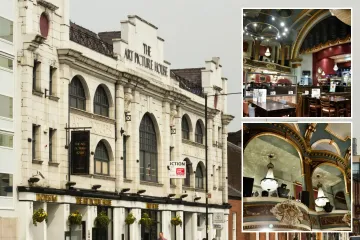
The Caley Picture House, Edinburgh
The former art-deco cinema is now a unique Wetherspoons that looks like it could be in the backdrop if a 1920s movie.
It still has original features including a large screen area and balcony – and you can enjoy a pint up on the mezzanine level which has views over the bar.
The building used to be part of a hotel before it was transformed into a cinema.
Hamilton Hall, London Liverpool Street
Outside of Liverpool Street Station is a Hamilton Hall – the Wetherspoons is inside what was once the Great Eastern Hotel.
It might not look like much from the outside, but the pub is actually inside an old ballroom.
It has a huge circular bar, enormous windows and a hanging chandelier.
The Caley Picture House is a former art-deco cinema in EdinburghCredit: News Group Newspapers LtdLondon Liverpool Street’s Hamilton Hall is inside what was once the Great Eastern HotelCredit: AlamyAt the opera house in Royal Tunbridge Wells, you can sit in the old theatre seatsCredit: Alamy
As its name suggests, the Opera House, is inside a former opera house that welcomed the public through its doors for performances back in 1902.
Later on, it was used as a cinema and a bingo hall.
It has original features from its hey-day as a theatre like its colourful booths and stalls – and of course it has Wetherspoons touches too, like the bar and classic patterned carpet.
The North Western, Liverpool
Inside the 330-room North Western Hotel that once was a stopping point for Liverpool Lime Street Station passengers is this pretty Wetherspoons.
The hotel first opened in 1871 but later fell vacant until 1996 when it became university student accommodation.
Eventually it opened as a Wetherspoons pub in 2015 and is very popular with commuters thanks to it being right next to Liverpool Lime Street.
Inside this historic hotel in Liverpool is the North Western WetherspoonsCredit: AlamyThe Palladium in Llandudno was built in the 1920sCredit: JD WETHERSPOONSThe Counting House in Glasgow has an impressive glass dome above the barCredit: Alamy Stock Photo
The Palladium, Llandudno
Another Wetherspoons pub that used to be a cinema is in north Wales – and it’s a showstopper.
It first opened to the public in the 1920s, has eye-catching decor with a ceiling with gold detailing and red carpet.
The pub stretches across three floors thanks to its remaining stalls, dress circle and balcony.
The Counting House, Glasgow
Another Scottish Wetherspoons is The Counting House which is inside a former bank.
It’s an Italian Renaissance style building and inside has high ceilings with pretty detailing including a glass dome over the bar.
You can even have a drink in the old underground banking vaults.
Waterend Barn, St Albans
St Albans is known as having lots of places to enjoy a drink, and it’s home to a pretty Wetherspoons too next to the River Lea.
It’s formed of two listed barn buildings and inside has high ceilings lined with beams and an outside area with picnic tables.
The Velvet Coaster, Blackpool
One pub that has incredible beach is The Velvet Coaster which is right next to Blackpool’s South Pier and metres from Blackpool Pleasure Beach.
It’s been described by punters as a Wetherspoons with “beautiful views”.
The pub opened in 2015, it’s set across three floors including a bar on each level and there’s a beer garden on the ground floor.
There’s also a balcony on the first floor, and a roof garden on the top level.
The interior is inspired by elements from Blackpool’s surroundings like the sea and nearby rollercoasters.
St Albans’ Wetherspoons has high ceilings with beamsCredit: UnknownThe Velvet Coaster has a modern decor and is close to Blackpool Pleasure BeachCredit: Google mapsThe beautiful Winter Gardens is inside a former Royal Baths in HarrogateCredit: Unknown
People are raving about a Wetherspoons pub which they say feels like being in a fancy hotelCredit: JD WetherspoonsHamilton Hall is found in London Liverpool Street StationCredit: JD WetherspoonsMany of the original features have been restoredCredit: JD Wetherspoons
Named after Great Eastern Railway Company Lord Claud Hamilton, it became a Wetherspoons in 1991.
It was both the first central London Wetherspoons and the first in a train station.
While the hotel itself is still open – you can stay at what is now the Andaz London Liverpool Street for £260 a night – many of the original features remain in the pub.
This includes the ornate mouldings and frescos, as well as the celling decorations, and artwork.
It is popular with train travellers and football fansCredit: AlamyIt was the first central London Wetherspoons to open more than 20 years agoCredit: JD Wetherspoons
A sprawling all-inclusive resort along the scenic coast has often been ranked as the ‘best in the UK’, with remarkable facilities that will keep everyone of all ages entertained
13:41, 24 Mar 2026Updated 13:41, 24 Mar 2026
This article contains affiliate links, we will receive a commission on any sales we generate from it. Learn more
The all-inclusive resort has often been ranked among the ‘best in the UK’(Image: Potters Resorts Hopton-on-Sea)
You don’t need to travel far to lap up the benefits of an all-inclusive resort, as one of the ‘best in the UK’ offers incredible facilities, ‘West End’ shows and unlimited drinks.
When we think of an all-inclusive resort, it’s easy to turn our minds to those in Europe, sipping cocktails around the pool by day, and watching lively entertainment by night. But why not ditch the cost of a flight for an all-inclusive escape in the UK, perfect for families during the school holidays or adults looking for a serene escape?
Situated between Great Yarmouth and Lowestoft on the Norfolk coast is the luxurious five-star, all-inclusive holiday resort, Potters Resorts Hopton-on-Sea, set across 65 acres.
Just a stone’s throw away from the golden sands of Hopton Beach, the resort has “something for everyone, and it’s all included”, and they mean everything, from its accommodation, drinks, meals, to entertainment, activities and facilities.
It’s been so highly praised and loved by visitors that Which? named it among the ‘best UK holiday parks & resorts’, while it was also highlighted as a TripAdvisor Travellers’ Choice. It’s not surprising, given the impressive facilities on offer.
The resort not only boasts two heated indoor swimming pools, a sauna, a steam room, and a whirlpool, but there’s also a spa where guests can pamper themselves with a massage or beauty treatment for an additional cost, but there’s so much more included in the price.
There are a bundle of fun activities, from their climbing wall and virtual reality experience, to pilates, yoga, nordic walking and dance classes. For those into sports, there’s certainly enough to keep you busy with badminton, tennis, pickleball, table tennis, air rifle shooting and archery all accessible.
Additionally, there’s a fully equipped gym, adventure golf, and bowls on the lawn of the World Indoor Bowls Championship. And if that wasn’t enough, there are traditional pub games and classic board games for those quieter afternoons, alongside snooker, pool, shuffleboard and darts, whatever your niche might be!
Sykes Cottages offers a wide range of handpicked holiday homes across the UK and Ireland, from cosy countryside retreats to stunning coastal escapes. Prices start from £27 per night
While the resort is predominantly for adults, it welcomes families and people of all ages during the school holidays, offering a host of fun-packed activities for kids, alongside its standard facilities. From KMX bikes and bungee trampolines to the inflatable assault course, football skills, and last man standing, the kids are bound to be entertained.
During the evenings, there is a packed programme of live music, dance, comedy, quizzes and cabaret, along with “West End-quality shows”.
Like any good all-inclusive, there’s plenty on offer food wise, with four meals a day for guests, as well as all-inclusive drinks covering teas and coffees, soft drinks, and a vast selection of beers, wines, and spirits.
For accommodation, the resort offers everything from a bungalow near the sea to hotel rooms near the main facilities, and penthouses with panoramic views of the scenic Norfolk coast. And when visitors can tear themselves away from the resort, there’s the sprawling Hopton Beach to explore, alongside the nearby town of Lowestoft and Great Yarmouth.
Following a visit in March this year, one visitor shared on TripAdvisor: “Just returned home from Potters, this was our 3rd visit in 8 months, and as always it was first class all the way. Food and entertainment were superb, our accommodation was a bungalow plus, which was very comfortable, tried various activities which we haven’t done on our previous visits, absolutely loved Mark Brewer and his team, they are all so funny and friendly, can’t wait to return again, which I’m sure will be very soon.”
“First time for myself, daughter, granddaughter & two great granddaughters aged 5 & 3, half term week, loved every minute, plenty to do for all ages, food varied & so plentiful! Will definitely be back!” another shared.
The brand also has Potter’s Resorts Five Lakes in Essex, offering a similar experience set among a whopping 333 acres in the heart of the countryside. For more information on Potters Resorts, or to book your break, you can visit their website. Of course it’s not the only offering in the region. Holiday firms including Haven and Parkdean Resorts also offer a plethora of stays in the area, complete with plenty of entertainment options.
Do you have a travel story to share? Email webtravel@reachplc.com
This historic Shropshire market town is bursting with history and has more than 500 listed buildings to explore, plus a vibrant food scene and festivals
The town has over 500 listed buildings(Image: joe daniel price via Getty Images)
Brimming with heritage, this charming market town makes for the perfect weekend escape, boasting over 500 listed buildings to discover and its renowned culinary scene.
Numerous visitors flock to Ludlow for its closeness to excellent hiking and cycling spots, while history enthusiasts adore it for its ancient churches, castles and mediaeval landmarks.
As the town has developed through the years, it now provides a lively atmosphere with its own market, independent retailers and regular festivals showcasing local talent.
Ludlow is situated along the River Teme, with its most ancient area being the mediaeval walled town, tracing as far back as the 11th century.
This section of the market town lies on the eastern bank of the river, whilst the castle perches on a hill and the remaining streets slope downwards towards the water.
Best holiday cottage deals in Wales
This article contains affiliate links, we will receive a commission on any sales we generate from it. Learn more
Wales is renowned for its stunning mountains, picturesque coastline and rich Celtic history. Sykes has a wide and varied collection of holiday cottages, houses and apartments across the country. Prices start from £35 per night with current deals.
Ludlow Castle
As one of the primary tourist draws in the region, Ludlow Castle stands as an uninhabited, partly ruined medieval fortification. Its origins are traced as far back as 1066 – subsequently, it became the residence of Prince Edward from 1473 to 1483, and for centuries it remained under the care of the crown.
By 1760, the government had contemplated demolishing the structure but, owing to substantial costs, opted instead to lease it, and thus the Earl of Powis started his residency in 1711.
From that point onwards, the magnificent castle started to draw tourists, with their appreciation for the picturesque style, and walking routes were established exploring the grounds and neighbouring areas.
Following the success of this venture, the Earl acquired the castle in 1811, and it has remained under the guardianship of the Trustees of the Powis Castle Estate ever since, who hold ownership on behalf of the family.
One visitor commented on TripAdvisor: “Lovely morning exploring the castle; so much to wander around even though it was very cold. The views were amazing from the top of the towers. You could feel the history come alive whilst walking around.”
Another said: “The main attraction in Ludlow – a site of enormous historical significance. The castle covers a very extensive area with amazing views from the top. In the castle shop do go upstairs to the gallery; it has some very interesting information.”
The fortress, perched proudly atop that very same hill, continues to welcome the public to discover and understand its significance to the town. Opening hours may fluctuate, though the castle can generally be expected to be accessible from 10am until 4pm daily.
Admission tickets can be purchased upon arrival – though advance booking online is usually recommended. Adult admission costs £10, whilst a child ticket is £5 and family tickets are £28.
Stokesay Castle
The remarkable buildings don’t end there, as Stokesay’s magnificent manor house continues to captivate passers-by with its timber-framed features.
Constructed like a fortress, though in reality it is a mansion, completed in 1291, and with minimal signs of alteration or modernisation ever since.
Owned by English Heritage, the protected structure has been meticulously maintained to reflect its original state and provides guided tours for those eager to discover more.
The property was originally established by Laurence of Ludlow, a celebrated wool merchant, actually one of the finest in the nation, and it stayed within his family until the 16th century.
The building’s architecture and design offer valuable insights into the period and continue to serve as a portal to the past. It welcomes visitors from Thursday to Sunday, 10am to 4pm, with adult admission priced at £9 and children’s tickets at £5.40.
One guest commented: “The castle that is not a castle! Thoroughly enjoyed our visit. The audio guide provided us with an amazing amount of useful information. A must-visit whilst in the area.”
Dining options
Ludlow boasts a strong reputation as a haven for food lovers, frequently dubbed the culinary capital of Shropshire. It’s earned this accolade through its excellent range of local produce, with countless independent suppliers and premium artisan food, all highlighted at the yearly food festival.
Taking place over one weekend in September, this year on 11-13, the festival features a vibrant programme of live events, including culinary demonstrations, workshops, talks and, naturally, showcases produce you can purchase to take away.
Naturally, the area also boasts numerous pubs and restaurants that garner considerable acclaim in their own right. Topping the rankings on TripAdvisor is The Blue Boar, a beautifully restored Grade II listed pub located on Mill Street.
A recent visitor commented: “Wonderful cosy, homely, friendly pub. Called twice on our little getaway, food was excellent, service was professional and friendly, and we would definitely recommend it to all our friends and family. Can’t wait for our next trip to Ludlow just to visit here again.”
Additional dining establishments include The French Pantry, Old Downton Lodge, The Queens, and the Michelin restaurant, known as The Charlton Arms Restaurant.
The UK’s ‘holiday park of the year’ has been revealed and it has everything including cosy glamping pods, beautiful beaches on the doorstep and incredible stargazing opportunities
The park offers eco-friendly accommodation in a natural setting(Image: Tranwell Farm Holidays.)
An eco-friendly holiday park close to Morpeth in Northumberland was named the best in the region at last night’s (March 19) Destination North East England Tourism Awards.
At the annual ceremony, now in its 24th year, Tranwell Farm Holidays was named the winner in the Camping, Glamping and Holiday Park of the Year category. The site is on a farm that has been cared for by the family for over 60 years, and since 2022 it has offered a range of unique glamping experiences.
Accommodation options include grass pitches, where you can camp surrounded by beautiful meadows, or you can bring your own caravan or campervan. There’s a cosy shepherds hut for two, a comfortable camping pod, and two woodland lodges surrounded by trees which come with a private log-fired hot tub.
Guests can also enjoy some unique experiences while they stay on the farm. There are sessions where they can meet the park’s rare breed lambs, and you may even get to bottle feed one or witness a birth. The park is also set in an area with an official ‘dark sky’, meaning it’s an incredibly spot for stargazing.
Guests can hire a stargazing kit including binoculars, hot water bottles, and a rug, and can even hire a telescope to help them explore the cosmos from Earth.
Less than a 10-minute drive away is Morpeth, a historic market town with the River Wansbeck running through its centre. It has a traditional high street with a mix of chains and independent shops, as well as the indoor Sanderson Arcade where you’ll find upscale boutiques.
Stroll along the riverfront Carlisle Park and spot historic buildings such as Morpeth Court. Once the town’s court and gaol, it now houses a colourful antiques centre and café, as well as holiday apartments. The Morpeth Chantry is another unique place to visit. This medieval chantry house, which once held church services, is now home to a bagpipe museum which often has live performances.
Northumberland is known for its long, beautiful and unspoilt beaches, and there are a few that can be explored nearby. About half an hour away is Blyth Beach, a sand and shingle beach that has a long promenade and colourful beach huts. Its waters have been rated as ‘excellent’ by the council, so you can take a dip or surf if the conditions are right.
Cambois Beach is also just a short drive away and this sandy beach has pretty sand dunes and footpaths among the sandy dunes. It’s a quieter spot with fewer facilities, but perfect for a peaceful walk and popular with dog walkers. You may even share the beach with a few people who are fishing, as it’s a great spot to catch flounder and cod.
Have a story you want to share? Email us at webtravel@reachplc.com
Time Out has ranked the 51 most beautiful places in the world, and the top spot goes to Spain’s Picos de Europa mountain range that’s just a two-hour flight from the UK with Ryanair
The Picos de Europa is in Spain and located just over 12 miles from the coastline(Image: Manuel ROMARIS via Getty Images)
The world is brimming with extraordinary destinations to discover, and pinpointing the most stunning is no easy feat, but Time Out has tackled the task.
The publication recently unveiled a list of the 51 most beautiful places in the world, featuring everything from lakes to beaches, National Parks, libraries, vineyards, and historic towns. Yet, claiming the number one position is a breathtaking mountain range that provides remarkable hiking opportunities, and it’s merely a two-hour flight from the UK.
The Picos de Europa in Spain is a striking, rugged limestone mountain range that soars to a height of 2,650 metres. Located just over 12 miles from the coastline, the mountains ascend steeply, forming deep gorges to discover, reports Express.
One route, the Cares Trail, ranks among the most sought-after walks in Spain, tracing a canyon and passing through craggy peaks and cascading waterfalls.
Spanning 13 miles in total, it’s not suitable for novices, though its gentle inclines make it achievable for walkers who can manage the distance. A straightforward choice is to board the Fuente Dé cable car, whisking you up the mountainside in moments and letting you relax and admire the verdant landscape below.
Upon reaching the summit, you can also explore additional hiking trails, including some demanding, steep climbs that provide spectacular vistas.
The mountains form part of the broader Picos de Europa National Park, and this region features the Lakes of Covadonga. These glistening blue waters are encircled by peaks and vegetation and resemble landscapes you’d encounter in Scotland or the Lake District, making it difficult to believe you’re in Spain.
This protected national park is abundant with wildlife, including brown bears, wolves, vultures, and eagles, and you’ll probably encounter mountain goats and vibrant butterflies amongst the limestone surroundings.
At the foot of the mountains, you can discover towns like the medieval Potes, brimming with centuries-old stone and half-timbered buildings and cobbled streets that lend it a rustic allure.
The town’s centrepiece is the Torre del Infantado, a 15th-century tower once the residence of medieval royalty, now a museum with a rooftop terrace providing sweeping views of the town.
Arenas de Cabrales on the park’s periphery is another favoured spot to stay. It’s renowned for producing Cabrales cheese, and has evolved into a gastronomic hotspot due to its plethora of acclaimed restaurants serving Northern Spanish cuisine.
Don’t expect to find paella on the menu. In this region, the dishes are hearty and rustic, such as bean stews and grilled meat, with ingredients sourced locally from the mountains.
The Picos de Europa is just under two hours from Santander Airport, and is serviced by airlines including Ryanair. Routes from the UK to Santander operate year-round from Edinburgh and London-Stansted, and seasonal flights operate from Birmingham and Manchester. Flights start from just £15 one-way and take 2 hours from the UK.
Got a story you’d like to share? Drop us an email at webtravel@reachplc.com
The Peak District village was systematically demolished and submerged in the 1940s to provide water for the industrial industries during the second world war – but it’s ruins remain
Passers-by have no idea what lies beneath (Image: Steve_Bramall via Getty Images)
It lies beneath a beloved hiking destination in Derbyshire, but this was once a thriving community before it was deliberately flooded and lost forever.
During the 1940s, the picturesque village of Derwent was methodically demolished and submerged beneath what is today known as Ladybower Reservoir.
The expansive, stunning expanse of water frequently serves as a stopping point for visitors admiring the scenery whilst exploring the Peak District, yet few realise what rests beneath its surface.
The reason for its submersion was to supply water to the booming industrial centres throughout the East Midlands during World War Two.
Locals were relocated, and by 1945 the valley had been flooded, with remnants of the former settlement now resting underwater.
Best Derbyshire holiday cottage deals
This article contains affiliate links, we will receive a commission on any sales we generate from it. Learn more
Derbyshire is known for its dramatic Peak District landscapes, historic market towns and stately country houses. Sykes Cottages has hundreds of places to stay, with prices from £32 per night.
Derwent before it drowned
Prior to the outbreak of war across Britain, Derwent had seemed like a permanent fixture in the moorlands, characterised by its century-old structures and tight-knit community.
Two initial dams were constructed after the water board selected a remote section of the valley. This decision impacted numerous residents. Those who owned farms or smallholdings were relocated to safer areas including Derwent and the neighbouring village of Ashopton.
What they couldn’t have anticipated was that this stretch of the valley, and their cherished village which they’d made their home, would shortly vanish entirely.
The village church conducted its final service for parishioners on March 17, 1943, before being submerged beneath the reservoir. Remnants of the church can be found scattered throughout Derby, with the bell now rehung at St Philip’s Church in Chaddesden.
Whilst nearly the entire area was deliberately flooded, a small number of homes survive above the waterline. Reports indicate that five properties from the original village endure, including several farms and the former village hall.
Mabel, a former Bamford resident who was 92 at the time of her interview, spoke to BBC Travel about growing up nearby and her memories of Derwent.
She revealed: “I may be the last person who remembers Ashopton and Derwent,” explaining that her school was located in Derwent, which she attended whilst the reservoir was being built.
The village emerged
During periods of extreme heat or reduced water levels, the reservoir has receded, and hauntingly, remnants of the village have surfaced. This phenomenon has been documented on several occasions, with the first instance occurring in 1976, leaving locals astounded.
The most recent, and consequently most significant, reappearance of the village occurred in 2018, when reservoir levels dropped dramatically and visitors flocked from across the region to witness the extraordinary spectacle.
An enormous crowd assembled, and the attention drawn to the old structures – which are largely piles of rubble and bricks – resulted in various complications.
On 3 November that year, a man found himself in a sticky situation, requiring mountain rescue assistance after becoming severely stuck in the dense mud surrounding the ruins of Derwent.
In a similar vein, due to the influx of visitors, the remnants were defaced with graffiti, prompting park rangers to discourage further visits as additional items were also taken from the site.
The picturesque village, with its postcard-worthy mountain views, rolling hills, and charming houses, may seem like a dream, but anyone hoping to land the cash incentive should be aware of a major catch
Ben was clearly impressed after making his way to the village by car(Image: Ben Morris/YouTube)
A travel vlogger who visited a picturesque European village offering people £24,000 to relocate there has highlighted a significant drawback. Ben Morris travelled to the Swiss Alps to explore a location faced with declining population numbers, which has introduced a financial incentive for anyone willing to make the village their permanent home.
Tucked away in southwestern Switzerland in the canton of Valais, the picture-perfect village of Albinen appears straight out of a postcard, boasting breathtaking mountain vistas, undulating hills, and quaint houses set against a lush green backdrop.
With a reported population of just 262 residents, Albinen’s inhabitants voted to enact a residency scheme offering CHF 25,000 (approximately £24,000 at the time of writing) to those prepared to relocate to the mountains, the BBC reports.
Ben was evidently impressed during his journey to the village by car, describing the scenery as “incredible” whilst driving in. Upon his arrival, he observed the village was “dead silent”, but as he wandered the narrow lanes and soaked up the panoramic views, he was blown away.
In the video, shared on his eponymous YouTube channel, he said: “I actually wasn’t going to come to this town. I just felt so tired and miserable this morning. But just being able to sit here right now and take in this view. It’s worth this alone.”
It appeared baffling that somewhere so stunning would need to provide financial incentives, but he subsequently highlighted the snag: relocating to Albinen comes with a set of requirements that must be adhered to.
He said: “I know what you’re all thinking. This village seems amazing. How do you sign up to receive your money? There is, unfortunately, a few requirements. That’s what makes it slightly less appealing.”
Ben continued: “Here are the requirements for moving to Albinen and getting your money. It’s 25,000 Swiss francs, which is actually a lot more than $25,000.
“You need to purchase, build, or substantially renovate a primary home in Albinen with a minimum value of 200,000 Swiss francs. This home has to be a main residence. It can’t be a holiday home. This one is pretty crazy as well.
“You have to commit to living in the village for at least 10 years. This one’s probably going to let down the majority of you guys watching. You must either be a Swiss citizen or hold a Swiss C permit for permanent residence.”
A seemingly deflated Ben added that once you learn these details, you realise it’s “not as attractive” as it first seemed. According to House Beautiful, you will also need to be under 45.
It explained that these stipulations, as outlined in the 2023 housing regulations, aim to “promote the retention and permanent residence of young people and families in the municipality of Albinen”.
A pretty UK town packed with independent shops, cosy tearooms and acres of green space, has been named as the ‘most welcoming’ destination, and after a visit, you might never want to leave
This pretty UK town has been named as the ‘most welcoming’(Image: Getty Images)
There’s a list of beautiful UK towns that offer an idyllic day out, whether that’s taking a stroll along their meandering rivers or exploring their cobbled streets lined with medieval architecture.
Yet there’s one that’s been named the ‘most welcoming town’ of them all, thanks to warm charm you’ll struggle to find anywhere else.
Harrogate, in North Yorkshire, is a Victorian spa town known for its mineral springs, 200 acres of green space at The Stray park, cosy tearooms, independent boutiques, and, famously, the home of Yorkshire Tea. It has often been hailed as one of the happiest places to live and has once again secured the title of the most welcoming town in the UK.
Thanks to its warm and friendly atmosphere, hospitality, and repeat visitors, Harrogate was named the UK’s most welcoming destination in Booking.com’s 2026 Traveller Review Awards. It’s even thought that its tea heritage and charming tearooms could have something to do with its ranking, as a quarter of Brits associated a visit to the Yorkshire town with a cosy cup of brew.
Whether it’s a warming cuppa in one of their tearooms, cafés, hotels, or even pubs, the town’s history can’t be ignored, as it’s where the black tea blend of Yorkshire Tea has been produced by the Bettys & Taylors Group since 1977. It’s also home to the delightful Bettys Café Tea Room, offering afternoon tea in the imperial room of freshly baked scones and, of course, their signature tea.
But that’s not the only tearoom in this town. There’s also Jenny’s Tea Shop, Mama Doreen’s Emporium, and another Bettys Café Tea Room, just on the outskirts of the town.
Yet, away from its brews, streets are lined with boutiques, with Montpellier Quarter boasting more than 50 independent shops, bars, restaurants, antique shops, and art galleries. There’s also Cold Bath Road, which offers more eateries and shops, all while paying homage to the town’s spa heritage.
Harrogate is known as the ‘English Spa’ thanks to its mineral springs, which were discovered in the 16th century. It quickly became known as a wellness destination, thanks to its open green spaces, spa treatments, fresh air, and famed waters.
Today, there are original Turkish Baths for a relaxing treatment and the Royal Pump Room Museum for a closer look into the town’s spa heritage. Harrogate has remained known as a spa town and continues to attract visitors seeking to unwind from the stress of everyday life.
The town is characterised by Victorian and Georgian buildings, some of which make up its collection of hotels, and there are plenty of B&Bs available in the area. That’s when you can tear yourself away from the ample green spaces, with its position on the edge of the Yorkshire Dales National Park, a haven for avid walkers.
With acres of pristine landscapes, Harrogate is home to beautiful parks and tranquil gardens that offer scenic strolls during the warmer months. One of its most popular attractions, which welcomes around three million visitors a year, is the Grade II-listed Valley Gardens, featuring various areas to admire.
Whether you’re looking for a day out away from the city or a weekend escape, you might just feel at home in Harrogate. Plus, it’s nestled just over a 20-minute train journey from Leeds and half an hour from York, making it even more convenient.
Ryan Pearson, regional manager for UK and Ireland at Booking.com, said: “Booking.com’s Traveller Review Awards celebrate destinations that consistently deliver exceptional hospitality, and Harrogate has earned recognition as one of the UK’s most welcoming towns for this specific reason.
“Guests frequently praise the town’s friendly, attentive hosts and genuinely warm atmosphere, which makes visitors feel instantly at home. While Harrogate charms with its historic spa buildings, elegant streets, and beautiful surrounding countryside, it’s the town’s authentic, personable hospitality that inspires repeat visits and rave recommendations from travellers.”
Do you have a travel story to share? Email webtravel@reachplc.com