HAVEN has just bought its 40th holiday park – and it’s already one of the most popular in the country.
The park found in West Sussex has 2,500 pitches, is right next to its own private beach and you can book a stay from less than £10per night.
Seal Bay Resort in West Sussex has 2,500 pitches and has been bought by HavenCredit: TripAdvisor It’s one of the most popular with families with outdoor pools and lots of activitiesCredit: TripAdvisor
It has thousands of pitches, there’s plenty of entertainment for the whole family and it’s minutes away from the beach, what’s not to love?
Sign up for the Travel newsletter
Thank you!
Seal Bay sits on the coast in Selsey and when it comes to picking a place to stay, visitors can choose from seaside caravans to beachfront pods or glamping options.
All stays come with kitted-out kitchens, bed linen, as well as access to the swimming pools and entertainment.
The simplest option is camping, with a choice of grass, electric or serviced pitches – each has a parking space and access to hot shower facilities.
Caravans range from comfy Bronze bases which sleeps up to eight guests, all the way to Platinum caravans that feel more like a homely cottage.
Lodges are larger with their own decks – and some luxury ones even come with a private hot tub.
Beachfront pods are a great choice for those wanting a cosy hideaway facing the sea – they have mezzanines and fold-out double beds, as well as private decking to enjoy that sea breeze.
For those visiting as a large group, you can even book an entire self-catering house.
As for entertainment and play there’s plenty for all ages – some of the highlights are its arcades, bowling, and soft play zones.
Seal Bay Resort is steps away from a private beach in SelseyCredit: TripAdvisor
There’s also a swimming pool with a splash zone for toddlers, wave simulator, inflatable obstacle course, lazy river and waterslides.
Families with young children can get crafting at the create-your-own teddy bear factory, sand art sessions and try out mini archery which is for those between two and five-years-old.
Older kids should head to the Dockyard which has a large climbing wall and adventure golf.
There’s plenty for adults and couples too, like live music, comedy nights, and Big Red Button Bingo.
When it comes to eating, there’s the Above the Bay Bar & Kitchen which opened earlier this year, along with Smokey’s BBQ Kitchen and the Cafe Lido.
From the park, holidaymakers have direct access down to Seal Bay Beach – and almost one mile of it is reserved for guests only.
The indoor pool has waterslides and tipping bucketsCredit: TripAdvisorInside the Dockyard are activities like climbing walls and adventure golfCredit: TripAdvisor
Mid-week breaks can be booked for under £250.
A family of up to six can book a four-night stay in May 2027 from £244 in a Classic 2 Bed Holiday Caravan – or £10.16pppn.
If you fancy a break in the next few weeks, a four-night stay in a Classic Caravan from 12-16 October can be booked out from £196 – or £8.16pppn.
Seal Bay will continue to trade under its current name for the remainder of 2026, before changings its name to the Haven brand for 2027.
It’s not the first holiday park that has been taken on by Haven in the last few years – it previously acquired the Richmond Holiday Centre which has now been named Haven Skegness Holiday Park.
Simon Palethorpe, CEO, Haven said: “I’m delighted that we are welcoming Seal Bay to the Haven family. It’s a fantastic park in the most stunning location and will sit brilliantly alongside our 39 other parks.
“Haven’s mission is all about making memories that last a lifetime and we can’t wait to start working with the Seal Bay team to deliver this for thousands of holiday makers and owners in the years to come.”
Holidaymakers can still book holidays on the current Seal Bay resort website – including for breaks in 2027.
POP star Zara Larsson has made waves rocking a purple bikini on Instagram in a striking, nighttime photoshoot.
The Swedish singer, 28, can be seen posing on a beach, bathed in dark lighting with dramatic flash photography and an E.T vibe.
Zara Larsson looks out of this world in a purple string bikiniCredit: Instagram/zaralarssonThe singer set the mood in an extraterrestrial-themed nighttime beach photoshootCredit: Instagram/zaralarsson
The blonde bombshell can be seen wearing a tiny metallic purple string bikini paired with her long blonde hair down with decorative glowing star stickers scattered across her skin.
The visual highlights several dynamic poses, including standing centered within a mesmerising circular swirl pattern carved into the sand, crouching low to the ground and striking side-profile silhouettes.
Sign up for the Showbiz newsletter
Thank you!
Injecting a touch of humour into the artistic drop, the post also features a playful product shot of a water bottle sitting upright in the middle of the sand ripples.
The post quickly drew hundreds of thousands of likes and a flood of enthusiastic comments from fans praising her look.
Fans commented: “God is a woman.”
A second playfully wrote: “She can just do that with the sand btw.”
A third added: “BODY WAS SCULPTED FROM THE GODS.”
Zara recently addressed the White House social media team’s use of her song Midnight Sun in a TikTok video featuring Immigration and Customs Enforcement (ICE) operations captioned ‘Never ending deportations’.
Most read in Entertainment
In a response shared on TikTok, Larsson expressed her sadness and heavy heart regarding the situation.
She shared a message directed at the creators of the video and wrote: “I wish I could talk to you, and I wish I could help you remember that you and I, we aren’t that different at all.
Larsson brings major ethereal energy to her latest night-beach shootCredit: Instagram/zaralarssonThe acclaimed Swedish pop singer and songwriter is known for chart-topping hits like Lush LifeCredit: Getty
“And we’re not that different from the people in the video, either.
“The biggest difference between us is that we were dealt a different hand in life.”
The singer continued: “I consider myself so lucky with the life that I’ve been dealt.
“The fact that I’m born in Sweden, I’ve had an education and I’ve had all these opportunities just sort of laid out in front of me.
“I can travel and get to do all these amazing things. That’s luck.
“There are people out there who are not that lucky, and they want to have a better life for their families or for themselves and their children.
Zara performed onstage at iHeartRadio Music Festival in Las VegasCredit: GettyZara at the 68th GRAMMY Awards in February 2026 in Los AngelesCredit: Getty
“I just don’t understand how it could be the worst thing in the world to be an undocumented immigrant.”
Larsson continued: “This video is so dehumanizing. These people in the video are real people.
“It’s so crazy how everything is so meme-ified, especially ‘Midnight Sun,’ which is about feeling connected to nature, the universe and people, essentially.
“And this just creates this massive divide between people. I just don’t get it. It’s so f***ing uncool… You guys are such f***ing losers, like it’s crazy.”
THE UK is set to see the last of the summer sun this weekend, so where better to enjoy it than Cornwall’s Saint Tropez?
One charming coastal village has been compared to the French glamorous resort town thanks to its incredible beaches, high-end restaurants and royal visitors.
The village of Rock sits right on the Camel Estuary in CornwallCredit: AlamyIt’s considered the Saint-Tropez of the UK thanks to its celeb visitors and pretty beachesCredit: Google maps
The village in question is called Rock which sits on the Camel Estuary and has incredible views across from the well-known town of Padstow.
The upscale hotspot has numerous celebrity homeowners and even Prince William and Prince Harry have enjoyed a holiday of two there.
Sign up for the Travel newsletter
Thank you!
The princes first visited Rock in the late 1990s as teenagers for family holidays and were spotted enjoying nearby beaches and surfing in Polzeath.
Other celebrities that have been known in the area include Gordon Ramsay who owns a multi-million-pound waterfront property there.
He’s even been filmed arriving to the village by helicopter.
Chef Paul Ainsworth owns the local pub called The Mariners, where you can get some of the best fish and chips in the area.
Other top spots include Four Boys which is open seven days a week for breakfast and lunch.
Fee’s Food is a deli where you can pick up quiches, freshly baked loaves, pastries – they also specialise in pies and curries.
Of course, no visit to Cornwall is complete without a trip to the beach, and Rock has a great one.
Rock Beach has described as being called “world class” by previous visitors, and another called it the “best beach I’ve been to in a long time.”
Rock Beach has been called ‘world class’ by visitorsCredit: Google maps
The sandy beach stretches on for around half a mile with views across the estuary to Padstow.
If you fancy venturing a little further afield, Porthilly Cove which is a secluded sandy beach is just around the corner.
The St Enodoc Hotel in Rock recently underwent a multi-million-pound renovation – it was closed for 10 months but had a grand reopening in July.
Along with 21 rooms, there are two restaurants to choose from – the Estuary Grill which serves lots of local seafood or the Flour Garden which dishes up hand-made pizzas.
St Enodoc Hotel in Rock reopened in July after a huge refurbCredit: Google maps/St Enodoc by Paul The pretty garden area has views across the waterfrontCredit: Unknown
The hotel has beautiful gardens too with lawn games, deck chairs and Maurice, a charming vintage French truck, with a mix of drinks including Guinness on-tap.
When it comes to getting there, the easiest way is to catch the ferry from Padstow – single journeys cost £3 for adults and £1.50 for children.
Huntington Beach High started the football season 4-0. The Oilers have Ohio State-bound Brady Edmunds at quarterback in his fourth season as a starter, and rapidly developing receiver Dylin Bruce, who has committed to Arizona State.
That alone should get the Oilers attention, but their 29-25 win over unbeaten Yorba Linda on Friday night deserves special attention. Yorba Linda was 4-0 and perhaps the best opponent on the Oilers’ schedule. By winning, Huntington Beach showed it’s ready for top 25 consideration in the Southland. It’s the first time since 1998 that the Oilers started 5-0.
There’s still the new Delta League opponents, including Dana Hills and Laguna Beach to face in the coming weeks, but second-year Huntington Beach coach Matthew Hatchette deserves kudos for the progress being made in the program.
This is a daily look at the positive happenings in high school sports. To submit any news, please email eric.sondheimer@latimes.com.
The beach has claimed another first-time music festival this year.
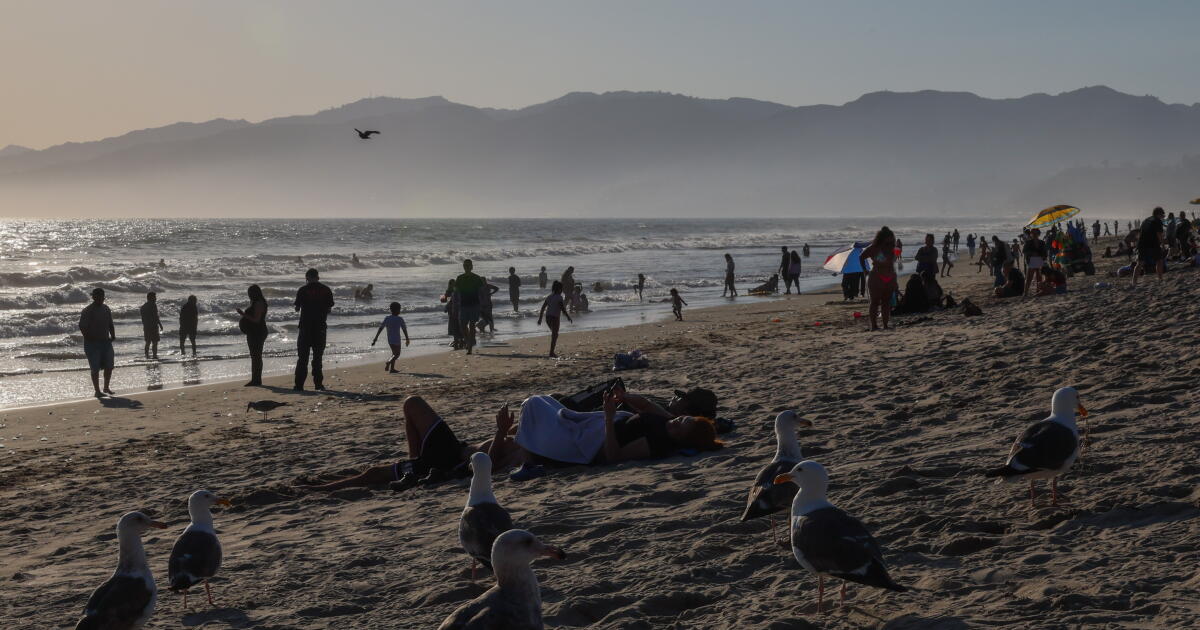
Ocean Way, the beachfront Santa Monica music fest, has been canceled just two weeks before debuting. The two-day event was set for Sept. 26-27.
Goldenvoice, the promoter behind Ocean Way as well as the Coachella Valley Music and Arts Festival, announced the news Friday in an email from its ticketing platform AXS.
“Due to the impacts of Hurricane Marie, the City of Santa Monica has canceled the inaugural Ocean Way festival,” organizers said in a statement. “Storm surf and runoff [have] caused significant beach erosion and the festival can no longer be safely held as planned. Plans are already underway to bring the festival back to Santa Monica in 2027.”
Tickets, which ran from $249 to $2,250, will be refunded within five to seven business days, the promoter said.
Hurricane Marie, spurred by the “Super El Niño” weather pattern resulting from warming waters in the eastern Pacific Ocean, severely damaged coastal areas from Malibu to Long Beach and Dana Point
“I am deeply saddened that severe weather and beach conditions have forced the City and Goldenvoice to make this difficult decision. However, the safety of festival-goers, our residents and the Pier must remain our priority,” Santa Monica City Council member Dan Hall said in a statement to The Times. “With Hurricane Marie also causing sinkholes in Malibu and triggering home evacuations in Long Beach due to rising surf, the rapid erosion of the beach near the Sandbox event space over the past few days is deeply concerning. The City is working rapidly to keep the Pico storm drain and shoreline repaired and ready for upcoming weather.”
“While we are all disappointed,” Hall said, “I remain optimistic about bringing Ocean Way back next summer.”
The fest was slated to have headline sets by the Killers and Olivia Dean, along with Khruangbin, Sublime, Jack White and many others.
Goldenvoice announced the festival in July, with high hopes that it would open up the waterfront to more public events and concerts in Santa Monica and establish a new marquee festival on the west side of Los Angeles. Santa Monica’s retail and nightlife scenes have struggled in the wake of the COVID-19 pandemic, and the festival, which promoters touted as car-free, would have set a precedent for transit-oriented concertgoing.
“We’ve got to take a chance on new things,” Goldenvoice concert producer Nic Adler told The Times in August. ”There is pressure. I think the city wants it, but that takes a little bit of risk and trying something new.”
“We really cannot keep doing the same things that we’ve always done and expect for Santa Monica to shine,” Santa Monica Mayor Caroline Torosis said in an earlier interview. “We have to invite people back to our city. We have been yearning to get back a big music festival on our beach to showcase the city, because the beach is our best asset.”
The festival is the second major beachside concert to go down this year. The inaugural LA Jazz Festival on Dockweiler Beach was canceled on what would have been its opening day, after its finances and permitting fell through.
Climate change and weather damage have become a major concern for festivals. Bonnaroo, in Tennessee, announced last month that the festival would take 2027 off to repair the grounds, after heavy storms canceled sets and prompted evacuations this year. Stagecoach, the country music festival on the same site as Coachella, also temporarily shut down this year due to strong winds.
The spot has been hailed by holidaymakers as the best beach on the White Isle, and with warm 23°C temperatures in October and November it’s the perfect spot for an autumn break away from the crowds
One European spot has dramatic scenery that sets it apart from other spots(Image: LUNAMARINA via Getty Images)
Tucked between pine-covered hills, the sheltered cove has a mix of golden sand and pebbles, while its clear waters are ideal for swimming and snorkelling. But it is the dramatic scenery that really sets the European spot apart.
Off the coast sits Cap Bernat, a distinctive rock formation often nicknamed the “Finger of God”. It has become an iconic part of the skyline and provides a spectacular backdrop as the sun sets over the water.
Cala Benirràs is one of the most famous coves in northern Ibiza, but it offers a very different experience from the island’s glamorous beach-club hotspots.
The beach is particularly famous for its bohemian atmosphere and stunning sunsets, with visitors gathering to watch the sun disappear behind the rocky coastline.
Benirràs has also long been associated with drumming at sunset, which has become part of the cove’s identity.
However, visitors should be aware that the traditional large-scale Sunday drumming sessions have been restricted in response to the huge crowds they attract.
Smaller, informal drumming sessions can still take place, but it is best to check the arrangements before travelling if this is a key reason for your visit.
Despite its popularity, Cala Benirràs retains a relatively natural and rustic feel compared with some of Ibiza’s more polished beach destinations. The seabed is rocky in places, adding to its appeal for snorkellers, while the sheltered bay usually offers calm, clear water.
There are also several places to eat and drink around the cove, including Elements Eivissa Beach Club, which sits directly on the beach, alongside more casual dining options nearby.
For visitors looking to experience a quieter, more bohemian side of Ibiza, Cala Benirràs offers a combination of clear waters, pine-covered hills, spectacular sunsets and its famous rock formation that makes it well worth a visit, reports the Express.
Best time to visit
Autumn breaks offer quieter beaches and warm, sunny weather, with package holiday prices often considerably cheaper than during the pricier summer period. Holding out just a few weeks for an October escape could see travellers discovering hidden gems in some of Europe’s most sought-after destinations like Spain or Portugal for a fraction of the cost.
When experts at Wizz Air pinpointed the best under-the-radar coastal destinations in Europe for the shoulder season, Cala Benirrás in the north of the island earned top marks for tranquillity.
The airline previously carried out an analysis of beaches across more than 50 European countries, evaluating crowd levels, average temperatures, and daylight hours throughout September, October, and November.
By calculating beach space per visitor, Wizz Air ranked destinations according to the amount of room available to unwind and bask in the late-season sunshine.
‘Hidden gem’
This Ibizan ‘hidden gem’ has been hailed as the “best beach on Ibiza, especially in October” by Tripadvisor user Debra H. Captivated by their visit to this tranquil corner of the White Isle, the traveller went on to say: “It’s not just a beach for a day trip or the Sunday drumming it’s a place to come early in the morning and get to know. We really liked Elements cafe, nice food sitting and chilling on the sofa as with music. Lovely family friendly and I love the rock there like a giant goddess. Highly recommend. Most favourite beach in Europe.”
Another late-season visitor, Emily S, shared the same enthusiasm, describing it as a “beautiful bohemian feeling beach, perfect place for sunset”.
They added: “We visited Ibiza at the end of October. End of season, so this beach was lovely. Not too busy, with a relaxed, friendly, safe feel. Beautiful sheltered cove with stunning views out to sea, and amazing clear waters with lots of fish.”
Ibiza boasts average temperatures of around a balmy 23°C (73°F) throughout October and November, making it ideal for those looking to soak up the last of the summer sunshine.
Cala Benirrás is just a 10-minute bus ride from the nearest town of Port De San Miguel, which is home to hotels, villas and a broad range of amenities.
HOPPING from place to place in a motorhome may not sound a particularly relaxing way to spend a week, compared to lying on a sun lounger at a resort.
But there’s a sense of excitement with a road trip that no fly-and-flop holiday could ever match.
Hit the road with the Swift Trekker 584Credit: SuppliedThe Tudor Market Square in ShrewsburyCredit: Getty
The sheer adventure, access to off-grid locations and freedom to move wherever the wind takes you are something money can’t buy.
That’s why I dragged my wife and two kids (aged six and three) away from the beach for our first ever campervan voyage, through the West Midlands, rural Shropshire and the North Welsh countryside.
Sign up for the Travel newsletter
Thank you!
And it beat all of our beach holidays, hands down.
We were in a Swift Trekker 584, a beast of a motorhome that’s nicer than my house, with sleeping space for four people, a roomy bathroom and mini kitchen complete with oven and hob.
From day one my boy fully embraced #vanlife, becoming a key helper in the not-so-glam, but necessary, daily tasks as we moved between driving, eating and sleeping — hooking up the electricity and water, ensuring things were properly stowed away and always making sure the toilet hatch was closed.
We cheated a little by switching out motorhome staples like spag bol or soup for the occasional restaurant but, by the end, we’d fully mastered road-trip life.
Our first base was Llanberis, a stunning village at the foot of Snowdon offering brilliant hiking in the surrounding mountains and watersports at two lakes on its doorstep.
Ahead of arrival, we’d booked a pitch with Morris Leisure, a highly rated camping operator specialising in motorhomes and caravans, with parks across North Wales, Herefordshire and Shropshire.
The Severn Valley Railway is great fun for allCredit: AlamyTom and his son in a museumCredit: Supplied
Its Llanberis Touring Park is ideally located, with direct footpaths to Snowdonia and a five-minute walk to the village centre.
Some pitches have electricity and wifi while others have fresh water, plus there’s a shower block and a laundry area.
And the best thing is, if you are motorhome novices like us, there’s an on-site shop crammed with anything you may have forgotten, plus caravan accessories and essentials.
After Wales, we made our way to the market town of Oswestry and Park Hall Farm (make sure to watch one of the hilarious pig races), then it was on to the Shropshire town of Shrewsbury.
Its high street is frequently named one of the best in the UK, so we had high hopes.
It didn’t disappoint. Rather than being overrun with vape shops, bookies and barbers, the main stretch was littered with Tudor architecture and chock-full of independent shops, cafes, pubs, restaurants, museums and galleries.
The place is buzzing and a pleasure to walk around.
Kids will love the Quarry Park for the splash zone, while budding young artists may prefer to get stuck into one of the workshops at Shrewsbury Museum & Art Gallery.
Stopover at Llanberis Park in SnowdoniaCredit: SuppliedOr you can ditch the road for the water and book a trip along the river Severn with Sabrina BoatCredit: Alamy
Or you can ditch the road for the water and book a trip along the river Severn with Sabrina Boat.
Prefer to travel by train? The Severn Valley Railway is a delightful experience and offers day trips through the rolling countryside, as well as special themed events.
Those visiting during October half-term will be able to book Halloween-inspired journeys from Kidderminster station, with scare trains for little ones as well as those aged 18 and over.
Our only regret was missing out on a film at Old Market Hall cinema, an independent screen sitting in a beautiful building dating from 1596.
It’s not just the destinations themselves that make a motorhome trip so magical, though.
Journeying along the A4086 and the A5 offered gorgeous scenery and rolling hills that kept us entertained for hours.
When we eventually dropped off the van, our home for the week, it was with a very heavy heart.
No motorhome trip will ever be stress-free and it does require a level of planning and organisation beyond your average resort holiday.
But the freedom can’t be matched.
And the memories from our motorhome will long outlive those from a Spanish sun lounger.
GO: CAMPERVANNING
STAYING THERE: Morris Leisure has seven touring caravan sites and holiday home parks in the UK.
Motorhome pitches at Llanberis cost from £46 per night.
The Folkestone Leas Lift is set to finally reopenCredit: Folkestone Leas LiftThe funicular was forced to close back in 2017Credit: The Folkestone Leas Lift Company Charity / Facebook
However, a long campaign has finally see restoration works start, with it planning to reopen by 2027.
The £6.6million works will restore the main systems, which connects the top of the cliff to the beach.
Sign up for the Travel newsletter
Thank you!
Not only that but the cafe is also being restored, along with the waiting room and addition of an outdoor terrace.
It remains one of the oldest in the UK, and one of just three of its kind left, being a water-balance funicular.
It has since carried more than 36million people since it opened.
It had hoped to reopen by this summer, although this has since been delayed to next year.
But its great new for families visiting the seaside town, as it makes the cliff and beach much more accessible.
Chair of the Leas Lift Build Committee Jo Streeter said in regards to works starting: “We wanted to be absolutely sure that as well as getting value for money – which is vital for our funders and supporters – we selected a company that understands what the Lift means to Folkestone.”
The works are expected to cost £6.6millionA new cafe is also part of the plansCredit: Folkestone Leas LiftIt is set to open by 2017
Folkestone even had two other lifts – The Metropole Lift and the Sandgate Hill Lift – although these no longer exist.
And the seaside town has recently surged in popularity, with it being less than an hour from London.
THE holiday destinations without the crowds that want MORE tourism have been revealed.
Intrepid has released its annual ‘Not Hot’ List, partnering with Globetrenders to look at alternative destinations to visit instead of the popular, oversaturated places.
Intrepid’s underrated travel destinations for 2027 have been namedCredit: AlamyAlonnisos island in Greece sees a fraction of tourists compared to other islandsCredit: Alamy
Using both Intrepid’s local leaders and destination experts, along with trend forecasts, the study looks at three key elements – areas with few visitor numbers, their ability to welcome more tourists, and any new infrastructure for 2027 such as big events or transport systems.
When it comes to Europe, you might be surprised to realise there are still some Greek islands that don’t have the tourist crowds.
Sign up for the Travel newsletter
Thank you!
Intrepid named Alonnisos as a “not hot” destination which is a more sustainable holiday experience in the region.
They said: “Alonnisos is a slice of paradise that plays host to an array of aquatic and land-based delights, including the endlessly entertaining – and endangered – Mediterranean monk seals.”
The island is actually home to the National Marine Park of Alonnisos and Northern Sporades (Europe’s largest marine protected area), as well as Greece’s only underwater museum, the Peristera shipwreck.
It remains off the radar for most tourists as you can’t fly to the island, with it only accessible by ferry or private yacht.
In 2024, it saw just 70,000 tourists – compared to its neighbour Skiathos’ 500,000 or Santorini’s 3.4million.
Another European destination highlighted was Liepāja, a beach city in Latvia.
Nicknamed the Baltic Mediterranean, next year it will become Europe’s Capital of Culture, meaning hundreds of events, festivals and shows.
Samburu Game Reserve in Kenya is a quieter safari destinationCredit: AlamyCanad’s Whitehorse, in Yukon Territory was named as wellCredit: AlamyWhen it comes to Europe Dalsland in Sweden was highlighted, often nicknamed the country’s ‘Lake District’Credit: AlamyCarretera Austral in Chile also made the listCredit: Alamy
Just under 120,000 tourists visited last year, meaning you’ll get the five-mile, white sand beach all to yourself.
To get there, Ryanair fly to Palanga from London Stansted for £25, which is around an hour from Liepāja
Sweden‘s Dalsland made the top 10 list as well, for being “unspoilt and unexplored”.
Around two hours from both Gothenburg and Oslo, it is known as Sweden‘s ‘Lake District’ for all of its outdoor activities from wild camping to kayaking and hiking.
Just 320,000 people visited last year, compared to the capital of Stockholm which saw 16million.
Other destinations on Intrepid’s list included Samburu National Reserve in Kenya, named for being the place for both “crowd-averse safari fans” and an “emerging astrotourism destination”.
Georgia is fast becoming a new holiday destination, after both British Airways and easyJet launched direct flights to the capital Tbilisi last year.
But Intrepid praised Mestia as an alternative, quieter place which, while popular with neighbouring tourism, is set to become bigger with international tourism due to new infrastructure plans.
The Pekoe Trail is Sri Lanka’s first long-distance walking trail, and an alternative way of seeing the island nationCredit: AlamyTimor-Leste is one of Southeast Asia’s least visited destinations, and is getting easier to go to thanks to new flight connectionsCredit: AlamyJordan’s North Highlands were named as a great alternative to the country’s iconic desert landscapesCredit: AlamyAnd Mestia in Georgia is set to become more popular as wellCredit: Alamy
Otherwise it is popular as an outdoor adventure holiday destination, with both hiking and skiing experiences.
Also mentioned was the Northern Highlands in Jordan, a green “alternative to the country’s iconic landscapes” while “Arctic tourism” was highlighted for visiting Whitehorse in Canada.
Timor-Leste, one of South East Asia’s least-visited destinations was also highlighted, with new flight routes to connect the capital of Dili to major hubs such as Kuala Lumpar.
Sri Lanka‘s first long-distance walking trail Pekoe Trail (with a new 10-day Intrepid trip launched) and Chile‘s ‘route 7’ Carretera Austral rounded out the list.
1.Palm Canyon Drive.(Christopher Reynolds / Los Angeles Times)2.A metal sculpture of a serpent by artist Richard Breceda.(Luis Sinco / Los Angeles Times)
This lonely San Diego County desert town, about 50 miles from the nearest Starbucks, deserves the attention of anyone who really wants peace and quiet. It’s home to perhaps 4,000 year-round residents, star-struck by night, startling at dawn, surrounded by the largest state park in California, Anza-Borrego Desert State Park.
Dark skies, aimless days and spring wildflowers draw many people. But fall visitors can hike the park’s Borrego Palm Canyon Trail (3 miles round trip) or the narrow canyon known as The Slot. Keep an eye out for bighorn sheep and dozens of metal artworks by sculptor Ricardo Breceda scattered around town, especially the 350-foot-long sea serpent (along Borrego Springs Road), which has become a community mascot.
Check out: The town’s biggest party of the year, Borrego Days, is coming Oct. 17-18. And its seasonal Farmers Market returns to Christmas Circle Community Park on Nov. 6.
Distance: A 4-hour drive from L.A. (154 miles from L.A. City Hall, via Google Maps).
It’s not too late to soak up the sun and book a last-minute getaway, with a stunning European country offering 28C weather in September and beaches that compare to the Maldives
The European country offers stretches of unspoilt white sand beaches and azure waters(Image: Getty Images)
A beautiful European destination is emerging as a new holiday hotspot, with balmy temperatures in September. It’s even been hailed as a cheap alternative to the Maldives, thanks to its azure waters and sugar-white sand beaches.
If you’re looking for a September escape at a budget price and without the crowds, Albania should be top of your list. Data from TripAdvisor revealed that Albania saw a 60% increase in interest during the first half of the year, emerging as a fast-rising destination in Europe. And it’s particularly beautiful in September, with sun-soaked rays of up to 28C and an unspoilt collection of beaches.
Albania’s coastline stretches along both the Adriatic and Ionian seas, with some of its stunning shores found along the Albanian Riviera in the south, offering crystal-clear turquoise waters and unspoilt white sand. They’ve been celebrated among the finest in Europe, with the Ksamil Islands a standout.
Dhërmi and Jale Beach are another exceptional spot for sun-seekers looking to bask on the beach, complete with lively beach parties and buzzing bars. But it’s not just the southern coast that impresses; the northern shores provide a more peaceful alternative, with pristine beaches tucked away amongst bays and hidden coves.
Aside from its beaches, there’s plenty to explore in Albania, including its vibrant capital, Tiranë (Tirana), where visitors can ride the Dajti Ekspres cable car for breathtaking views, or admire its unique architecture, vibrant street art and sprawling green parks. There are also its famed underground bunkers, Bunk’Art 1 and Bunk’Art 2, which are now history and art museums, as well as nearby walking trails through the dramatic scenery of the Albanian Alps.
And that’s not all. Albania remains one of Europe’s most budget-friendly destinations, with a three-star hotel stay in the walkable city of Tiranë costing just £41.72 per night, research from Hoppa revealed. Meanwhile, a draft beer in the city can cost just £2.41, and a meal can start from a mere £7.27. What’s more, flights in September start from just £15 one-way, according to Skyscanner.
The European country has even been recommended by the professionals, as Adam Hodge, who has worked as Wizz Air cabin crew for eight years, said it starkly resembles the Maldives. “Albania has similarities to the Maldives, especially with its beachy vibes, lovely sun loungers, and its aquamarine waters,” he previously told the Mirror. “If you want to do a city break, it’s brilliant, or if you want to do a beach getaway along the coast, and towards the top, you have the European destination alternative to the Maldives.”
Adam added: “Albania is definitely one of my favourite destinations, and I’d say that it’s one to watch out for. Plus, it’s good to try somewhere lesser-known. It’s got everything which is great, and it’s very good value for money. Some of the destinations we fly to are not using the euro currency, so actually you do get a little bit more value for money with the destinations out of the euro currency as well, when it comes to eating out, drinks and destination activity trips.”
Do you have a travel story to share? Email webtravel@reachplc.com
A handful of aviation photographers got a suprise eyeful of a very sleek and large aircraft silhouette on Thursday night at Long Beach Airport. One of them was Ricky Schol, who saw the mysterious airframe emerge from a hangar, prompting a double take. It was the first time in his 16 years of aviation photography at the historic airport he’d ever seen anything like it.
“I was driving home past my local airport Thursday evening here in Southern California when I saw a bright light coming from a hangar I haven’t seen open in a long time, so I doubled back to check it out,” Schol told us. “I was blown away when I pulled over and saw the future in front of my eyes. I had no clue what I was looking at. I jumped out of my vehicle and started taking pictures immediately.”
“At first glance I thought it was an F-117 Nighthawk when driving by,” said Schol, a plumber by trade. “That’s why I doubled back to see. And to my surprise I saw something I’ve never seen before, having no cockpit. It left me with a very curious feeling.”
As you can see from the images below, the aircraft bears the FAA N Number N567RX, which has been reserved by Aevum to an address at the airport, but it appears to be a mockup — one we have likely seen before.
(Ricky Schol) (Ricky Schol)
A mockup of the drone was introduced online with great fanfare in 2021 and described at the time by company CEO Jay Skylus as the “mothership” for a two-stage rocket able to carry a payload of just over 1,000 pounds.
During the mockup roll-out, the company described what we noted back then was a “very ambitious, if not almost bizarre timeline” for getting Ravn X into the air. The plan was to start with “vehicle-level testing” to obtain the required airworthiness certification and launch licensing for operations, a process that should take 18 months, Skylus claimed. From there, Aevum planned to secure airworthiness certification for the first-stage drone from the Federal Aviation Administration.
Following that, the next step was to commence orbital launch tests from Cecil Spaceport in Jacksonville, Florida, by late 2021.
Aevum Ravn X Autonomous Launch Vehicle Rollout
It is unclear whether AEVUM achieved any of its goals. There are no details on the company website and the most recent information about RAVN X is from Gunter’s Space Page, a website that tracks launches.
“In December 2020 Aevum rolled out a mock-up of the Ravn-X carrier plane (although claimed to be a real prototype), but no further activities have been noticed so far,” noted Gunter’s Space Page. “It is doubtful, that any real hardware has been produced so far. By August 2024, all activities seem to have stopped.”
We reached out to Skylus and Aevum for more details.
(Aevum screencap) www.twz.com
Given that RAVN X has all but disappeared from public notice, Schol and a few other photographers at the airport caught a rare glimpse.
“I was there from the time they pulled it out to the time they pulled it in,” he told us. “They lined it up on the runway. It moved a little bit, but not much.”
Schol said he didn’t hear the engines or see any exhaust.
“I don’t know exactly what they were testing or trying to accomplish that night,” he proffered.
Mockups can be modified for limited ground tests and other important work, which could be the case here. Regardless, RAVN X does appear to be still alive as a program.
If we find out any details, we will pass them along.
THE Portuguese love a summer spent in the Algarve as much as the rest of us.
But instead of the better-known Albufeira, Faro and Lagos, they head to the quaint fishing town of Tavira.
Tavira’s whitewashed buildings are strikingCredit: GettyThe beautiful Praia da Ilha de Tavira, which spans eight miles, leaves plenty of room for your beach towelCredit: Alamy
On the eastern end of the famous coastline, it has calmer, cheaper and more cultured experiences than its neighbouring tourist hotspots.
And with easyJet having launched new routes from the UK this summer, it’s the perfect time to explore new Algarvian shores.
Sign up for the Travel newsletter
Thank you!
WHY SHOULD I GO?
Put simply, for the numerous beaches. Tavira is a paradise within the Algarve, which was last year crowned the World’s Best Beach Destination 2025.
These numerous wild, sandy stretches are largely unspoilt and crowd-free, even in peak season.
Notably, they include the beautiful Praia da Ilha de Tavira, which spans eight miles, leaving plenty of room for your beach towel.
Here, the sea is famously warmer as it is more sheltered from the chilly expanse of Atlantic Ocean.
STREETS MADE FOR WALKING?
The Gilao river is great to walk alongCredit: Alamy
To reach Praia da Ilha de Tavira, you will need to take a ferry or, if you feel you like splashing out, a water taxi.
From Tavira, the easiest place to hop on is at the town’s pier.
Ferries, which operate between March and October, take 20 minutes and cost around £2 for a return trip.
Back on dry land in central Tavira, however, the town’s winding, cobbled streets can be easily explored on foot.
Make sure to stroll along the picturesque Gilao river, which runs through the centre, flanked by traditional tile-covered buildings.
And linger to take in the live music at golden hour on the old Ponte Romana bridge.
Want to rest your legs? You can travel past the town’s key landmarks on a traditional hop-on, hop-off “tourist train”.
ANYTHING FOR THE BUCKET LIST?
The historic Ponte Romana bridge connects the townCredit: Alamy
For those who like to relax on holiday, the port town’s beaches include the option to rent sunloungers, as well as surfboards, and enjoy beach club drinks served while you sunbathe.
While you’re between the sandy dunes and saltwater lagoons, you may even see the flamingos, dolphins and turtles that call this area home.
If you often get itchy feet and like to immerse yourself in the local culture — or need to walk off the traditional dessert of a freshly baked pastel de nata — then this is a Portuguese spot rich in history.
The ruins of a Moorish castle can be found in Tavira, and they are free to explore.
Plenty of architectural evidence also remains of the sailors and fishermen who came to inhabit the town in the Middle Ages.
WHERE SHOULD I EAT?
Pastel de nata are like Portuguese custard tartsCredit: Getty
Given its proximity to the coast, seafood is the most popular choice here.
Try Mesa Farta, which has a modern take on traditional Portuguese food, including homemade sourdough and mackerel, as well as fresh chocolate mousse.
Special occasion? You can’t beat A Ver Tavira. Situated near the castle and with the best views in town, it is one of only seven Michelin-starred restaurants in the Algarve, with mouthwatering dishes that take culinary inspiration from the local area.
A particular favourite of the locals is Restaurante Pedro, in the nearby village of Cabanas de Tavira.
I FANCY A DRINK
There are no shortage of bars in Tavira. One popular option is Arcada, positioned on the main square, which serves freshly-shaken cocktails.
Meanwhile, the Black Anchor is an Irish bar with a terrace that overlooks the river, with the Portuguese beer Sagres on the menu — or even a Guinness on tap if you must.
If you are more of an early bird than a night owl, the town is brimming with cafes where you can get your caffeine fix for less than a couple of euros.
Flat white or matcha more to your taste? Then head to speciality coffee shop, The Table.
WHERE SHOULD I STAY?
For complete tranquillity, head to the 4* Quinta dos Perfumes, with its rooms and pool area nestled in an oasis of orange and avocado trees.
It is less than a ten-minute drive from the centre, a 15-minute walk to the boats at Cabanas de Tavira and close to Benamor golf course.
GO: TAVIRA
GETTING THERE: easyJet flights from Newcastle to Faro start from £25.99pp.
BOURNEMOUTH is one of the most popular seaside towns in the UK, pulling in millions of visitors every year to its pretty beaches.
But there’s so much more to it than just its coastline, as Michael Regenhard, who manages the Bournemouth Highcliff Hotel, reveals.
Michael Regenhardt is the Multi Property General Manager of the Bournemouth HighcliffCredit: SuppliedThere’s lots more to do in Bournemouth as well as enjoy its beautiful beachesCredit: Alamy
Michael Regenhardt left Germany for Bournemouth 20 years ago and he’s lived there ever since – what did he make of it when he first arrived?
He told us: “I’m German, so you look at the English and think they do all these weird and wonderful things. Then when you live here – I eat my lamb with mint sauce now – my mother will never forgive me for that.”
Sign up for the Travel newsletter
Thank you!
Michael continued: “I wear brown suede shoes now too. And when I came to Bournemouth – it was the first time I went to an amusement arcade I was given a bundle of coins and I thought ‘what do I do with this?’
“But now, when I have friends come to visit, I take them on the lift down to the beach – then we go there and their eyes light up.
“I see it with Brits too because it’s nostalgic – it takes them back to their childhood. It’s a lovely experience – then we go for fish and chips afterwards.
“You can’t get more English than that.”
Here are his top Bournemouth recommendations.
Hotels
Bournemouth Highcliff Marriott Hotel sits high above the beachCredit: Supplied
Being the Multi Property General Manager of the beautiful Bournemouth Highcliff (and the Portsmouth Marriott) – Michael has to recommend it to visitors.
“The Highcliff is 150-years-old and was initially just four townhouses then it was converted into a hotel. Next to us we have the original coastguard cottages that Bournemouth had when the smugglers still came across the sea.
“They go back to around 1830 – and they’re part of the hotel as well. Now they’re rooms, with a little garden in front of them.”
The coastal cottages are now beautiful rooms that guests can stay inCredit: Mike Caldwell
“Winston Churchill stayed here at the beginning of World War Two – he was actually declared wartime leader at the hotel.”
Michael continued: “We have 160 bedrooms and the hotel sits on top of the cliff, so we get the best views out of most of the hotels I would say.
“We have Brasserie Blanc, it’s our restaurant partner, and we have an outdoor swimmingpool.”
Restaurants
“I have one in the summer which is called El Murrino – it’s right on the beach. But it’s only open from April until September.
“It has good vibes, it has good food – it’s very simple, pizzas, burgers, salads, cocktails and beers. But it’s one of the only restaurants right on the beach.
“We have a place for Tiien Thai, which I have to say, is in my hotel. It’s not part of the hotel, but it is inside. It’s been around for almost 12 years and I think it’s the best Thai restaurant in the south.
El Murrino is a seasonal beach bar right on the sandCredit: UnknownAruba has a tropical feel and an outdoor terrace looking over the pierCredit: TripAdvisor
“I’m a Panang man – it’s what I have every time I go. And they have the best crispy squid, or calamari.”
Bars
When it comes to beach bars, he said there aren’t many, but praises Aruba which overlooks the pier, saying there is “always a good vibe in there during the evening”.
He added: “We have a place called The Botanist now in the square in the old Debenhams building – it’s very beautiful and it’s on the rooftop.
“You take an old staircase up, and it is a restaurant too but they have a lovely outside bar – you overlook the square and the Lower Gardens.
“Our hotel has a bar as well, it’s part of Brasserie Blanc, they have a fantastic terrace – but that would be biased from me!”
Pubs
“One in the town centre is called The Sun which has recently been refurbished, it used to be called 60 Million Postcards.
“It has a good look to it with a big terrace.
“Then there’s a couple up in The Triangle, they’re a bit older; The Branksome is one of those.
“There’s two pubs in the main square too – like the Wetherspoons. It depends what you want.”
Date night spots
“Go back to the Urban Garden as a restaurant because you can go on a romantic walk there too through the gardens, take the staircase, it’s half in the jungle.
“Afterwards, if you’re a bit younger, I’d say go down to 1812 which is next to the BIC.
“It’s a huge building and there’s a cocktail bar inside there – it gets busy on Fridays and Saturdays.
“But it’s a nice setting, especially if you sit outside.”
Best beaches
Sandbanks has pretty sandy beaches and is much quieter during the weekCredit: AlamyBournemouth has miles and miles of coastlineCredit: Getty
“One really nice beach is if you go towards Sandbanks, the beach is beautiful, there aren’t any stones – but it is busy.
“During the week, it’s much quieter.
“Branksome is a lovely beach with two lovely restaurants there and it’s a nice, family-friendly spot. It’s not too busy – and you can only park in the Chines.
“I don’t think there’s a bad spot in Bournemouth though.”
Hidden gems
“One of those is Sobo Beach, which is in Southbourne. It’s very much a neighbourhood beach and is usually quiet, but busy enough that it has a good vibe.
“SOBO Beach Bar and Restaurant is great too – it’s very quirky, a bit Miami, very colourful with good music on the weekend.
“During the week it’s part of the neighbourhood where people go for coffees in the morning and so on. That’s a great beach and it’s not busy.
“If I give one tip – if you ever go to the beach, avoid the piers. Go 200 metres one way or the other, it’s just too packed.
“There are miles and miles of beach.”
Local experiences
These are some of England’s most expensive beach hutsCredit: AlamyWestbourne is the place to visit for unique shopsCredit: Alamy
“Past Southbourne is a little place called Tuckton, and when you speak to all the English tourists they talk about Tuckton Tea Garden – but that’s not the experience I’m talking about.
“They have a mini marina there and from there you take boat trips up to Mudeford Spit. It’s like little boats for eight or nine people, then you drive up the river a bit, go part Christchurch and come out on Christchurch Bay.
“It’s a beautiful little trip. Then when you get there you have England’s most expensive beach huts, which go for around £250,000 and over.
“They are the only beach huts where you can stay overnight and some of them have dual aspect so you can see the Isle of Wight and Christchurch Bay.
“It’s a beautiful trip. There’s a little train as well which goes to Hengistbury Head and from there you can take a bus or a cab back.
“Not many people know about that.”
Family attractions
“There’s the Oceanarium – it’s something for the whole family. It’s right on the pier, they have penguins there.
“It’s nicely done with lots of activities, quite educational – it’s a nice thing to do as a family.
“The pier has a zipwire, and a climbing centre now too. Overall, the pier has lots of little activities for families.
“As for attractions – it’s really all about the beach.”
Shopping
“I’d say Westbourne which from the hotel is a five-minute drive away.
“It’s a very nice, older kind of neighbourhood; it has an arcade with shops inside and the high street isn’t one long road, it’s more of a loop.
“They’re all very individual shops, with nice cafes, lovely restaurants – it’s all a bit quirky.
“It takes you away from the classic shopping centre – which we do have.”
Cheap food spots
At the Pier View Kitchen you can pick up breakfast for £5Credit: TripAdvisor The Russell Cotes Museum sits on Eastcliff and is full of art workCredit: Alamy
“Where the pier is, there’s the Pier View Kitchen and it’s got a huge terrace, it’s half self-service and half service.
“But they have everything you need and you can pick up a bacon butty and a coffee for £5.
“It does what it says on the tin and you can look over the whole pier approach.”
Sweet treats and coffee
“There are two places that aren’t far from each other – there’s a place called Fika on Westover Road.
“It’s where the Pavilion is, and they’re really individual coffee shop, it’s a lovely place to eat, they do ice creams too – it’s very cute.
“Then there’s another coffee spot I recommend called BigWigs – it’s a family bakery that have a few places dotted through Bournemouth.
“Great pastries, cakes and great coffee – they serve Bad Hand coffee which is a local coffee roastery.
“Then you have Bad Hands itself which is up towards the Triangle, that’s where their roastery is, and they have a coffee shop now too.”
Cheap activities
“We had a group recently that hired some bikes and went all along the promenade from one end to the other. And the best time to do that? 8 o’clock in the morning – it’s stunning.
“That’s a nice way of doing some sightseeing while in Bournemouth. If you’re looking for something free to do, head to the beach.”
Cultural activities
“There’s the Russell Cotes Museum on Eastcliff in a beautiful old building which goes back over 100 years.
“It used to be family owned and the people in there loved collecting art and sculptures and it was slowly turned into a museum.
“It’s very beautiful and inside, it’s fantastic and it’s Bournemouth-centric.
“That’s from the pier, five minutes up the hill – there are also some art galleries on Westover Road if that takes your fancy.”
Best views
Explore nearby Swanage on a Breezer BusCredit: AlamyMudeford Spit is a place most tourists heading to Bournemouth won’t visitCredit: Alamy
“So if you go over to Mudeford Spit, that is attached to Hengistbury Head – and you want to go to the oppositesidee of Sandbanks.
“It’s not a mountain, it’s a hill and it’s beautiful to walk, you can go along the beach and around it – or up and over.
“Once you’re on top of it, you see the Isle of Wight and The Needles, Swanage and Christchurch – it’s absolutely beautiful.
“When the regatta is on over on the Isle of Wight you can see all the ships too.
“The best time to do it in the early morning when it’s clearer – you can see for miles.”
Michael has some final tips as a local…
“I just say prepare for the weather! It’s one of the main things that people do wrong.
“It could be sunny and then it gets cold – which it always does in the evenings.
“As I said before there’s never the wrong weather, just the wrong clothes – and I’d say Bournemouth is just as lovely in the autumn and winter.
“It’s lovely in the summer months but it can be a bit too much – if you come out of season, October, November – it doesn’t matter, it’s still lovely. Just put your jacket on.”
By the time I reached the top, my shoulders were burning, my calves were screaming and I could no longer say exactly how many steps I’d climbed.
On the way down, I had counted 223. On the way back up, balancing a sack across my back, I arrived at 225. I chalked the discrepancy up to exhaustion.
The route at Thousand Steps Beach in South Laguna gains roughly 250 feet in elevation within a quarter mile from the sand to the highest point of the Ninth Avenue hill. And I was one of around 60 people making the climb again and again with sandbags weighing anywhere from 5 to 50-plus pounds.
Co-creator Joey Finiguerra sets out some gear before the workout begins.
A participant fills a bag with sand.
This was Sandbag Saturday, a free training session founded by brothers Dante and Joey Finiguerra. There’s no registration required — attendees just show up and grab one of the heavy-duty, polypropylene sacks the brothers provide and fill it with as much beach sand as they want. A portable luggage scale allows the more serious athletes to keep track of their progress week after week.
My quads and I were intimidated. But it turned out to be one of the friendliest workouts I’ve ever done.
The workout got its start in December 2023, when Dante, a former Navy SEAL and fitness coach, posted an invitation on Instagram for what was originally supposed to be “Water Jug Saturday.” He encouraged his followers to fill 5-gallon jugs and join him and Joey, a triathlete, for military-style drills on the sand, in the water and up the stairs and adjacent hill.
When a friend pointed out some weighted bags lining the path at the bottom of the staircase one day, the siblings quickly abandoned the water jug idea. Sandbags were easier to sling over shoulders and balance on heads. And perhaps just as importantly, “Sandbag Saturday” rolled off the tongue a lot better.
Long before Dante joined the military and Joey started running marathons, Thousand Steps Beach was always where they got their best workouts. As teenagers growing up in the area, they climbed the staircase barefoot, sprinted the hill overlooking the Pacific and stretched their limbs on the shoreline. They spent nights camping on the sand after long days of surfing. Joey later proposed to his now-wife there.
1
2
3
1.Participants prepare to walk down a hill. 2.A close-up of a sandbag.3.The workout consists of hundreds of steps.
“The beach really has meaning to us,” Dante told me when asked about the workout’s origins. “From 18 to 22, I trained for the Navy here almost every day. I always wanted to come back and give this to the community and to anyone who I felt would appreciate it.”
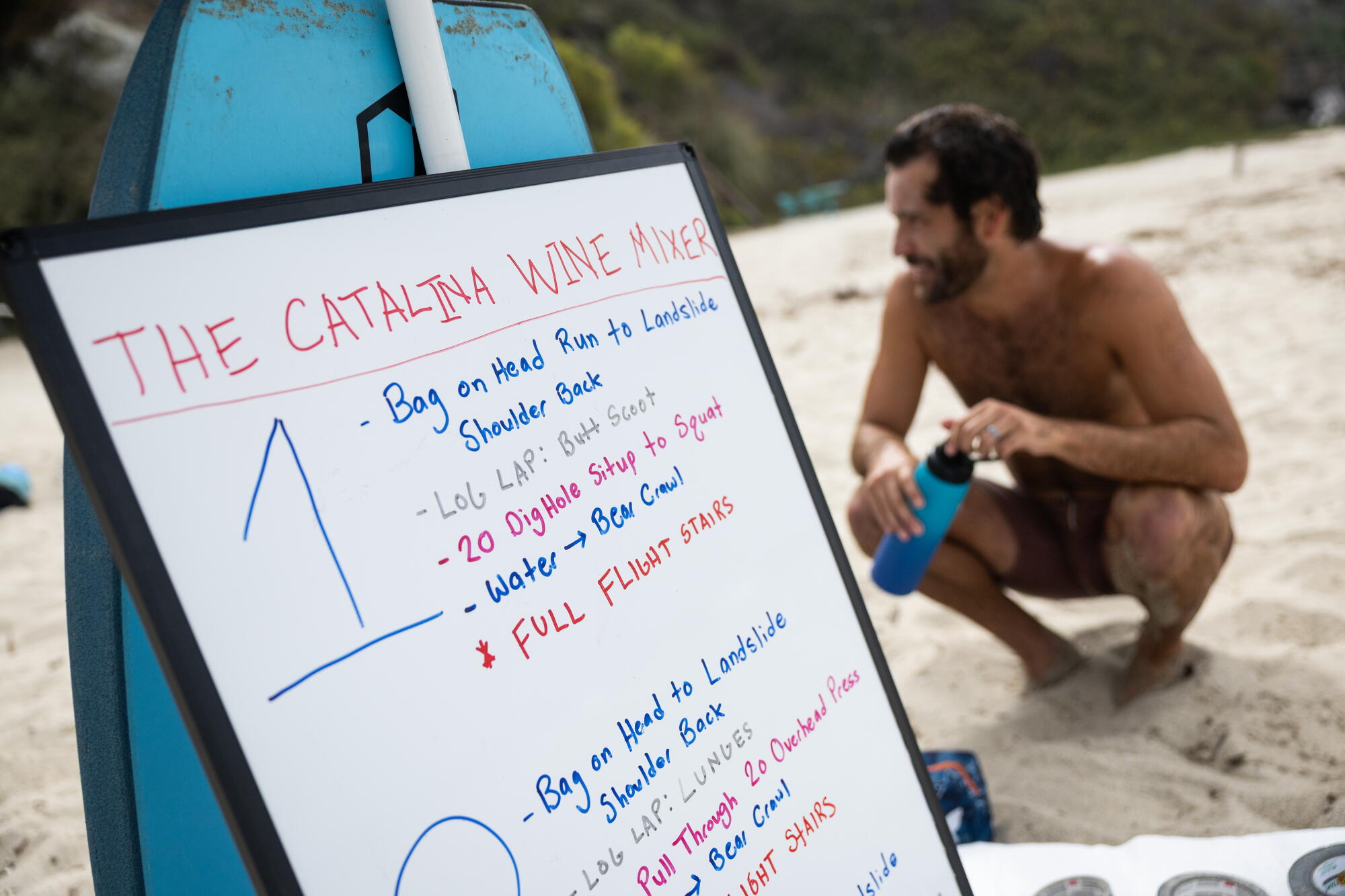
After serving for nine years, Dante’s military background is evident in the fitness sessions he designs for Sandbag Saturdays. Participants perform duck walks, suitcase carries, bear crawls and overhead holds reminiscent of the log and boat carries in Marine boot camps. But despite its inspiration, the atmosphere couldn’t be further from the “Full Metal Jacket”-esque training days that might come to mind.
“We don’t do the typical hardcore yelling at you,” Joey told me before leading the group on a recent Saturday. “Everyone can go as slow or fast as they want.”
Participants run while carrying sandbags on their heads.
Among the regular participants are active-duty firefighters, lifeguards, professional boxers, National Guard personnel, yoga teachers and locals just looking for a fun way to get their cardio in. For some, the gatherings are family affairs. When I was there, Dante and Joey’s mother and sister joined in, and a handful of young children carried tiny sacks too.
“I think people see us and it looks like there’s a barrier of entry with the sandbags and all,” said Anthony Gudenau, who joins Sandbag Saturdays regularly. “But I’m amazed at the different types of people that show up regardless.”
The group’s growth might be due to the sense of inclusiveness that becomes especially noticeable on the staircase. While doing the steps myself, I noticed participants regularly inviting curious, inquiring beachgoers to join in the following weekend.
Running in sand adds to the challenge.
Everyone is encouraged to move at their own pace.
“I love how we all pump each other up when we pass one another going up and down,” said Carmen Benedick, a local who has attended every Saturday for the past six weeks. “It’s not unusual for strangers who aren’t even part of it to also encourage you. The sense of community is amazing.”
Perhaps that’s why so many people keep coming back. Sandbag Saturday has evolved into a kind of outdoor third place, where the endorphin-releasing workout is only part of the draw. For all the sore glutes and calves, what lingers most is the appeal of turning this into a weekend ritual.
“I just want to keep doing it for free every Saturday,” Dante told me. “As long as it’s bringing a positive force to people’s lives and making them feel proud for doing something extremely hard.”
When the morning finally wrapped up and the temperature started to climb, participants stacked their sandbags into a towering formation. A few climbed onto the pile to practice gymnastics-style balances while others headed into the water.
The workout includes bear crawls after running into the water.
Then, one by one, the bags were sliced open, and the sand spilled back onto the beach where it had come from. I grabbed my belongings and headed up those 223 — or maybe 225 — stairs one last time.
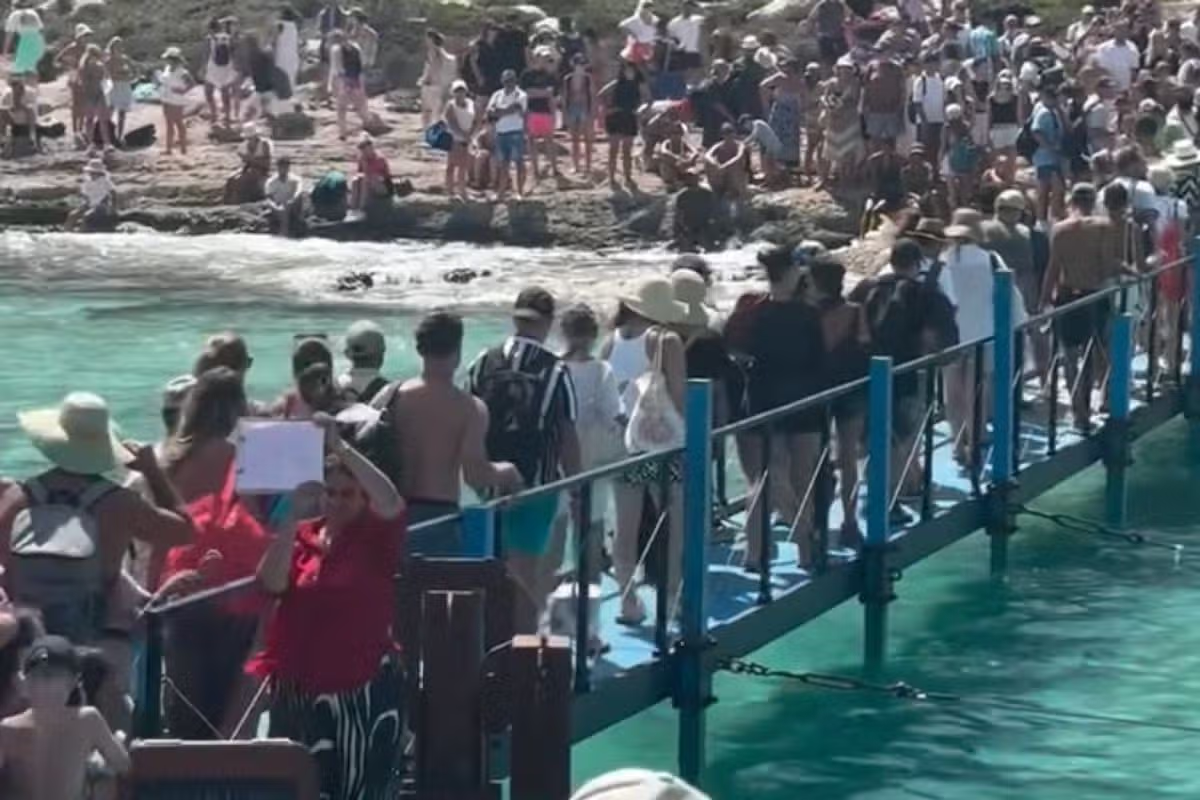
People have been left horrified after they were unable to get off the ferry when they arrived at a Greek beach as the popular destination was packed with tourists
The beach was peaceful at the start of the year, but now it’s seriously chaotic (file)(Image: Abstract Aerial Art via Getty Images)
Imagine going on an excursion when you’re on holiday, only to be unable to get off the boat you arrived on because the island is too busy. You’d likely be furious, wanting a refund for the trip, and wondering why so many others had been allowed to travel on the same day as you to visit the island.
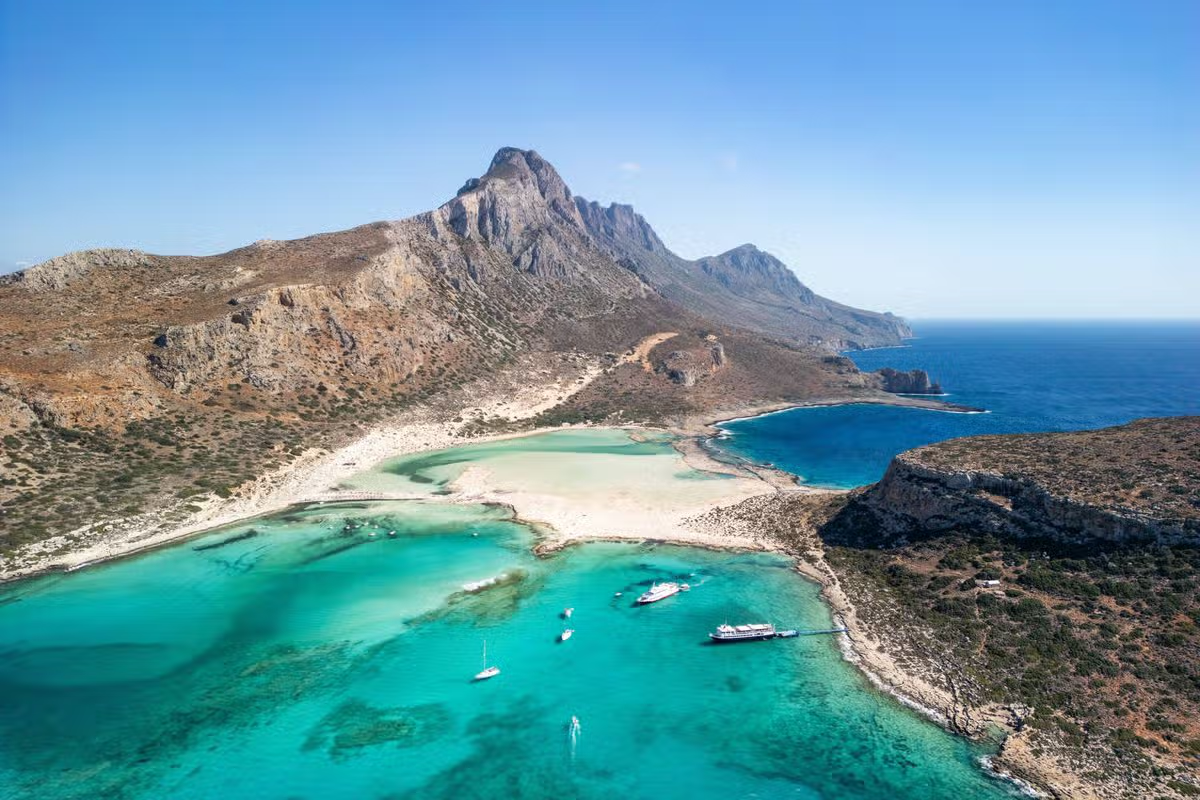
But that was the reality recently for disgruntled tourists as they arrived at Balos Beach in Crete, Greece, only to be unable to disembark from their boat. It was described as “hell on earth,” and people are blaming influencers for the beach pile-up.
The beach is renowned for its “hypnotising turquoise waters and a panoramic landscape,” however, it has been so heavily promoted and plastered across social media that many believe this is the root cause of the overwhelming crowds.
Visitors were pictured crammed along the shoreline, and as they queued to make their way onto the island, yet more tourists continued to pour in by boat, creating absolute chaos.
Local media have reported that authorities are now taking steps to regulate visitor numbers in order to protect the environment and guarantee the safety of those who do make the trip.
It has been proposed that a maximum of 1,200 people should be permitted on the island at any one time, according to The Daily Mail.
Content cannot be displayed without consent
On X, one user shared the shocking footage, writing: “Balos Beach, Greece, a queue of tourists waiting to board the return boat, while other boats keep arriving loaded with new visitors”.
One visitor recalled that a trip in May had been a “different universe,” describing the beach as completely peaceful at that time of year compared to now.
However, many families have little choice but to holiday during the peak summer months, as parents face penalties for taking children out of school during term time.
“This is the harm that influencers do,” one man claimed, given that this beach has been branded a seriously Instagrammable destination in Greece, which has contributed to its soaring popularity.
Others described it as “horrifying,” with some arguing that entry fees should be increased to manage visitor numbers.
While some remarked it didn’t appear “very relaxing,” others drew comparisons to “attending a concert,” pointing out that queuing is sometimes part and parcel of popular experiences.
Content cannot be displayed without consent
It’s not the only location that has sparked debate in Greece this summer, as one woman revealed she had to wait for two hours just to capture the perfect Instagram photograph in Oia, Santorini.
People begin queuing as early as 7am in the hope of securing the ideal shot of the iconic blue-domed buildings and stunning azure waters, but is it genuinely worthwhile?
Influencer Luiza Parente recently visited Santorini herself and documented the enormous queue required to snap a photograph.
Nevertheless, she believed it was worth the wait, as she successfully captured the perfect shot – and she even dressed in blue to commemorate the moment.
Balos Beach in Chania, Crete, was inundated with tourists at the end of August, many of them struggling to keep steady among the intense throngs attracted to the pretty spot
The beach has become very popular (Image: warumpenny/Instagram)
A beautiful Greek beach has gone viral for all of the wrong reasons.
Some people are bucket-and-spade beachgoers. Others prefer to relax on the sand, enjoying a glass of wine. Some can spend hours splashing about in the waves.
However you prefer to enjoy a day at the beach, it’s unlikely your ideal seaside trip involves getting crushed by hundreds of fellow sunseekers scrabbling not to fall into the water.
That was the scene at Balos Beach in Crete at the end of August. Footage taken at the beautiful coastal spot shows it inundated with tourists, many struggling to keep steady among the intense throngs.
Do you have a travel story to share? Email webtravel@reachplc.com
Content cannot be displayed without consent
In the roasting hot Greek weather, beachgoers were unable to move, packed as they were onto an increasingly popular beach on the north-east of the island. More tourists kept arriving by boat, even as it became apparent that Balos was full.
A video of the beach shared on Instagram has attracted more than a million views and hundreds of comments, many of them despairing about the crowds.
“I get that it’s beautiful and everyone wants to see this… BUT it’s a protected area! Maybe just let a few groups of people at a time go … and not a whole invasion … I’m Greek and this makes me sad … so please if you visit… respect that beautiful place,” one person wrote.
Another added: “Poor Balos. In a few years, this beautiful natural environment will be destroyed.” A third wrote: ” Pathetic. At least leave an unspoilt corner for us Greeks and go to Mykonos. Please.”
Efforts have been made to protect some of Crete’s best-loved beaches from the impacts of overtourism.
Balos Lagoon, Elafonisi and Falassarna are all protected under the European Union’s Natura 2000 network due to their ecological importance and rich biodiversity, according to Kathimerini.
Balos is known for its shallow turquoise waters and white and pink-tinged sand.
Giorgos Koukourakis, a special environmental adviser to the Municipality of Kissamos, told the publication: “We have had a problem with overpopulation for the past three or four years. Because these areas have such a good reputation, too many people go there.”
Some steps have already been taken, including limiting the number of sun loungers at Balos to 150, down from 400.
“But even this measure is not enough. When you have to manage 4,000 to 5,000 people a day, it is frightening,” Koukourakis added.
There are now proposals to control beach visits through an online booking system. Officials hope to have it ready next year.
HAVE you ever struggled to get to sleep on a plane? Well, what if the plane was actually a hotel?
A new hotel has just opened in Malaysia where you can stay on two planes.
You could stay on a plane at this hotel in MalaysiaCredit: 1975 Avenue HotelThe 1975 Avenue & Hotel has two Boeing 747 planes that have been converted into accommodation – each with nine suitesCredit: 1975 Avenue Hotel
In Johor Bahru – the third-largest city in Malaysia – you’ll find the new 1975 Avenue & Hotel formed of two Boeing 747 planes once used by Pan Am and Japan Airlines.
The planes – nicknamed Bove and Bey – form part of the new hotel, which has 38 rooms in total.
Sign up for the Travel newsletter
Thank you!
To get on each plane, guests will have to board via a jet bridge from the main hotel.
Each plane then has nine suites onboard designed around different countries including Indonesia, China, England and Thailand.
In the Premium Suites, guests will be able to enjoy two levels of accommodation including a king-sized bed, a freestanding bath, a rain shower and a separate lounge area.
Even the cockpit on each plane has been transformed into a lounge area, complete with original details.
The suites cost from 1,706 Malaysian Ringgits (£267.36) per night.
The two planes sit in the middle of the wider hotel complex where you can book into regular rooms – many of which have views of the two orange-painted planes.
There are 20 other hotel rooms at the complex as wellCredit: 1975 Avenue HotelOther facilities include a rooftop pool, spa and man-made beach poolCredit: 1975 Avenue Hotel
And below the wings of the planes is where you will find a man-made beach pool, a kid’s waterpark and bar.
The hotel also boasts a rooftop pool, sunken hot tub, a fully equipped gym and a spa as well.
When it comes to grabbing something to eat, the hotel has an all-day dining restaurant as well.
The hotel isn’t too far from Singapore either, as well as just 20 minutes from Senai International Airport.
LOUISE Redknapp has shown her toyboy ex what he’s missing as she posed in a green bikini on the beach after the split.
The Eternal star, 51, took to Instagram to share a sneak peek into her holiday as she posed up a storm in the green number.
Louise Redknapp has shown her toyboy ex what he’s missingCredit: louiseredknapp/InstagramShe hit the beach in a green bikiniCredit: louiseredknapp/Instagram
Louise looked beach ready in the bikini which she paired with a cream and brown monogrammed skirt as she gave a peek of her midriff.
She wore a chocolate brown long-sleeved top which she left unbuttoned to reveal her two-piece.
Sign up for the Showbiz newsletter
Thank you!
The singer accessorised with some chic sandals and a black bag with tassels.
She went make-up free for the beach day as she popped a pair of sunglasses on her head as well as several necklaces around her neck.
It was her first serious romance since the breakdown of her 19-year marriage to football pundit Jamie Redknapp, 53, almost a decade ago.
A source said: “Louise and Drew decided to end things a little while ago.
“Things had been really good between them but it felt like their relationship had run its course and they both thought it was best to move on.
“It was all very amicable and although it’s never fun when a relationship ends, Louise has thrown herself back into her social life and her busy work schedule.
Drew’s thought to have moved abroad for work so it’s been a clean break.
“She’s in no rush to jump back into another relationship because she feels very fulfilled with her life right now, but she’ll see what happens.”
Several times over the past many years, I’ve ended a column about California’s greatest natural asset with the same words:
The coast is never saved, it’s always being saved.
Today I’m beginning with that thought.
The words are not mine. The late Peter Douglas, former executive director of the California Coastal Commission, uttered them many years ago. He was pointing out that it would take constant vigilance to fend off repeated attempts to chip away at the protections he helped enshrine in the Coastal Act.
Odious, yes, but if you’re thinking of running for president one day, why not go for broke?
Coastal protection advocates held their breath late into the night Friday as the clock ticked at the end of the legislative session. But before I let you know how it played out, I’m going to back up a bit.
I’d just returned last week from a trip back east, where I’d taken photos of signs blocking my access to some beaches in Connecticut and New York. A typical under-handed tactic they use is to prohibit parking in beach lots unless you show proof of residence.
If you’re not a resident, goodbye. The parking lot could be nearly empty and they’ll send you away, and then you’ll discover there is nowhere else to park within easy or safe walking distance. It’s a surefire way to essentially privatize beaches.
So I came home eager to remind everyone that we have something special in California, and that we should all be lighting candles on the cake celebrating the 50th anniversary of the Coastal Act.
That’s the framework that established guidelines regarding public access, conservation and development. And it came about because more than half a century ago, when it appeared that the coast was becoming too privatized and industrialized, a citizen uprising led to the protections we enjoy today.
Now back to Gov. Newsom.
I’d barely unpacked my vacation bags when a gaggle of sources and news reports grabbed my attention, and the Calmatters story and headline neatly summed things up:
“Newsom pushes environmental carve-out for campaign donor’s Santa Monica project.”
The project, Calmatters reported, “belongs to Jeff Worthe, who, along with his wife, Kristin Worthe, has donated more than $274,000 to Newsom’s campaigns and inaugural fund between 2018 and 2022, according to state campaign finance records.”
“You don’t expect to have a governor do something so under-handed as this, and now that it’s out in the open, there’s no shame about it,” she told me. ”And he would be the first person to carve out an exemption in the Coastal Act, that has survived all these other attacks over the last 50 years.”
You’d like to see the California governor stand tall rather than come off like Trump’s caddy, kicking sand in the faces of those who have taken up stewardship of the coast.
Look, not everyone loves the Coastal Act or the Coastal Commission, which is seen by many as obstructionist and slow-footed. Sometimes, finding the right balance between sensible development and coastal conservation can be complicated.
But in essence, California is about the idea that the coast is not owned by anyone, it’s owned by everyone.
In the case of the Santa Monica project, Jordan asked the right question.
“Why the exemption?”
Is there something so odious about a reworked design that the only way to hustle it across the finish line is to give it a free pass?
“If you want to build in the coastal zone, you need to go through the Coastal Act,” Jordan told me. “That’s why we have the Coastal Act, and I don’t think it should be corrupted by this developer or by the governor.”
Newsom, when asked recently by a reporter to explain what he was up to, had this to say:
“I’m not going to comment about any pending bills.”
Why not? If you’re going to tear up the rule book on coastal development, doesn’t the public deserve an explanation, even if you’ve already got one foot out the door?
The Worthe project would sit just up from the beach in Santa Monica, and, in previous incarnations, it has included a luxury hotel, apartments and a Frank Gehry museum. The Coastal Commission signed off on it a few years ago after extended tussles and finally an agreement regarding low-cost housing provisions. After getting the green light, Worthe pulled back, and his permit expired.
But then Newsom came to the rescue with a trailer bill that aides were still pushing as of Thursday, sources tell me. It would have allowed for an unnamed project in that same location to be put forward again, this time without normal regulatory review in the event that Santa Monica failed to complete its own local coastal plan (LCP) by 2028
And since it could be difficult to meet that deadline, Newsom’s bill essentially provided a way to escape the kind of critical review demanded by the Coastal Act.
In anticipation of a Friday meeting between Newsom and the leaders of the Senate and Assembly, Assemblyman Rick Chavez Zbur (D-Santa Monica) rallied legislators to implore the governor to back off.
Zbur, who had been working on his own coastal development and public access bill and helping assemble Santa Monica’s LCP, was one of a dozen legislators who signed a salty missive that was sent Friday to Newsom, Senate President Pro Tem Monique Limon and Assembly Speaker Robert Rivas.
“We are frustrated that, once again, we must devote time and energy to working to defeat this harmful proposal that creates unprecedented exemptions from the Coastal Act,” the letter said.
It must have made an impact. Late Friday night, when the last whistle blew at the sausage factory, the Newsom exemption had been pulled back.
Victory for the coast.
Zbur told me Saturday morning that it was not clear how the matter had played out when the governor met with the two legislative leaders Friday, but Zbur was grateful to all three of them for letting the matter drop.
“This wasn’t about the project,” Zbur said. “It was about the precedent that would have been set on having people come in and exempting a certain project from the Coastal Act. It would have been a terrible precedent.”
Despite this threat and the recent big-footing by Trump, there’s a silver lining in all of this.
“As long as there are people who want to monetize the coast for their own benefit, you’re going to need people to rise up and say no,” said Kim Delfino, an environmental attorney and founder of Earth Advocacy.
And people did rise up.
Last week, dozens of organizations signed a letter to the governor opposing any “last-minute legislation to create dangerous exemptions to the Coastal Act.” Among them were Heal the Bay, Amigos de Bolsa Chica, L.A. Waterkeeper, Azul, the Surfrider Foundation and Orange County Coastkeeper.
I can think of several ways to end this column, but at the risk of repeating myself, I don’t think I can do better than to lean on this reminder:
The coast is never saved, it’s always being saved.
ONE tiny village in the North of England has been dubbed one of the best places to visit.
It’s surrounded by ‘Little Switzerland’s‘ rolling hills, not to mention it has a wild swimming spot that’s is considered England‘s highest beach.
Todmorden in West Yorkshire has been named one for the best places to visit this summerCredit: AlamyHardcastle Crags is considered the UK’s very own ‘Little Switzerland’Credit: Alamy
The Independent put the village of Todmorden in top spot when ranking its ‘best places to visit in summer‘.
It said: “Hebden Bridge, up the road, is a tourist magnet.Happy Valleyput Calderdale on the TV pilgrims’ map. But Todmorden at the eastern end of the valley has retained a down-to-earth, organic quality.“
Sign up for the Travel newsletter
Thank you!
It continued: “With the historicLancashire-Yorkshire border running through the town – even cutting the Town Hall in half – it’s a mix of rural and urban, Mancunian and West Riding, poshed-up and proletarian.“
It has a few pubs like the Golden Lion, Hare & Hounds and The Polished Knob as well as cafes, an indoor market.
Some of the houses sit on the waterfront as the River Calder runs directly through Todmorden.
The village is also very close to Hardcastle Crags, a wooded valley managed by the National Trust.
It’s often referred to as ‘Little Switzerland‘ thanks to its steep Alpine-style hills, valley, streams and rock ravines.
It also has a 19th-century mill that is open to visitors.
One of its most popular attractions in Todmorden is Gaddings Dam which is a Victorian reservoir high up on the moors.
Gaddings Dam in Todmorden is considered England’s highest beachCredit: Alamy
At 1,150 feet above sea level, it’s actually considered the highest beach in England and is a wild swim spot managed by the local communities.
One visitors said: “Wow! Went here one sunny, but windy day in July. Took about half an hour to walk to the top but well worth it when we got there!
“Make sure you take water and refreshments as there is nothing at the top apart from beautiful scenery! Only a small beach and only a handful of people there but was really peaceful.”
Another added: “Gaddings Dam is a fab place to go for a walk, swim, and picnic.”
Another popular site near Todmorden is Stoodley Pike, a landmark along the Pennine Way.
It overlooks both Todmorden and the neighbouring town of Hebden Bridge.
Lots of hikers say the spot ‘gets windier every single time you visit’ but is worth the walk for the ‘unreal’ views.
Meanwhile, Hebden Bridge is Todmorden’s more well-known neighbour considered ‘quirky’ and ‘bohemian’ thanks to its many artists, crafters, brewers and beekeepers.
Here’s the full list of the best places to visit in the North of England…
Todmorden, Lancashire
Ouseburn, Newcastle
Stockton-on-Tees, County Durham
AND festival, Barnsley, South Yorkshire
The GM Ringway, Manchester and surroundings
Yorkshire Sculpture Park, Wakefield, West Yorkshire
OUR Spotlight On column shines a light on the best things to see and do in popular holiday destinations, as well as some lesser known spots.
As Brazil sees a record breaking number of British tourists flocking to the country in 2026, this week we’ve set our sights on Rio de Janeiro.
Here is everything you need to know about a trip to RioCredit: AlamyMake sure to try the famous beach snacksCredit: Alamy
The Sun’s Deputy Travel Editor Kara Godfrey recently visited the iconic city.
She explained: “I’ve never been to a place that looked exactly like it did in the movies – enter Rio.
Sign up for the Travel newsletter
Thank you!
“From the 5am pink sunrise of Copacabana Beach, to the men selling teeny tiny bikinis all tied to a huge stick, the city welcomed me with vibrant colours and beautiful chaos.
“Make sure to do some shopping – Havaianas are a steal here compared to the UK, with too many shops to choose from – or just rent an umbrella and lounger for the day for less than £20.
“Thanks to the many beach vendors, they’ll all come straight to you, serving cocktails, snacks, meals and even accessories.”
Here are some of our other top tips for a trip to the Brazilian capital.
MUST SEE/DO
Hop in a taxi and head over to the district of Santa Theresa, nicknamed Little Lisbon.
The resemblance comes from the very quaint yellow tram that runs the length of it to the fantastic independent shops and cafes.
Street art brings colour to the roads, alongside sellers hawking Brazilian football shirts and rogue monkeys swinging through the trees.
Make sure to order delicious acai bowls and ‘pão de queijo’ a cheesy bread, at Cultivar for a true Brazilian breakfast.
Copacabana Beach feels just like the moviesCredit: Alamy
HIDDEN GEM
One of the famous Brazilian clothing brands is Farm Rio – but one has a hidden rooftop that no-one knows about.
Casa FARM rooftop is set across four floors but go to the top and you will get an amazing view of the beautiful Green Lagoon and Christ the Redeemer without the crowds.
BEST VIEW
You can’t visit Rio without going to see the famous Wonder of the World, Christ the Redeemer.
Make sure to check the weather before going up – any fog up there and you’ll only see half the man – but the massive statue surrounded by the city of Rio will leave you in awe of its grandeur.
Then head over to Sugarloaf mountain for just as fantastic views, after hopping in two cable cars to take you up the 1,299ft.
Rio express tour with Christ Redeemer and Sugarloaf Mountain, from £70. See tuimusement.com.
RATED RESTAURANT
Make the most of the beautiful Rio beaches and eat at Tropik Beach Club, which is on Copacabana Beach with hearty bowls of shrimp rice and fresh ceviche, chased by a local caipirinha cocktail and live music as the sun goes down.
If you get snacky on your walk home, try and catch one of the nearby street vendors for a bag of Biscoito Globo a strangely-morish cassava beach snack.
Santa Theresa is often called Little LisbonCredit: AlamyThe rooftop pool at the Fairmont Rio de Janeiro Copacabana hotel pool has amazing viewsCredit: Alamy
BEST BAR
For a good night out, join the locals in the neighbourhood of Botafogo.
One of the most popular bars is Casa Tão Longe, Tão Perto which serves local Brazilian wines from small distilleries.
You have to be quick here. The tiny rattan seats line the pavement and are in short supply, but it is worth it for the friendly English-speaking staff.
For something a bit finer, head around to Belisco Bar de Vinhos, which serves up fantastic Chilean and Argentinian wine as well.
HOTEL PICK
The Fairmont Rio de Janeiro Copacabana couldn’t be better placed, straddling both Copacabana and Ipanema beach.
The rooftop infinity pool has a great snack menu as well as live DJs and beautiful views from the many sunloungers.
The rooms are simple but classy and spacious, many of which have seaview balconies.
Make sure to spend time at breakfast – the buffet is extensive – and book in for a glorious massage at the on-site spa.
Double rooms at Fairmont Rio de Janeiro Copacabana cost from £277 based on two sharing on room-only basis. See fairmont.com.