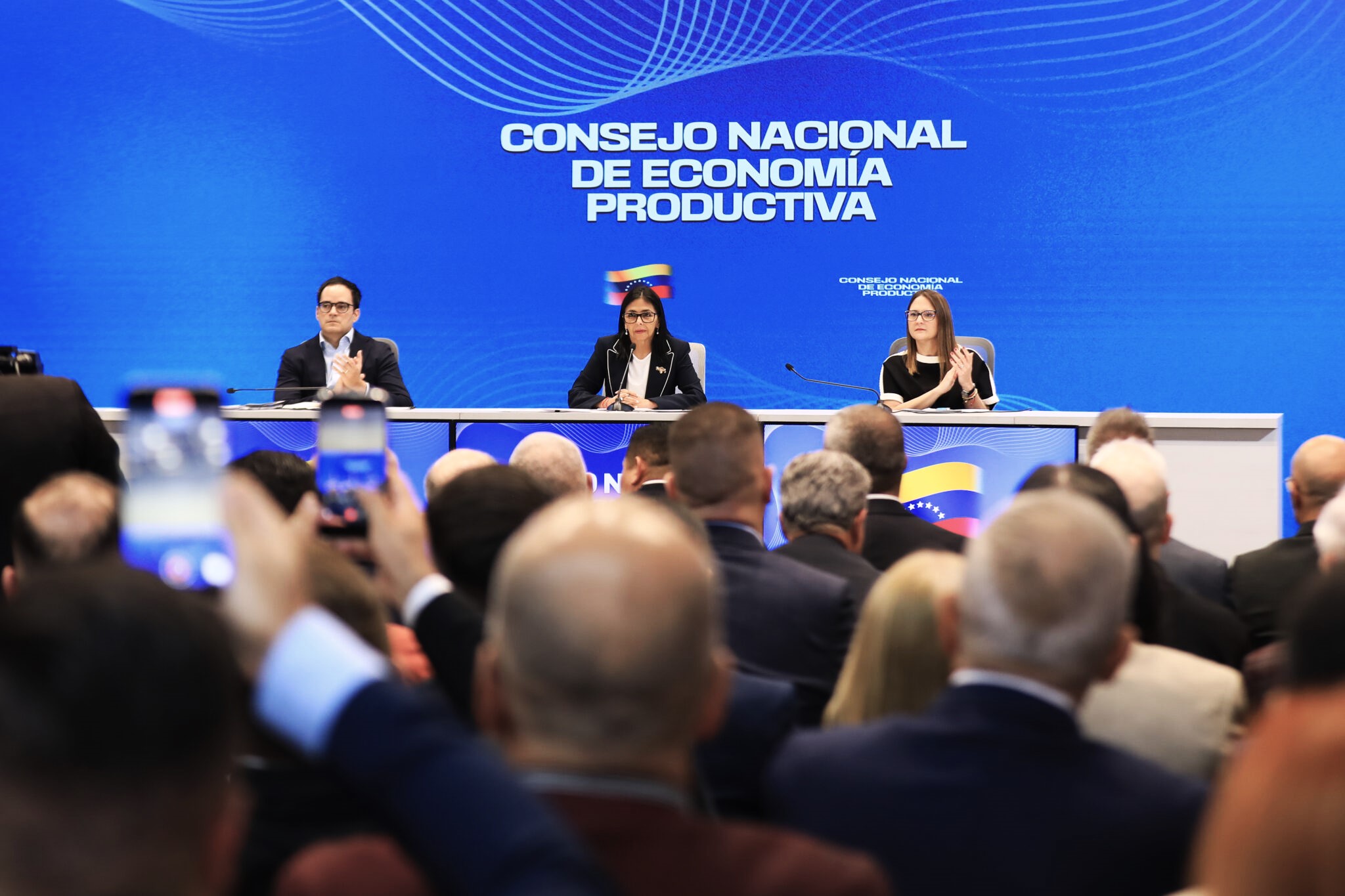
Post-Maduro Economic Management Leaves Structural Flaws Untouched
Optimism has been the name of the game since Operation Absolute Resolve took Maduro out. Such optimism doesn’t just come from Venezuelans, where polls showed support for the intervention, but also from the investment community, which has flocked into the country to assess all kinds of opportunities. Since then, oil revenues have increased, driven not just by output increments but also by favourable price tailwinds and sanctions relief, which meant the reintroduction of Venezuelan crude into the global market. Today, Venezuela is the second largest source of imported crude in the United States, something unthinkable five months ago.
The petro dollars haven’t come in by themselves. A mechanism was designed so American officials could control how and where those funds would be deployed in order to avoid the disappearance of half of all oil revenues, as was the case under the previous administration. Additionally, licenses were granted to the BCV, new laws were passed for the hydrocarbon and mining sectors, with new MoUs being signed with international energy companies. Even macroeconomic data sets have been released for the first time in over a decade. So much appears to have changed that even multilaterals (chiefly the IMF) reemerged as crucial partners for a potential debt restructuring and stabilization program. Optimism is granted and the illusion of recovery does not come without merit, given the changes the country has experienced in less than five months.
However, that mirage breaks against the harsh reality on the ground and macroeconomic indicators that tell a different story. A year-to-date inflation of 90%, a 70% depreciation of the official exchange rate, and a widening gap between multiple dollar rates that continues to punish businesses and individuals alike. Meanwhile, the Bolívar printing press is working overtime while BCV reserves remain flat, deepening macroeconomic uncertainty and destroying what little credibility the institution still retained.
The almighty bond market will need far more than an Instagram post to bite the bait. Sovereign creditors respond to numbers, rules, and enforceability. Venezuela remains deeply deficient on those fronts.
None of this reflects an economy that is stabilizing, despite the interim authorities having a golden opportunity to do so. Instead, it reflects a government trying to politically manage deterioration without implementing the reforms necessary to stop it.
The current model is not designed to solve the crisis but to preserve political control while generating just enough liquidity, oil revenue, and international flexibility to postpone its inevitable collapse. The interim authorities continue to rely on the same mechanisms that created the disaster in the first place with an unsustainable monetary expansion, exchange-rate distortions, opaque fiscal management, and complete control over all institutions. So while oil revenues and external prospects may have improved, the underlying structure of the economy remains unchanged.
Refusing to address the obvious
A country benefiting from stronger revenues should be rebuilding reserve buffers and restoring institutional confidence, and prioritizing the reconstruction of the essential services. Instead, every dollar is consumed by a State that remains just too large, too inefficient, and politically unwilling to reform. The central bank continues injecting Bolívares into an economy where there is effectively no confidence that the currency can preserve value over time, nor in the institutional capacity to sustain credible long-term policy.
This lack of confidence is central to understanding our persistent inflation problem. It is not solely driven by the irresponsible monetary expansion but by high money velocity resulting from the complete lack of credibility in our currency. As soon as businesses and individuals receive Bolívars, they rush to buy dollars, inventory, or any asset capable of preserving value, accelerating velocity and pushing inflation into a spiral. This is not speculation; it is rational economic behavior in response to the collapse of trust in the Bolívar. Without restoring that confidence, inflation will remain entrenched.
The foreign exchange market remains one of the clearest indicators of the country’s fragility. As the gap between the official and parallel rate distort prices throughout the economy. The widening gap between the official and parallel exchange rates distorts prices across the economy, leaving businesses struggling to establish stable cost structures or expansion plans. International investors also face enormous uncertainty regarding how those multiple rates affect their ability to move capital in and out of the country. Meanwhile, the BCV continues wasting precious dollar inflows trying to defend an artificial exchange rate that is fundamentally unsustainable.
Without institutional legitimacy, no restructuring effort or investment cycle will prove durable or beneficial for the country.
Addressing these distortions may still be too politically costly for Rodriguez. Closing the gap would require a fiscal discipline alien to chavismo, while also dismantling one of the most important corruption mechanisms for rewarding insiders.
The solution appears straightforward: transition toward a system in which dollar-auction pricing is transparent and the USD is allowed to float. Furthermore, the government should let the dollars circulate freely, letting businesses and individuals use the greenback for both transactions and contract setting. While alleviating the economic distortions, this will also contribute to slowing the velocity, and keeping inflation under control. Venezuela should pursue this approach while keeping the Bolívar alive so it can gradually recover credibility through discipline and a coherent fiscal and monetary framework.
Yet the changes necessary to stabilize the economy are the same changes that would reduce the government’s discretionary control over the economy. As previously argued, setting an independent board in the likes of Petroleos de Venezuela or the Venezuelan Central Bank would threaten the political hegemony of the interim authorities across all institutions.
What sound debt restructuring implies
The next collision with reality, where fundamental flaws will be hard to conceal, lies in the newly announced debt restructuring process. Interim authorities are about to face the almighty bond market which will need far more than an Instagram post to bite the bait. Sovereign creditors respond to numbers, rules, and enforceability. And on those fronts, Venezuela remains deeply deficient.
Venezuela’s total debt is estimated at $200 billion or about 200% of GDP. Despite Venezuela receiving a license to be able to hire Centerview, one of the most prestigious boutique firms in the market, any meaningful and fair progress would be impossible without a coherent macroeconomic plan bound by institutional legitimacy and backed by multilateral oversight, particularly from the IMF.
For Venezuela to avoid setting itself up for failure through a restructuring process that could hinder its financial capacity to grow sustainably, the Fund becomes an indispensable partner. The IMF would need to conduct an assessment of the country’s current financial stance via an Article IV consultation that hasn’t been conducted since Chavez withdrew from the organization. This assessment would be a key piece in understanding Venezuela’s repayment capacity and debt sustainability, setting the base from where to negotiate towards an agreeable debt haircut, tenor, and coupon.
Nothing will come out of the great opportunity created by the January events if there is no fundamental change over the who and hows of economic management.
An IMF-backed restructuring would eventually demand fiscal transparency, monetary discipline, reserve accumulation, independent oversight, and credible institutional reforms. Additionally, creditors will call for legal certainty and enforceable agreements that provide confidence that rules will not arbitrarily change once capital enters the country, or years later when investors seek to exit . To provide such guarantees, Venezuela would need a legitimate political and legal framework capable of signing long-term agreements recognized both domestically and internationally
Without institutional legitimacy, no restructuring effort or investment cycle will prove durable or beneficial for the country. Proceeding without these elements would leave the country exposed to holdout creditors and future arbitration battles. The cornerstone for avoiding that is a credible electoral timeline that renews and legitimizes the National Assembly and executive power.
Yet that process is also set to collide with the interim authorities’ apparent intention to manipulate political timing in their favor. The current leadership wants the benefits of the stability phase brought in by oil revenue, sanctions relief, and fresh capital without surrendering the mechanisms of control that produced the crisis in the first place.
That formula is destined to fail. The authorities are neither serious enough nor committed to making the necessary reforms. In the meantime, we can keep going over the distortion caused by the exchange rate, what new law is being proposed or the deceiving debt announcement from last week. But nothing will come out of the great opportunity created by the January events if there is no fundamental change over the who and hows of economic management.