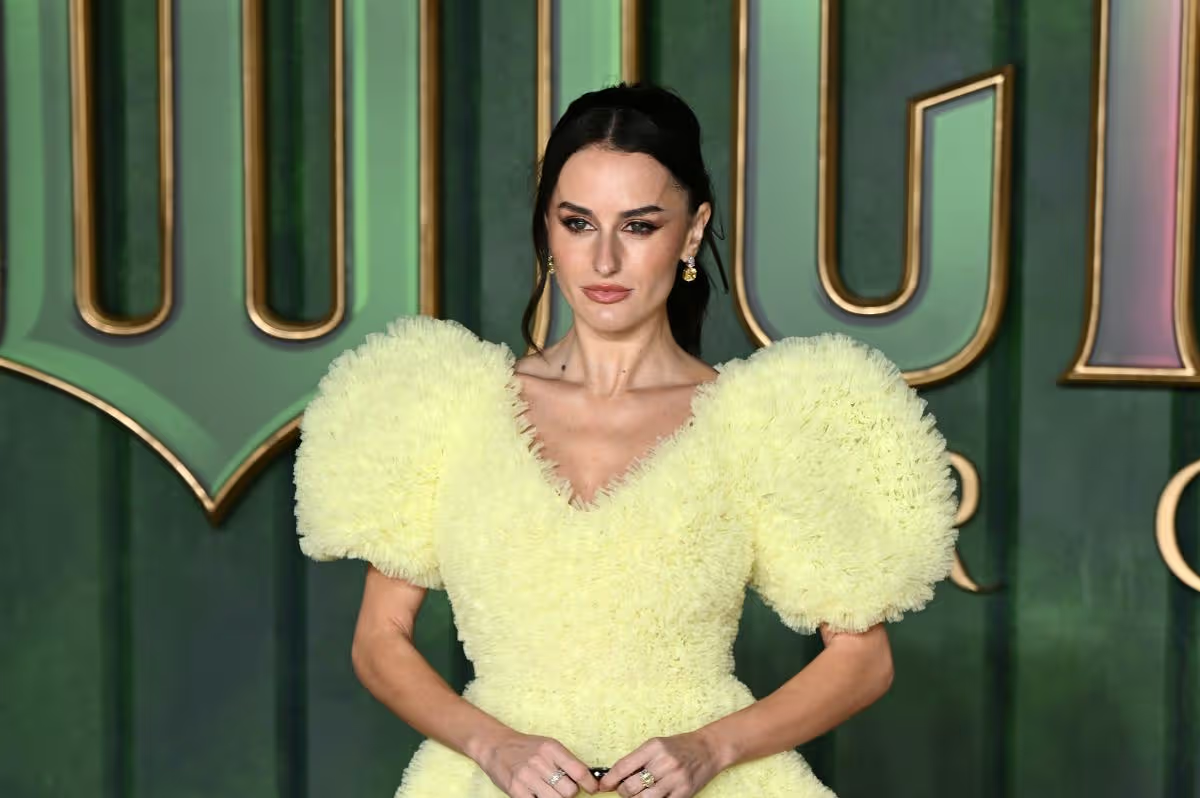
Strictly Come Dancing is reportedly going to be unrecognisable by the time it returns to screens later this year, after bosses have decided to give the show a makeover
Daniel Bird Assistant Celebrity and Entertainment Editor
22:40, 04 Jun 2026
Strictly is to undergo a major transformation(Image: BBC)
Strictly Come Dancing is undergoing a major makeover. The BBC dancing programme is set to return to screens later this year with three new hosts following the departure of Tess Daly and Claudia Winkleman.
And Tess and Claudia aren’t the only people who’ve left; a string of professional stars have also departed, making way for new names to take to the dancefloor. But that’s not the only shake-up: sources say the show will look completely unrecognisable by the time it returns in autumn.
The dance floor is likely to undergo a makeover, with bosses currently deciding whether to change the iconic backdrop, which has become extremely familiar to viewers. The current studio, the George Lucas studio at Elstree, is made up of bright coloured panels, lights and some screens.
But sources claim this could switch to larger screens that display visuals during routines. “It was natural that bosses look at giving the show a whole new look as it enters a new era, but they aren’t ditching the traditional presentation of the show, just the way it is delivered,” a source told The Sun.
The source went on to add: “It’s going to get a more sleek, impressive set, but it will still be all about fun, glitz and sparkles. They aren’t trying to turn it into the set of Star Wars. But it would have been strange not to have made some change to the look of the show, given that the programme is starting a new chapter with so many other new elements.”
The publication claims that the new set has been compared to the shake-up The X Factor underwent in 2009, which saw the show’s backdrop made up entirely of large screens.
The rumoured new set-up has recently been seen across the UK tour of Strictly: The Professionals, and bosses have decided to keep the staircase and band, but the rest of the display was on giant green screens. The Clauditorium is said to remain the same.
With three hosts rather than two, there will also be a new backstage element of the programme. Emma Willis, comic Josh Widdicombe and professional dancer Johannes Radebe are the new faces of Strictly and will make their presenting debut in the autumn.
Another change this year is that Janette Manrara won’t be returning to the front spin-off show, It Takes Two. Manrara was also widely rumoured to be facing the axe, and has now confirmed she has left the series.
In a video posted on her YouTube account, she said: “Strictly Come Dancing has changed hugely, and I am no longer a part of It Takes Two or the main show. I’ll still be involved in other ways. But that just means that I’m free to pursue and do many other projects that I’ve always wanted to do and never really thought about doing.
“Strictly is all I’ve known for the last 14 years so it is a bit like, ‘Oh, we’re going into a different world, a different space, how are we going to navigate that?'”
The Mirror approached Strictly Come Dancing for comment.
The One Show has welcomed back one of its hosts after she was absent due to illness
A presenter has returned to The One Show after being off ill(Image: BBC screengrab)
One of the presenters on The One Show has returned to the sofa after taking time off ill.
Alex Jones is usually a staple on the BBC programme but was absent on Monday and Tuesday this week, with JB Gill stepping in and hosting alongside her regular co-presenter, Roman Kemp.
However, the TV star was back on Wednesday (June 3), fronting the show alongside Angellica Bell.
Alex’s return was confirmed on Instagram ahead of the show, with Angellica exclaiming: “Good news, everyone. Alex is back!”
“Are you feeling better?” she asked the presenter.
“I am,” replied Alex. “I am slightly croaky, but we’ll get through it,” she added.
As the show started, she told Angellica that she had “nearly recovered” after being unwell, adding: “Glad to be here.”
The pair then turned to announcing the guests who would be on the show – Dara Ó Briain and Shania Twain.
Alex has been hosting the BBC programme for several years, and is one of the show’s best known presenters. The star, who has three children with her husband Charlie, has been a presenter on the programme since 2010, hosting with stars such as Matt Baker, Ronan Keating and Roman.
Speaking last year, she told the BBC: “I feel incredibly proud to have been on the iconic sofa for all these years. It certainly doesn’t feel like 15 years, and it still feels fresh, as the show keeps evolving. I feel like we keep coming back better and better.
“I started as a young girl and I feel like I’ve grown up with our viewers. They have seen me through all my big life moments like getting engaged and married, to having children. Our viewers are like extended family by now!”
She went on: “I think the reason is it really strikes a chord with people because we sit right at the heart of the nation. Our job, essentially, is to reflect what’s going on. All the small daily bits and pieces, but also the big events that affect the country.”
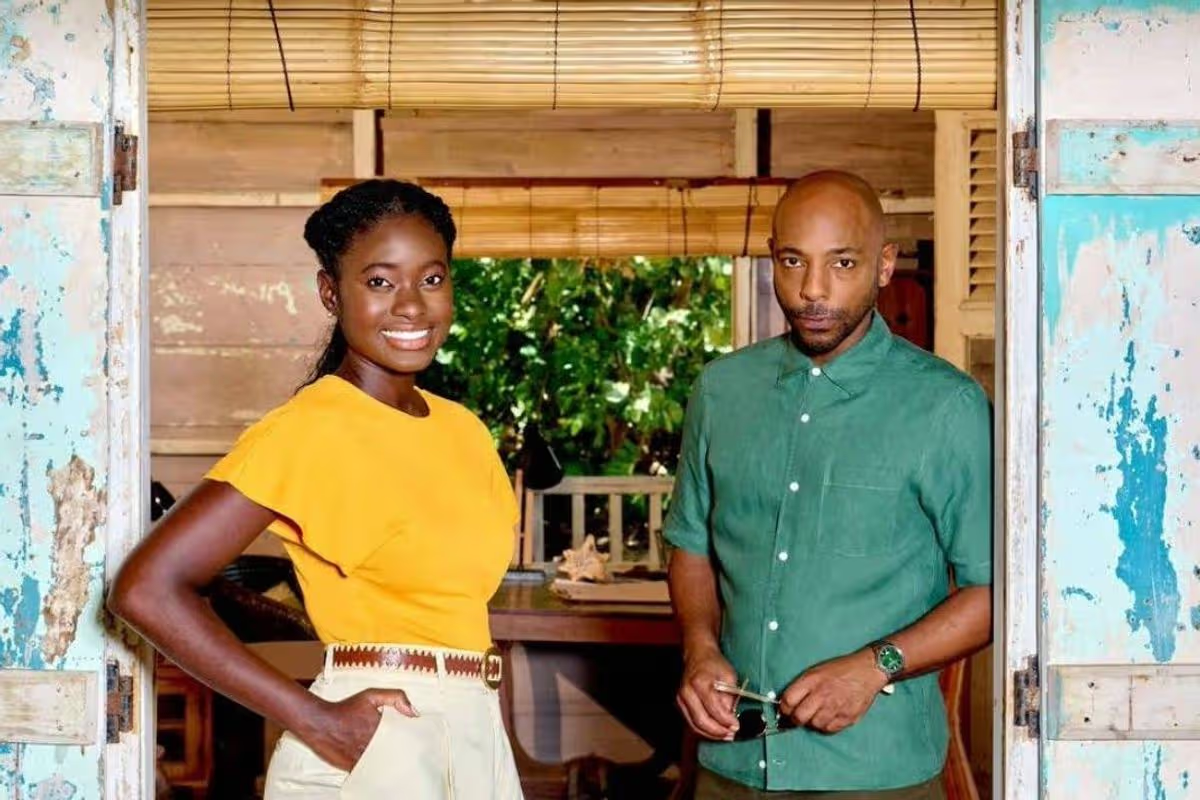
Death in Paradise fans have a while to wait for the next series, but luckily there are three cosy crime dramas that can fill the void
Death in Paradise is loved by viewers(Image: BBC)
These three brilliant dramas should fill the gap nicely.
Death in Paradise face face a bit of a wait until the next instalment from Saint Marie, but there are a few “cosy” crime programmes that can take its place in the meantime.
The most recent series of the BBC crime staple – starring Don Gilet as DI Mervin Wilson, who investigates various murders on a fictional Caribbean island – concluded in March.
The 16th series isn’t expected to air until early 2027, while the Christmas special remains months away, reports the Express.
Fortunately, there are a few crime programmes to bridge the gap for Death in Paradise fans. We have a look at some of the best ones to delve into during June.
A Taste For Murder
A Taste For Murder premiered in April, following widowed Metropolitan police detective DCI Joe Mottram, portrayed by Warren Brown, who travels to Capri with his daughter Angelica (Beau Gadsdon) as they process their bereavement.
During their stay, he starts getting involved in solving local crimes, including the death of a British holidaymaker and the questionable fate of someone who’d been making a routine dive.
It’s proven tremendously popular with audiences, with some declaring it superior to Death in Paradise.
One viewer posted on X: “Death in Paradise meets Whitstable Pearl meets Recipes for Love and Murder and I’m absolutely here for it.” Another viewer remarked: “If you like light-ish murder mysteries then give it a try. Similar theme to Death in Paradise but I think it’s much better. Gorgeous scenery/food & a better cast imo. It’s entertaining, and it flies by.”
A Taste For Murder is available on ITVX.
You’re Killing Me
Mystery drama You’re Killing Me launched on Acorn TV in May.
Situated in a picturesque New England town, the series follows novelist Allie (Brooke Shields), who joins forces with podcaster Andi (Amalia Williamson) to track down the killer of a friend.
One viewer left a comment on IMDb describing it as a “perfect mystery series”, while another remarked: “You’re Killing Me may find its place in the cosy mystery pantheon.”
Someone else commented: “At first glance, it seems like a reincarnation of Murder She Wrote. Writer, New England location and murders! It rapidly became its own show. Brooke Shields is absolutely hysterical in this. I never saw her movies or series so I didn’t know why to expect but I was instantly pleased. The support cast is enjoyable as well. Kudos to the writers for some clever dialogue.”
The Brokenwood Mysteries
New Zealand-based programme The Brokenwood Mysteries is currently on screens as the crime drama’s 12th season airs.
The series is set in the seemingly tranquil town of Brokenwood, which is “slowly being riddled with murders” and Detective Mike Shepherd (Neill Rea) must solve them.
The series can be found on U&DRAMA and Channel 4, with the official synopsis describing it as a show “about a detective who arrives on assignment in a small town where memories – and animosities – run deep”.
Fans have labelled it “outstanding”, with one viewer declaring: “I look forward to future episodes of this refreshing NZ ‘whodunnit’, which for me rates better than Midsomer, definitely better than Death in Paradise, but perhaps not quite as good as Lewis, Frost, or the Swedish version of Wallander.”
Death in Paradise is available to stream on BBC iPlayer.
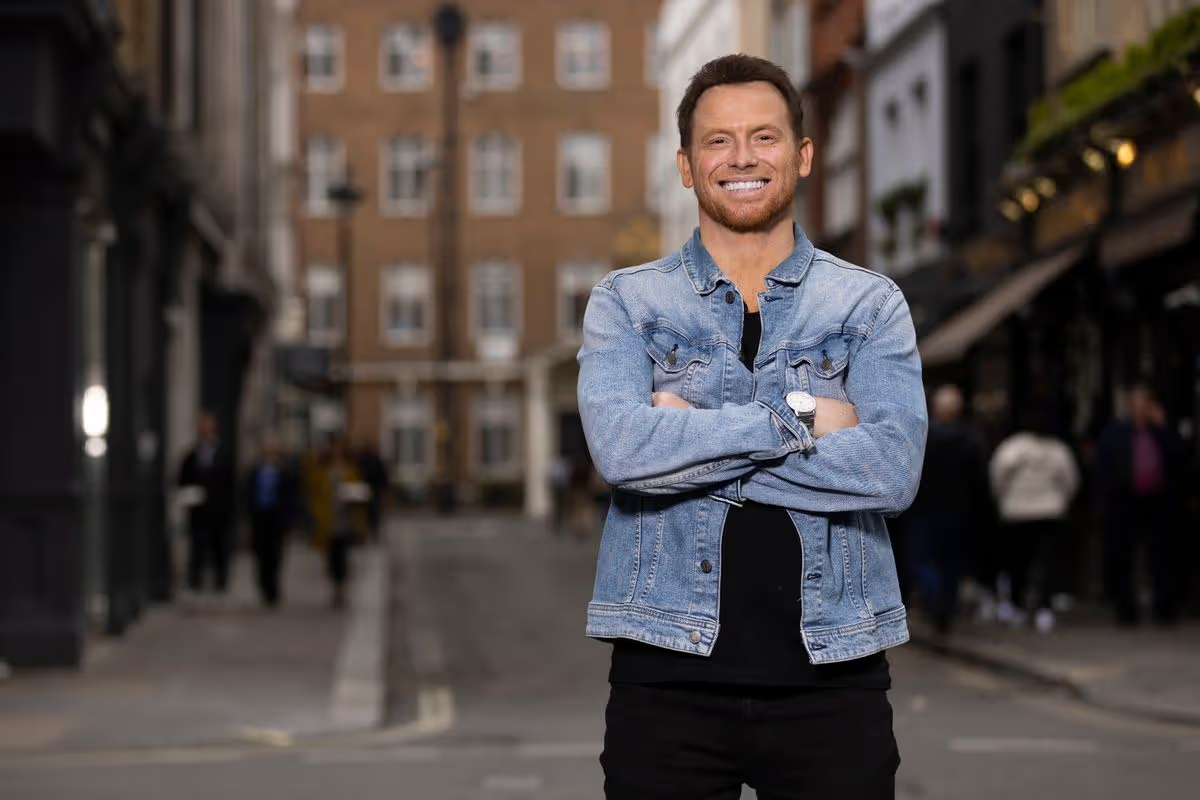
Joe Swash says discovering family history has made him complete after taking part in Who Do You think You Are? for the BBC
Joe finds out his family on his father’s side moved over from Italy at the start of the 20th century.(Image: CREDIT LINE:BBC / Wall to Wall Media Ltd / Stephen Perry)
Joe Swash says he feels “galvanised” after learning about the Italian roots of his family. The actor and husband of Stacey Solomon appears on Who Do You Think You Are? hoping to learn more about his family tree.
Former EastEnders star Joe, 44, tells the programme he lost his own dad Ricky when he was aged 39 and Joe was just 12 which had a big impact on his upbringing.
He explained: “My house was full of life and life. And then, when my dad died, for a long time, it was a house full of sadness and grief. So, you know, a lot of the time it was just trying to get through that period. Growing up in London, I was quite vulnerable, not having a father figure, and I had dyslexia and ADHD that wasn’t diagnosed, so I do struggle when I read something, and a lot of the time I was misunderstood as being quite naughty and mischievous.”
Joe says thanks to some “strong women” in his life he stayed on track, and that he feels like he has got some “Italian traits” including wearing his heart on his sleeve. His mum Kiffy tells him that on his father’s side his great grandmother’s part of the family tree were Italian.
At this stage Joe doesn’t know anything beyond his grandad Charlie but his parents were Joe’s great grandad also called Charlie Swash and Maria Raimo. A 1921 marriage certificate shows Maria living at home in Lox Gardens in London with her parents, Giuseppe, Italian for Joseph, and Rosa, Joe’s great great grandparents.
Joe’s great great grandfather Guiseppe Raimo moved from Italy to London and worked his way up from a street performer in poor living conditions to a job crafting Street pianos. He also spoke alongside Sylvia Pankhurst in 1923 at a Communist Workers’ Movement meeting in London. A letter in his name was published in weekly newspaper The Worker’s Dreadnought, condemning the brutality of the fascist regime.
Historian Alfio Bernabei said: “Giuseppe wasn’t simply attending the meeting, he was actually speaking alongside Sylvia Pankhurst. He could see what was going on, he was following events in Italy, and everything was leading towards a catastrophe. Giuseppe would have run terrible risks had he been in Italy, and he was running terrible risks in London.”
Hearing this detail, Joe said: “It really does fill me with a great, great deal of pride to think that he was struggling through life anyway, being Italian, living where they were living, but he still was concerned about what was happening in the world and fascism, so he must have been a man with great moral compass, someone that really stood by what he thought.
“I had so much pride when I found out about him. The journey he went on, the morals and the things he stood up for, the people he rubbed shoulders with, and the way he got out and worked through poverty to make himself and make his family’s life better, just shows real tenacity. Learning about his speech was emotional, it was a total surprise. I think in that moment I felt really close to my relatives, to Giuseppe. It was such a lovely thing to find out.”
Joe also goes to Naples and traces his ancestors back to his five times great grandfather Donato who was born in 1762 and was living in the now largely abandoned but picturesque mountainous town of Senerchia. The family were peasant farmers but did have a brush with crime after being wrongly linked to the Italian brigands in 1867 during the Italian rebellion.
Back in the present day Joe also finds a ‘Raimo bar’ nearby to Senerchia, and is delighted the family name lives on in Italy. Reflecting on everything, Joe said: “For a lot of my life, I’ve never really known who I am, what I am, where my roots are. I don’t know if that’s due to losing my dad at a young age, but being on his journey, it really has sort of like galvanised who I am, where I’m from, the people that made me, how strong they are, they never give up. Hopefully a bit of that tenacity has come down the line to me.”
He added: “I think what I’ll carry with me from this experience is just the importance of where you come from and knowing who you are. As well as the things that I found out about my relatives, especially about Giuseppe. Traits and things from them that I hope I have as well, or that I’d like to introduce into my life, you know. It just made me feel a lot more attached to my heritage, which I’ve never really felt attached to. I very much knew nothing about it before, but after this journey, I feel like I’m part of something.”
* Who Do You Think You Are? With Joe Swash airs on BBC1 at 9pm on Tuesday June 9. The series is available to stream on BBCiPlayer.
ONE of the UK’s prettiest islands has been forced to ban people travelling there once a week.
Ulva is home to just 16 people but after it starred on a TV show, has experienced ‘unprecedented interest’ by tourists.
Sign up for the Travel newsletter
Thank you!
Ulva has been described as ‘another world’ but will close on certain days to monitor touristsCredit: AlamyA TV series about the opening a new hotel has thrust Ulva into the spotlightCredit: BBC
In a bid to control the number of people visiting the small Scottish island, the local and only ferry service has announced it will not run on Sundays.
Ulva is an island in the Inner Hebrides of Scotland found off the west coast of the Isle of Mull.
The island receives an influx of visitors during the spring and summertime – but this year has had more than ever.
Banjo and Ro who hail from Australia appeared on the series renovating Ulva House – a Regency home that will open as a hotel.
Since the show aired, the island has become much busier – so much so that the ferry operator has decided to close on certain days.
The ferry is the only way to get to Ulva as it crosses the strait from Mull in around 5-minutes.
The foot passenger ferry operates on weekdays from 9am to 5.30pm and does not operate on Saturdays.
In recent news, the ferry announced it will no longer carry passengers across on Sundays either.
In a recent post, it said: “None of us could have predicted how significant the increase in the numbers of visitors would be, so to give ourselves, the Boathouse [restaurant] and fellow islanders the chance to recharge and prepare for the week ahead, we have made the difficult decision not to open Sundays this summer.”
For those who have already pre-booked a trip to the island in June, July or August, the ferry operator has said that it will still help visitors across.
The ferry operator from the Isle of Mull to Ulva will no longer operate on SundaysCredit: Alamy
Banjo and Ro already run The Boathouse on Ulva, a restaurant where visitors can pick up a coffee or local fish dishes.
The island is car-free island with cliffs, moorlands, woodland as well as quiet beaches and bays.
Banjo said: “We’ve got otters, dolphins and seals swimming by, and one ferry you can take from Ulva is called Turus Mara which goes to the Treshnish Isles, it’s home to puffins.
“Often we go there for a puffin picnic just to sit with them, that’s one of our favourite things to do.
“There are more cows than people too so you’re likely to see a lot of them. And you’ve got a great chance of seeing the Northern Lights when the sun goes down.”
The Boathouse is a restaurant on the island run by Banjo and RoCredit: Alamy
When it comes to activities on the island, of course Banjo suggests stopping at The Boathouse for a “pre-walk coffee” then a walk to Ormaig.
Here is where there are ruins of the island’s villages.
Another attraction is Livingston’s Cave, and nearby you’ll see “gorgeous view of Inch Kenneth where the Mitford sisters used to live”.
Then Banjo said: “Head back to The Boathouse for lunch – we serve fresh langoustines, crab and lobster which you can enjoy with a fresh bottle of wine.”
A Good Girl’s Guide to Murder has come to an end on BBC and Netflix, but there are plenty of loose ends to tie up in a potential third season
18:10, 30 May 2026Updated 18:26, 30 May 2026
Biggest questions A Good Girl’s Guide season 3 must answer
Pip Fitz-Amobi has one final mystery left to unravel.
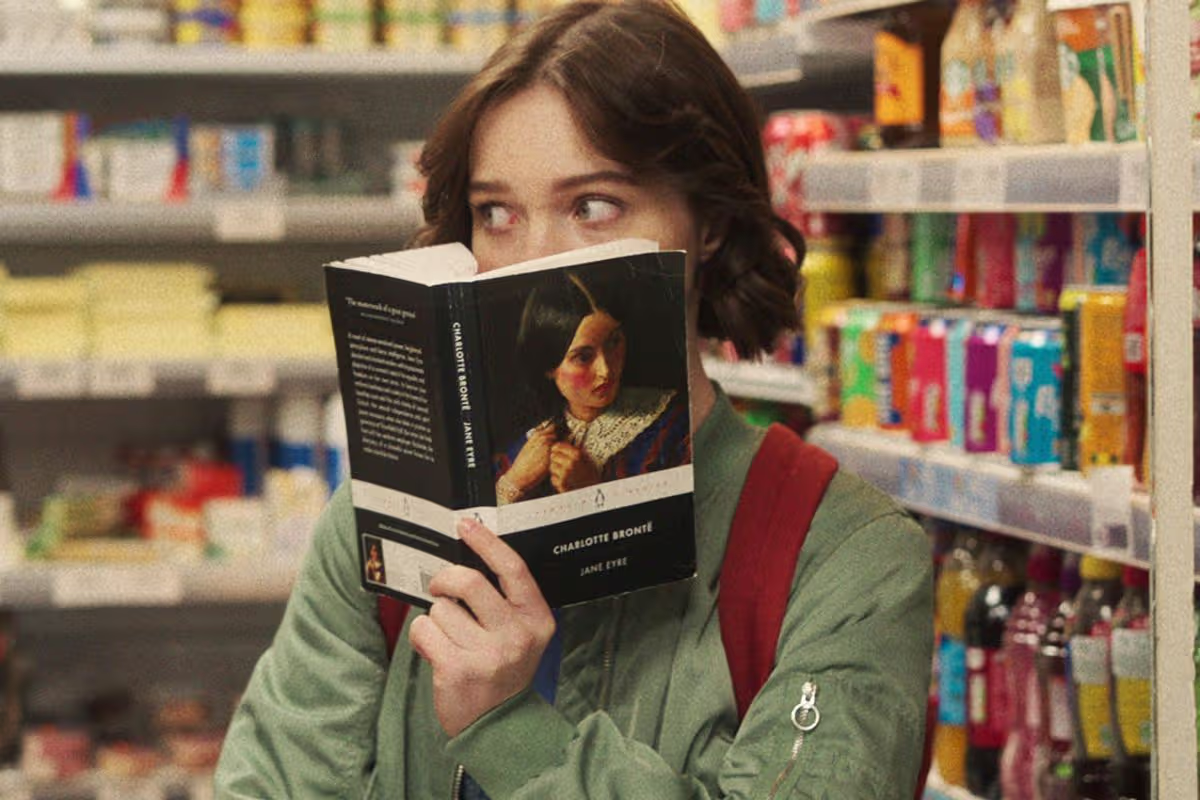
A Good Girl’s Guide to Murder made its eagerly anticipated return this week for a second thrilling season, adapted from the bestselling novels by Holly Jackson.
On this occasion, Pip Fitz-Amobi (played by Emma Myers) investigates the disturbing disappearance of Jamie Reynolds (Eden H Davies), the elder brother of her friend Connor (Jude Morgan-Collie).
Elsewhere, Max Hastings (Henry Ashton) stands trial for drugging and assaulting female classmates, yet proceedings are thrown into disarray when Jamie surfaces before crucial evidence can be presented.
Now that another compelling six-part series has concluded with a breathtaking cliffhanger, we examine all the loose ends that a potential third season would need to resolve, reports Bristol Live.
**Warning – this article contains major spoilers for A Good Girl’s Guide to Murder season 2 and minor spoilers from the third book, As Good As Dead.**
Will Charlie and Flora face justice?
By the conclusion of Pip’s second investigation, the truth behind Jamie’s disappearance is revealed to be her neighbour Charlie Green (Jack Rowan), who had been hunting for Child Brunswick — the son of a notorious child killer who had lured his sister to her death.
Child Brunswick had been assigned a fresh identity under a witness protection scheme, and is unmasked as security guard Stanley Forbes (Misia Butler). Stanley meets his end in the finale at Charlie’s hands, who subsequently flees alongside his wife Flora (Anna Brindle).
By the season’s conclusion, audiences might question whether police eventually apprehend them. The third instalment in Jackson’s series, As Good As Dead, offers some resolution to this, though the adaptation may potentially pursue an alternative direction.
When will Max Hastings get taking down?
Pip finds herself incensed at the close of the second series when predator Max evades punishment, despite testimony from his victim Becca Bell (Carla Woodcock), after he attributed his offences to murder victim Sal Singh (Rahul Pattni), who couldn’t refute the accusations.
In the final episode, Pip conducts a funeral for Stanley and endures harassment from Max, who appears to have acquired a new girlfriend. She’s additionally enraged by graffiti daubed on a neighbouring structure stating “Child killer burn in hell Child Brunswick”, presumably created by Max or his associates.
Max cannot face retrial, but has Pip devised a plan to bring about his downfall? Again, this matter is explored in As Good As Dead and will presumably feature in the third series.
Who is Pip’s stalker?
Season two featured Pip receiving threatening communications from an unidentified stalker, which could represent further provocations from her adversary Max or potentially sinister warnings from another danger concealed in the darkness.
In the finale, her bedroom suffers an intrusion and she discovers repeated instances of the message “Who will look for you when you’re the one who disappears?” on her laptop.
This enigma provides the foundation for Jackson’s third instalment in the series, so everything will be unveiled should A Good Girl’s Guide to Murder progress.
Will Lauren and Robin split up?
A significant departure from the novels in season two involves the arrival of Max’s cousin, Robin Hastings (Freddie England), who starts a relationship with Pip’s friend Lauren (Yali Topol Margalith).
In the penultimate episode of season two, Lauren is last spotted at a family meal with Robin, Max, and their relatives, suggesting they remain together by the finale.
Nevertheless, in Jackson’s books, Lauren actually starts seeing a character named Ant Lowe, who hasn’t featured in the television adaptation. Fans may consequently witness her romance with Robin take a somewhat different trajectory in the third season.
What’s season three’s storyline?
Fans eager to discover what unfolds next are urged to read the third and concluding book in the series, As Good As Dead.
For non-readers, here’s a brief synopsis, according to HarperCollins: “Pip Fitz-Amobi is haunted by the way her last investigation ended. Soon she’ll be leaving for Cambridge University but then another case finds her… and this time it’s all about Pip.
“Pip is used to online death threats, but there’s one that catches her eye, someone who keeps asking: who will look for you when you’re the one who disappears? And it’s not just online. Pip has a stalker who knows where she lives. The police refuse to act and then Pip finds connections between her stalker and a local serial killer.
“The killer has been in prison for six years, but Pip suspects that the wrong man is behind bars. As the deadly game plays out, Pip realises that everything in Little Kilton is finally coming full circle. If Pip doesn’t find the answers, this time she will be the one who disappears…”
A Good Girl’s Guide to Murder season 2 is available to stream on BBC iPlayer.
Karen Hauer has spoken for the first time in length about her emotional exit from Strictly Come Dancing after 14 years on the BBC show
Karen’s new chapter has begun(Image: Zoë Birkbeck Photography)
Karen Hauer’s exit from Strictly Come Dancing after 14 years on the show, in the midst of a dramatic shake-up for the 2026 series, stunned fans. But in an exclusive interview, in which she talks about her shock departure for the first time, she says she’s ready for whatever’s next.
The pro dancer, 44, felt like part of the furniture on the BBC show. She was the longest-serving female professional, having graced the famous dance floor with stars including Mark Wright and Jamie Laing – reaching the final with both – and the late Hairy Biker Dave Myers, who she once said was her most “cherished” partnership. So it’s not surprising that the announcement in March that she was quitting evoked some strong feelings.
“It was very emotional, but it did feel like I was ready to get my teeth stuck into other projects and continue evolving. I learned so much from every single celebrity that I came across,” she tells us, with a warm smile. “It’s always about growth. It was a beautiful decision that came from a good place in my heart.”
The Venezuelan-American, who is a Latin dance specialist and World Mambo Champion, decided to keep her decision quiet from everyone, including her fellow pros, except her very closest pals, as she knew they would try to convince her to stay.
“I didn’t say anything because I know it would have been hard for them to digest and they’d have been like, ‘No, definitely no, not you,” she laughs. “I kept it within my tightest circle. But you know what? When I announced it, I’ve never felt such an outpouring of love. So many people were reaching out to me, and just being so kind.”
Karen’s exit is one of many ahead of the new series, with hosts Tess Daly and Claudia Winkleman stepping down and a string of other pros waving goodbye to the show, including Gorka Márquez, Nadiya Bychkova, Luba Mushtuk and Michelle Tsiakkas. Meanwhile, Emma Willis, Josh Widdicombe and Johannes Radebe are set to shake things up as the show’s new hosts.
Karen, who moved to the countryside near Preston, Lancashire in 2025 for a quieter life, after years of calling London home, believes Strictly will continue to evolve. “Even before I was on the show, when we saw Bruce Forsyth leave and then Len Goodman, it’s always got bigger and better – that’s the beauty of it,” she says. “Now, there’s new energy coming in. The next generation is only going to lift it even more.”
Karen is excited, she says, to see where the dramatically changed team takes the show. “I’ll be watching, 100%. And I know I’ll miss the people – the camera crew, hair and make-up, the costume ladies, our runners, the producers that make the show work.”
She’ll also miss her fellow pros, with whom she admits, she took on a protective, maternal role. “Ah, my professional dancers – my kids!” she says fondly. “I felt like I was a mother goose and everybody was always so beautiful backstage. I’ll miss the dance floor when it was all quiet and there was nobody around and we were all rehearsing with no lights. Just us there.”
She adds, a little wistfully, “Strictly will always be my home, you know? I will always have a deep connection to it, no matter what.”
After so long on one show, no one would blame Karen for wanting to take a break to recharge her batteries. But no, she’s jumping headfirst into a new project – and that’s just the way she likes it.
Karen will be touring the UK this summer in a revival of feel-good comedy Stepping Out, which follows a group of seemingly mismatched amateur tap dancers as they prepare for a charity gala performance. She will play Mavis, the group’s teacher – a role last played in 2017 by Tamzin Outhwaite, and by the legendary Liza Minnelli in the 1991 film version.
When she thinks of all the famous faces she’s put through their dancing paces, Karen says it feels tailor-made for her. “It just fell into my lap at exactly the right time, after closing a massive chapter of my life with Strictly,” she says. “The fact that Mavis is a dance teacher, dealing with so many different personalities and stories just resonated with me so much.”
It’s not the star’s first brush with the stage. Over the years she’s had acclaimed stints in the West End and on Broadway. “I’ve always loved theatre,” she says. “I mean, live TV and stage shows are equally nerve-wracking, but when you’re on TV, it’s a one-hit wonder because you don’t get to repeat, you just have to perform and leave it there. In theatre, you evolve each time within the character.”
“When you’re doing a show like Strictly, there’s a certain part of you that you protect,” she adds. “It’s okay to hold back certain things about yourself, to protect yourself in a way. That’s completely okay. I think that’s how you need to be to be able to function. Acting is a completely different demon.”
Karen clearly has boundless energy as she will also be joining fellow Strictly pro Nikita Kuzmin on his Burn The Floor extravaganza, Supernova. The brainchild of Strictly’s director of choreography Jason Gilkison, she says it will always hold a special place in her heart as she was the principal female dancer in the original Broadway cast and toured the world with the ground-breaking show.
“I turned into the performer I was always meant to be because of Jason and Burn The Floor. He gave me that confidence, that belief in myself,” she tells us. “Nikita’s energy and charisma is just… beyond. I did not see it coming, so it was really nice to be asked. It’s almost like going home again.”
Away from work, Karen – who split from her third husband in 2023 – found love again two years ago with former rugby coach Simon Davidson. Smiling, she says her favourite thing to do when she’s not working is spend quality time with her handsome other half – and their four adorable rescue dogs.
“I have an amazing support network of friends, my family, my dogs, my partner at home,” she says. “He just turned 40, I’m 44, and there’s a different mindset when it comes to that stage of life – the enjoyment of life and making sure we’re taking care of each other.
“Our lives are very chaotic and we both travel a lot, so when we get back together, we have that total peace at home with our dogs. Just enjoying the little things in life is really important for both of us.”
Karen is the first to admit she’s had a rollercoaster love life. She was married to her ex-dance partner Matthew Hauer for nine years and went on to wed Strictly’s Kevin Clifton, who she then split from in 2018. She tied the knot with fitness professional Jordan Wyn-Jones in 2022, but they called it a day just 16 months later.
“I’ve definitely had my ups and downs in relationships,” she says softly. “But I think this one’s definitely an up for me, and for him as well. I think we can sense our emotions and our energy very quickly as well. We’re very aware of what makes the other tick.”
Her relationship advice? “It’s important to communicate with each another on even the smallest things. Life is too good to be hung up on little things.”
A year and a half ago, Karen decided to stop drinking alcohol, which, she says, has been transformative. “It’s completely changed my emotional state and boosted my energy levels. I’ve made so many little tweaks for self-improvement, from the inside.”
Her social media is full of posts about fitness, and Simon is even hoping to convince her to sign up to gruelling fitness competition Hyrox one day.
As for what the future may hold, Karen says, “The world’s my oyster. I don’t want to be afraid to try new things, so anything that comes my way, I’ll go for it. Because what’s the worst thing that can happen?”
With a new chapter beginning, what would Karen tell her 30-year-old self on the first day of her Strictly journey? She flashes a huge grin. “Strap in, put the seat belt on, you’re gonna fly!”
Penny Smith was one of the familiar faces of ITV’s GMTV alongside Lorraine Kelly and Eamonn Holmes, but left the show in 2010
13:54, 29 May 2026Updated 14:17, 29 May 2026
Daytime TV legend Penny Smith on BBC Morning Live(Image: BBC)
TV icon Penny Smith made a triumphant return to daytime telly.
The popular presenter was famous for her role on GMTV and joined as the main newsreader in April 1993 and remained on the show until June 2010.
The star – who worked alongside Eamonn Holmes, Lorraine Kelly and John Stapleton among others – was treated to clips of her best bits on her final day in the studio.
She was also reunited with Curtis Stigers, her former partner from BBC’s singing show Just The Two of Us, who serenaded her with his hit You’re All That Matters To Me.
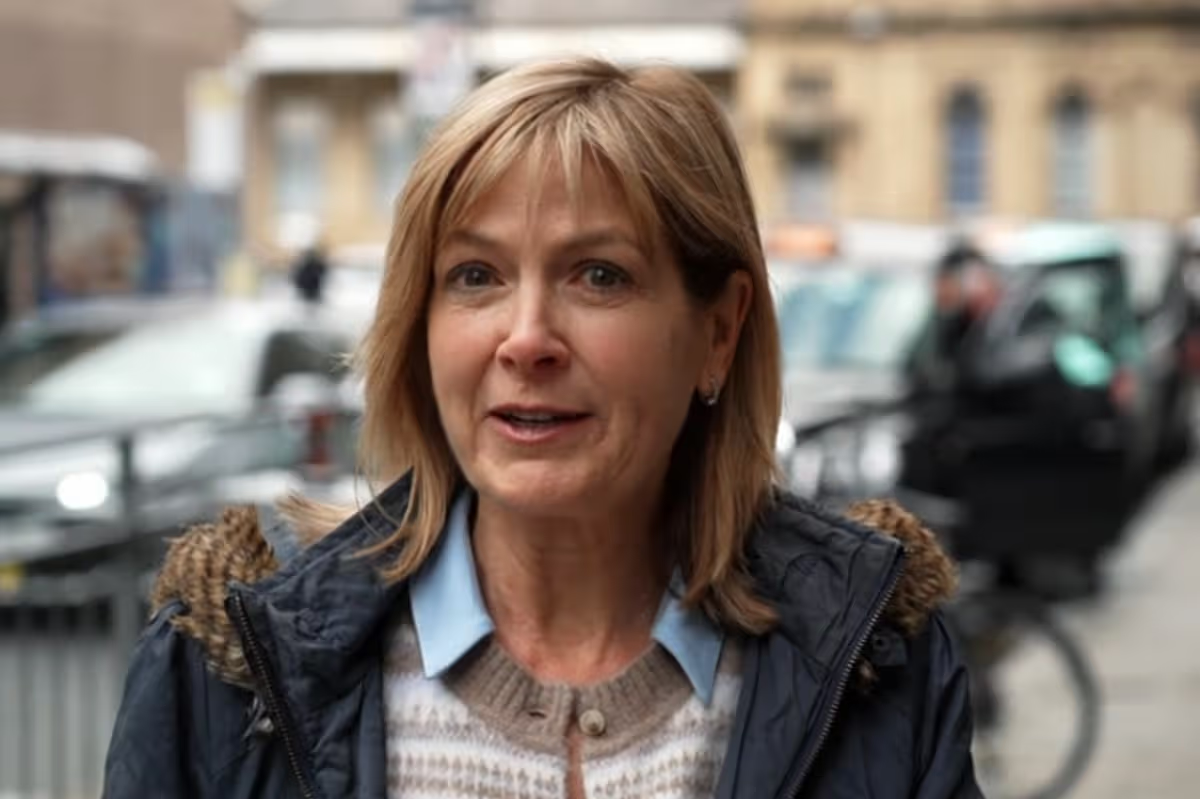
Now, 67-year-old Penny has made a comeback on another daytime show when she landed a slot as a roving reporter on BBC’s Morning Live on Friday, May 29 – and fans were delighted to see her return.
Penny presented a special segment investigating the chaos faced by tourists caught up in the EU’s new fingerprint scanner during the show which was hosted by Gethin Jones and Michelle Ackerley, reports the Daily Mail.
Penny was out on the ground at Manchester chatting to people travelling through the airport while also meeting up with a young woman who missed her flight due to the chaos.
She then tried a number of different substances on her hands, from water to moisturiser and an alcohol wipe, to see how it impacted the results on the fingerprint scanner. All produced different results.
Penny’s return to daytime television was welcomed by viewers who took to social media to express their delight.
One said: ‘Can we please see more of Penny Smith on Morning Live?’ while another said: ‘Great to see Penny Smith back on TV’.
Penny began her career as a reporter and feature writer on the Peterborough Evening Telegraph in 1977.
Penny later helped launch Sky News in February 1989, and four years later she joined GMTV, where she stayed until 4 June 2010.
She has since hosted several radio shows, including the weekday breakfast show on BBC London, Talk Radio, and Magic Classical.
Elsewhere, she has appeared on Have I Got News for You, Just the Two of Us, and Never Mind the Buzzcocks.
Last year, she reunited with former GMTV co-star Eamonn during a short stint on GB News. At the time, Eamonn said: “I’m delighted to be working with Penny again after all these years.”
Morning Live is on BBC One weekdays at 9.30am and BBC iPlayer
Anna Maxwell Martin takes on an intimidating new role that’s miles away from Motherland in this gripping Apple TV drama
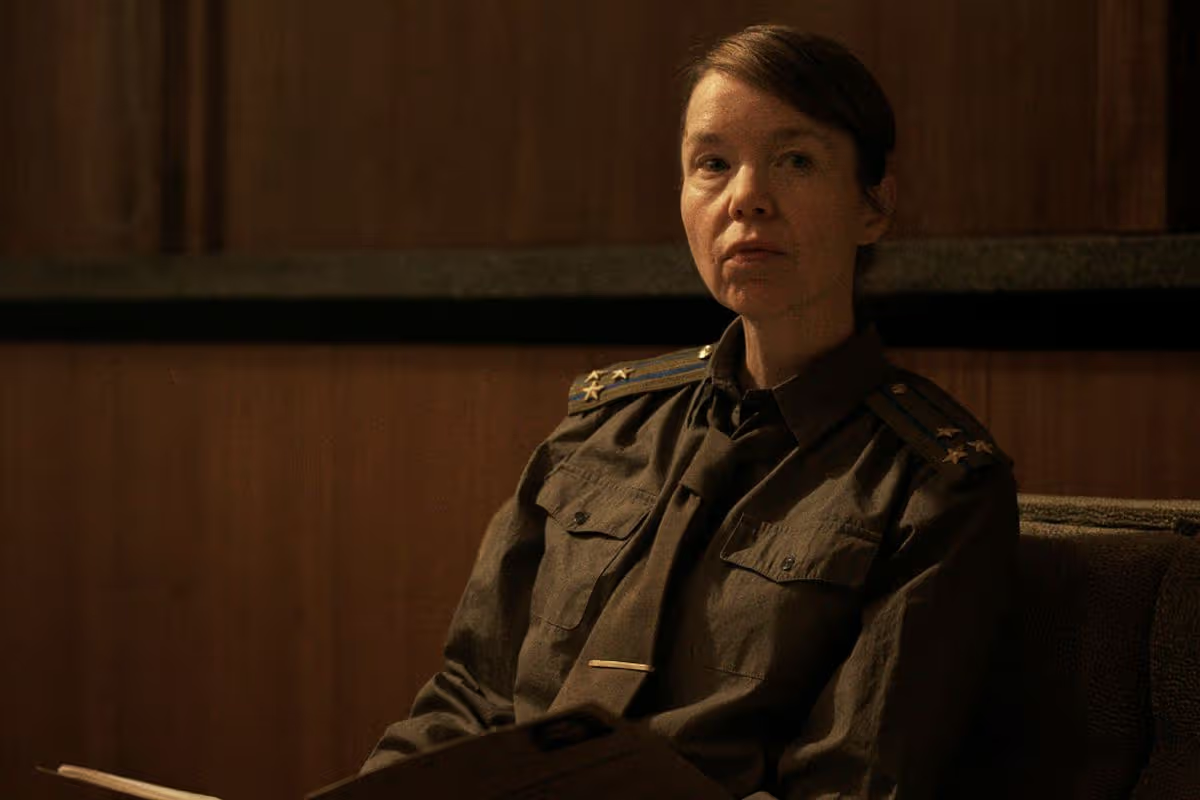
Motherland’s Anna Maxwell Martin as KGB surveillance head Lyudmilla Raskova (Image: APPLE TV)
The new Cold War thriller features some very recognisable names.
Apple TV’s highly anticipated For All Mankind spin-off Star City is finally here and has received rave reviews across the board.
Taking viewers back to the 1970s in this alternate version of history in which the Soviet Union won the space-race, the series picks up with the Russian politicians, engineers, cosmonauts, and KGB agents overseeing more missions to the Moon.
While the USSR is still basking in the victory of becoming the first nation to put a man on the Moon in 1969, tensions are running high as the threat of the US still looms large during the Cold War.
The series begins today (Friday, 29th May) with six more episodes coming each Friday until a riveting finale on 10th July.
But who is in the cast of Star City? From a major sitcom star to actors from some of the most acclaimed dramas of the past few years, let’s take a closer look at where you’ve seen them before.
Star City’s main cast
Rhys Ifans – Chief Designer
Welsh film and TV icon Rhys Ifans portrays the secretive figure at the head of the Star City program, known only as the chief designer.
You’ll have seen him recently as Otto Hightower in House of the Dragon, HBO’s popular Game of Thrones spin-off, as well as portraying Xenophilius Lovegood in the Harry Potter franchise and as Curt Connors/The Lizard in The Amazing Spider-Man, a role he reprised in Spider-Man: No Way Home.
His performance as comedy legend Peter Cook in Channel 4’s Not Only But Always won him a BAFTA TV award, and he is also well-known for his role as Spike in Notting Hill opposite Hugh Grant.
Anna Maxwell Martin – Lyudmilla Raskova
Anna Maxwell Martin plays the head of Star City’s KGB surveillance department, Lyudmilla Raskova, in a performance the Guardian has described as “terrifying”.
Martin has appeared in a huge range of popular British dramas, including Line of Duty, Ludwig, and ITV’s Until I Kill You, which won her an International Emmy Award.
She has also won BAFTA TV Awards for her roles in Bleak House and Poppy Shakespeare and is well-known among comedy fans for playing Julia Johnstone in the hit BBC sitcom Motherland.
Agnes O’Casey – Irina Morozova
Irina Morozova, a recent KGB recruit at Star City, is portrayed by English and Irish actress Agnes O’Casey.
O’Casey has landed supporting roles in major dramas in the 2020s, including Dangerous Liaisons, Wolf Hall: The Mirror and the Light, and Netflix’s Black Doves.
On the big screen she has appeared in Small Things Like These with Cillian Murphy and in The Miracle Club, Dame Maggie Smith’s final film.
Alice Englert – Anastasia Belikova
Anastasia Belikova is an untested female cosmonaut in the Soviet space program and portrayed by Australian actress Alice Englert.
Previously best known for her film roles, she has appeared in Ginger & Rosa with Elle Fanning, Beautiful Creatures with Alden Ehrenreich, and Netflix’s The Power of the Dog with Benedict Cumberbatch, which was directed by her mother Jane Campion.
Englert also appeared with O’Casey in Dangerous Liaisons, as well as BBC’s The Serpent and Jonathan Strange & Mr Norrell, and made her directorial debut with the 2023 film Bad Behaviour starring Jennifer Connelly.
Solly McLeod – Sasha Polivanov
Sasha Polivanov is described as “a reckless cosmonaut who has yet to live up to his potential” and is portrayed by Solly McLeod.
McLeod is a British actor known for playing the title role in ITV’s adaptation of Tom Jones, and has also played Ser Joffrey Lonmouth in two episode of House of the Dragon with Star City co-star Ifans.
He is also set to appear in the major upcoming films Practical Magic 2 and Anxious People, adapted from the bestselling novel by Fredrik Backman.
Adam Nagaitis – Valya Mironov
In contrast to Sasha, Valya is a respected cosmonaut in the Star City program brought to life by British actor Adam Nagaitis. Nagaitis previously portrayed a Russian firefighter in HBO’s acclaimed miniseries Chernobyl.
He has also appeared in the film The Last Duel with Matt Damon and Adam Driver, as well as TV series The Responder, The Agency and A Thousand Blows.
Ruby Ashbourne Serkis – Tanya Mironova
Ruby Ashbourne Serkis is the actress daughter of The Lord of the Rings star Andy Serkis and will be portraying Tanya, the wife of one of Star City’s cosmonauts.
She has previously appeared in TV series Shardlake and I, Jack Wright, as well as two recent Cillian Murphy films; Netflix’s Steve and the Peaky Blinders movie, The Immortal Man.
Josef Davies – Sergei Nikulov
Josef Davies portrays Sergei Nikulov, a young engineering prodigy working at Soviet Ground Control. Davies is best known as Sören in Young Wallander and he has also appeared in Andor, Grace, and Agatha Christie’s Seven Dials, as well as the hit WWI film 1917.
Supporting cast and guest stars
Apple TV+ Annual Plan
This article contains affiliate links, we will receive a commission on any sales we generate from it. Learn more
Two major stars of BBC’s A Good Girl’s Guide to Murder have formed a close friendship on the set of the hit thriller’s second season
A Good Girl’s Guide stars living together after forming ‘brotherly bond’(Image: BBC/NETFLIX)
The pair play brothers in the BBC phenomenon’s second season.
A Good Girl’s Guide to Murder stars Jude Morgan-Collie and Eden Hambelton Davies have revealed they’re now living together after portraying brothers in the BBC drama’s second season.
The popular series based on the books by Holly Black premiered back in 2024 and quickly generated a passionate fanbase, which continued to grow once the first season was released internationally on Netflix.
With millions of fans expected to tune into the second season, now on iPlayer as of Wednesday, 27th May, they’re keen to know more about the show’s stellar cast.
Emma Myers will of course be returning as teenage sleuth Pip Fitz-Amobi, who is now investigating the mysterious disappearance of Jamie Reynolds, portrayed by newcomer Eden Hambelton Davies.
Speaking to Reach ahead of the premiere, the actor revealed he quickly forged a strong bond with his co-star Jude Morgan-Collie, who portrays his younger brother Connor.
“To step into that world that’s already pre-established, I think there’s an expectation that comes with joining an already made cast and you’d expect it to sort of just be work, and it absolutely wasn’t,” he shared.
“It was a fantastic opportunity, I’ve met some people I hope will stay in my life for a very long time, forever. I live with Jude Morgan-Collie, who plays my brother in the show.”
Based on Black’s second novel in the series, Good Girl, Bad Blood, season two darkens the tone this time around with new directors Asim Abbasi and Jill Robertson taking the helm, as well as the author taking on screenwriting duties to ensure the adaptation remains faithful to the gripping source material.
Rather than feeling daunted by the prospect of joining the cast of a highly anticipated second outing, Hambelton Davies reveals he “slot right in” with the ensemble.
“The cast is so well-established with one another,” he went on, “the chemistry is so fantastic, to step into that and be so welcomed in, which I was, it’s impossible not to get an exact understanding of the mood and slot right in, so I felt very welcomed.
“It made the work a lot easier and allowed me to feel more comfortable, but also, as a person, it was such a lovely privilege to be welcomed in as I was.”
Watch Unchosen on Sky for free
This article contains affiliate links, we will receive a commission on any sales we generate from it. Learn more
Sky is giving away a free Netflix subscription with its new Sky Stream TV bundles, including the £15 Essential TV plan.
This lets members watch live and on-demand TV content without a satellite dish or aerial and includes hit shows.
This includes the brand new UK drama Unchosen, starring Asa Butterfield and Christopher Eccleston.
His co-star Morgan-Collie also confirmed their living situation, saying: “It’s very cool. I’ve done another show where I’ve had a sibling [Here We Go], so it’s always really fun to play with that dynamic. And having any family in a show and getting them in the scene is always really fun.”
He also revealed that their friendship started with a misunderstanding: “I remember both of our first days in Bristol for season two, I said ‘let’s go for a brotherly pint’.
“I’ve since learned that he didn’t realise that it was me who texted him and he just thought that someone in the cast had worded something really weirdly. He didn’t realise that I was saying ‘let’s work on this!’
“But I think, as a cast, we’re all really close, and we were very quick to become mates,” he added. “Despite playing my older brother we’re the same age and we’re young adults and we’re living here in a new city, we’re messing about. It’s really good fun and we got a lot of downtime in the evenings so we’re all going out for dinner and stuff. It’s good fun.”
Filming for the second season wasn’t all fun, however, as Morgan-Collie recalled a particularly difficult scene. “I got slammed against the bonnet of a car for a day,” he recalls.
“At first I was like ‘Hell yeah, this is wicked’. Then you very quickly learn… it gets old very quickly.”
Tune into another instalment of the BBC’s enthralling young adult thriller to find out why.
A Good Girl’s Guide to Murder season 2 is available on BBC iPlayer and internationally on Netflix.
Strictly Come Dancing finalist Amber Davies, who shot to fame when she won Love Island, has hit back at claims that she only went on the ITV2 dating show to try to make it to the West End stage
22:31, 27 May 2026Updated 22:31, 27 May 2026
Amber Davies has hit back at claims she used Love Island to try to make it to the West End (Image: Getty Images)
Amber Davies insisted that she didn’t go on Love Island just to further her stage career. The actress, 29, competed on the ITV2 reality dating show in 2017 and went on to win it alongside then-boyfriend Kem Cetinay.
However, Amber has now insisted she only went on Love Island because she couldn’t find employment elsewhere as she spoke with fellow West End star Jacob Fowler, who got his big break when he won Little Mix: The Search on the BBC in 2019.
Speaking on her Call To Stage podcast, she said: “A lot of people ask me, ‘Oh, did you do that just to get on the West End?’ No, I did it because I couldn’t get a bloody job! I didn’t want to work at a bar and Love Island were giving me a free holiday for six weeks. Luckily [it worked out]!”
Amber can currently be seen starring as Elle Woods in a UK tour of Legally Blonde: The Musical, but the production got off to something of a bumpy start amid various cast illnesses, and the TV star herself was forced to take time away from the part earlier this year.
While she was away, TikTok star Hannah Lowther took over the part but rumours of a “feud” between the two began to emerge, which both actresses quickly quashed, although comparisons of how each of them portrayed Reese Witherspoon’s signature role of a sorority-girl-turned-lawyer role continued to dominate social media.
Following her return to the show after fighting off a chest infection, Amber admitted that while she did sign up to be “in the spotlight” with her TV career, she never expected to receive the amount of online hate she has done over her stage work.
She said: “I know that going on Love Island put me in the spotlight. I didn’t know how much it was going to and I feel so grateful that 10 years on, I was on Strictly, and there’s so many amazing things that have happened to me. I definitely am used to it but I do have to prepare myself.”
“The last thing I do want to speak out about – this has broke my heart in ways that I can’t even possibly imagine. When I was doing Strictly I’d had a meeting with my team and they prepared me for the trolling and the opinions.
“Sometimes the opinions aren’t trolling but the opinions are mean, so it counts as trolling. I think sometimes when people leave mean comments, they forget that they are talking about an actual human being who is just working hard.
“What I wasn’t prepared for was the trolling that was going to come with Elle. I have worked…I am trying to find the words to explain this…I’ve been in this industry, I’ve done lots of jobs and I’ve never experienced trolling within the musical theatre industry as much as I have during this time.”
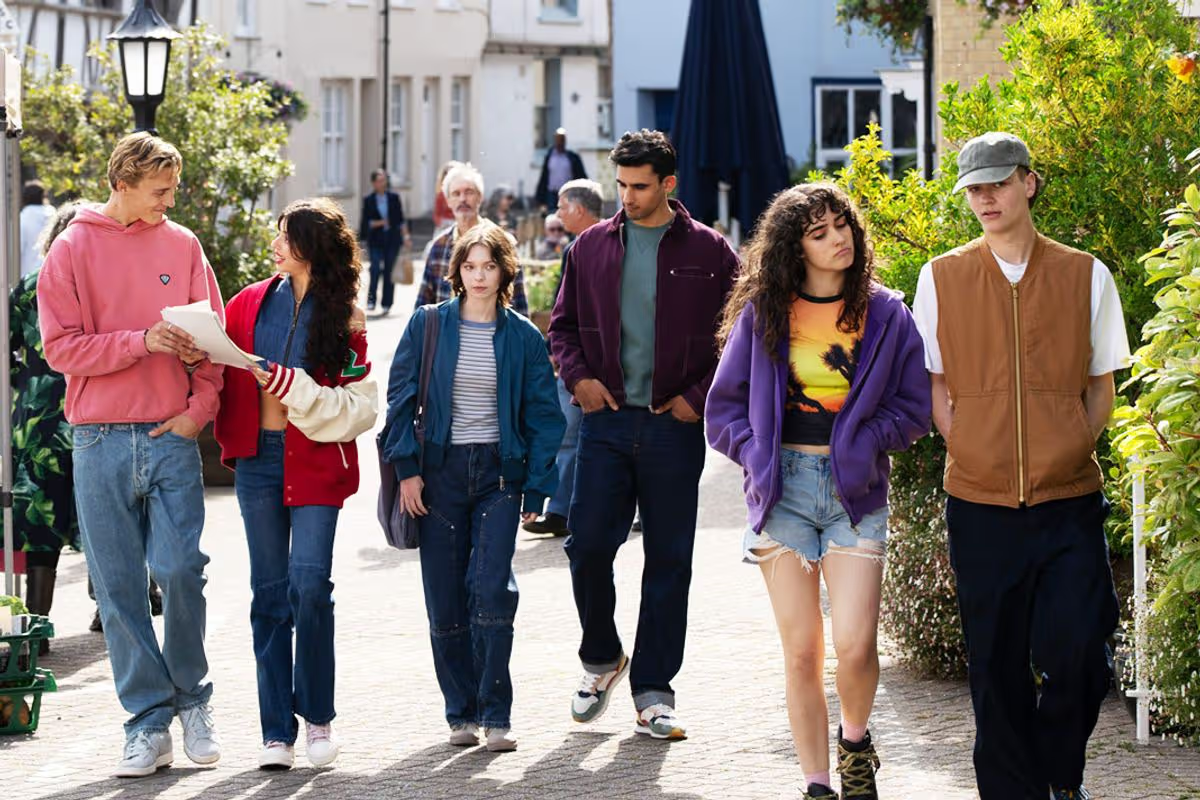
The BBC’s hit thriller filmed in Bristol and Somerset has finally returned for its second season, but where was it filmed?
The cast filmed in Axbridge near Cheddar, Somerset(Image: BBC/NETFLIX)
Fans want to know if Little Kilton is a real place.
A Good Girl’s Guide to Murder is back today (Wednesday, 27th May) and sees Pip Fitz-Amobi (played by Emma Myers) delving into another chilling missing person case.
This time, she’s determined to put predator Max Hastings (Henry Ashton) behind bars, but the disappearance of a key witness, Connor’s older brother Jamie, pushes her investigative skills to the limit.
Based on the bestselling novels by Holly Black, the first series became a huge hit thanks to its addictive, edge-of-your-seat twists and a global release on Netflix.
It is also famously filmed in Bristol and other parts of the West Country, standing in for Pip’s fictional village of Little Kilton.
With six thrilling new episodes now streaming on iPlayer, let’s take a look a little closer at the locations used in the second season.
Where was A Good Girl’s Guide to Murder season 2 filmed?
The second series of the popular BBC and Netflix drama was once again filmed around Bristol and Somerset.
Much of the show’s interior scenes are shot at Bottle Yard Studios in Bristol, which reportedly includes the likes of school classrooms, investigation rooms, and darker interiors for the murder-mystery show’s more suspenseful scenes.
Bristol itself was also used for more urban areas of Little Kilton to highlight the second outing’s gritty tone. Clifton Village in central Bristol, including the Clifton Suspension Bridge, can also be seen briefly.
Standing in for the idyllic village of Little Kilton is Axbridge, a small town near Cheddar, Somerset.
The town square, the Old Station and Chestnut Avenue were all closed for filming in 2025, with a memorial, flags, and other decor put up for key scenes including the memorial service which kicks off season two. Axbridge’s St John the Baptist Church can also be seen.
Season two director Asim Abassi confirmed: “We filmed Little Kilton in the town of Axbridge, which is lovely but small, so you get the challenges of a tight-knit community curious about filming. But it is wonderfully quaint and perfect for Little Kilton.”
Watch Unchosen on Sky for free
This article contains affiliate links, we will receive a commission on any sales we generate from it. Learn more
Sky is giving away a free Netflix subscription with its new Sky Stream TV bundles, including the £15 Essential TV plan.
This lets members watch live and on-demand TV content without a satellite dish or aerial and includes hit shows.
This includes the brand new UK drama Unchosen, starring Asa Butterfield and Christopher Eccleston.
Another key location this time around is an abandoned manor, which actor Zain Iqbal, who portrays Pip’s boyfriend Ravi, confirms is near Bristol.
And Abassi revealed it was his “favourite” location, adding: “It was originally meant to be something else, but I pushed for it to be a manor, so I am personally attached to it.
“It ended up being a phenomenal location and, to me, captures the essence of season 2.”
A Good Girl’s Guide to Murder season 2 is available on BBC iPlayer and internationally on Netflix.