
How 'outstanding' Tzolakis kept Brighton at bay
Match of the Day pundit Danny Murphy looks at how Hull goalkeeper Konstantinos Tzolakis was able to thwart high-flying Brighton in their 2-0 win over the Seagulls at the MKM Stadium.
Source link
Match of the Day pundit Danny Murphy looks at how Hull goalkeeper Konstantinos Tzolakis was able to thwart high-flying Brighton in their 2-0 win over the Seagulls at the MKM Stadium.
Source link
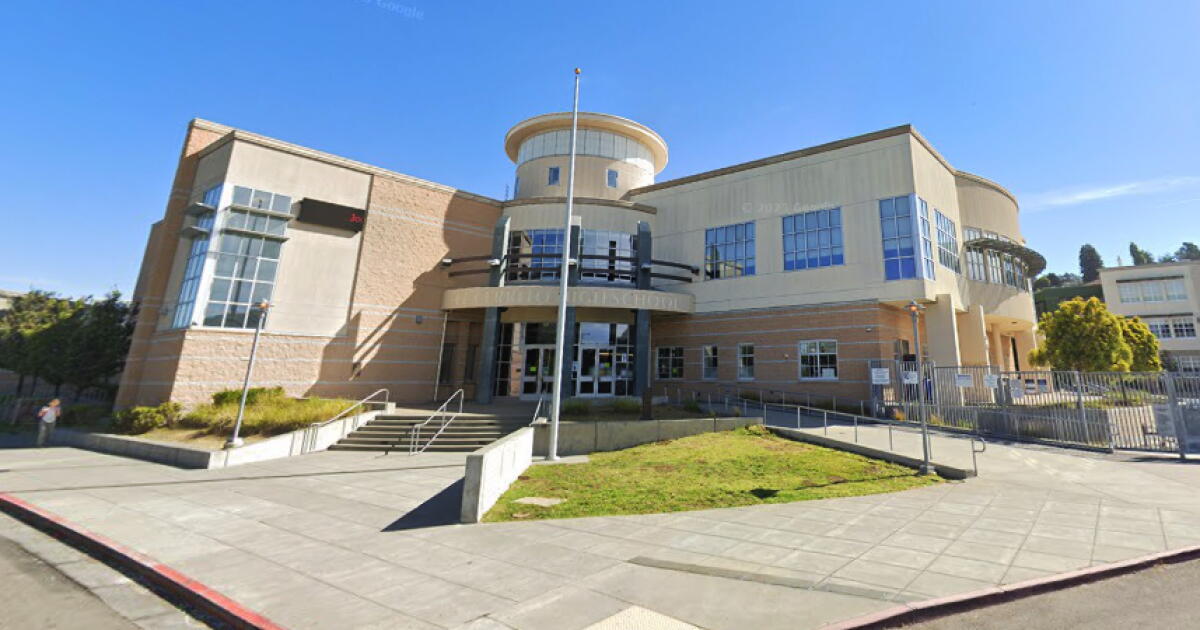
El Cerrito High School in the Bay Area has canceled the remainder of its football season following a month-long police investigation into allegations of hazing and sexual assault involving at least 22 athletes over the last three seasons.
The probe stems from “a mandated reporter” on Oct. 2 telling police that members of the football team were engaging in bullying and hazing, the El Cerrito Police Department said in a statement. A mandated reporter in California is someone who has responsibility for children through their employment or volunteer status and is legally required to report suspected child abuse.
The alleged victims were other members of the football team. Detectives interviewed them along with school staff and witnesses. The West Contra Costa Unified School District, in the East Bay region of the San Francisco Bay Area, said the alleged incidents were said to have occurred between September 2024 and October 2026.
The police said they are investigating allegations of battery, sexual battery, assault, false imprisonment, dissuading a victim, conspiracy and stalking.
Detectives have obtained video evidence that corroborated the allegations, although police officials said they would not release details because of “the sensitive nature of an ongoing investigation that involves juvenile victims, witnesses and suspects.”
El Cerrito head coach Tim Johnson was placed on leave, and the team’s regular-season finale Friday against El Sobrante De Anza High was canceled. El Cerrito has a 6-3 record but will not participate in the upcoming playoffs to defend their title won last year.
The school district said it is conducting its own investigation under Title IX.
“No child should ever experience what our students have described,” District Supt. Cheryl Cotton said. “While we have worked to focus on accountability for the actions of individual players up until this point, new information has led to new decisions.
“We must now make the very tough call to immediately suspend the El Cerrito High football program in order to prevent any further harm and restore a safe learning environment for our students.”
Cotton said the district is “providing resources for all impacted and involved students” through classroom instruction on anti-hazing and bystander education.
The El Cerrito football program is two years removed from a controversy that allegedly coincided with the beginning of the hazing. Six games were forfeited by the Gauchos in 2024 and their coach at the time, Jacob Rincon, was suspended for breaking rules prohibiting undue influence and athletically motivated transfers. Several players were deemed ineligible, and the program was placed on probation for two years.
Some parents and advocates of the program were outraged by the school’s action, calling on Rincon to be reinstated and then-principal Malcolm Norrington to be fired. More than 100 students engaged in a walkout, waving homemade posters and chanting “Free Coach Jake,” and “No More Norrington,” according to digital news site Richmond Confidential.
Parents gathered more than 2,000 signatures in a petition to fire Norrington, who left the district in 2025. Rincon was dismissed and replaced last season by Johnson, who led the team to a 13-2 record and the school’s first State Division 4-A championship.
According to the police, however, the hazing and sexual assaults continued in 2025 and into 2026.
Similar allegations have marred prominent high school football programs in Southern California in recent years.
A lawsuit in 2024 details a sexual assault against a sophomore football player at Santa Margarita Catholic High School in Rancho Santa Margarita that triggered a police investigation and left the boy with post-traumatic stress disorder, severe depression and anxiety. The Orange County Sheriff’s Department investigated after the boy went to a hospital emergency room and alleged he had been sexually assaulted.
Santa Margarita principal Cheri Wood admitted in emails obtained by the Orange County Register that “at least 8” other players were allegedly assaulted by their teammates in a similar manner. The lawsuit was dismissed after a confidential out-of-court settlement was reached. The coach at the time was replaced by former NFL quarterback Carson Palmer, and Santa Margarita won a state title in 2025 and currently sits atop The Times’ high school football rankings.
A Rancho Cucamonga Los Osos High football player placed in a chokehold and whipped with a belt by two older players in a locker room in 2023 was initially described by Chaffey Joint Union High School District officials as “horseplay.” However, a video of the victim begging and screaming was circulated widely online and the district reversed its position, reclassified the event as prohibited hazing and issued undisclosed student disciplinary measures.
A 2021 lawsuit shined a light on players at Santa Ana Mater Dei High — one of the most celebrated football programs in the nation — being severely beaten by other players in a brutal hazing ritual called “bodies.” The family of a victim who suffered a traumatic brain injury and a broken nose filed a lawsuit against Mater Dei and the Diocese of Orange, alleging the Mater Dei administration covered up the incident.
“You drop your kids off at school and give them a kiss goodbye … and you feel like you’re putting them somewhere they can be safe,” the victim’s mother told The Times. “I felt like Mater Dei had the highest protection, I felt my kid would be safe there. Then for them to turn a blind eye and be so unsupervised. … It’s like, you failed my child.”

Oakland, California – Protesters dressed as cardboard robots chanted and danced to a drumbeat as they protested against new data centres outside Oakland City Hall last month.
Their concerns largely focused on how the centres — which process large amounts of digital information — might strain the energy grid.
list of 3 itemsend of list
The result, they argued, would not only be environmental harm but also sky-high electricity bills for local households.
“Power prices have gone up so much in Oakland that some people are thinking of shutting off their power,” said Carlos Gutierrez, an activist for Communities for a Better Environment, an environmental justice group.
“And the city is planning to provide power to a data centre instead.”
Opposition to data centres is growing across the United States, as residents express concern about their rapid expansion.
More than 3,000 data centres already operate in the country, with more than 1,500 others in development, according to the Pew Research Center.
But the backlash is perhaps most striking in California’s San Francisco Bay Area, a region considered to be the heart of the artificial intelligence (AI) boom.
Major AI companies such as Anthropic, OpenAI and Meta are based in the Bay Area, and the industry’s growth has been credited with fuelling a local economic renaissance.
Data centres house the advanced computer chips and servers needed to run AI-powered services such as Anthropic’s Claude and OpenAI’s ChatGPT.
But they also require 24-hour power and a large supply of water to cool their processors.
Even with such cooling technology, data centres are notorious for emitting heat, leading to an increase in land surface temperatures as high as 9 degrees Celsius (16 degrees Fahrenheit).

Concerns about the cost of rapid data centre growth, both environmentally and financially, have catapulted the issue into the discourse around Tuesday’s midterm elections.
In the final two months before the vote, at least seven Bay Area cities, including San Francisco and Richmond, have passed temporary moratoriums on data centre construction.
They include Oakland, which passed a data centre moratorium on October 6, after days of protest.
Local politicians competing in Tuesday’s midterms have also used the topic as a wedge issue, to rally support among certain pockets of voters.
One of the most closely watched races in the Bay Area is for the seat left vacant by longtime Democratic leader Nancy Pelosi. After 39 years in the House of Representatives, Pelosi is retiring at the end of the year.
Two Democrats are competing in Tuesday’s election to fill her position in Congress: San Francisco Supervisor Connie Chan and state Senator Scott Wiener.
Each one has staked out a different position on AI data centres. Wiener, for instance, opposes any ban on data centres.
“A blanket data centre moratorium could undermine AI regulation,” he told the publication Mission Local.
Chan, meanwhile, has pledged to seek a nationwide moratorium on data centres, at least until responsible AI regulation is put in place.
“Let’s start with a moratorium on data centres. Allow us to have that moment to regulate artificial intelligence,” she said at a debate in October.
Chan played a leading role in passing San Francisco’s moratorium in early October.
A poll from the University of Southern California showed Wiener leading Chan 47 percent to 41, as of mid-October.

“Right now, data centre opposition is an issue that unifies the US public like no other,” said Shum Preston, a political analyst based in San Francisco.
So far, there has been relatively little opposition to the data centre moratoriums in local hearings. But he speculates that there may be several reasons for the lack of pushback to the bans.
Among them are the surveys indicating widespread public backlash to data centre creation.
An October CNBC poll found that 63 percent of registered US voters oppose building data centres within 16 kilometres, or 10 miles, of their homes.
“Data centres poll very poorly, and developers probably don’t want to put their supervisor friends in trouble ahead of elections. So they probably let this pass,” Preston said.
He also signalled that the short-term nature of the moratoriums may be a factor.
Certain Bay Area cities like San Francisco, Brisbane and Oakland paused construction on data centres for 45 days, with the option to extend the ban later.
Opponents of the moratoriums “will be more vocal when” the 45 days end, Preston said. By that time, the heat of the midterm election season will also have settled, he added.
“That’s when the hearings will get more contentious,” he said.

Another hurdle facing the moratoriums is the lack of transparency surrounding data centre construction.
Supervisor Shamann Walton, who sponsored San Francisco’s moratorium ordinance, has argued that the city’s definition of “data centres” is outdated.
Created in 2001 — long before the AI boom — the city planning code defines data centres as “internet service exchanges”, a definition that may not accurately characterise the technology today.
Walton said the outdated language has made it hard for authorities to count how many data centres exist in the city.
Not being able to identify data centres can also prevent city officials from monitoring their power and water usage.
“We cannot use 2001 rules to regulate 2026 technology,” he said in a September 14 statement.
Another issue is the time it takes to carry out the necessary environmental assessments. The moratoriums may not offer enough time for a comprehensive review.
“Forty-five days is hardly enough time to document and study the impacts and then frame regulations,” said Roger Lin, senior attorney at the Center for Biological Diversity, a US environmental nonprofit.
He added that legal barriers limit access to such information from the data centres themselves.
“Data centres often have nondisclosure agreements, so even local air quality boards may not know the impact of data centres on air quality,” said Lin.
Still, AI industry supporters have touted the growth of the data centres as evidence of a flourishing industry, with positive downstream effects for US communities.
Anthropic, for instance, is preparing an initial public offering (IPO) that is likely to raise billions of dollars.
But critics warn that the company’s growth may not translate into an economic boom for the San Francisco Bay Area overall.
Instead, residents fear unequal economic growth that primarily benefits the wealthy. Already, San Francisco faces some of the highest and fastest-growing home rental prices in the country.
At a hearing at San Francisco City Hall, a resident vented their frustrations about the data centres to the supervisors.
“This city is less for humans and more for robots and billionaires,” the resident said.