Barry

Inside ‘Mighty Real,’ Barry Walters’ history of LGBTQ+ music

For more than 40 years, Barry Walters has been closely watching the dance floors of New York and San Francisco, chronicling the ways in which LGBTQ+ culture has influenced mainstream culture. As a writer for the Village Voice, the Advocate and Spin, among others, Walters became one of music journalism’s most eloquent and crucial voices, championing artists like the Pet Shop Boys and Madonna during their formative years.

Walters’ new book, “Mighty Real, draws on his deep firsthand knowledge, offering a comprehensive history of LGBTQ+ music from 1969 to 2000. I recently spoke with Walters about Babs, Madge and Bowie.

You’re reading Book Club

An exclusive look at what we’re reading, book club events and our latest author interviews.

✍️ Author Chat

In the book, you make a distinction between pre-Stonewall LGBTQ music and post-Stonewall LGBTQ music.

Gay culture before Stonewall really had to be hidden, or at least secretive. I think of Barbra Streisand as a quintessential pre-Stonewall figure. Judy Garland, as well. These women are tough, and even though they sing songs written by men, it’s not in a submissive way. They are singing like they are the champions, even when they are suffering through what men do to women through the torch songs they perform.

What can you say about the encoded nature of certain songs that spoke to gay culture in a way that flew under the radar of hetero listeners in the pre-Stonewall era?

The music that spoke to gay culture, by necessity, had to be encoded. “Secret Love” by Doris Day is a good example. It’s about struggling to have something that’s otherwise forbidden. Sinead O’Connor covered that song. There was a song I loved as a young child called “Have I The Right?” by the Honeycombs, which was written by two British gay men at a time when homosexuality was illegal in England. You know, have I the right to be with whomever I want to be with?

What, in your view, was the big bang of post-Stonewall LGBTQ music?

David Bowie to a large degree. Right around the time that “Hunky Dory” was being released in 1971, he told the Evening Standard newspaper that he was gay, flat out just said it. And it was such a strange thing to say that many people doubted his sincerity.

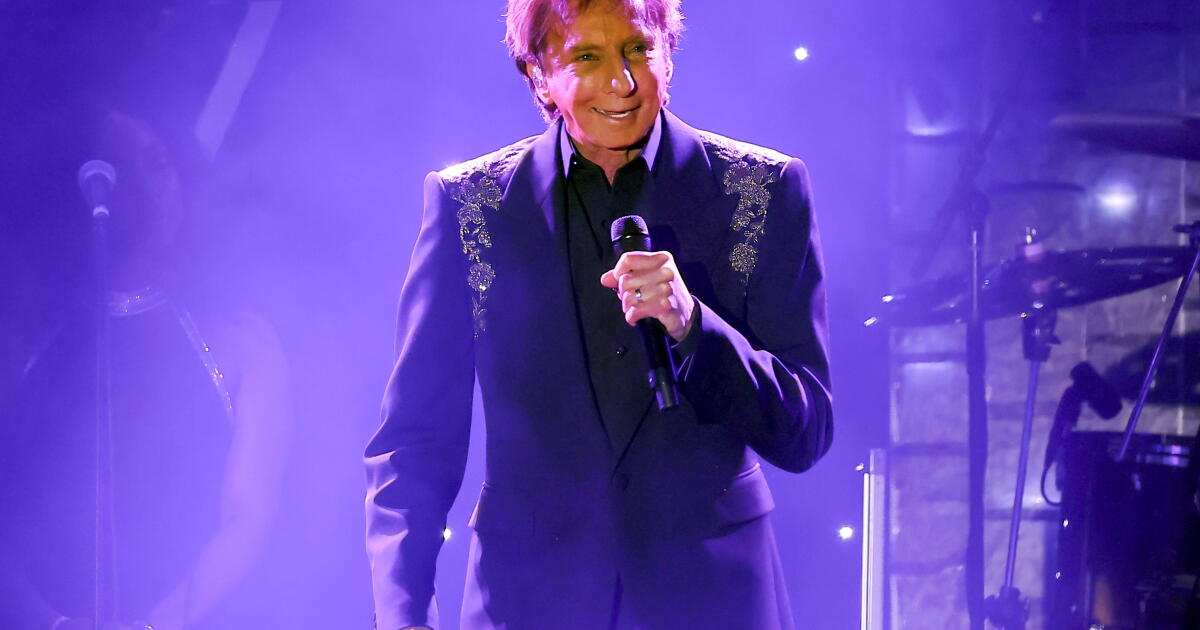
Barry Walters wrote a new book about the history of LGBTQ music.

Barry Walters, a writer for the Village Voice, the Advocate and Spin, among others, wrote a new book about the history of LGBTQ+ music.

(Kelly Lawrence for Walters)

I remember seeing Bowie wearing that dress on the cover of “The Man Who Sold The World,” thinking that was the most transgressive act any rock star had ever committed.

And then he performed “Starman” on Top of the Pops in 1972 and he put his arm around his guitarist Mick Ronson, who also looked gorgeous. They were displaying a familiarity men aren’t supposed to have.

I thought I knew everything about pop music, but you have uncovered so many fascinating stories. Tell me about Olivia Records.

Olivia Records was an independent record label in the Bay Area owned and controlled by lesbians for female artists. This is years before punk or indie rock, when so many small labels cropped up. They pioneered so much. They would recruit fans in different cities to man the merchandise and to help get their records in stores. The idea of a merch table was something new at the time. They also created the forerunner of Burning Man. They would go find a farm somewhere and create an impromptu village, with food, sanitation and the rest.

You have given the most space in your book to Madonna, whom you have written about extensively over the years. Why is Madonna such a huge figure in the history of LGBTQ music?

Her art is so queer. I feel like she is one of us. She’s very much like Grace Jones, in that her sensibility is so aligned with gay culture. I related to Madonna on multiple levels. In the early ‘80s, I would see her around town, dancing at the same New York clubs I was frequenting, like Danceteria. She was steeped in gay culture, and then she brought all of this into the mainstream, and that was profound. I also feel like she was misunderstood in many ways. When straight men called her a slut, things like that. That is so far from the truth. She is such a complex artist. If you are making that claim, you don’t know anything about her.

(This Q&A was edited for length and clarity.)

📰 The Week(s) in Books

Illustration of a man swimming away from a book-shaped shark

(Javier Pérez / For The Times)

Pulitzer prize winner Elizabeth Strout has a new novel called “The Things We Never Say,” and Julia M. Klein approves. “[Strout] reprises her familiar themes: the mysteries of human personality, the perils of solitude, the occasional possibility of grace … in deceptively simple, occasionally mannered prose that draws readers in and immerses them in her fictional worlds,” Klein writes.

They’re on a boat! Paula L. Woods climbed aboard a 130-foot yacht in Marina del Rey to soak in the vibes of the Yacht Girls Book Club. “I wanted conversations with like-minded women that were intellectual but fun,” club founder Aloni Ford told Woods. “And talking about books seemed to be the ideal way to achieve that.”

“PEN15” co-creator Anna Konkle has written a memoir called “The Sane One,” and Rachel Brodsky talked to her about it. “In some ways, ‘PEN15’ was a reaction to loving memoirs,” she tells Brodsky. “Raw memory has always been very exciting to me.”

Finally, our Times critics take the measure of this summer’s hottest beach reads.

📖 Bookstore Faves

Kinokuniya bookstores sell Japanese manga, stationery and literature.

Kinokuniya bookstores sell Japanese manga, stationery and literature.

(Courtesy of Kinokuniya)

When Kinokuniya opened its first L.A. shop in 1977, it was primarily to provide Japanese expats with imported books and magazines to read in their native tongue. Forty years later, the store has become a locus of Japanese printed matter for Angelenos eager to scoop up Japanese literature and manga in Japanese and English, as well an expansive selection of imported stationery products that, in L.A., can only be found in Kinokuniya’s three stores. I spoke with Sakura Yamaguchi, who manages two of Kinokuniya’s stores downtown (the third is in Mar Vista) about its many-splendored pleasures.

How did the store travel from Japan to Los Angeles?

Books Kinokuniya was founded by Moichi Tanabe in 1927. Located in the Shinjuku district of Tokyo in a two-story wooden building, the first Kinokuniya started with five employees, including Mr. Tanabe himself. In 1969, Kinokuniya opened its first overseas bookstore in San Francisco. The first Los Angeles store opened in 1977.

Who are your customers?

We first started as a store for Japanese customers, so we imported Japanese books and magazines and sold them, mainly. But in the past 10 years, Japanese manga/anime, stationery and literature has been quite popular in the U.S. Therefore our customers are a mix of Japanese-speaking customers and non-Japanese speakers who are interested in Japanese culture.

What percentage of your clientele buys Japaneselanguage products?

Forty percent Japanese-language products versus 60% English books.

What specific titles are selling for you right now?

“Witch Hat Atelier Grimoire Edition, Volume 1,” “JoJo’s Bizarre Adventure: Purple Smoke Distortion” and the “Strange Houses” series.

Are you seeing more young people turning to printed matter? It seems like there is an analog revival at the moment.

We have been trying to make exclusive editions that come with freebies to make the printed manga more attractive, but without that our English manga sales have been increasing and our main target for the manga is young people. There are many titles that are published exclusively in e-book format, but we frequently hear from customers asking when they will be released in print form. Also, recently there has been a growing number of cases where titles that were originally available only in digital format have later been published as physical books.

Kinokuniya at the Bloc in Los Angeles is located at 700 W 7th St.

(Please note: The Times may earn a commission through links to Bookshop.org, whose fees support independent bookstores.)

Source link

Emotional Barry Keoghan says he became recluse after Sabrina Carpenter ‘cheating’ claims saw vicious trolls bombard him

WITH a rocketing career and A-list girlfriend Sabrina Carpenter on his arm, Barry Keoghan had the world at his feet in 2024.

But after his relationship soured — amid false claims the actor cheated — he was so badly burned by the fallout that he has become a recluse.

Barry Keoghan and Sabrina Carpenter at the 2024 Met Gala before their relationship soured Credit: Getty
Espresso singer Sabrina confirmed the actor didn’t cheat on her Credit: Getty

Barry has quit all social media, stopped seeing his mates and has even moved house — all while internet trolls continue to hurl insults his way.

The strife all stems from a rumour that he had an affair while seeing Espresso singer Sabrina, 26, which she herself has said was false.

Saltburn actor Barry, 33, who is currently filming the upcoming Beatles biopics as Ringo Starr, said: “I have been avoiding stuff.

“I’ve stopped socialising. And again, it’s because there was a narrative that’s not true.

Read more on Barry Keoghan

BARRY’S TRUTH

Barry Keoghan breaks silence on Sabrina Carpenter cheating rumours


manchild

Sabrina Carpenter jokes she’s ‘had to train men’ – as she strips off for shoot

Barry Keoghan as Sir Ringo Starr in the upcoming Beatles biopic films Credit: PA
Barry in a scene from The Banshees of Inisherin Credit: Alamy

“I never confirmed or said anything about it, and, you know, I just disappeared.”

Pushed on what that narrative is, he continued: “It’s that I cheated.

“I don’t want to ever bring anyone else into it, but unfortunately having a relationship in the public eye, we all know this, it gets put out there, and it’s amplified.

“A girl made a video and then the girl actually made [another] video and went, ‘Sorry for making that up’, but no one seemed to latch on to that video.”

Barry with his mum, who died when he was 12, and his brother Credit: Instagram
Barry was speaking on the Friends Keep Secrets podcast Credit: Friends Keep Secrets / YouTube

Gossip site DeuxMoi and social media influencers had claimed he was seen at a members’ club and steakhouse with another blonde woman while he was dating Sabrina.

Fans believed he had cheated with influencer Breckie Hill, although she insisted it was untrue and that they had never even met.

Barry now says that despite deleting his accounts, he is still drawn to the vicious things people write about him online, almost 18 months after his year-long romance with the chart-topper ended.

He explained: “I’m not on Instagram or Twitter or any of that but I still go on and have a little . . . I go on my brother’s account. I can access it that way.

The actor says he struggled in the aftermath of his split with Sabrina Credit: Getty
Barry as Oliver Quick in dark comedy Saltburn Credit: Alamy

“I do go on and have a look because I’m curious, but there’s a lot of hatred towards me for just looking like this. It’s just crazy.

“There’s videos on TikTok that literally go, ‘I hate him’.

“I went through addiction myself and then sobriety, and to battle all of that, to then want to drag that person down . . . ”

Sabrina did little to suppress the online noise against him when she released her No1 album Man’s Best Friend last August — on which she sang about dating a “manchild”.

And Barry says he struggled in the aftermath, as he did not want her to have to deny the cheating rumours following their split.

He explained: “It’s a hard one because I never want to speak on behalf of other people. And I also never want to mention other people or involve them.

“And even if it is those people that were in a relationship, it’s not their place to come forward and speak on my behalf.

“It’s unfair to them. They’re also in a relationship. It’s both of us being out there, so I’m very aware of that.”

Barry, who hails from Dublin, said he has even relocated from London to the Oxfordshire town of Henley-on-Thames due to the mental toll events have taken on him.

But it is fair to say he has faced plenty of other challenges in his life, having largely grown up in foster homes.

His mum died when he was 12 after years spent battling a drug addiction.

Now, speaking on the Friends Keep Secrets podcast, Barry has talked about how he fell into a similar spiral of addiction and has only managed to overcome his substance dependence in recent years.

Barry said: “I’m clean now. But my mum died at 32 from heroin and my dad passed away. But the curiosity of still wanting to do this, for me, was absolutely . . . 

“It took me three attempts at rehab and it was finally Malibu, The Pointe, where there was a sudden switch and it was when I was 32, the same age my mum was. Like, ‘That’s it, I’m not doing it’.”

Asked if he ever drinks now, he added: “I don’t do anything.

“I used to try to justify it by going, ‘Maybe I’ll be off the drink for a while’, but now I like to think I’m allergic to alcohol because my reaction is: Cocaine. That reaction can make me die.”

And he claims he actually has died — and was brought back to life — in 2021 due to being high on drugs.

He was hit by a bottle in a pub and developed the rare bacterial infection necrotising fasciitis.

Barry explained: “This is a flesh-eating bacteria infection that I got and almost died.

“I got it right before I filmed the movie Banshees Of Inisherin and literally, I got it three weeks beforehand. I got it because I went through psychosis.

“An event happened and I got hit with a bottle, and something happened to my arm. It went to my blood system and whatever. But it’s a very rare infection.

“This basically eats your limbs and they have to remove it.

“I technically did die for a few seconds.”

He went on to deliver an outstanding performance in The Banshees Of Inisherin, for which he was nominated for Best Supporting Actor at the Oscars.

But the infection was so touch-and-go that he even believes he had a “post-death vision”.

He said: “I did. I swear to you, it was almost like a f***ing painting. It happened in London. I went for a few seconds and there was this sort of image. There was this girl walking away and she wouldn’t look back.

“She had blonde hair, but she was walking away and I kept calling her.

“She just kept walking and I wanted to see who it was.

“It was almost like she was walking away to get me to follow.

“On this side was council flats, it was black and white, and this side was in colour.

“On this side, there was loads of lads stabbing me and trying to push me over and, obviously, it was the doctors doing the work on me, you know, that’s what I was feeling.

“But in this vision, they were stabbing me and pushing me, and I was holding on to them, and they were trying to push me over to this side.

“I swear, I was begging them that I could stay. I said, ‘Please let me stay’.”

In 2022 he was arrested in Dublin for public intoxication. Months later he became a dad to a little boy with partner Alyson Kierans, a dental nurse. But they split in mid-2023.

Later that year, he got together with Sabrina, and gained mainstream success in the dark comedy Saltburn.

That led to an outpouring of love and support, which no doubt helped him land his next role — and the most important one of his career so far.

He is playing Beatles drummer Ringo in the four-film cinematic biopic being created by director Sam Mendes.

Asked about how he is finding work on the project, which is halfway through a year-long filming schedule, he said: “I’m loving it.”

He will appear alongside Paul Mescal as Paul McCartney, Harris Dickinson as John Lennon and Joseph Quinn as George Harrison.

However, Barry revealed the tight work schedule is having a major affect on his body — and he has lost a stone since the cameras started rolling.

He said: “I’ve lost so much weight on this movie. I was 65 or 66 kilos and I’m like 58 kilos now. But it’s because of my ADHD meds as well.

“No one tells you to lose weight and I don’t need to lose it for Ringo either. But it’s more of getting into character and the stamina.

“Movies usually last six or seven weeks and I always lose weight by the end, but by that time I’m gone. But this one’s a year.”

He is expected to spend the majority of this year finishing the movies, before they hit screens in April 2028.

And hopefully by that time, at least, he will feel able to leave the house with his head held high.

Source link

World Championship 2026: Mark Allen moves into semis with victory over Barry Hawkins

Mark Allen’s bid to become the oldest first-time world champion in the modern era gathered momentum as he reached the semi-finals with a 13-11 victory over Barry Hawkins at the Crucible Theatre in Sheffield.

The 40-year-old Northern Irishman is aiming to complete snooker’s Triple Crown having previously triumphed in the UK Championship and Masters.

However, snooker’s biggest prize has so far eluded him in 19 previous attempts with his win over Hawkins earning him a place in the last four for only the third time.

Having resumed at 8-8, Allen took the opening two frames of Wednesday morning’s session only to be pegged back by the 2013 finalist, who knocked in breaks of 70 and 83 in response.

The players traded frames before Allen constructed his third century of a high-quality affair to move 12-11 ahead.

In a dramatic final frame Allen took control with a break of 59 and sealed his passage to the single-table stage after the Englishman underhit an attempted snooker on the pink just seconds after fluking a red to give himself the chance to force a decider.

Allen will now face either Wu Yize or Hossein Vafaei in a best-of-33 encounter that begins on Thursday at 19:00 BST.

Should Allen win the world title he will become the oldest first-time winner in the modern era, eclipsing Stuart Bingham, who claimed the world title in 2015, aged 38 years and 343 days.

More to follow

Source link