Butlin’s has created a new high-tech solution to avoid the issue of bar queues, and it means you can enjoy many of your favourite alcoholic and soft drinks in just a few seconds
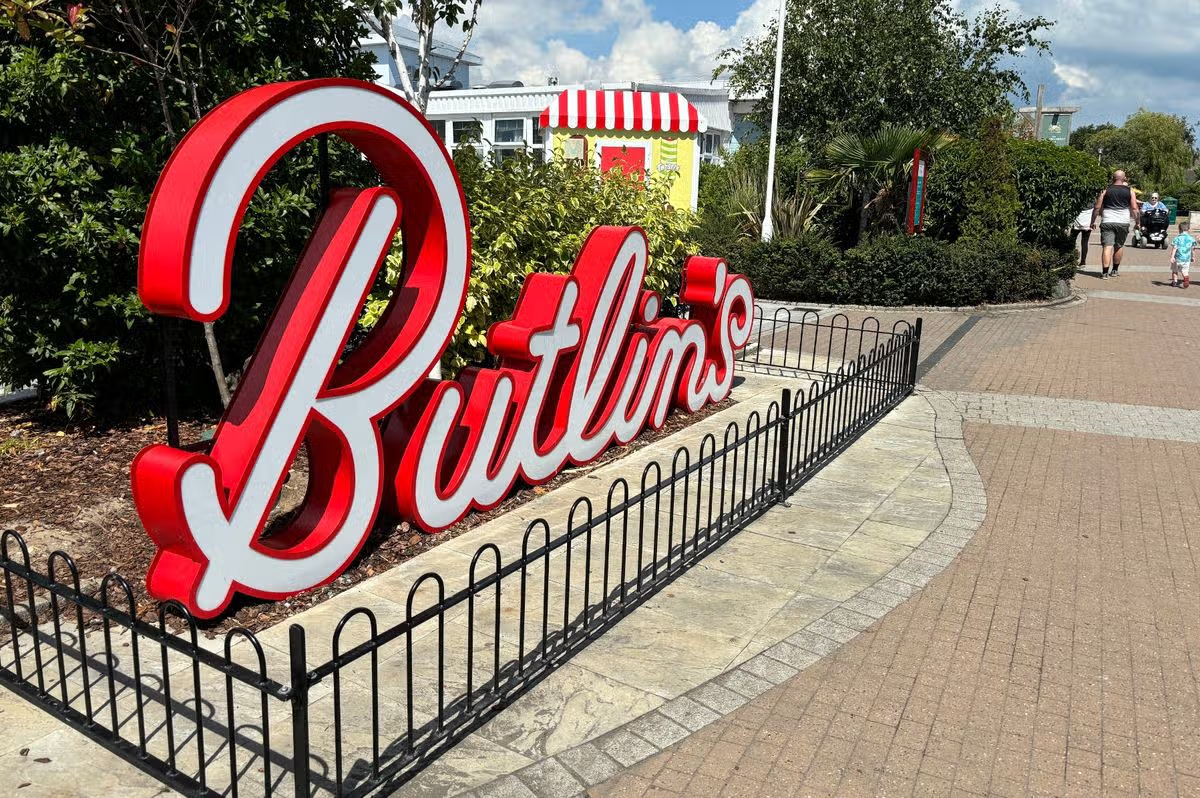
The change will be made across all three Butlin’s resorts(Image: MEN MEDIA)
Butlin’s has announced a huge change to the way holidaymakers can order a drink at its three resorts in Bognor Regis, Minehead, and Skegness, and it’s already in place for guests visiting this summer.
The popular holiday park firm, which recently celebrated its 90th anniversary, has rolled out over 100 self-serve bars across its three sites, which it claims makes it the first in Europe to offer these kinds of bars for guests.
The technology, developed by Boxbars in a £1 million investment by Butlin’s, means there’s much less queuing for drinks, and guests can enjoy a soft or alcoholic drink in as little as six seconds.
The new self-serve bars will be available for both family and Big Weekender breaks, and will offer a huge range of beverages for all the family including branded beers, ciders, and spirits, as well as kid-friendly favourites.
More than 20 options will be available at the touch of a button including pints of Madri and Guinness, Smirnoff with mixers, and cocktails including the brand’s very own Butlin’s On The Beach, which is a mixture of vodka, peach schnapps, cranberry juice, and orange juice, and is reportedly the most popular option across the resorts for All Inclusive guests.
A statement from Butlin’s says the new bars will “help guests get served faster and spend less time queuing”, claiming that “the new technology has the potential to pour hundreds of drinks every minute across the three resorts”.
Guests will either be able to scan their All Inclusive wristband to dispense their drink, or can use contactless payment to quickly pay for their round. Butlin’s confirmed that bars will still be open as usual for guests who’d rather order in person.
Butlin’s launched its all inclusive drink package back in 2024, costing from £25.95 per adult per day, which includes alcoholic drinks such as draught beers, spirits and cocktails from 11am, and all-day Costa coffee and soft drinks across the parks.
Heidi Watson, from Butlin’s said: “This is an exciting first for Butlin’s. Everything we do is about improving the guest experience and our new Boxbar Self-Serve Bars will make a real difference to guests on a family break or a Big Weekender.
“Open in time for the school summer holidays, the bars are designed to reduce wait times and make it quicker and easier for guests to get a drink. This means less time queuing and more time enjoying their holiday with family and friends.”
Earlier this year Butlin’s announced new bookable karaoke pods, which groups of up to 12 people could hire for an exciting sing-along experience. Hiring the pods costs £36, and once inside visitors can choose from 45,000 chart-topping hits and throwback songs, allowing them to enjoy a private sing-song with friends and family as part of their Butlin’s break.
Have a story you want to share? Email us at webtravel@reachplc.com
‘Many ruin bars seem to be just tourist traps now,” says artist István, standing outside Instant-Fogas complex, which calls itself Europe’s biggest ruin pub, but looks more like a mammoth nightclub with several dancefloors.
“These bars were a hot topic 20 years ago, but many have become really commercial now,’ says István. “Ruin bars being expensive actually ruins their purpose. I’m a student, I like beers that are under 1,000 forints [about £2.50], and the big commercial ruin bars are typically much more expensive.”
Ruin bars (or romkocsmák) emerged mainly in Budapest’s historic Jewish Quarter (District VII) in the early 2000s when abandoned, prewar buildings and empty courtyards were transformed by young entrepreneurs into cheap bohemian art spaces that flaunted their dilapidation. They were typically peppered with fairy lights and mismatching secondhand furniture and artefacts.
Many have since lost their ruin bar essence and aesthetic, and simply host punters on the lash and a stream of guided pub crawls, stag and hen parties. But some proper ruin bars do still exist.
Photograph: Hemis/Alamy
Szimpla Kert (or Simple Garden) is considered the pioneer of Budapest’s ruin bars and can feel overwhelming of an evening on your first visit; it’s much calmer in the day. Gigantic, buzzing, with multiple rooms on two levels, lots of colourful lights and pulsating music, it is undeniably a bit touristy, yet not unpleasantly so.
It has become a community centre, too, with film showings, an art gallery, a farmers’ market, flea market and other regular activities.
Suitably decrepit, with graffitied walls, rough wooden benches, concrete floors, a huge disco ball and plants lining the ceilings, it certainly has character. Nights may have live music and there are DJs, with small bars serving craft beers, cocktails and more. Prices are high for a Budapest bar – about 2,000 forints (£5) for a half litre of lager. Yet with a tatty bar space on such a huge scale completely assaulting your senses, there really is nowhere else like it. 9/10
The perfect example of a ruin bar being ruined. The night I visited, the clientele was 90% male, a high proportion of them out to get drunk.
It’s the kind of mainstream sports bar you’d find anywhere, with football screens and arcade games, but also some rather dilapidated areas (perhaps as a nod to the ruin bar concept, possibly through neglect) and a tree in the middle of an open courtyard.
A £1 charge is added to each relatively expensive drink as a deposit for the ugly plastic cup it’s served in – and that I have no interest in taking away. Of course, many people don’t realise this and don’t get their deposit back, and it is a difficult process if you do: customers are typically directed to another bar with a sizeable queue to get the money returned.
Unsurprisingly, there are critical reviews of Füge Udvar online. 0/10
Photograph: Ben West
With a collection of shabby bar stools and tables inside and out, a chaotic mishmash of artworks on the walls and windows covered in stickers, Fekete Kutya (or Black Dog) certainly cultivates the ruin bar vibe.
“It’s been here since 2013 and used to be a ruin bar for local people,” says student Milan Keleti while serving me a PostřižinskéFrancin lager (£2.10). “Initially, this was a place for artists, for people that couldn’t afford expensive bars. But, as this area has become more touristy, about half the custom is now from tourists. But it still has the atmosphere, the music, the decor that is fit for ruin bars.”
Although Fekete Kutya is becoming popular with tourists, it has noticeably lower prices than the big, commercial bars. It also has live music. 8/10
While this sizeable District IX space has elements of the ruin bar formula – rooms centred on a courtyard, worn plaster walls, exposed brick, industrial chic, rustic wooden tables and a tree in situ – it has more of the vibe of an east London craft beer bar.
Indeed, it focuses on beers for discerning drinkers – Hungarian and international – with more than 20 on draught each day. Beers from the nearby Fehér Nyúl brewery are particularly popular. 7/10
Consisting of a large room with a high ceiling and a vintage cafe look, packed with artwork, graffiti, stickers, fairy lights, mannequins, toys, chandeliers and carpets scattered across the worn floorboards, this very much has the ruin bar vibe. Around two Roman-style pillars – presumably holding up the place – are lots of colourful, rickety little chairs and tables, where locals and visitors chat away, creating a laid-back atmosphere.
Originally a grand late-19th century coffee house frequented by Budapest’s intellectuals and writers, this is still a place to conduct a conversation (Csendes Létterem means “quiet restaurant” in Hungarian), something you might struggle with in some of the larger ruin bars pumping out loud music. Sometimes Csendes hosts events, such as live acoustic music and cinema nights.
A block away from Astoria or Calvin Square, you could perhaps try an Edelweiss wheat beer (half litre £5.70) or maybe a tequila (£4.45). 9/10
Photograph: Ben West
It is heavenly to walk down the steps into this little, off-the-beaten-track basement venue as a six-piece band is playing Hungarian folk songs with gusto, encircled by audience members dancing energetically – and everyone appears to be local.
The true spirit of the ruin bar is alive and well here.
Although, once again, the exact definition of a ruin bar seems to be rather elusive. “It’s not really a ruin bar – but then I suppose, come to think of it, it is a ruin bar,” says bartender Anna Horváth, serving me a gin and tonic in an old jam jar.
While ruin bars were “traditionally” located in District VII, this is very much a scaled-down version of the concept, in District VIII. Also known as Fővárosi Kulipintyó, it is suitably shabby, with a semicircular wooden slatted roof, a worn cream and brown tiled floor, antique posters, plates and, curiously, old boots on display, with beer barrels stacked up by the entrance.
“It’s like being in a second world war Anderson shelter,” says my son Jethro. Although, at 27 years of age, I’m not sure he’d really know what that would be like.
Zsír has live music most nights – which could be klezmer (instrumental Ashkenazi Jewish music),Balkan, Romanian or Latin.
“I come here every night for the live music,” says regular Gyula Márky, straight from the dancefloor. “It’s fantastic. It’s like you’re in a novel or something; it’s really, really special. Dancers, singers and musicians all together: that’s the best thing I can imagine.” 10/10
Accommodation was provided byUp Hotel Budapest, which has doubles from €92, room-only
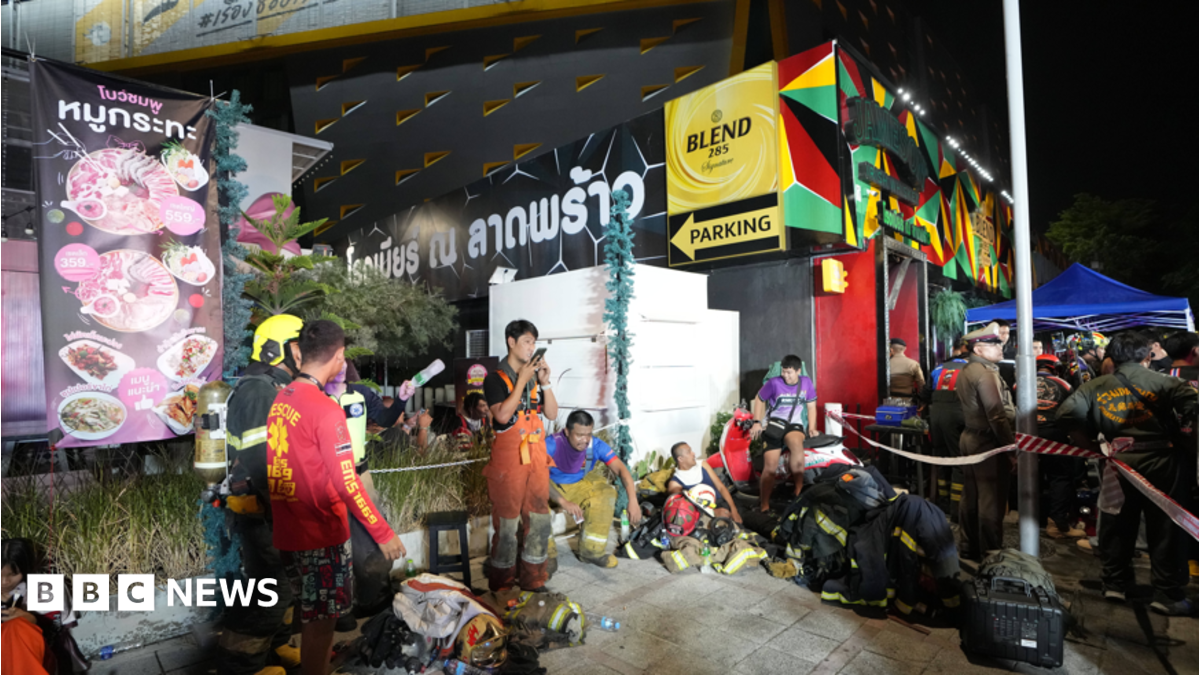
At least 27 people have been killed in a huge fire which ravaged through a Bangkok bar, Thai media has reported.
Firefighters were called to the scene just after midnight and discovered patrons fleeing through the flame-enveloped front door of the venue.
Unverified footage shows flames blasting out of the bar as one woman falls to the floor before getting to her feet to get away.
Thailand’s Prime Minister Anutin Charnvirakul told journalists at the scene that 27 people died and several have been taken to the hospital, according to local media. He stressed the cause of the fire was still under investigation.
The bar is located in the Chatuchak District and is a famous entertainment venue and restaurant in the area, Thai outlet the Daily News reported, external.
Firefighters were able to bring the flames under control in half an hour.
Pictures taken inside the bar after the fire was put out show it completely charred and blackened, with the ceiling peeling off.
MAYA Jama has revealed she risked being arrested in Ibiza after she accidentally took something from a bar without paying for it.
The Love Island host, 31, shared a new vlog on her YouTube channel as her hairdresser got her ready for a photoshoot to be a cover girl on a magazine.
Sign up for the Showbiz newsletter
Thank you!
Maya Jama has revealed she nearly got arrested in IbizaCredit: Instagram/ @mayajamaShe made the revelation during her latest vlog on her YouTube channelCredit: @mayajama / YouTube
Her hairstylist divulged: “We were in Ibiza and the bar was closing and we were walking back to the hotel, but we took our glasses and then the Spanish lady, she was chasing us down the road.”
Maya added: “So we came and gave them back! Otherwise we would get arrested!”
The hairdresser expressed: “We’d get arrested in Ibiza and that’s not what we want.”
Maya told the camera: “They weren’t even proper glass cups, they were plastic.”
She admitted she took drinking glasses from a bar in SpainCredit: @mayajama / YouTubeIt comes as she returned to the Love Island villa for the Casa Amor recouplingCredit: Shutterstock Editorial
When Jasmine saw Kavan, who she was in a couple with, walk back into the main villa with the stunning Irish influencer – she was left taken aback and quite frankly, fuming.
After she processed the information, Jasmine asked Kavan if he had slept in bed with girls during Casa.
She also asked him if he’d kissed any girls outside of challenges.
His brother Aidan was quick to butt in, saying how he thinks this is a conversation for them to have in private.
“I’m allowed to speak to him. That’s who I was in a couple with,” Jasmine snapped at Aidan.
“Yeah, Aidan, let them two speak,” Maya then added in a stern voice.
Reacting to Maya’s hilarious snap back at Aidan, one person penned: “The fact even Maya’s sick of Aidan acting like the spokesperson.”
“Maya Jama is so real telling Aidan to let Jasmine and her couple speak. That’s a REAL ASS HOST,” said a second.
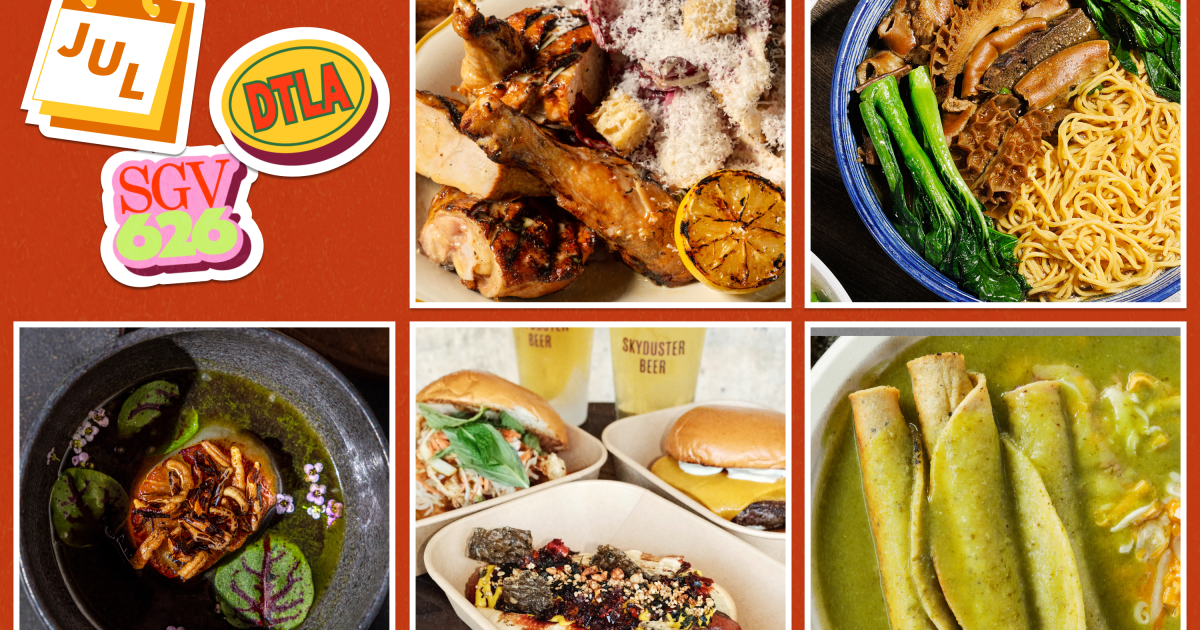
Summer has just begun, but there’s a certain magic in the air in Los Angeles right now. On the heels of Juneteenth and Pride Month, the city is fully immersed in World Cup, which continues through July 19, with some of the matches being played at Inglewood’s SoFi Stadium. There are plenty of places to eat and drink near the stadium if you’re heading there for a game and plenty of watch parties at local restaurants and bars for those looking to cheer alongside other soccer fans.
If you’re staying close to home this summer, keep your taste buds entertained with Food’s guide to the 50 essential dining experiences that define living here, from an East L.A. taco truck crawl to pastries in Chinatown and Iranian cafes in Westwood’s Persian Square. There are also plenty of new bars to explore, including rooftop destinations with sparkling views of the city.
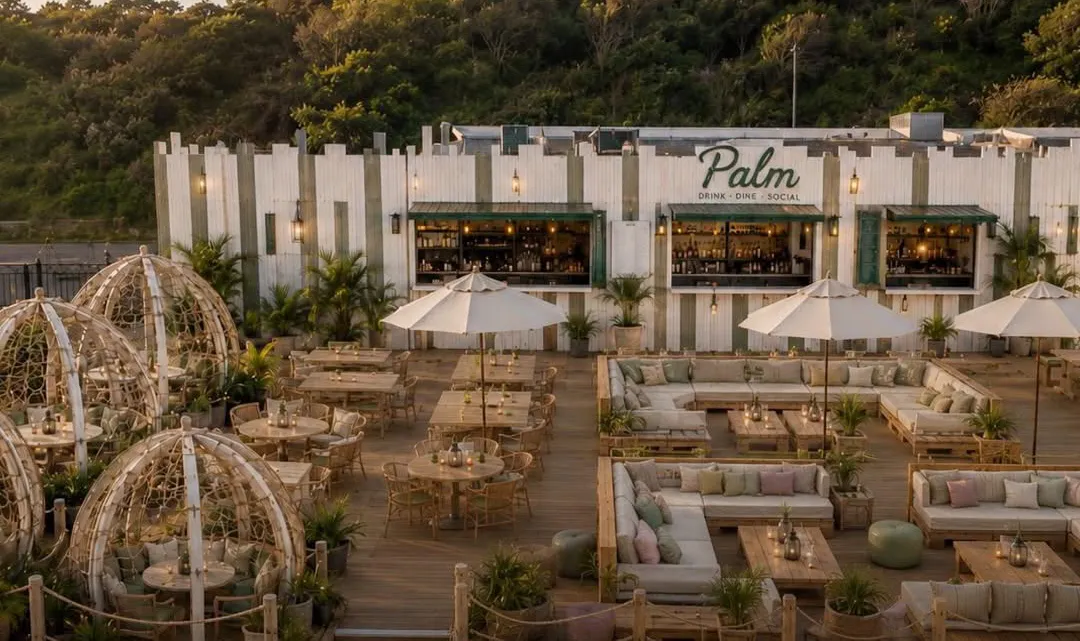
A NEW Mediterranean-style pop-up beach club is coming to the UK.
The new venue will be bringing summer vibes to Bournemouth with dining domes, beach beds, sunloungers and DJs.
Sign up for the Travel newsletter
Thank you!
Palm will open on Bournemouth seafront for the summerCredit: Seventa EventsThe popular UK beach will have a new attraction until SeptemberCredit: Getty
Called ‘Palm’, the Ibiza-style club will open on Bournemouth’s seafront next month.
The seaside town is one of the most sought-after when the sun shines as the golden sandy beach stretches on for seven miles.
For those who know the area, Palm will be a few paces away from Bournemouth Pier on the old WestBeach Restaurant site.
The beach club will be open all day starting at 9am with breakfast and coffee.
Growing up in suburban Detroit, there was deep-dish square pizza and there was round pizza. The round style was the kind of pizza you’d find at your local bowling alley, roller rink, arcade or neighborhood sports bar. It was thin, super crispy and you could pick it up and eat it with just a napkin.
I wasn’t aware that any of my hometown pizzas were considered trendy until 2016 when Detroit-style pies exploded in NYC and then, during the pandemic, in Los Angeles. But much like the square pizza, the thin, crispy, round pies have an identity as well: Tavern-style pizza has many names (party cut, bar pie, etc.) but it’s the slightly lesser known, thin-crust style of pizza born in the Midwest. And lately, it’s been having a moment in Los Angeles.
“It was the kind of pizza they served you at whatever bar you were at,” says fellow Michigan native Aaron Lindell of Echo Park’s Quarter Sheets. “I wasn’t aware then that it was its own style,” he says.
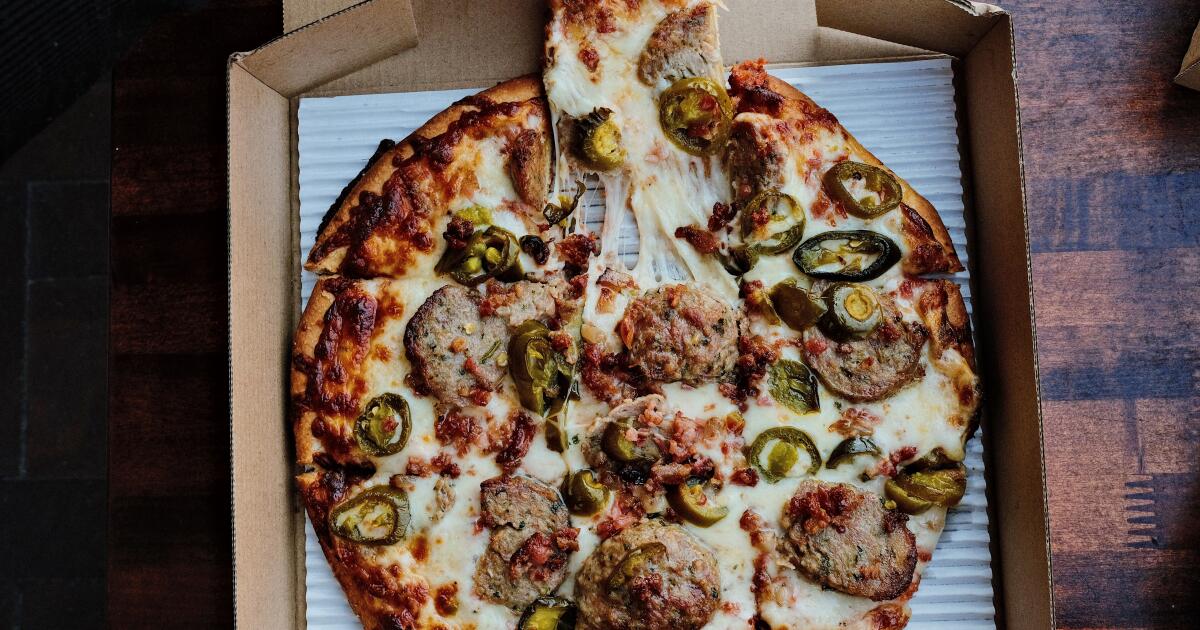
What makes it a Midwest-style tavern pie exactly? Essentially it’s a lower-moisture, higher-fat dough resulting in a thin, crackery, flaky pizza crust. Typically bar pies go lighter on tomato sauce and caramelize the mozzarella significantly, resulting in a molten matrix of cheese and sauce that takes me back to my childhood with each bite.
Despite its prevalence in Michigan and other parts of the Midwest, tavern-style is most commonly associated with the Chicagoland area, thanks to places like Vito & Nick’s. Lindell developed his own recipe for bar pie in 2023 that combines Midwest tavern style with those of the northeast to bump up business on slower nights. Now, the nights that Quarter Sheets has bar pies on the menu are some of the busiest of the week.
However, Lindell was far from the first to offer a take on tavern-style pizzas here in L.A. Eagle Rock’s Casa Bianca Pizza Pie opened in 1955 with the intention to bring Chicago thin-crust to Los Angeles. Fresh Brothers Pizza opened in 2008 in Manhattan Beach specializing in tavern-style pies and wings and the chain quickly expanded to 20 locations in the SoCal area. In 2013, Rance’s Chicago Pizza opened in Costa Mesa offering both Chicago deep dish and tavern-style (and eventually expanded to Long Beach in 2017). Midwest icon Gino’s East of Chicago even opened in Sherman Oaks in 2019, also offering their take.
And since the pandemic, newer spots have been doing their own versions much like Quarter Sheets.
Here are nine places to try tavern-style pizza around L.A. right now.
POP superstars Madonna and Kylie Minogue get into the groove as they film a comedy bar sketch for Madge’s special with Graham Norton.
Madonna, 67, invited Kylie, 58, to take part in the top-secret filming last month, having admired her career for over a decade, the Sun can reveal.
Sign up for the Showbiz newsletter
Thank you!
Madonna and Kylie Minogue filmed a comedy bar sketch for Madge’s special with Graham NortonCredit: Ricardo GomesThe Sun understands the pair have discussed hitting the studio together in the future
A source said: “Madonna and Kylie have long been fans of each other, so when Kylie got the call to make a cameo in the BBC special, it was a no-brainer. Rather than a performance, Kylie actually appears in the show in a light-hearted skit.
“She plays a barmaid, though, awkwardly, Madonna doesn’t like the drink Kylie gives her. It’s all very light-hearted.”
The Sun understands the pair have discussed hitting the studio together in the future.
The TV special, Madonna & Graham, airs tonight at 10.40pm on BBC One.
It was filmed in Camden at Koko, where Madonna performed for the first time in the UK for just 200 people in 1983 when it was called the Camden Palace.
Graham said: “As a lifelong fan it is always a thrill to interview Madonna. But to meet her on the dance floor where she first performed in London over 40 years ago felt incredibly special.”
Kylie made a surprise guest appearance at Madonna’s The Celebration Tour in LA in 2024.
They performed Gloria Gaynor’s 1978 hit I Will Survive in a nod to Kylie’s 2005 breast cancer battle.
The TV special, Madonna & Graham airs tonight at 10.40pm on BBC OneCredit: PA
Tokyo isn’t one city. It’s many cities, and each is its own universe.
Occasionally — at a certain subterranean bar big enough for only seven people, or a sushi counter on the fifth floor of a random office building — I feel as if I’m stepping into another time or dimension.
Finding your way to any of the millions of restaurants, cafes, bars and shops (some are micro-businesses in an alley in a village in the city) can be like figuring out a many-layered puzzle. Like Tokyo, each experience is dense.
Use these handy dining guides for all of your summer travel, near and far.
The Japanese word for hospitality is omotenashi. But its meaning goes far beyond just customer service. Even the translations “wholehearted, selfless hospitality” or “flawless care” don’t cover all of the philosophies that make up omotenashi: magokoro (“true heart” or “sincere feeling”), ichigo ichie (“one time, one meeting”) and kuuki wo yomu (“reading the air”). The last refers to the intuitive ability to anticipate guests’ needs before they ask — an idea rooted in tea ceremony, which is rooted in Buddhism. It’s hard to grasp that level of selflessness.
Here are some of our favorite places to lose yourself in Tokyo. — Betty Hallock
Among coffee geeks, “pilgrimage” isn’t too strong a word to describe visiting the Collingwood neighborhood cafe owned by barista/roaster/industry visionary Nolan Hirte and his wife, Shari. Nolan was one of the leaders who built on Melbourne’s early coffee culture, established by Italian immigrants and their daily espresso habits in the mid-20th century. After Nolan took a tour of America’s burgeoning third-wave coffee shops in the mid-2000s, he returned to Melbourne determined to push the expressive possibilities of filter coffee even further.
At the cafe, the drink menu — whether drip, espresso drinks or pour-overs — includes flavor descriptions that can resemble wine-tasting notes, but there’s nothing fussy about the experience, or the easygoing breakfast and lunch options. Pour-over freaks looking for the highbrow deep dive should walk two blocks to Aunty Peg’s, the Hirtes’ laboratory/counter/roasting facility, for two or three rounds of Panamanian geishas.
WITH the warm weather staying, you don’t need to fly away to experience a destination that feels like abroad.
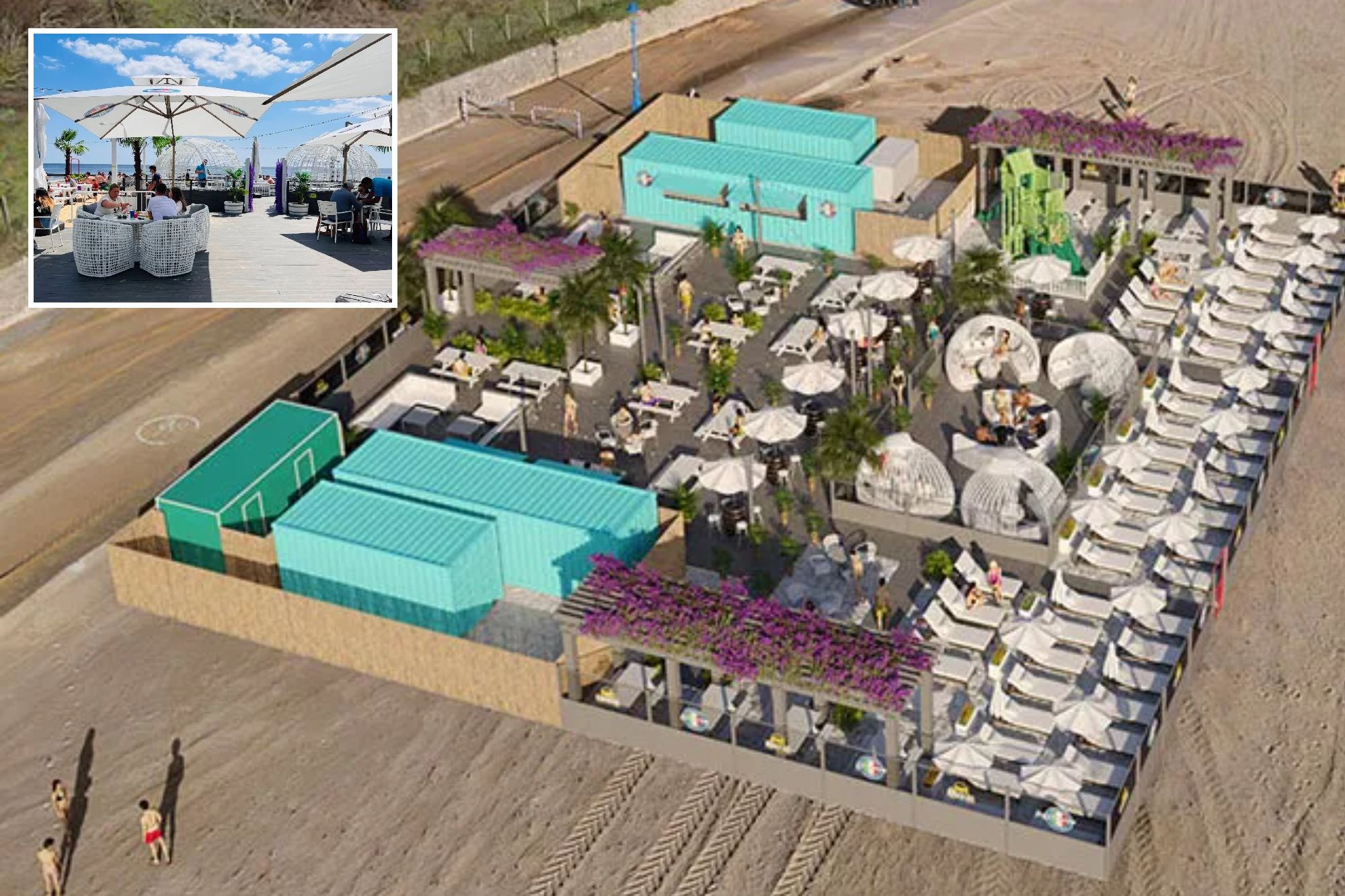
El Murrino Beachside Kitchen sits on East Cliff Beach, between Bournemouth and Boscombe Piers in Dorset.
Sign up for the Travel newsletter
Thank you!
El Murrino Beachside Kitchen in Bournemouth is said to feel like the MedCredit: Google mapsThe beach bar even has VIP cabanas you can bookCredit: El Murrino Beachside Kitchen
One recent visitor claimed the bar has “Mediterranean beach vibes”.
Another added: “The food was tasty and the atmosphere was like being abroad in Spain.”
A third agreed: “The sun was shining and the music made it feel like we were in Ibiza for the afternoon.”
Others even compared it to Miami, saying it feels like being on holiday abroad.
It doesn’t matter what time of day you visit as the kitchen serves breakfast, lunch and dinner.
Breakfast options include American pancakes for £8 and then when it comes to lunch or dinner you can grab a burger, salad, fish and chips or pizza for £14.
The beach bar sits right on the beach as wellCredit: Google mapsAnd in the summer they host live DJ sessionsCredit: El Murrino Beachside Kitchen
Even your four-legged friend won’t be left out with doggy ice cream available for £3.50 a tub.
And of course there are plenty of tipples on offer including cocktails for £9 or a pint for £6.50.
If you want to elevate your experience, there is the option to book a VIP Cabana for £75.
The cabana can be used by up to 10 people and includes two pizzas and four drinks or a bottle of wine or prosecco with your booking.
Each booking lasts two and a half hours.
If you don’t fancy booking a cabana there are plenty of picnic-style tables as well, surrounded by sand.
And during the summer months, you can also catch a live DJ session at the beach bar.
The beach bar is open each day until 11pm and makes for the perfect pitstop when exploring Bournemouth’s beaches.
Playing in goal for the U.S. men’s national soccer team is a little like playing right field for the Yankees. You’re following a long line of great players, making the comparisons — and the high expectations — unavoidable.
Matt Freese is the latest to be thrown into that crucible. But he considers that pressure to be a privilege, not a problem.
“I wouldn’t say it’s intimidating, I would say it’s inspiring,” he said before the U.S. training session Tuesday morning in Irvine. “It’s a long line of goalkeepers that I’ve looked up to for my whole life — and there were some before my life as well.”
Two games into this summer’s World Cup he’s certainly held his own with that group, giving up just one goal for a team that’s unbeaten and already through to the next round. However Thursday’s group-stage finale with winless Turkey will be far from meaningless for Freese since his first start for the U.S. came against Turkey 55 weeks ago, bringing his whirlwind international team career full circle.
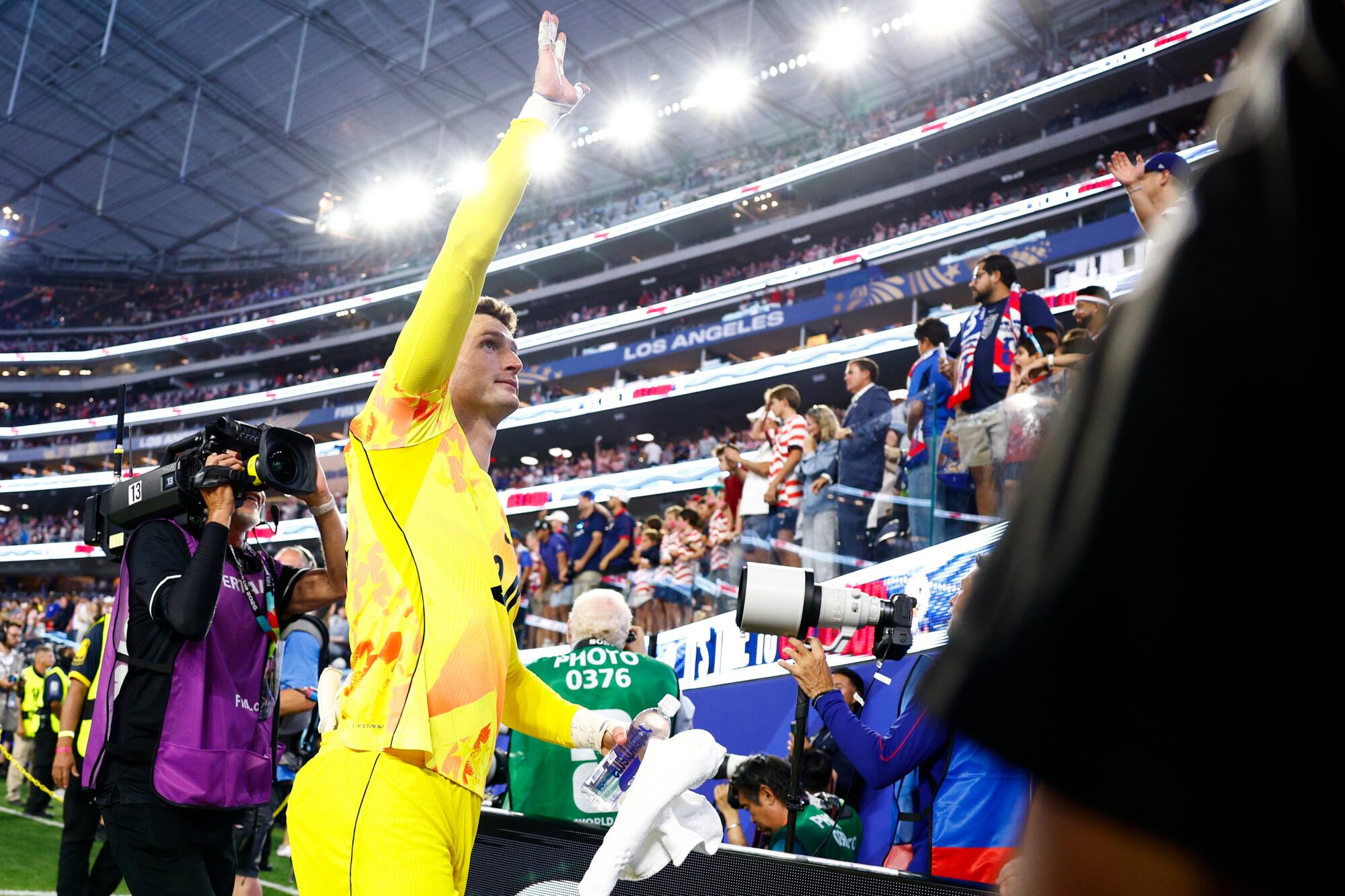
U.S. goalkeeper Matt Freese waves to the crowd after beating Paraguay during a World Cup match at SoFi Stadium on June 12.
(Kelvin Kuo/Los Angeles Times)
He lost that game but his performance was good enough to make him the starter in the Gold Cup, where he was even better. A little over a year ago he was just a faint blip on coach Mauricio Pochettino’s radar. Now he has a World Cup shutout and with another clean sheet Thursday, he’ll join Matt Turner as the only American keepers to post back-to-back shutouts in a World Cup in 96 years.
“I dreamt of this opportunity. But you never know if it’s going to come,” Freese said. “I learned the ones that work hard without the promise of reward are the ones that usually succeed.”
Turner, who gave up just a goal in the group stage in Qatar four years ago, is Freese’s backup in this tournament. And he’s just the most recent U.S. keeper to stand out in a World Cup. In 2014, Tim Howard set a tournament record with 16 saves in a knockout-stage loss to Belgium and 12 years before that Brad Friedel made six stops in a 2-0 win over Mexico to send the U.S. to the quarterfinals for the only time.
“To have my name next to theirs as the next guy up is an incredible honor, and it’s something I’ve dreamed of,” Freese said. “The bar is set high and I’m going to strive to reach that bar and raise it even higher.”
Freese, 27, took an unusual route to that bar. The son of a neurosurgeon who earned a doctorate from MIT and the grandson of scientists who immigrated from Germany after World War II, Freese grew up in a household where academics were more important than athletics. So while he joined the Philadelphia Union academy as a teen, he craved the demands of school and left soon afterward to enroll at Harvard.
“When you’re a professional athlete at age 18, 19 sometimes it can be difficult to keep a routine, keep a regimen that keeps you focused and keeps you hungry,” Freese said. “For me, taking classes was something that occupied my time, occupied my mind and gave a very natural release off the field.
“I think at that age it was necessary.”
After two seasons at Harvard, he returned to Philadelphia to sign with the MLS team while continuing to take classes online, once writing a paper on penalty-kick analytics. In 2022, he graduated from Harvard with a degree in economics.
The soccer part wasn’t going nearly as well. Playing behind Andre Blake, a three-time MLS keeper of the year, Freese rarely saw the field in Philadelphia. But a trade to New York City FC in the winter of 2023 gave him a second chance and likely saved his career.
He made the most of it, earning the starting job in his second season, when he finished third in the league in saves, and getting his first call-up to a national team training camp in January 2025.
Six months later he was the team’s starter in goal.
The late-blooming Freese’s journey was unusual in another way too since he traveled to the World Cup from MLS. In the five World Cups between 1998 and 2014, the U.S. started Friedel, Kasey Keller and Howard — three English Premier League keepers — in goal. A dozen years later, the Athletic reports, there are no American goalkeepers in the top five European club leagues and the three goalies on this summer’s roster all play in MLS.
U.S. goalkeeper Matt Freese clears the ball as Australia’s Mohamed Toure closes in during a World Cup match in Seattle on June 19.
(Maddy Grassy / Ap Photo/maddy Grassy)
However as a guy with a Harvard diploma on his resume, Freese knows enough to know that getting to a World Cup isn’t about where you came from or even how long it took you to get there. All that matters is that you made it. And now that he’s there, his job isn’t to stand out, but to blend in.
“Being a goalkeeper is recognizing that it’s not always about you. And I’m comfortable with that,” he said. “The less action I have in a game means the better that we’re playing, and the more likely we are going to win.
“So I’m typically more focused on that and preventing any shots rather than just being only ready to save them.”
A LITTLE-known band were left totally gobsmacked after a rock legend turned up in the audience at one of their shows.
The Rolling Stones cover band were playing to a small crowd in a bar when the iconic musician revealed himself as a fan, dancing alone in the bar.
Sign up for the Showbiz newsletter
Thank you!
The music legend enjoyed a night out in his hometown of Franklin, TennesseeCredit: tiktok/@jennyteatorThe frontman forewent his trademark red cap and goatee for a striking white-bearded lookCredit: tiktok/@jennyteator
The mystery figure was none other than Noughties nu-metal megastar Fred Durst, frontman of Limp Bizkit.
Fellow punters couldn’t believe their eyes and quickly pulled out their phones to capture the surreal moment as the Rollin’ singer rocked out to their set.
Musician Jenny Teator, who was singing on stage shared the clip on TikTok, writing: “This was unexpected. Get it, Fredddd!! We had so much fun at @GRAYSonMAIN.”
The unlikely scene unfolded at Grays on Main, a bustling music venue and dining room in downtown Franklin, Tennessee – the town Fred now calls home.
The Limp Bizkit star danced alone to Rolling Stones classics at the small-town venueCredit: tiktok/@jennyteatorFred during Limp Bizkit’s chart-topping Noughties heyday.Credit: Redferns
The star looked almost unrecognisable with a full white beard, although he still sported the signature baseball cap fans will remember from the band’s heyday.
Other diners appeared oblivious to the famous face in their midst, continuing with their meals unaware they were in the company of rock royalty.
One viewer commented: “The people sitting there eating, completely unbothered that Fred Durst is getting down right beside them, is killllling me!”
Fred and Limp Bizkit were one of the biggest bands of the late Nineties and early Noughties, with hits including Break Stuff, My Way and Rollin’.
Limp Bizkit still perform more than 25 years after the band’s breakthrough successCredit: GettyFred during a recent Limp Bizkit performance at Gunnersbury Park.Credit: Getty
Their album Chocolate Starfish and the Hot Dog Flavoured Water debuted at number one on the Billboard 200 and sold over one million copies in its first week.
The singer was also linked to a string of high-profile romances, including rumoured relationships with pop stars Christina Aguilera, Britney Spears and Avril Lavigne. He has been married four times and has two children.
Despite stepping out of the spotlight in recent years, Fred, now 55, continues to record and perform with Limp Bizkit.
Limp Bizkit’s last official UK tour was last year, with the band appearing at the Reading and Leeds festivals.
Besides continuing to tour and perform with the band, Fred has made his mark as a film director with movies like The Education of Charlie Banks and The Longshots.
He also directed the film The Franatic in 2019 which starred John Travolta.
MOLLIE’S is the brand that’s making budget travel chic.
There’s only one problem with its new Manchester site… it’s so fun that you won’t want to leave. So here’s everything you need to know about staying there.
Sign up for the Travel newsletter
Thank you!
There are several room styles including bunks and doublesCredit: Unknown
Where is Mollie’s Manchester?
Unlike its two sister hotels in Oxfordshire and Bristol – both of which sit roadside and a short drive from the main hub of the city – the Manchester joint is slap bang in the city centre, close to the upmarket Deansgate area.
It’s a 15 or so minute walk from Manchester Piccadilly train station.
What’s it like?
This is the first hotel in the budget-luxe chain not to operate as a motel and has a slightly more sophisticated feel to it.
You’ll likely spot locals popping in for coffee on their way to the shops, or mooching about in the very stylish lobby-cum-cafe where the atmosphere is reminiscent of a cool, unstuffy members club.
All have the exact same Scandi-esque look no matter which county you’re staying in – think light wooden panels and eccentric lamps.
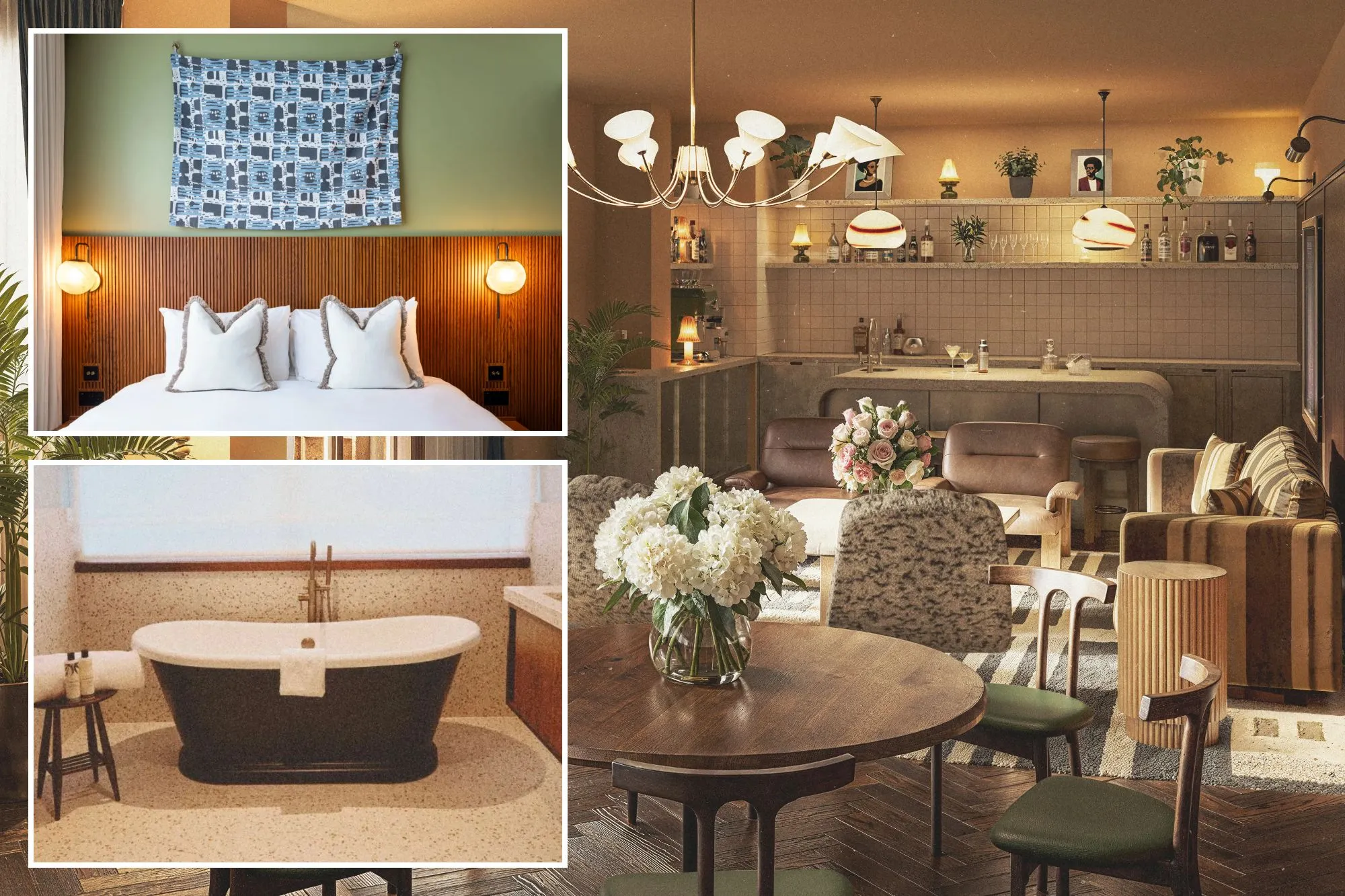
The Manchester hotel features a couple of roomier options like the Studio, which comes with a lounge and freestanding tub, and several giant suites that boast a proper kitchen and living room plus an in-room Peloton bike.
Other options include doubles, twins and four-person bunk rooms.
Mollie’s diner serves American grub including fricklesCredit: Supplied
What is there to eat and drink?
The American-style motel theme runs strong in the kitchen, with a knock-out menu of burgers, hot dogs and milkshakes at the onsite diner.
Dishes are filling so make sure to come hungry.
I tried the frickles – fried pickles – which came with a zingy dipping sauce and reminded me of the ones I ate in America’s Deep South.
Brekkie is a similar affair: pancakes stacked high and dripping in maple syrup and fry-ups that are piled with some of the best hash browns I’ve ever eaten – fluffy inside, wonderfully crispy on the outside.
What else is there to do?
The hotel has a cool, unstuffy members club feel to itCredit: Supplied
Don’t forget to book yourself into the downstairs cocktail bar where the atmosphere is sexy and sultry.
Studio IV rather accurately describes itself as a “lively living room” – plush velvet sofas are framed around a stage where DJs and jazz musicians perform.
It’s got somewhat of a secret speakeasy vibe to it, with dark corners to cosy up in and space for people to boogie.
The cocktails are very fun and staff are extremely attentive.
How much is Mollie’s Manchester?
Rooms cost from £90 per night.
Rooms are well decorated in a Scandi styleCredit: Supplied
Is it family friendly?
Yes, very much so.
There are plenty of adjoining rooms with twin and double options, as well as bunk rooms that are great for families with more than two kids.
There’s a children’s menu at the diner and games in the lobby that kids will love
Is there access for guests with disabilities?
Yes there are accessible rooms and toilets in the public areas, as well as lifts to all floors.
IF you’re looking for a new London hang-out spot, Olympia has it all from pretty bars to top-tier entertainment.
After a £1.3billion upgrade, the impressive project is opening its rooftop ‘Canopy’ today and its music venue later this week.
Sign up for the Travel newsletter
Thank you!
Olympia in West Kensington has been transformed after a £1.3 billion upgradeCredit: OlympiaNew rooftop bars and restaurants are opening this week like Bar ArribaCredit: Olympia
The enormous revamped building in West Kensington is opening its rooftop bars and restaurants that can only be found at Olympia today.
For anyone who fancies Mexican, check out Bar Arriba which serves up fresh cocktails and small bites from tacos to tostadas.
Lillie’s Wine Bar & Restaurant is the spot for the best of British food from Gressingham duck to Devon crab salad and you can even try a rhubarb and custard cocktail.
The outside area looks like an English country garden too with sculptures and beds of daffodils.
At Wolves of Tokyo dig into Japanese dishes from sushi to grilled skewers, gyozas and tartare.
Arbour is the food hall which has more of a casual vibe and inside are four different spots; Café Modo, Fry Baby, The Rambler and Whammy Burger.
All of these spots are up on the rooftop so they’re perfect for a sunny weekend.
But if the weather doesn’t play ball, there is a retractable roof to protect punters from the rain.
Another dining venue at Olympia called Pillar Hall opened in March, 2026.
It’s found in the Grade-II listed part of Olympia that was built in 1886 and is home to Idalia an all-day restaurant and Pepperbird, a speakeasy-style bar.
Lillie’s Bar and Restaurant is in the style of an English country gardenCredit: Incipio
It’s been described as a ‘world-class venue’ which will host music, comedy and entertainment.
It will start with performances by Self Esteem and McFly before the likes of Van Morrison and Khalid take to the stage later in the year.
This will be followed by the 1,575-seat British Airways Theatre in 2027 which will be London’s largest new theatre in 50 years.
Japanese restaurant Wolves of Tokyo has beautiful views from outsideCredit: Olympia
The Hyatt Regency hotel which will have 204 rooms will open to guests from July 6.
The other on-site hotel, CitizenM London Olympia will have 146 rooms and is expected to open this summer, although no official date has been announced.
Olympia London first opened in 1886 and has held performances by Jimi Hendrix and Pink Floyd and was used as an exhibition space by the likes of Vivienne Westwood.
Serving breakfast and lunch, you can get all the classic of a Full English or avocado on toast, as well as burgers and fish and chips.
They also serve alcohol including cocktails and grazing boards.
Live music evenings will also return this summer, including Jazz Cafe nights and 5 Nights of Sumer with “sunset dining, European sharing platters and cocktails by the sea” along with music.
Otherwise the cafe is only open in the day, from 9am to 5pm, (or 3pm in the week).
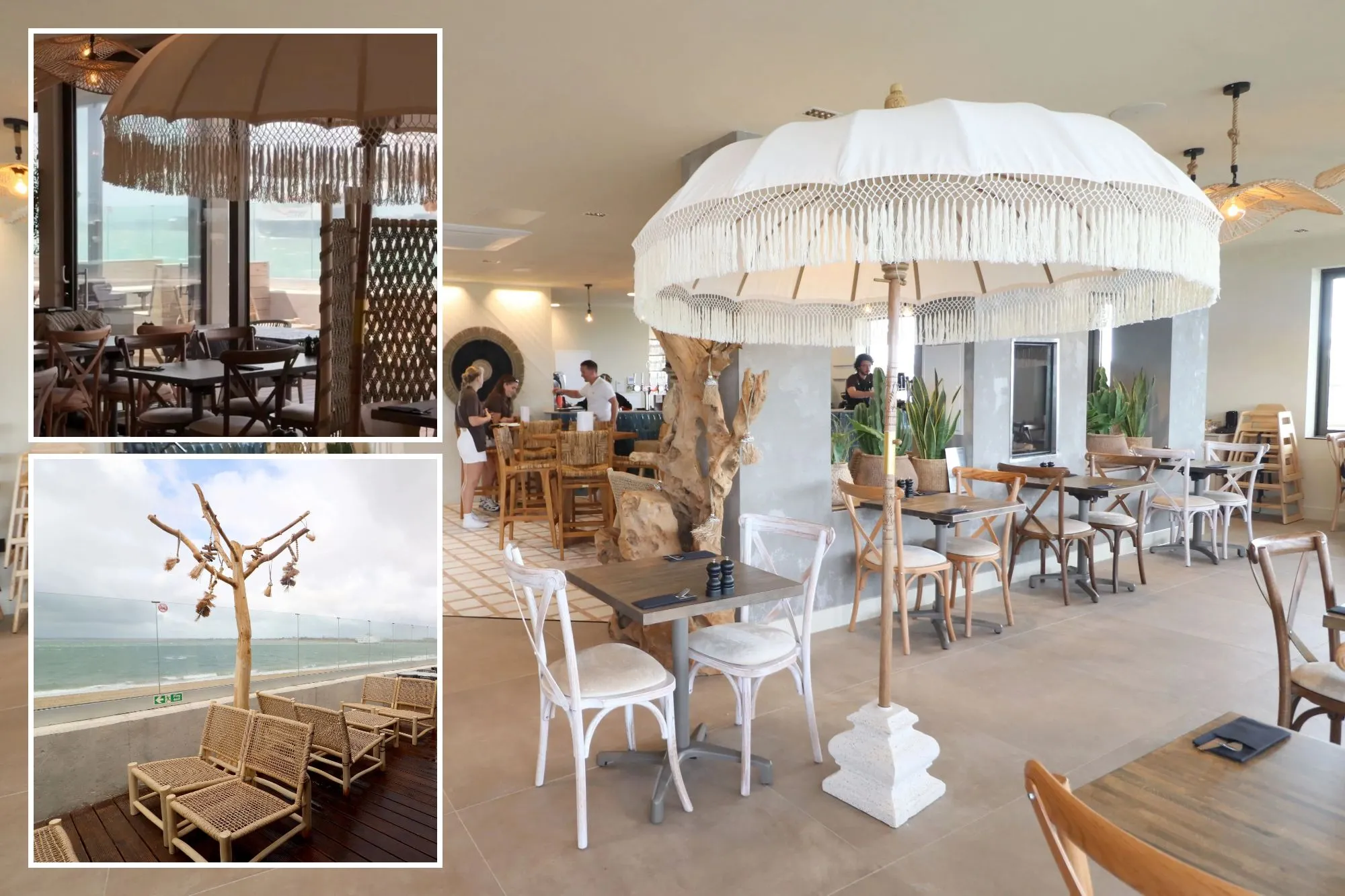
Guests can book in for sunset music sessions in the evening tooCredit: Instagram/southseacafeThe outdoor terrace has direct views of the seaCredit: Solent
The cafe’s general manager Elisa Standley told local media: “I think this place has completely reformed the beachfront – it’s taken a modern twist of what we used to do, and it’s expanded what we do in a better way.
WASHINGTON — Former Trump administration national security advisor John Bolton has agreed to plead guilty to a single count of retaining classified information under a deal with the Justice Department that could allow him to avoid prison time, a person familiar with the matter said Thursday.
The deal would resolve a criminal case filed in October that charged Bolton with 18 counts of either retaining or disseminating classified information, including diary-like notes from his time in government that officials say he shared with his family members as he was preparing a memoir about his time in office.
Under the agreement, Bolton would also face a $2.25-million fine, said the person, who insisted on anonymity to discuss a deal that had not been made public. Any prison sentence would be capped at five years, but the agreement allows for him to avoid time behind bars, though the punishment will ultimately be up to a judge.
The case against Bolton, filed weeks after prosecutors secured indictments against former FBI Director James Comey and New York Atty. Gen. Letitia James, unfolded against the backdrop of concerns that the Justice Department was using its law enforcement powers to pursue perceived adversaries of President Trump. The investigation burst into public view last August when FBI agents served search warrants at his Maryland home and Washington office, but it had been well underway by the time Trump returned to the White House in January 2025.
Bolton is a longtime fixture in Republican foreign policy circles who became known for his hawkish views on U.S. power. He served for more than a year in Trump’s first administration before being fired in 2019 and publishing a critical book that portrayed the Republican president as deeply misinformed, an unflattering portrait of his leadership and decision-making.
Trump’s administration fought unsuccessfully to block the publication of “The Room Where it Happened” on the grounds that the book risked disclosing classified information. The plea deal that Bolton will enter covers the notes he shared with relatives as opposed to information published in the tell-all book.
A rearraignment, which typically signals a plea agreement, is scheduled for June 26 in federal court in Greenbelt, Md.
The Justice Department declined to comment.
The indictment’s 18 counts carried a threat of a substantial prison sentence in the event of conviction.
Court documents alleged that he shared with two family members “diary-like” entries with information classified as high as top secret that he had learned from meetings with other U.S. government officials, from intelligence briefings or talks with foreign leaders. After sending one document, Bolton wrote in a message to his relatives, “None of which we talk about!!!” In response, one of his relatives wrote, “Shhhhh,” prosecutors said.
The indictment said that among the material shared was information about foreign adversaries that in some cases revealed details about sources and methods used by the U.S. government to collect intelligence. One document related to a foreign adversary’s plans for a missile launch, while another detailed U.S. government plans for covert action and included intelligence blaming an adversary for an attack, court papers say.
In a statement released after his indictment, Bolton described the charges as part of an “intensive effort” by Trump to intimidate his opponents, to ensure that he alone determines what is said about his conduct.”
Bolton also served in the Department of Justice during President Reagan’s administration and was a State Department point person on arms control during George W. Bush’s presidency.
Bolton was nominated by Bush to serve as U.S. ambassador to the United Nations, but the strong supporter of the Iraq war was unable to win Senate confirmation. He resigned after serving 17 months through a recess appointment that allowed him to hold the job on a temporary basis without Senate approval.
In 2018, Bolton was appointed to serve as Trump’s third national security advisor. His brief tenure was characterized by disputes with the president over North Korea, Iran and Ukraine.
Those rifts ultimately led to Bolton’s departure, with Trump announcing on social media in September 2019 that he had accepted Bolton’s resignation.
Bolton subsequently criticized Trump’s approach to foreign policy and government in his book, alleging that Trump directly tied providing military aid to Ukraine to that country’s willingness to conduct investigations into Joe Biden, who was soon to be Trump’s Democratic rival in the 2020 presidential election, and members of the Biden family.
Trump responded by slamming Bolton as a “washed-up guy” and a “crazy” warmonger who would have led the country into “World War Six.”
Tucker writes for the Associated Press. AP writer Alanna Durkin Richer contributed to this report.
Making a rib stop on the way to a game and then eating your barbecue inside your car — or, better, on the hood of your car if you don’t want sauce-stained seats — has been a classic move since the days the Lakers used to play at the Forum in Inglewood. Lately, however, it’s getting harder to find old-school L.A. barbecue — the wood-smoked ribs and links and small ends that have long powered this city. Luckily, Inglewood is home to two outposts from the first family of L.A. barbecue: Woody’s (see separate entry), started by the late Woodrow “Woody” Phillips and Phillips Bar-B-Que from Woody’s cousin Foster Phillips, who still inspires younger pitmasters. Where Woody’s has patio seating, Phillips, in traditional barbecue style, is a take-out-only shop with a tightly packed parking lot off Centinela Avenue. It’s the only location that remains after the 2024 closure of Phillips’ Crenshaw spot. Recently, I stopped in for pork ribs so tender the meat easily came free from the bone; small ends, a meaty cut Phillips helped popularize; plus sides of greens and an especially cheesy macaroni and cheese. If you order your rib sauce hot, it may not be as spicy as it was in the old days, but it still has the sweet taste of nostalgia.
L.A. will soon explode in color as Angelenos and tourists alike don jerseys and wave flags representing their favorite soccer teams playing in the 2026 FIFA World Cup, with some of the matches taking place at Inglewood’s SoFi Stadium.
The action kicks off with Mexico vs. South Africa on June 11 and will continue through July 19, with later matches determined by which teams advance. Forty-eight countries are represented in the tournament, including heavyweights like Brazil and Argentina with multiple titles under their belts, and hopeful underdogs like Haiti, whose men’s team qualified for the competition for the first time in 52 years.
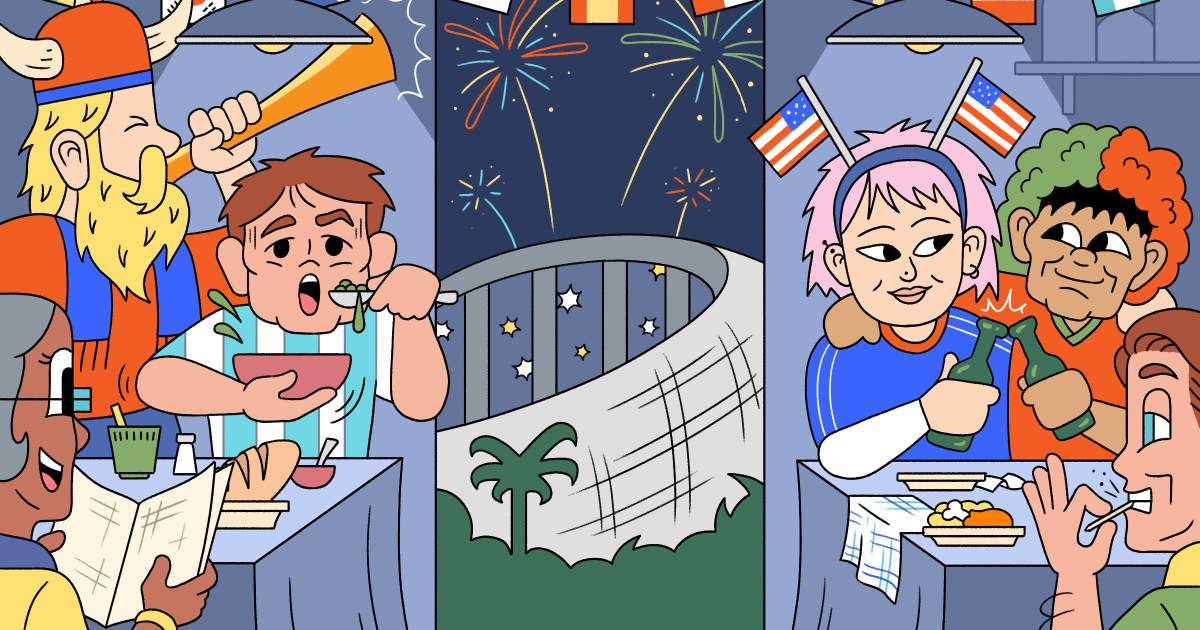
Local restaurants, sports bars, coffee shops and breweries are getting in on the action with World Cup viewing parties, complete with big-screen TVs, extended hours, food and drink specials, games, giveaways and live performances. Some require tickets or a reservation, but many are free, family-friendly and open to all.
About This Guide
Our journalists independently visited every spot recommended in this guide. We do not accept free meals or experiences. What should we check out next? Send ideas to guides@latimes.com.
Some spots are committed to screening every game throughout the tournament, while others are focused on championing the countries their cuisines hail from, including an Argentinian bistro in South L.A. offering discounted empanadas, a German beer garden in Eagle Rock serving vegan sausages and schnitzel and a Panamanian restaurant in Long Beach where you can watch the Central American team play while you sip soursop lemonade alongside jerk mac and cheese.
From Hawthorne to Sherman Oaks, here are 31 restaurants and bars screening World Cup matches this summer:
But the baby pink walled stairway quickly gave way to a huge glass roof, teasing me about what was to come.
After the never-ending climb, I was met with panoramic views of the Margate beach, where the bright blue waters were reminiscent of somewhere like Ibiza or Sardinia.
The bar can be covered for when the weather gets too hot
With a covered bar, the menu of both cocktails and wine as well as cocktails was extensive, and my crisp glass of rose was a perfect cooler for the temperature.
And the design felt more members club than Margate, with baby pink and white stripped seating, dark wooden tables and Bali-like wicker lights.
The music toed the line of classic chill out music to more upbeat tunes to get you in the party mood.
And with uninterrupted views of the beach, harbour and Dreamland in the distance, I was surprised that some had no idea it existed,
The cocktails and the wine list is extensive
Local Katherine told me: “I’d have never known this kind of place existed in Margate, its just what it needs.”
You don’t have to be a guest at the hotel, although I’d advise splashing out as they are some of the most beautiful rooms in town.
The rooftop bar is open Friday to Sunday as well as bank holidays, from midday.
And if you want something to eat, there is the Pearly Cow downstairs that serves.
Otherwise there is Peter’s Fish Factory just down the road, often named one of the best chippys in the UK.
Thankfully it was delicious enough to be worth the wait, after I inadvertently found myself behind a queue of 50 school children.
Snag a seat at the front for views of the beachThe bar is now open for summer
(Although there was some luck there, after overhearing that another “90 kids would be coming in a few minutes”).
And along with big name acts at Dreamland this summer – I caught Haim before their secret gig at Glastonbury – there has never been a better time to visit Margate del Sol.
The closed Winter Gardens theatre has revealed grand plans to open, which will include a rooftop bar, set to cost £11million.
The Kent seaside town has seen a huge surge in tourists in recent years.
Margate’s Cliftonville neighbourhood was named the coolest neighbourhood in the UK by Time Out back in 2022.
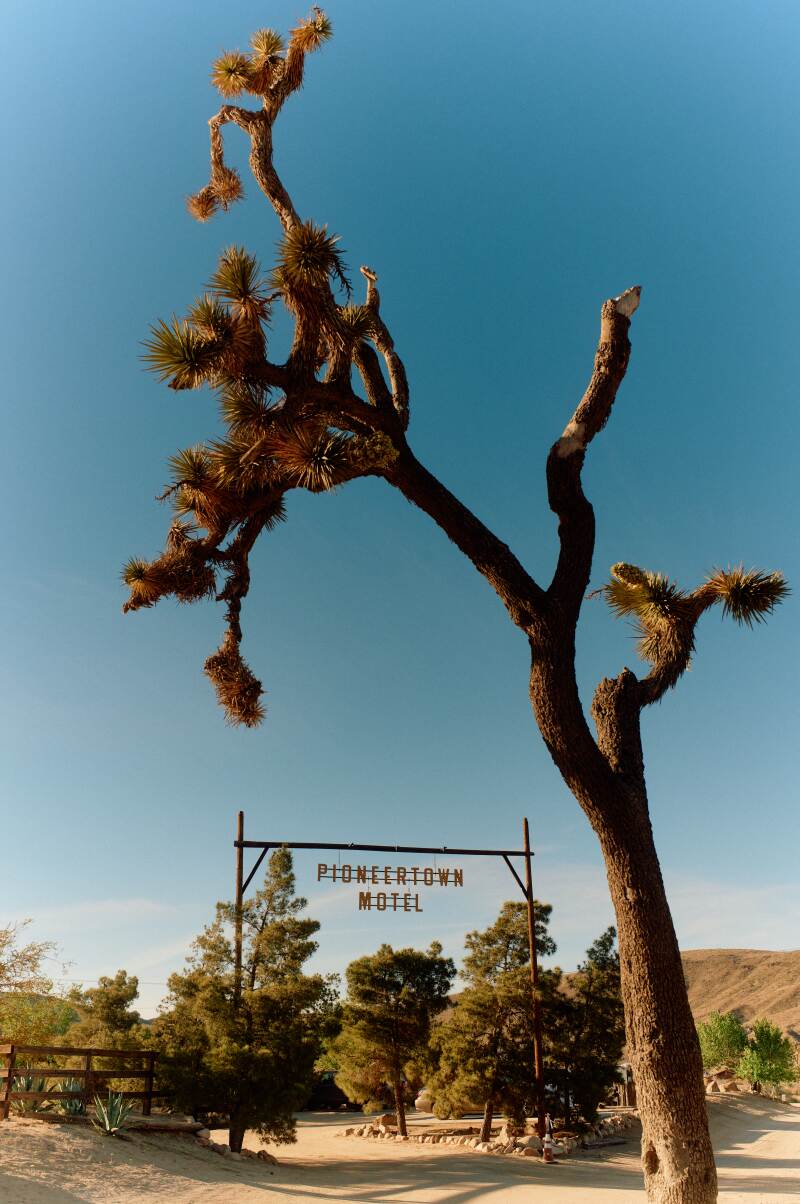
Candles flickered on long wooden tables beneath a sprawling mulberry tree as Matt French stepped in front of the doorway of his sleek Pioneertown home, holding a drink aloft. Dressed in fitted jeans and a dark western shirt, he welcomed the roughly 60 guests who had assembled in his front yard for the kickoff event of the High Desert Art Fair that would take over the 19-room Pioneertown Motel he owns with his brother Mike.
“We’re super honored to be hosting this event and hosting tonight,” said Matt, addressing a crowd that included local artists, musicians and well-heeled art world types from L.A. “This is the exact kind of event that we want to have in the desert.”
Although the French brothers were not directly involved in the art fair itself, the evening’s itinerary had their fingerprints all over it. Dinner was held in front of the expansive compound they share, and the food — perfectly grilled tri-tip with chimichurri, sourdough bread with cultured butter, flatbread pizzas — was prepared by the owners of the Old Town Public Market, a yet-to-open organic deli and wine bar that would soon occupy another building the brothers own in nearby Yucca Valley. After dessert, the ringing of an old-fashioned triangle bell alerted guests that it was time to cross the road to the Red Dog Saloon, another French brothers business, where Shepard Fairey was already DJing to a packed crowd that spilled onto the rustic porch, the cacophony of laughter, bass and cigarette smoke wafting down the town’s main drag.
It was just another dreamy, highly curated night in the high desert of Matt and Mike French’s making.
Vintage design details abound at the French brothers’ properties, including the Pioneertown Motel.
Few people have had more influence on the modern aesthetic of the sun-drenched desert near Joshua Tree National Park than the two brothers from Portland whose properties regularly pop up in travel publications, Instagram reels and “best of the desert” lists. Since buying the Pioneertown Motel in 2014, Matt, 42, and Mike, 37, have built a portfolio of businesses that tap into the mythology of the California desert — part cowboy, part Rat Pack, part cosmic traveler. Across historic restoration projects like the motel where Gene Autry once played cards all night, the Red Dog Saloon where 1940s film crews unwound after long days of shooting and the Copper Room, a restaurant and bar at the Yucca Valley airport that was a favorite of Gram Parsons, their properties give tourists and locals alike a taste of the desert’s history and glamour all while making it feel like patrons have just stumbled upon these magical spots themselves.
Now, the brothers, along with Eric Cheong, a designer and the third partner in their company Life & Times, are expanding their unique vision to other parts of the desert with two new projects. In late 2026, they will open Lord Fletcher Inn, a 1960s-era steak house in Rancho Mirage where Frank Sinatra occasionally stepped behind the bar. Miracle Hill, the brothers’ colorful take on a geothermal bath house in Desert Hot Springs, is slated to open at the end of 2027.
The French brothers purchased the 1960s-era restaurant Lord Fletcher’s in Rancho Mirage, where Frank Sinatra occasionally tended bar.
Designer Eric Cheong, left, on the porch of the Red Dog Saloon, with Matt and Mike French.
With these two new businesses, as well as an ambitious expansion of the Pioneertown Motel, including an extension of the Western facade of Mane Street that was approved in December, the brothers say they feel a renewed commitment to the desert community where they have lived and worked for more than a decade. Although they toyed with the idea of doing projects in other parts of the country, they ultimately decided that the world they have created in this dry desert landscape is too valuable to leave.
“The lady at the post office has treats for my dog and knows my dog’s name,” Mike said. “You can’t buy your way into community like that. You have to earn it.”
The French brothers’ story may sound like a desert fairy tale, but they insist it wasn’t always that way.
Although they’d been traveling to Palm Springs for family vacations since they were kids, it wasn’t until 2009 that Matt first drove up the rocky mountain pass to Pioneertown and fell in love with the funky desert community originally built in the 1940s as a working film set. After learning that the rundown motel across the street from Pioneertown’s iconic roadhouse and concert venue Pappy & Harriet’s was for sale, Matt, who was working for a boutique hotel company at the time, convinced Mike to join forces with him and buy it. It took five years of starts, stops, heartbreak and nearly giving up before the deal finally went through in 2014.
“Matt was really the driving force,” Mike said. “I was like, this is nuts, but I’m in.”
Those early days were challenging. One of their first orders of business was to evict the previous owner’s weed dealer who had been living in one of the rooms rent-free. The manager at the time was known to yell people off the property. Skilled workers were hard to find, and the desert’s popularity as a tourist destination had not yet ballooned.
Mike and Matt French are setting the stage for their next venture, Miracle Hill, a geothermal bath house in Desert Hot Springs.
“In retrospect it can look very obvious and very, like, ‘Oh, of course, the hotel’s cool and it’s right next to Pappy’s,’” said Matt. “But that is not what it felt like back then.”
The brothers also had to contend with a notoriously fierce local community that was deeply suspicious of the lanky millennials from out of town.
“We had our claws out and our guns cocked,” said David Miller, 81, a longtime local and the president of Friends of Pioneertown. “But it turned out that they are model citizens.”
For two years, the brothers ran the motel remotely while continuing to work other jobs — Matt for a real estate company that did large-scale development in Portland and Mike for a ticketing and events start-up in L.A. In 2017, they decided they needed a home base in town and bought a rundown house with an even more rundown barn a 10-minute walk from the motel. They have since renovated it into two homes just yards from each other with a shared backyard that includes a pool, sauna, cold plunge, hot tub and custom-built hammock that can hold up to 20 people. In 2018, they moved in full time.
A Pioneertown Motel pick-up truck, spotted outside the kitchen window of Matt French’s home.
Two years later, in August 2020, they opened the Red Dog Saloon, a full-scale renovation of the historic bar of the same name that originally opened in 1946. The brothers say they weren’t necessarily looking to open a new business — they just really wanted another place to eat and drink in town besides Pappy & Harriet’s. Their original plan was to create a 16-seat whiskey bar in a small building across from Pioneertown’s picturesque Post Office, but their partners, restaurateurs Adam Weisblatt of Last Word Hospitality who operates Hermon’s and Found Oyster and Eric Alperin from the Varnish, suggested they look at the much larger Red Dog Saloon instead.
“They were like, ‘You can actually make money that way,’” Mike said about the restaurant and bar that can serve as many 1,000 people a day. “And we were like, ‘Yes, that’s a great point.’”
The same team came together again to open the Copper Room, a higher-end, full-service restaurant at the Yucca Valley Airport that opened in 2022 on the site of a dive bar they used to frequent called Wine & Roses.
In 2020, the brothers opened the Red Dog Saloon, a full-scale renovation of the historic bar of the same name that originally opened in 1946.
“At the time we really weren’t sure if Yucca Valley could support that kind of dining experience,” Mike said. “Now we have a $200 tomahawk steak served tableside on the menu and they sell out. There is no way we could imagine that happening when we opened.”
As they did with the motel and the Red Dog, the brothers and Cheong leaned into the history of the space when designing the Copper Room. They kept the curved bar where Gram Parsons drank his last margarita intact but went with a 1950s vibe in the main dining room, with heavy brocade banquets and floral wallpaper, nodding to the restaurant’s opening in 1957.
Cheong said that across each project, he and the French brothers leaned heavily on the space’s unique history for design inspiration.
The vintage-style entrance into Red Dog Saloon.
“We really base it around story and lore,” Cheong said. “The spaces merge together because there is a similar strategy, but it’s not a style. It’s not a color palate. It’s like a feeling of respect and honor, but it’s also our twist on it.”
The brothers’ three businesses were thriving, but in 2023, they found themselves in a lull. “We were having trouble figuring out what to do next,” Matt said. “ We have a very specific criteria of what we want to do and we were like, maybe we look outside of the desert. Maybe things here are plateauing.”
The brothers already had one property outside of the desert — Captain Whidbey, a historic lodge and resort on Whidbey Island in Washington that was named one of the best hotels in the world by Travel + Leisure in 2020 — but ultimately they concluded that the price of leaving Pioneertown to start over somewhere new was too high to pay. They had invested years into building relationships with the high desert’s eclectic community. Somewhere along the way they had also come to feel like chosen family.
The French brothers and Eric Cheong leaned into the history of the space when designing the Copper Room.
“So many things were pulling us in different directions, but life is more personal than business,” Mike said. “So we committed to the desert, which was not just committing to doing business in the desert, but was really committing to living in the desert.”
Since then, more opportunities have opened up. The brothers purchased Lord Fletcher’s in 2025 after a real estate agent happened to mention a 1966-era steak house in Rancho Mirage was for sale. Miracle Hill came about in part because the town of Desert Hot Springs is eager to grow its reputation as a destination for geothermal bathing and offered to help them find a suitable location. For the brothers, it represents the first time they are creating a space from the ground up. Construction has yet to begin, but they have already crafted a story for the space that builds off the community’s early 20th century history and mystical geology.
“The core narrative is that it feels like an eccentric, gregarious host’s home that you are going into,” Mike said. “And the mountain alignment, the sun, the wind, the faults and the geothermal water are the five forces that create a vortex-type energetic field deal. So we’re kind of leaning into that.”
At the same time, Mike revived the community’s historic Pioneertown Gazette, which he originally started printing as an in-room publication but has since expanded to a weekly newsletter that enthusiastically highlights the growing calendar of events happening at several venues across the high desert. And in the next few years, the brothers plan to begin construction on the next phase of the Pioneertown Motel, which will include a swimming pool, restaurant and 47 new rooms.
A game of horseshoes at Pioneertown Motel.
Signage pointing to the Red Dog Saloon.
Pioneertown’s history buffs, and there are many of them, will tell you that the picturesque community has a long history of newcomers showing up with dollar signs in their eyes, hoping to make it big in the desert. But few, if any, have been as successful as the French brothers at making those businesses come to life. It helps that they have a good sense of design and an intuitive understanding of what people want. It also helps that they’ve attracted like-minded people like Jeffrey Baker, the warm and personable general manager at the Copper Room and future general manager of Lord Fletcher’s who excels at management (a self-described weak point for Matt and Mike) and makes everyone he meets feel like an instant friend.
But their true secret sauce might be that aside from the motel, their businesses are designed to cater to the local community at least as much as to tourists.
“People here love these restaurants,” Matt said. “They love the Red Dog, they love the Copper Room, they love the Gazette. So we felt that vibe shift of people being supportive and excited about what we’re doing.”
It also helps that over the last few years, some bad actors have demonstrated what the alternative might look like, with new management at Pappy’s that alienated locals from their longtime watering hole and a wannabe developer who floated much-maligned plans to build a concert venue and a massive glamping complex in Pioneertown. (Both parties have since left the area.)
“I think that has given some people some perspective that having locals do it right, and seeing that we are committed, has really made a difference,” Matt said.
Mike and Matt French walk down Pioneertown’s Mane Street.
It’s been a winning business formula, but if you believe the brothers, there’s more to it than that. Creating spaces where everyone from foreign tourists to drunken bachelorettes to crusty locals to families with young kids feels comfortable and welcomed is all part of the desert ideal they’ve been curating for more than a decade.
Mike said that there’s nothing like seeing Pioneertown old-timers drinking with their buddies at the Red Dog.
“It’s so good,” he said. “And then you find other people who get lit up by the same silly thing, and it’s like, maybe it’s not so silly. Maybe it’s the whole point.”
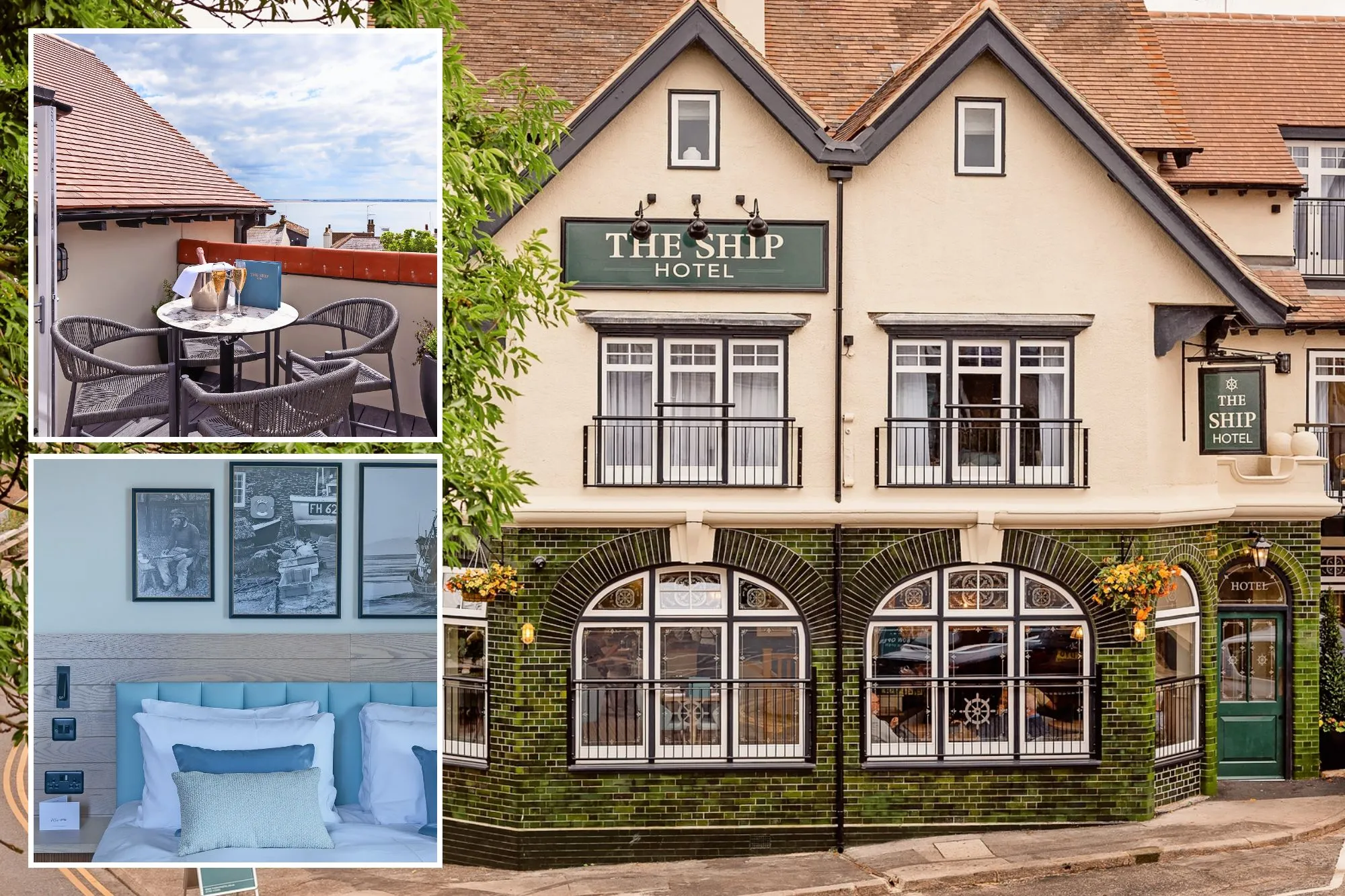
I was impressed with the guest rooms, which hit the perfect note in combining comfort and design.
The Endeavour Suite feels extra special.
For a small price upgrade, you get a loft-style room with a sofa and living area, sea views from a large window and a terrace overlooking the water.
Newly decorated, a lot of effort has gone into making these rooms a sanctuary for guests. Be warned if you have an early start, though.
Fluffy duvets and pillows, along with the snug mattresses make it very difficult to leave.
Rooms start from £102 including breakfast. Visit theshiphotel.co.uk or call 01702 413452 for 15% off by booking directly with the hotel.
What is there to eat and drink?
Definitely eat at the hotel, which has excellent food.
Being so close to the coast the main menu leans toward seafood dishes, with vegetables and meat from local Essex farms.
They also serve fantastic Sunday roasts.
The beef-dripping Yorkshire puddings with Malden sea salt are worth making a reservation for, even if you’re not staying overnight at the hotel.
As well as the laid-back restaurant, there is also a small, but excellent bar.
More fitting of a swanky London cocktail club, the creative menu includes smoke-infused martinis and very spicy margaritas.
If you are staying a few days, I highly recommend getting a reservation at GABS too, which is a cute, bohemian restaurant across the road.
They also serve creative cocktails and have a sophisticated menu. I suggest going for a choice of ‘picky bits’. The whipped feta with honey, figs and pistachio, served with sourdough is frankly superb.
What else is there to do nearby?
Some rooms include parking in the private car park outside is a great find and absolutely perfect for a weekend away in Essex.
They also offer in-room massages, meaning with a great restaurant and cocktails on your very own roof terrace, you might decide you don’t even need to leave the hotel.
Otherwise the Ship Hotel is perfectly positioned to explore the surprisingly adorable town of Leigh-on-Sea.
You can easily reach Leigh Old Town, on the water’s edge, which I also happened to have a perfect view of from my room.
There are lots of pubs, bars and seafood shacks, many with seating on an outdoor terrace, idyllic in summer.
You can also walk up the hill to New Leigh and the charming high street, which is packed with cool coffee shops, quirky boutiques and trendy bars that are very popular over the weekend.
The grand finale was a view of the spectacular sunset from my room – not always guaranteed, but stunning if you get lucky.
Is the hotel family friendly?
There are family and interconnecting rooms, as well as cots and highchairs on request.
is it accessible?
The hotel has wheelchair access and a lift to all floors, along with accessible rooms that have adapted bathrooms.
Upgrade to a room with a terrace for drinks over the oceanRooms start from £102