ballots

Column: Trump’s cries of cheating on mail-in ballots defy logic

Why would an immigrant living here illegally risk jail and deportation by trying to vote? That has always puzzled me.

And why would a political pro waste time and money soliciting votes from noncitizens when there are millions of legal voters available to persuade?

The answer is that undocumented immigrants don’t. And neither do campaign consultants.

President Trump and MAGA Republicans who echo his diatribe are hallucinating or outright lying when they claim without evidence that there’s widespread fraud in American elections — specifically in blue states like California that vote for Democrats.

Trump reiterated the fabrication last week when he signed an executive order seeking to place tight federal controls on increasingly popular mail-in voting.

“Mail-in voting means mail-in cheating,” Trump reiterated. “Cheating on mail-in voting is legendary. It’s horrible what’s going on.”

“See you in court,” California Gov. Gavin Newsom replied.

California and several states partnered in filing a lawsuit accusing the president of an illegal power grab. They pointed out that states have a constitutional right to administer elections pretty much as they see fit.

Trump hypocritically voted by mail himself in a recent Florida special election.

“You know what, because I’m president of the United States,” he told reporters when asked about the vote. “I had a lot of different things” to do. For him, voting by mail was convenient.

As for the rest of us, apparently in Trump’s mind we don’t do anything important enough to warrant handy mail voting.

The reality is that egotistical Trump still can’t admit to himself that he lost the 2020 presidential election to Joe Biden fair and square. Democrats must have cheated, he thinks — or says he does.

The main way Democrats cheat, Trump and his followers assert, is to round up noncitizens and register them to vote — especially immigrants from Latin America.

It’s nonsensical. As if some undocumented immigrant struggling to survive and dodge ICE agents really gives a rat who’s elected governor or senator. Voting fraudulently is a crime — a misdemeanor or a felony, punishable by a steep fine and/or jail time.

And a campaign pro is going to break the law by offering cash or groceries to a noncitizen for her vote? That would be felony stupid.

“We can’t get Latinos who have been here legally for three generations to vote. If you’re going to spend money getting votes, that’s where you’re going to spend it,” says Republican consultant Mike Madrid, who has written a book about Latino political influence.

“The notion that Democratic operatives are going after undocumented immigrants is absurd.”

People who migrated here illegally, Madrid adds, “don’t want to touch the government in any shape or form. They just want to put in a hard day’s work and retreat to the shadows. They couldn’t care less about politics and voting in the United States.”

No hard evidence of significant election fraud in America in recent years has been produced by Trump or anyone else.

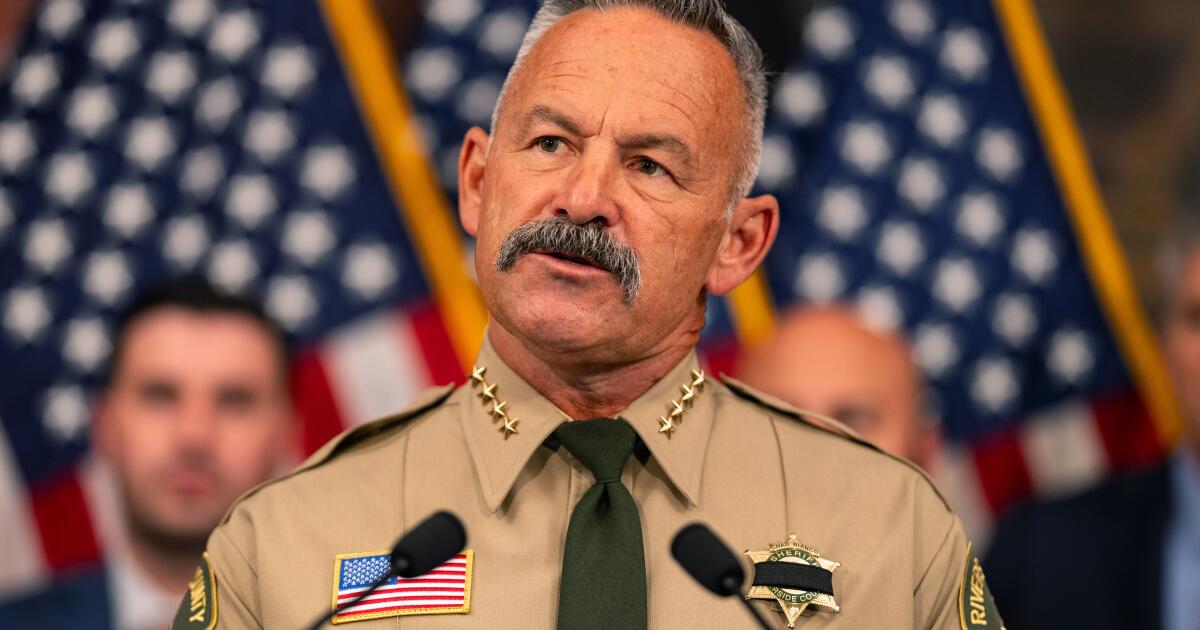
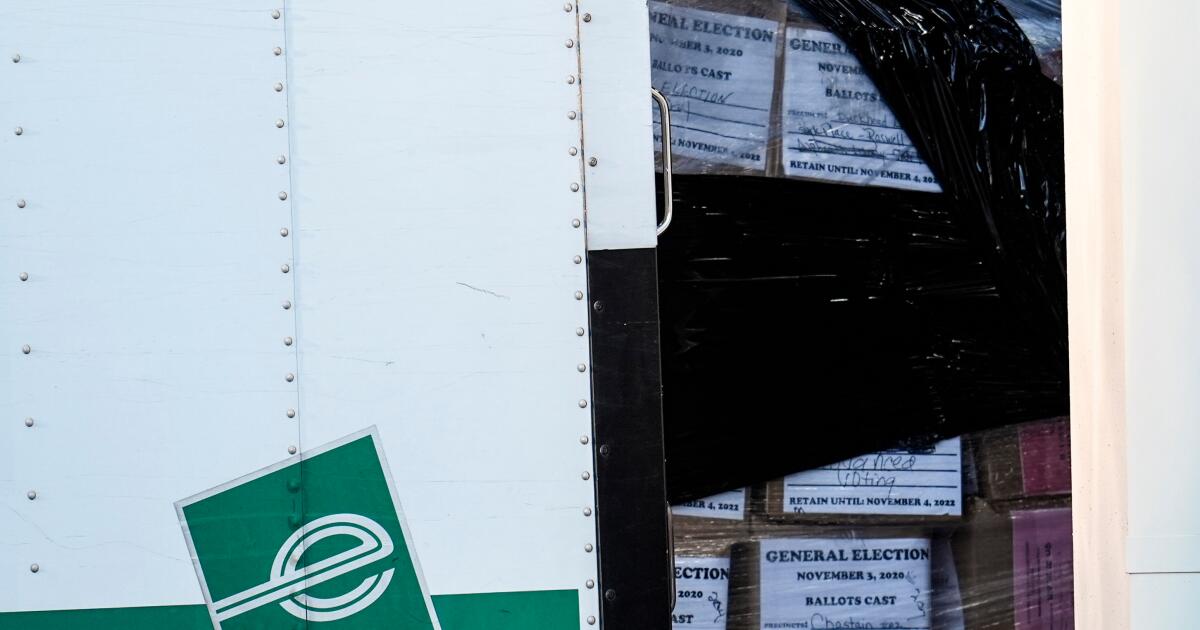
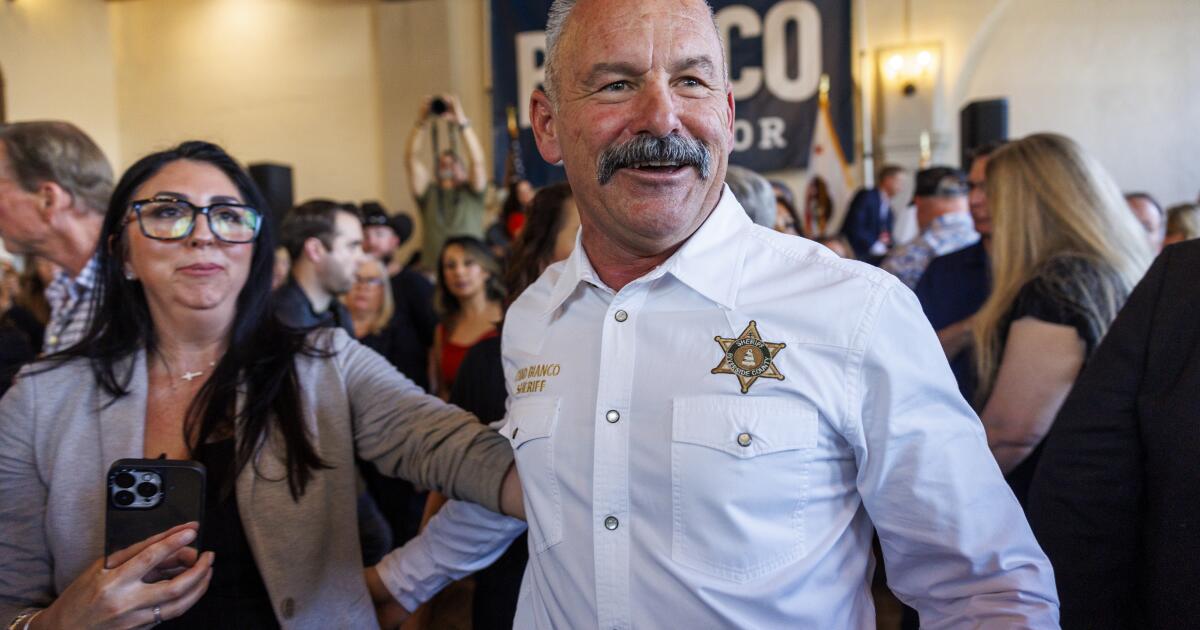
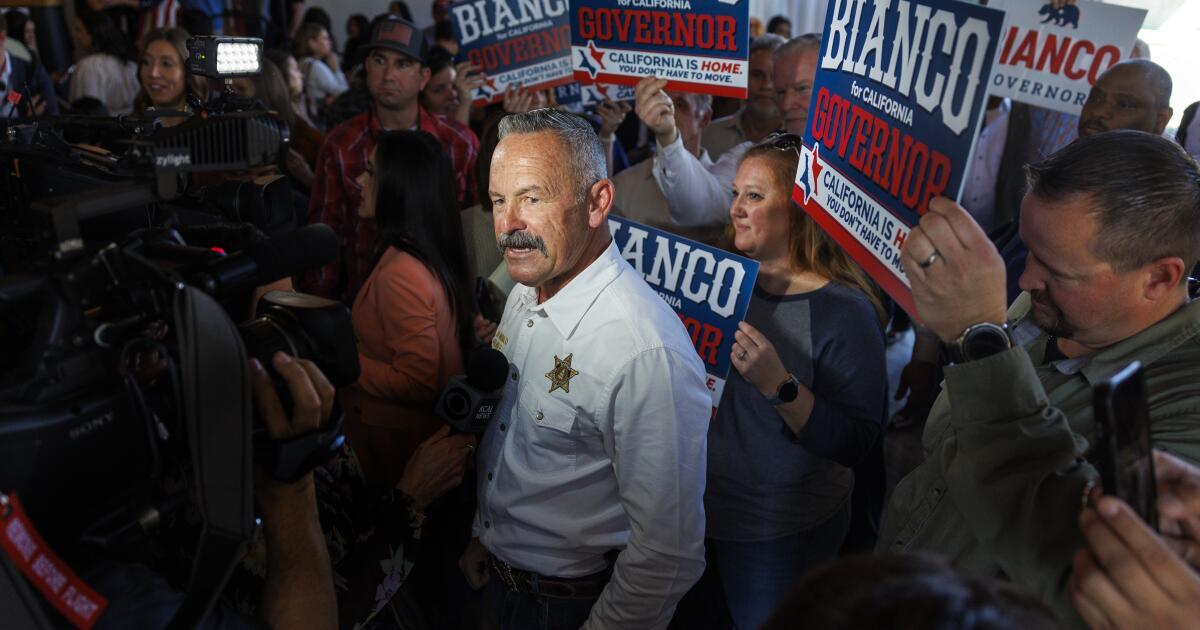
Riverside County Sheriff Chad Bianco, a leading Republican candidate for governor, apparently was trying to impress Trump and win his endorsement by seizing more than 650,000 ballots cast in November’s Proposition 50 election.

The sheriff said he was investigating claims — unsubstantiated — of election fraud. But the project is now on hold. A good place for it.

It was a waste of the sheriff’s resources to collect the ballots and would be an even bigger misuse of personnel and money to sift through all of those documents in a fruitless search for fraud.

I called Assemblywoman Gail Pellerin, a Democrat who was Santa Cruz County’s chief elections official for 27 years. She chairs the Assembly Elections Committee.

In all of those years supervising elections, Pellerin told me, she encountered only one clear case of fraud. A landlord snatched a ballot that had been mailed to a tenant and illegally cast it.

But a voter must sign the envelope containing a mailed ballot and the landlord’s signature didn’t match the intended voter’s as given when she originally registered. Election officials contacted the intended voter, who said she hadn’t received her ballot yet. The landlord was prosecuted and convicted.

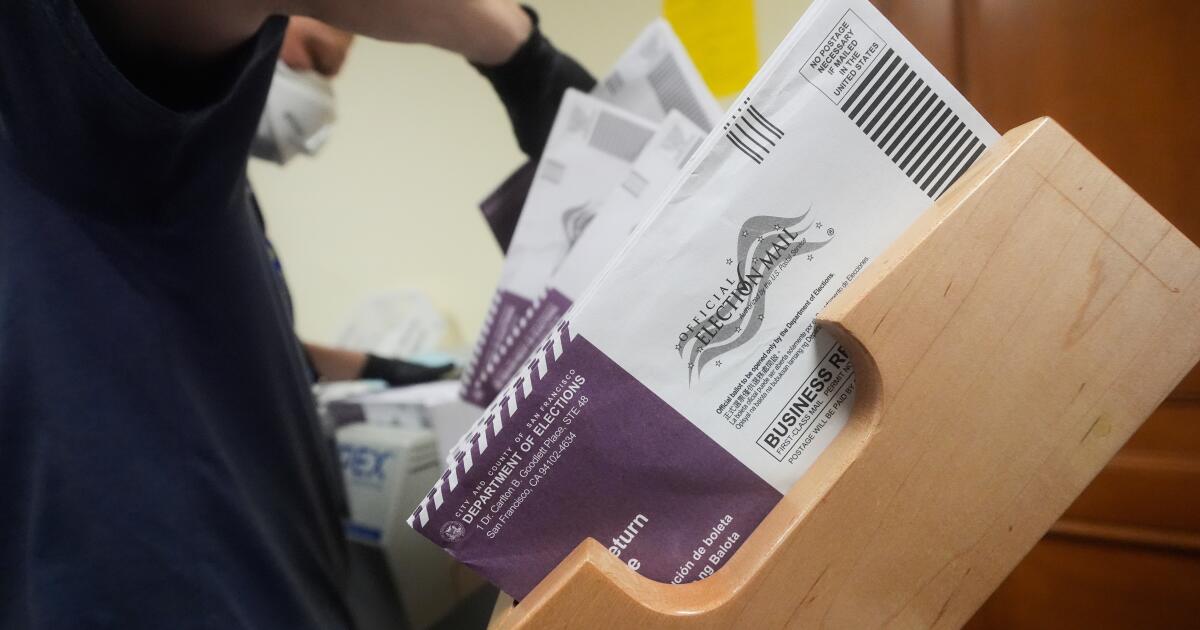
Signatures are checked with the use of technology in California. That’s the main method of verifying a mailed ballot’s legality.

Pellerin says her own signature didn’t match up once. “I got sloppy and my signature had changed since I registered 20 years earlier.” She was contacted by an elections official and her ballot ultimately was counted.

In every election, she says, there are cases of a mother signing the ballot for a daughter who’s away at college, or someone signing for an aging parent. The signatures invariably don’t match and the voters are contacted.

But that’s about the extent of so-called cheating, Pellerin says.

“Immigrants are here to make their lives better,” she says. “They’re not going to risk any path to citizenship by trying to participate in an election.”

When voters register, they must answer under penalty of perjury whether they’re a citizen.

Trump’s convoluted intervention in state-operated voting would, among other things, direct the United States Postal Service to design new envelopes with bar codes that verify voter legality. The feds would refuse to send ballots to people deemed ineligible to cast them.

Gosh, what could possibly go wrong under the Trump administration?

Californians have embraced mail-in voting. In the gubernatorial election 40 years ago, only 9% of ballots were cast by mail; 20 years ago, 42% were. In November, it was up to 89%.

But baseless claims by Trump and his grovelers of “cheating” will persist. It fires up the conservative base and raises political money.

It also maligns noncitizens and dedicated elections officials who keep voting fraud-free.

You’re reading the L.A. Times Politics newsletter

George Skelton and Michael Wilner cover the insights, legislation, players and politics you need to know. In your inbox Monday and Thursday mornings.

What else you should be reading

The must-read: California election experts sound alarm as rate of rejected ballots quadruples
What the … : Californians may need to mail ballots early as Supreme Court signals support for new election day deadline
The L.A. Times Special: The loophole that keeps a Trump loyalist serving as L.A.’s top federal prosecutor

Until next week,
George Skelton


Was this newsletter forwarded to you? Sign up here to get it in your inbox.
Source link

California election experts sound alarm as rejected ballots quadruple

As Democratic leaders in California challenge President Trump’s latest effort to restrict the use of mail-in ballots, they also must grapple with a troubling development in the last election.

A significant number of mail-in ballots arrived too late to be counted in the Nov. 4 special election for Proposition 50, Gov. Gavin Newsom’s successful measure to reconfigure the state’s congressional districts, according to state data.

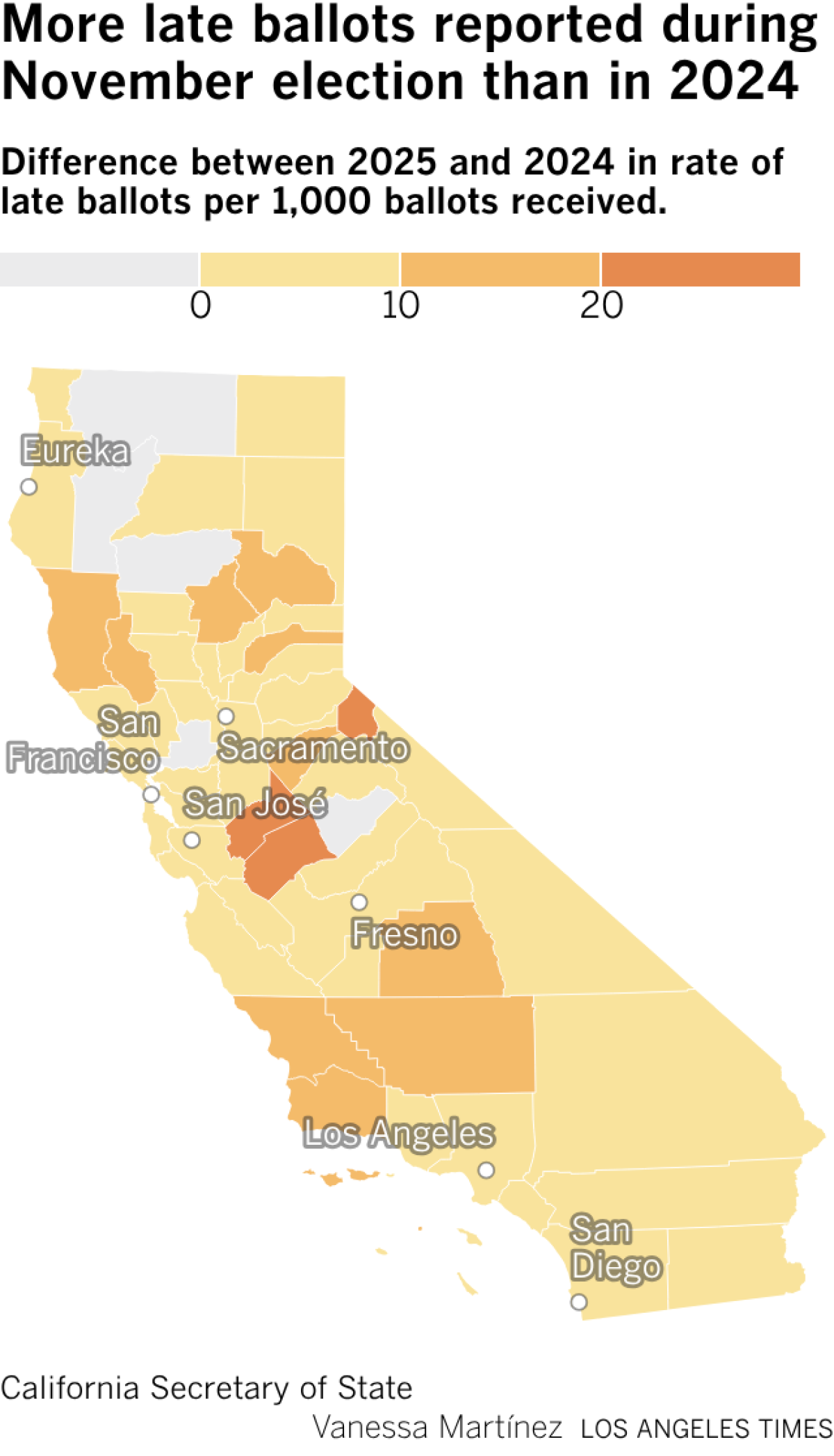
Ballots came in late at an average rate four times higher than that of the 2024 election, with rural counties seeing some of the biggest increases, according to a Times review.

“Something changed,” said Melvin E. Levey, who heads the Merced County Registrar of Voters. “We don’t like seeing late ballots and if someone has made the effort to vote, we want to count it.”

Merced saw almost a sevenfold increase in late-arriving mail ballots in the November election compared with the year before.

Vote-by-mail ballots are considered late if they are not postmarked on or ahead of election day or do not arrive within seven days of election day.

The issue appears to be linked to the U.S. Postal Service, which last year reduced the number of trips to pick up mail at post offices in mostly rural areas. Election officials warned before Nov. 4 that the Postal Service changes could delay the postmarking of ballots and lead to votes not being counted.

During the Nov. 4 election in California, an average of 8 out of every 1,000 vote-by-mail ballots were rejected by counties because they arrived too late, according to Secretary of State data. In the 2024 general election, which included the presidential race, an average of 2 of every 1,000 vote-by-mail ballots were rejected for being late.

In Kern County, for example, 3,303 mail-in ballots — or 1.95% of returned mail-in ballots — were not counted in the 2025 special election because they arrived too late. In 2024, that number was 332 — or 0.14%. And in Riverside County, 5,831 ballots — or 0.95% of those mailed in — were deemed too late to count, more than double the number of late ballots rejected in 2024.

Postal Service spokesperson Cathy Purcell recommended that voters mail their ballot a week in advance of when it must be received by election officials to ensure it arrives on time.

“You should never be mailing your ballot on election day,” Purcell told The Times.

Before last’s year’s special election, California Secretary of State Shirley Weber issued a similar warning about the delays. Anyone dropping off their ballot at a post office on election day should get it postmarked at the counter, she said.

“We don’t want anyone to just toss it into the mailbox as we have been able to do in the past and have it counted,” she said. “The Postal Service has said that they may not be counted in certain areas.”

California voter data expert Paul Mitchell expressed astonishment about the Postal Service’s guidance.

“We’ve had six, eight years of elections where people were feeling confident about mailing in their ballot,” said Mitchell, vice president of the voter data firm Political Data Inc. “Now the USPS is saying they have to mail it in a week early.”

“That is a dramatic change that can disenfranchise voters who are just following the same pattern that they’ve used in prior elections,” he added.

Democrats have been defending the vote-by-mail system in the face of Republican attacks. Trump recently signed an executive order to impose federal restrictions on mail-in ballots and, without evidence, has long criticized mail-in ballots as a source of fraud and a factor in his 2020 election loss to Joe Biden.

The Nov. 4 special election on Proposition 50 was the Democrats’ attempt to counter Trump’s push for Republican-led states, most notably Texas, to redraw their electoral maps to keep Democrats from gaining control of the U.S. House of Representatives in the 2026 midterms and upending his agenda. The ballot measure overwhelmingly passed.

Nearly 89% of votes in the Nov. 4 election were vote-by-mail ballots, according to Weber’s office. In addition to Proposition 50, tax measures were also on the ballots in some counties.

Postal Service changes

About a month before the Nov. 4 election, Weber and Atty. Gen. Rob Bonta held a news conference to encourage California voters to vote early because of service changes at the U.S. Postal Service.

Bonta told reporters that voters living 50 or more miles from six large mail processing centers in urban areas who mailed their ballots on election day would not have those ballots postmarked in time. The centers are in Los Angeles, Bell Gardens, San Diego, Santa Clarita, Richmond and West Sacramento, according to Bonta’s office.

The changes at the U.S. Postal Service are part of a 10-year plan that kicked off several years ago aimed at improving services and reducing costs at the independent federal agency.

In the 17 counties that are mostly or entirely within the 50-mile distance from the mail facilities, the average rate of late ballots doubled in the November 2025 election compared with the election the year before — from 2.5 per 1,000 ballots received in 2024 to 5.6 per 1,000 in 2025.

But in counties that are entirely or mostly outside of the 50-mile radius, the average rate of late ballots quadrupled — from 2 per 1,000 ballots received in 2024 to 9.3 per 1,000 in 2025, state election records show.

Similar complaints about late ballots because of the mail changes have been reported in other states, including in Snohomish County, Wash., according to the New York Times.

The U.S. Postal Services told the Times that there are “any number of factors” that may affect the timeliness of mail.

“The Postal Service has successfully delivered America’s election mail, and we are confident that we will do so again this year,” spokesperson Nikolaj Hagen said. “We rely on long-standing, robust and tested policies and procedures, which have proven successful in the secure and timely delivery of election mail.”

Hagen added that “adjustments to our transportation operations will result in some mailpieces not arriving at our originating processing facilities on the same day that they are mailed.”

Postmarks are generally applied at those processing facilities, Hagen said, so the postmark date may not reflect the date the mail was collected by a letter carrier, dropped off at a retail location, or placed in a collection box.

While the U.S. Postal Service uses postmarking as an internal tool to track the place and date the mail was accepted, outside entities also use the postmarks for their own purposes, including the Internal Revenue Service, which requires federal tax returns to be mailed by April 15.

Several U.S. senators, including Sen. Alex Padilla (D-Calif.), sent a letter in January to USPS Postmaster Gen. Dave Steiner warning that changes to postmarking will make it more difficult for people, particularly those in rural areas, to vote by mail and pay tax bills on time.

On Tuesday, Trump signed an executive order that seeks to put new federal controls on voting by mail in states, repeating his long-held but unsubstantiated claim that mail-in ballots are a source of widespread fraud in U.S. elections.

The order directs the U.S. Postal Service to take control of mail balloting by designing new envelopes with special bar codes that will allow the federal government to ensure that such ballots go out only to eligible voters.

States must follow the USPS process if they plan to use the federal mail system for sending or receiving ballots. They also must submit to the USPS lists of eligible voters in advance of such ballots passing through the mail system.

Separately, the Republican National Committee is challenging a Mississippi law that allows ballots that arrive up to five days after election day to be accepted and counted. The case was argued before the conservative-leaning U.S. Supreme Court in March.

Times staff reporter Kevin Rector contributed to this report.

Source link

Trump signs executive order limiting mail-in ballots; California leaders say they’ll fight

President Trump signed an executive order Tuesday purporting to place new federal controls on voting by mail in states such as California, repeating his long-held but unsubstantiated claim that mail-in ballots are a source of widespread fraud in U.S. elections.

California leaders immediately responded with promises to fight the order in court. They said mail ballots are a safe and secure method for voting relied on by millions of Californians, that Trump’s order infringes on the state’s constitutional right to administer elections as it sees fit, and that it amounts to an “illegal power grab” ahead of midterm elections in which his party is poised to suffer substantial losses.

The order directs the United States Postal Service to take control of mail balloting by designing new envelopes with special bar codes that will allow the federal government to ensure that such ballots go out only to eligible voters, and that only eligible voters return such ballots.

It requires states to submit to the USPS process if they plan to use the federal mail system for sending or receiving ballots, and to submit to the USPS lists of eligible voters in advance of such ballots passing through the mail system.

It also requires the Department of Homeland Security, U.S. Citizenship and Immigration Services, and the Social Security Administration to “compile and transmit to the chief election official of each State a list of individuals confirmed to be United States citizens who will be above the age of 18 at the time of an upcoming Federal election and who maintain a residence in the subject State.”

Those lists will be drawn from federal citizenship and naturalization records, Social Security records and “other relevant Federal databases,” and the USPS will be barred from transmitting ballots that do not match those lists, the order says.

“Secure ballot envelope identifiers provide a reliable, auditable mechanism to enforce Federal law without unduly burdening or infringing on the rights of eligible voters,” the order reads. “Unique ballot envelope identifiers, such as bar codes, enable confirmation that only citizens receive and cast ballots, reducing the risk of fraud and protecting the integrity of Federal elections.”

Trump — who recently voted by mail himself in Florida — framed the order as a solution to “massive cheating” in U.S. elections currently, which he did not back up with evidence.

“The cheating on mail-in voting is legendary. It’s horrible what’s going on,” Trump said.

“He’s going to make sure that mail-in ballots are safe secure and accurate,” said Commerce Secretary Howard Lutnick, who appeared alongside Trump and whose agency the order requires to be involved in the coordination of the new voting measures.

California officials blasted the president for attacking and undermining election integrity, rather than shoring it up, and said they would fight the order from taking effect.

“President Trump’s Executive Order marks a dangerous and unprecedented escalation in his ongoing attacks on our elections. The power to regulate elections belongs to the States and to Congress — he has no role to play. We blocked his previous Executive Order on elections in court, and we are prepared to stop him again,” said California Atty. Gen. Rob Bonta.

“The reality is that President Trump and Congressional Republicans see the writing on the wall — that they are likely to lose in the upcoming midterms — and they are pushing to make it harder for people to vote,” Bonta added. “We won’t stand idly by.”

Sen. Alex Padilla (D-Calif.), in a statement to The Times, said Trump’s actions were “a clear and present threat to our democracy,” that he will “use every tool I can to stop him,” and that he expects “immediate legal challenges in order to protect our free and fair elections.”

“Instead of focusing on lowering the cost of energy, groceries, and health care, Donald Trump is desperately attempting to take over and rig our elections and avoid accountability in November. This executive order is a blatant, unconstitutional abuse of power,” said Padilla, the ranking Democrat on the Senate Committee on Rules and Administration.

“The President and the Department of Homeland Security have no authority to commandeer federal elections or direct the independent Postal Service to undermine mail and absentee voting that nearly 50 million Americans relied on in 2024,” he said. “A decade of lies about election fraud does not change the Constitution.”

“In the middle of an unauthorized war abroad and an escalating authoritarian crackdown by ICE here at home, Trump is attempting another illegal power grab,” Padilla said.

A vast majority of Californians vote by mail. In the state’s 2025 special election on Proposition 50, the state’s mid-decade redistricting measure, nearly 89% of votes were cast by mail, according to California Secretary of State Shirley Weber’s office — or nearly 10.3 million out of about 11.6 million votes cast.

Trump has long criticized mail-in ballots — without evidence — as a source of fraud and a factor in his losing the 2020 election to President Biden, which he still contends was illegitimate.

Election experts, voting rights advocates, local elections officials and other California leaders have all dismissed those claims as unfounded and inaccurate. They have also been preparing for Trump to act to curtail such voting.

Padilla previously warned colleagues that he would force a vote on any effort by Trump to declare a national emergency in order to seize control of this year’s midterm elections from the states, forcing them to either co-sign on the power grab or resist it.

Critics of mail ballots have also been actively working to end or curtail the practice. Just last week, the U.S. Supreme Court heard arguments in a case in which the Republican Party challenged a Mississippi law that allows ballots to be accepted and counted if they arrive up to five days after election day.

During those arguments, the court’s six conservatives sounded ready to rule that federal law requires ballots to be received by election day in order to be counted as legal.

Weber, California’s top elections official, has warned that attacks on mail-in voting risked undermining a system the state has spent years building around universal mail voting.

Trump’s executive order is the latest front in a years-long campaign he has led attacking the integrity of U.S. elections — which has contributed to a steep decline in voter trust in U.S. elections.

On Tuesday, Trump said his order was drafted by “great legal minds,” and will survive any legal challenges unless “rogue” judges rule against it inappropriately.

“We want to have honest voting in our country,” he said.

Rick Hasen, an election law expert and director of the Safeguarding Democracy Project at UCLA Law, argued otherwise in a post Tuesday, noting that an earlier executive order purporting to place new federal controls on elections was blocked in court, and “this one is likely to fare no better.”

“To put this in plain terms: the order would use the USPS, which is not under the direct control of the President, to interfere with a state’s lawful transmission of ballots. If the state does not comply with these rules, federal law would purport to interfere with a state’s conduct of its own elections,” Hasen wrote. “The President does not have the authority to do this.”

Source link

The real questions for courts after Bianco seized Riverside County ballots

Riverside County Sheriff Chad Bianco says he’d like to be our governor, but more and more, it’s looking to me like the real goal for the far-right provocateur is just to be MAGA-famous.

That’s cool. That’s fine. Honestly, who in Southern California hasn’t dreamed of their 15 minutes? And he certainly has the cop-stache to play the role of rogue Wild West lawman.

But Bianco’s bid for celebrity may help extremists take down American elections, and that is a problem — one California needs to deal with quickly, before the midterms suffer from his antics. There are two separate issues at play here, both of which state courts will be asked to weigh in on in coming days — Bianco apparently is putting his so-called investigation on hold until those cases bring some measure of clarity, and hopefully sanity.

First, are California sheriffs answerable to anyone, or are they a law unto themselves? Second, who in California can legally handle and count ballots according to law, if state law does in fact matter?

The fact that these two issues are coming up now — together— is no accident. President Trump’s election fraud claims have been moving toward this moment for years, largely out of the consciousness of mainstream voters, but very much intentionally pushed by those who would like to see MAGA officials remain in power, even at the cost of democracy.

The real question being answered right now in Riverside — the one we should all be clear on — is, if Republicans want to invalidate election results that don’t go their way this November, what’s the nitty-gritty of actually doing that?

Bianco is attempting an answer.

“This is about more than just what Sheriff Bianco is doing,” said Matt Barreto, faculty director of the UCLA Voting Rights Project. “… It shouldn’t happen. And again, it doesn’t matter if Democrats are winning or Republicans are winning, no sheriff should come in and take over possession or counting of ballots.”

By now, you’ve probably heard that Bianco has obtained multiple secret, sealed search warrants from a buddy judge that allowed him to spirit away hundreds of thousands of ballots in his county from November’s Proposition 50 election.

Bianco claims he has the right to seize these ballots and investigate as he sees fit — and it’s not our business or anyone else’s, not even state Atty. Gen. Rob Bonta, who ordered Bianco to stop what he was doing until Bonta could review it.

Bianco has largely ignored that order, instead scooping up even more ballots late last week — all but giving Bonta a certain finger reserved for simple communication. Fox News loved it. Bianco’s admission Monday that he is pausing his effort is the first hint that even he may see he’s gone too far.

But Bianco’s hubris is in line with the attitude of many so-called constitutional sheriffs, a national movement by some far-right elected lawmen that Bianco has been associated with, though he’s never claimed outright affinity.

These extremist sheriffs misguidedly believe that they are above both state and federal law, and get to decide for themselves what’s constitutional or not in their jurisdictions — and therefore what’s law and what’s not.

Since about 2020, empowered by successes in ignoring pandemic restrictions, these sheriffs have dived deeper and deeper into the election fraud movement that Trump loves so much, claiming increasing rights to investigate alleged fraud. Though their national organization doesn’t publish its membership list, media and other tracking show there are at minimum dozens of these like-minded lawmen across the country, likely closely watching Riverside County.

Some election experts now worry that if Bianco is successful in the courts in retaining the right to take ballots, it will give a dangerous legal precedent that empowers other constitutional sheriffs to do the same at the midterms. Only then it would be fresh, uncounted ballots — leaving these far-right sheriffs in charge of providing results instead of trained, trusted elections officials.

“What happens if the ballots have not been properly counted by the right people yet and a sheriff decides they want to go confiscate them?” said Chad Dunn, co-founder of UCLA’s Voting Rights Project and the trial lawyer who successfully halted Texas’ gerrymandering effort, for now anyway.

“Once the chain of custody … is broken, as they have been with these, you’ll never count them in a way that you’ll be able to get reasonable confidence from the public,” Dunn said. “It puts the entire election process in jeopardy.”

The constitutional sheriffs would become the boots on the ground for Trump’s election deniers to implement their will, seizing ballots as they see fit and creating such a crisis of confidence that it’s likely we the voters would never accept the results, Republican or Democrat.

It could even give Republican Speaker of the House Mike Johnson a plausible reason — an ongoing fraud investigation — not to seat elected Democrats, stalling as he did with Arizona’s Adelita Grijalva last year after she won a special election.

The Voting Rights Project, along with Democratic gubernatorial candidate Xavier Becerra, filed a lawsuit last week asking the state Supreme Court to uphold the laws that govern how ballots are handled in California — basically protecting that chain of custody and making it clear sheriffs can’t ignore it and are not part of it.

“They do not, under California law, have the right to take ballots away from the Registrar of Voters, and they do not, under California law, have the right to count or handle ballots,” Barreto said. “There’s no question that it violates California election law.”

Separately, Bonta’s office filed its own action, with that issue of constitutional sheriffs front and center. Bonta is asking courts to tell Bianco that he’s not a law unto himself, and does in fact answer to the state attorney general.

This issue of whether sheriffs have any legal duty to listen to the state’s top law enforcement officer has long been one of Bonta’s fights — he argued about it with then-L.A. Sheriff Alex Villanueva in another public corruption fiasco over then-L.A. County Supervisor Sheila Kuehl.

I’m guessing Bianco will refer Bonta back to that simple communication of a single finger, much the same as Villanueva did.

But it’s long past time that the state decide just how powerful sheriffs are, for the good of the country this time. The state Legislature has repeatedly kicked the can on clarifying the issue, a failure on their part.

Legislators could amend the state Constitution to make sheriffs appointed instead of elected — the same as police chiefs. Then boards of supervisors could hire and fire them just like other law enforcement leaders.

With the Legislature’s resounding absence on the issue, we have to rely on courts. That’s likely to be a long battle.

In the meantime, Bianco is up to his mustache in attention. This has become a national story, boosting his profile throughout the MAGA-verse as a champion of election deniers everywhere.

Whether Bianco wins or loses these legal battles, resumes his investigation or not, he’s won the attention battle — he’s even polling at the top in the gubernatorial race, thanks to the 8 million Democrats who refuse to drop out.

Riverside County, once as red as it comes, is increasingly purple, Barreto points out. Bianco’s tenure as elected sheriff may not last forever. His shot at governor, despite the polls, is unlikely.

But maybe Fox News will be so impressed with his aggressive rants that he’ll get an offer. Maybe Trump, known for watching it, will like what he sees. So many possibilities from the publicity.

And so much real damage to democracy.

Source link

Georgia’s Fulton County and Trump administration square off in court over seized 2020 ballots

Attorneys for Georgia’s Fulton County and President Trump’s administration squared off in court Friday over the county’s demand that the FBI return seized ballots and other materials from the 2020 election.

Abbe Lowell, an attorney representing Fulton County, noted that the January raid was “unusual” because it involved an old election and allegations that have already been investigated in the years since Trump, a Republican, lost the county and the state to Joe Biden, a Democrat.

Lowell contended that the Trump administration seized the materials because it grew impatient with litigation the Justice Department filed to obtain them last year. “There’s abundant law that the left hand of the department needs to know what the right hand is doing,” Lowell told U.S. District Judge J.P. Boulee.

Michael Weisbuch, representing the federal government, replied that the separate civil litigation wasn’t “relevant in any respect.” He said the administration has already provided Fulton County with digital copies of everything taken and needs to retain physical copies to carry out its own investigation.

Boulee wrote in a scheduling order that the hearing was needed after the two sides failed to reach an agreement in court-ordered mediation.

Trump’s actions alarm Democrats and election officials

The Jan. 28 seizure from a warehouse near Atlanta targeted the elections hub in Georgia’s most populous county, which is heavily Democratic and includes most of Atlanta. Fulton County has been at the center of unfounded claims by Trump and his allies that widespread election fraud cost him reelection.

The FBI’s move was among several actions by the Trump administration that have alarmed Democrats and many election officials who are concerned it’s using law enforcement to pursue the president’s personal grievances and is planning ways to interfere in this year’s midterm elections. The FBI also used a subpoena earlier this month to obtain records related to an audit of the 2020 presidential election in Maricopa County in Arizona, another battleground state Trump lost that year.

At the same time, the Justice Department is fighting numerous states in court for access to voter data that includes sensitive personal information. Election officials, including some Republicans, have said handing over the information would violate state and federal privacy laws.

Justice Department says it’s investigating 2020 ‘irregularities’

Lawyers for Fulton County argued in a court filing that the seizure of its documents was “improper and unjustified” and demonstrates “callous disregard” for the Fourth Amendment protection against unreasonable search and seizure. The Justice Department seeks to “set a precedent that would grant the federal government unchecked power to interfere with the local administration of elections,” it wrote.

Justice Department attorneys argued that preparing a detailed affidavit and presenting it to a judge “is the exact opposite of ‘callous disregard’” for those constitutional rights. “Their goal to disrupt an ongoing federal criminal investigation is clear,” they wrote of Fulton County officials.

The Justice Department said it is investigating “irregularities that occurred during the 2020 presidential election in the County” and identified two laws that might have been violated. One requires election records to be maintained for 22 months, while the other prohibits procuring, casting or tabulating false, fictitious or fraudulent ballots.

The filing said the FBI is looking into whether Fulton County properly retained ballot images; whether some ballots were scanned and counted multiple times; whether unfolded, unmailed ballots were counted as mail-in absentee ballots; and potential irregularities concerning tabulator tapes from the scanners used to count ballots.

Fulton County’s lawyers wrote that the “deficiencies” or “defects” in the county’s handling of the 2020 election cited in the affidavit are the kinds of human errors that commonly occur without any intentional wrongdoing and cannot establish probable cause.

Election tech expert cites problems in the affidavit

To support their claims, Fulton County officials submitted a sworn declaration from Ryan Macias, an election technology and security expert who advised the county during the 2020 election. He said the affidavit contains “a multitude of false or misleading statements and omissions” and offered explanations for the alleged “deficiencies.”

Investigations by the Georgia secretary of state and independent reviews contradict the core allegations of the affidavit, which is “rife with statements from witnesses lacking credibility, with extraordinary and undisclosed biases,” Fulton’s lawyers argued.

Georgia’s votes in the 2020 presidential race were counted three times, including once by hand, and each count affirmed Biden’s win.

Federal government lawyers rejected the idea that the FBI agent who wrote the affidavit “intentionally or recklessly misled” the judge, writing that “the supposed misrepresentations and omissions flagged by Petitioners are illusory and/or immaterial.” They also asserted that a lapse of the statute of limitations on the potential crimes does not negate probable cause.

The Justice Department also noted that a federal magistrate judge reviewed the FBI affidavit and signed off on the search warrant. Fulton County sought to have the FBI agent who wrote the affidavit testify at Friday’s hearing, but the Justice Department objected and the judge sided with the federal government.

Brumback writes for the Associated Press. AP writer Nicholas Riccardi in Denver contributed to this report.

Source link

CA AG moves to block Republican sheriff’s investigation of seized ballots

The feud between California Atty. Gen. Rob Bonta and Riverside County Sheriff Chad Bianco has escalated after Bonta asked a court to stop Bianco’s investigation into alleged election fraud.

In a 70-page petition filed with the Fourth Appellate District Monday, Bonta wrote that “the Sheriff’s misguided investigation threatens to sow distrust and jeopardize public confidence” in upcoming elections. The investigation, which he also called “sweeping and unprecedented,” is an abuse of the criminal process, he wrote.

Bianco, who is a leading Republican candidate for governor, last month seized more than 650,000 ballots cast in Riverside County in the November election for Proposition 50, which temporarily redrew the state’s congressional districts to favor Democrats.

The sheriff has said that his investigators are looking into allegations by a local citizens group that “did their own audit” and found that the county’s tally was falsely inflated by more than 45,000 votes — a claim that local election officials have emphatically rejected.

Bianco has described his probe as a “fact-finding mission” to determine if votes were fraudulently counted. He has accused the attorney general, a Democrat, of improperly interfering with what he says is a lawful criminal investigation.

In Riverside County, the proposition passed by more than 82,000 votes. Statewide, it passed with about 64% of the vote and a margin of more than 3.3 million ballots.

“Well, well, well, the political corruption in California just gets bigger and bigger,” Bianco said in a social media video Monday night in response to Bonta’s petition.

“Why in the world would Rob Bonta want that count stopped unless he was afraid of what that count would uncover?” he added. “We have an extremely politically biased appeals court, so this is going to be interesting.”

Political observers have said that Bianco, an outspoken supporter of President Trump, appears to be vying for attention from Trump, who has called on the federal government to “nationalize” state-run elections, remains fixated on his 2020 election loss and has falsely claimed widespread fraud.

Kim Nalder, a political science professor and director of the Project for an Informed Electorate at Sacramento State, said that Bianco’s investigation appears to be “an electoral ploy.”

“At this stage in the election, most voters haven’t really tuned into the gubernatorial race, and there are a ton of candidates,” she said. “People who don’t know his background will know now. This is clear signaling.”

The sheriff has denied the probe has anything to do with his campaign.

A poll released last week by UC Berkeley’s Institute of Governmental Studies and co-sponsored by The Times showed Bianco and conservative commentator Steve Hilton leading the crowded field of gubernatorial candidates by slim margins, with the Democratic vote split among multiple candidates in a left-leaning state.

Bonta’s office said in a statement Monday evening that it was asking the court to pause the investigation “while we work to understand its basis.”

Bonta’s petition revealed that — in addition to warrants issued on Feb. 9 and 23 — the sheriff obtained a third warrant from the Riverside County Superior Court on March 19 to restart a paused recount of the ballots. The warrants now are under seal.

Bonta’s office called the warrants and the affidavits supporting them legally deficient because “the Sheriff has not identified any particular crime that may have been committed by anyone — a necessary predicate to obtain a criminal search warrant.”
Bonta had earlier questioned whether Bianco had concealed important information from the magistrate judge who approved the warrants.

In his petition, Bonta wrote that the sheriff’s department had planned to assign “12 employees working four days a week, five to seven hours each day” to count the votes.

David Becker, executive director of the Center for Election Innovation & Research and a former senior trial attorney overseeing voting enforcement for the Department of Justice’s Civil Rights Division, agreed with Bonta’s assessment that the sheriff’s probe is a legally deficient “fishing expedition.” He questioned how Bianco got a judge to sign off on three warrants.

“You can’t use a warrant as a PR tool, as something to help your political campaign,” Becker said. “You have to meet certain standards in order to obtain a warrant, because a warrant is extraordinary. A warrant is saying we believe there is probable cause to seize evidence, and we need it now.”

Bianco said in a news conference Friday that a Riverside County Superior Court judge had ordered the appointment of a special master to oversee the count. His investigators had already begun counting, but the tally would start over under the court’s guidance, Bianco said.

“This isn’t about counting yes and no votes,” Bianco said in his social media video Monday. “This is simply counting the total ballots and comparing that total with the number of votes. … Plain and simple. Common sense.”

Source link

California sheriff seizes ballots from 2025 special election

March 23 (UPI) — A sheriff in Riverside, Calif., has seized more than 650,000 ballots from a 2025 state election that allowed the state to redistrict to gain five congressional seats.

Sheriff Chad Bianco, who is running for California governor, said Friday that he is investigating allegations by an activist group that alleged the reported tallies don’t match the ballots.

“This investigation is simple,” he said at a press conference. “Physically count the ballots and compare that result with the total votes reported.”

The election Bianco is investigating is the special election for Proposition 50, asking voters for endorsement to redraw the congressional districts in response to other Republican-led states, like Texas, redrawing their districts to pick up seats.

Californians voted to redistrict, and it was not a close election: 7.4 million in favor to 4.1 million.

A group called Riverside Election Integrity Team called for the investigation saying its examination of records shows about 45,000 more ballots were counted than received, Bianco said.

Local election officials said those allegations were based on a misunderstanding of how ballots are officially counted, the Palm Springs Desert Sun reported.

“County election staff follow detailed procedures established by state and federal law to protect the integrity of the vote and to ensure that every eligible ballot is processed and counted in accordance with those legal requirements,” Riverside County Executive Officer Jeff Van Wagenen said in a statement.

Bianco seized the ballots with two warrants signed by a judge. California Attorney General Rob Bonta sent Bianco a letter March 6 alleging, “my office has serious concerns as to whether probable cause existed to support the issuance of the warrants and whether your office presented the magistrate with all material evidence as required by law.”

Bonta also alleged that Bianco’s office is not qualified to count ballots and the investigation “sets a dangerous precedent and will only sow distrust in our elections.”

Bianco replied: “A judge approved the warrant, so Bonta’s opinion means absolutely nothing.”

Bianco also said Friday that he would give the investigation to a judge-appointed special master.

Democrats and Republicans in the state have said the investigation is baseless.

“It looks to me like it’s a politically motivated effort,” Jon Fleischman, former executive director of the California Republican Party, told The New York Times. “It’s awfully coincidental that he would be taking this high-profile and extreme of an action literally two months before he’s facing a statewide election.”

California Secretary of State Shirley Weber, a Democrat, said Bianco’s claims are not supported by the evidence.

“The Riverside County Sheriff’s Office has taken actions based on allegations that lack credible evidence and risk undermining public confidence in our elections,” Weber said in a statement on Friday.

“Investigations into election processes must be conducted by those with the appropriate legal authority and subject matter expertise. Similar claims raised in other states by individuals without election administration experience have been thoroughly reviewed and debunked.”

Antonio Villaraigosa, a Democrat running for governor, said Bianco is trying to gain national exposure.

“What we’re seeing from Chad Bianco is a dangerous abuse of power and no different from what we’re seeing from Donald Trump and the extreme Republican efforts to disenfranchise voters nationally,” Villaraigosa said in a statement.

“Seizing hundreds of thousands of ballots without credible evidence is an attack on the very foundation of our democracy. If you’re willing to undermine free and fair elections for MAGA stardom, you have no business holding public office.”

Source link

The Riverside County sheriff has seized 650,000 ballots. Here’s what we know

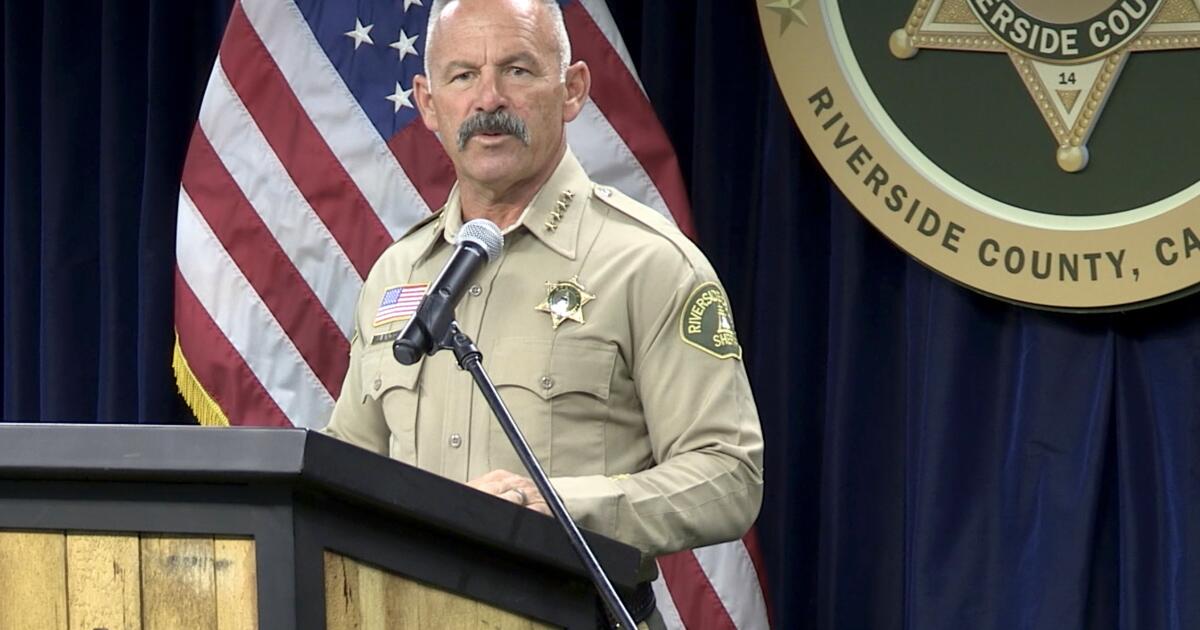
Chad Bianco, the Riverside County sheriff and a leading Republican candidate for governor, has seized more than 650,000 ballots from last November’s election as part of an investigation that he called a “fact-finding mission” to determine if they were fraudulently counted.

Atty. Gen. Rob Bonta, the state’s top law enforcement official, has sharply criticized the probe, which he called “unprecedented in both scope and scale.”

In a March 4 letter to the sheriff, Bonta said the seizure of the ballots “sets a dangerous precedent and will only sow distrust in our elections.” He threatened to seek legal recourse if Bianco does not halt his investigation.

Bianco said Friday that his investigators are looking into allegations by a local citizens group that “did their own audit” and found that the county’s tally was falsely inflated by more than 45,000 votes — a claim that local election officials have emphatically rejected.

Here is what we know.

Why were ballots taken?

According to Bonta’s office, Bianco’s department on Feb. 26 took about 1,000 boxes of ballot materials in Riverside County related to the November election for Proposition 50, which temporarily redrew the state’s congressional districts to favor Democrats in response to partisan redistricting in Republican states, including Texas.

Bianco said that it’s his “constitutional duty” to investigate a potential crime and that he is not trying to change the election results.

The investigation includes all of the ballots cast in the county, where Proposition 50 passed with 56% of the vote, a margin of more than 82,000 ballots. Statewide, it passed with 64% of the vote, a margin of more than 3.3 million ballots.

Bianco said he had been contacted by “a group of citizen volunteers” that said it performed an audit finding that 45,896 more ballots were counted than were cast. He did not name the group, but the allegations match those made by a group called the Riverside Election Integrity Team.

In a February presentation to the Riverside County Board of Supervisors, Registrar of Voters Art Tinoco disputed the group’s allegations and said they were based on a misunderstanding of raw data that had not been fully processed.

The actual discrepancy, Tinoco said, was 103 votes — a variance of 0.016%.

How did the sheriff get the ballots?

Bianco said his department served the registrar with a warrant “approved and signed by a judge” on Feb. 9.

According to Bonta’s office, an additional warrant was issued on Feb. 23. Bianco said the warrants are now sealed.

In the March 4 letter to Bianco, the attorney general said he had “serious concerns” about whether the sheriff had probable cause to seize the election materials.

Bonta questioned whether Bianco had concealed information from the magistrate judge who approved the warrants, including details from the registrar’s analysis of the citizen group’s allegations.

An official from Bonta’s office told The Times that the attorney general “found out in the middle of the week that [Bianco] was going to execute the warrants on a Friday.” Bonta’s office asked the sheriff to slow down and share information about the investigation, but “instead of waiting, he actually moved it up” and seized the ballots sooner than planned, said the official, who would only speak on background.

Bianco said a Riverside County Superior Court judge ordered the appointment of a special master to oversee the ballot count. His investigators had already begun counting, but the tally would start over under the court’s guidance, Bianco said.

The ballots would have soon been destroyed

California law requires county officials to keep election materials — including ballots and voter identification envelopes — for 22 months for elections involving a federal office and for six months for all other contests.

The materials must be sealed and then destroyed at the end of the retention period.

The Proposition 50 election took place on Nov. 4, so the ballots are scheduled to be destroyed in May.

Why investigate now?

Political observers say that Bianco — a leading gubernatorial candidate — appears to be vying for attention from President Trump and his supporters.

Kim Nalder, a political science professor and director of the Project for an Informed Electorate at Sacramento State, said the investigation appears to be “an electoral ploy.”

“At this stage in the election, most voters haven’t really tuned into the gubernatorial race, and there are a ton of candidates,” she said. “People who don’t know his background will know now. This is clear signaling.”

Trump has repeatedly called on the federal government to “nationalize” state-run elections. He remains fixated on his 2020 election loss and has falsely claimed widespread fraud.

In January, the FBI raided the elections office in Fulton County, Ga., seizing 2020 presidential election records. And this month, the Republican leader of Arizona’s state Senate said he had handed over 2020 election records to the FBI, complying with a federal grand jury subpoena for records related to a controversial audit of the election in Maricopa County.

Bianco is an outspoken Trump supporter.

A poll released last week by UC Berkeley’s Institute of Governmental Studies and co-sponsored by The Times showed Bianco and conservative commentator Steve Hilton leading the crowded field of gubernatorial candidates by slim margins, with the Democratic vote split among multiple candidates in a left-leaning state.

The top two vote getters, regardless of party, will advance to the November election.

Bianco said the investigation was “not a recount” for Proposition 50 and had nothing to do with his campaign for governor.

Source link

Californians may need to mail ballots early as Supreme Court signals support for new election day deadline

Californians may be forced to put their ballots in the mail well before election day to be certain they will be counted.

That’s the likely outcome of a Republican challenge to mail ballots that came before the Supreme Court on Monday.

The court’s six conservatives sounded ready to rule that federal law requires that ballots must be received by election day if they are to be counted as legal.

In the 19th century, Congress set a national day for federal elections on a Tuesday in early November, but it did not say how or when states would count their ballots. The Constitution leaves it to states to decide the “times, places and manners for holding elections.”

California and 13 other states count mail ballots that were cast before or on election day but arrive a few days late. And most states accept late ballots from members of the military who are stationed overseas.

By law, California counts mail ballots that arrive within seven days of election day. In 2024, more than 406,000 of these late-arriving ballots were counted in California, about 2.5% of the total.

Other Western states — Washington, Oregon, Nevada and Alaska — also count late-arriving mail ballots.

But President Trump has repeatedly claimed that voting by mail leads to fraud, and the Republican National Committee has gone to court to challenge the state laws that allow for counting the legally cast ballots of citizens which are postmarked on time but arrive late.

GOP lawyers argued that the phrase “election day” has always meant ballots must be in the hands of election officials on that day. In their questions and comments, all six conservatives agreed.

Justice Samuel A. Alito Jr. saw a real prospect of fraud. There could be “a big stash of ballots” that arrive late and “flip the outcome,” he said.

Democrats and election law experts say that the proposed new rule conflicts with more than a century of practice, because most states allowed for some people to vote by mail if they were traveling on election day. They argued that election day is like the federal tax day of April 15. While tax returns must be postmarked then, the tax returns are legal even if they arrive at the Internal Revenue Service a few days later.

The GOP filed its challenge in Mississippi, which accepts ballots that arrive up to five days after election day. A district judge rejected the claim, but a 5th Circuit Court panel with three Trump appointees ruled that ballots are illegal if they are not received by election day.

The case before the court is Watson vs. Republican National Committee.

California has been criticized for taking weeks to count all the votes, but that issue was not raised in this case.

Source link

More than half a million ballots seized by top GOP candidate in California governor’s race

Riverside County Sheriff Chad Bianco, who is a leading Republican candidate for governor, has seized more than 650,000 ballots from last November’s election and is investigating whether they were fraudulently counted.

“This investigation is simple: Physically count the ballots and compare that result with the total votes recorded,” Bianco said at a news conference Friday.

The unusual probe drew a sharp rebuke from California Atty. Gen. Rob Bonta, who said in a statement Friday that it is “unprecedented in both scope and scale” and appears “not to be based on facts or evidence.”

“There is no indication, anywhere in the United States, of widespread voter fraud,” Bonta said. “Counts, recounts, hand counts, audits, and court cases all support this.”

According to Bonta’s office, Bianco’s department on Feb. 26 seized about 1,000 boxes of ballot materials in Riverside County related to the November election for Proposition 50, which temporarily redrew the state’s congressional districts to favor Democrats in response to partisan redistricting in Republican states, including Texas.

The sheriff said his investigators are looking into allegations by a local citizens group that “did their own audit” and found that the county’s tally was falsely inflated by more than 45,000 votes — a claim that local election officials have rejected.

President Trump, who remains fixated on his 2020 election loss, continues to amplify election conspiracy theories and has repeatedly called for the federal government to “nationalize” state-run elections to counter what he says is widespread fraud.

Bonta and California Secretary of State Shirley Weber, both Democrats, have vowed to fight federal interference that could affect voting in California, including efforts to seize election records, as the FBI recently did in Georgia.

Bianco is an outspoken Trump supporter who said in an endorsement video in 2024 that, after 30 years of putting criminals in jail, he figured it was “time to put a felon in the White House — Trump 2024, baby” — referencing Trump’s conviction by a New York jury for falsifying business records while paying hush money to a porn actor.

Bianco’s investigation, which includes all the ballots cast in Riverside County in November, raises questions about how he would handle the election denialism movement if elected governor.

A poll released last week by UC Berkeley’s Institute of Governmental Studies and co-sponsored by The Times showed Bianco and conservative commentator Steve Hilton leading the crowded field of gubernatorial candidates by slim margins, in a left-leaning state.

Last fall, Proposition 50 passed in Riverside County with 56% of the vote — a margin of more than 82,000 ballots.

A citizens group called the Riverside Election Integrity Team has said it performed an audit finding that 45,896 more ballots were counted than were cast.

In a lengthy February presentation to the Riverside County Board of Supervisors, Registrar of Voters Art Tinoco disputed that figure, saying it was based on a misunderstanding of raw data that had not been fully processed.

The actual discrepancy, Tinoco said, was 103 votes, a variance of 0.016% that was far below what he said was the state’s preferred 2% margin of error for certifying results.

Bianco on Friday said that there “is no acceptable error, small or large, in our elections.”

The sheriff did not name the Riverside Election Integrity Team, but his description of the allegations brought to him by “a group of citizen volunteers” matched theirs.

Bianco said the investigation was “not a recount” for the Proposition 50 contest and was “just as much to prove the election is accurate as it is to show otherwise — we will not know until the count is complete.”

Bonta said his office has “attempted to work cooperatively” with the Sheriff’s Department to understand the basis for the probe. The sheriff, Bonta said, “has delayed, stonewalled, and otherwise refused to work with us in good faith” and failed to provide most of the requested documents.

“We’re concerned that there is not sufficient justification for seizing every ballot that was cast in this very largely populated county,” an official in Bonta’s office said in an interview Friday night.

In a March 4 letter to Bianco, the attorney general cited Bianco’s plan to use Sheriff’s Department staffers, “who are not trained and have no experience,” to count the ballots.

“Let me be clear: this is unacceptable,” Bonta wrote. “Your decision to seize ballots and begin counting them based on vague, unsubstantiated allegations about irregularities in the November special election results sets a dangerous precedent and will only sow distrust in our elections. You are also flagrantly violating my directives.”

At his news conference Friday, Bianco fired back by calling Bonta “an embarrassment to law enforcement.”

A Riverside County Superior Court judge, Bianco said, has ordered the appointment of a special master to oversee the ballot count.

In a statement Friday, Secretary of State Weber said “the Sheriff’s assertion that his deputies know how to count is admirable. The fact remains that he and his deputies are not elections officials and they do not have expertise in election administration.”


Source link