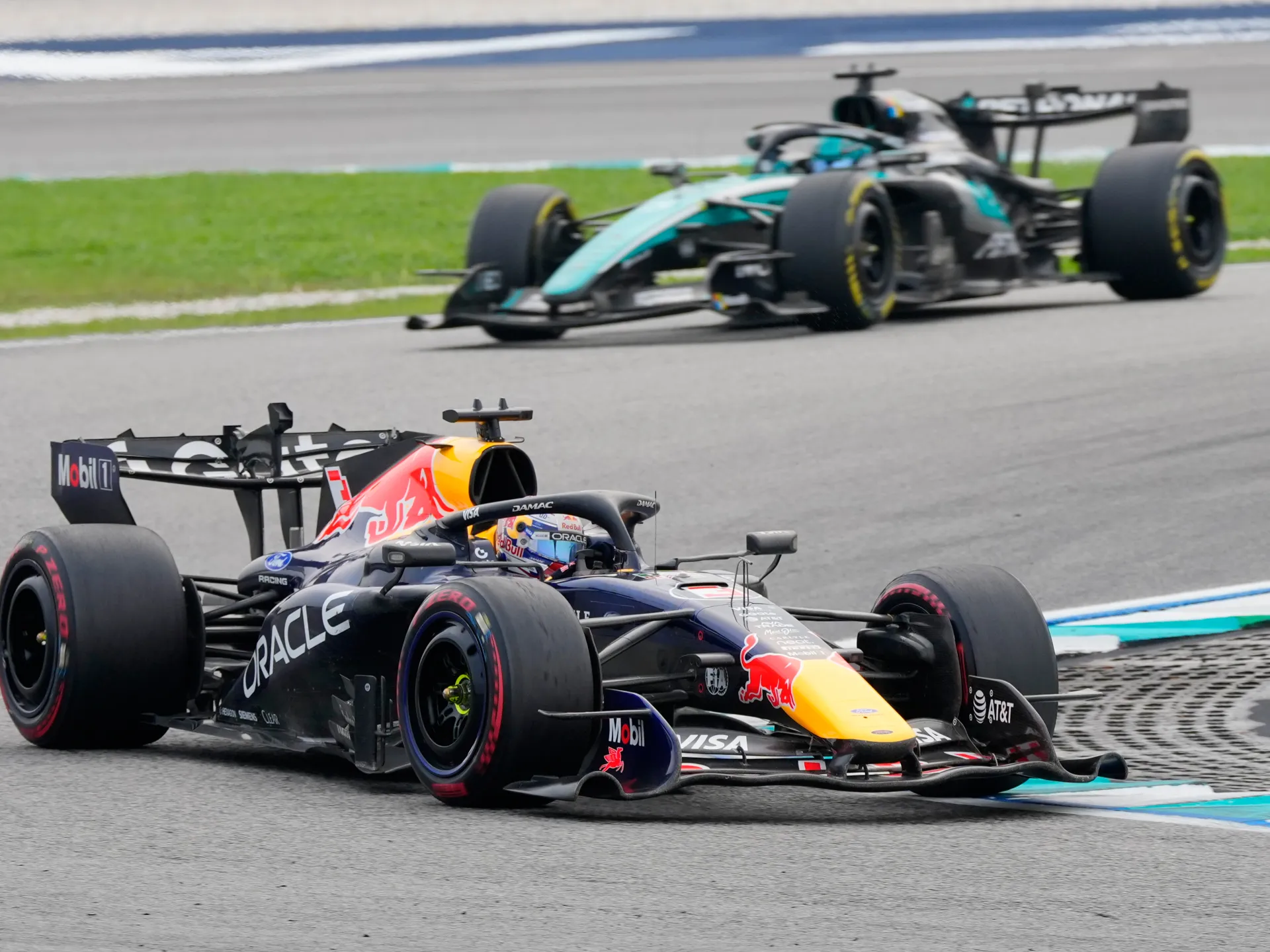
Drivers faced glitches at the race in Malaysia, where Lewis Hamilton had to stop and restart his car on the track.
Published On 5 Oct 20265 Oct 2026
Formula One’s governing body has promised a full investigation into a software bug that caused chaos and forced the start of the Bahrain Grand Prix in Malaysia to be aborted, with drivers feeling like they were in battery-powered cars made of Lego.
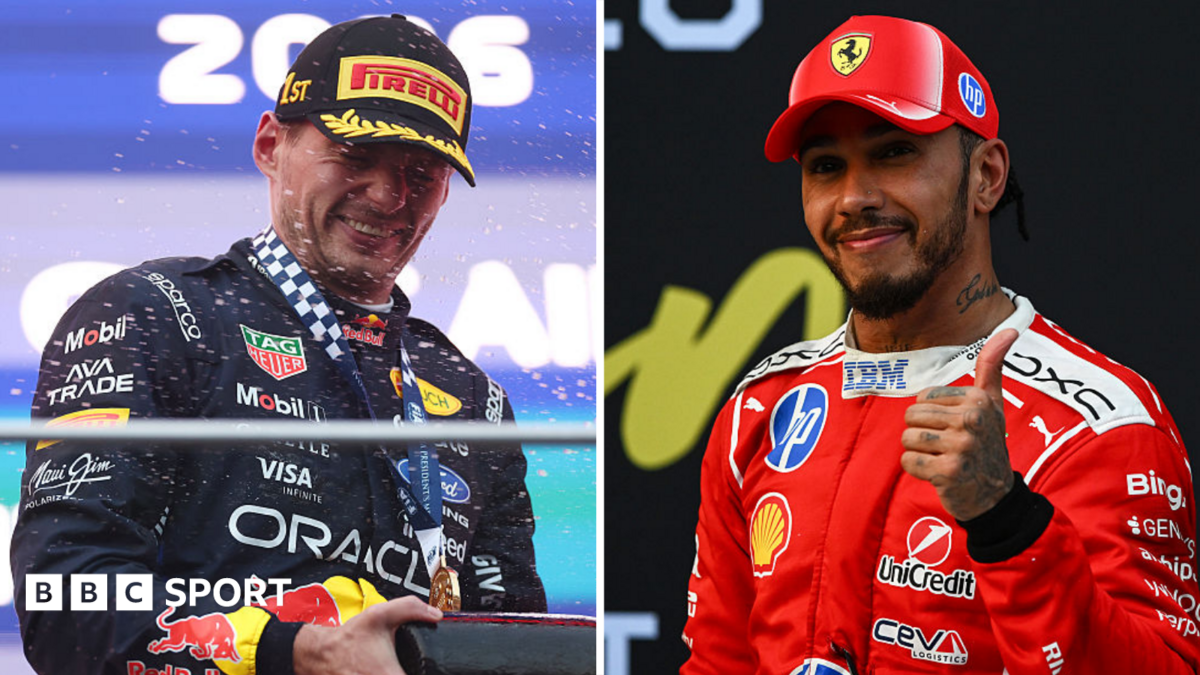
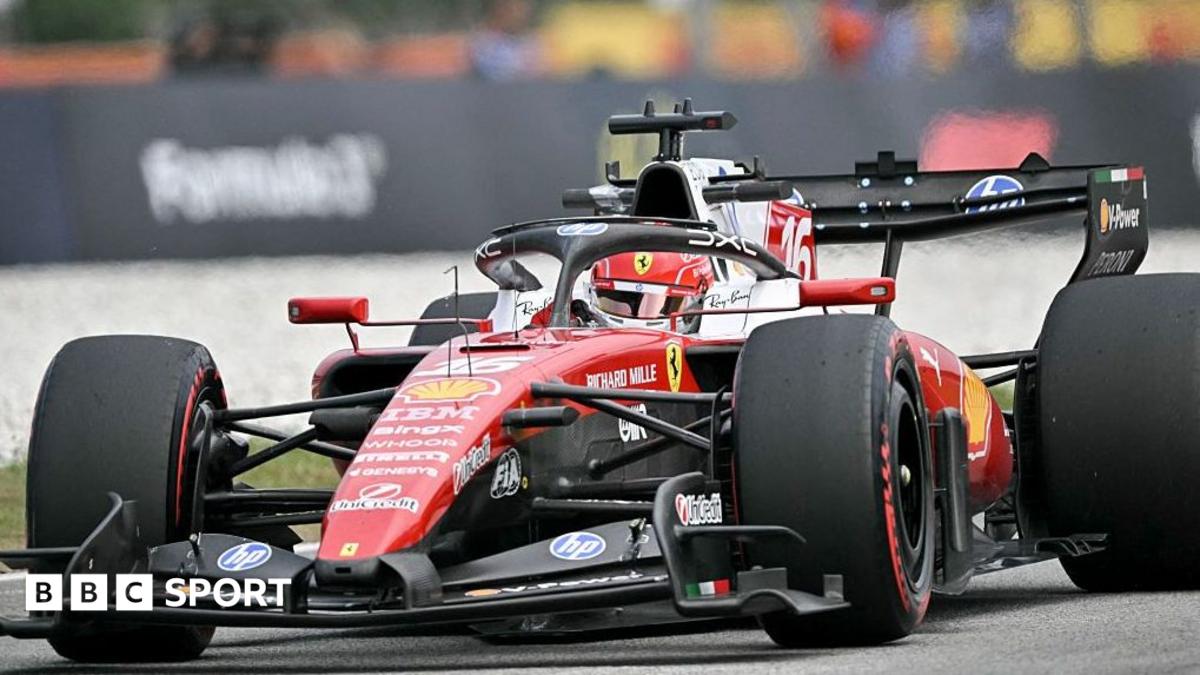
Ferrari’s seven-time world champion Lewis Hamilton and Red Bull’s four-time champion and eventual race winner Max Verstappen were among several affected by the glitch on a formation lap after torrential rain and a long delay at Malaysia’s steamy Sepang circuit on Sunday.
Recommended Stories
list of 4 itemsend of list
Verstappen compared the experience to a “Lego race” held at Silverstone before the British Grand Prix while Hamilton, the sport’s most successful driver of all time, had to stop his car on track and restart it in what he said was a career first.
The episode was the latest in a difficult first season for the new era of cars and engines, with drivers at the pinnacle of motorsport unhappy since the opening race with the power units’ increased electrical component and the need for energy management.
FIA said afterwards that “an unprecedented combination of low engine speed, low-grip conditions, wet-weather energy management settings and the Sepang circuit’s sector configuration led to an unintended loss of power for a number of cars”.
“As a result, the FIA technical department removed the energy limit constraint in the affected sectors through an updated software release distributed to all competitors during the race delay caused by heavy rain, enabling teams to make the necessary changes to the power unit before the start of the race.
“This issue had not been detected by the FIA or the teams during testing or during the laps to the grid. The FIA, together with the teams and power unit manufacturers, will undertake a full review of the issue.”
The FIA’s single-seater director Nikolas Tombazis told reporters the lack of preseason testing in wet conditions had played a part in the chaos.
“Some cars went very slowly, almost came to a standstill. There was a bit of a concertina effect between cars, and some cars almost stopped completely,” he said. “That bug prevented the power from being redeployed, and for the cars to start again.
“I think if we had had a bit more testing, we probably would have managed to catch it in time, and not have such a situation.”
Sepang was the first race weekend of the season with wet conditions, although the track dried during the race.
“Sometimes things fall through the net and people learn, and you do a better job next time,” Tombazis said.
Missing Q2 was disappointing but he responded with a strong recovery on Sunday. Climbed from 15th on the grid to finish just outside the points and comfortably ahead of Audi team-mate Bortoleto after the Brazilian’s penalty.
Lance Stroll – 6.5/10
A much more competitive weekend for Aston Martin generally. Stroll joined Alonso in Q2 and kept himself out of trouble through a chaotic race to finish 12th, even if his team-mate ultimately extracted more from the opportunity.
Franco Colapinto – 7/10
Started 21st due to grid penalties, so 13th represented a very respectable recovery. Kept things clean after his costly mistake last time out and made up plenty of ground in difficult conditions.
Oliver Bearman – 5/10
Another fairly anonymous weekend for Haas. Knocked out in Q1 and although he gained a couple of places during the race, 14th was about all there was to show for it.
Esteban Ocon – 5/10
Frustrated with Haas’ qualifying run plan after going out in Q1 and never really recovered from there. Great start and was fighting well inside the top 10. Ultimately finished behind Bearman and was unable to make the changing conditions work sufficiently to threaten the points.
Pierre Gasly – 5.5/10
Qualifying ninth was an excellent start but Sunday unravelled almost immediately. Nearly lost the car on slicks during the formation procedure and ultimately fell all the way to 16th as Alpine’s gamble failed to pay off.
Carlos Sainz – 6/10
Williams struggled for pace throughout the weekend but 13th represented a good qualifying. His race was then further compromised by contact with Bortoleto, for which the Audi driver was penalised, so 17th doesn’t tell the whole story.
Gabriel Bortoleto – 4.5/10
There was plenty to like about reaching Q3 in the Audi, but the race undid that good work. Contact with Sainz earned him a penalty and left him 18th after starting inside the top 10.
Sergio Perez – 4/10
Qualified last and never looked likely to make meaningful progress even amid all the chaos. Reaching the chequered flag was at least something for Cadillac, but 19th completed another difficult weekend.
George Russell – 8/10
A far better race than his eighth place in qualifying suggested. Made an excellent start, ran inside the top three for virtually the entire afternoon and, even if he couldn’t match Mercedes team-mate Antonelli, was heading for another podium before a power-unit failure stopped him with five laps remaining.
Alex Albon – 4.5/10
Williams lacked pace from the outset and qualifying 20th left him with an enormous amount of work to do. His eventual retirement was caused by a gearbox problem rather than a driving error, but there had been little sign of any kind of meaningful challenge before then.
Valtteri Bottas – 3.5/10
A weekend to forget. Qualified ahead of Cadillac team-mate Perez but admitted his decision to run slicks was a risk before spinning into the gravel on lap nine and triggering the first safety car.
Verstappen, who chose not to do a soft-tyre run because rain was forecast and he wanted to prioritise race preparation, said his day had been a “decent start” and “positive”.
Technical director Pierre Wache added: “We were not very optimistic starting the weekend. The main aspect was to evaluate the package we put in Baku in different type of corners than low speed.
“It looks to be working better than the previous package. Relative performance is difficult to judge but we were surprisingly happy with where we were today.”
Mercedes drivers George Russell and Kimi Antonelli were only seventh and eighth fastest in terms of headline times as they evaluated a major upgrade on their car, the team’s first since the Canadian Grand Prix in June.
Russell said: “I’m feeling the downforce in some of the corners but with this amount of tyre overheating and degradation that trumps everything. So we just need to get on top of that overnight,. That’s more of a set-up rather than the upgrade itself and go from there.’
Asked whether he could compete for pole position on Saturday, Russell said: “Currently, Verstappen looks very fast and the race pace of the McLaren looked very quick but never say never.”
The Briton trails Antonelli by 66 points in the championship after his victory in Azerbaijan last weekend.
On the race simulation runs, Verstappen also looked like the car to beat, taking stint length and tyre wear into account.
But the top four teams all looked to be in close company after a day evaluating tyre wear in the tropical temperatures and on an abnormally abrasive track, where F1 cars last raced in 2017.
Racing Bulls’ Liam Lawson and Alpine’s Pierre Gasly were ninth and 10th.
Three drivers have grid penalties. Hadjar will drop five places from his qualifying position for exceeding the permitted number of engine parts.
And Arvid Lindblad of Racing Bulls and Alpine’s Franco Colapinto will be at the back, the Briton for engine penalties, and the Argentine because of a 10-place engine penalty on top of the five-place penalty he was given for causing a crash at a restart in last weekend’s Azerbaijan Grand Prix.
F1 has returned to this track, regarded as one of the best layouts among the new generation of circuits that came on stream at the end of the last century and into this one, because of the circumstances around this year’s calendar.
The Bahrain and Saudi Arabia races were cancelled at the beginning of the year as a result of the war in the Middle East.
But Bahrain were keen to hold their race and Crown Prince Salman bin Hamad bin Isa Al Khalifa negotiated to hold the race in Malaysia.
A bunch of Bahraini-related activities are being held at the track, while the trophy presented will be the Bahrain Grand Prix trophy and rosewater rather than champagne will be sprayed on the podium.
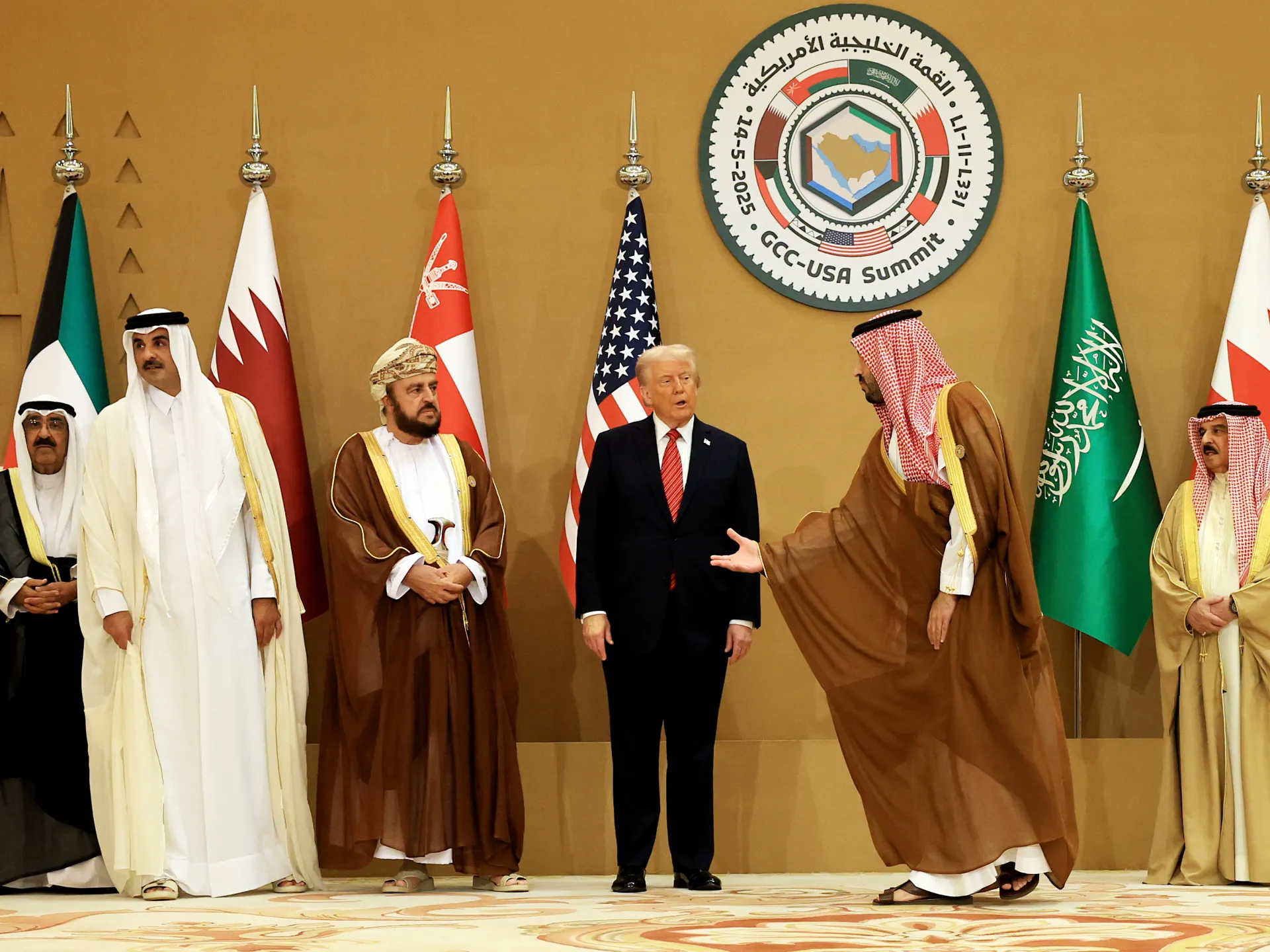
Leaders of the six Gulf Cooperation Council (GCC) states are set to meet United States President Donald Trump in New York on Tuesday, as the US-Israel war on Iran nears seven months.
The meeting, to be held on the sidelines of the United Nations General Assembly (UNGA), brings together countries that have borne much of the fallout from a war they did not start.
Recommended Stories
list of 4 itemsend of list
Since the war began on February 28, Iran has repeatedly struck US bases across the Middle East as well as airports, energy facilities and hotels. The war has particularly hit the Gulf nations hard, as their oil and gas exports – the mainstay of their economies – have been disrupted, causing a global energy crisis.
A June memorandum of understanding (MoU) briefly raised hopes of an end to the war, but it collapsed last month amid disputes over navigation through the Strait of Hormuz, which remains effectively closed.
These talks come as Trump says he faces a “big decision” on the war, and as Iran’s president and foreign minister are also in New York for the UNGA.
So what is on the table and what might come out of the talks? Here is all you need to know:
What do we know about the GCC-Trump meeting?
Trump is set to meet the leaders from Bahrain, Kuwait, Oman, Qatar, Saudi Arabia and the United Arab Emirates, which form the GCC, on the sidelines of the UNGA.
Trump told US media outlet Axios on Thursday that he wanted to meet the GCC leaders as he faced a “big decision” on the war and wanted to speak with them directly.
Experts say there are two interconnected issues – the US-Israel war on Iran and the conflict between Houthi rebels and the Saudi-backed government forces in Yemen.
What do the GCC countries want from the meeting?
Broadly, experts say, the GCC nations share a common goal for the meeting.
The GCC has “shared positions on the main principles of regional security and de-escalation”, Luciano Zaccara, a researcher with the New Ground Research think tank in Doha, Qatar, told Al Jazeera.
“With Trump recently threatening to ‘wipe out’ Iran, I expect the six GCC states, or at least most of them, to convey to the US president their grave concerns about the likely consequences of another round of intense US military strikes on Iran,” Giorgio Cafiero, CEO of Gulf State Analytics, told Al Jazeera.
“They will probably seek to underscore their own vulnerabilities to a renewed cycle of all-out fighting between the United States and Iran,” he said, adding that they will try to persuade Trump into making certain concessions to Tehran.
Cafiero said they will look to develop an arrangement that builds on the MoU and which “offers the most viable path toward winding down the crisis”.
Chief among their common concerns is freedom of navigation through the Strait of Hormuz and the Red Sea, according to Ahmed Helal, managing director for the Gulf region at The Asia Group.
‘Divergent’ goals
Despite common goals, the Gulf states have still experienced “divergent” outcomes from the war and will also look to persuade Trump to address their particular predicaments, Helal said.
The UAE, he explained, has been able to keep exporting oil by pipeline to its port of Fujairah, which bypasses the Strait of Hormuz, although not at the volumes it would like.
But fellow GCC member Qatar, whose gas exports depend on the strait, has seen its LNG shipments severely curtailed and wants to avoid any renewed escalation that could see its energy infrastructure targeted again, Helal said.
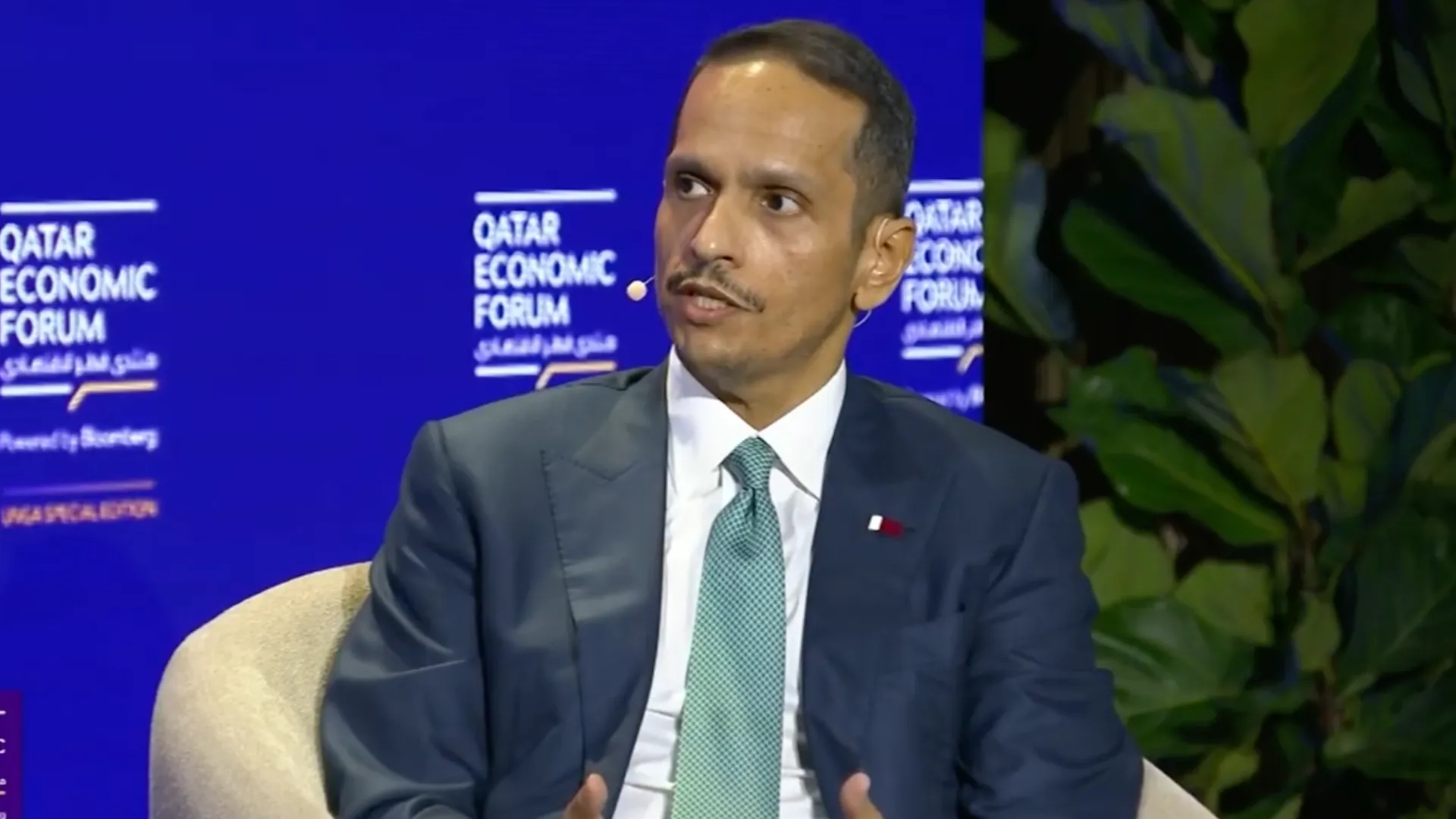
Speaking at an event in New York, US, on Sunday, Qatar’s Prime Minister Sheikh Mohammed bin Abdulrahman bin Jassim Al Thani described the economic fallout from the US-Israel war on Iran as an “earthquake”.
Saudi Arabia has another problem, as it is now under “enormous pressure” as the Houthis gain ground in Yemen, and has been “intensifying their lobbying” for US strikes on the group, he said.
What does Trump want from the meeting?
Predicting what the US president plans has been difficult since the outbreak of the US-Israel war on Iran, experts say.
“It could be possible that the US is expecting a more direct GCC engagement against Iran in exchange for a direct US intervention to stop the Houthi attacks against Saudi Arabia, but without the GCC leaving the main role in defending themselves”, Zaccara told Al Jazeera.
“Regarding Iran, Trump has not ruled out another major military escalation. At the same time, the administration seems to be open to exploring diplomatic options,” he said, adding there are rumours of a possible indirect US-Iran meeting on the sidelines before Iranian President Masoud Pezeshkian’s speech on Wednesday.
Helal said the administration’s focus is domestic, with the midterm elections weeks away and Trump’s approval ratings at a record low; there is “immense pressure” to lower petrol prices.
While Trump has threatened further military action, he remains politically sensitive to an “escalatory ladder” that could spike oil prices, Helal said.
The talks are unlikely to produce a breakthrough, he added, with the best-case scenario an agreement to return to negotiations potentially brokered by Qatar or Pakistan.
Qatar’s Prime Minister tells Bloomberg, the Gulf won’t be the same as before the war, unless there’s a security framework ensuring no one is a threat to each other. Speaking at the Qatar Economic Forum in New York, Sheikh Mohammed bin Abdulrahman Al Thani says the region needs to have good relations.
Tehran, Iran – Another attempt to clinch a deal between Iran and Oman to restore some traffic to the Strait of Hormuz has been set back by a lack of regional consensus on the future of the waterway.
Officials from Iran, Iraq and the Gulf Cooperation Council (GCC) nations – minus objecting Bahrain – were scheduled to meet in Oman’s port city of Salalah on Monday to confer on new temporary routes in the Strait of Hormuz amid Tehran’s ongoing hot-and-cold war with the United States.
Recommended Stories
list of 4 itemsend of list
On Sunday night, the region’s officials announced the postponement of the meeting, without giving a new date. None of the stakeholders gave any indication that the postponement was directly linked to recent Houthi and Iraqi militia attacks on Saudi Arabia.
However, Iran’s Ministry of Foreign Affairs said Saudi objection was the reason for the postponement, without providing further details.
US media outlets Axios and CNN reported that Saudi Arabia had submitted amendments to the Iran-Oman proposal for Hormuz because it had concerns that the wording would establish a new status quo which would be unacceptable to Riyadh.
It comes days after Saudi Arabia shut down its critical East-West oil pipeline – the kingdom’s key route for energy exports – after drone attacks in the area originating from Iraq. US President Donald Trump said these attacks were likely conducted at Tehran’s behest.
Saudi Arabia has also faced repeated attacks by the Houthis, who took control of Yemen’s Red Sea coast over the weekend.
Hours after the Salalah meeting was postponed, the Saudi civil defence issued alerts for Abha, Khamis Mushait, Jazan and Najran in southern and western parts of the kingdom. The Houthis claimed to have fired dozens of ballistic missiles and drones at military facilities in Khamis Mushait, in retaliation for air strikes across Yemen, which it blames on Saudi Arabia.
With continued disruptions to the passage of vessels through the strait, Iran has signalled that it intends to continue pursuing the bilateral agreement with Oman over Hormuz, which it said was finalised last month.
“In consultation with Oman, in the next step, we will make a decision on how to announce or register the agreement,” Ministry of Foreign Affairs spokesman Esmaeil Baghaei told reporters during a weekly news conference on Monday.
When the two countries initially advanced the bilateral deal, Trump threatened to bomb Oman if it “gets in the way” of US talks with Iran.
Ali Vaez, deputy director of the Middle East and North Africa programme at the Crisis Group, told Al Jazeera that Tehran wants to use its leverage over Hormuz for regional legitimacy – and ultimately to pressure the US.
“The broader the regional buy-in, the harder it becomes for the US to dismiss the arrangement as an Iranian diktat,” he told Al Jazeera.
GCC states, suffering from a sharp decrease in energy receipts, want ships moving and their economies insulated from a war they neither started nor can end. But Vaez said Washington is unlikely to lift the blockade on Iran even if the region blesses the arrangement between Muscat and Tehran.
“[The US] will find it much harder to sustain a policy that its own partners increasingly see as perpetuating the crisis,” Vaez said
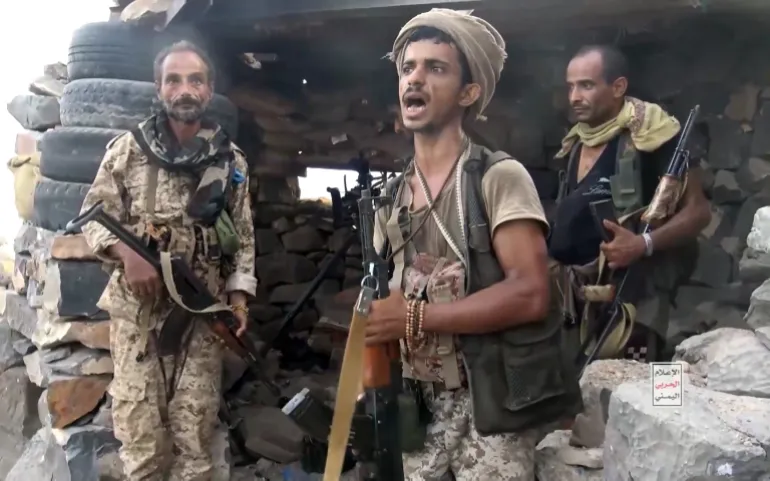
Houthi fighters stand guard at a seized camp during an offensive in the port city of Mocha, Yemen [Handout/Houthi Military Media Centre via EPA]
Temporary entry and exit
The Omani-Iranian planned agreement envisions temporary entry and exit routes for commercial vessels in the strait, with Tehran repeatedly stating that this would not mean that the Strait of Hormuz has reopened.
Iran and Oman are the only two countries with territorial waters in the Strait of Hormuz. The proposed inbound corridor reportedly goes through Iranian waters, while the outbound corridor mostly passes through Omani waters, with small parts still in Iranian territory.
During Monday’s scheduled meeting, Iran and Oman were supposed to share precise maps and discuss the details of the routes with GCC members Saudi Arabia, the United Arab Emirates, Qatar and Kuwait, and Iraq, which is outside the bloc. The deal could reportedly include voluntary tolls to fund navigation, environmental protection and search-and-rescue operations.
Bahrain, which has borne the brunt of Iranian attacks since the US-Israel war on Iran started at the end of February, said it would not participate in the forum since it would amount to “appeasement”. The Tasnim news outlet, affiliated with Iran’s Islamic Revolutionary Guard Corps (IRGC), claimed Israel pushed Bahrain to refuse participation.
How does Yemen fit in this picture?
The latest diplomatic movement comes after days of explosive developments in Yemen, when the Houthis, officially known as Ansar Allah, essentially took control of the Bab al-Mandeb strait and the Red Sea after a lightning offensive against government forces.
Thomas Juneau, assistant professor in the Graduate School of Public and International Affairs at the University of Ottawa, said the Houthi advances represent a significant gain for Iran. Its Yemeni allies’ position in the Red Sea offers Iran an important new bargaining chip in future negotiations with the US.
“The Houthis are not a simple arm of Iranian foreign policy. They operate largely based on their own interests, and do not take and execute Iranian commands,” he told Al Jazeera. “But Houthi and Iranian interests are largely, if not always fully, aligned. They cooperate closely on the basis of those shared interests.”
Juneau sees the ability for Iran and the Houthis to potentially partially block traffic in the Strait of Hormuz and the Bab al-Mandeb – two of the world’s most crucial maritime bottlenecks – would give them tremendous influence over the global economy, and thus the US.
The Houthis are trying to seize the opportunity to “institutionalise the de facto reality of their veto on maritime traffic” in the southern Red Sea and replicate partial Iranian success in doing the same in the Strait of Hormuz, Juneau said.
Iran has stressed that their allies’ gains in the Red Sea cannot be separated from the Saudi-led blockade and attacks on Houthi areas in Yemen since 2015.
“We know very well that continued war between Islamic countries in the region only has one winner, and that winner is no one but the Zionist regime, which is after persisting tensions and conflict in our region and between Islamic countries,” Iranian spokesperson Baghaei said.