B21

B-21 Raider Not Appearing In Any America 250 Flyovers, Air Force Confirms

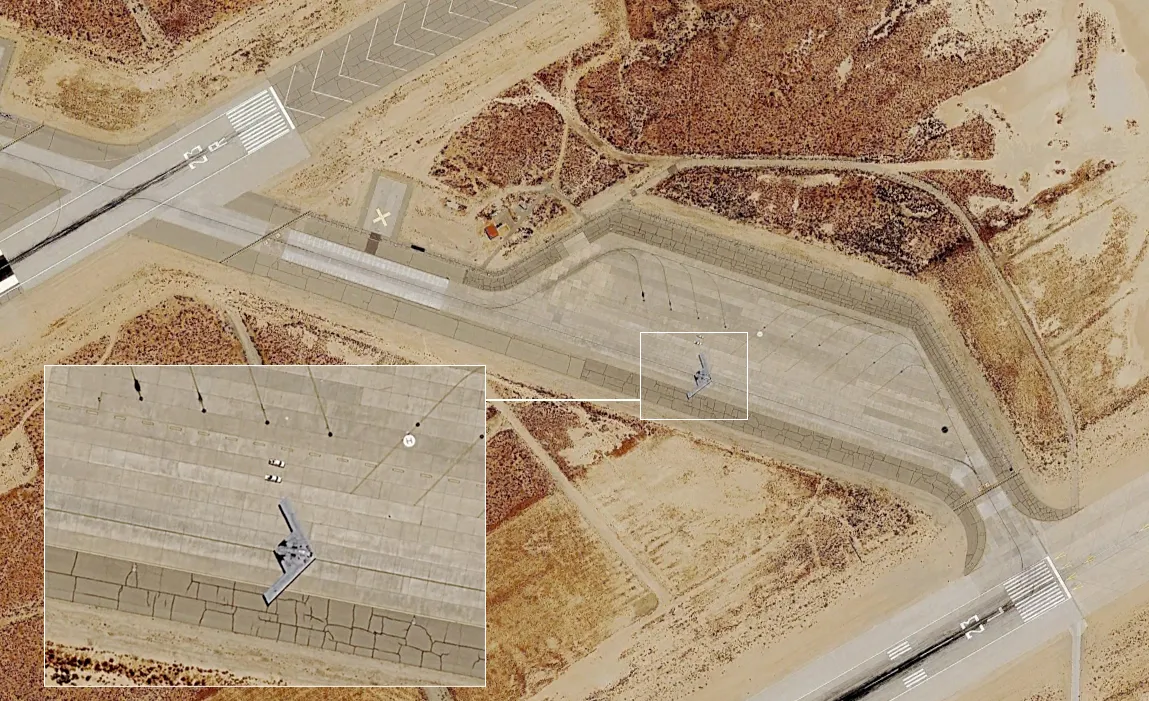
After what appeared to be cryptic indications that prompted online speculation and excitement, fans of the B-21 Raider won’t be seeing America’s newest bomber in any Fourth of July celebrations, the Air Force confirmed to TWZ Wednesday morning. The aircraft, two of which are now undergoing flight testing, will remain at Edwards Air Force Base in California.

Asked by TWZ to “confirm B-21 will not take part in any 250th celebration events in DC or anywhere else,” an Air Force official offered the following response: “The B-21 will not take part in any flyovers for this week’s celebration.” 

The official further clarified that the aircraft won’t take part in any such events, even though the flyovers in Washington, D.C. continue through July 10.

B-21 Raider. (USAF)

The Air Force official’s statement about the B-21 not taking part in any Independence Day celebrations adds additional clarity to comments Air Force Secretary Troy Meink made to Air & Space Forces Magazine last week about the topic.

“No, no, the program is going really, really well, but the planes are out at Edwards, and we just started doing refueling,” Meink told the publication. “So to get a B-21 here [for the Fourth], not going to happen.” 

TWZ was first to report on the Raider’s initial refueling trials.

A B-21 Raider being refueled. (USAF)

The first pre-production B-21 arrived at Edwards Air Force Base following its maiden flight in 2023. A second pre-production Raider took to the skies last year. The Air Force is eventually expected to take delivery of a total of six pre-production examples of the new stealth bomber. Non-flying airframes are also being used to support ongoing testing.

The Air Force expects to procure 100 of these jets, and possibly significantly more. You can read more about the program in our story here.

B-21 Takeoff and Landing thumbnail

B-21 Takeoff and Landing


Speculation about whether the B-21 would make an appearance over the nation’s capital was mainly fueled by a campaign of cryptic videos and an image posted on social media by the jet’s manufacturer, Northrop Grumman.

A 30-second video titled “Stealth Meets Spotlight: B‑21 Blows Out 250 Candles to Celebrate America’s Birthday” was posted on YouTube 11 days ago.

It opens with credits showing “Utah Salt Flats” and then shows the silhouette of a Raider followed by one flying low and blowing out 250 candles on pillars placed in a row before roaring off with the words “Happy Birthday, America” emblazoned on the screen.

Stealth Meets Spotlight: B‑21 Blows Out 250 Candles to Celebrate America's Birthday thumbnail

Stealth Meets Spotlight: B‑21 Blows Out 250 Candles to Celebrate America’s Birthday


A seven-second version of that video, posted on X June 25 and titled: “Some things stay off the radar. America’s 250th isn’t one of them,” just shows the silhouette and the candles being blown out.

On June 30, Northrop Grumman added another teasing post to X, just showing a still from the longer video.

The company declined comment about the social media campaign. It deferred questions about whether the Raider would fly in any July 4 celebrations to the Air Force.

In a post on his social media outlet, President Donald Trump added further fodder for speculation about whether Raider would emerge for the festivities.

“Last night’s Rally was packed — 45,000 people. July 4th will be a step beyond anything you’ve ever seen,” Trump proclaimed on June 27. “The Military flyovers will be the best, EVER — The most planes, the newest planes, the fastest planes!…”

Even before these posts, the military aviation community of X had been speculating about whether the Raider would make an appearance at America’s birthday bash in the capital.

Though the B-21 won’t be the centerpiece of any flyovers, aviation buffs in the D.C. area already got a chance to see several iconic aircraft, including B-2A Spirit and B-52 Stratofortress bombers, as well as fighters and other aircraft. The new Air Force One bridge aircraft is also supposed to make an appearance.

More flyovers are expected over D.C. through July 10 as we noted at the top of our story.

So, unless there is a well coordinated conspiracy inside the USAF to surprise the public by denying the B-21’s attendance at America 250, the Raider will remain off the radar, which is what it was designed to do.

Contact the author: howard@twz.com

Howard is a Senior Staff Writer for TWZ. He writes frequently about conflict, focusing heavily on the Middle East and Ukraine, and interviews with military and intelligence officials and industry leaders from around the globe. He lives near Tampa, Florida, home of U.S. Central Command, U.S. Special Operations Command.


Source link

B-21 Raider Seen From Above For The First Time

We have just gotten our first full overhead image ever of the B-21 Raider. The photo was taken during the Raider’s initial aerial refueling trials, which TWZ was first to report on. While a head-on slightly elevated image of the B-21 has been released, one showing the entire aircraft from a steep upper perspective has not. The same can be said for any image showing the next generation bomber’s exhaust, which is one of the most sensitive parts of a very low observable aircraft’s design.

The images of the first B-21 airframe, nicknamed Cerberus, undergoing testing in the pre-contact position behind the tanker were included with a release from its manufacturer, Northrop Grumman. It states, in part:

As the most fuel-efficient bomber ever built, the B-21 consumes a fraction of the fuel used by fourth- and fifth-generation aircraft. This reduces demand for theatre tanker logistics and provides operational commanders with greater flexibility in force packaging. 

With more than $5 billion invested in digital technologies and manufacturing infrastructure for the B-21 program, Northrop Grumman is accelerating its production, with the first aircraft planned to arrive at Ellsworth Air Force Base in 2027.  

The B-21’s extreme endurance is a key component of the Long-Range Strike Bomber (LRS-B) concept. The aircraft is smaller than a B-2, but will be able to fly farther, relying on a planform design that predated the B-2 Spirit and is optimized for high-altitude, highly-efficient flight. The B-21 likely relies on two engines, based on images showing the aircraft’s contrails and general design cues, not four, as found in its predecessor. The aircraft will also have a smaller weapons payload than the B-2, but will carry an extreme amount of fuel to help it reach farther from a tanker. You can learn more about the evolution of the B-21 and its B-2 roots in this past feature of ours.

The tanker that is seen in the images is Edwards AFB’s ‘Ghost’ tanker, tail number 61-0320. TWZ just spent time with this special aircraft and its crews at Edwards AFB. You can learn all about their unique mission in the feature video below that we posted to YouTube as part of our Special Access video series:

Inside The Air Force's Elite Ghost Tanker Unit thumbnail

Inside The Air Force’s Elite Ghost Tanker Unit


In this new overhead image, we get a good look at the Raider’s open refueling receptacle and the paint markings around it, which mirror those found on the USAF’s 5th generation stealth fighters, the F-22 and F-35. We also get a great look at the B-21’s deeply-blended air inlets, also one of the most sensitive parts of its stealth design. Above all else, we are shown Raider’s exhausts, which appear very impressive, if not a bit confounding.

We must state that the image very well could have been altered so as to not give certain features of the B-21’s exotic exhausts away. Once again, this is a very sensitive area of the bomber. Regardless, what we see is the deeply-sunk chevron-shaped (inverse direction compared to B-2) low-observable exhausts placed very far forward of the aircraft’s trailing edge to help mask its infrared signature. But what’s missing is any kind of special material that would attenuate the heat generated from the hot gasses and protect the airframe from it.

There also isn’t any planar area for active cooling, as is found on the B-2, or a trough-like section that connects the buried engine’s exhaust ducts with the upper area of the aircraft’s empennage. Exactly how all this is accomplished is unclear, but again, the image could be touched up to conceal parts of this area.

(Northrop Grumman)
A US. Air Force B-2 Spirt assigned to the 509th Bomb Wing, Whiteman Air Force Base receives fuel from a U.S. Air Force KC-135 assigned to the 185th Air Refueling Wing, Iowa Air National Guard in the sky over northwest Missouri on August 29, 2018. U.S. Air National Guard photo by Senior Master Sgt. Vincent De Groot
The B-2 from a similar angle. (USAF) Vincent De Groot

Another feature that we have pointed out since the B-21 was revealed that is really clear in this image is just how small the cockpit windows are. As we originally speculated, their unique design was likely driven by aerial refueling requirements balanced against minimizing the frontal radar cross-section of the aircraft. The B-21’s higher operating altitude should make the cockpit area less of an issue for most aerial and ground based radars, but still, it appears that minimal cockpit glazing was used to keep the Raider hard to detect as possible.

We also got a side view of the aerial refueling formation trial showing the B-21’s trailing its instrumented drogue as it cozies up behind 61-0320. This angle gives an idea of just how short the length of the B-21 is. Likely about the length of an F-15 front to back. Our estimation of its wingspan remains around 145 to 155 feet.

(Northrop Grumman)

Overall, from what we understand about the still very secretive program is that it’s on schedule and on budget — a remarkable achievement considering the history of its progenitor. You can read all about how the B-2’s unfortunate fiscal ‘death spiral’ likely heavily influenced the B-21’s design in our previous feature linked here.

Regardless, it’s great to see new perspectives of what is the most cutting-edge manned aircraft known to the public and it is a good sign that we will be seeing a lot more imagery of the B-21 as the test program accelerates towards initial operational capability.

UPDATE:

Here is an annotated view of the B-21’s upper fuselage showing some of its main features, minus the conformal antennas and other bits:

Contact the author: Tyler@twz.com

Tyler’s passion is the study of military technology, strategy, and foreign policy and he has fostered a dominant voice on those topics in the defense media space. He was the creator of the hugely popular defense site Foxtrot Alpha before developing The War Zone.


Source link