Awards

AI In Finance Awards 2025: Round II

In banking as in other industries, AI is rapidly becoming a core business driver. The biggest gains will come from a foundational rethink of operations, not marginal improvements.

The financial sector is undergoing a profound transformation, powered by AI. Banks’ strategic integration of AI is moving beyond simple efficiency gains to make the technology a core business driver, focused on hyper-personalization, augmentation of human talent, and robust governance.

The real opportunity, says Andy Schmidt, vice president and global industry lead for Banking at CGI, [our AI in Finance judging partner], lies not in simply applying AI to existing workflows, but in fundamentally rebuilding processes with AI at the core.

A key aspect of this transformation is the shift towards an ultra-personalized and predictive customer experience. AI is moving past rudimentary chatbots to become an “agentic, conversational assistant” that can proactively anticipate a customer’s needs: from preventing payment failures by automatically increasing card limits to providing tailored financial guidance and real-time product recommendations.

Going forward, this intensified focus on customer experience will be a significant component of return on investment (ROI), Schmidt predicts.

“The real value comes in improved customer experience,” he stresses. “Being able to onboard customers more quickly, being able to transition from opportunity to revenue more quickly, and optimizing the customer experience so that they remain satisfied and stay with the bank over time.”

Schmidt highlights success stories in wealth and personal finance where GenAI drives personalization recommendations. DBS Bank’s harnessing of AI, for example, has drastically accelerated customer journeys, demonstrating the potential for significant scale and opportunity.

Human-AI Augmentation

The case for AI adoption in banking centers on strategic augmentation, were AI becomes a co-pilot for human experts. The goal is to automate repetitive and low-value tasks, freeing up human capital to focus on such complex, high-value activities as strategic decision-making, advisory sales, and conflict resolution.

Further driving this internal empowerment is the democratization of GenAI tools across the workforce, accelerating research, analysis, and data synthesis. Crucially, banks must commit to the principle of human oversight, ensuring that for complex matters, a human being is always in the loop and remains the final decision-maker.

AI’s role in risk management is evolving from reactive analysis to real-time, predictive analytics. By continuously monitoring vast internal and external data streams, AI can anticipate potential risks and perform complex what-if scenario planning. This capability couples with enhanced fraud detection, where sophisticated AI, including neural networks, provides real-time surveillance and prevention across massive transaction volumes.

AI is also streamlining the traditionally costly and time-consuming realm of regulatory compliance. Schmidt emphasizes the value of AI in bringing “transparency, auditability, and repeatability to key processes, especially when it comes to compliancerelated processes like KYC [know your customer].” Relatedly, AI is automating tasks like credit report preparation and enhancing the rigor of due diligence on complex M&A transactions.

Maximizing ROI Gain

A significant lesson emerging from AI deployment is that the most substantial returns come from a foundational rethink of operations, not marginal improvements. The financial industry is recognizing that “adding AI to existing processes will make them marginally better,” Schmidt notes, but that “optimizing processes to leverage AI will make them dramatically better.” The best way to realize the benefits of AI transformation, he adds, is in “examining these long-standing processes, optimizing them, and fundamentally rebuilding them. The goal is to integrate AI at the core of the process, rather than sprinkling it on top as an afterthought.”

With every aspect of AI adoption, however, the best approach is to proceed in stages. For those beginning their AI journey, Schmidt suggests adopting large language models (LLMs) as a starting point before transitioning to more specialized, purpose-built models. The effective integration of AI requires continuous change management to sustain capabilities and maximize ROI over time.


Methodology

The Global Finance AI In Finance award winners are chosen based on entries provided by financial institutions. Entrants are judged on the impact, adoption, and creativity that AI brings to both systems and services. Winners are chosen from entries submitted by banks and evaluated by a world-class panel of judges at CGI, a leading multinational IT and business consulting-services firm. CGI is a trusted AI expert that combines data science and machine slearning capabilities to generate new insights, experiences, and business models powered by AI. The editors of Global Finance are responsible for the final selection of all winners.


Meet The Winners

Globalization Artificial intelligence (AI) digital world smart futuristic interface technology background, Vector Illustration
Global Winners
Consumer Winners
Corporate Winners

Winner Insights

Gökhan Gökçay, executive VP of Technology at Akbank
Nimish Panchmatia, Chief Data & Transformation Officer, DBS

Source link

Fifa Best Awards: Hannah Hampton & Gianluigi Donnarumma win goalkeeper awards

“To the fans, both club and country, your support doesn’t go unnoticed.

“We hear you cheering every single game loud and proud and it helps push us on to go and get the win for you all. So, thank you very much.”

Hampton and Donnarumma won the Yashin Trophy at the Ballon d’Or in September.

Hampton started every game at Euro 2025 – England beat Spain in a penalty shootout in the final – and all Chelsea‘s matches in an unbeaten Women’s Super League season.

She also won the Golden Glove award with 13 clean sheets.

Lizbeth Ovalle won the Marta Award for the best goal in women’s football with her scorpion kick for Tigres against Guadalajara in Mexico’s Liga MX Femenil in March.

Ovalle now plays for Orlando Pride in the National Women’s Soccer League in the US.

The winner of the Puskas Award, for the best goal in men’s football, was Independiente’s Santiago Montiel for his overhead kick from outside the box against Independiente Rivadavia in the Argentine Primera Division in May.

Source link

Trump awards 13 service members with new Mexican Border Defense Medal

Dec. 16 (UPI) — President Donald Trump has awarded 13 soldiers and Marines the newly established Mexican Border Defense Medal for their contributions to safeguarding the U.S. southern border.

The service members are the first to receive the commendation, created Aug. 13 in a memo signed by Defense Secretary Pete Hegseth to honor those deployed to the U.S.-Mexico border.

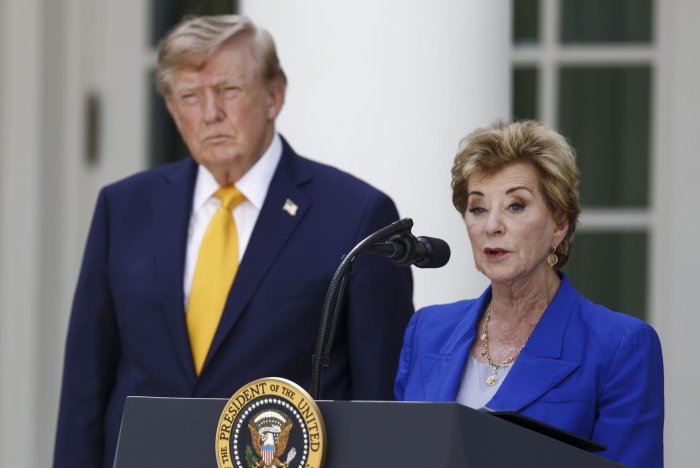
The commander-in-chief awarded the medals to the service members at the White House.

“On day one of my administration, I signed an executive order making it [the] core mission of the United States military to protect and defend the homeland. And today, we’re here to honor our military men and women for their central role in the protection of our border,” Trump said during the ceremony.

Since returning to the White House in January, Trump has overseen crackdowns on immigration and crime that have included the deployment of troops to the U.S.-Mexico border.

More than 10,000 U.S. military service members attached to Joint Task Force Southern Border have been deployed to the U.S.-Mexico border in support of the Department of Homeland Security, with the missions to secure the border, disrupt transnational criminal organizations and respond to national security threats.

Trump said Monday that more than 25,000 service members have served in this “incredible and historic operation,” which has overseen 13,000 patrols along the border.

“They’ve spent night and day enduring scorching hot and bitter cold, and they’ve given up their holidays and their weekends, working with the offices of Customs and Border Protection,” Trump said.

“And today, we give these great warriors the recognition that they have earned — and they have really earned it.”

The medal, according to the Department of Defense, is identical to the Mexican Border Service Medal awarded for service in 1916 and 1917 in the Mexican state of Chihuahua as well as the U.S.-Mexico border regions in New Mexico and Texas.

It is bronze with a sheathed Roman sword hanging on a tablet on the front, which bears an inscription that reads: “For Service on the Mexican Border.”

Those eligible for the award must have been permanently assigned to a designated Department of Defense military operation supporting CBP within the area of eligibility for at least 30 consecutive or non-consecutive days from Jan. 20 of this year.

“We’re proud of this mission,” Hegseth said during the White House event. “We’re proud to defend the American people and pinning these medals on is an example of how important it is to us.”

The Trump administration states that its crackdown has resulted in more than 2.5 million undocumented migrants removed from the United States and the lowest level of illegal border crossings since 1970.

Source link

Tesla Board Reaped Over $3 Billion in Stock Awards, Far Exceeding Tech Peers

Tesla’s board of directors has earned more than $3 billion through stock awards since 2004, an amount that dwarfs compensation at other major U.S. technology firms. CEO Elon Musk’s brother Kimbal has earned nearly $1 billion, while director Ira Ehrenpreis collected $869 million and board chair Robyn Denholm $650 million. Most of these windfalls came from stock options that appreciated dramatically as Tesla’s share price soared.

Why It Matters
The outsized compensation raises questions about corporate governance and board independence. Experts argue that such high pay could compromise directors’ ability to objectively oversee Tesla and Musk, as a large portion of their wealth is tied to stock performance rather than cash. Critics also note that Tesla is one of the few major firms where directors are paid predominantly in options rather than shares, magnifying upside potential with limited downside risk.

Stock Option Controversy
Tesla directors have received compensation primarily through stock options, rather than shares. This practice allows them to profit if Tesla’s stock rises without incurring losses if it falls, unlike restricted stock which better aligns interests with shareholders. Between 2018 and 2024, Tesla directors averaged $1.7 million annually despite suspending pay for four years, more than double the average of Meta directors, the next highest-paid among the “Magnificent Seven” tech companies.

Legal and Governance Issues
Tesla’s board suspended new stock grants in 2021 following a shareholder lawsuit alleging excessive pay. The board has also faced scrutiny in a Delaware court over Musk’s 2018 compensation package, with the judge ruling that excessive pay and personal ties compromised CEO-pay negotiations. The board proposed a new pay package for Musk in 2024 potentially worth $1 trillion in Tesla stock over the next decade.

Stakeholders include Tesla’s board members, CEO Elon Musk, shareholders, corporate-governance experts, and the wider investment community. Oversight and accountability are central concerns, as compensation structures can influence board decisions and shareholder trust.

Comparison With Tech Peers
Other major tech firms like Alphabet, Meta, Apple, Microsoft, Amazon, and Nvidia (“Magnificent Seven”) have also seen stock-based wealth increases for directors, but none have granted awards as concentrated or directly tied to board service as Tesla. Lifetime earnings for Tesla directors far exceed peers when factoring in appreciated stock value.

What’s Next
Governance experts suggest reforms such as paying directors in restricted stock rather than options, and greater shareholder oversight of compensation plans. Tesla’s board must navigate the delicate balance of incentivising directors while maintaining independence in overseeing Musk and the company. Legal proceedings and shareholder scrutiny over Musk’s latest pay package are ongoing and may influence future board compensation practices.

Additional Considerations
The analysis raises broader questions about tech-sector governance, the risks of incentive structures tied to stock performance, and the potential misalignment between directors’ personal wealth and long-term shareholder interests. Tesla’s board, given its outsized compensation, will remain a focus for regulators and investors alike.

With information from an exclusive Reuters report.

Source link