Authorities

Authorities foil plot to firebomb Palestinian activist’s NYC home

March 27 (UPI) — Federal officials arrested a man accused of plotting to firebomb the Brooklyn, N.Y., home of Palestinian activist Nerdeen Kiswani, the Justice Department announced Friday.

Alexander Heifler, 26, faces one count of unlawful possession of destructive devices and one count of making destructive devices. The Hoboken, N.J., man allegedly constructed Molotov cocktails he planned to throw at Kiswani’s home.

Kiswani is the co-founder of the group Within Our Lifetime, a New York City-based organization supporting Palestinians.

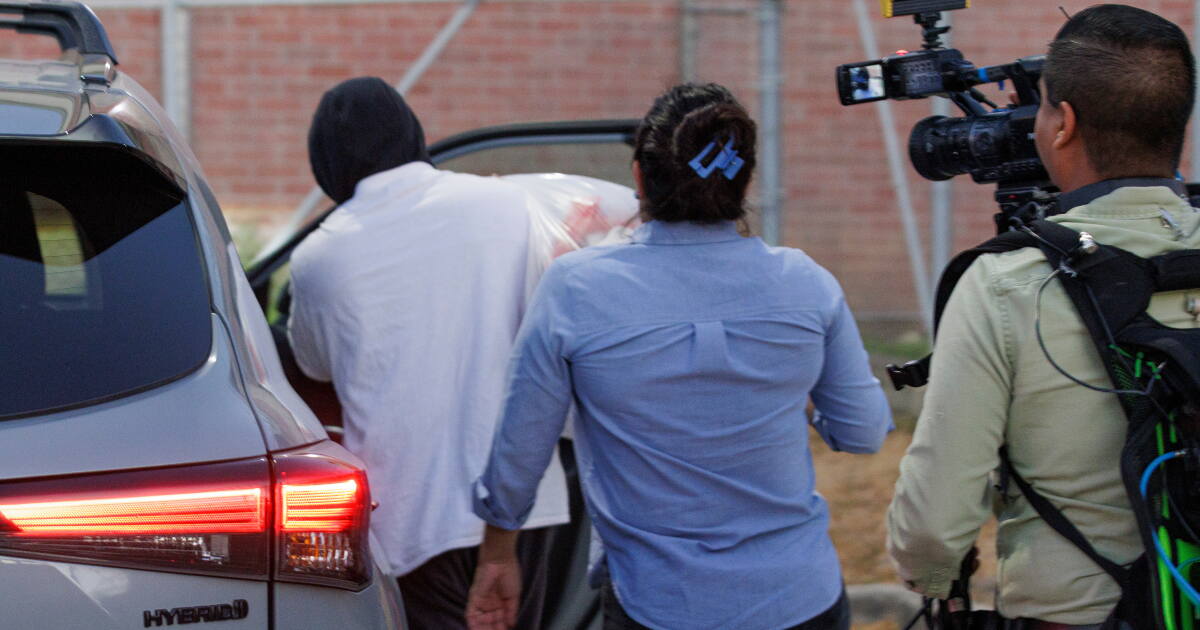
A complaint from the Justice Department said Heifler was charged as a result of an undercover operation by the New York Police Department. He was arrested Thursday night.

NYPD Commissioner Jessica Tisch confirmed the NYPD’s involvement in the investigation in a post on X.

“Our undercover officer identified and tracked the threat — first online and then in person — allowing us to disrupt the planned attack, take Heifler into custody, and ensure that no one was harmed,” she wrote.

“This is exactly how our intelligence and counterterrorism operation is designed to work — a sophisticated apparatus built to detect danger early and prevent violence before it reaches our streets.”

Kiswani said she won’t “stop speaking up for the people of Palestine” despite the alleged plot.

“For months, Zionist organizations like Beta and politicians like Randy Fine have encouraged violence against my family and me,” she wrote on X. “I will have more to say as additional details come to light.”

Source link

D.C. authorities hunt for two suspects after U.S. Park Police officer shot

March 24 (UPI) — Authorities in Washington, D.C., are hunting for at least two suspects after a U.S. Park Police officer was shot while on undercover duty in the nation’s capital.

The shooting occurred at about 7:30 p.m. EDT Monday near the 5000 block of Queens Stroll Place SE and the 4600 block of Hillside Road SE, the Metropolitan Police Department said in a statement.

U.S. Park Police Deputy Chief Scott Bretch told reporters in a press conference that the officer was riding in an unmarked police car as part of an ongoing U.S. Park Police investigation when the office was “ambushed” by at least two gunmen.

The officer was struck by gunfire, he said. Authorities said police did not return fire.

Bretch said the police vehicle continued down the street until it pulled over, where the wounded officer received first aid before being airlifted to the hospital with non-life-threatening injuries.

Bretch would not say what kind of investigation U.S. Park Police was working on or how the suspects fled the scene. It was unclear how many police officers were in the targeted police car.

Interim Metropolitan Police Chief Jeff Carroll said that they believe the suspects had targeted the U.S. Park Police officer in the vehicle for being law enforcement.

Authorities are searching for two suspects both described as Black males. One was dressed in a white hoodie with blue jeans, and the other was dressed all in black with a white stripe down his sleeves and pant legs.

D.C. Mayor Muriel Bowser said she had been briefed on the shooting.

“Our prayers are with the officer for a quick recovery and we are grateful for all our law enforcement officers and first responders for their quick response,” she said in a statement.

Attorney General Pam Bondi said she was also briefed on the shooting by Bowser and Carroll, stating the FBI and other federal law enforcement agencies will assist the Metropolitan Police Department “in any way we can.

“Please pray for the officer’s recovery,” she said.


Source link

Iranian authorities taunt US, Israel, EU amid strikes and assassinations | US-Israel war on Iran News

Tehran, Iran – Military and political authorities in Iran are projecting a message that “victory” is near as war with the United States and Israel continues to escalate, and air strikes and assassination attempts are reported across the country.

Massive joint US-Israeli air raids were recorded in multiple areas of the capital Tehran overnight into Sunday, and in central Iran’s Isfahan city in the morning, a day after Dezful and Andimeshk in western Khuzestan and several other cities were hit.

Recommended Stories

list of 4 itemsend of list

Israeli warplanes also conducted two separate sets of precision strikes on privately-owned residential units located in small towns in the green provinces of Gilan and Mazandaran to the north on Saturday, which appeared to be assassination attempts on officials.

Local authorities confirmed that several people were killed, but did not elaborate. Israeli and US media said a senior drone commander is believed to have been killed.

Nevertheless, top officials in Tehran said they were unyielding and focused on retaliatory attacks.

Parliament speaker and former Islamic Revolutionary Guard Corps (IRGC) commander Mohammad Bagher Ghalibaf said the fact that Iranian missiles struck Israel’s Dimona overnight shows that a “new stage of battle” has started where “Israel’s skies are defenceless”.

Majid Mousavi, aerospace commander of the IRGC, echoed the same statement about control over Israeli skies in a post on X on Saturday night, which came in response to the US and Israel declaring dominance over Iranian airspace.

“Pinpoint precision Seyed Majid, hit Dimona again,” chanted flag-waving pro-establishment supporters shown on state television broadcasts, calling on Mousavi for action.

Israel said more than 180 people were injured in Dimona, a southern city where its key nuclear facilities are also located, in addition to nearby Arad.

Ahmad-Reza Radan – Iran’s hardline police chief, who has been cited by Israeli media as being a target for assassination along with Mousavi, Ghalibaf and others – was seen briefly addressing a group of supporters in Tehran on Saturday night.

“Trump first threatened the European Union, then begged. Today, he has said he will come take Greenland if the Europeans don’t come. I want to tell the European Union that if they can’t hold on to Greenland, then send a request and we will come preserve it,” he said, followed by chants of “Alla akbar” (God is greatest).

Defence Ministry spokesman Reza Talaei-Nik said in a statement that attacks across the region will continue “until the complete halt and surrender of the enemy”.

The taunts are in line with the state’s messaging in recent days, including a written statement attributed to Mojtaba Khamenei, who was selected as the supreme leader after his father Ayatollah Ali Khamenei was assassinated on the first day of the war, but who has not been seen or heard.

The message said Iran’s enemies were being “defeated” and there is “particular unity” among supporters of the theocratic establishment.

Over the past week, the country’s top security official, commanders of the paramilitary Basij force of the IRGC, the government’s intelligence minister, and a number of other military and security personnel have been among those killed.

The government reports that a large number of residential buildings, hospitals, schools and other civilian facilities have also been impacted during the war, as state supporters control the city streets, squares and mosques to counter potential anti-government protests.

‘Say goodbye to electricity!’

The Iranian rhetoric quickly escalated on Sunday after US President Donald Trump issued a 48-hour ultimatum for Tehran to reopen the strategic Strait of Hormuz, a key water route for global energy export, or face strikes on its power plants.

In response, Iranian politicians and armed forces said they would strike back harder against the region’s energy facilities.

The IRGC-affiliated Mehr news agency released a map with graphics that showed power plants across the region, including in the United Arab Emirates, Saudi Arabia, Qatar and Kuwait, that could be attacked if Iranian facilities are hit. An accompanying message read, “Say goodbye to electricity!”

On Saturday night, state and IRGC-affiliated media circulated a different map, showing Doha and also marking the central offices of Al Jazeera network as potential targets, and said all residents of the Qatari capital were advised to evacuate immediately.

State television quickly issued a retraction and cited unnamed sources as saying the map was not official, but no explanation was provided about who circulated the image and why.

Iran war
Iranians attend the funeral ceremony of Islamic Revolutionary Guard Corps (IRGC) spokesman Ali Mohammad Naini, who was killed in US-Israeli strikes, in Tehran on March 21, 2026 [AFP]

The all-around promises of escalation, particularly around bombing electricity facilities and other critical civilian infrastructure, have created additional concerns among many Iranians about the impact on daily lives and implications on the country’s future.

“If the main power plants are bombed, it’s not going to be just a brief disruption; it could stop the flow of everything from water to gas,” a Tehran resident told Al Jazeera, asking to remain anonymous due to security concerns. “It would be foolish to just punish the population like that.”

The US-Israeli forces have also struck natural gas facilities in southern Iran and bombed fuel reserves across Tehran, but authorities said fires and damage were contained quickly without creating major disruptions.

In an Instagram post to mark Nowruz, the Persian New Year, iconic footballer and nationally respected figure Ali Daei said this year’s celebrations were different because Iran is grieving for its people killed in the war.

“Wishing for a prosperous and free Iran, away from war and bloodshed, all about welfare and calm,” he wrote, drawing the ire of a number of state media, including the IRGC-affiliated Tasnim, which criticised Daei for not specifically condemning the US and Israel.

Proclamations, warnings under blackout

Meanwhile, the internet remains cut for more than 92 million Iranians for a 23rd day, becoming the longest shutdown in the country’s history, trailed only by a 20-day blackout imposed during the killing of thousands of anti-government protesters in January.

State media outlets continue to focus on successful IRGC attacks and present Iran as a country on the brink of being recognised as a world power, as they refrain from communicating details about the US and Israeli attacks or significant damage sustained.

Alaeddin Boroujerdi, a member of the national security committee of Iran’s parliament, told the state television on Sunday that the IRGC’s overnight attacks against Israel “opened a new page in shifting the balance of power and showed the victory of the Islamic Republic in this imposed war”.

The parliamentary committee’s spokesman, Ebrahim Rezaei, stretched the same line of thinking even further, and said in a post on X that Iran should demand to become a veto-yielding permanent member of the United Nations Security Council as a condition for ending the war. The lawmaker did not say how or when he expected that to happen.

Iran’s government has also demanded war reparations and guarantees against future aggression, but the US and Israel have been pushing to overthrow the Islamic Republic that came to power in a 1979 revolution.

Intelligence authorities advised the Iranian population on Saturday that even being a member of foreign-based news and war footage channels on Telegram and all other social media outlets banned by the state could violate national security laws.

The Iranian judiciary said that such channels are considered “terrorist” outlets and that sending any videos of impact sites or armed state checkpoints on the streets to them could carry maximum penalties like confiscation of assets and even execution.

State security authorities have emphasised that anyone who engages in anti-establishment protests will be treated as an “enemy”.

Source link

Iran’s authorities showcase continuity as they back new leader during war | News

Tehran, Iran – Commanders, politicians and religious authorities in Iran are rallying around the flag and hinting at a prolonged war after Mojtaba Khamenei was selected as supreme leader as the country is under fire from the United States and Israel.

The 88-member Assembly of Experts, made up of religious leaders, approved the second son of Ayatollah Ali Khamenei as his successor after he was killed on February 28, the first day of the war. The younger Khamenei was tasked with steering the “holy establishment of the Islamic Republic”, state television said overnight into Monday.

Recommended Stories

list of 3 itemsend of list

The 56-year-old Mojtaba Khamenei has hardly made any public appearances or remarks but is believed to have acted as a powerbroker with deep connections to the Islamic Revolutionary Guard Corps (IRGC). His ascension signals continuity for the theocratic establishment that came to power after the 1979 Islamic revolution.

The IRGC, which was originally created to operate in parallel to the country’s regular army to safeguard the establishment but has since turned into a major military and economic force, was among the first to pledge allegiance to the new leader.

It said its forces are prepared to “fully obey and sacrifice for the divine commands” of Khamenei to “maintain the values of the Islamic revolution and safeguard the legacies” of the first two supreme leaders, Ali Khamenei and Ruhollah Khomeini.

The aerospace, ground, naval and other major forces of the IRGC issued separate statements of support.

The Iranian army, the high command of police and the Defence Council also said they were prepared to take orders from Mojtaba Khamenei, and Intelligence Minister Esmaeil Khatib said his selection shows that “Islamic Iran knows no dead ends and always has a bright outlook of victory.”

The powerful 12-member constitutional watchdog known as the Guardian Council called the selection of Mojtaba Khamenei a “balm for the pain” of losing his father while influential seminaries across the country and the heads of government, the judiciary and parliament issued similar statements.

Ali Larijani, the secretary of the Supreme National Security Council, appeared relatively less enthusiastic but emphasised that the process was done legally so he backs it.

“During the recent period, many negative narratives and campaigns were carried out, but the transparent and lawful process undertaken by the Assembly of Experts provided a clear response to those narratives,” he told state media in an apparent reference to media reports that he and some others were opposed to the choice.

Larijani stressed that the office of the supreme leader must be assisted by all as a “symbol of national unity” and expressed hope that during Mojtaba Khamenei’s time, “Iran is aligned with the path of development, economic conditions are improved, and more calm and welfare is provided for the people”.

All who praised the new leader referred to him as “ayatollah”, indicating that his religious standing has been upgraded from the lower rank of hojatoleslam as part of his ascension to the highest political and religious office in the country.

Hardline state-affiliated media and supporters went as far as calling him “imam”, a title used to describe significant religious figures and regularly used by state media to describe his father and Khomeini, the first supreme leader.

State television broadcast images of the news of Khamenei’s selection being announced at important mosques in Tehran, Mashhad, Isfahan and other cities across the country.

Mass text messages sent by the state to Iranians invited people to gather at Enghelab (Revolution) Square in downtown Tehran and spots in other cities on Monday afternoon to “renew the covenant with the martyred imam of the Muslim nation and pledge allegiance to the supreme leader selected by the Assembly of Experts”.

Israeli and US warplanes bombed Tehran and Isfahan in the afternoon, two days after sweeping attacks on the capital’s oil reserves and refineries left thick black smoke hanging over the city.

Rocky road ahead

The younger Khamenei faces myriad challenges, most prominently the threat of assassination in the foreseeable future as the US and Israel have promised to keep taking out Iranian leaders.

Some local and Israeli media have claimed he may have been wounded in a strike, but details were unclear. There was no clarity from officials on whether Khamenei is expected to make an appearance anytime soon.

US President Donald Trump has repeatedly said he is unhappy with the selection and will aim to kill the new leader because he wants the US to play a role in deciding Iran’s future leadership.

The younger Khamenei’s ascension suggests more hardline factions in Iran’s establishment retain power and could indicate that the government has little desire to agree to new negotiations with the US in the short term.

The commanders of the IRGC and the army have continued shooting projectiles since his selection with one IRGC commander telling state television that the country is capable of keeping up considerable attacks for at least six months.

US officials have also expressed eagerness to continue the war in pursuit of their objectives, including dismantling Iran’s nuclear and missile programmes and cutting off support to regional allies in the “axis of resistance”.

Its members – including Hezbollah in Lebanon, the Houthis in Yemen and armed groups in Iraq – released statements backing Khamenei’s selection.

Khamenei is also leading Iran at a time when the US is trying to curb its oil exports, a key revenue stream, while tightening sanctions that have heavily damaged the Iranian economy.

The Strait of Hormuz is expected to remain a flashpoint area as shipping is disrupted. Iran is also experiencing one of its highest inflation rates in decades at about 70 percent with annual food inflation rates shooting above 100 percent, according to the Statistical Centre of Iran.

The national currency is among the least valuable and most isolated in the world. The government continues to promise that Iran’s population of about 92 million people does not need to worry about shortages of essential goods like food and fuel because contingency plans are in motion.

Source link

Venezuela: Attorney General and Ombudsman Resign as Authorities Process Thousands of Amnesty Requests

Alfredo Ruiz (left), Tarek William Saab (center) and Larry Devoe (right). (AFP)

Caracas, February 27, 2026 (venezuelanalysis.com) – Venezuelan National Assembly President Jorge Rodríguez announced on Wednesday that he had received the resignations of Attorney General Tarek William Saab and Ombudsman Alfredo Ruiz. 

Both officials had been ratified in their positions in October 2024 for a seven-year term extending through 2031. Rodríguez did not specify the motives expressed by Saab and Ruiz in their resignation letters.

Following the officials’ departure, lawmakers declared a parliamentary urgency and appointed a 13-member committee tasked with selecting candidates and appointing new figures to both posts within 30 days.

In the interim, at Rodríguez’s proposal, the Venezuelan parliament appointed Saab as acting ombudsman, while naming Larry Devoe—formerly executive secretary of the National Human Rights Council—as acting attorney general.

Under normal legal procedure, Saab’s post would be temporarily filled by the deputy attorney general. However, Rodríguez explained that the position is currently vacant, requiring parliament to adopt extraordinary measures.

A lawyer by training, Tarek William Saab was part of the legal defense team for Hugo Chávez following the 1992 civil-military uprising and later represented relatives of leftist militants and guerrillas who were tortured or disappeared during the Fourth Republic period. He served as ombudsman from 2014 to 2017, when the National Constituent Assembly appointed him attorney general after the removal of his controversial predecessor Luisa Ortega Díaz.

As the country’s top prosecutor, Saab took charge of several high-profile cases, including the arrest of former Oil Minister Tareck El Aissami. Saab likewise headed Venezuela’s relations with the International Criminal Court, accusing the tribunal of “lawfare” in its investigation of human rights abuses committed by Venezuelan authorities.

Alfredo Ruiz, a professor and founding member of the social organization Red de Apoyo por la Justicia y la Paz (Support Network for Justice and Peace), had served as ombudsman since 2017.

Larry Devoe is a lawyer specializing in criminal and criminological sciences. He previously held several positions within the Ombudsman’s Office and was appointed executive secretary of the National Human Rights Council in 2014. He is currently a member of the Peace and Coexistence Program established in January by Acting President Delcy Rodríguez.

Following the temporary appointments, opposition lawmaker Henrique Capriles described Saab’s designation as acting ombudsman as “an insult to victims.”

Speaking to reporters after the legislative session, Capriles accused Saab of being “responsible for persecution and criminalization” in Venezuela and criticized his new role. 

“It is an insult to victims, to those of us who expect that public powers in this country will change—that there will be institutions serving the interests of Venezuelans and not the government,” he said.

Regarding Devoe, Capriles argued that he is “someone close to the ruling party,” adding that the country “needs a truly independent attorney general and ombudsman.”

Parliamentary commission processes amnesty requests

The resignations come amid the implementation of an Amnesty Law that has facilitated the release of detainees accused or convicted of political violence dating back to 1999. The legislation covers 13 specific periods between January 1, 1999, and 2026, mostly related to “protests and violent events.”

Jorge Arreaza, head of the National Assembly’s Special Commission for the Development and Implementation of the Amnesty Law for Democratic Coexistence, reported on Friday that 8,110 individuals have filed petitions for amnesty since the law’s approval last week.

According to the Socialist Party deputy, 223 individuals previously in prison have been released, while 4,534 people subject to parole-type measures—such as mandatory court appearances or house arrest—have been fully cleared.

Far-right politicians Freddy Superlano and Juan Pablo Guanipa, both accused by authorities of terrorism and criminal conspiracy, were among those released in recent days.

In total, 4,757 individuals have benefited from the law to date, according to Venezuelan officials. Arreaza added that Venezuela’s justice system remains on permanent alert to expedite procedures for cases that qualify for amnesty.

Edited by Ricardo Vaz in Caracas.

Source link