attack

Israeli attack on Palestinian refugee camp in Lebanon kills at least 13 | Israel attacks Lebanon News

Israel continues to attack Lebanon on a near-daily basis in violation of a yearlong ceasefire with Hezbollah.

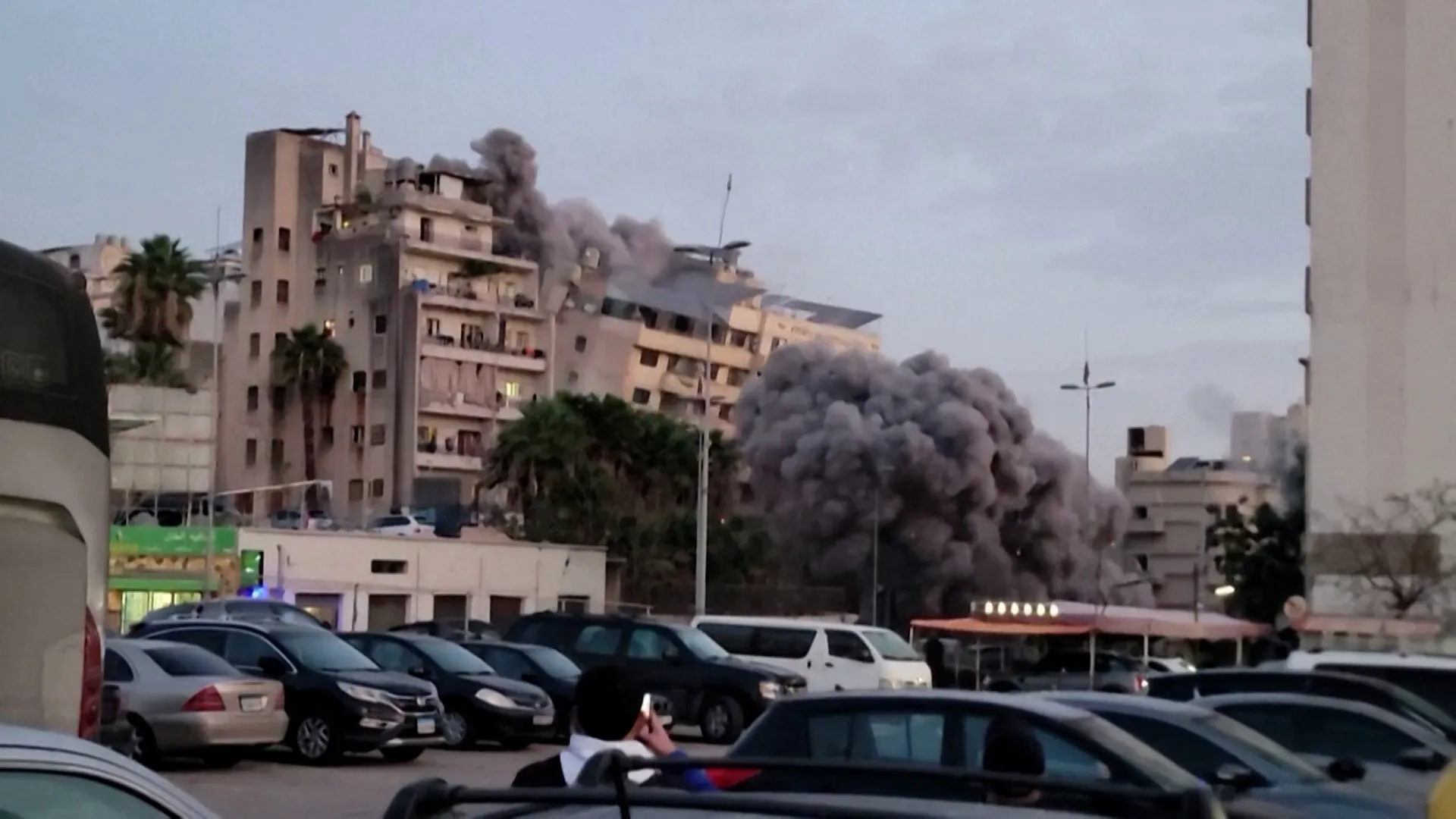
At least 13 people have been killed in an Israeli air strike on a Palestinian refugee camp in southern Lebanon, according to the Lebanese Ministry of Public Health.

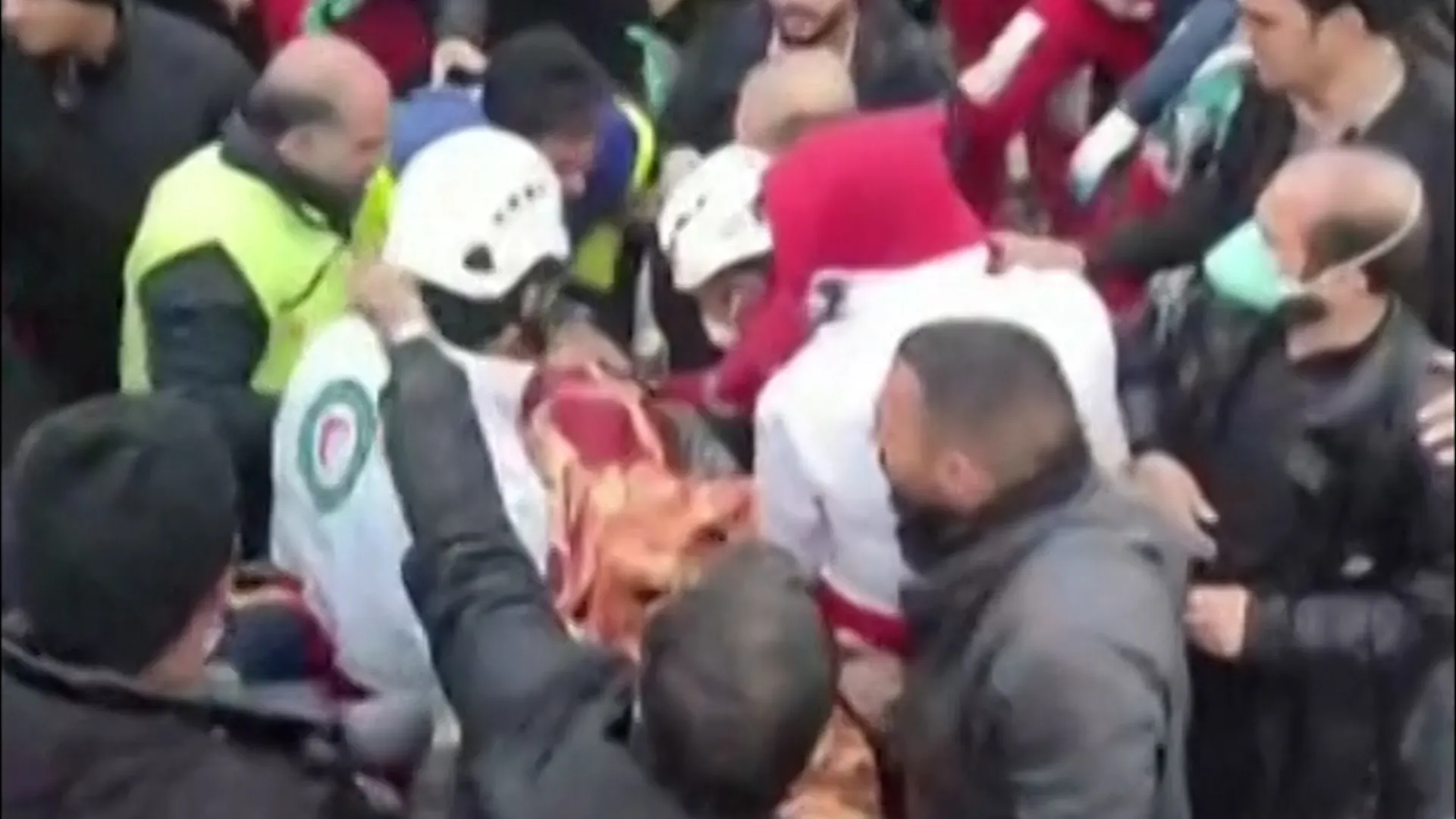
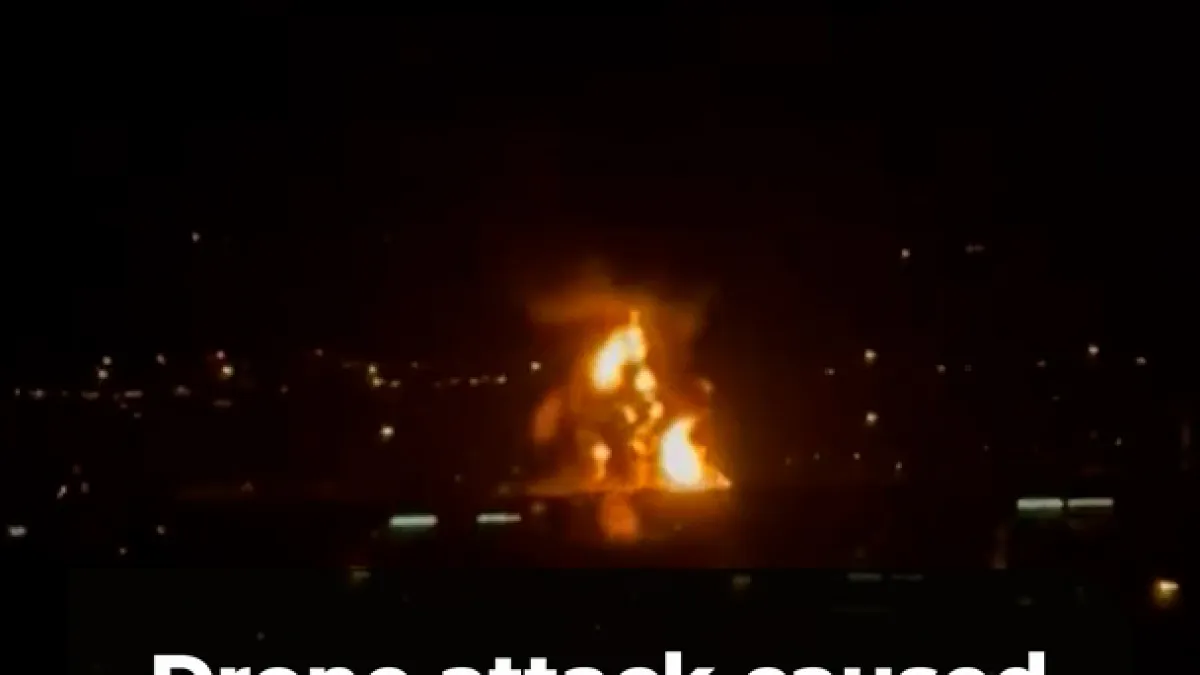
The drone strike hit a car on Tuesday in the car park of a mosque in the Ein el-Hilweh refugee camp on the outskirts of the coastal city of Sidon, the Lebanese state-run National News Agency reported.

At least four people were wounded in the attack, the ministry said, adding that “ambulances are still transporting more wounded to nearby hospitals.”

Israel said it struck members of the Palestinian armed group Hamas who were operating in a training compound in the refugee camp.

“When we say we will not tolerate any threat on our northern border, this means all terrorist groups operating in the region,” the Israeli military’s Arabic spokesperson Avichay Adraee said in a statement. “We will continue to act forcefully against Hamas’s attempts to establish a foothold in Lebanon and eliminate its elements that threaten our security.”

Hamas denied Israel’s claim, calling it a “fabrication” and stressing the group doesn’t have training facilities in Lebanon’s refugee camps.

“The Zionist bombardment was a barbaric aggression against our innocent Palestinian people as well as Lebanon’s sovereignty,” it said in a statement.

Earlier on Tuesday, Lebanon said Israeli strikes on cars elsewhere in the country’s south killed two people.

Israel has killed several officials from Palestinian factions including Hamas in Lebanon since it launched its war on Gaza in October 2023 after Hamas led an attack on southern Israel

Israel’s war on Gaza has killed at least 69,483 Palestinians and wounded 170,706. A total of 1,139 people were killed in Israel during the October 7, 2023, Hamas-led attacks, and more than 200 were taken captive.

A day after Israel launched its war on Gaza, Hezbollah began firing rockets towards Israel, which responded with shelling and air strikes in Lebanon, and the two sides became locked in a conflict that Israel escalated into a full-blown war in late September 2024.

Israel’s war killed more than 4,000 people in Lebanon, including hundreds of civilians. In Israel, 127 people were killed, including 80 soldiers.

The war halted in late November 2024 with a United States-brokered ceasefire, but since then, Israel has carried out dozens of air attacks on Lebanon, accusing Hezbollah of trying to rebuild its capabilities.

Lebanon’s Health Ministry has reported more than 270 people killed and about 850 wounded by Israeli military actions since the ceasefire.

“There are daily violations of the ceasefire by Israel in Lebanon, and it would be unfair at this stage to pin the blame on the Lebanese government,” Lebanese political analyst Karim Emile Bitar told Al Jazeera. “The Lebanese government went above and beyond what was required … and took a historic decision to ask the Lebanese army to disarm Hezbollah.”

However, Bitar said, Israel has not lived up to its end of the bargain. Under the terms of the ceasefire signed on November 27, 2024, Israel was meant to withdraw its forces from southern Lebanon by January 26, a deadline it missed.

Source link

David Attenborough’s ‘saddest TV moment ever’ will leave fans shaken after brutal attack

The fourth episode in the series, airing on Sunday nights, has a devastating story about the wild dogs of the Nsefu park, Zambia

Sir David Attenborough’s landmark BBC series Kingdom is to show one of the most heart-wrenching stories in the history of wildlife programming – involving a wild dog in a valiant fight with a crocodile.

But when it airs later this month viewers will also learn how the pack of dogs, followed by cameras for five years at the Nsefu park in Zambia, have a bond so strong that members are willing to risk their own lives in a rescue attempt.

In the episode, the audience learns how three-legged Flint lost his hind limb in a poacher’s trap, meaning he is slower than the rest of the dogs and no longer able to hunt effectively. For safety, he has rejoined the pack led by his mother and matriarch, Storm, where he is looked after and fed in return for other duties – like watching over her latest litter of 11 pups.

READ MORE: Strictly’s Balvinder admits ‘struggle’ in face of ongoing dance off hellREAD MORE: Mary Berry reveals her husband of 60 years prefers another cook’s recipes

“Few animals have stronger bonds than wild dogs,” Sir David says in his narration. But when they go to the river to drink he warns that the pack “needs to be careful” – just moments before poor Flint is dragged into the water by a hidden crocodile, which holds him in a vice-like grip.

The whole attack is caught on camera from 20 feet away. Showing just how strong the pack bond is, Storm and one of Flint’s brothers risk their own lives by grabbing hold of him and trying to wrench his body free – but their efforts are futile. “The crocodile’s grip is unbreakable,” Sir David tells viewers.

There is some joy for the audience when – after being held in the water for several agonising minutes – Flint somehow manages to get away. “Astonishingly, Flint finds the strength to escape and his brother continues to protect him,” Sir David says, as poor Flint drags himself out of the water and up the river bank.

But any happiness is short-lived when it emerges the wounds inflicted by the croc will prove fatal. “Flint has been gravely injured,” Sir David says sadly. “The family don’t leave Flint’s side until he has taken his final breath.”

Wild dogs producer Anna Place told the Mirror that no crew had ever previously filmed a pack trying to pull one of their own out of the jaws of a crocodile. She said the footage still made her emotional despite having watched it repeatedly. “I couldn’t tell you how many times I’ve seen that footage but Storm’s pack trying to save him, and standing there looking so forlorn, it really gets me still, every time.”

She said that having lost his leg he was not as equipped to deal with the wild dog life as the others – but that didn’t mean they gave up on him. “Flint was not the best hunter because of his injury but he’s still a valuable member of the pack that they would risk their own lives over.

“The behaviour of the pack is astonishing. We knew wild dogs had a strong bond but to actually see it and capture it on film in that way was something I couldn’t have imagined. I just think they are amazing animals.

“It’s very moving and very powerful visually. The audience can see for themselves that it looks like those animals genuinely care about each other. And having spent several years with that pack, that is definitely the feeling I’ve come away with. They will put themselves in danger to try and rescue one of their own.”

She said cameraman Mark MacEwan had found it to be one of the toughest things he’d filmed. “He was working on the series from the very beginning so he’d got to know the animals and it’s really hard when something tragic like that happens,” she explained. “I believe he found it very difficult but he did an incredible job to cover it in the way that he did.”

Anna hopes the BBC audience will find uplifting elements amid the tragedy. “Those who have connected with the animal characters we follow will find it sad but it also shows how caring the wild dogs are and how important the pack are to each other. I hope people come away with a renewed love for the wild dogs.”

  • Kingdom continues on BBC1, Sunday, 6.20pm

Like this story? For more of the latest showbiz news and gossip, follow Mirror Celebs on TikTok, Snapchat, Instagram, Twitter, Facebook, YouTube and Threads.


Source link

Indian authorities make arrest in Red Fort car terrorist attack

Authorities on Sunday said an arrested has been made in Nov. 10’s terrorist attack near the Red Fort in New Delhi, India, that killed 10 people. Photo by Rajat Gupta/EPA

Nov. 17 (UPI) — Indian authorities have arrested a man whose vehicle was used in last week’s Red Fort car bombing attack that killed 10 people and injured 32 others.

In a statement Sunday, India’s National Investigation Agency said Amir Rashid Ali was arrested in Delhi by NIA agents in a massive search operation.

Authorities identified the accused as a resident of Pampore in Muslim-majority Kashmir, a disputed region under Hindu-majority India control.

The NIA accused Ali of conspiring with the alleged suicide bomber Umar Un Nabi in the attack, which occurred Nov. 10 near the tourist-heavy and crowded Red Fort in New Delhi.

Authorities and officials were initially reluctant to label the attack but have since said it was terror-related. Two days after the attack, the Cabinet of Prime Minister Narendra Modi passed a resolution stating it was “a heinous terrorist incident, perpetrated by anti-national forces.”

Authorities said the attack, which occurred at about 7 p.m. local time, was carried out with a Hyundai i20.

Nabi, a resident of Pulwama, in Kashmir, has been forensically identified as the deceased driver of the car, NIA said Sunday. He was identified as an assistant professor in general medicine at Al Falah University.

A vehicle belonging to Nabi has also been seized and is being examined for evidence.

Seventy-three people have so far been questioned, including those injured in the blast, the NIA said. The investigation is being conducted across multiple states.

Source link

Most advanced U.S. aircraft carrier arrives in Caribbean in major buildup near Venezuela

The nation’s most advanced aircraft carrier arrived in the Caribbean Sea on Sunday in a display of U.S. military power, raising questions about what the new influx of troops and weaponry could signal for the Trump administration’s drug enforcement campaign in South America.

The arrival of the USS Gerald R. Ford, announced by the U.S. military in a news release, marks a major moment in what the Trump administration says is an antidrug operation but has been seen as an escalating pressure tactic against Venezuelan President Nicolás Maduro. Since early September, U.S. strikes have killed at least 80 people in 20 attacks on small boats accused of transporting drugs in the Caribbean and eastern Pacific Ocean.

The Ford rounds off the largest buildup of U.S. firepower in the region in generations, bringing the total number of troops to around 12,000 on nearly a dozen Navy ships in what Defense Secretary Pete Hegseth has dubbed Operation Southern Spear.

The Ford’s carrier strike group, which includes squadrons of fighter jets and guided-missile destroyers, transited the Anegada Passage near the British Virgin Islands on Sunday morning, the Navy said in a statement.

Rear Adm. Paul Lanzilotta, who commands the Ford’s carrier strike group, said it will bolster an already large force of American warships to “protect our nation’s security and prosperity against narco-terrorism in the Western Hemisphere.”

The administration has maintained that the buildup of warships is focused on stopping the flow of drugs into the U.S., but it has released no evidence to support its assertions that those killed in the boats were “narco-terrorists.” An Associated Press report recently found that those killed included Venezuelan fishermen and other impoverished men earning a few hundred dollars per trip.

President Trump has indicated military action would expand beyond strikes by sea, saying the U.S. would “stop the drugs coming in by land.”

The U.S. has long used aircraft carriers to pressure and deter aggression by other nations because their warplanes can strike targets deep inside another country. Some experts say the Ford is ill-suited to fighting cartels, but it could be an effective instrument of intimidation for Maduro in a push to get him to step down.

Secretary of State Marco Rubio says the United States does not recognize Maduro, who was widely accused of stealing last year’s election, as Venezuela’s legitimate leader. Rubio has called Venezuela’s government a “transshipment organization” that openly cooperates with those trafficking drugs.

Maduro, who faces charges of narco-terrorism in the U.S., has said the government in Washington is “fabricating” a war against him. Venezuela’s government recently touted a “massive” mobilization of troops and civilians to defend against possible U.S. attacks.

Trump has justified the attacks on drug boats by saying the U.S. is in “armed conflict” with drug cartels while claiming the boats are operated by foreign terrorist organizations.

He has faced skepticism and opposition from leaders in the region, the United Nations human rights chief and U.S. lawmakers, including Republicans, who have pressed for more information on who is being targeted and the legal justification for the boat strikes.

Senate Republicans, however, recently voted to reject legislation that would have put a check on Trump’s ability to launch an attack against Venezuela without congressional authorization.

Experts disagree on whether or not American warplanes may be used to strike land targets inside Venezuela. Either way, the 100,000-ton warship is sending a message.

“This is the anchor of what it means to have U.S. military power once again in Latin America,” said Elizabeth Dickinson, the International Crisis Group’s senior analyst for the Andes region. “And it has raised a lot of anxieties in Venezuela but also throughout the region. I think everyone is watching this with sort of bated breath to see just how willing the U.S. is to really use military force.”

Finley writes for the Associated Press.

Source link

Israeli settler attack on West Bank mosque draws international condemnation | Israel-Palestine conflict News

An Israeli settler arson attack on a mosque in the occupied West Bank has drawn international condemnation, as a wave of intensified violence against Palestinians continues unabated across the area.

Israeli settlers set fire to the Hajja Hamida Mosque in the Palestinian village of Deir Istiya, near Salfit in the north of the West Bank, around dawn on Thursday, local residents told Al Jazeera.

Recommended Stories

list of 3 itemsend of list

Photographs taken at the scene showed racist, anti-Palestinian slogans sprayed on the walls of the mosque, which was damaged in the blaze. Copies of the Quran – the Islamic holy book – were also burned.

The Palestinian Ministry of Religious Endowments and Affairs condemned what it said was a “heinous crime” that highlights “the barbarity” with which Israel treats Muslim and Christian holy sites in the occupied Palestinian territory.

Separately, two Palestinian children were killed on Thursday when Israeli forces opened fire during a raid in the town of Beit Ummar, near Hebron in the southern West Bank, the Wafa news agency reported.

The violence comes amid a record-setting number of Israeli settler and military attacks on Palestinians across the West Bank so far this year, with many of the assaults taking place in the context of the 2025 olive harvest.

At least 167 settler attacks related to the olive harvest were reported since October 1, the United Nations’ humanitarian agency (OCHA) said in its latest update this week. More than 150 Palestinians have been injured in those assaults, while more than 5,700 trees have also been damaged.

Experts say Israeli attacks in the West Bank have increased in the shadow of Israel’s war on Gaza, which has killed more than 69,000 Palestinians in the coastal enclave since October 2023.

They also come as members of Israeli Prime Minister Benjamin Netanyahu’s far-right government are pushing to formally annex the area. Rights groups say Israel already maintains a system of de facto annexation and apartheid in the West Bank.

The UN human rights office warned in July that the settler violence was being carried out “with the acquiescence, support, and in some cases participation, of Israeli security forces”.

Settler and military attacks, it said, “are part of a broader and coordinated strategy of the State of Israel to expand and consolidate annexation of the occupied West Bank, while reinforcing its system of discrimination, oppression and control over Palestinians there”.

‘Completely unacceptable’

Thursday’s attack on the mosque in Deir Istiya prompted an outpouring of international condemnation.

A spokesman for UN chief Antonio Guterres said the international body was “deeply disturbed” by the assault. “Such attacks on places of worship are completely unacceptable,” Stephane Dujarric told reporters during a briefing at the UN headquarters in New York.

A Palestinian man holds a scorched fragment of a Koran page inside the Hajja Hamida Mosque after it was reportedly set on fire and vandalised by Israeli settlers in the Palestinian village of Deir Istiya, near Salfit in the Israeli-occupied West Bank, on November 13, 2025.
A Palestinian man holds a scorched fragment of a Quran page inside the mosque that was attacked in Deir Istiya [AFP]

“We have and will continue to condemn attacks by Israeli settlers on Palestinians and their property in the West Bank,” Dujarric said.

“Israel, as the occupying power, has a responsibility to protect the civilian population and ensure that those responsible for these attacks, including this attack on a mosque and the spray-painting of horrendous language on the mosque, be brought to account.”

Jordan’s Ministry of Foreign Affairs also “strongly condemned” the rise in Israeli settler attacks, according to a statement shared by the Palestinian news agency Wafa.

A Jordan Foreign Ministry spokesman described the violence as “an extension of the Israeli government’s extremist policies and inflammatory rhetoric that fuel violence and extremism against the Palestinian people”.

Germany, which has faced criticism for defending Israel amid the Gaza war, also called for a halt to settler violence, saying the “incidents must be thoroughly investigated and those responsible held accountable”.

The Swiss Foreign Ministry likewise said recent Israeli arson attacks in the West Bank “are unacceptable”. “This violence and the continued expansion of illegal settlements must stop,” it said in a statement.

Palestinians stand next to scorched copies of the Koran inside in the Hajja Hamida Mosque after it was reportedly set on fire and vandalised by Israeli settlers in the Palestinian village of Deir Istiya, near Salfit in the Israeli-occupied West Bank, on November 13, 2025.
Palestinians stand next to scorched copies of the Quran at the mosque [AFP]

Palestinians have urged world leaders to go beyond words, however, and take concrete action against Israel amid the wave of violence in the West Bank and Gaza Strip, including by ending weapons transfers to the Israeli military.

In a separate incident last week, Israeli settlers set fire to a Palestinian home in the village of Khirbet Abu Falah, near Ramallah, while a family was inside, the UN’s humanitarian office reported.

“As the flames spread, the family immediately evacuated while neighbours and civil defence teams rushed to the scene and managed to extinguish the fire. The mother sustained a leg fracture while running away from the settlers,” OCHA said.

Source link

10 years after Paris terror attacks, stadium security guard says he’s ‘more victim than hero’

Salim Toorabally’s mental scars from the Paris terror attacks 10 years ago have not healed with time and the images of that night at Stade de France remain indelible.

The November 2015 attacks began at France’s national stadium and spread across the city in assaults that killed 132 people and injured more than 400. One person died and least 14 were injured outside Stade de France that night, but casualties there could have been far heavier without Toorabally’s vigilance.

It was Toorabally who stopped Bilal Hadfi — one of the three terrorist bombers who targeted the national stadium when France’s soccer team played Germany — from getting inside.

Toorabally was praised for his actions, by then-President François Hollande, by the Interior Ministry and also by the general public. Yet his own suffering, unrelenting since that night, went unnoticed.

“I was seen more as a hero than as a victim,” Toorabally told the Associated Press in a recent interview. “But this part of being a victim is equally inside me.”

Later on Thursday, France played Ukraine in a World Cup qualifier at the Parc des Princes stadium in Paris, where a commemoration was planned and Toorabally was invited by the French Football Federation.

“I will be there but with a heavy heart,” he said. “Ten years have passed like it was yesterday we were attacked.”

Stopping the bomber

Toorabally was positioned at Gate L as a stadium security agent.

Hadfi tried to enter but was stopped by Toorabally when he spotted him trying to tailgate another fan through the turnstile.

“A young man showed up. He was sticking close behind someone, moving forward without showing his ticket. So I said to him, ‘Sir, where are you going? Show me your ticket.’ But he just kept going, he wasn’t listening to me,” Toorabally told the AP. “So I put my arm out, put my arm in front of him so he couldn’t go inside, and then he said to me, ‘I have to get in, I have to get in.’ It made me suspicious.”

Toorabally kept an eye on the 20-year-old Hadfi, who was now standing back a few yards away.

“He positioned himself right in front of me, he was watching me work and I alerted [fellow security agents] over the radio: ‘Be careful at every gate, there’s a young man dressed in black with a young face, very childlike, who is trying to get in. Do not let him in,’” Toorabally recalled. ”He stood in front of me for about 10 minutes, watching me work, and that’s when I got really scared. I was worried he’d go back in, that I wouldn’t see him. I watched him intently, he stared at me intently and suddenly he disappeared in the crowd, he slipped away.”

Toorabally’s warning worked. Hadfi was denied entry elsewhere, before later detonating his explosive vest.

The explosions

There were two explosions close together during the first half of the match; the first ones around 9:20 p.m. near Gate D, and a third explosion approaching 10 p.m. close to a fast food outlet.

Toorabally vividly remembers them.

“I could feel the floor shaking,” he said. “There was a burning smell rising into the air, different to the smell of [smoke] flares.”

He also tended to a wounded man that night.

“I took charge of him, I lay the individual down. He had like these bolts [pieces of metal] lodged in his thigh,” said Toorabally, who still speaks to the man today. “I looked at my hands, there was blood. I didn’t have gloves on, and there were pieces of flesh in my hands.”

Keeping fans in the dark

Toorabally said he and other security agents were told not to inform spectators of the attack, to prevent a potential situation where 80,000 people tried leaving at the same time.

“The supporters inside couldn’t know the Stade de France had been attacked otherwise it would have caused enormous panic,” Toorabally explained. “At halftime some fans came up to us and asked, ‘What happened? Was there a gas explosion at the restaurants in front of the stadium?’ We didn’t answer them so as not to cause panic.”

After the game the stadium announcer told spectators which exit gates to use and many went home by train, including Toorabally.

Traumatic images

Five days after the attack he was called to a police station to help identify Hadfi as one of the bombers. Toorabally was given no forewarning of what he was about to see.

“They showed me a photo, his [Hadfi’s] head was separated from his body. The forensic police [officer] was holding his head,” Toorabally said. “I formally recognized him. It was indeed the man who had been in front of me, who had stood there, who had been alive and was now lifeless.”

Hadfi’s face remains imprinted on Toorabally’s mind.

“The image is very violent, someone’s head separated from his body. Then there’s the explosion, the odor of burning and my hand filled with human flesh. These images have stayed in my mind for 10 years.”

Toorabally‘s wage that night was 40 euros ($46). “I suffer from post-traumatic stress, it is very severe, very violent.”

Horrific memories can appear at any moment.

“I could be with you and talking with you and then all of sudden my mind goes back there,” Toorabally said. “This is something very, very difficult to deal with. It handicaps you.”

Talking helps

Toorabally talks to a psychiatrist and says it helps to tell people about what happened. But at the time of the attacks and in the months afterward he received no psychological support.

“That’s how traumatism sets in,” Toorabally said. “The proof being it stayed 10 years.”

He dealt with his mental anguish alone, having potentially saved hundreds of lives.

“Every time I go back to the Stade de France, I can’t help thinking about it,” Hollande told L’Équipe newspaper. “I realize what could have happened if an attack had taken place inside the stadium, or if panic had gripped the crowd.”

Former France midfielder Blaise Matuidi called Toorabally “more than a hero” and added “if the terrorists had entered, what would have happened? Just talking about it gives me chills.”

Pugmire writes for the Associated Press.

Source link

Detained British Muslim commentator Sami Hamdi agrees to leave U.S.

British political commentator Sami Hamdi is going to voluntarily leave the U.S. after spending more than two weeks in immigration detention over what his supporters say was his criticism of Israel. The Trump administration has accused him of cheering on Hamas.

Hamdi, who is Muslim, was on a speaking tour in the U.S. when he was arrested by Immigration and Customs Enforcement on Oct. 26. He had just addressed the annual gala for the Sacramento chapter of the Council on American-Islamic Relations, or CAIR, the day before his arrest.

In a statement late Monday, the organization said Hamdi had “chosen to accept an offer to leave the United States voluntarily.”

“It is this simple: Sami never should have spent a single night in an ICE cell. His only real ‘offense’ was speaking clearly about Israel’s genocidal war crimes against Palestinians,” said the chief executive of CAIR’s California chapter, Hussam Ayloush, in a statement.

Hamdi’s detention was part of broader efforts by the Trump administration to identify and potentially expel thousands of foreigners in the United States who it says have either fomented or participated in unrest or publicly supported protests against Israel’s military operations in Gaza.

Those enforcement actions have been criticized by civil rights groups as violations of constitutional protections for freedom of speech, which apply to anyone in the United States and not just to American citizens.

Zahra Billoo, executive director of CAIR’s San Francisco office, said Tuesday that the logistics of Hamdi’s departure were still being worked out but that it might happen later this week. Billoo said there were “no conditions to the voluntary departure” and that he’s not barred from seeking another U.S. visa in the future.

CAIR said Hamdi’s charging document in immigration court did not accuse him of criminal conduct or security concerns but only listed a visa overstay, which they blamed on the government revoking his visa.

Tricia McLaughlin, a Department of Homeland Security spokeswoman, said in a statement Tuesday that Hamdi had requested voluntary departure and “ICE is happily arranging his removal from this country.”

The State Department said due to “visa record confidentiality,” it could not comment on specific cases.

CAIR has said that Hamdi, 35, was detained in response to his vocal criticism of the Israeli government during a U.S. speaking tour.

The Department of Homeland Security said at the time of Hamdi’s arrest that the State Department had revoked his visa and that ICE had put him in immigration proceedings. Homeland Security later accused him of supporting the Hamas-led Oct. 7, 2023, attack in Israel.

In a statement at the time, McLaughlin cited remarks he made in a video posted online shortly after the Hamas-led attack in which he asked: “How many of you felt it in your hearts when you got the news that it happened? How many of you felt the euphoria? Allah akbar.”

Hamdi said later his intent was not to praise the attacks but to suggest that the violence was “a natural consequence of the oppression that is being put on the Palestinians.”

The State Department has not said specifically what Hamdi said or did that initiated the revocation but in a post on X the department said: “The United States has no obligation to host foreigners” whom the administration deems to “support terrorism and actively undermine the safety of Americans. We continue to revoke the visas of persons engaged in such activity.”

Santana writes for the Associated Press.

Source link

Venezuela prepares ‘massive deployment’ of forces in case of US attack | Nicolas Maduro News

Arrival of US aircraft carrier off Latin America fuels speculation that US could try to overthrow Venezuelan government.

The Venezuelan government has said it is preparing its armed forces in the event of an invasion or military attack by the United States.

A statement shared by Minister of People’s Power for Defence Vladimir Padrino on Tuesday said that the preparations include the “massive deployment of ground, aerial, naval, riverine and missile forces”, as well as the participation of police, militias and citizens’ units.

Recommended Stories

list of 3 itemsend of list

The announcement comes as the arrival of a US aircraft carrier in the region fuels speculation of possible military action aimed at collapsing the government of Venezuelan President Nicolas Maduro, a longtime US rival.

Tensions between the two countries have escalated since the return of US President Donald Trump for a second term in January.

On Tuesday, the Pentagon confirmed that the Gerald R Ford Carrier Strike Group — which includes the world’s largest aircraft carrier — had arrived in the Caribbean Sea, bearing at least 4,000 sailors as well as “tactical aircraft”.

In recent weeks, the US government has also surged troops to areas near the Caribbean, including Puerto Rico, El Salvador, Panama and Trinidad and Tobago, for training exercises and other operations.

The Trump administration has framed such deployments as necessary “to disrupt illicit drug trafficking and protect the homeland”. Trump officials have also accused Maduro of masterminding the activities of Tren de Aragua, a Venezuelan gang with a relatively modest presence in the US.

But Maduro and his allies have accused the US of “imperialistic” aims.


Questions remain, however, about whether Venezuela is equipped to fend off any US military advances.

Experts say the Maduro government has sought to project an image of military preparedness in the face of a large buildup of US forces in the Caribbean, but it could face difficulties from a lack of personnel and up-to-date equipment.

While the government has used possible US intervention to rally support, Maduro is also struggling with widespread discontent at home and growing diplomatic isolation following a contested election in 2024, marred by allegations of widespread fraud and a crackdown on protesters.

The military buildup in the Caribbean region began after the start of a series of US military strikes on September 2.

The US has carried out at least 19 air strikes against alleged drug-trafficking vessels in the Caribbean and eastern Pacific Ocean, killing approximately 75 people.

Trump has suggested that land strikes “are going to be next”. But when asked in late October whether he was considering attacks within Venezuela, Trump replied, “No”.

Legal experts say that a military attack on Venezuela would likely violate international law, and recent polling from the research firm YouGov suggests that about 47 percent of people in the US would oppose land attacks on Venezuelan territory. About 19 percent, meanwhile, say they would support such attacks.

While Venezuela’s armed forces have expressed support for Maduro and said they would resist a US attack, the Reuters news agency has reported that the government has struggled to provide members of the armed forces with adequate food and supplies.

The use of additional paramilitary and police forces could represent an effort to plug the holes in Venezuela’s lacklustre military capacity. Reuters reported that a government memo includes plans for small units at about 280 locations, where they could use sabotage and guerrilla tactics for “prolonged resistance” against any potential US incursion.

Source link

How Trump’s support for a white minority group in South Africa led to U.S. boycott of G-20 summit

President Trump says that his government will boycott the Group of 20 summit this month in South Africa over his claims that a white minority group there is being violently persecuted. Those claims have been widely rejected.

Trump announced Friday on social media that no U.S. government official will attend the Nov. 22-23 summit in Johannesburg “as long as these Human Rights abuses continue.” South Africa’s Black-led government has been a regular target for Trump since he returned to office.

In February, Trump issued an executive order stopping U.S. financial assistance to South Africa, citing its treatment of the Afrikaner white minority. His administration has also prioritized Afrikaners for refugee status in the U.S. and says they will be given most of the 7,500 places available this fiscal year.

The South African government — and some Afrikaners themselves — say Trump’s claims of persecution are baseless.

Descendants of European settlers

Afrikaners are South Africans who are descended mainly from Dutch but also French and German colonial settlers who first came to the country in the 17th century.

Afrikaners were at the heart of the apartheid system of white minority rule from 1948-94, leading to decades of hostility between them and South Africa’s Black majority. But Afrikaners are not a homogenous group, and some fought against apartheid. There are an estimated 2.7 million Afrikaners in South Africa’s population of 62 million.

Afrikaners are divided over Trump’s claims. Some say they face discrimination, but a group of leading Afrikaner business figures and academics said in an open letter last month that “the narrative that casts Afrikaners as victims of racial persecution in post-apartheid South Africa” is misleading.

Afrikaners’ Dutch-derived language is widely spoken in South Africa and is one of the country’s 12 official languages. Afrikaners are represented in every aspect of society. Afrikaners are some of South Africa’s richest entrepreneurs and some of its most successful sports stars, and also serve in government. Most are largely committed to South Africa’s multiracial democracy.

Trump claims they’re being ‘killed and slaughtered’

Trump asserted that Afrikaners “are being killed and slaughtered, and their land and farms are being illegally confiscated.” The president’s comments are in reference to a relatively small number of attacks on Afrikaner farmers that he and others claim are racially motivated.

Trump has also pointed to a highly contentious law introduced by the South African government that allows land to be appropriated from private owners without compensation. Some Afrikaners fear that law is aimed at removing them from their land in favor of South Africa’s poor Black majority. Many South Africans, including opposition parties, have criticized the law, but it hasn’t led to land confiscations.

Trump first made baseless claims of widespread killing of white South African farmers and land seizures during his first term in response to allegations aired on conservative media personality Tucker Carlson’s former show on Fox News. Trump ordered then-U.S. Secretary of State Mike Pompeo to look into the allegations, but nothing came of any investigation.

South Africa rejects the claims

The South African government said in response to Trump’s social media post that his claims were “not substantiated by fact.” It has said that Trump’s criticism of South Africa over Afrikaners is a result of misinformation because it misses the context that Black farmers and farmworkers are also killed in rural attacks, which make up a tiny percentage of the country’s high violent crime rate.

There were more than 26,000 homicides in South Africa in 2024. Of those, 37 were farm murders, according to an Afrikaner lobby group that tracks them. Experts on rural attacks in South Africa have said the overriding motive for the violent farm invasions is robbery, not race.

Other pressure on South Africa

Trump said it is a “total disgrace” that the G-20 summit — a meeting of the leaders of the 19 top rich and developing economies, the European Union and the African Union — is being held in South Africa. He had already said he wouldn’t attend, and Vice President JD Vance was due to go in his place. The U.S. will take on the rotating presidency of the G-20 after South Africa.

Trump also said in a speech last week that South Africa should be thrown out of the G-20.

Trump’s criticism of Africa’s most developed economy has gone beyond the issue of Afrikaners. His executive order in February said South Africa had taken “aggressive positions towards the United States and its allies,” specifically with its decision to accuse Israel of genocide against Palestinians in Gaza at the United Nations’ top court.

U.S. Secretary of State Marco Rubio boycotted a G-20 foreign ministers meeting in South Africa in February after deriding the host country’s G-20 slogan of “solidarity, equality and sustainability” as “DEI and climate change.”

Imray writes for the Associated Press.

Source link

Israeli settlers attack journalists at olive harvest in occupied West Bank | Occupied West Bank

NewsFeed

Israeli settlers have attacked Palestinian villagers, activists, and journalists, including Reuters reporter Raneen Sawafta, near Nablus. The assault is the latest in a surge of settler violence across the occupied West Bank during the olive harvesting season, with over 760 attacks recorded in October.

Source link

Woman critical after ‘unprovoked attack’

Chloe Hughes and

Amy Cole,Birmingham

BBC A wet road at night taped off by white and blue police tape. Police officers in yellow hi vis jackets and black hats are standing next to it. There is a blue and white West Midlands police tent on the pavement on the left.
BBC

Police were called just before 21:00 GMT on Friday

A woman is in a critical condition after being stabbed in the neck in an “unprovoked attack” in Birmingham city centre.

A man in his 20s has been arrested on suspicion of attempted murder after the attack on Friday night.

West Midlands Police said officers were called to Smallbrook Queensway shortly before 21:00 GMT.

A woman in her 30s suffered a serious neck injury and is in hospital in a critical condition, the force said.

It said a man was arrested close to the scene and remained in custody.

A blue tent on a pavement, surrounded by blue and white police tape. There are two police officers in yellow hi-vis and a black hat standing as scene guards. There is a bus driving past

Officers remain in the area, where a cordon is in place

Officers are currently carrying out inquiries near the scene, which is in an extremely busy part of the city centre near to the Bullring shopping centre.

A police tent remains on the pavement, just outside the Bullring and opposite the main entrance to New Street railway station.

“We believe this was an unprovoked attack and are working to understand why it happened,” said Det Insp James Nix.

“We will have officers in the area today to continue our investigation and provide reassurance.

“We are not currently looking for anyone else in connection with this incident.”

Red and white blocks are blocking a pavement. There is blue and white police tape cordoning off a bus stop and a blue tent.

Police said they believed the attack was unprovoked

The force has appealed for witnesses, and urged anyone who knows more to contact 101.

St Martin’s Queensway westbound has been closed from Moor Street Queensway to Smallbrook Queensway.

Buses are being diverted onto Moor Street.

The cordon is expected to be in place all day, the BBC has been told.

Source link

California D.A. retweets 9/11 attack images as he slams Mamdani

A California district attorney reposted on social media 9/11 images along with comments blasting the election of Zohran Mamdani as New York City’s first Muslim mayor. Despite the gory images and strong denunciation of Mamdani, Dan Dow insists that he has no issues with the Muslim community in San Luis Obispo County, where he is the top prosecutor.

He has “strong ties” with the community, Dow said in an emailed statement Thursday to The Times.

But his posts have drawn backlash, and a Muslim advocacy organization is demanding an apology and an investigation.

On Wednesday, Dow retweeted a post on X from a popular right-wing account that appeared to show a snapshot moments after flames jutted from the South Tower, the second of the twin towers struck by a plane on Sept. 11, 2001.

A second visual tweet, more graphic than the first, displayed footage from two angles of a plane barreling into one of the towers. That was posted by the leader of an activist organization, described as a hate group by some, that claims to “combat the threats from Islamic supremacists, radical leftists and their allies.”

Each was posted in the aftermath of the New York City mayoral election won by 34-year-old, self-described democratic socialist Mamdani.

The posts were retweeted and subtweeted days later and 3,000 miles away by Dow, drawing rebuke from some locals, in a story first broken by the San Luis Obispo Tribune.

Dow responded to a Times email for comment saying his issue was not with the county’s Muslim population, which numbers around 500, according to the Assn. of Religion Data Archives.

“I shared the posts because, in my opinion, Mamdani is going to destroy New York being a self-proclaimed socialist,” Dow responded. “I support the Muslim community and have strong ties to our Muslim community in San Luis Obispo.”

The first post Dow retweeted came from the account @EndWokeness, which vows to its nearly 4 million followers that it’s “fighting, exposing, and mocking wokeness.”

The second post came from Amy Mekelburg, founder of Rise, Align, Ignite and Reclaim (RAIR) Foundation, which is listed as a hate organization by the Council on American-Islamic Relations.

The council’s Los Angeles office demanded Thursday evening that Dow apologize and “retract his recent anti-Muslim social media posts.” CAIR-LA is also asking for an independent investigation into Dow’s conduct and “his fitness to continue to serve as DA.”

The organization is incensed at his retweeting of Mekelburg, whom they describe as “a known anti-Muslim extremist.”

Mekelburg wrote a sizable message on the video post, saying she’d “given my entire self” to warn the world “about the threat of Islam after 9/11.”

“And now … to see New York — my city — stand in this moment, where someone like Zohran Mamdani could even be elected,” she wrote. “My God, New York, what have you done?”

CAIR-LA said that Mekelburg “falsely equated the election of Mamdani with 9/11, reinforcing the harmful stereotype that Muslims are inherently tied to terrorism simply because of their faith.”

Dow subtweeted that specific post with a message that began by highlighting his 32 years of service in the U.S. Army and his four tours overseas.

“I remember like it was yesterday our nation being attacked by Islamic extremists on 9/11/2001,” he wrote. “I love this country and I do not in any way share the same views as the 33-year-old socialist Zohran Mamdani.”

He added in the tweet: “I am very sad to see the Big Apple torn apart by electing an un-American socialist who wants to trample on the values and freedoms that millions of Americans have fought and died for.”

“Dow’s decision to repost content that weaponizes bigotry and baselessly ties an elected Muslim official to terrorism is appalling and reflects the deeply rooted dehumanization and fearmongering in this country that American Muslims have had to endure for decades,” CAIR-LA Executive Director Hussam Ayloush said in a statement.

Dow’s posts also struck a nerve with one of his Muslim allies in San Luis Obispo, Dr. Rushdi Cader, who referred to the district attorney as “a personal friend” to the San Luis Obispo Tribune.

Cader told the Tribune the posts were “highly incendiary and puts Muslims at risk for harm, especially hijab-wearing Muslim women like my wife Nisha, whom Dan has himself described as ‘a kind and gentle lady’ who he ‘prayed would be blessed with peace.’”

Cader added he thought Dow’s “ugly post” was borne “out of disagreement with Mamdani’s politics” rather than any direct attack on Islam.”

Dow’s tweets drew other rebukes.

San Luis Obispo County Second District Supervisor Bruce Gibson called Dow a “Christian nationalist.”

He “occupies a powerful public office that requires decency and discipline,” Gibson said of Dow. “This post is yet another example that he has neither.”

San Luis Obispo Mayor Erica Stewart emailed The Times to say that the city was welcoming to all community members.

“Dan Dow, as the county’s District Attorney, by definition, should be objective and fair,” she wrote. “For someone in his position to express racism is unacceptable.”

Dow had his defenders too.

Orange County Dist. Atty. Todd Spitzer serves with Dow on the California District Attorneys Assn. Spitzer is the organization’s secretary-treasurer while Dow is the president.

Spitzer found no fault with Dow’s social media posts.

“Elected officials have a platform to share their views and be judged by their constituents,” he wrote in an email. “It is heartbreaking to see someone who has expressed such anti-public safety and anti-Semitic sentiments elected as mayor of New York, and we as the elected protectors of public safety have a right to express that.”

Source link

US Senate votes against limiting Trump’s ability to attack Venezuela | Donald Trump News

Polls find large majorities of people in the US oppose military action against Venezuela, where Trump has ramped up military pressure.

Republicans in the United States Senate have voted down legislation that would have required US President Donald Trump to obtain congressional approval for any military attacks on Venezuela.

Two Republicans had crossed the political aisle and joined Democrats to vote in favour of the legislation on Thursday, but their support was not enough to secure passage, and the bill failed to pass by 51 to 49 votes.

Recommended Stories

list of 3 itemsend of list

“We should not be going to war without a vote of Congress,” Democratic Senator Tim Kaine said during a speech.

The vote comes amid a US military build-up off South America and a series of military strikes targeting vessels in international waters off Venezuela and Colombia that have killed at least 65 people.

The US has alleged, without presenting evidence, that the boats it bombed were transporting drugs, but Latin American leaders, some members of Congress, international law experts and family members of the deceased have described the US attacks as extrajudicial killings, claiming most of those killed were fishermen.

Fears are now growing that Trump will use the military deployment in the region – which includes thousands of US troops, a nuclear submarine and a group of warships accompanying the USS Gerald R Ford, the US Navy’s most sophisticated aircraft carrier – to launch an attack on Venezuela in a bid to oust President Nicolas Maduro.

Washington has accused Maduro of drug trafficking, and Trump has hinted at carrying out attacks on Venezuelan soil.

Senator Adam Schiff, a California Democrat, referencing Trump’s military posturing towards Venezuela, said on Thursday: “It’s really an open secret that this is much more about potential regime change.”

“If that’s where the administration is headed, if that’s what we’re risking – involvement in a war – then Congress needs to be heard on this,” he said.

Earlier on Thursday, a pair of US B-52 bombers flew over the Caribbean Sea along the coast of Venezuela, flight tracking data showed.

Data from tracking website Flightradar24 showed the two bombers flying parallel to the Venezuelan coast, then circling northeast of Caracas before heading back along the coast and turning north and flying further out to sea.

The presence of the US bombers off Venezuela was at least the fourth time that US military aircraft have flown near the country’s borders since mid-October, with B-52s having done so on one previous occasion, and B-1B bombers on two other occasions.

Little public support in US for attack on Venezuela

A recent poll found that only 18 percent of people in the US support even limited use of military force to overthrow Maduro’s government.

Research by YouGov also found that 74 percent of people in the US believe that the president should not be able to carry out military strikes abroad without congressional approval, in line with the requirements of the US Constitution.

Republican lawmakers, however, have embraced the recent strikes on vessels in the Caribbean and Pacific, adopting the Trump administration’s framing of its efforts to cut off the flow of narcotics to the US.

Questions of the legality of such attacks, either under US or international law, do not appear to be of great concern to many Republicans.

“President Trump has taken decisive action to protect thousands of Americans from lethal narcotics,” Senator Jim Risch, the Republican chair of the Senate Foreign Relations Committee, said in remarks declaring his support for the strikes.

While only two Republicans – Senators Rand Paul and Lisa Murkowski – defected to join Democrats in supporting the legislation to limit Trump’s ability to wage war unilaterally on Thursday, some conservatives have expressed frustration with a possible war on Venezuela.

Trump had campaigned for president on the promise of withdrawing the US from foreign military entanglements.

In recent years, Congress has made occasional efforts to reassert itself and impose restraints on foreign military engagements through the War Powers Resolution of 1973, which reaffirmed that Congress alone has the power to declare war.

Source link

Mexico’s President Sheinbaum presses charges after groping attack on street | Sexual Assault News

Sheinbaum calls for nationwide review of sexual harassment laws, as attack shines light on Mexico’s poor record on women’s safety.

Mexican President Claudia Sheinbaum has called for sexual harassment to be made a crime nationwide after being groped on the street while greeting supporters near the presidential palace in Mexico City.

Sheinbaum, 63, said on Wednesday that she had pressed charges against the man and would review nationwide legislation on sexual harassment following the attack by a drunk man who put his arm around her shoulder, and with the other hand touched her hip and chest, while attempting to kiss her neck.

Recommended Stories

list of 4 itemsend of list

Mexico’s first woman president removed the man’s hands before a member of her staff stepped between them. The president’s security detail did not appear to be nearby at the moment of the attack, which was caught on camera.

The man was later arrested.

“My thinking is: If I don’t file a complaint, what becomes of other Mexican women? If this happens to the president, what will happen to all the women in our country?” Sheinbaum told her regular morning news conference on Wednesday.

In a post on social media, the president said the attack was “something that many women experience in the country and in the world”.

Translation: I filed a complaint for the harassment episode that I experienced yesterday in Mexico City. It must be clear that, beyond being president, this is something that many women experience in the country and in the world; no one can violate our body and personal space. We will review the legislation so that this crime is punishable in all 32 states.

Sheinbaum explained that the incident occurred when she and her team had decided to walk from the National Palace to the Education Ministry to save time. She said they could walk the route in five minutes, rather than taking a 20-minute car ride.

She also called on states across Mexico to look at their laws and procedures to make it easier for women to report such assaults and said Mexicans needed to hear a “loud and clear, no, women’s personal space must not be violated”.

Mexico’s 32 states and Mexico City, which is a federal entity, all have their own criminal codes, and not all states consider sexual harassment a crime.

“It should be a criminal offence, and we are going to launch a campaign,” Sheinbaum said, adding that she had suffered similar attacks in her youth.

The incident has put the focus on Mexico’s troubling record on women’s safety, with sexual harassment commonplace and rights groups warning of a femicide crisis, and the United Nations reporting that an average of 10 women are murdered every day in the country.

About 70 percent of Mexican women aged 15 and over will also experience at least one incident of sexual harassment in their lives, according to the UN.

The attack also focused criticism on Sheinbaum’s security detail and on her insistence on maintaining a degree of intimacy with the public, despite Mexican politicians regularly being a target of cartel violence.

But Sheinbaum dismissed any suggestion that she would increase her security or change how she interacts with people following the incident.

At nationwide rallies in September to mark her first year in power, the president allowed supporters to embrace her and take selfies.


Source link

Filming for Claudia Winkleman’s The Piano is CANCELLED after train attack

Claudia Winkleman, praised recently for her work on The Celebrity Traitors, was supposed to start filming The Piano at King’s Cross Station in London last weekend

The Christmas special of The Piano has reportedly had to be canned because of the stabbing attack on a London-bound train last weekend.

Filming for the festive episode was supposed to start this week at London King’s Cross Station, where the ill-fated service was due to terminate on Saturday night. Claudia Winkleman and her crew had to halt their plans, though, as heightened security created problems for access in the station.

And it was decided to abandon the one-off, hour-long Christmas special this year, it is understood. The team, it is believed, behind The Piano felt it was inappropriate to make the cosy show in the neighbouring St Pancras Station while the horrors affected passengers on the train from Peterborough to the capital.

Claudia, who also presents The Traitors and The Celebrity Traitors, was due to be joined by The Piano mentors Jon Baptiste and Mika on the train concourses, which are regularly filled with amateurs tinkling on the ivories.

READ MORE: Celebrity Traitors viewers can buy cloak or branded pyjamas from one high street storeREAD MORE: Celebrity Traitors star Alan Carr hits back at claim he’s ‘not being real’ on show

The Piano has enjoyed three seasons since it started in February 2023. Last year, the festive special aired on Christmas Day itself on Channel 4, but it was unclear when 2025’s episode was due to air.

But, according to The Sun, a full series of The Piano, hosted by Claudia once more, will return in 2026 with a fourth series, which will start filming in the spring and air later in the year.

During last Christmas’ episode, Claudia and her team reunited with some of the stand-out players from series two, performing seasonal favourites including Walking in the Air, O Holy Night and Joni Mitchell’s River. Brad Kella, who won Series two, puts on a moving performance of his first single. Mika and Lang Lang performed a duet of a Beatles classic too.

And, during the third series in the spring, Claudia, 53, wept during performances at other locations, including Heathrow Airport. She had said: “The people who make the show make it beautifully. There are no lights. There is no tripod. They’re just in the station and they’re documentary makers at heart. It’s not like any other TV show. The people who make it are the stars.”

More than 12 million people typically tuned in for The Celebrity Traitors each episode this year, a show also hosted by mother-of-three Claudia. Audiences for the first four episodes of the tense BBC One game show averaged 12.6 million, according to official seven-day consolidated figures published by the research body Barb.

The ultimate game of deception and trust draws to a close tonight on BBC One.

Source link

Salman Rushdie’s first work of fiction since attack is potent, poignant

Book Review

The Eleventh Hour: A Quintet of Stories

By Salman Rushdie
Random House: 272, $29

If you buy books linked on our site, The Times may earn a commission from Bookshop.org, whose fees support independent bookstores.

As one century gives way to another, a child is born in Mumbai. “The millennium’s gift,” Chandni Contractor, is a source of joy to her parents. When Chandni turns 4 and reveals herself to be a musical prodigy, she becomes a source of wonder. At the age of 13, she dazzles audiences across India with her piano and sitar performances. Five years later, she enthralls Majnoo, the playboy son of billionaire parents, and the pair go on to have a spectacular wedding. But their marriage sours and her in-laws turn overbearing. Eventually Chandni snaps and wreaks havoc by playing a different kind of music, one that has the power to destroy livelihoods and lives.

“The Musician of Kahani” is one of five stories in a new collection by Salman Rushdie. “The Eleventh Hour” sees the acclaimed Indian-born British American author exploring the weighty matters of life and death. That he should choose to craft tales around these twin themes is hardly surprising. In 2022, he was nearly killed in a frenzied attack at an event in upstate New York. Two years later, in his up-close-and-personal memoir, “Knife,” he recounted his ordeal and told how he had come to embrace what he called “my second-chance life.” Rushdie’s brush with death and new lease on life renders his latest stories — his first fiction since the attack — all the more potent and poignant.

The collection’s opener, “In the South,” gets underway both innocently and ominously: “The day Junior fell down began like any other day.” What follows is a chronicle of a death foretold. Senior and Junior are two octogenarian neighbors in Chennai, India, who spend their time together arguing. The former has had a rich and fulfilling life, but as so many of his friends and family have died — or “gone to their fiery rest” — he now longs for death. The latter, afflicted by “the incurable disease of mediocrity,” has led a disappointing life yet still possesses a lust for it.

"The Eleventh Hour: A Quintet of Stories" by Salman Rushdie book cover

When a tsunami hits the city, it kills Junior. At first Senior is angry (“Why not me?” he rages), but his dominant emotion turns to sadness after he realizes he has lost a man who was his “shadow.” Or so he believes. For Junior’s passing is not the end. Senior continues to see, and quarrel with, his fallen friend. As Rushdie puts it: “Death and life were just adjacent verandas.”

One of the finest stories here, “Late,” involves another apparition. English academic S. M. Arthur wakes up in his university college (an unnamed King’s College, Cambridge) and discovers he is dead. Feeling like “a broken entity trapped in a kind of prison,” he finds peace by communing with the one person who can see him, Indian student and fellow lonely soul, Rosa.

The pair form a bond in the empty college over the Christmas holidays. Despite their affinity, Arthur harbors secrets. When Rosa is tasked with sorting his papers, she comes across a mysteriously locked box file, the contents of which he refuses to disclose. Then Arthur takes stock of his situation and decides he can’t rest until Rosa helps him get even with a past persecutor. What is in the box and why the need for revenge?

Weighing in at over 70 pages, “Late” constitutes more a novella than a story, as does “The Musician of Kahani” and the equally substantial “Oklahoma.” This last offering about writers, writing and elaborate vanishing acts is artfully structured and formally daring, made up of multiple layers, diverse references, literary ventriloquy and slick twists and turns. In a lesser writer’s hands, this novella might have been too clever for its own good; however, Rushdie, a seasoned pro, achieves the perfect balance.

He hasn’t done so in recent years in his long-form fiction. “The Golden House” (2017), “Quichotte” (2019) and his last novel, “Victory City” (2023), were blighted in places by digressive riffs and monologues, bottomless subplots, “humorous” character names (Evel Cent, Thimma the Almost as Huge) and excessive magic-realist high jinks comprising talking revolvers, ferocious mastodons, an Italian-speaking cricket and a demigoddess who grows a city from seeds and lives for 247 years. Sometimes this hocus-pocus worked wonders; at other times it felt like cheap tricks.

Rushdie has far more success in “The Eleventh Hour.” His narratives are more streamlined. His flights of fancy— malevolent music, undead scholars, imaginary brothers, a cult led by a guru with 93 Ferraris in an “experimental township” called the Moon — are more controlled and add subtle strokes of color. Some groan-inducing puns aside, Rushdie’s comic touches are deftly managed, appearing as sharp satirical swipes or witty repartee. “You look like a man who is only waiting to die,” says Junior to Senior, who in turn retorts: “That is better than looking, as you do, like a man who is still waiting to live.”

Rushdie exhibits further playfulness by scattering clues and inviting his reader to trace connections. Arthur is in part a crafty composite of the writer E.M. Forster and the computer scientist Alan Turing — all three being, like their creator, King’s College alumni. “And at midnight, the approved hour for miraculous births in our part of the world, a baby was born to a Breach Candy family,” Rushdie writes of Chandni, with a knowing nod to the key time, place and circumstances in his 1981 masterpiece “Midnight’s Children.”

The book’s last and shortest entry, the fabular “The Old Man in the Piazza,” makes for a somewhat slight coda. Otherwise, this is an inventive and engrossing collection of stories which, though death-tinged, are never doom-laden. With luck this master writer has more tales to tell.

Malcolm Forbes is a freelance writer and critic from Edinburgh, Scotland, who writes for the Economist, the Washington Post and other publications.

Source link

Dick Cheney, former vice president who unapologetically supported wars in Iraq, Afghanistan, dies at 84

Richard B. Cheney, the former vice president of the United States who was the architect of the nation’s longest war as he plotted President George W. Bush’s thunderous global response to the 9/11 terror attacks, has died.

Vexed by heart trouble for much of his adult life, Cheney died Monday night due to complications of pneumonia and cardiac and vascular disease, according to a statement from his family. He was 84.

“For decades, Dick Cheney served our nation, including as White House Chief of Staff, Wyoming’s Congressman, Secretary of Defense, and Vice President of the United States,” the statement said. “Dick Cheney was a great and good man who taught his children and grandchildren to love our country, and to live lives of courage, honor, love, kindness, and fly fishing. We are grateful beyond measure for all Dick Cheney did for our country. And we are blessed beyond measure to have loved and been loved by this noble giant of a man.”

To supporters and detractors alike, Cheney was widely viewed as the engine that drove the Bush White House. His two-term tenure capped a lifetime of public service, both in Congress and on behalf of four Republican presidents.

It often fell to Cheney, not President Bush, to make an assertive, unapologetic case for the American-led wars in Afghanistan and Iraq and for the controversial antiterrorism measures such as the Guantánamo Bay prison. And after the election of President Obama, it was once again Cheney, not Bush, who stood among the new president’s fiercest critics on national security.

In an October 2009 speech — one emblematic of the role he embraced after leaving the White House — Cheney blasted the Obama administration for opening a probe of “enhanced” interrogations of suspected terrorists conducted during the Bush years.

“We cannot protect this country by putting politics over security, and turning the guns on our own guys,” he said. The rhetoric was textbook Cheney: blunt, unvarnished, delivered with authority.

While Cheney at the time was attempting to occupy the leadership vacuum in the GOP in the age of Obama, there was little doubt that he also was motivated to preserve a legacy that appears to be as much his as former President Bush‘s. For eight years, Cheney redrew the lines that defined the vice presidency in a way no predecessor had. His office enjoyed greater autonomy than others before it, while working to keep much of his influence from plain sight. That way of operating led to a challenge before the Supreme Court as well as a criminal investigation over a leak of classified information.

Moreover, the image of a powerful backroom operator managing the Bush administration’s “war on terror,” combined with his service as Defense secretary during the Persian Gulf War and his stint as a chairman of defense contracting giant Halliburton, made Cheney a towering bête noire to liberals worldwide. To them, he embodied a dangerous fusion of politics and the military-industrial complex — and they viewed his every move with deep suspicion.

To his champions, however, he was the firm-jawed, hulking, resolute defender of American interests.

Standing with the administration was more than a duty to Cheney; it was an article of faith. The invasion of Iraq “was the right thing to do, and if we had to do it over again, we’d do exactly the same thing,” Cheney said in a 2006 interview, even as the nation slowly learned that U.S. intelligence suggesting Saddam Hussein’s regime possessed weapons of mass destruction was simply not true.

Three years earlier, Cheney had pledged that the U.S. would be greeted in Iraq as “liberators” — a comment that haunted him as insurgents in the country gained strength, killed thousands of allied troops and extended the conflict for years. The war in Afghanistan would drag on for 20 years, ending in 2021 as it had begun, with the Taliban back in control.

While Cheney will largely be remembered for his leading role in the response to the 9/11 terror attacks, he had long worked the corridors of power in Washington. He was a White House aide to President Nixon and later chief of staff to President Ford. As a member of the House from Wyoming, he rose quickly to become part of the Republican leadership during the 1980s. In the early ’90s, he ran the Pentagon during the Gulf War.

Richard Bruce “Dick” Cheney was born in Lincoln, Neb., on Jan. 30, 1941, and spent much of his teenage years in Casper, Wyo. His father worked for the U.S. Soil Conservation Service.

As a young man, he was more interested in hunting, fishing and sports than in academics, and a stint at Yale University was short-lived. He eventually obtained bachelor’s and master’s degrees from the University of Wyoming and studied toward a doctorate at the University of Wisconsin.

In 1964, he married Lynne Ann Vincent, who became a lifelong political partner while strongly influencing Cheney’s conservatism. Daughter Elizabeth, who was elected to Congress in 2017, was born in 1966 and her sister, Mary, arrived three years later. The sisters became embittered years later when Elizabeth — who preferred Liz — took a stance opposing same-sex marriage, which seemed a slap to Mary and her wife. Cheney, however, offered his support for such unions, an early GOP voice for same-sex marriage. Years later, he came to Liz’s defense when she broke with fellow Republicans and voted to impeach President Trump following the Jan. 6, 2021 attack on the U.S. Capitol. In addition to his wife and daughters, Cheney is survived by seven grandchildren.

A fellowship sent Cheney to Washington, where he soon began working for a politically shrewd House member who also was a lifetime influence, Donald H. Rumsfeld. When Rumsfeld joined the Nixon administration, Cheney followed.

After Ford succeeded Nixon in the wake of Watergate, Rumsfeld served as chief of staff, with Cheney at his side. Ford eventually appointed Rumsfeld secretary of Defense, and Cheney, at 34, ran the White House. Even then, his calm reserve was a hallmark.

Although nearly everyone working for him was older, “He was very self-assured,” James Cannon, a member of Ford’s White House team, said years later. “It didn’t faze him a bit to be chief of staff.”

Ford lost a narrow election to Jimmy Carter in 1976, but Cheney’s Washington career was just getting underway. He headed back to Casper and in little more than a year was running for Congress.

His health, though, already was a factor. In 1978, at age 37 and in the midst of a primary election campaign, he had a heart attack, the first of several. He would undergo multiple surgeries, including a quadruple bypass, two angioplasties, installation of a heart pump and — in 2012 — a transplant. His frequent trips to the hospital and seeming indestructibility provided fodder for late-night talk show hosts during Cheney’s vice presidency.

With the help of television ads reminding voters that Dwight D. Eisenhower and Lyndon B. Johnson had served full White House terms despite having had heart attacks, he narrowly won the Republican nomination and, in November 1978, secured election to the House of Representatives from Wyoming’s single district.

In Congress, he was known as a listener more interested in problem-solving than conservative demagoguery, even as he quietly built a voting record that left no doubt about where he stood on the political spectrum. He quickly moved into the ranks of GOP leadership.

Cheney stepped into the public spotlight after he was named Defense secretary by President George H.W. Bush in 1989. As the Berlin Wall fell and the Cold War cooled, Cheney was charged with overseeing a Pentagon that was more fractious than usual. In a test of political and managerial will, he oversaw major reductions in the Defense budget, a profound downsizing of forces and the closing of obsolete military bases. He helped implement the U.S. invasion of Panama in 1989 to oust the country’s leader, Manuel Noriega, for drug trafficking and racketeering.

But Cheney — along with his hand-picked chairman of the Joint Chiefs of Staff, Colin Powell — made his mark in the American response to the Iraqi invasion of Kuwait in 1990. Cheney played a key role in persuading the Saudi royal family to allow American troops to be stationed in Saudi Arabia to defend against a looming attack from Hussein’s forces.

The Cheney-led Pentagon then shifted to offense in 1991, amassing an enormous American force that totaled more than 500,000 soldiers, nearly twice the number employed in the 2003 U.S. invasion of Iraq. The U.S. military, with help from allied countries, overwhelmed the Iraqi forces in Kuwait in only 43 days and easily entered Iraq.

Characteristically, Cheney would defend the then-controversial decision to halt the U.S. advance toward Baghdad, which left Hussein in power. “I would guess if we had gone in there, we would still have forces in Baghdad today. We’d be running the country,” he said in a 1992 speech. “We would not have been able to get everybody out and bring everybody home.”

Cheney’s efforts to station U.S. troops in Saudi Arabia, considered critical to the push to repel Iraq, would have unforeseen ramifications. The military presence there helped radicalize young Islamic militants such as Osama bin Laden.

After President Clinton’s victory in 1992, Cheney left government service. Three years later, he assumed the helm of Halliburton, one of the world’s leading oil field companies and a prominent military contractor. The company thrived under Cheney’s leadership: Its relationship with the Pentagon flourished, its international operations expanded and Cheney grew wealthy.

In 2000, then-Texas Gov. George W. Bush, the Republican nominee for president, asked Cheney to head up the search for his running mate, then ultimately chose Cheney for the job instead. He brought to the ticket an element of maturity and Washington gravitas that the inexperienced Bush did not possess.

Cheney’s lack of design on the presidency, and his willingness to return to government 10 days shy of his 60th birthday, seemingly gave Bush the benefit of his experience and earned Cheney a measure of trust — and thus authority — commanded by few presidential advisors.

Once in office, Cheney, mindful of lessons learned in the Ford White House, sought to revitalize an executive office he believed had become too hemmed in by Congress and the courts. He termed it a “restoration.”

“After Watergate, President Ford said there was an imperiled president, not an imperial presidency,” said presidential historian Robert Dallek. Cheney, he said, felt “he badly needed to expand the powers of the presidency to assure the national security.”

In office barely a week, Cheney created a national energy policy task force in response to rising gasoline prices. A series of meetings with top officials from the oil, natural gas, electricity and nuclear industries were closed to the public, and Cheney refused to reveal the names of the participants. Cheney would exert similar influence over environmental policy and, with an office on Capitol Hill, forcefully advance the president’s legislative agenda.

A lawsuit seeking information about the task force made its way to the Supreme Court, which ruled in the vice president’s favor in 2004. One of the justices in the majority was Antonin Scalia, who was a friend and, it was later revealed, had recently gone duck hunting with the vice president.

Another hunting trip gone awry earned Cheney embarrassing headlines in 2006 when he accidentally shot and wounded a member of the party with a round of birdshot while quail hunting on a Texas ranch.

More troubling to Cheney was a federal criminal probe in connection with the 2003 leak of the identity of covert CIA operative Valerie Plame Wilson. The investigation resulted in the conviction four years later of Cheney aide I. Lewis “Scooter” Libby for perjury and obstruction of justice. Libby was later pardoned by President Trump.

Cheney, however, will be largely remembered for his unwavering belief that the U.S. invasions of Afghanistan and Iraq — especially the latter — were essential, a stance he maintained even as the missions in both theaters evolved from rooting out suspected terrorists to nation-building, and even as the casualties skyrocketed and it became clear the 20-year mission was doomed.

When U.S. troops and civilians were pulled out of Afghanistan in a fraught and fatal departure in 2021, it was Cheney’s daughter who spoke up.

“We’ve now created a situation where as we get to the 20th anniversary of 9/11, we are surrendering Afghanistan to the very terrorist organization that housed al Qaeda when they plotted and planned the attacks against us,” Rep. Liz Cheney (R.-Wyo.) said.

The former vice president’s steely resolve was captured years later in “Vice,” a 2018 biographical drama in which Christian Bale portrayed Cheney as a brainy yet uncompromisingly uncharismatic leader.

It was Cheney who insisted early on that Hussein possessed weapons of mass destruction. “There is no doubt he is amassing them to use against our friends, against our allies, and against us,” Cheney said in August 2002. The U.S. eventually determined that Iraq had no such weapons.

He argued forcefully that Hussein was linked to the 2001 terror attacks. When other administration officials fell silent, Cheney continued to make the connections even though no shred of proof was ever found. In a 2005 speech, he called the Democrats who accused the administration of manipulating intelligence to justify the war “opportunists” who peddled “cynical and pernicious falsehoods” to gain political advantage.

Cheney also frequently defended the use of so-called extreme interrogation methods, such as waterboarding, on al Qaeda operatives. He did so in the final months of the Bush administration, as both the president’s and Cheney’s public approval ratings plunged.

“It’s a good thing we had them in custody and it’s a good thing we found out what they knew,” he said in a 2008 speech to a friendly crowd at the Conservative Political Action Conference.

“I’ve been proud to stand by him, the decisions he made,” Cheney said of Bush. “And would I support those same decisions today? You’re damn right I would.”

Oliphant and Gerstenzang are former Times staff writers.

Staff writer Steve Marble contributed to this story.

Source link