asylum

U.S. halts all asylum decisions after shooting of National Guard members

The Trump administration has halted all asylum decisions and paused issuing visas for people traveling on Afghan passports, days after a shooting in the nation’s capital that left one National Guard member dead and another in critical condition.

Investigators continued Saturday to seek a motive in the shooting, in which the suspect, Rahmanullah Lakanwal, faces charges including first-degree murder.

Lakanwal is a 29-year-old Afghan national who worked with the CIA during the Afghanistan war. He applied for asylum during the Biden administration, which was granted this year under President Trump, according to #AfghanEvac, a group that assists with resettlement of Afghans who helped U.S. forces in their country.

The Trump administration has seized on the shooting Wednesday several blocks from the White House to intensify efforts to rein in legal immigration, promising to pause entry from some poor countries and review Afghans and other legal migrants already in the country. That is in addition to other measures, some of which were previously set in motion.

Army Spc. Sarah Beckstrom, 20, died after Wednesday’s shooting, and Air Force Staff Sgt. Andrew Wolfe, 24, remains hospitalized in critical condition. They were deployed with the West Virginia National Guard as part of Trump’s mission in Washington, D.C., which he says aims to combat crime. The president also has deployed or tried to deploy National Guard members to other Democratic-run cities to assist with his mass deportation efforts but has faced court challenges.

U.S. Atty. Jeanine Pirro’s office said the charges against Lakanwal also include two counts of assault with intent to kill while armed. In an interview on Fox News, she said there were “many charges to come.”

Asylum decisions halted

Trump called the shooting a “terrorist attack” and criticized the Biden administration for enabling entry by Afghans who worked with U.S. forces.

The director of U.S. Citizenship and Immigration Services, Joseph Edlow, said Friday in a post on the social platform X that asylum decisions would be paused “until we can ensure that every alien is vetted and screened to the maximum degree possible.”

Experts say the U.S. has rigorous vetting systems for asylum seekers. Asylum claims made from inside the country through USCIS have long faced backlogs. Critics say the slowdown has been exacerbated during the Trump administration.

Also Friday, Secretary of State Marco Rubio said his department was pausing “visa issuance for ALL individuals traveling on Afghan passports.”

Shawn VanDiver, president of San Diego-based #AfghanEvac, which has coordinated with the U.S. government on its Afghan resettlement efforts, said in response: “They are using a single violent individual as cover for a policy they have long planned, turning their own intelligence failures into an excuse to punish an entire community and the veterans who served alongside them.”

The suspect

Lakanwal lived in Bellingham, Wash., about 80 miles north of Seattle, with his wife and five children, former landlord Kristina Widman said.

Neighbor Mohammad Sherzad said Lakanwal was polite and quiet and spoke little English.

Sherzad said he attended the same mosque as Lakanwal and heard from other members that he was struggling to find work. He said Lakanwal “disappeared” about two weeks ago.

Lakanwal worked briefly this summer as an independent contractor for Amazon Flex, which lets people use their own cars to deliver packages, according to a company spokesperson.

Investigators are executing warrants in Washington state and other parts of the country.

Lakanwal entered the U.S. in 2021 through Operation Allies Welcome, a Biden administration program that resettled Afghans after the U.S. withdrawal, officials said. Lakanwal applied for asylum during that administration, but his asylum was approved this year under the Trump administration, #AfghanEvac said in a statement.

Lakanwal served in a CIA-backed Afghan army unit, known as one of the specialized Zero Units, in the southern province of Kandahar, according to a resident of the eastern province of Khost who identified himself as Lakanwal’s cousin and spoke on condition of anonymity for fear of reprisals.

The man said Lakanwal started out working for the unit as a security guard in 2012 and was later promoted to a team leader and a GPS specialist.

Binkley and Finley write for the Associated Press. AP journalists Sarah Brumfield, Siddiqullah Alizai, Elena Becatoros, Randy Herschaft, Cedar Attanasio and Hallie Golden contributed to this report.

Source link

Trump pushes for more restrictions on Afghan refugees. Experts say many are already in place

The Trump administration is promising an even tougher anti-immigration agenda after an Afghan national was charged this week in the shooting of two National Guard members, with new restrictions targeting the tens of thousands of Afghans resettled in the U.S. and those seeking to come, many of whom served alongside American soldiers in the two-decade war.

But those still waiting to come were already facing stricter measures as part of President Trump’s sweeping crackdown on legal and illegal migration that began when he started his second term in January. And the Afghan immigrants living in the U.S. and now in the administration’s crosshairs were among the most extensively vetted, often undergoing years of security screening, experts and advocates say.

In its latest move, the Trump administration announced Friday that it will pause issuing visas for anyone traveling on an Afghan passport.

The suspected shooter, who worked with the CIA during the Afghanistan war, “was vetted both before he landed, probably once he landed, once he applied for asylum,” said Andrew Selee, president of the Migration Policy Institute. “But more importantly, he was almost certainly vetted extensively and much more by the CIA.”

Haris Tarin, a former U.S. official who worked on the Biden-era program that resettled Afghans, predicted that “as the investigation unfolds, you will see that this is not a failure of screening. This is a failure of us not being able to integrate — not just foreign intelligence and military personnel — but our own veterans, over the past 25 years.”

The program, Operations Allies Welcome, initially brought about 76,000 Afghans to the United States, many of whom had worked alongside American troops and diplomats as interpreters and translators. The initiative was in place for around a year before shifting to a longer-term program called Operation Enduring Welcome. Almost 200,000 Afghans have been resettled in the U.S. under the programs.

Among those brought to the U.S. under the program was the suspected shooter, 29-year-old Rahmanullah Lakanwal, who now faces a first-degree murder charge in the death of 20-year-old Army Spc. Sarah Beckstrom. The other National Guard member who was shot, 24-year-old Air Force Staff Sgt. Andrew Wolfe, remains in critical condition.

Those resettlements are now on hold. The State Department has temporarily stopped issuing visas for all people traveling on Afghan passports, Secretary of State Marco Rubio announced late Friday on X.

Anti-immigrant rhetoric

Trump and his allies have seized on the shooting to criticize gaps in the U.S. vetting process and the speed of admissions, even though some Republicans spent the months and years after the 2021 withdrawal criticizing the Biden administration for not moving fast enough to approve some applications from Afghan allies.

CIA Director John Ratcliffe said Lakanwal “should have never been allowed to come here.” Trump called lax migration policies “the single greatest national security threat facing our nation,” and Vice President JD Vance said Biden’s policy was “opening the floodgate to unvetted Afghan refugees.”

That rhetoric quickly turned into policy announcements, with Trump saying he would “permanently pause all migration” from a list of nearly 20 countries, “terminate all of the millions of Biden illegal admissions,” and “remove anyone who is not a net asset to the United States.” Many of these changes had already been set in motion through a series of executive orders over the last 10 months, including most recently in June.

“They are highlighting practices that were already going into place,” said Andrea Flores, a lawyer who was an immigration policy advisor in the Obama and Biden administrations.

Lakanwal applied for asylum during the Biden administration, but his request was approved in April of this year — under the Trump administration — after undergoing a thorough vetting, according to #AfghanEvac, a group that helps resettle Afghans who assisted the U.S. during the war.

Flores said the system has worked across administrations: “You may hear people say, ‘Well, he was granted asylum under Trump. This is Trump’s problem.’ That’s not how our immigration system works. It relies on the same bedding. No asylum laws have really been changed by Congress.”

Afghans in the U.S. fearful for their status

Trump and other U.S. officials have used the attack to demand a reexamination of everyone who came to the U.S. from Afghanistan, a country he called “a hellhole on Earth” on Thursday.

“These policies were already creating widespread disruption and fear among lawfully admitted families. What’s new and deeply troubling is the attempt to retroactively tie all of this to one act of violence in a way that casts suspicion on entire nationalities, including Afghan allies who risked their lives to protect our troops,” Krish O’Mara Vignarajah, president and CEO of Global Refuge, said in a statement Friday.

This has left the nearly 200,000 Afghans living across the U.S. in deep fear and shame over actions attributed to one person. Those in the U.S. are now worrying about their legal status being revoked, while others in the immigration pipeline here and abroad are waiting in limbo.

Nesar, a 22-year-old Afghan who arrived in the U.S. weeks after the fall of Kabul, said he had just begun to assimilate into life in the U.S. when the attack happened Wednesday. He agreed to speak to the Associated Press on condition that only his first name be used for fear of reprisals or targeting by immigration officials.

“Life was finally getting easier for me. I’ve learned to speak English. I found a better job,” he said. “But after this happened two days ago, I honestly went to the grocery store this morning, and I was feeling so uncomfortable among all of those people. I was like, maybe they’re now looking at me the same way as the shooter.”

Two days before the shooting, Nesar and his father, who worked for the Afghan president during the war, had received an interview date of Dec. 13 for their green card application, a moment he said they had been working toward for four years. He says it is now unclear if their application will move forward or whether their interview will take place.

Another Afghan national, who also spoke to the AP on condition of anonymity out of fear of reprisal, said that after fearing for his life under Taliban rule, he felt a sense of peace and hope when he finally received a special immigrant visa to come to the U.S. two years ago.

He said he thought he could use his experience working as a defense attorney in Afghanistan to contribute to American society. But now, he said, he and other Afghans will once again face scrutiny because of the actions of an “extremist who, despite benefiting from the safety and livelihood provided by this country, ungratefully attacked two American soldiers.”

“It seems that whenever a terrorist commits a crime, its shadow falls upon me simply because I am from Afghanistan,” he added.

Cappelletti and Amiri write for the Associated Press. AP writer Renata Brito contributed to this report.

Source link

USCIS pauses all asylum applications in wake of D.C. shooting

Flowers and an American flag are seen on Thursda at the scene where two West Virginia National Guard members were shot near the White House in downtown Washington, D.C. An Afghan national who worked with the CIA in his native country has been arrested in connection with the shooting. One of the victims has died. Photo by Pat Benic/UPI | License Photo

Nov. 28 (UPI) — The U.S. Citizenship and Immigration Services told staff Friday that it will pause all applications for asylum filed by migrants inside the United States in the wake of the shooting of two National Guard members in Washington, D.C.

On Thursday, the president announced he will “permanently pause migration from all Third World Countries.” Then Friday evening, all affirmative asylum applicants were paused.

Affirmative asylum applicants must apply for protection from USCIS asylum officers. Applications must be filed within a year of when migrants arrive in the United States. Defensive asylum applications are used when an applicant faces deportation.

U.S. Army Spc. Sarah Beckstrom, 20, was killed in the attack, and U.S. Air Force Staff Sgt. Andrew Wolfe, 24, remains in critical condition. They were both members of the West Virginia National Guard.

The suspect, Rahmanulla Lakanwal, 29, is hospitalized after being shot by another guard member. He is an immigrant from Afghanistan and will face a first-degree murder charge.

Lakanwal came to the United States in 2021 and got asylum in April, The Times reported. But it was not clear if it was affirmative asylum.

“USCIS has halted all asylum decisions until we can ensure that every alien is vetted and screened to the maximum degree possible,” said Joseph Edlow, director of the agency, in a statement Friday. “The safety of the American people always comes first.”

Asylum officers at USCIS were told to not approve, deny or close asylum applications received by the agency, according to CBS News.

Officers were told the pause applied to all USCIS asylum cases, which includes those filed by Afghans who arrived under a Biden administration effort. In-person appointments for asylum applicants would be canceled, at least for Monday. The appointments were for applicants to find out what decisions have been made on their cases.

Source link

US pauses visas for all Afghan passport holders, halts asylum requests | Donald Trump News

Pause on visas and halting of asylum applications comes after shooting of two National Guard members in Washington, DC.

The US State Department has announced it is “immediately” pausing issuing visas for individuals travelling on Afghan passports to protect “public safety”, as President Donald Trump administration’s immigration crackdown intensifies in the wake of a deadly attack on two National Guard members.

The announcement on Friday came as United States immigration authorities said they are also halting decisions on all asylum applications for the foreseeable future.

Recommended Stories

list of 3 itemsend of list

US Secretary of State Marco Rubio confirmed in a post on X on Friday that the State Department had “paused visa issuance for ALL individuals traveling on Afghan passports”.

The move comes after authorities named Afghan national Rahmanaullah Lakanwal as the main suspect in Wednesday’s shooting in Washington, DC, which killed one National Guard member and left another in critical condition.

“The United States has no higher priority than protecting our nation and our people,” Rubio said.

Lakanwal is alleged to have ambushed West Virginia National Guard members Sarah Beckstrom and Andrew Wolfe in an unprovoked attack as they patrolled near the White House.

On Thursday evening, the Trump administration confirmed that 20-year-old Beckstrom had died from her injuries, while 24-year-old Wolfe remains in critical condition.

The CIA confirmed this week that Lakanwal had worked for the spy agency in Afghanistan before emigrating to the US shortly after the withdrawal of Western forces from the country in 2021.

The office of US Attorney for the District of Columbia, Jeanine Pirro, announced on Friday that the charges against Lakanwal had been upgraded to first-degree murder, along with two counts of assault with intent to kill while armed.

In a separate announcement on Friday, US Citizenship and Immigration Services (USCIS) director Joseph Edlow said the agency had also paused all asylum decisions in the interest of the “safety of the American people”.

“USCIS has halted all asylum decisions until we can ensure that every alien is vetted and screened to the maximum degree possible,” Edlow said in a post on X.

A day earlier, Edlow said he had ordered “a full-scale, rigorous re-examination of every green card for every alien from every country of concern” at the direction of Trump.

The moves are the latest in a series of escalating restrictions imposed on immigration into the US at Trump’s urging.

Trump, who called the deadly Washington, DC, shooting a “terrorist attack”, has on several occasions over recent days attacked former President Joe Biden’s administration’s immigration policies, including the granting of visas to Afghan nationals who worked with US forces in Afghanistan.

Lakanwal came to the US under a Biden-era programme known as “Operation Allies Welcome”, following the US withdrawal in 2021.

In a post on his Truth Social platform on Thursday, Trump ordered authorities to re-examine all green card applications from 19 “countries of concern”, before saying he planned to suspend immigration from “all Third World countries”.

He did not define the term “Third World”, but the phrase is often used as a shorthand for developing countries in the Global South.

Trump also said that he would “remove anyone who is not a net asset to the United States, or is incapable of loving our Country”.

“[I will] denaturalize migrants who undermine domestic tranquillity, and deport any foreign national who is a public charge, security risk, or non-compatible with Western civilization,” he said.

Since returning to the White House in January, Trump has already taken aggressive measures to restrict immigration, announcing in October his administration would accept only 7,500 refugees in 2026 – the lowest number since 1980.


Source link

Bolsonaro held on fears ex-president would flee Brazil seeking asylum

1 of 3 | Brazil’s former President Jair Bolsonaro, pictured speaking at the Planalto Palace in Brasilia, Brazil in 2021, has been arrested for allegedly attempting to flee before he is jailed for attempting a coup after the 2022 presidential election.. EPA-EFE/Joedson Alves

Nov. 22 (UPI) — Former Brazilian President Jair Bolsonaro was detained early Saturday in Brasilia because of a possible “attempted escape” to an embassy days before he was to begin his 27-year prison sentence for leading a coup attempt.

Brazil’s Supreme Court issued a preventive arrest warrant that had been sought by police for Bolonaro, 70, who had been under house arrest with an ankle monitor since early August.

Bolsonaro, Brazil’s president from 2019 to 2022, is being held in a Federal Police station in Brasilia and will undergo a custody hearing on Sunday, the BBC reported.

He is scheduled to begin serving his sentence as the court reviews his appeals.

There was the possibility of “relocation to embassies near the residence, considering that the investigations revealed a history of planning to request asylum through a diplomatic representation,” the court said.

In August, police obtained a document during a raid that Bolsonaro had planned to seek asylum in Argentina last year. And days after the operation, he spent two nights at the Hungarian Embassy in Brazil in an apparent bid for asylum.

Bolsonaro’s lawyers planned to appeal the arrest, denying that Bolsonaro was attempting to flee.

Brazilian Supreme Court Justice Alexandre de Moraes, who wrote the order, said “new facts” had come to light about the far-right former president.

His intention was “to break the electronic ankle bracelet to ensure success in his escape” that would be “facilitated by the confusion caused by the demonstration called by his son” outside his apartment complex.

The judge described it as a “high possibility of an attempted escape.”

The vigil planned for Saturday night was organized by his oldest son, Flavio, a senator.

“Are you going to fight for your country or just watch everything on your phone on your couch at home?” he asked his followers in a social media video.

The court also said it was informed that there was a violation of Bolsonaro’s electronic monitoring equipment early Saturday.

“The information confirms the convict’s intention to break the electronic ankle bracelet in order to ensure the success of his escape, facilitated by the confusion caused by the demonstration,” the court said.

Bolsonaro’s sentence was to begin next week after all appeals were exhausted.

“The fact is that the former president was arrested at his home, with an electronic ankle monitor and under police surveillance. Furthermore, Jair Bolsonaro’s health is delicate and his imprisonment may put his life at risk,” his lawyers said in a statement.

And they noted the protest is protected by law.

On Sept. 11, Bolsonaro was sentenced and convicted in a plot to remain in power after losing the 2022 election to President Luiz Inacio Lula da Silva.

Four of five justices convicted him on all five counts.

Aside from the coup attempt, Bolsonaro was found guilty of taking part in an armed criminal organization, attempting to abolish Brazil’s democratic order by force, committing violent acts against state institutions and damaging protected public property after his supporters stormed government buildings on Jan. 8, 2023.

He is barred from running for public office until 2060, eight years after his sentence would end, when he would 105 years old.

On Friday, Bolsonaro’s lawyers asked the Supreme Court to allow him to serve his whole jail sentence under house arrest with electronic monitoring. He would be able to leave for medical treatment, including for pulmonary infections and other ailments.

Earlier this month, high-ranking military officials and a federal police officer were sentenced to prison after the Supreme Court justices found them guilty of attempting a coup and plotting to kill Lula da Silva.

“The message to Brazil, and to the world, is that crime doesn’t pay,” Reimont Otoni, a Workers’ party congressman and backer of Otono.

Otoni noted Bolsonaro’s plot included a conspiracy to assassinate Lula.

Also, high court justices knew about plans to assassinate Lula’s vice presidential running mate, and to arrest and execute de Moraes.

The conspiracy failed to get the backing of the army and air force commanders, and Lula was sworn in on Jan. 1, 2023.

One week later, supporters stormed and vandalized government buildings in the capital, Brasilia.

Bonsonaro, who has been referred to as the “Trump of the tropics,” has contended it was a “witch hunt.” U.S. President Donald Trump also calls it a “witch hunt” and punished the nation for the “disgrace” of how Bolsonaro has been treated, as well as for an “unfair trade relationship.”

President Donald Trump meets with New York City mayor-elect Zohran Mamdani in the Oval Office at the White House in Washington, on Friday. Photo by Yuri Gripas/UPI | License Photo

Source link

Shabana Mahmood defends overhaul of ‘unfair’ asylum system

Kate WhannelPolitical reporter

Watch: Home Secretary Shabana Mahmood says UK must restore “order and control” over borders

Home Secretary Shabana Mahmood has defended sweeping changes to the UK’s asylum system, telling MPs the current situation is “out of control and unfair”.

Speaking in the House of Commons, Mahmood said: “If we fail to deal with this crisis, we will draw more people down a path that starts with anger and ends in hatred.”

Under the plans, refugee status will become temporary, guaranteed housing support for asylum seekers will end and new capped “safe and legal routes” into the UK will be created.

Some Labour MPs expressed concerns, with Nadia Whittome calling the plans “dystopian” and “shameful”, but the Conservatives gave the measures a cautious welcome.

Tory leader Kemi Badenoch said the proposals were “positive baby steps”. However, she warned that unless the UK left the European Convention on Human Rights, Mahmood’s efforts would be “doomed to fail”.

Badenoch urged the home secretary to work with the Conservatives, saying she may find their votes would “come in handy” if Labour backbenchers did not support the changes.

Over the past year, the government has been forced to backtrack on some of its policies – including cuts to welfare and the winter fuel payment – after objections from its own MPs.

Liberal Democrat home affairs spokesman Max Wilkinson welcomed the introduction of new safe and legal routes – but accused the home secretary of “stoking division by using immoderate language”.

Mahmood hit back angrily, telling the MP: “I wish I had the privilege of walking around this country and not seeing the division that the issue of migration and the asylum system is creating across this country.”

She said she regularly faced racist abuse – using the racial slur she said is used against her – as well as being told to “go back home”.

So far, around 20 Labour MPs have criticised the plans. Whittome, the MP for Nottingham East, accused the government of “ripping up the rights and protections of people who’ve endured imaginable trauma”.

Folkestone and Hythe MP, and immigration lawyer, Tony Vaughan said making refugee status temporary would create a “situation of perpetual limbo and alienation”.

Richard Burgon said the measures were “morally wrong” and would “push away Labour voters”.

“Why not recognise that now rather than in another few months and have to make a U-turn,” the MP for Leeds East said.

Other Labour MPs expressed support for Mahmood. Chris Murray told BBC Radio 5 Live the system had to be fair “otherwise it’ll collapse, and there’s nothing progressive about letting that happen”.

MP for Blackley and Middleton South, Graham Stringer, said the home secretary was “going down the right track”.

He said she would reach a “compromise” with Labour MPs but added: “It might all be for naught if we don’t get out of the European Convention on Human Rights.”

Speaking to the BBC later, Mahmood said changing the system was a “moral mission” for her.

“If we don’t win this argument… we will lose public support for having an asylum system at all and therefore we’ll lose something brilliant about this country.

“I’m not willing to put public support for having an asylum system at risk.”

She acknowledged that some Labour MPs had concerns but insisted “the vast majority of my colleagues agree with me”.

Home secretary says she been called racial slurs

So far this year 111,800 people have claimed asylum in the UK – 39% arrived in a small boat, while 37% arrived by legal means before claiming asylum.

The government says its plans are aimed at reducing the number of people coming to the UK and increasing removals of people who do not have a legal right to be in the country.

The Home Office published the changes in a 30-page document and a few hours later Mahmood presented them to the House of Commons.

Under the proposals, people granted refugee status will only be allowed to stay in the country temporarily, with their status reviewed every 30 months – half the current time period.

People could be returned to their home country, when it is deemed safe to do so.

The amount of time refugees will have to be in the UK before being allowed to apply for permanent residence will be quadrupled from five years to 20.

Families with children who have been refused asylum will be offered incentives to leave but could be forcibly removed if they refuse to go voluntarily.

Asylum seekers with income or assets would have to contribute to the cost of their stay in the UK.

Mahmood told MPs this would “end the absurdity where an asylum seeker receiving £800 a month from his family and an Audi was receiving free housing at the taxpayer’s expense and the courts judged we could do nothing about it”.

Home Office sources have pushed back against suggestions asylum seekers could have items of sentimental value, such as wedding rings, confiscated to pay for their accommodation.

In order to make it easier to remove failed asylum seekers, the government intends to change the way the European Convention of Human Rights and Modern Slavery Act is applied.

Mahmood also threatened to stop granting visas to people from three African countries – Angola, the Democratic Republic of Congo and Namibia – unless those governments improved co-operation on deportations.

Setting out her plans for capped safe and legal routes, Mahmood said voluntary and community organisations would be given “greater involvement” in receiving and supporting new arrivals.

Reform UK leader Nigel Farage praised Mahmood’s “strong language” and suggested she was auditioning to join his party.

However, he said he had “serious doubts” her plans would survive objections from Labour backbenchers or the European Court of Human Rights.

Zack Polanski, the Green Party leader of England and Wales, told BBC Newsnight: “Every single Labour MP needs to look to their conscience.

“This is extreme, this is inhumane and this is a government of cowards.

“They went for pensioners, they went for the disabled and now they are going for people fleeing war and conflict.”

Enver Solomon of the Refugee Council charity said tightening the system would not deter people “fleeing for their lives”.

He said people were not coming to the UK because of the asylum rules but because they spoke English or had familial ties or community connections in the country.

“We have those communities because of our historical links and our past history as a big colonial nation,” he added.

Source link

What are the proposed asylum system reforms?

Sam FrancisPolitical reporter

PA Media A police officer escorts a group of people thought to be migrants ashore from the Dungeness lifeboat in Dungeness, Kent, after being picked-up following a small boat incident in the ChannelPA Media

Home Secretary Shabana Mahmood has unveiled what has been billed as the biggest changes to tackle illegal migration “in modern times”.

The package, modelled on the stricter approach brought in by Denmark’s centre-left government, makes refugee status temporary, narrows the appeal process and threatens visa bans on countries that block returns.

Here’s what we know:

Refugee status to become temporary

People granted asylum in the UK will only be allowed to stay in the country temporarily, with their status reviewed every 30 months.

This means people could be returned to their home country if it is judged “safe”.

The scheme mirrors the approach in Denmark, where refugees get two-year permits and must reapply when they expire.

The government says it has already started supporting people to return to Syria voluntarily, following the toppling of the Assad regime.

It will now start exploring forced returns to Syria and other countries where people have not routinely been removed to in recent years.

Refugees will also need to be resident in the UK for 20 years before they can apply for permanent residence or indefinite leave to remain – up from the current five years.

Meanwhile, the government will create a new “work and study” visa route, and encourage refugees to find employment or begin education in order to switch onto this route and earn settlement more quickly.

Only those on this work and study route will be able to sponsor family members to join them in the UK.

Human rights law overhaul

The home secretary also plans to end the process of allowing multiple appeals in asylum cases and replacing it with a single, consolidated appeal where all grounds must be raised at once.

A new independent appeals body will be created, staffed by trained adjudicators and supported by early legal advice.

To do this, the government will introduce a law to change how the right to family life under Article 8 of the European Convention on Human Rights (ECHR) is applied in migration court cases.

Only those with immediate relatives, like children or parents, will be able to remain in the UK in future.

A greater weight will be given to the public interest in removing foreign offenders and people who entered illegally.

The government will also narrow the application of Article 3 of the ECHR, which bans inhuman or degrading treatment.

Ministers say the current interpretation of the law allows multiple appeals against refusals for asylum – including serious criminals having their deportation blocked because their healthcare needs cannot be met.

The Modern Slavery Act will be tightened to curb last‑minute trafficking claims used to halt removals by requiring asylum seekers to disclose all relevant information early. Any information disclosed later will be treated as less credible.

Ending housing and financial support

Mahmood will revoke the legal duty to provide asylum seekers with support, ending guaranteed housing and weekly pay.

Support would still be available for “those who are destitute” but will be withheld from those with permission to work who do not, and from people who break the law or defy removal directions.

Those who “have deliberately made themselves destitute” will also be denied support.

Under plans, asylum seekers with assets will be required to contribute to the cost of their accommodation. This echoes Denmark’s approach where asylum seekers must use savings to pay for their accommodation and authorities can seize assets at the border.

UK Home Office sources have ruled out confiscating sentimental items like wedding rings, but Home Office Minister Alex Norris has suggested that cars and e-bikes could be targeted.

The government has previously pledged to end the use of hotels to hold asylum seekers by 2029, which official figures show cost the government £5.77m per day last year.

The government is also consulting on plans to end the current system where families whose asylum claims have been refused continue receiving housing and financial support until their youngest child turns 18.

Ministers say the current system creates a “perverse incentive” to remain in the UK without status. Instead, families will be offered financial assistance to return voluntarily, but if they refuse, enforced removal will follow.

New safe and legal routes

Alongside tightening access to refugee status, the UK would create new legal routes to the UK, with an annual cap on numbers.

Under the changes, volunteers and community groups will be able to sponsor individual refugees, echoing the “Homes for Ukraine” scheme where Britons hosted Ukrainians fleeing war.

The government will also expand the work of the Displaced Talent Mobility pilot, set up in 2021, to encourage businesses to sponsor at-risk people from around the world to come to the UK to help fill skills gaps.

The home secretary will set an annual cap on arrivals via these routes, based on local capacity. But those arriving on the legal routes will be on a streamlined ten-year route to settlement.

Visa bans

Visa penalties will be applied to countries who fail to co-operate with the returns policies, including an “emergency brake” on visas for countries with high asylum claims until they takes back its citizens who are in the UK illegally.

The UK has already identified three African countries it plans to penalise if their governments do not improve co-operation on removals.

The governments of Angola, Namibia and the Democratic Republic of Congo will have a month to start co-operating before a sliding scale of sanctions are imposed, the Home Office said on Monday.

Increased use of technology

The government is also planning to roll out new technologies to strengthen enforcement.

Trials of AI-driven technology to verify the age of asylum seekers, particularly those claiming to be children, will be rolled out more widely.

Alongside this, the government plans to introduce a digital ID by the end of Parliament. This will allow more accurate right-to-work checks by employers and make it harder for illegal workers to use fraudulent documents, the government argues.

Thin, red banner promoting the Politics Essential newsletter with text saying, “Top political analysis in your inbox every day”. There is also an image of the Houses of Parliament.

Source link

Supreme Court may restrict asylum claims from those arriving at the southern border

The Supreme Court agreed Monday to hear a Trump administration appeal that argues migrants have no right to seek asylum at the southern border.

Rather, the government says border agents may block asylum seekers from stepping on to U.S. soil and turn away their claims without a hearing.

The new case seeks to clarify the immigration laws and resolve an issue that has divided past administrations and the 9th Circuit Court of Appeals.

Under federal law, migrants who faces persecution in their home countries may apply for asylum and receive a screening hearing if they are “physically present in the United States” or if such a person “arrives in the United States.”

Since 2016, however, the Obama, Biden and Trump administrations responded to surges at the border by adopting temporary rules which required migrants to wait on the Mexican side before they could apply for asylum.

But in May, a divided 9th Circuit Court ruled those restrictions were illegal if they prevented migrants from applying for asylum.

“To ‘arrive’ means ‘to reach a destination,’” wrote Judge Michelle Friedland, citing a dictionary definition. “A person who presents herself to an official at the border has ‘arrived.’”

She said this interpretation “does not radically expand the right to asylum.” By contrast, the “government’s reading would reflect a radical reconstruction of the right to apply for asylum because it would give the executive branch vast discretion to prevent people from applying by blocking them at the border.”

“We therefore conclude that a non-citizen stopped by U.S. officials at the border is eligible to apply for asylum,” she wrote.

The 2-1 decision upheld a federal judge in San Diego who ruled for migrants who had filed a class-action suit and said they were wrongly denied an asylum hearing.

But Solicitor Gen. D. John Sauer urged the Supreme Court to review and reverse the appellate ruling, noting 15 judges of the 9th Circuit joined dissents that called the decision “radical” and “clearly wrong.”

In football, a “running back does not ‘arrive in’ the end zone when he is stopped at the one-yard line,” Sauer wrote.

He said federal immigration law “does not grant aliens throughout the world a right to enter the United States so that they can seek asylum.” From abroad, they may “seek admission as refugees,” he said, but the government may enforce its laws by “blocking illegal immigrants from stepping on U.S. soil.”

Immigrants rights lawyers advised the court to turn away the appeal because the government is no longer using the “metering” system that required migrants to wait for a hearing.

Since June 2024, they said the government has restricted inspections and processing of these non-citizens under a different provision of law that authorizes the president to “suspend the entry of all aliens or any class of alien” if he believes they would be “detrimental to the interests of the United States.”

The government also routinely sends back migrants who illegally cross the border.

But the solicitor general said the asylum provision should be clarified.

The justices voted to hear the case of Noem vs. Al Otro Lado early next year and decide “whether an alien who is stopped on the Mexican side of the U.S.-Mexico border ‘arrives in the United States’ within the meaning” of federal immigration law.

Source link

Britain’s home secretary set to unveil asylum, immigration overhaul

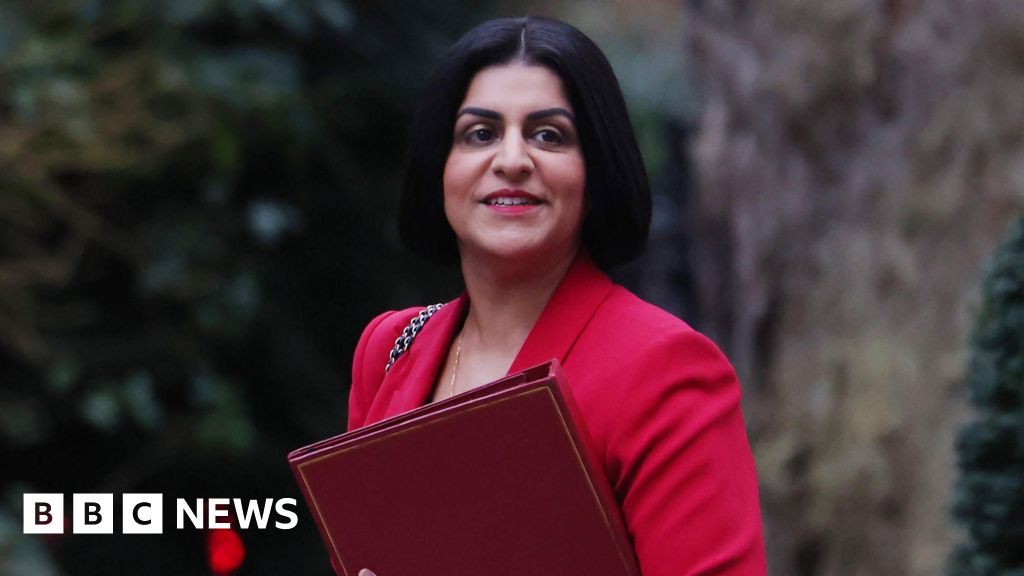
British Lord High Chancellor and Secretary of State for Justice Shabana Mahmood arrives for a cabinet meeting at 10 Downing Street in London, Britain, in September. EPA/ANDY RAIN

Nov. 16 (UPI) — Britain’s home secretary Shabana Mahmood plans to unveil plans to overhaul the country’s asylum policy Monday after declaring that illegal immigration is “tearing the country apart.”

The new measures will include a two-decade long wait period after people who are granted asylum are allowed to settle in the country permanently, the BBC reported.

The new plans will also require that people who are granted asylum will have their refugee status reviewed regularly, and those whose countries are deemed safe will be required to return. Mahmood said Sunday that she sees reforming Britain’s immigration system as a “moral mission.”

Conservatives would deport undocumented migrants “within a week,” while Liberal Democratic Party leaders have called for asylum seekers to have the right to work.

Mahmood said the changes are designed to make the country less attractive to illegal immigrants, and lead to fewer dangerous small boat crossings across the often turbulent English Channel, and asylum claims.

She said the new plans will also end visas for people from Angola, Namibia and the Democratic Republic of Congo if those countries do not quickly improve their cooperation on removing people from Britain.

These countries have been selected “for their unacceptable low co-operation and obstructive return processes,” the BBC reported.

Enver Soloman, chief executive of the Refugee Council, said the 20-year wait period for permanent residency would “leave people in limbo for many, many years.

“We need a system that is controlled and fair, and the way you do that is you make decisions fairly, in a timely fashion, and if someone is found to be a refugee they go on and they contribute to our communities and they pay back,” he said Sunday on BBC Breakfast.

At least 109,343 people claimed asylum in Britain in the last 12 months, a 17% increase over the year before, according to government figures. At least 1,069 migrants have arrived in the country in the last 7 days, the data show.

Mahmood is set to unveil her plans in the House of Commons on Monday.

Source link

UK to end ‘golden ticket’ for asylum seekers in huge policy overhaul | Refugees News

The plans, inspired by Denmark’s approach, aim to slash irregular immigration and counter the UK’s far right.

The United Kingdom has announced a drastic reduction in the protections for asylum seekers and refugees under a new plan aimed at slashing irregular immigration and countering the far right.

The measures, modelled on Denmark’s strict asylum system, were announced late on Saturday as Prime Minister Keir Starmer comes under pressure from surging popularity for the anti-immigrant Reform UK party.

Recommended Stories

list of 4 itemsend of list

“I’ll end UK’s golden ticket for asylum seekers,” Interior Minister Shabana Mahmood declared in a statement, with the Home Office, as her ministry is known, calling the new proposals the “largest overhaul of asylum policy in modern times”.

Mahmood is due to lay out the policy in parliament on Monday.

Meanwhile, the head of the UK’s Refugee Council warned the government that the measures would not deter people from trying to reach the country and urged a rethink.

“They should ensure that refugees who work hard and contribute to Britain can build secure, settled lives and give back to their communities,” Enver Solomon said.

Currently, people get refugee status for five years, after which they can apply for indefinite leave to remain and eventually, citizenship.

Mahmood’s ministry says it would cut the length of refugee status to 30 months. That protection will be “regularly reviewed”, and refugees will be forced to return to their home countries once they are deemed safe, it added.

The ministry also said it intended to make those refugees who were granted asylum wait 20 years before applying to be allowed to live in the UK long-term.

Asylum claims record high

Asylum claims in Britain are at a record high. Polls suggest immigration has overtaken the economy as voters’ top concern.

Some 109,343 people claimed asylum in the UK in the year ending March 2025, a 17 percent rise on the previous year and 6 percent above the 2002 peak of 103,081.

The Home Office said the reforms would make it less attractive for irregular migrants and refugees to come to the UK and make it easier to remove those already in the country.

A statutory legal duty to provide support to asylum seekers, introduced in a 2005 law, would also be revoked, the ministry said. That means housing and weekly financial allowances would no longer be guaranteed for asylum seekers.

It would be “discretionary”, meaning the government could deny assistance to any asylum seeker who could work or support themselves, or those who committed crimes.

Starmer, elected last year, is under pressure to stop migrants crossing the English Channel in small boats from France, something that also troubled his Conservative predecessors.

More than 39,000 people, many fleeing conflict, have arrived this year following such dangerous journeys – more than for the whole of 2024 but lower than the record set in 2022.

The crossings are helping raise the popularity of Reform, led by firebrand Nigel Farage, which has led Labour by double-digit margins in opinion polls for most of this year.

More than 100 British charities wrote to Mahmood, urging her to “end the scapegoating of migrants and performative policies that only cause harm”, saying such steps are prompting racism and violence.

Source link

Britain’s high court rules Epping hotel asylum seekers can stay

An August 2025 picture of a worker looking out from behind a gate outside Britain’s Bell Hotel in Epping, Essex. Asylum seekers will now be permitted to stay in the Essex hotel following Britain’s high court ruling against the local municipal council to remove them. Photo Provided by Tolga Akmen/EPA

Nov. 11 (UPI) — Asylum seekers will be permitted to stay at hotel in Essex following a British high court ruling against a local council to remove them.

The Bell Hotel in Epping Forest, less than 20 miles northeast of London, has housed roughly 140 migrants in the process of seeking British asylum. But the local Epping Forest District Council sought to block their temporarily living conditions after a 14-year-old girl was sexually assaulted and a man living in the hotel accused of the attack.

On Tuesday, Justice Tim Mould dismissed the council’s claims and ruled that an injunction was “not an appropriate means of enforcing planning control.”

Epping Forest’s councillors argued the Bell Hotel owner flouted local planning and zoning rules.

“What we saw in court was an unholy alliance of lawyers for government and big business intent on protecting huge profits and an indefensible asylum policy,”Ken Williamson, a member on Epping Forest District Council, told the BBC.

In August, a temporary injunction was awarded that banned asylum but later overturned by an appeal court following intervention by Britain’s Home Office.

Protests near the hotel turned violent in July when hijacked by far-right supporters after Hadush Gerberslasie Kebatu, an Ethiopian national and resident of the hotel, was charged with the teen girl’s sexual assault.

But Mould on Tuesday rejected the prospect that hotel owner Somani Hotels demonstrated a “flagrant or persistent abuse” of planning control with a growing number of immigrants and other foreign asylum seekers.

“Taking a broad view, the degree of planning and environmental harm resulting from the current use of the Bell is limited,” he wrote in a 87-page ruling.

The judge acknowledged the “criminal behavior of a small number of individual asylum seekers” housed at the hotel had “raised the fear of crime” in the local community.

It was noted there was a “continuing need” to house asylum seekers with a looming asylum hearing. And so that Home Secretary Shabana Mahmood “can fulfill her statutory duties.”

Tuesday’s ruling continued that statutory procedures under British law provided for the “local planning authority, or on appeal the Secretary of State, to determine conclusively whether an existing use of land is lawful because it does not involve development.”

Source link

Peru severs relations with Mexico for granting asylum to ex-PM

Pedro Castillo — seen here at the 76th Session of the U.N. General Assembly on September 21, 2021, speaking as the president of Peru — is facing charges in connection to his attempt to dissolve the country’s congress in 2022 and rule by emergency order. The prime minister during his time in office, Betssy Chavez Chino, has sought diplomatic asylum from Mexico. Pool File Photo by Mary Altaffer/UPI | License Photo

Nov. 4 (UPI) — Peru is severing diplomatic relations with Mexico over its granting of diplomatic asylum to a former prime minister accused of being involved in a coup attempt in 2022.

The Peruvian Foreign Ministry announced it was ending diplomatic relations with Mexico in a Monday evening communication, accusing the North American nation of “interfering in an inadmissible and systematic manner in Peru’s internal affairs.”

According to the communication, Mexico informed Peru that former Prime Minister Betssy Chavez Chino had sought refuge at its embassy in Lima and was granted political asylum.

Peru’s Foreign Ministry said it was “an unfriendly act that adds to the series of unacceptable interferences by the Mexican government toward Peru” and demonstrates its “profound lack of interest in maintaining a relationship” with Lima.

“Consequently, the government of the Republic of Peru has decided to break diplomatic relations with the United Mexican States,” it said.

Chavez was prime minister under President Pedro Castillo, who was impeached after trying to dissolve Congress and impose an emergency government to rule by decree in December 2022. He has been held in preventive detention since then on corruption and rebellion-related charges.

The former prime minister had been jailed from June 2023 over her alleged role in the coup until September, when she was released by a judge who ruled her right “not to suffer arbitrary detentions” had been violated.

Mexico’s Foreign Ministry said Peru’s decision to sever diplomatic relations was “excessive and disproportionate.”

In defense of granting Chavez asylum, Mexico said it did so in adherence to international law, in particular the 1954 Convention on Diplomatic Asylum, which both countries are party to.

“Mrs. Chavez Chino has mentioned that she has been the subject of repeated violations of her human rights as part of a political persecution of the Peruvian state since the moment of her capture in 2023,” the ministry said in a statement.

Mexico said its decision followed a “thorough evaluation and in strict compliance with the procedure established for this purpose in the Law on Refugees, Complementary Protection and Political Asylum” as well as in accordance with Mexican law.

“Mexico reaffirms, as has been recognized by the General Assembly of the United Nations, that the granting of asylum cannot be considered an unfriendly act by another state.”

Source link

Peru cuts ties with Mexico over asylum for ex-prime minister | News

Move comes after Betssy Chavez, who is on trial on coup charges, fled to the Mexican Embassy in Peru.

Peru has severed diplomatic relations with Mexico after accusing it of granting asylum to a former Peruvian prime minister who is on trial over an alleged coup attempt in 2022.

The announcement on Monday came hours after former Prime Minister Betssy Chavez – who served under former President Pedro Castillo – fled to the Mexican Embassy in Peru.

Recommended Stories

list of 4 itemsend of list

“Today we learned with surprise and deep regret that Betssy Chavez, the alleged co-author of the coup attempt by former President Pedro Castillo, is being granted asylum at the Mexican Embassy residence in Peru,” Minister of Foreign Affairs Hugo de Zela told a news conference.

“Given this unfriendly act, and considering the repeated instances in which the current and former presidents of that country have interfered in Peru’s internal affairs, the Peruvian government has decided to sever diplomatic relations with Mexico today,” he added.

There was no immediate comment from Mexico.

Chavez’s lawyer, Raul Noblecilla, told local radio station RPP that he had not heard from his client in several days and was unaware of whether she had requested asylum.

Chavez, who served in Castillo’s cabinet as Minister of Culture, was appointed as prime minister in November 2022 amid a months-long standoff between the president and the Congress.

Castillo – a former rural schoolteacher and trade unionist, dubbed Peru’s “first poor president” – was impeached by lawmakers the following month when he attempted to dissolve the Congress.

Relations between Lima and Mexico deteriorated sharply afterwards.

Following his impeachment, Castillo was on his way to the Mexican embassy in Lima to request asylum when he was arrested and charged with rebellion and abuse of authority.

Chavez was charged alongside him.

In December 2022, Peru expelled Mexico’s ambassador after Mexico granted asylum to Castillo’s wife and children.

Castillo’s successor, then-President Dina Boluarte, also temporarily recalled Peru’s ambassador to Mexico City in February 2023, accusing then-left-wing president Andres Manuel Lopez Obrador of meddling in her country’s affairs for expressing support for Castillo.

The former president and Chavez went on trial in March of this year.

While Castillo has been in preventive custody since his impeachment, Chavez was released on bail in September.

Prosecutors had sought a 25-year term for Chavez for allegedly participating in Castillo’s plan to dissolve Congress.

They have sought a 34-year sentence for Castillo.

The pair has denied the charges.

Source link