assistant

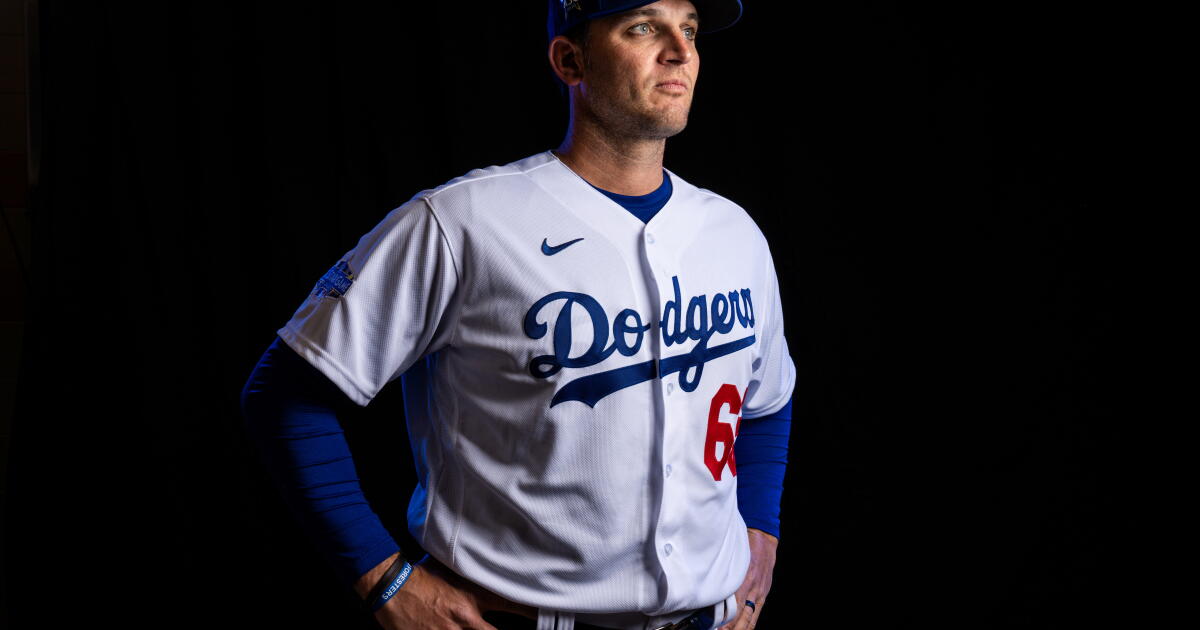
Dodgers and hitting coach Aaron Bates part ways in shakeup to staff

In a surprise shakeup of the Dodgers coaching staff, hitting coach Aaron Bates and the team are parting ways, as confirmed by a person with knowledge of the matter who was not authorized to speak publicly.

Dodgers president of baseball operations Andrew Friedman said after the season that he expected “status quo” for the coaching staff. But, as MLB Trade Rumors first reported, negotiations on a new contract for Bates eventually reached an impasse.

The rest of the Dodgers coaching staff, including co-hitting coach Robert Van Scoyoc, is expected to return next year, according to people with knowledge of the matter but not authorized to speak publicly.

Bates spent 12 years in the Dodgers organization, including four as a co-hitting coach with Van Scoyoc, and four as an assistant hitting coach. Before joining the major-league staff, Bates served as a minor-league hitting director and coach.

This past season, the Dodgers’ star-studded but aging offense ranked No.2 in weighted runs created-plus (111) — a comprehensive offensive stat that adjusts for ballpark factors — behind only the Cubs. But the Dodgers are working to diagnose two straight years of a July and August dip in offensive production.

Their search to replace Bates begins in a unique offseason. When the current CBA expires on Dec. 1, MLB team owners are expected to impose a lockout, during which teams will be restricted from communicating with players. So, if the Dodgers want their new hitting coach to meet with hitters or contribute to their offseason hitting plans, they will have to finalize the hire or promotion in the next few weeks.
Source link

Tinto Brass, director known for erotic film ‘Caligula,’ dies at 93

Tinto Brass, the avant-garde Italian director best known for 1970s erotic films “Caligula” and “Salon Kitty,” died Wednesday in Rome. He was 93.

His wife, Caterina Varzi, and children Bonifacio and Beatrice Brass confirmed the director’s death to Italian press agency Ansa.

Brass was born in Milan in 1933 but grew up in Venice. The son of a criminal lawyer, Brass graduated from the University of Padua in Northern Italy with a law degree in 1957, but he never felt the vocation suited him and instead packed his bags for Paris, where he followed his passion for cinema. In Paris, he worked as an editor and assistant at the Cinémathèque Française, an acclaimed film archive that doubled as a school for cinephiles founded by Henri Langlois and three friends.

When he returned to Italy, Brass worked under prominent Italian neorealist director Roberto Rossellini as an editor and assistant director.

In 1963, Brass made his feature directorial debut with “Who Works Is Lost,” a day in the life of an unmoored designer in Venice who questions the societal expectation of labor, which screened at the 1963 Venice International Film Festival. The decade cemented Brass’ reputation as an experimental director with a rebellious spirit, and in the late ’60s, he was approached by Warner Bros to direct the film adaptation of Anthony Burgess’ dystopian novel, “A Clockwork Orange.” The deal fell through due to scheduling conflicts, but Brass would go on to work with the film’s title star, Malcolm McDowell, in his most famous film, “Caligula,” which was written by Gore Vidal and produced by Penthouse magazine founder Bob Guccione.

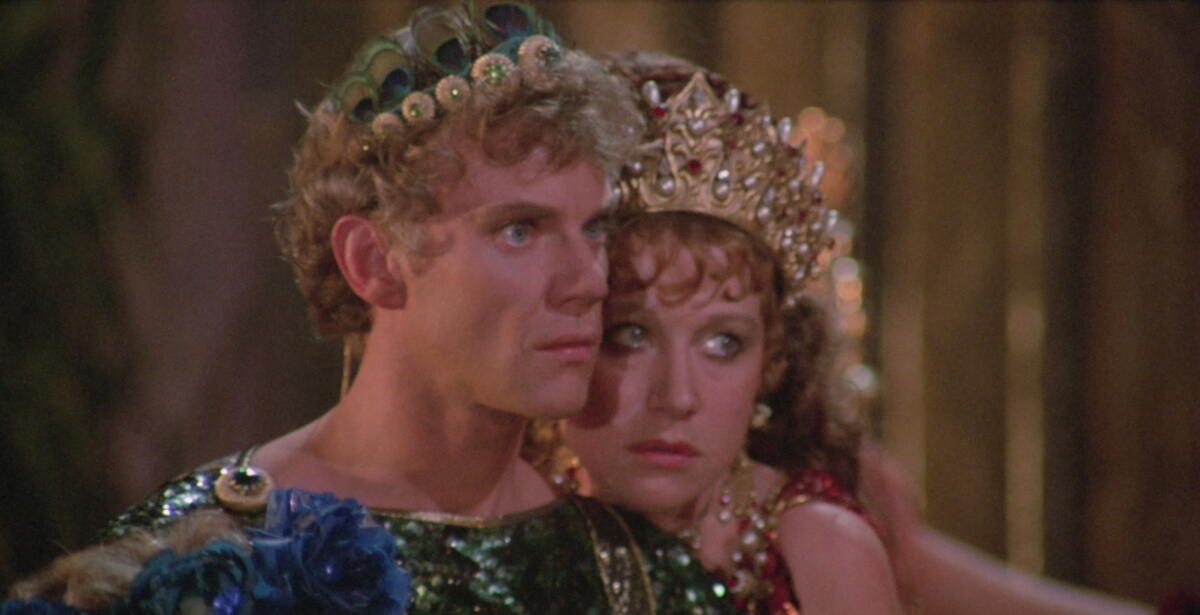
McDowell starred as the sexually deviant emperor, alongside Helen Mirren, Peter O’Toole and John Gielgud. Brass was fired from the project and nixed as an editor over creative clashes with Guccione, who wanted to amp up the raunchy scenes, Penthouse-style. After Guccione took control, he added pornographic scenes to the final cut, which prompted Brass and Vidal to sue to have their names scrubbed from the film. Naturally, the movie has gained a cult following since its release more than four decades ago.

A scene from 1979 film "Caligula."

Malcolm McDowell and Helen Mirren starred in 1979’s “Caligula,” directed by Tinto Brass.

(Drafthouse Films)

While Brass decried Guccione’s hardcore take on sex in cinema, he celebrated eroticism and pivoted to the genre with “Salon Kitty” (1976), “The Key” (1983), “Paprika” (1991), “All Ladies Do It” (1992), “Frivolous Lola” (1998) and “Cheeky” (2000).

“I made so many erotic films because I believed eroticism to be a fundamental key to human expression and, above all, the key to portraying women,” he told La Repubblica newspaper. “That was what interested me most.”

Brass also directed the Western “Yankee” (1966) and the murder mystery “I Am What I Am” (1967).

Brass is survived by his wife, Caterina, whom he married in 2017, and his children.

Source link