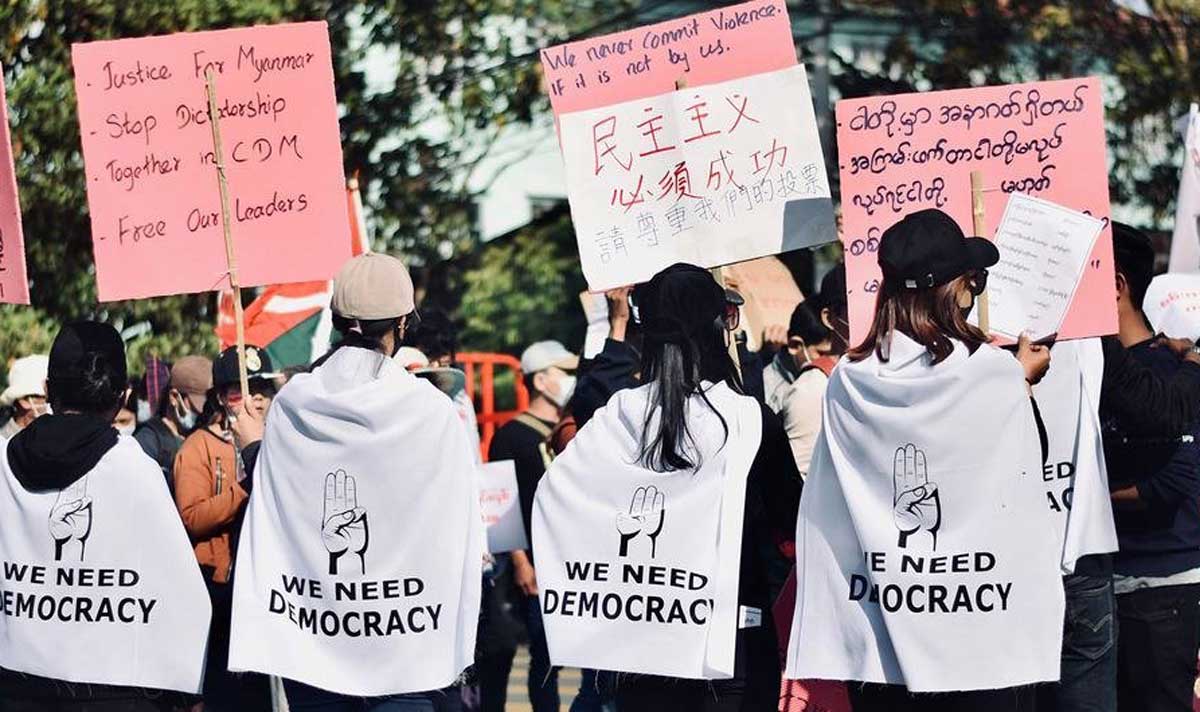
Four years after seizing power in a coup, Myanmar’s military junta is adapting to survive a grinding civil war that once appeared to be slipping beyond its control. In October, rebel fighters in central Myanmar described facing a level of intensity they had not seen before: sustained artillery fire, coordinated drone strikes, and repeated infantry assaults that came in relentless waves. After days of fighting near the village of Pazun Myaung, resistance forces were forced to withdraw, marking a rare tactical success for a military that had suffered major setbacks since 2023.
This shift follows Operation 1027, a coordinated rebel offensive that overran around 150 military outposts and handed resistance groups control of large swathes of borderland territory. Shaken by those defeats, the junta began reshaping its strategy. According to rebel fighters and security analysts interviewed by Reuters, the military has leaned on three pillars to stabilise its position: mass conscription, expanded use of drones and air power, and growing diplomatic and coercive support from China.
How the Junta Is Fighting Back
On the ground, resistance fighters report that the military is deploying “human-wave” tactics, sending repeated infantry units forward even as casualties mount. Rebels say some soldiers appear to be coerced into advancing, a stark contrast to earlier phases of the war when troops often retreated quickly after losses. These assaults are now closely integrated with artillery and drone strikes, creating pressure that smaller, lightly equipped resistance units struggle to withstand over time.
At the same time, the junta has rebuilt manpower through mandatory conscription introduced in February 2024. Despite widespread public fear and evasion, tens of thousands of recruits have reportedly entered the armed forces, stabilising a military that had shrunk dramatically since the coup. The command structure has also been reshuffled, with more experienced officers replacing those promoted through patronage, addressing one of the army’s long-standing weaknesses.
Air power has become more lethal as well. While conventional airstrikes remain central, they are now increasingly guided by reconnaissance drones, improving accuracy. Analysts say the military operates a diverse fleet of unmanned aerial vehicles sourced from China, Russia and Iran, giving it a technological edge over resistance groups that lack jamming equipment or air-defence systems. Lower-level commanders are also reportedly being granted faster access to air support, tightening coordination between ground assaults and aerial attacks.
China’s Quiet but Crucial Role
Beyond the battlefield, China has emerged as a decisive external factor in the junta’s partial resurgence. While Beijing maintains ties with certain ethnic armed groups, it continues to see Myanmar’s generals as the most reliable guarantors of stability along its border. Chinese officials have brokered ceasefires that have directly benefited the junta, including arrangements that returned strategically important towns to military control.
Pressure from Beijing has also constrained resistance groups’ access to weapons and financing. International researchers say China has leaned on allied militias to restrict arms flows and imposed financial and border measures to enforce compliance. In some areas, this has effectively frozen resistance operations, forcing groups into ceasefires due to shortages of ammunition and funds. For fighters on the ground, this external squeeze has compounded the military’s renewed offensive momentum.
Why It Matters
The junta’s evolving tactics do not signal outright victory, but they do mark a dangerous shift in a conflict that had increasingly favoured resistance forces. Myanmar’s frontlines remain fragmented, with no single actor dominating nationwide, yet the military’s ability to retake territory in parts of the country suggests the war is entering a new, more brutal phase. Civilians are likely to bear the cost, as intensified airstrikes, mass infantry assaults and prolonged clashes deepen humanitarian suffering and displacement.
This military push also coincides with a planned general election that international observers and rights groups have already dismissed as neither free nor fair. By reclaiming territory and projecting strength, the junta appears intent on manufacturing a sense of control and legitimacy, even as key opposition figures remain jailed and major political forces boycott the vote.
What Comes Next
Analysts expect fighting to intensify rather than subside. With conscription feeding new troops into the ranks, drones sharpening air power, and China discouraging resistance advances near its interests, the military is likely to continue probing for opportunities to retake ground. Resistance forces, meanwhile, face internal disparities in strength and growing external pressure, making coordinated nationwide offensives harder to sustain.
Over the next few years, Myanmar is likely to see a protracted stalemate punctuated by brutal offensives rather than a decisive resolution. The junta’s comeback is limited and uneven, but it is enough to prolong the conflict and raise the stakes for all sides involved.
Analysis
Myanmar’s war is no longer defined solely by a collapsing army versus a rising resistance. Instead, it is evolving into a grim contest of endurance. The junta’s use of human-wave assaults reflects both renewed confidence and underlying fragility: manpower is being substituted for legitimacy, and coercion for morale. Drones and foreign backing provide tactical advantages, but they do not resolve the political roots of the conflict. China’s role underscores how regional power politics can shape internal wars, often prioritising stability over justice. In this context, the junta’s battlefield adaptation may extend its survival, but it also deepens a cycle of violence that makes a negotiated political settlement ever more elusive.
With information from Reuters.