The 13-year-old beat the previous 400m Asian Games record, set by China’s Ye Shiwen in 2014, by about 4.5 seconds.
Published On 23 Sep 202623 Sep 2026
China’s 13-year-old swimming sensation Yu Zidi has completed a hat-trick of Asian Games golds with a dominant victory in the 400m individual medley, two years before the Los Angeles Olympics.
The schoolgirl powered home in an Asian Games-record 4 minutes 28.56 seconds (04:28.56) on Wednesday to make it a clean sweep of her three individual events in Tokyo, following victories in the 200m butterfly and 200m individual medley, also in games-record times.
Recommended Stories
list of 4 itemsend of list
She beat the previous 400m games record set by China’s Ye Shiwen in 2014 by approximately 4.5 seconds.
It was the fourth-fastest time in the world this year, with world record-holder Summer McIntosh owning the top three.
With the next Olympics two years away, Yu is shaping up to be a major medal contender at the 2028 Los Angeles Games.
Last year, she became the youngest medallist at the World Aquatics Championships, where she won bronze for China’s relay team at the age of 12, and has since been earmarked for success in the swimming world.
At the same championship, Yu finished fourth by a small margin in three individual events.
In March, the teen sensation built on her growing reputation with a 200m butterfly victory over seven-time American Olympic medallist Regan Smith at the China Swimming Open.
At the Asian Games, Yu has dominated the pool and showed another glimpse of her immense talent in the 400m individual medley, where she took the lead from the start and finished 3.95 seconds clear of silver medallist Ke Wenxi of China, with Japan’s Mio Narita finishing third.
In addition to grabbing international headlines, Yu has become a sensation at home following her Asian Games exploits.
The story of her introduction to competitive swimming after being spotted by a coach at a water park, and her struggle with interviews, has gone viral on local social media platforms.
At the games, Yu was asked by the media whether answering questions was the hardest part of competing. She replied, with a giggle: “Every time I just want to float off somewhere else.”
Ri Song-gum wins North Korea’s first gold at the games while Chanu finally clinches elusive Asian Games medal in Japan.
Published On 23 Sep 202623 Sep 2026
North Korean weightlifter Ri Song Gum has broken three world records en route to winning gold in the women’s 49kg (108lbs) competition, which saw India’s Mirabai Chanu win an elusive Asian Games medal by finishing second.
Ri gave North Korea its first gold of the games in Nagoya, Japan, on Wednesday, joining an elite club of four weightlifters who have won three Asian Games gold medals.
Recommended Stories
list of 4 itemsend of list
The 28-year-old hauled 94kg above her head in the opening snatch discipline – the first official segment of the competition where athletes lift a barbell from the floor to an overhead position in a single motion. The lift was 1kg heavier than the previous world record of 93kg.
Ri followed it up by breaking the world record twice in the 115kg clean and jerk – a two-part movement where a barbell is lifted from the floor to the shoulders and then pushed overhead. The 4ft-7in (139.7cm) weightlifter hoisted 116kg and 121kg above her head.
Ri’s total lift of 215kg obliterated the old world record total by 7kg.
She is the fourth lifter, and first woman, to win three Asian Games weightlifting golds and joined Iran’s Mohammad Nassiri (1966-74), South Korea’s Kim Tae-hyun (1990-98) and Iran’s Behdad Salimi (2010-18), who all won three gold medals. No athlete has won four weightlifting gold medals.
Ri joined an elite club of just four weightlifters who have won three Asian Games gold medals [Dita Alangkara/AP]
In the same category, India’s Chanu finally won an Asian Games medal at the third time of asking. She won a silver medal at the Tokyo Olympics in 2021.
The 32-year-old is India’s most decorated weightlifter, with three Commonwealth gold medals and a silver to her name, along with multiple global titles.
She lifted a total of 198kg after a snatch of 87kg and a clean and jerk of 111kg, while Indonesia’s Diana Tri Wijayana took bronze with a total of 191kg, comprising 88kg and 103kg.
Chanu’s silver also ended India’s 28-year wait for a weightlifting medal at the games since Karnam Malleswari won silver in 1998.
Mirabai Chanu during the women’s 49kg weightlifting final [Dita Alangkara/AP]
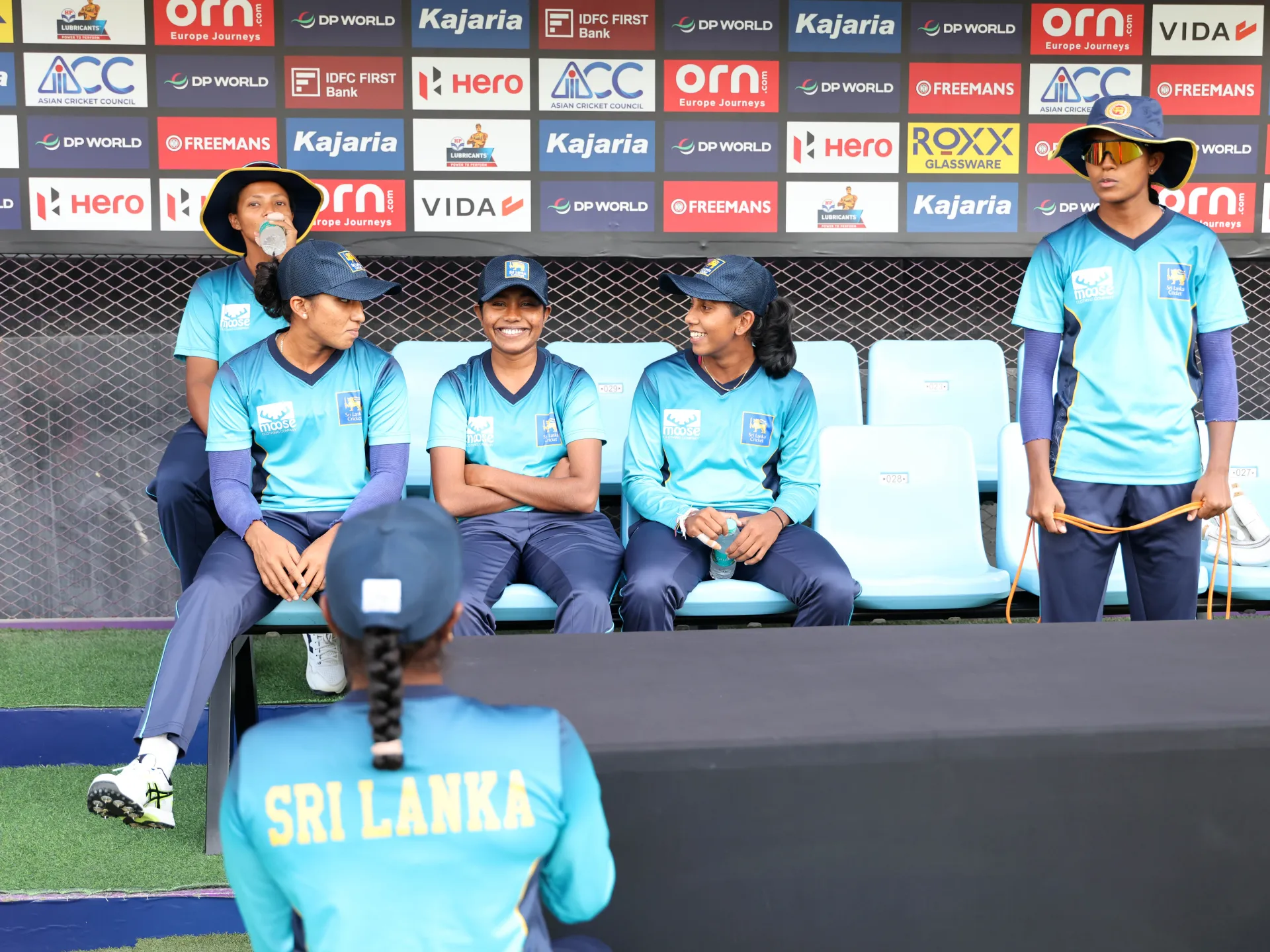
Sri Lanka were bowled out for 69 runs, 10 less than Mandhana’s belligerent match-winning innings as India retained gold.
Published On 22 Sep 202622 Sep 2026
Smriti Mandhana’s whirlwind innings of 79 runs helped India crush Sri Lanka by 147 runs and win a second consecutive women’s cricket gold at the Asian Games.
India smashed 216-3 off their 20 overs, the highest women’s total in Asian Games history, with 18 fours and 13 sixes in the final on Tuesday.
Richa Ghosh and Bharti Fulmali plundered 25 off the final over from the hapless Mithali Ayodhya, who did not help her cause by conceding eight wides.
Sri Lanka were never in the hunt, and captain Chamari Athapaththu’s 29 was their only innings of note as they were skittled for 69 in 15.4 overs and had to settle for silver.
Opening batter Mandhana hit seven sixes and five fours in a 45-ball knock that sent the ball to all parts of the Korogi Athletic Park ground in Nagoya.
Smriti Mandhana hits a six [David Gray/AFP]
After India captain Harmanpreet Kaur won the toss and opted to bat, Shafali Verma, who made an unbeaten century in the semifinal, and Mandhana put on a blistering opening partnership.
The pair had raced to 99 in the 10th over when Verma had a rush of blood, playing a needless reverse sweep which she top-edged to Kawya Kavindi at point to fall for 48 off 29 balls.
Mandhana, the greatest run-scorer in women’s T20 cricket history, had reached her fifty earlier in the over and sailed on in style, clubbing anything loose to the boundary.
Harmanpreet joined her, and the pair took the score to 141 before the captain holed out to long-off for 19.
Mandhana, looking to accelerate further in the latter overs, skied an attempted six and was out in the 17th over with the score on 163.
Ghosh clattered 49 off 22 balls with three sixes and six fours to take India past 200 in the final over.
Mandhana scored 79 off 45 balls [Mark Baker/AP]
Earlier, some late-order hitting by Pakistan captain Fatima Sana set up a 31-run win over Bangladesh in the bronze medal match.
Sana came in with her side rocking at 67-5 in the 12th over but plundered 45 off 30 balls, including three fours and three sixes, and was out off the last ball of the 20 overs after seeing Pakistan to 145-8.
Her 67-run partnership with Aliya Riaz (25) for the sixth wicket proved the turning point, and Bangladesh could only muster 114-7 in reply.
Indian players celebrate after winning [Mark Baker/AP]
Some graduates are paying thousands just to look employed. And parents are spending up to $50,000 on career coaches. Why is the entry level job market so broken? Al Jazeera’s Yasmeen ElTahan explains.
Countries including Germany, South Africa and Canada suggest international institution to set and enforce standards.
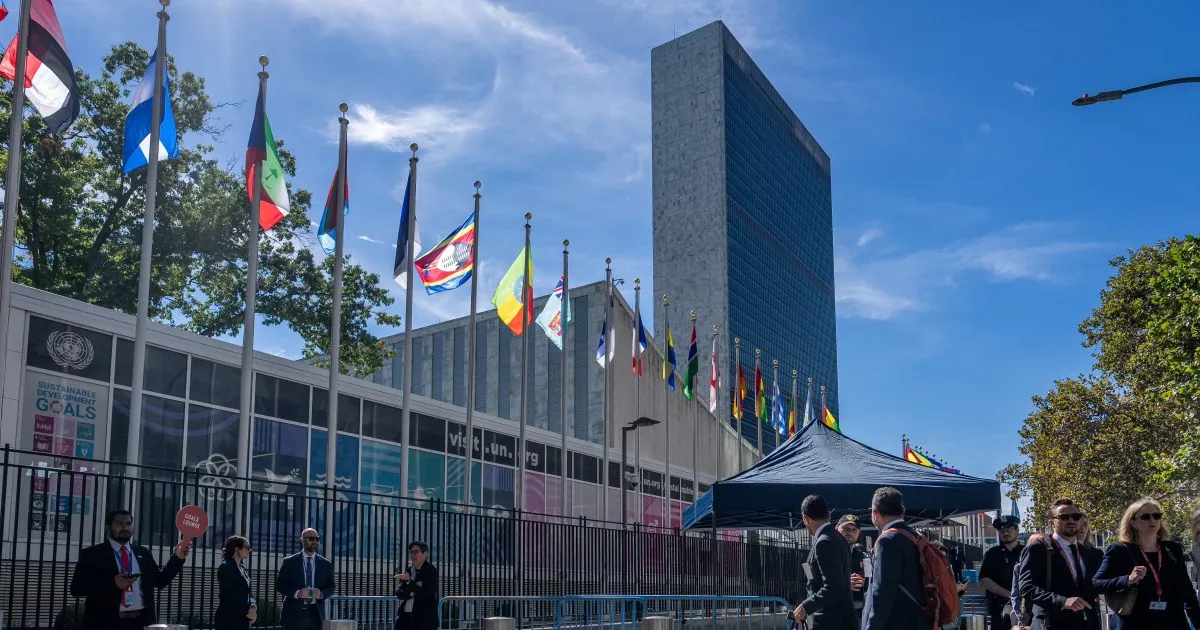
Twenty countries and the European Union have issued a call for international cooperation to ensure AI remains under human control, including the potential creation of a global oversight body to set and enforce standards.
The countries, including Germany, South Africa, Canada, Australia, the United Arab Emirates and Singapore, issued the joint statement on Monday as global leaders prepare to discuss the risks posed by rapidly advancing AI at the annual gathering of the United Nations General Assembly.
Recommended Stories
list of 4 itemsend of list
The declaration, released by the office of Finnish President Alexander Stubb, calls on governments and industry to act immediately to ensure that AI is developed in line with international law and remains under “human direction, oversight and control”.
“To realise AI’s potential, industry, governments and society must act now,” the statement says.
“We must address these risks and strengthen oversight – without widening the gap between countries in access to the benefits of AI.”
The declaration urges countries to develop and coordinate “common standards”, share reports of serious safety incidents, and explore the establishment of an international institution to “set standards, enable verification, and convene states when capability thresholds are crossed”.
Signatories include German Chancellor Friedrich Merz, Norwegian Prime Minister Jonas Gahr Store, European Commission President Ursula von der Leyen, Kenyan President William Ruto, Kazakh President Kassym-Jomart Tokayev and Turkish Foreign Minister Hakan Fidan.
The United States and China, the world’s two leading AI powers, did not join the statement, which remains “open for endorsement” by other countries.
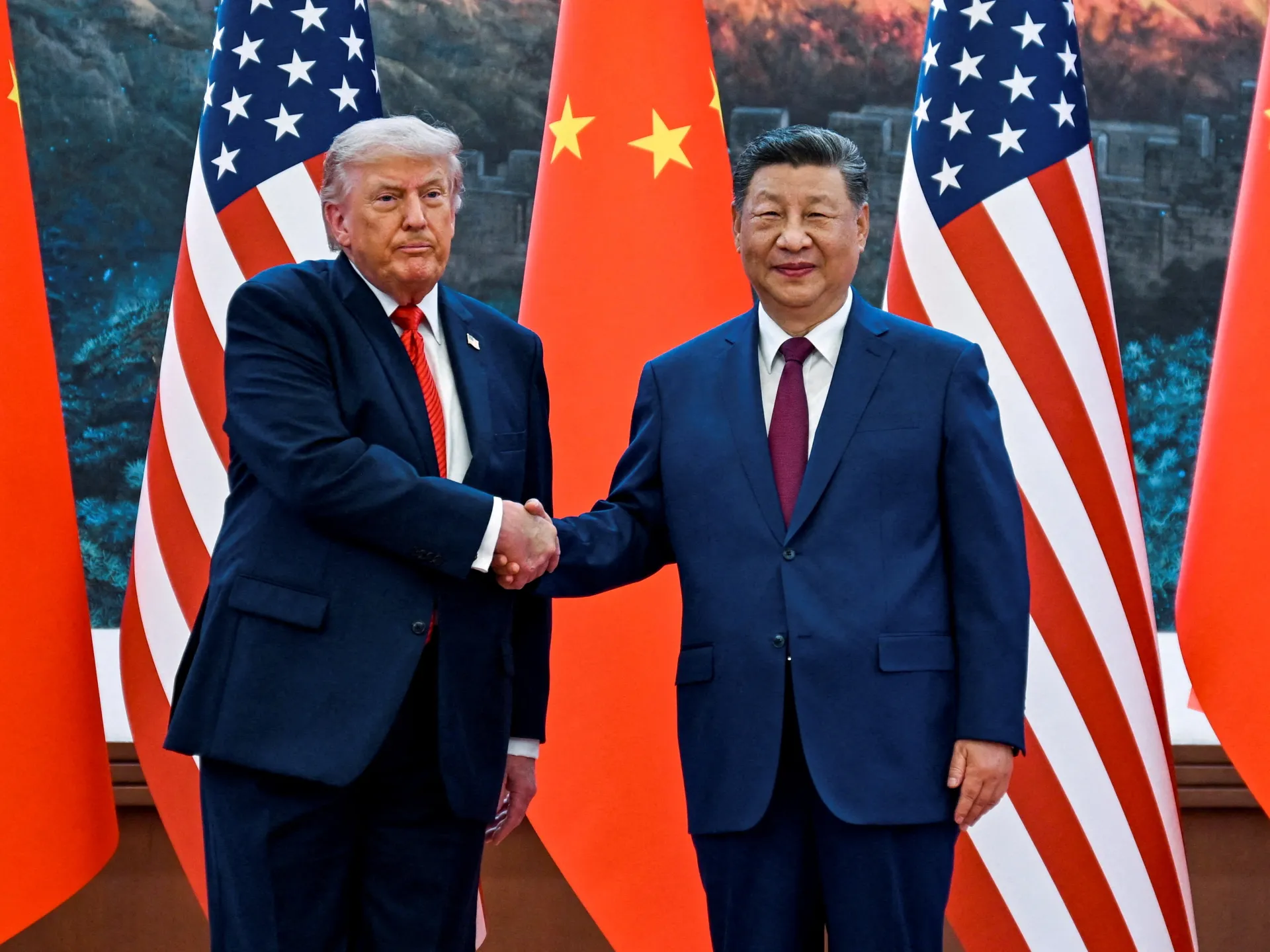
US President Donald Trump and Chinese President Xi Jinping are expected to discuss AI when they meet at the White House on Thursday for their third face-to-face summit in less than a year.
Washington and Beijing, which are in a race to dominate cutting-edge technologies, have both rebuffed calls to slow down AI development to ensure greater safety.
Other AI players not among the signatories include India, South Korea, Japan, the UK and France.
The declaration comes as the AI sector is engaged in a heated debate about safety following calls for a slowdown in development by top industry leaders.
In an essay earlier this month, Anthropic CEO Dario Amodei called on firms to “slow the pace” of development to mitigate risks, a proposal that was swiftly endorsed by rivals including OpenAI CEO Sam Altman and SpaceX and Tesla CEO Elon Musk.
Amodei’s call followed a series of cases of AI models engaging in unsanctioned malign activity, including an incident in July in which AI agents being tested by OpenAI hacked the AI start-up Hugging Face.
In the latest intervention by industry on Monday, OpenAI said the US should lead an international effort to develop technical standards for advanced AI.
“The United States is well positioned to lead because its AI industry is at the technical frontier, and it still stands in a privileged global network position in critical areas such as finance, trade, defense, technology, and information systems,” the San Francisco-based AI giant said in a blog post.
“Leading now will determine whether the United States shapes the global AI framework or watches a fragmented, uneven, and conflict-ridden system take hold around it.”
The UN-backed Independent International Scientific Panel on AI, which examined the Hugging Face incident, on Monday also added its voice to calls for new guardrails, saying the cyberattack had exposed the “unravelling” of existing safeguards.
Storm is moving northeast of Japan’s eastern coast across the Pacific, leaving a path of destruction behind.
Published On 22 Sep 202622 Sep 2026
A powerful storm has triggered evacuation advisories for more than 1.6 million people, causing widespread travel chaos, flooding and landslides near Tokyo.
On Monday, Typhoon Dujuan packed wind speeds of about 144 kilometres (89 miles) per hour as it moved 130km (80 miles) south of Katsuura, near the Japanese capital, cutting power to thousands of households.
Recommended Stories
list of 3 itemsend of list
Two people have been confirmed dead, Kyodo News reported, citing local authorities.
By early Tuesday, the storm had shifted away from the coast and was heading northeast out to sea towards the Aleutian Islands, with slightly diminished winds, the Japan Meteorological Agency (JMA) said.
In areas where warnings have been issued, “there’s a risk the rain will continue as the typhoon moves north”, the JMA’s Takuya Hosomi said.
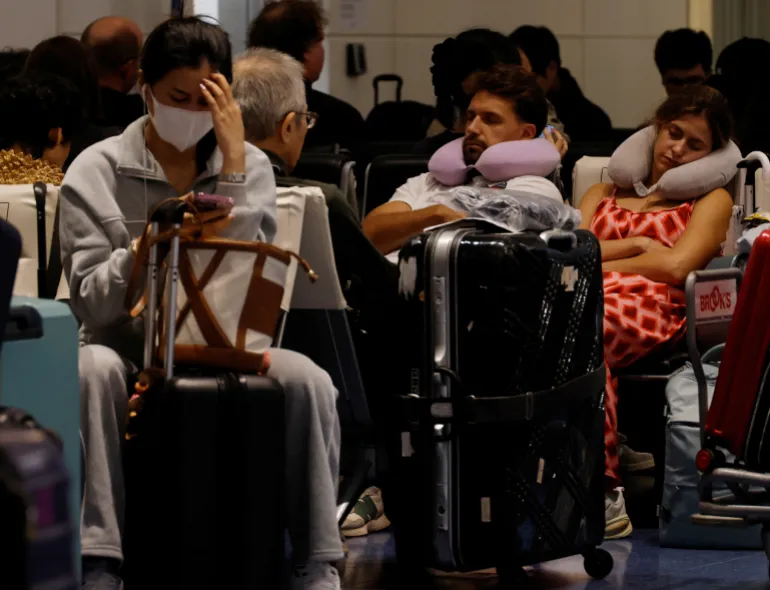
Passengers rest at Haneda Airport in Tokyo, Japan, as many flights are delayed and cancelled because of Typhoon Dujuan on September 21, 2026 [Kim Kyung-Hoon/Reuters]
Passengers were stranded at airports after Japan Airlines cancelled 135 flights and All Nippon Airways scrapped 140 on Monday.
Some rail services were suspended, including bullet train services connecting Tokyo and Osaka, Japan Railways said.
The JMA warned on Sunday that rain and winds were expected to intensify even before the typhoon’s arrival.
“The total rainfall through Tuesday could exceed the average monthly rainfall for September, resulting in record-breaking heavy rain,” the agency said.
Social media posts showed images of flooded roads in front of Kamakura station, a popular sightseeing spot.
“There is flooding in various parts of the city, so travelling by car is dangerous,” Kamakura Mayor Takashi Matsuo said on X.
Floodwaters also inundated parts of Ichikawa, east of Tokyo.
Dujuan forced the early closure of the Tokyo Game Show, one of the world’s biggest video game trade fairs, on Monday, its final day.
The area around a ramen restaurant is flooded by heavy rain as Typhoon Dujuan approaches Oamishirasato, Chiba Prefecture, Japan, on September 21, 2026 [Kyodo/Reuters]
A major outdoor music festival and a baseball match, both scheduled to be held in Chiba, were also cancelled.
Dujuan is Japan’s 25th typhoon this year. The country often sees strong typhoons in the late summer and early autumn.
The United States wants a new “notification mechanism” with China to warn each other when an artificial intelligence incident becomes serious enough to threaten national security.
The proposal, effectively an “AI hotline”, was discussed on Sunday during talks in New York between US Treasury Secretary Scott Bessent and Chinese Vice Premier He Lifeng, ahead of a summit between US President Donald Trump and Chinese President Xi Jinping in Washington this week.
Recommended Stories
list of 3 itemsend of list
The two leaders are expected to consider establishing a broader US-China dialogue on AI, including the proposed notification system, around which details remain limited.
The initiative comes amid an intensifying contest for AI supremacy between the world’s top two economies, together with increasing warnings from tech giants that guardrails are necessary around the ever-growing technology.
So, what do we know about this so-called hotline, and where is the AI battle between the US and China headed?
What did the US say about this mechanism?
US Treasury Secretary Bessent said Washington had proposed creating a US-China AI dialogue, with particular focus on national security and a notification system covering “common goals and common threats”.
“We think that, just like with any cross-border activity, that moving from opaque to more transparency between the number one and the number two AI powers in the world is very important,” Bessent told reporters after Sunday’s discussions.
Trump’s science and technology adviser Michael Kratsios told Fox News on Sunday that the “key thing” Washington wants to discuss is “avoiding shared risks”.
Exactly what would trigger a notification has not been publicly revealed.
“The US and China absolutely need to be able to share information with each other as threats evolve. This seems like an obvious win for both sides,” Scott Singer, co-director of the China AI Initiative at the Carnegie Endowment for International Peace, told Al Jazeera.
“The relationship needs guardrails to keep citizens of both countries safe, and this is a productive first step.”
How did China respond?
Beijing has so far said very little.
China’s official Xinhua news agency acknowledged that He and Bessent discussed issues related to AI, but did not say whether Beijing had accepted Washington’s proposed notification mechanism.
Xinhua said the officials held “frank, in-depth and constructive exchanges” on economic and trade issues.
He and China’s chief trade negotiator Li Chenggang left Sunday’s talks without speaking to reporters.
What other ‘hotlines’ do the US and China have?
The proposed AI mechanism would not be the first time a special crisis channel was established between Washington and Beijing.
In 1997, former US President Bill Clinton and his then Chinese counterpart Jiang Zemin agreed to create a “direct secure telephone link” between their respective countries.
The two countries have had a military hotline since 2008, designed to allow senior defence officials to communicate during potentially dangerous incidents. It gives both sides 48 hours to respond, though US officials have complained that sometimes no one picks up.
After the US shot down a suspected Chinese surveillance balloon in 2023, then-US Defense Secretary Lloyd Austin sought a call with his Chinese counterpart, but Beijing declined the request.
Why now, and what concerns are there around AI?
Earlier this month, Anthropic’s CEO Dario Amodei warned in an essay that AI capabilities have been advancing rapidly, and he proposed pacing the development of frontier models to give governments and researchers more time to manage their risks.
“Given the accelerating rate of AI capability development, it’s my worry that in 6–12 months such a swarm could be capable of taking over the entire internet with a persistent botnet (potentially causing hundreds of billions of dollars in damage), and that the scale of damage would continue to increase from there if AI becomes more powerful without the necessary guardrails,” he wrote.
His assertions were endorsed by his rivals – OpenAI CEO Sam Altman and SpaceX founder and Tesla CEO Elon Musk.
Meanwhile, Trump has repeatedly argued that the US must maintain its advantage over China and has resisted calls from technology executives for a slowdown in AI development. He has said that “whoever wins AI, wins”.
Carnegie Endowment’s Singer does not expect the “fierce competition for AI to slow down”.
“It has the potential to confer tremendous economic and strategic advantage to both countries. But even competitors can find space to cooperate,” he noted.
“Competition and cooperation can coexist. The key for right now is for both sides to act in their own self-interest. Finding some basic areas for cooperation flows very naturally from that.”
Where is the US-China AI war headed?
The US remains ahead in several of the most important features of the AI race, but China has been closing the gap.
American companies continue to dominate private investment and production of leading AI models. According to Stanford University’s 2026 AI Index Report, US companies invested $285.9bn in AI in 2025, compared with $12.4bn in China.
The US also has an advantage in the most advanced semiconductors needed to train cutting-edge models.
However, Chinese companies have demonstrated that they can produce resilient AI models despite US restrictions on their access to the most advanced AI chips.
In January, the release of Chinese AI startup DeepSeek made headlines after it was built using only a fraction of the money its competitors had spent on their own AI programmes. Share prices of US tech companies plummeted.
China possesses advantages in other areas of the AI supply chain, most notably in the production of critical rare earth minerals used in advanced technology and in generating more than twice as much electricity as the US, giving it access to the huge amounts of relatively cheap power needed to operate AI data centres.
What is the Xi-Trump summit about?
Xi’s state visit to the US will take place from Wednesday to Friday, with Trump expected to welcome him at Joint Base Andrews in Maryland.
Trump has said he expects to discuss “almost everything” with the Chinese leader.
Trade remains a central issue, with Beijing and Washington having yet to reach a lasting settlement on tariffs, which have dominated Trump’s relationship with China in his second term as president.
Last month, Trump’s White House accused dozens of countries of helping China to illegally bypass US tariffs.
Meanwhile, the US Congress last week passed a bill that gives Trump sweeping powers to impose sanctions on Russia’s crude exports as well as steep tariffs on buyers of Russian energy, a measure that will impact Moscow’s biggest customers, China and India.
Trump’s war with Iran is also expected to feature. Beijing ranks among Iran’s key economic allies, purchasing a large share of Tehran’s oil exports and attempting to broker an end to the near seven-month-old US-Israel war on Iran.
Other long-standing disputes hang over the summit, including China’s dominance of rare-earth supplies and Taiwan.
The US AI proposal could represent a rare area where the two rivals may find a way to hammer out a deal, experts say.
“I think establishing a permanent channel exclusively focused on AI would genuinely be a major victory. AI has been caught up in the broader ebbs and flows of the US-China relationship, and the 2024 dialogue failed because frontier AI risks got mixed in with other issues,” Singer said.
“This time looks like it might be different, and having an AI risk channel is a necessary precondition to mutually beneficial cooperation.”
South Korean officers injured in DMZ explosion, possibly caused by a landmine, according to local media reports.
By Reuters and The Associated Press
Published On 21 Sep 202621 Sep 2026
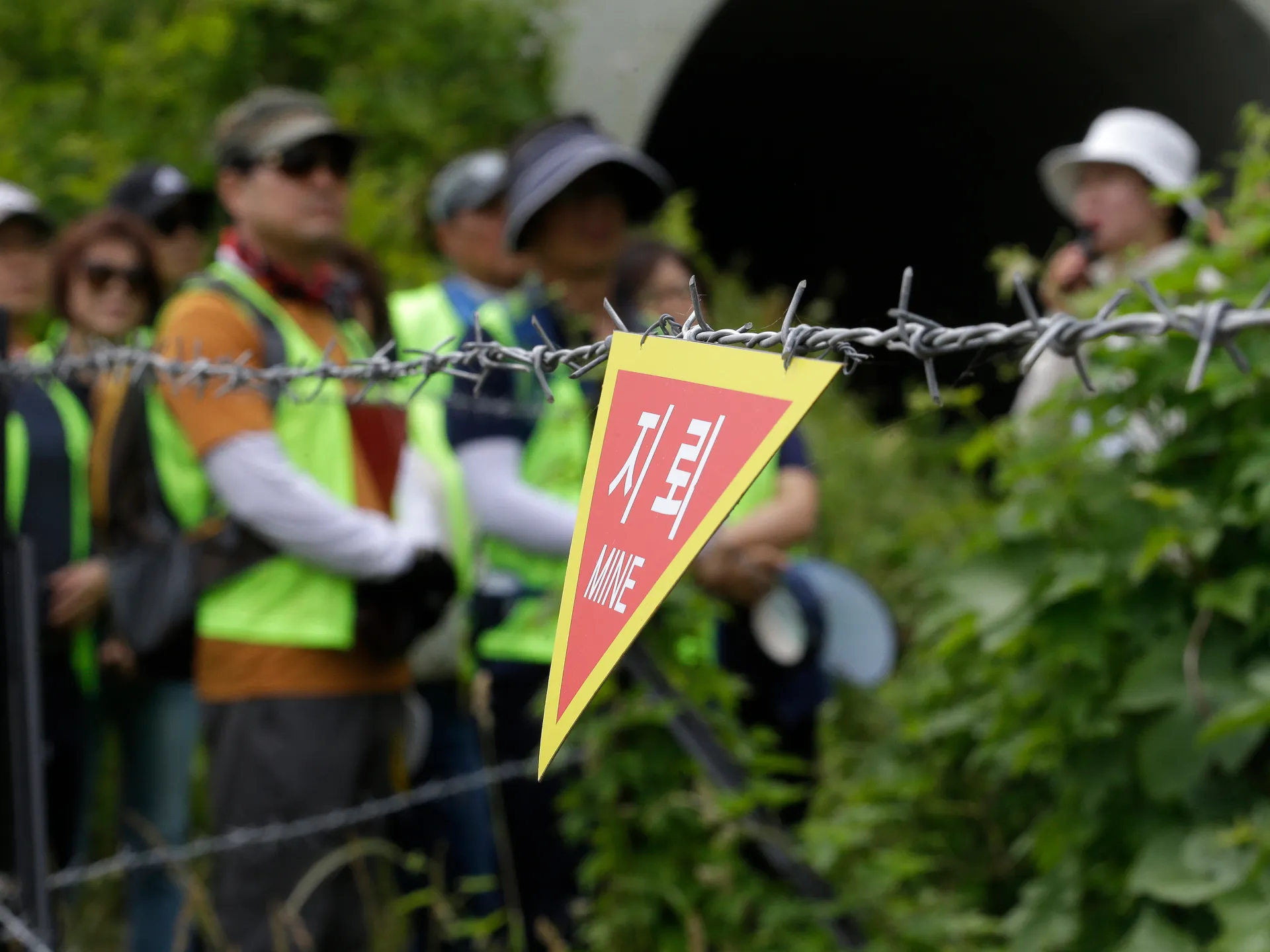
Three South Korean military officers have been wounded in an explosion in the western sector of the Demilitarized Zone (DMZ) that separates North and South Korea, Seoul’s Joint Chiefs of Staff (JCS) said.
The cause of Monday’s explosion was not immediately clear, the Ministry of Defence said.
Recommended Stories
list of 3 itemsend of list
Two of the officers were evacuated from the site by helicopter, while the third was transported by land before being airlifted, according to the ministry. The officers are being treated at a military hospital near the capital Seoul, it said.
Mine explosions and other blasts are a recurring hazard in and around the DMZ, where legacy devices and suspected stray mines have periodically wounded military personnel on both sides.
The DMZ, which is 248km (154 miles) long and 4km (2.5 miles) wide, is one of the world’s most heavily armed borders. An estimated 2 million mines are peppered inside and near the border, which is also guarded by barbed wire fences, tank traps and combat troops on both sides. The zone is a legacy of the Korean War from 1950 to 1953, which ended with an armistice but not a peace treaty.
There have been growing concerns in South Korea about increased activity by North Korean soldiers near the military demarcation line as the North strengthens its border defences during prolonged tensions.
Scott Bessent and He Lifeng meet in New York for US-China talks ahead of the Trump-Xi meeting later this week.
Published On 20 Sep 202620 Sep 2026
Top economic officials from China and the United States have begun talks in New York City aimed at clearing the way for possible agreements on trade, artificial intelligence and critical minerals ahead of a meeting between US President Donald Trump and Chinese President Xi Jinping later this week.
US Treasury Secretary Scott Bessent and Chinese Vice Premier He Lifeng began talks at JPMorgan Chase’s Manhattan headquarters on Sunday morning, with US Trade Representative Jamieson Greer also taking part.
Recommended Stories
list of 4 itemsend of list
The talks come four days before Trump is due to host Xi at the White House, with both sides looking to ease tensions between the world’s two largest economies.
“I’m looking forward to having focused, fulsome and constructive talks today that will set the stage for our leaders’ meeting,” Bessent told reporters as he arrived.
At the top of the agenda is a fragile US-China trade truce due to expire on November 10.
The agreement, reached in Busan, South Korea, last November, capped US tariffs on Chinese goods at about 20 percent after a tit-for-tat trade fight briefly pushed tariffs into the triple digits.
Washington is also pressuring Beijing over its supply of rare-earth magnets and other critical minerals, crucial to industries ranging from cars to advanced semiconductors.
China promised to restore the flow of critical minerals under last year’s truce, but a senior US official said on Friday that Beijing’s performance had “not been up to par”.
AI enters the talks
Artificial intelligence (AI) is also expected to feature prominently, adding a relatively new issue to negotiations long dominated by trade.
Bessent has said the countries could discuss AI “guardrails” aimed at addressing shared risks, including preventing powerful models from falling into the hands of malign non-state actors.
The talks are expected to cover both open- and closed-weight AI models. Chinese open-weight models have increasingly attracted US companies, in part because they can be cheaper than closed systems developed by US firms such as OpenAI and Anthropic.
“The United States remains the leader in AI,” Bessent said. “And we are open to discussions on avoiding shared risks and avoiding bifurcation of our two systems.”
Another potential point of friction is Iran. China remains one of Tehran’s most important economic partners and buys much of its oil, making Beijing an important target of Washington’s efforts to increase economic pressure on Iran as the US-Israel war on Iran enters its seventh month.
Expectations remain low
Despite the packed agenda, analysts are not expecting a sweeping breakthrough.
“I think there will be some show of deliverables because of the fact that it’s a presidential summit coming, but I don’t feel like we’re on the verge of some sort of breakthrough,” Anna Ashton, a China trade analyst and founder of Ashton Intelligence, told Reuters.
“I think status quo is probably both sides’ general best expectation.”
Former US Deputy Secretary of State Kurt Campbell similarly said the immediate goal may simply be keeping tensions contained.
“One of the only things we can hope for in the short term is a truce, and that this will likely continue through the remainder of this year,” Campbell said.
Sunday’s negotiations are part of a series of meetings between Bessent, He and Greer over the past 16 months aimed at hammering out areas of agreement before Trump and Xi meet face to face.
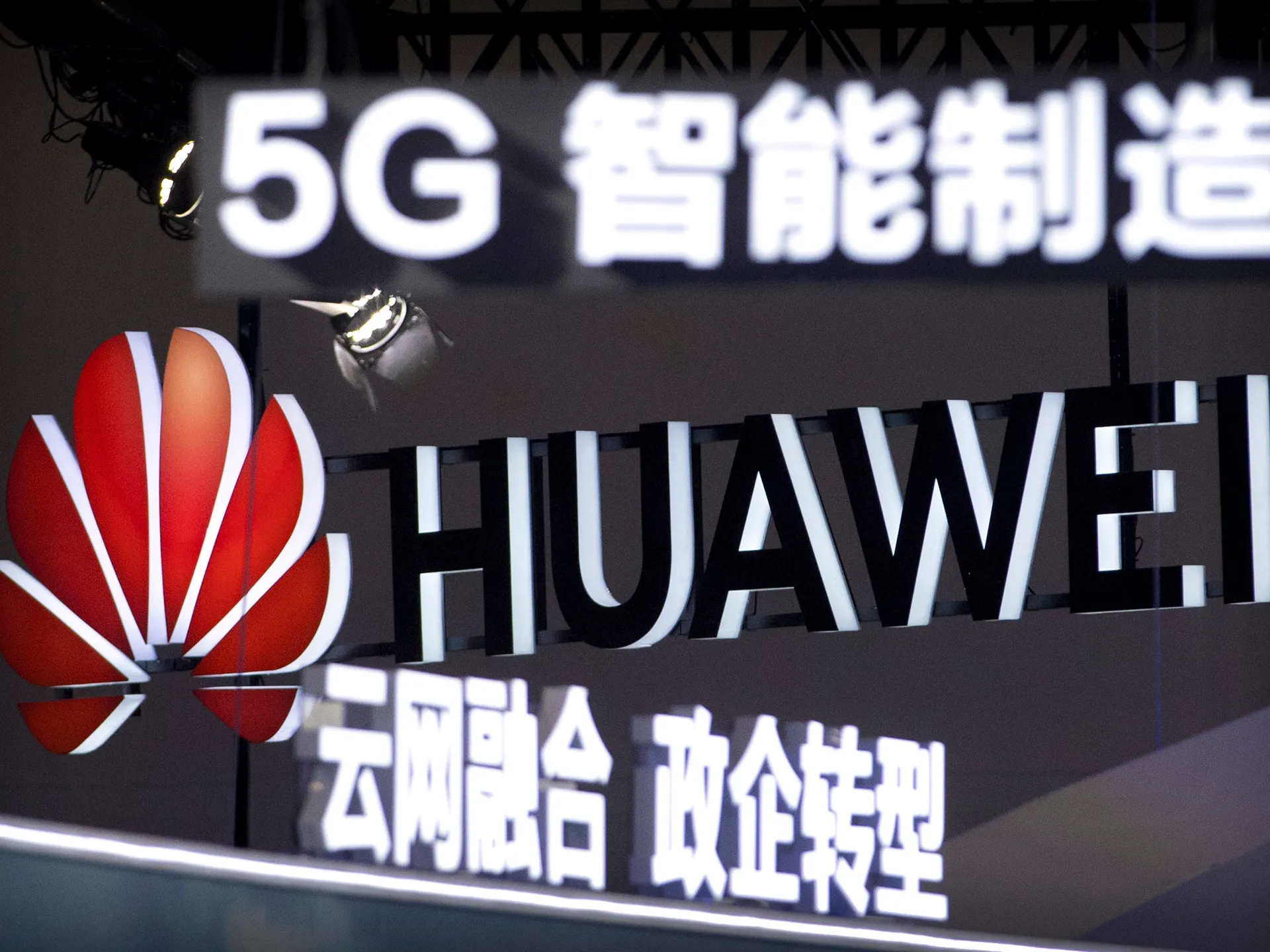
Chinese technology giant Huawei is facing a landmark criminal trial in the United States amid Washington’s long-running tech rivalry with Beijing.
The trial began in federal court in Brooklyn, New York, on September 9, with US prosecutors portraying Huawei as a criminal enterprise that spent two decades stealing technology from US companies, deceiving banks and circumventing sanctions on Iran.
Recommended Stories
list of 3 itemsend of list
Huawei has pleaded not guilty and says the US government is attempting to turn ordinary business disputes and the actions of individual employees into evidence of a company-wide conspiracy.
The trial is expected to last about three months and overlaps with Chinese President Xi Jinping’s September 23-25 visit to Washington, where trade, artificial intelligence, tariffs and access to critical technologies are likely to be on the agenda.
Here is what you need to know:
What are the allegations against Huawei?
US prosecutors have accused the company of racketeering, money laundering, bank and wire fraud, sanctions violations, obstruction and conspiring to steal trade secrets from five US technology companies.
Prosecutors say the alleged wrongdoing stretched from about 1999 to 2020.
“Theft, lies, cover-up,” Justice Department lawyer Taylor Stout said in his opening remarks.
Prosecutors allege Huawei stole technology, including internet-router source code from Cisco and a robotic arm used by T-Mobile to test phones.
They also accuse Huawei of concealing the nature of its operations in Iran to move US dollars through the financial system despite US sanctions.
The government also alleges that Huawei supplied equipment that could help Iranian authorities monitor protesters during demonstrations in 2009.
How has Huawei responded?
Huawei, a major manufacturer of telecommunications equipment, denies any wrongdoing.
The tech giant’s lawyer Brian Heberlig told jurors the case was about “competition, not conspiracy. Innovation, not theft. Ordinary business dealings, not criminal conduct.”
Heberlig accused prosecutors of “cherry-picking isolated events” to construct a conspiracy that did not exist. Huawei’s defence says some incidents involved individual employees whose actions were dealt with internally, rather than reflecting company policy.
He told jurors that prosecutors will describe routine activities by global tech companies “but will twist those ordinary activities to try to make them look criminal”.
Huawei separately described the broader prosecution as an attempt to undermine its competitiveness, saying the US government’s “overarching narrative is demonstrably false” and that it had “the utmost respect for intellectual property”.
The case originated during Donald Trump’s first presidency. His administration placed Huawei on a US trade blacklist in 2019 and pushed allies to exclude the company from 5G networks, arguing its equipment could present national security and espionage risks.
Huawei has repeatedly denied that its technology is used for spying.
What has China’s response been?
Beijing has strongly criticised the prosecution, which has come weeks ahead of Chinese President Xi Jinping’s visit to the US.
On Thursday, a Chinese Ministry of Foreign Affairs spokesperson said “the Chinese government firmly opposes the US side’s suppression and containment of Chinese enterprises”, when asked about the case and the American prosecutor’s “criminal enterprise” description.
China “firmly supports Chinese enterprises in safeguarding their legitimate rights and interests”, the spokesperson said at a regular news conference.
What is Huawei, and has the tech giant faced investigations before?
Huawei is one of the world’s largest telecommunications equipment manufacturers. It also produces smartphones and has become increasingly important to China’s semiconductor and AI industries.
Its activities have drawn scrutiny well beyond the current US trial.
Belgian prosecutors launched an investigation in 2025 into suspected bribery involving the European Parliament allegedly for Huawei’s benefit.
The European Parliament subsequently suspended access for Huawei lobbyists. Huawei said it had “zero-tolerance” for corruption and would cooperate with authorities.
Huawei chief financial officer Meng Wanzhou made worldwide headlines in 2018 when she was arrested on a US warrant after landing in Vancouver, straining both US-China and China-Canada relations.
The warrant was filed after a sealed indictment accused her and the company of bank fraud for misleading HSBC and other banks about Huawei’s business in Iran.
She returned to China in 2021 under a deferred prosecution agreement, and the charges against her were later dismissed.
Admissions Meng made as part of that agreement can, however, be presented as evidence in Huawei’s current trial after a US judge ruled them admissible in June.
They are legally separate but form part of a much wider economic and technological competition between Washington and Beijing.
Huawei became one of the most prominent targets of US restrictions during Trump’s first term.
Since then, the rivalry has expanded from telecommunications and 5G into semiconductors and AI, with Washington restricting China’s access to advanced US chips and chipmaking technology.
Last week, Dario Amodei, the CEO of Anthropic, warned that a “Chinese lead in AI would pose grave danger for the US and the world” and urged Washington to maintain restrictions on cutting-edge AI tech. He also called for action against alleged “distillation” of US models by Chinese AI laboratories.
China’s Foreign Ministry on September 14 accused the US tech giant of “fearmongering”.
“Fomenting various threats, engaging in confrontation and malicious competition will only disrupt the process of global governance of artificial intelligence and is not in the interests of any party,” said ministry spokesperson Guo Jiakun.
The state-backed Global Times newspaper went further, describing Amodei’s proposal as a “Cold War playbook” whose real purpose was to curb Chinese AI development and preserve US technological dominance.
China and the US were engaged in a tit-for-tat tariff war at the beginning of Trump’s presidency in 2025. The trade war ended in a truce, but the world’s two largest economies have failed to strike a trade deal.
Beijing, meanwhile, has used its dominance of critical minerals as leverage and accelerated efforts to build domestic alternatives to American technology.
Currently, China controls most of the world’s rare earth minerals, including metals that are necessary for the manufacture of many technological items, from smartphones to fighter jets. The world’s second-largest economy has 60 percent of these minerals and processes 90 percent of the world’s supply.
In October, Beijing announced plans to require foreign companies to obtain permission to export Chinese rare earth equipment or material.
This meant companies anywhere in the world would need a licence to export rare earth magnets and certain semiconductor materials that contain even trace amounts of minerals sourced from China or produced using Chinese technology.
China’s Ministry of Commerce said its export controls on rare earths, which Trump had labelled “surprising” and “very hostile”, were introduced in response to a series of US measures.
Selected by Beijing in 1996, Tung Chee-hwa’s tenure shaped post-handover Hong Kong during a turbulent political era.
Published On 20 Sep 202620 Sep 2026
Hong Kong has given a state funeral to Tung Chee-hwa, its first post-colonial leader, only the third time the city has granted such an honour since Britain returned it to Chinese rule in 1997.
Senior Chinese and Hong Kong officials bid farewell to Tung at the Hong Kong Funeral Home in North Point on Sunday, a day after a public vigil that drew dozens of political and business figures.
Recommended Stories
list of 3 itemsend of list
Tung, Hong Kong’s first chief executive, died on September 8 at the age of 89.
Members of the public could pay their respects by signing condolence books at three community halls until Sunday noon.
The funeral committee, made up of 87 members, was chaired by Shi Taifeng, a senior Chinese Communist Party Politburo member and vice chairman of the Chinese People’s Political Consultative Conference (CPPCC), the top political advisory body, underlining the level of official backing from Beijing.
Shi attended the funeral alongside Xia Baolong, Beijing’s top official for Hong Kong and Macau affairs; current chief executive John Lee; former chief executives Leung Chun-ying, Carrie Lam and Donald Tsang; and other political and business figures, reported government-funded Radio Television Hong Kong (RTHK).
Lee and Leung were among the pallbearers who carried Tung’s coffin, draped in China’s national flag, from the hall to a hearse, which headed to Cape Collinson Crematorium.
A shipping tycoon with little political experience, Tung was selected in 1996 by a Beijing-appointed committee to become Hong Kong’s first leader after the 1997 handover from Britain.
Tung led the city through the 1997 Asian financial crisis and the 2003 SARS outbreak, and mass protests that year forced him to shelve proposed national security legislation.
He was re-elected unopposed in 2002 but resigned in 2005, midway through his second term, citing poor health, in a move widely seen as driven by Beijing’s loss of confidence in him.
He went on to serve as a vice chairman of the CPPCC until 2023.
Two business leaders, industrialist Ann Tse-kai and tycoon Henry Fok, who both served as vice chairs of the CPPCC, were given state funerals in 2000 and 2006, respectively.
Chinese state media described Tung as a “renowned patriot”, while his successor, Tsang, called him “an easy-going, gentle and refined man with a broad-minded outlook and far-reaching vision”.
Critics recalled his tenure as marked by governance struggles and public discontent that never fully recovered after the financial crisis.
Former England forward Andros Townsend avoided serious injury after being run over by a pitch roller as he warmed up at half-time in a Thailand league match.
PM Anthony Albanese asks Apple CEO Tim Cook to back Canberra’s online safety laws to ‘keep Australians safe’.
Published On 20 Sep 202620 Sep 2026
The Australian government is seeking support from global tech giants as it works to strengthen the country’s online safety laws and artificial intelligence (AI) regulations.
Prime Minister Anthony Albanese, who met Apple CEO Tim Cook at the tech company’s headquarters in Cupertino, California, on Saturday, said that “Australia can’t do it alone” when it came to protecting children from the dangers of the internet.
Recommended Stories
list of 3 itemsend of list
“We spoke about what we’re doing to protect children from online harm and the work ahead,” Albanese wrote on social media.
“We’re putting stronger rules in place to keep Australians safe online,” he said. “And now, big tech companies like Apple are stepping up too.”
Albanese, who is also in the United States for the United Nations General Assembly, used his trip to call for stronger AI regulation after dire safety warnings from industry leaders.
Australia will introduce new standards for AI by the end of the year, he said.
In a video posted to his X account, Albanese said his Labor government is “making sure technology works for Australians”, and not the other way around.
In a post on X, Cook also said he shared with Albanese new “strong and intuitive controls to help keep kids safe online”.
New Australian legislation unveiled this month would place a “duty of care” requirement on the firms behind popular platforms, such as Facebook, TikTok and Instagram, and allow users to turn off their algorithms.
The draft laws will be introduced to parliament later this year after consultation with social media companies, industry bodies and civil society groups.
The opposition Liberal-National Coalition opposes the bill “in its current form”, according to a statement published on September 10, saying that it “contains inadequate safeguards for free speech and journalism, and leaves too much power in the hands of the Communications Minister”.
Australia implemented legislation barring children under 16 from social media platforms last year as part of a world-first crackdown designed to protect children from online bullying and “predatory algorithms”.
However, data last month found that Australians under 16 continued using social media apps such as Instagram and TikTok despite the ban.
Asia’s biggest sport stars will descend on Japan this week to battle it out for continental glory as the Asian Games get under way.
Aichi-Nagoya 2026 will see several athletes eyeing first-time podium finishes while others look to defend their crown.
Recommended Stories
list of 4 itemsend of list
This year’s edition will see six sports make their debut, while in some sports, a gold medal will double as automatic qualification for the LA 2028 Olympics.
From Olympic champions to teen sensations to breakout stars, Al Jazeera Sport takes a look at some of the top athletes to watch:
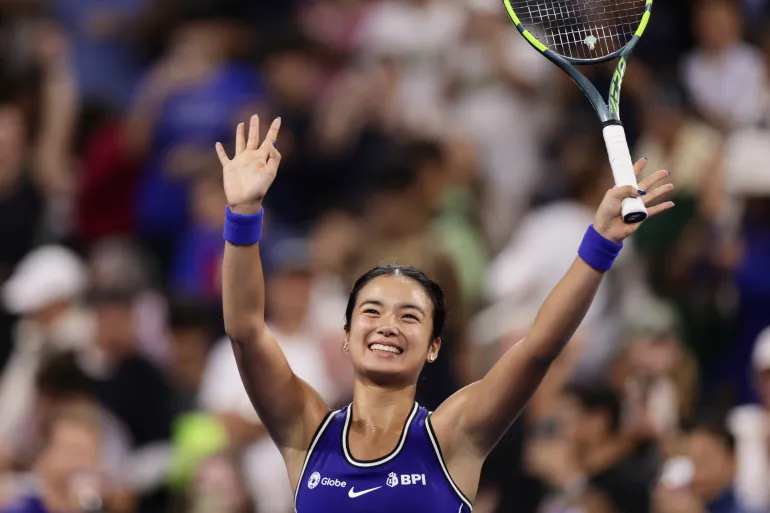
Alex Eala, Philippines — tennis
Tennis’s newest sweetheart will be the favourite for gold in women’s singles. The 21-year-old Filipino star is coming off a career-high season that saw her first WTA 1000 title last month and a third-round finish at the US Open.
Eala will compete at the Singapore Open just before the games, but will skip the concurrent Beijing Open – regardless of whether the WTA decide to punish her – since a gold medal at the Asian Games serves as automatic qualification for the LA 2028 Olympics.
Defending champion Zheng Qinwen and former world number one Naomi Osaka will not be competing in Japan, leaving it wide open for Eala to claim gold and upgrade from the bronze she won in 2022.
Eala acknowledges the crowd after defeating Mary Stoiana in the first round of the US Open in New York [Adam Hunger/AP Photo]
Rumesh Pathirage, Sri Lanka — javelin
The javelin phenom has been collecting gold medals like Pokemon cards this year, and another one at the Asian Games will add to his Diamond League, Commonwealth, and Ultimate Champion crowns.
But gold is not the biggest prize for the 23-year-old, although it is almost guaranteed after his nearest contender, India’s Neeraj Chopra, withdrew with injury. Pathirage is eyeing the Asian record of 92.97m set by Arshad Nadeem at the Paris 2024 Olympics, which he is poised to break after becoming the only thrower this season to breach 92m twice.
Pakistan’s Nadeem, on the other hand, is far from fit and will be lucky to end his season with a medal after a string of subpar throws.
Pathirage celebrates with the trophy after his victory in men’s javelin at the World Athletics Ultimate Championship in Budapest on September 13, 2026 [Ben Stansall/AFP]
Haruka Kitaguchi, Japan — javelin
Home favourite Kitaguchi is eyeing gold in the women’s javelin after being crowned Ultimate Champion in Budapest last week. Her 68.92m throw landed her a new national record and is tied for 10th-best in the world and second-best this season.
Surprisingly, the 28-year-old is making her Asian Games debut and will look to add continental gold in front of the home crowd after floundering at last year’s World Athletics Championships in Tokyo.
Yan Ziyi, China — javelin
Another javelin powerhouse to watch is world number one Yan Ziyi. She became only the sixth woman in history to surpass the 70m mark with her 71.74m throw in May that became a new Asian and World Under-20 record.
The Chinese teen sensation was unbeaten throughout the five Diamond League competitions she contested, but finished second to Kitaguchi at the Ultimate Championship after withdrawing with injury after one throw.
Should she recover in time, the 18-year-old can snatch back the crown from the Japanese veteran thrower to end the season on a high note.
Yan Ziyi heads to the Asian Games as world number one in the women’s javelin throw [Lintao Zhang/Getty Images/File]
Vaibhav Sooryavanshi, India — cricket
As India look to defend their men’s cricket crown, all eyes are on 15-year-old Sooryavanshi to produce another phenomenal result on the pitch.
India’s Vaibhav Sooryavanshi in action at the third India v England T20I in Nottingham [Andrew Boyers/Reuters]
Pan Zhanle, China — swimming
The Olympic champion returns to the stomping grounds where he first went sub-47 seconds in the men’s 100m freestyle – and became the first Asian male to do so – to break his own Asian record.
It was also on home soil at the Hangzhou 2022 games that he bagged a silver in the 200m and 400m freestyle, a bronze in the 50m, and a gold in the men’s 4x100m freestyle relay and 4x100m medley relay.
Pan Zhanle celebrates after winning the men’s 100m freestyle final at the 2024 Summer Olympics [Petr David Josek/AP Photo]
Yu Zidi, China — swimming
The Chinese prodigy was only 12 when she made waves as the youngest-ever medallist at the 2025 World Swimming Championships. She narrowly missed a podium finish in her individual events but found redemption at the Chinese National Swimming Championships later that year with two golds, one silver, and an Asian record in the 200m Individual Medley.
Now 13, she is looking to dominate at her first, hopefully of many, Asian Games where she’s entered in the 200m IM, 400m IM and 200m butterfly events, alongside relays.
While training with the China team in Beijing, she told local media this month she was “excited” for her Asian Games debut.
“Train well, don’t slack off. Demonstrate the level of your training and work hard to break past yourself,” she said, according to state news agency Xinhua.
Yu Zidi of China competes in the Women’s 200m individual medley final at the China Open Swimming Championship in Shenzhen, China on March 22, 2026 [Lintao Zhang/Getty]
101 East meets innovators across East Asia using digital technology to transform how we grieve those we love.
East Asia is facing a demographic reckoning, with societies in Japan, South Korea and Taiwan ageing rapidly.
With a drastic shortage of burial space, a lucrative new market is emerging.
From AI avatars to DNA gems, technology is bringing loved ones back to life – in digital forms – raising questions about whether it will help heal or hinder the grieving process.
101 East investigates how new technology is transforming the way we bid farewell to those we love.
New Delhi, India – On the morning of August 26, the Himalayan landscape above Nepal’s Rasuwa district changed in minutes.
A mass of ice and rock broke loose high in the mountains and sent a violent surge of water, mud and debris down the Lhende Khola River. The torrent travelled through valleys, swept away settlements and infrastructure and eventually reached the Nepal-China border.
What followed was not simply a flood.
It was a chain reaction.
By mid-September, more than 1,400 people had been reported dead and at least 6,000 remained missing in Nepal and across the border in Tibet. Twelve hydropower plants were destroyed, while roads, bridges and homes were buried or washed away.
The scale of the destruction has left scientists and disaster managers confronting a difficult question: How do you warn communities about a disaster whose trigger may occur high above them, in terrain that is difficult to monitor and where there may be only minutes to react?
Basanta Raj Adhikari, director of the Centre for Disaster Studies at Tribhuvan University in Kathmandu, described the event to Al Jazeera as unprecedented in size, affected area and mechanism. His estimate suggested that the energy involved was greater than that released by the Hiroshima atomic bomb, a comparison intended to illustrate the scale of the physical forces involved rather than suggest that the event was equivalent to a nuclear explosion.
For scientists who study the Himalayas, the disaster demonstrated how quickly an event originating in a remote, high-altitude environment can become a regional catastrophe.
And Nepal is not alone.
The warning problem
A warming climate is altering glaciers, snow cover, permafrost and high-altitude lakes. At the same time, roads, hydropower projects, tourist facilities and settlements have pushed deeper into mountain valleys.
That combination is creating a new risk landscape in which one hazard can trigger another.
An avalanche can block a river. A blocked river can form a temporary lake. A sudden release can become a debris flow. That debris can destroy a road or bridge, block another river and create another flood downstream.
The August disaster in Nepal showed how quickly such a sequence can unfold. It also exposed a weakness in the way early-warning systems are often designed.
Many systems are built around a particular hazard: rainfall, river level or glacial lake outburst flood. But the Himalayas do not always respect those categories.
In July, the International Centre for Integrated Mountain Development, or ICIMOD, warned that a below-normal monsoon should not be interpreted as a safer one.
“The biggest misunderstanding is that less seasonal rainfall means lower flood risk,” said Saswata Sanyal, a disaster risk reduction specialist at ICIMOD.
“A drier monsoon can still be a dangerous monsoon,” he added, warning that seasonal averages cannot capture the cloudbursts capable of producing catastrophic flooding in mountain valleys.
The Nepal disaster went a step further.
The immediate trigger was not simply heavy rainfall.
Scientists have been examining an ice-rock avalanche and other possible processes that temporarily obstructed the river system before releasing a destructive surge. ICIMOD has described the event as an ice avalanche rather than a conventional glacial lake outburst flood, while other scientists have examined the role of local seismic activity and other high-altitude processes.
That distinction matters.
A warning system waiting for rainfall or a rising river may not provide enough time when the real trigger happens several kilometres upstream and above the line of sight of the communities below.
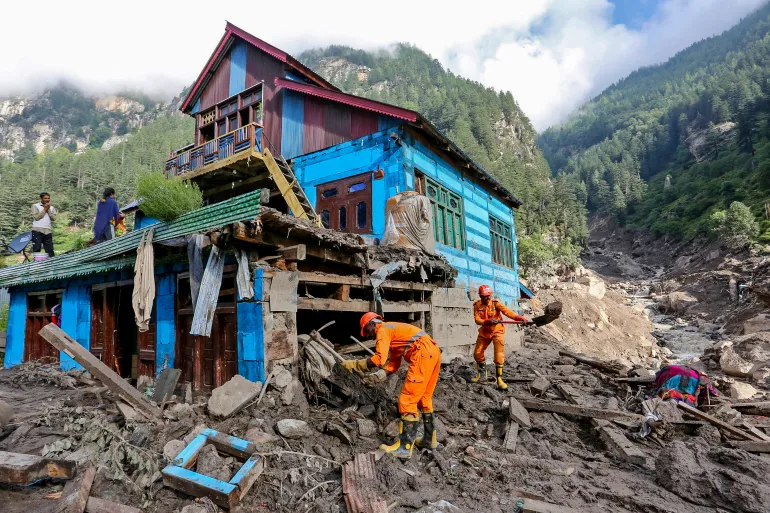
Indian National Disaster Response Force (NDRF) personnel conduct a search and rescue operation at the site of a flash flood at a village in the Kishtwar district of Indian-administered Kashmir on August 16, 2025 [AFP]
Kashmir’s warning signs
Thousands of kilometres away, scientists studying Kashmir’s Himalayas are seeing another part of the same problem.
A study published in the Journal of Glaciology this year mapped 155 glacial lakes above 2,500 metres (8,200ft) across the Himalayas in Indian-administered Kashmir.
The researchers found that the area of ice-contact proglacial lakes – bodies of water that form directly against the margin of a melting glacier, trapped by moraine ridges, bedrock basins, or ice dams – had increased by 26 percent between 1992 and 2024.
Five lakes were classified as having very high susceptibility to glacial lake outburst floods.
An outburst from those lakes, the researchers found, could threaten several thousand buildings, 15 major bridges, roads and a hydropower project.
More significantly, the study warned that hazards could occur in chains, with an upstream lake outburst potentially triggering secondary events downstream.
For Irfan Rashid, a glaciologist and associate professor at the University of Kashmir who co-authored the study, the implications extend beyond individual lakes.
Rashid recently told Al Jazeera that without action, the melting, thinning, and destabilisation of glaciers, seasonal snow cover, and permafrost along the Hindu Kush-Himalayas system would increase, and water shortages could become a major problem across the Upper Indus, Ganga and Brahmaputra basins by the end of the century.
That is why the Nepal disaster resonates in Kashmir.
The landscapes are different, the rivers are different and the individual hazards may differ. But the underlying problem is increasingly similar: Communities living downstream of a rapidly changing high-altitude environment may have little time to respond when something breaks loose above them.
The challenge is particularly acute in places where roads, bridges and hydropower projects occupy narrow valleys.
Once a mountain river begins carrying enormous quantities of rock, ice and mud, infrastructure designed for conventional floods can quickly become irrelevant.
Volunteers rescue flood-affected victims along with their livestock using a boat following heavy rains and overflowing of the Sutlej River, on the outskirts of Multan in Punjab province, Pakistan, on September 4, 2025 [Shahid Saeed Mirza/AFP]
Pakistan has already begun building a warning network
The same concern runs across the western Himalayas and Karakoram ranges.
The Gilgit-Baltistan region in Pakistan-administered Kashmir contains hundreds of glaciers and glacial lakes, while communities and infrastructure sit along valleys exposed to sudden floods and landslides.
Pakistan has responded by expanding early-warning infrastructure.
Under a United Nations-supported programme, early-warning systems, evacuation shelters, disaster-management centres and other protective measures have been established in vulnerable valleys.
But technology alone cannot solve the problem. A sensor can detect a change. Someone still has to receive the message. Someone has to understand what it means. And people downstream have to have a route to safety.
That last part is often the weakest link. A siren is useful only if the people hearing it know where to go. An automatic warning is useful only if it arrives before the flood. A satellite image is useful only if the information can be converted into a decision quickly enough to save lives.
This is why disaster scientists increasingly talk about anticipatory action rather than simply disaster response.
“The era of preparing for a single, predictable hazard is over,” Sanyal said earlier this year. “Anticipatory action and early warning must now be the foundation.”
Nepal army soldiers work during a search and rescue operation outside a tunnel near a hydropower project site, following deadly flash floods and mudslides, in Rasuwa district, Nepal, on September 1, 2026 [Reuters]
The infrastructure trap
The Himalayas are also becoming more heavily engineered.
Hydropower is central to Nepal’s economy. Roads are being expanded. Border crossings are growing in importance. Tourism is pushing deeper into remote valleys.
The benefits are obvious. So are the risks.
The August disaster struck an area where hydropower infrastructure was concentrated along the river corridor. At least 900 workers were believed to have been inside tunnels and other facilities in the aftermath, making rescue operations extraordinarily difficult. Two workers were eventually pulled alive from a hydropower tunnel nine days after the disaster.
The question is no longer simply whether infrastructure can withstand a flood. It is whether planners have adequately considered what happens when a flood is carrying an enormous mass of rock and ice, when a river changes course, or when one mountain hazard triggers another.
For decades, engineering risk assessments have often relied on historical records. But history becomes a less reliable guide when the physical conditions producing disasters are changing.
A river that flooded once every several decades may no longer behave according to the same pattern. A glacier that appeared stable from satellite imagery may sit beneath an increasingly unstable slope. A lake that was considered remote may suddenly become a threat to a road, village or power plant hundreds of metres below.
Relatives of victims and missing people react outside the morgue of the Tribhuvan University Teaching Hospital (TUTH), in Kathmandu, Nepal, August 29, 2026 [Narendra Shreshtha/EPA]
The border problem
There is another complication that no satellite can solve on its own.
Borders.
The Himalayas are divided among countries with different political systems, security concerns and approaches to sharing information. But rivers do not stop at international boundaries. Neither do floods.
The August disaster reached the Nepal-China border and damaged the Gyirong crossing, an important trade and pilgrimage route. The disaster also raised questions about how quickly information about hazards in high mountain areas can move between countries.
This is where regional cooperation becomes more than a diplomatic slogan, experts say. A sensor positioned in one country can provide warning to people in another. A satellite image collected over one mountain range can reveal a developing hazard that threatens a valley downstream. A river gauge can provide critical information before floodwaters reach a settlement.
The technical capability already exists in many cases. The missing piece is often the architecture connecting it.
A 2026 assessment of Himalayan disaster risks has argued for stronger monitoring, early-warning systems and regional coordination because hazards are increasingly interconnected.
The idea is simple: Information about a mountain hazard should not stop at the same line where a political boundary begins.
Buildings are inundated after flash floods triggered by sudden heavy rainfall swamped Rangpo town in Sikkim, India, Friday, October 6, 2023 [Prakash Adhikari/AP Photo]
From Nepal to Sikkim to Kashmir
The August disaster in Nepal isn’t a tragedy belonging to one country, point out experts.
The Kashmir Himalayas study has already identified lakes capable of producing destructive outburst floods and has warned of cascading processes.
Northeast India’s Sikkim provides another example.
Today, 40 high-risk glacial lakes have been identified in Sikkim, including 16 placed in the highest-risk category, with authorities working on drainage, flood-retention and other protective measures.
But the lesson from each disaster is broadly the same: Waiting for a disaster to prove the risk is the most expensive form of preparedness.
The world’s second largest mountain, the 8,611-metre- (28,251ft-) high K2 (seen in the distance), and the 8,051-meter- (26.414ft-) high Broad Peak (R), are illuminated by the moon at Concordia, the confluence of the Baltoro and Godwin-Austen glaciers, in the Karakoram mountain range in Pakistan, September 7, 2014 [Wolfgang Rattay/Reuters]
The Third Pole test
The Himalayas are sometimes called the Third Pole because they contain one of the world’s largest concentrations of snow and ice outside the Arctic and Antarctic.
Major Asian rivers depend on water originating in these mountains. Hundreds of millions of people live downstream.
That makes the changing Himalayas not only an environmental issue but a security, infrastructure and humanitarian one.
The August disaster demonstrated the most frightening version of that future. A mountain can collapse without warning. A river can become a weapon of debris. A hydropower tunnel can become a trap. A border crossing can disappear in minutes. And by the time people downstream understand what is happening, the water may already be there.
It’s a future that a region stretching from northeast India, spanning Tibet, Nepal, Kashmir and Pakistan, can no longer ignore. Yet disaster management remains largely divided by national boundaries. That contradiction is becoming harder to navigate.
The next glacial collapse could begin in Kashmir. It could begin in Pakistan’s high mountains. It could begin in Sikkim, Nepal or Tibet.
Wherever it starts, the same question will follow the mountain downstream: Who knew, how early did they know, and did the warning reach the people in time?
For a region entering an era of increasingly complex mountain hazards, that may be the real measure of whether the Third Pole is prepared.
US judges affirm migrants must have opportunities to voice safety concerns before deportation to unfamiliar nations.
Published On 19 Sep 202619 Sep 2026
A US federal appeals court has rejected the Trump administration’s policy of rapidly deporting migrants to countries other than their own – a ruling that could next go before the Supreme Court.
On Friday, a three-judge panel of the 1st US Circuit Court of Appeals in Boston largely upheld a February decision that found the Department of Homeland Security’s so-called third-country removal policy unlawful.
Recommended Stories
list of 3 itemsend of list
The case stems from a class-action lawsuit testing what due process migrants are owed before being sent to nations with which they have no ties.
Writing for the panel, US Circuit Judge Seth Aframe said migrants must be given a “meaningful” chance to raise safety concerns before removal, rejecting the Trump administration’s narrower reading of the law.
The court did overturn part of the ruling on procedural grounds, concerning whether officials must first try deporting migrants to countries they have ties to.
Trina Realmuto, a lawyer for the plaintiffs at the National Immigration Litigation Alliance, said the decision confirmed that “due process and the protections Congress enacted against persecution and torture cannot be circumvented by putting someone on a plane to a country that was never part of their removal proceedings”.
The DHS did not immediately comment. The Trump administration is expected to appeal the ruling.
Under Trump, the US has struck agreements allowing it to send more than 25,000 migrants to at least 29 third countries, most often Mexico, according to Third Country Deportation Watch, a tracker run by the rights groups Refugees International and Human Rights First.
The policy, adopted in March 2025, allowed removals with only minimal notice if officials had diplomatic assurances against persecution.
The controversial programme has reached the Supreme Court twice.
In 2025, the justices cleared the way for eight men, including nationals of Cuba, Myanmar and Vietnam, to be deported to South Sudan, a country the US State Department advises against visiting because of “crime, kidnapping, and armed conflict”.
The DHS called the removals “a win”, while rights groups said they flouted basic protections.
The Trump administration’s immigration agenda has faced a string of setbacks this month.
A federal judge blocked planned caps on student and journalist visas, calling the government’s justification “exceptionally weak”, while a coalition of 22 states and Washington, DC, sued to stop a separate rule that would let officials deny green cards to immigrants who lawfully use public benefits.
Indonesia says vessel will be used to aid disaster relief across the archipelago, but its arrival comes amid drive to upgrade the military.
Published On 18 Sep 202618 Sep 2026
Indonesia has welcomed the delivery of its first-ever aircraft carrier with a military ceremony as the vessel arrived at a naval base.
The 41-year-old former Italian navy vessel Giuseppe Garibaldi docked in North Jakarta’s Tanjung Priok seaport on Friday, after sailing from Italy via Colombo and the Malacca strait, Indonesian Navy Chief of Staff Muhammad Ali told reporters.
Recommended Stories
list of 3 itemsend of list
Indonesia’s President Prabowo Subianto says the ship will be used to manage disasters across the archipelago. However, it arrives amid a drive to upgrade the military.
The 180-metre (590-foot) vessel can carry up to 18 helicopters and accommodate up to 830 personnel, a navy spokesperson said in a statement.
The carrier will be renamed KRI Sriwijaya, honouring the Srivijaya empire, a maritime kingdom based in Sumatra that became one of Southeast Asia’s dominant naval and trading powers between the seventh and 13th centuries.
“There are many disasters in this country. So we really need a vessel or platform that could carry many helicopters, because the helicopters can drop logistics quickly to remote areas,” Ali said.
However, he also noted that the ship could “be deployed for combat missions if necessary”.
Bolstering defence
The arrival of the vessel, which was commissioned by the Italian navy in 1985, comes as Prabowo has been pushing to upgrade Indonesia’s military assets and build closer defence cooperation with other countries.
Italy agreed to give Indonesia the carrier in March, after it was retired in 2014. The move was meant to bolster the two countries’ defence engagement.
Italy is seeking deals on submarines and aircraft, and gifting the carrier to Indonesia also saves it the cost of decommissioning the ship.
“Its condition is still very good and hopefully it can be used by the Indonesian navy for the next 15 to 20 years,” navy chief Ali said.
Indonesia’s Finance Ministry approved $450m in financing for the aircraft carrier programme in 2025. Opposition politicians worry the overall bill could be far higher.
However, Prabowo – formerly a general under the Suharto regime – has made building Indonesia’s defence assets and agreements a priority.
Jakarta signed an $8.1bn deal in 2022, when Prabowo was defence minister, to purchase 42 French-made Rafale fighter jets. India confirmed this year that it will supply the country with long-range missiles.
Indonesia has also agreed this year to a “Major Defence Cooperation Partnership” with the Trump administration in the United States, and a security treaty with Australia.
Bank of Japan raises benchmark interest rate from 1 to 1.25 percent, pledging to help counter inflation risks.
Published On 18 Sep 202618 Sep 2026
The Bank of Japan (BoJ) has raised interest rates by 0.25 to 1.25 percent, pushing borrowing costs to their highest level in 31 years, amid rising inflation and wages, and pressure from Washington.
The move on Friday marked the first hike since June, and takes interest rates closer to levels the BoJ deems neutral to the economy, marking another step away from decades of ultra-low rates that cemented the yen’s status as a cheap global funding currency.
Japan is grappling to contain inflation, which is being driven by factors including rising energy prices, global supply pressures and domestic inflation exceeding the 2 percent target.
Core consumer inflation held steady near the target in August, data showed on Friday, as companies continued to pass on rising costs for a wide range of food and grocery items.
The country also faced a “slow-moving demographic shock” with a shrinking labour pool lifting wages, a structural factor that cannot be dismissed as temporary, BoJ Executive Director Koji Nakamura said on Monday.
The Federal Reserve’s rate hike on Wednesday, and the prospect of another one later this year, have added pressure on the BoJ to keep pace.
Further widening of the United States-Japan rate gap risks weakening the yen and lifting inflation through higher import costs, analysts told the Reuters news agency.
Its policy rate also remains lower than the European Central Bank, which raised its key rate to 2.5 percent last week.
Such pressure could affect the tone of BoJ Governor Kazuo Ueda’s post-meeting briefing, which will be closely watched by markets for clues on the timing and pace of further increases.
The Aichi-Nagoya Asian Games get under way this weekend under the shadow of a housing crisis that has organisers scrambling to placate athletes and officials from participating nations.
The tournament has been mired in complaints over housing options for athletes travelling to Japan, after the host nation decided not to build a dedicated Games village for the 17,000 competitors and officials.
Recommended Stories
list of 3 itemsend of list
To cut costs this year, organisers are relying on a cruise ship, temporary wooden cabins and hotels, but this temporary accommodation has met with criticism in the days leading up to the continental competition.
On Monday, South Korean officials slammed beds in shipping container-style huts as the “worst-ever”, as the South Korean basketball chief said the beds were too short to stretch out in.
Here’s everything we know:
Why are the Asian Games facing an accommodation crisis?
The official housing committee said the issue arose because they expected 15,000 athletes and officials, but numbers increased as new sports were added.
This year’s Games will feature several newcomers, including mixed martial arts, padel and surfing, as well as virtual taekwondo and teqball, which combines aspects of football and table tennis.
Ahead of the Games’ opening, chief organiser Hideaki Omura said efforts are being made to ensure athletes are comfortable.
“If there are different opinions, then we will respond to them appropriately,” Omura, who also serves as governor of Aichi prefecture, told the AFP news agency.
“At this point, while we are responding to individual opinions, we have been improving everything as issues arise, and we will continue to respond that way.”
He added that a committee of former athletes, including Olympians, gave a favourable assessment of the plans for the huts built this year.
“We explained everything to them and had them take a look around, and they said it looked functional and good,” he said.
Temporary wooden container huts being used to house athletes [David Gray/AFP]
Where will the Asian Games athletes stay?
Alternative housing options range from a cruise liner and wooden containers to hotel rooms.
On Tuesday, the Italian cruise ship, Costa Serena, which will host 4,000 athletes and officials, arrived in Nagoya.
The shipping container-style huts in the dock area of Japan’s biggest port will host 2,000 other athletes and officials.
On Thursday, Japan’s deputy Chef de Mission Hisashi Mizutori told a news conference that athletes have been going through entry procedures since the cruise ship village opened a day earlier.
“There have been cases where coaches, team officials and athletes have been assigned to the same room. There are also situations where room assignments were made purely based on the numbers, such as assigning five twin rooms for a group of five men and five women,” Mizutori said.
“While the numbers match on paper, practically it creates challenging situations such as men and women being assigned together, coaches being assigned with athletes, or trainers who need to accommodate a lot of medical equipment being assigned together.”
He added that the Japanese Olympic Committee (JOC) had also anticipated accommodation “challenges” and secured hotels in the city as a backup.
“We are currently working to coordinate and negotiate adjustments wherever possible. For cases where that proves too difficult, we are considering using the backup accommodations that Team Japan prepared in advance as alternatives.”
Why are participating nations and athletes complaining about the accommodation?
“Athletes who are over two metres tall cannot even stretch their legs out on the beds. It’s unreasonable.”
Jung also accused the organisers of failing to respond to South Korea’s concerns about the housing options.
“The organisers have still not said anything,” he said, adding: “We are very concerned and discussing extensively with the Korean Sport and Olympic Committee what to do about this.”
Player Byeon Jun-hyeong, from the basketball team, posted a video on social media showing a leaking sink and a soaked floor in his hut.
“Please help us,” he posted.
Philippine Olympic Committee president Abraham Tolentino also said that while all his athletes had been given a room, “some officials, like coaches, were moved to different hotels and Airbnb”.
The Costa Serena, a 290-metre-long cruise ship that will be used as an accommodation facility for athletes and officials during the 2026 Asian Games, is docked at the Port of Nagoya [Fred Mery/AFP]
Why will cricketers get the best accommodation at the Asian Games?
According to Miyaji, the cricket tournament is being run by the Asian Games organising committee in collaboration with the Asian Cricket Council.
He said that the two bodies had been discussing accommodation options “for a long time”.
“The participating teams in cricket are being offered hotel accommodation,” Miyaji said.
“Many other sports are being accommodated in much more limited facilities, such as a cruise ship or container hotels.”
What other issues have hit the Asian Games?
While the opening ceremony has yet to take place, several events such as basketball, football, cricket, hockey and modern pentathlon have already begun.
On Thursday, Tropical Storm Dujuan was located off Japan’s Pacific coast as of 03:00 GMT and heading northwest towards central Japan, where Nagoya is located.
Kosei Inoue, Japan’s chef de mission for the Games and a senior executive board member of the JOC, said at a news conference on Thursday that some competitions have already experienced “delays or postponements, and there is also a possibility that a typhoon could approach on September 21”.
“Under these circumstances, we are holding thorough meetings within the JOC to ensure that we are fully prepared and capable of responding appropriately to these situations.”














![Indian National Disaster Response Force (NDRF) personnel conduct a search and rescue operation at the site of a flash flood at a village in the Kishtwar district of Indian-administered Kashmir on August 16, 2025 [AFP]](https://i0.wp.com/occasionaldigest.com/wp-content/uploads/2026/09/afp_68aac36f5150-1756021615.jpg?w=640&ssl=1)