Alexander Volkanovski secured a total knockout in the closing seconds of second round at UFC 333 in Abu Dhabi.
Published On 25 Oct 202625 Oct 2026
Australia’s Alexander Volkanovski has retained his featherweight title after making short work of Russia’s Movsar Evloev in the UFC 333 main event in Abu Dhabi.
Volkanovski secured a technical knockout (TKO) with a right hand, followed by a ground-and-pound move in the closing seconds of the second round of their scheduled five-round fight on Saturday.
Recommended Stories
list of 3 itemsend of list
The official time was 4:54, as the fight was called off with six seconds left to the jubilation of the Etihad Arena crowd in the United Arab Emirates capital.
It was Evloev’s first professional loss and he remained classy in defeat.
“Like I said, Alex is a great champion and it was an honour to share the cage with him,” Evloev said after the loss.
Meanwhile, Volkanovski said he wants to keep stacking wins for as long as he can.
“I’m choosing to do [fight], I don’t have to. I said if I didn’t take too much damage, we will probably keep going. So maybe we keep going,” Volkanovski said.
In the co-main event, Petr Yan won his three-fight series against Merab Dvalishvili in a Russia vs Georgia showdown as Yan swept the scorecards 48-47, 48-47, 48-47 with a mix of a gruelling pace, wrestling, dirty boxing and keeping Dvalishvili at distance to defend his UFC bantamweight title.
Yan beat Dvalishvili last December to regain the title for the second time, having previously won it in July 2020 against Jose Aldo at UFC 251.
The finishes kept coming, but this time in the flyweight division. England’s Lone’er Kavanagh secured a TKO stoppage against Uzbekistan’s Ramazan Temirov with an uppercut, followed by strikes, at 4:28 of Round 1.
At heavyweight, Russia’s Alexander Volkov won a unanimous decision over Rizvan Kuniev utilising dominant wrestling and top control to earn his third-straight win. Volkov called for a title shot at Thursday’s presser, which may have stumped UFC CEO Dana White when addressing him.
Kuniev had his two-fight winning streak snapped.
Opening the main card, Aaron Pico needed just over a minute to TKO Losene Keita of Guinea in their featherweight fight. Pico has won back-to-back fights, while Keita has split his last four.
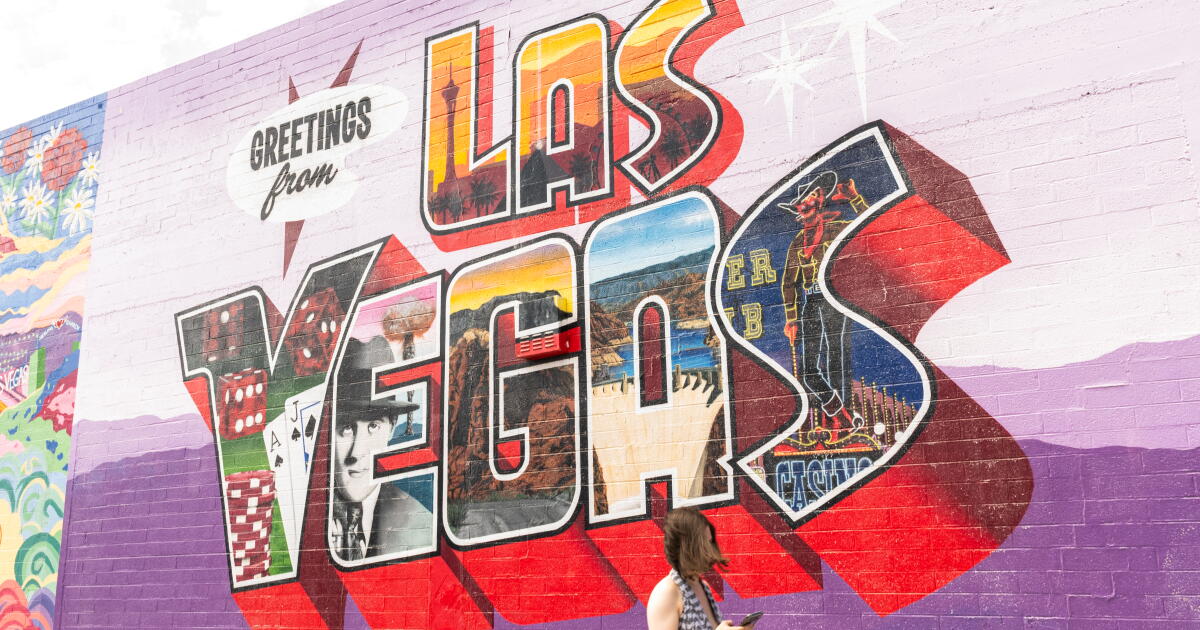
Even as recently as a decade ago, Las Vegas hotel concierges and plenty of locals would have described the gap between the Strip and Fremont Street as something of a dead zone. This was a ragged corridor of old warehouses and auto shops, with more boarded-up storefronts than open doors.
“You couldn’t park your car and not worry,” remembers artist Gem Jaxx, who moved to Vegas in 2006 from Monterey County, Calif. “You couldn’t even walk the streets.”
Yet the idea of an arts district had been taking shape since the early ’90s, when the city identified an 18-block area south of downtown as ripe for creative development. Loosely framed by Hoover Avenue to the north and Colorado Avenue to the south, with Commerce Street and Fourth Street marking its west and east edges, this region became known as the 18b Arts District. First Friday, launched by a small group of artists and gallery owners in 2002, started pulling crowds into the neighborhood. Sometimes tens of thousands at a time, if only once a month.
The regular influx of visitors (combined with cheap rents and plenty of retail space) drew a wave of interesting tenants: antique dealers, secondhand clothing boutiques, microbreweries, cocktail bars. As the mix of businesses grew, 18b began to matter less as a set of boundaries and more as an identity.
“Very quickly it changed,” says Josh Kellman, president of the Arts District board. “Businesses here were saying, ‘Hey, I want to be in 18b.’ No one wants to feel like they’re outside the neighborhood.”
Today, the Las Vegas Arts District is a low-key alternative to the Strip for dining, drinks, art, shopping and beyond. Centered on Main Street, but with plenty to explore on neighboring Commerce Street and Casino Center Boulevard, it’s easy to spend an afternoon browsing vintage shops and gallery spaces, catch live music or a stage show, grab dinner, coffee and craft beer — and still have money left for tomorrow.
But the neighborhood is at a crossroads. After a tragic shooting happened earlier this month during First Friday, the monthly arts festival is now on hold as organizers and city officials consider how to move forward. Meanwhile, a proposed Business Improvement District intended to fund additional safety measures and neighborhood services has stirred debate over how to improve the area while preserving the independent spirit that made it a destination in the first place.
As questions swirl, fans of the Arts District hope it holds on to what makes it such a distinctive place. At a time when Las Vegas can feel increasingly engineered around sky-high bottle service, celebrity-chef tasting menus and cocktails edging toward $30, the neighborhood remains one of the places locals actually hang out and where tourists can experience Sin City beyond the slot machines. Here are 11 worthwhile stops on a visit to the creative hub.
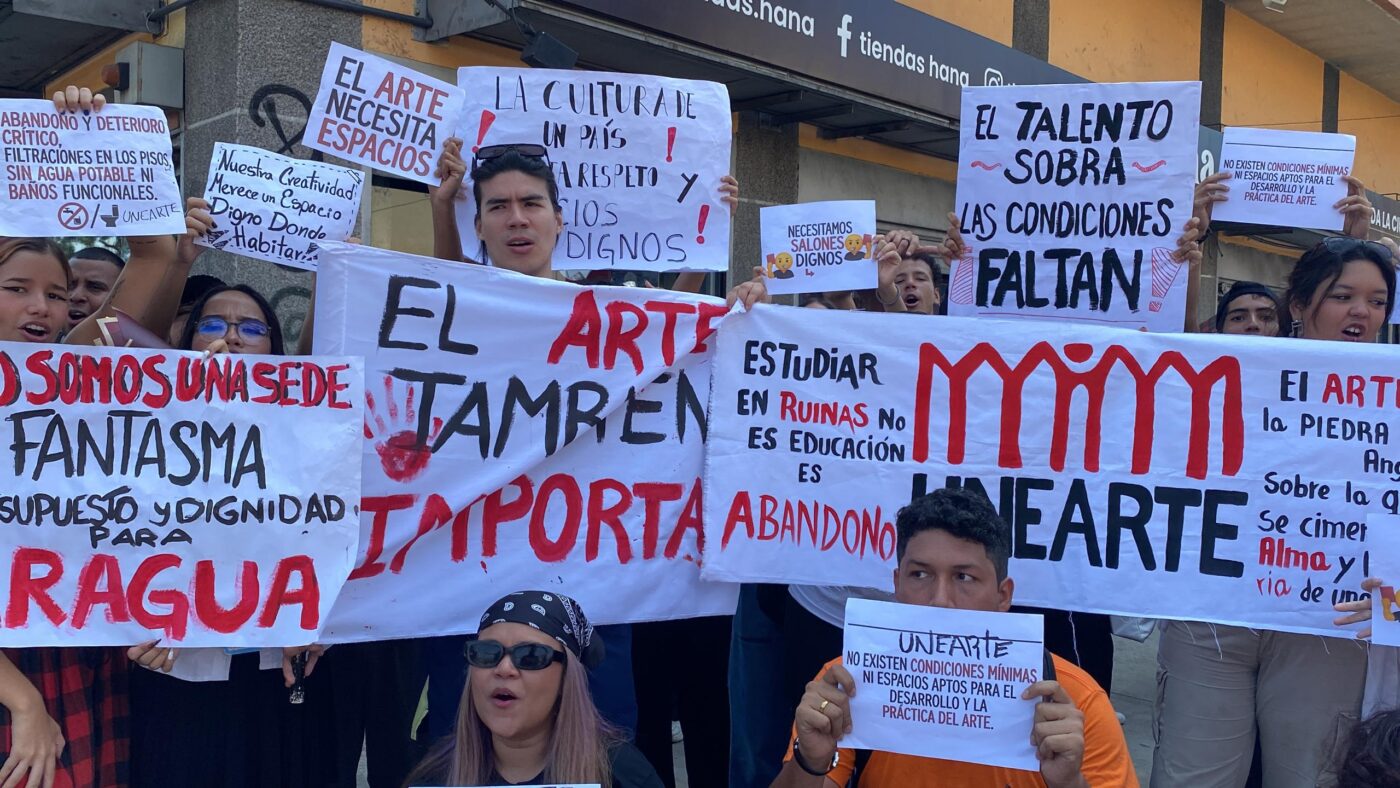
UNEARTE students have staged demonstrations in Maracay and Caracas. (El Siglo)
Caracas, October 22, 2026 (venezuelanalysis.com) – Students from the Venezuelan Experimental University of the Arts (UNEARTE) have staged multiple demonstrations in recent days to press for solutions to infrastructural and administrative issues.
Students from the UNEARTE branch in Maracay, Aragua State, blocked a major intersection on Tuesday to demand “dignified” studying conditions.
“We are staging a peaceful demonstration to demand improvements to our academic conditions,” student José Pérez told local reporters. “We do not have our own campus, and the facilities are inadequate for the artistic areas we are studying.”
Protesters held billboards and banners calling for a “dignified campus.” UNEARTE’s Maracay education programs function in different rented spaces, which students have complained are in deteriorating condition.
The Maracay demonstration followed a number of protests and sit-ins at UNEARTE’s main campus in Caracas. Students denounced that multiple university installations are shut down or in a state of disrepair. The Modest Bor center, which houses UNEARTE’s music program, has been partially closed for several years.
In addition, students decried that UNEARTE centers’ cafeterias have been shuttered for months, while many have additional grievances including inoperative bathrooms and software issues that left many students unable to properly register for classes.
In response to the protests, Venezuelan authorities vowed to address the concerns raised by students. UNEARTE Rector Ignacio Barreto approached students during a demonstration and promised that the registration process would start over.
The Ministry of Culture, which is responsible for UNEARTE alongside the Ministry of Higher Education, held an assembly with all university personnel and announced the creation of working groups with student representatives in several areas.
“This commission, apart from listening to the students and the authorities, should have a weekly plan that can be supervised,” Culture Minister Alejandro López told press. “Accountability before the students is key.”
López, Barreto and other officials were seen inspecting several university facilities last week. The minister pledged to address issues of running water, internet connectivity, and transportation in the near term.
UNEARTE was created by former President Hugo Chávez in 2008, bringing together several educational institutes dedicated to the arts with the aim of advancing a popular and anti-colonial pedagogical approach. It offers degrees in music, dance, film, theater, photography, and plastic arts.
The protests over UNEARTE’s disrepair and deficient conditions coincided with the Venezuelan government’s launch of the José Antonio Abreu Music University. Acting President Delcy Rodríguez headlined the inauguration ceremony earlier this month.
The new public university will have its state-of-the-art campus in the traditionally middle-class southwestern Caracas parish of El Paraíso, including three concert halls and a research center. It will also have 18 regional branches, with a maximum enrolment capacity of around 3,500 students.
Other Venezuelan universities have likewise seen student demonstrations in recent days. In the “Dr. Humberto Fernández-Morán” National Sciences University, students held a protest and an assembly on Monday over what they characterized as inadequate transportation.
The campus is located in Los Teques, some 25 kilometers outside Caracas, and was formally inaugurated in December 2024. Though the university promised to provide transportation, students have complained that the assigned buses are unreliable and have insufficient capacity.
Higher education trade unions have also been at the forefront of regular labor protests in recent months. Venezuelan working-class organizations have called for non-wage bonuses to be converted to salaries and for the restoration of collective bargaining agreements.
Far-right President Abelardo de la Espriella says he will wage a ‘counterrevolution’ against cultural institutions.
Published On 22 Oct 202622 Oct 2026
Colombian President Abelardo de la Espriella has announced he is spearheading a cultural “counterrevolution” that includes removing dozens of exhibits from the National Museum, drawing protests and comparisons to United States President Donald Trump.
De la Espriella, a conservative Trump ally, said last week that he wants to prevent cultural institutions from being taken over by what he calls “atheist social communism”.
Recommended Stories
list of 3 itemsend of list
Since then, exhibits have been taken down that once addressed the history of social movements, including feminist and LGBTQ+ activism, and Colombia’s political violence.
The changes have sparked protests by civil rights groups, artists and students who have accused the government of censorship and warn that important parts of the country’s history could be erased.
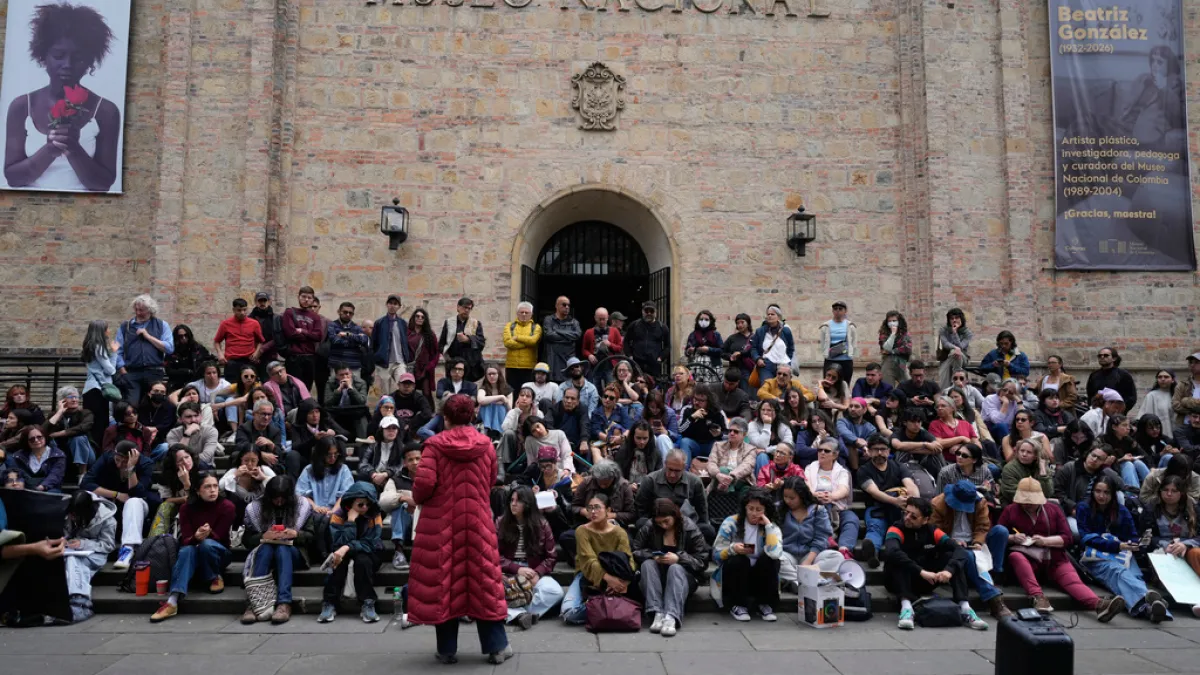
Dozens of demonstrators gathered on Wednesday outside the National Museum in downtown Bogota as riot police guarded its entrance.
“I find it outrageous that they want to erase part of our history,” said Azul Riascos, a history student.
He said the government was promoting a vision of Colombia as exclusively white, Catholic and Spanish-speaking. That image, he explained, excluded Black, Indigenous and LGBTQ+ communities.
Gimena Sanchez-Garzoli, director for the Andes at the Washington Office on Latin America, a research and advocacy organisation, said the Colombian government’s approach reflects a broader trend among Trump allies who are copying US political narratives and strategies.
Trump has been fiercely critical of museums in Washington, particularly those tied to the Smithsonian Institution.
The White House released a report in July branding leaders of the Smithsonian’s National Museum of American History as radical activists and has ordered signs to be installed outside the museum telling visitors that some of the exhibits are inaccurate.
Nearly three months after that order, such signs haven’t been installed. The museum’s director, Anthea Hartig, told Congress that the White House report “does not fairly or accurately characterise the full body of work at the museum”.
Sanchez-Garzoli said Trump’s cooperation with allied Latin American governments on security and counternarcotics efforts also has an ideological dimension.
“These are imported narratives about terrorism and about being ‘woke,’” anthropologist Arturo Sanabria said during Wednesday’s protest, describing the Colombian government’s approach as a form of neocolonial intervention.
Colombia’s Culture Minister Paola Holguin said the government was reviewing and redesigning exhibitions and curatorial practices at other museums overseen by her ministry.
The Foreign Ministry also renamed a courtyard previously honouring an Indigenous leader, describing the change as part of the president’s campaign against “woke” ideology.
“The government is making serious efforts in a cultural battle that probably doesn’t exist,” political scientist Estefania Cardozo said outside the museum. “It is inventing one to erase identities that cannot be erased because they already exist.”
Bitupan Deka was out shopping for a “gamusa” (traditional scarf) with his mother in India’s northeastern state of Meghalaya when he noticed something unusual.
“Every shop selling the scarf had the same handful of patterns repeated over and over,” he told Al Jazeera over the telephone from Shillong, the capital of Meghalaya.
Recommended Stories
list of 4 itemsend of list
“When I asked around, I found that weavers in Sualkuchi [district in neighbouring Assam state] are paid a one-time fee of roughly 2,000 rupees [$21] for each design they develop, instead of royalties. Cutting down the number of designs they produce was a cost-saving practice followed by the manufacturers.”
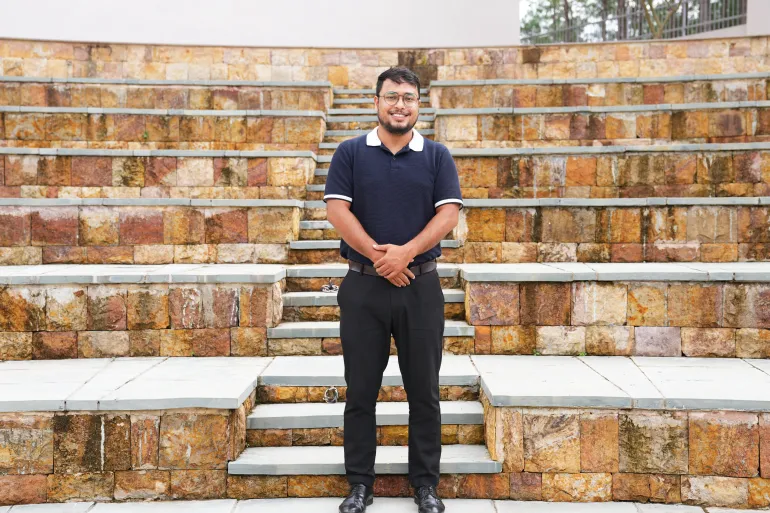
Bitupan Deka [Courtesy of Bitupan Deka]
This discovery prompted Deka, an assistant professor of computer technology at Shillong’s MIT University, to create a system that can produce infinite new designs for such fabrics.
“My work isn’t meant to replace the traditional designers. I hope, instead, that it will become a tool in their hands to create new and modern motifs more easily, so the consumers can have variety,” Deka said.
Once the patent, which is being applied for under the research and development department of his university, comes through, Deka plans to monetise the system by making it a commercial designing service that the textile industry can avail.
In India’s varied textile traditions, patterns and motifs carry the memory of a place and the mythology of its people – sometimes even the history of migrations.
The designs are imagined by weavers from things that exist around them, and then painted with locally available colours, mostly using carved clay and wooden frames. These weavers do not simply reproduce a pattern; they inherit it. Their hands hesitate where their grandmother’s did, and they know why a particular flower must face left.
A computer has no such inheritance or hesitation. It learns by analysing pictures and repeating them in endless variations. And yet, as Deka’s system shows, the computer can now draw and weave the same flower.
The Rekh Sanganeri Dataset is a similar system developed for hand-block printed Sanganeri textiles from the western Indian state of Rajasthan. It includes high-resolution images of printed patterns, annotated down to ink bleed and slight misalignment – the imperfections that are the hallmark of the handmade work.
Its developer, Reddy Sai Nivas C, says it should be used as a resource for research and art, not as a substitute for artisans.
But the disclaimer is the paradox: Tools built to preserve a craft are making its visual language easier to digitally reproduce without involving the craftsperson.
Dinesh Chhipa comes from one of the oldest Chhipa families, an artisan and merchant caste renowned for dyeing and block printing. He is a Bagru designer – a block printing technique from Bagru town in the western state of Rajasthan – and a textile businessman.
“Traditional craft is slow to produce. Even if someone offered us a fortune, we wouldn’t be able to produce these pieces in mass numbers, so I don’t fault those using digital technology and AI to fill the gap,” he told Al Jazeera.
“But don’t borrow craft and regional names like Bagru and Jaipuri [named after the capital city of Rajasthan]. These designs and motifs were born out of a culture and necessities of the communities they come from.”
Dinesh Chhipa is a Rajasthan-based artisan and merchant [Courtesy of Burgoyne Original Masters]
Who owns culture when it turns into plain data?
India has been digitising its textile memory for years – from the Botanical Survey of India’s historical collections to the Bharatiya Vastra Shilpa Kosh, a national portal built by the state-run National Institute of Fashion Technology and the Centre for Development of Advanced Computing (C-DAC).
Without documentation, the fragile traditions and knowledge could disappear. But digitisation also allows the same archive to be used by an AI system seeking to reproduce these crafts at scale.
At the India AI Impact Summit in New Delhi in February this year, Indian software company Tata Consultancy Services (TCS) showcased Bridgital Loom, an AI system that converts textile designs into loom-ready instructions. LED lights on the loom guide a weaver through the thread sequences of intricate Banarasi and Kanchipuram patterns – named after the cities where these iconic arts grew.
TCS says the technology helps weavers execute complex designs faster and with fewer errors, and is meant to be a bridge between the artisans and technology. A pilot project that uses the loom is already under way at Kanchipuram, a town in southern Tamil Nadu state.
In an interview with the online platform Digit at the New Delhi summit, the head of AI strategy at Bridgital Loom, Muthulakshmi Nellaiappan, pointed out that a new weaver takes more than 15 years to master the art.
“With the technologies we have in hand … the younger weaver who has just entered the skill can become a master much sooner,” she said.
Several classic Indian motifs used by traditional weavers [Courtesy of Burgoyne Original Masters]
Technology flattens the master-apprentice hierarchy of traditional knowledge systems. The weaver no longer has to conceptualise or remember patterns, colours and codes; he blindly follows the machine’s instructions, handing creativity and memory to AI.
Nellaiappan said that since a large percentage of India’s looms are non-electronic, TCS has ensured its system works with handlooms as well and that it was essential for scaling up the technology.
But digital looms also raise another question: Who owns culture when it turns into plain data?
For generations, India’s textile knowledge sat outside intellectual property systems. It lived in community memory, passed from master to apprentice with no certificate of ownership. Kanchipuram, Mekhela-Sador, Sanganeri and Banarasi are names for places that these textiles helped shape, not merely emerged from.
Now, this knowledge is entering generative models that owe nothing to these traditions.
For designers and manufacturers, the possibilities are seductive: Motifs combined at will, colours changed with a command, and thousands of designs generated instantly. The machine offers abundance.
The artisan, on the other hand, has always lived with scarcity: Of money, bargaining power, or recognition.
Ananthalakshmi Vadivel, a third-generation weaver and owner of Vadivel Silk Looms in Kanchipuram, says their venture is already competing in the market with cheaper Kanchipuram sarees produced on electronic looms.
“Perhaps, with AI, these sellers can create trending designs faster and cheaper to attract mass consumers. But these imitations can never replace the original,” she told Al Jazeera.
“There will always be a market for authentic Kanchipuram and handcrafted textiles, no matter how much technology makes the imitation cheaper. True Kanchipuram weave, colour, and designs can only be created by hand, and discerning buyers know this.”
Then again, the question is no longer whether AI can recreate a textile. It sure can. The question is: Who gets paid when it does?
Legal gaps
In December 2025, the federal government’s Department for Promotion of Industry and Internal Trade floated a statutory “blanket licence” – a system where AI developers could train models on lawfully obtained copyrighted material without seeking permission from each rights holder. Once commercialised, those systems would owe royalties to copyright owners at rates set by the government.
But intellectual property (IP) laws assume a traceable work with a traceable author. A motif, on the other hand, is communal property, its technique passed down through generations with no single originator.
In such cases, who is entitled to royalty and copyright? The artisan who first created the design? The photographer who documented it? The researcher who assembled the dataset? The developer who built the tool? India’s laws offer no clear answers. The artisan whose name never appeared on a label may once again be missing from the paperwork.
A weaver in West Bengal state rinses the colourful jute fibre to dry under the sun, which will be used to extract threads to make handloom dresses [Avishek Das/SOPA Images/LightRocket via Getty Images]
Meanwhile, the government is planning a dedicated AI-handloom research department under the Centre of Excellence for Handloom Technology at the Indian Institute of Technology (IIT) in the capital, New Delhi. Inaugurated in August, the $1.4m facility aims to modernise India’s handloom sector by combining traditional weaving heritage with contemporary technology.
The government also plans to register thousands of weavers and fit their handlooms with sensors that convert weave patterns into digital data, and issue QR-coded tags to trace provenance. Maharashtra’s Vingatha system does something similar at the state level by authenticating handloom sarees such as Paithani and Karvat Kathi.
The idea is simple: If a saree can tell you where it came from, the person who made it becomes harder to erase.
While these measures cannot stop AI-enabled design and mass production, they may give artisans more visibility and turn each piece into an archive.
In art galleries, the traditional textiles are increasingly shedding the label of craft for the more lucrative category of contemporary art.
Gurjeet Singh, an artist from Chandigarh city, recently hosted a textile-based solo show in New York. His work transforms discarded fabrics, buttons and embroidered scraps into sculptures that explore queer identity and social prejudices surrounding gender and sexuality.
Sayan Chanda, an Indian artist based in London, works with cut and rewoven vintage Bengali quilts to question fixed notions of cultural belonging. Gurugram-based artist Sumakshi Singh uses delicate embroidery and suspended thread structures to reconstruct the architectural fragments of vanished homes, gardens and personal histories. There are many more.
An art gallery in New Delhi displaying some weaving traditions [Courtesy of Burgoyne Original Masters]
In New Delhi, 20 such artisans and craft-led collectives featured last month at an art show celebrating the traditional textile crafts.
“Our aim is to present these traditional crafts as living practices that continue to evolve through contemporary artisans, rather than as heritage to be archived. Kanmai Payun, one of the artists featured in the show, for example, is the last practitioner of Fulor Saneki, a flower pattern used by Assamese weavers. We encouraged her to teach her 17-year-old son so the craft outlives her,” Aparupa Ray Ganguly, the curator of the show, told Al Jazeera.
But as textiles gain value in art galleries, their makers do not necessarily gain automatic control over their work.
In April, another art exhibition in New Delhi, titled No ‘One’ Maker, saw artisans missing from the show’s preview, exposing how traditional textiles are aestheticised, but the people who carry that knowledge remain unrecognised.
“You cannot separate the names from the community. Call your mass-produced work digital prints and leave the traditional names to the original artisans,” says Chhipa, the artisan and merchant from Rajasthan.
The cultural exchange comes amid strengthening ties between the two countries.
Published On 14 Oct 202614 Oct 2026
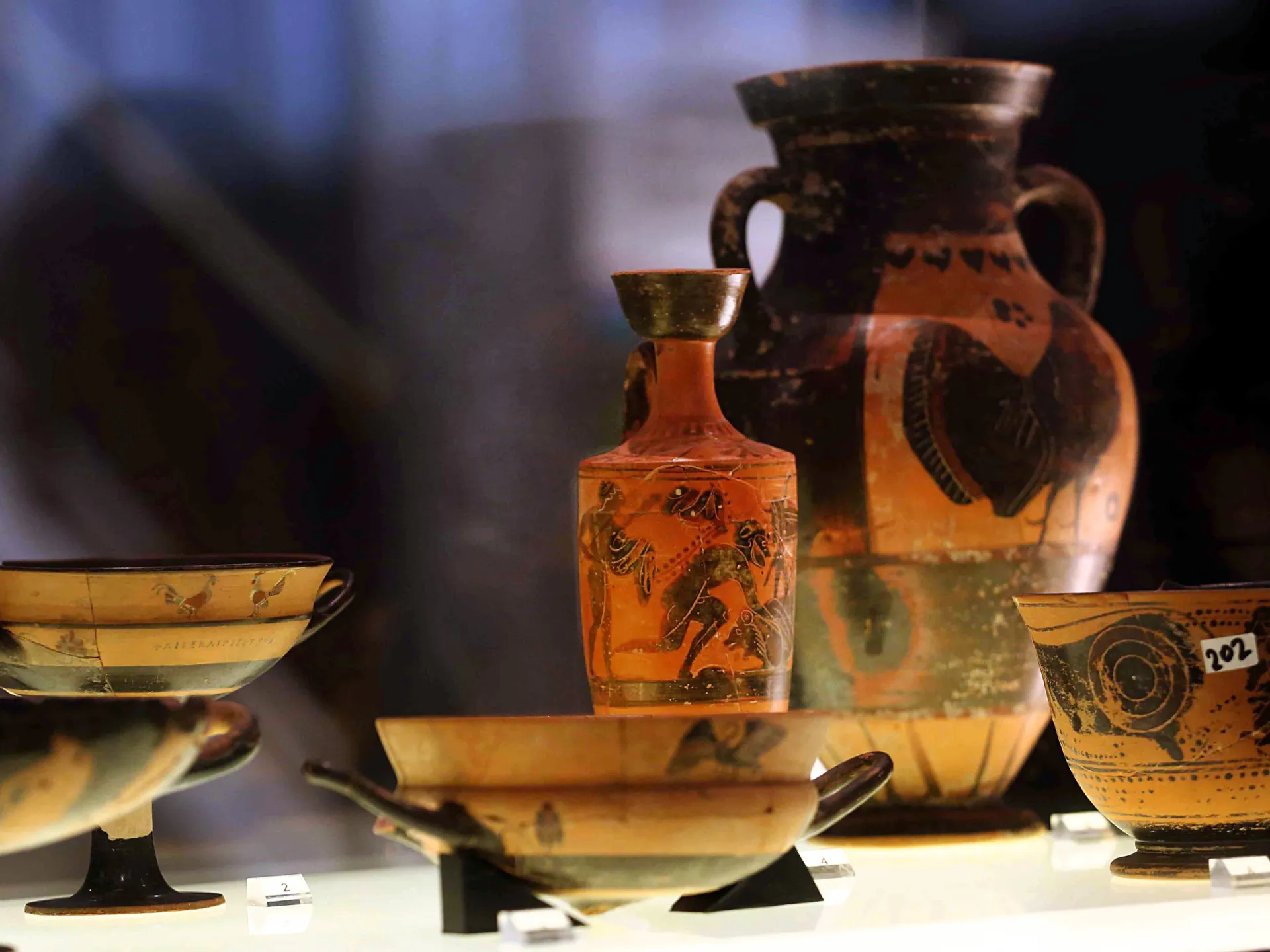
Israel has returned 22 ancient artefacts stolen from Greece, a cultural exchange that comes as the two countries strengthen ties.
Greek and Israeli officials did not provide details on Tuesday on how the artefacts were discovered in Israel or the circumstances surrounding their illegal removal from Greece.
Recommended Stories
list of 3 itemsend of list
The Israel Antiquities Authority’s Theft Prevention Unit had located the items, Pninat Yanay, Israel’s ambassador to Greece, said.
Greek Minister of Culture Lina Mendoni accepted the objects from the Israeli Antiquities Authority at a ceremony held at the National Archaeological Museum in Athens.
“It is the first time that Israel has returned antiquities to Greece, marking the starting point of closer cooperation between the two countries for the protection of cultural heritage,” Mendoni said.
“Every return of a cultural object to its place of origin has a broader symbolic and moral dimension.”
The collection includes 15 Attic vases, six Corinthian vases, and a bronze female statuette.
The objects are dated between 700 BC and 320 BC.
Yanay said the return of the antiquities created “the conditions for further strengthening cooperation between Greece and Israel”.
Greece-Israel relations
Greece and Israel have strengthened energy and defence ties in recent years.
In August, Israel signed a $3.5bn defence deal to build a multi-layered air defence system in Greece, called the Achilles Shield. It is the largest defence deal between the two countries, and one of the most significant export agreements in Israel’s recent history.
Renoir art heist suspects were planning ‘imminent’ second robbery, prosecutors say.
Published On 12 Oct 202612 Oct 2026
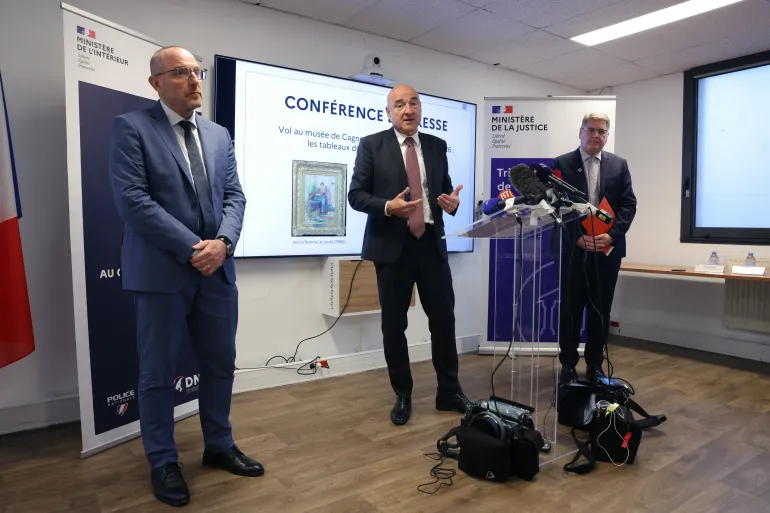
Two paintings by the impressionist master Renoir which were stolen from a French museum last month have been found damaged behind a false wall in a private home after police made several arrests ahead of what prosecutors say was an imminent second heist.
Marseille prosecutor Nicolas Bessone said six suspects were arrested on Wednesday after authorities discovered they were planning to target the Fondation Maeght in Saint-Paul-de-Vence, home to one of Europe’s largest collections of modern art.
Bessone said the arrests were prompted by the “very strong suspicion that another heist was imminent”.
“We were very clearly looking at the repetition of a criminal scheme”, said Eric Antonetti, the head of the Alpes-Maritimes judicial police.
On September 8, thieves used an electric saw to cut through a fence to enter the Renoir Museum in Cagnes-sur-Mer on the French Riviera, according to investigators.
An alarm sounded and police officers arrived four minutes later, a swift response that “apparently caused the perpetrators to panic,” Bessone said.
The stolen works, “Madame Colonna Romano” and “Young Woman at the Well” by impressionist painter Pierre-Auguste Renoir, were valued at about 4.2m euros ($4.7m), Bessone said.
The thieves also attempted to steal two other Renoir paintings, “Madame Pichon” and “Coco Reading”, which depicts Renoir’s young son Claude. They abandoned them in the museum gardens while fleeing police.
“As they fled, they were unable to take all four paintings and abandoned two of them, which were later found in a protective sleeve,” he said.
Police chiefs speak to reporters in Nanterre on Monday following recovery of the stolen paintings last week [Thomas Samson/AFP]
Damaged and torn
The paintings were found hidden behind a false wall in a house on Friday. Both works were damaged and will need restoration. One of the paintings, “Madame Colonna Romano”, had been torn.
“These two paintings are not simply works of art. They are part of our city’s history,” Bryan Masson, the mayor of Cagnes-sur-Mer, near Nice, said on Friday. “Knowing they have been recovered is an immense relief.”
The recovery came almost exactly one month after the theft, following an investigation that used DNA evidence, mobile phone geolocation data and surveillance video.
The two key suspects include a 29-year-old, who was charged after investigators recovered DNA from a bag left behind during the getaway.
They were charged with organised theft and other offences. A third man, accused of hiding the paintings, was charged with organised handling of stolen goods.
A fourth suspect, who investigators say was approached about buying the artworks, was charged with handling stolen goods and taking part in a criminal conspiracy.
Bessone said the suspects had denied planning a second museum raid, but he added that he did “not believe the principal suspect visited that museum simply out of a love of art”.
The recovered Renoir paintings, valued at millions, were stolen in a daring heist at Cagnes-sur-Mer last month.
Published On 10 Oct 202610 Oct 2026
Two paintings by the French Impressionist artist Pierre-Auguste Renoir that were stolen from a museum in southern France a month ago have been recovered, the town’s mayor said.
“These two paintings are not simply works of art. They are part of our city’s history,” Bryan Masson, the mayor of Cagnes-sur-Mer, near Nice, said on Friday. “Knowing they have been recovered is an immense relief.”
Recommended Stories
list of 3 itemsend of list
Six people have been arrested in connection with the theft, local authorities said. Masson did not say where the paintings were found or in what condition.
How the theft unfolded
Two thieves broke into the Renoir Museum a little before 6am on September 8, cutting through a fence to enter the grounds, smashing a window and using an electric saw to cut the clips securing the frames, Masson said at the time.
He described them as “well equipped” and “well informed”.
The museum alarm sounded at 5:48am, and municipal police arrived five minutes later, forcing the thieves to flee.
They had taken four paintings, valued by the mayor at about nine million euros ($10.5m).
Two of the stolen works – Renoir’s “Portrait of Madame Pichon” and “Coco Reading” – were later found dropped in the museum garden, the prosecutor’s office said at the time.
The two works that remained missing were “Portrait of Madame Colonna Romano” and “Young Woman at the Well”, the office said.
Police said last month that the thieves were not first-time offenders and had scoped out the premises.
The Marseille prosecutor opened a theft investigation into an organised gang, and the national office for trafficking in cultural goods joined the probe.
A string of museum heists
The museum, opened in 1960, is in the painter’s last home, where he died in 1919.
“This incident should serve as a warning about the protection of our museums,” Masson said after the robbery.
The theft came less than a year after jewels worth about $100m were stolen from the Louvre in Paris in a daylight robbery.
The four suspected robbers have been arrested, but the jewels have not been found.
In August, Italian police said they had recovered paintings by Renoir, Cezanne and Matisse worth more than $10.4m that were stolen from a museum in March.
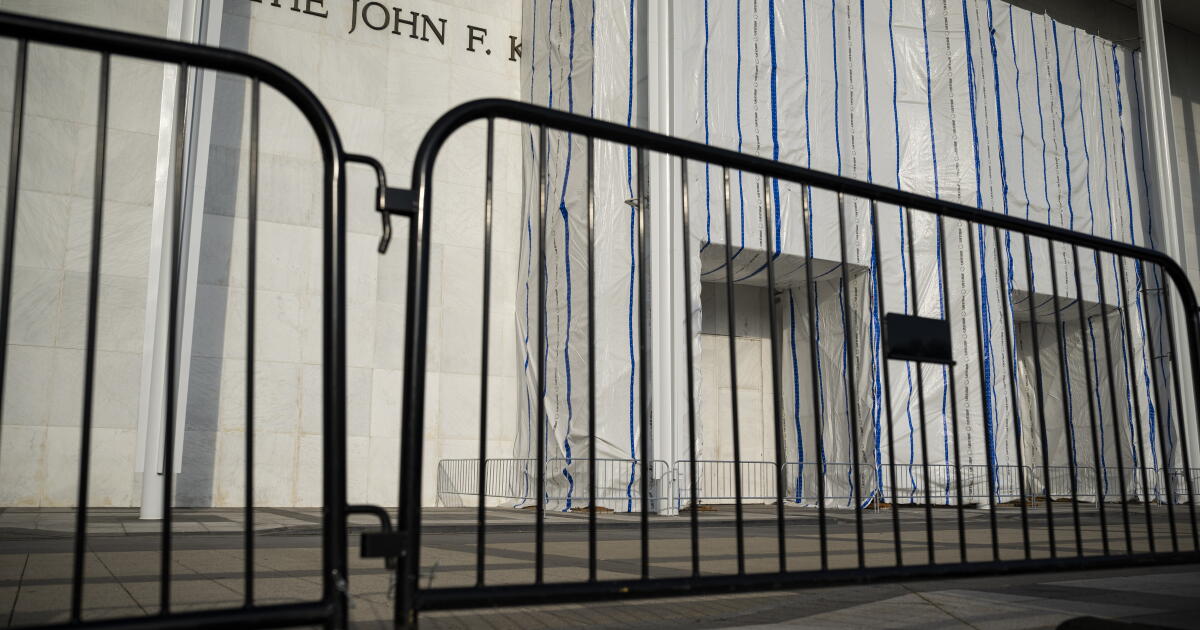
Like any other building from 1971, or a democracy created in 1776, the Kennedy Center could use some attention and possibly some structural repair. But I was a vice president at that arts center in Washington, and I can tell you that maintenance is almost certainly not why it closed its doors last month.
Officially, it’s closed because a section of the Grand Foyer ceiling gave way in a storm, plaster crashing to the floor, and the building needed to be shut down for safety. The Justice Department itself has argued in court filings that there is no real emergency requiring the closure. The board, meanwhile, has approved a quarter-billion-dollar renovation plan, put together without competitive bidding, while the president muses openly about tearing the building down altogether if his own name isn’t affixed to it. This administration is effectively bulldozing arts infrastructure in an attempt to abolish an infrastructure of the imagination.
I watch all of this from the outside now. When the new “leadership” took over last year, my team and I were among the first let go. My department worked on free public programming, on creative equity, on cross-sector community development and on measuring the social impact of art. That we were among the first out the door probably tells you everything you need to know about who was put in charge of the place.
As an American, as an artist and as a former member of its labor force, I understand that the Kennedy Center is more than a building. It is a living memorial to a president who was taken from us too soon, a man who had the audacity to aim for the moon before the science existed to get us there. To honor that kind of visionary, this country built a center for the creative impossible, and gave it his name.
And true to that name, my job at the Kennedy Center was to investigate the correlation between the arts economy and the economy of civic aspiration. As a team, we believed that inspiration erodes apathy and yields empathy. The building is a container of federal infrastructure, but the arts that imbue the Kennedy Center make the argument that inspiration itself is part of the infrastructure of our democracy. An arts center is built to ask: “What are the conditions necessary to dream together in public?”
Who, if not artists, are the authors of the public imagination? When a baby is born, or your daughter gets married, do you read a piece of legislation to commemorate the occasion or do you quote a poem, or dedicate a song? Who, if not artists, might light the path to a post-fear economy?
So why invade an arts center? What could possibly be gained by shuttering a national citadel for creative excellence? How perverse that a president whose policies have underfunded education and the arts would gut a national sanctuary for curiosity, and then demand that his name be emblazoned on the shell of what was. This president has used executive orders to intimidate artists, banned writers and journalists, sabotaged arts education, created oppressive red lines within the National Endowment for the Arts and threatened philanthropic organizations that fund arts and culture, and then he turns around and wants his name on our national cultural center.
When I worked there, the Kennedy Center wasn’t perfect. No institution is. But the business was viable, the staff was talented and reliable, and the work we made together would, often enough, touch something close to the sublime. Our job, like those of so many arts workers across the country, was to activate creative magic in service of social cohesion and well-being.
This is what gets lost in the noise of storms and lawsuits and renovation budgets: Entertainment is everywhere, but inspiration is rare. Sometimes you are sitting in a dark theater with strangers and the right note gets struck, and you hear it with your ears but you feel it somewhere else entirely. In the gut and heart. And the person next to you, a stranger, feels it too, at the exact same moment. You can practically feel the room change. All that magic can happen in one theater, and the Kennedy Center has nine of them. If a solar panel uses the energy of the sun to power a building, an intentionally run theater can use the energy of its inspired audiences to power a city.
Art holds memory. It also holds the horizon, the sense of what a country could still become. Patriotism as enacted by the creative community takes the American experiment seriously enough to question, examine, remember what we’ve forgotten and catalyze collective American dreaming. That is what the Kennedy Center was named for: a president who dreamed of a country unafraid of beauty, unafraid of grace.
Thankfully, America’s creative labor force tirelessly stewards that sense of creative provocation and patriotic inquiry. It is alive everywhere, including in the work of individual artists such as Carrie Mae Weems or in the work of collectives such as For Freedoms and their “America, the Beautiful” initiative.
We, the chronically underwhelmed citizenry of the United States, can’t afford one less pillar of creativity. We should be fighting to reconstitute any and all artistic institutions with an eye toward an inspired future.
Marc Bamuthi Joseph, a spoken-word artist and actor, was vice president for social impact at the Kennedy Center.
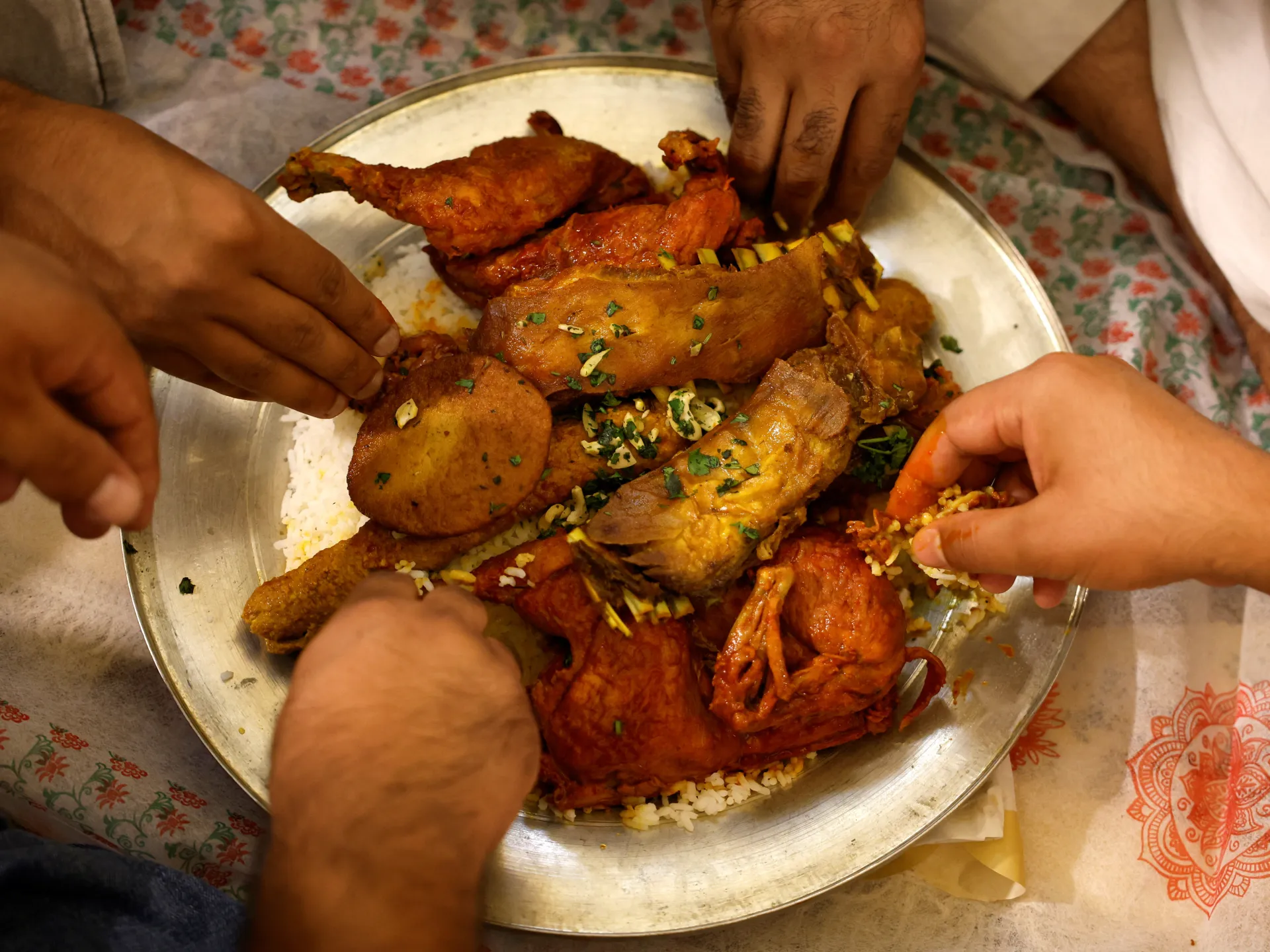
As autumn approaches, the rhythmic thud of wooden mallets pounding lamb echoes across courtyards and back lanes in Kashmir, where cooks prepare Wazwan – a lavish, multi-course mutton feast that remains central to traditional wedding celebrations.
Wazwan arrived in the valley from Central Asia in the 14th century, when rulers brought skilled chefs along with the carpet and shawl weavers that later defined the region’s craft heritage.
Today, the feast is both a marker of social status and a powerful symbol of Kashmiri identity.
Among its guardians is 74-year-old Ghulam Nabi Baba, a veteran Wazwan chef who traces his lineage to those early migrants. His forefathers settled in Srinagar’s old city as part of a community of cooks known as Wazpora.
“There were only seven mutton dishes at that time. Over the centuries we added more, and now there are around 20,” Baba said.
He explained how the number of dishes and the amount of meat often reflect a family’s wealth.
“Forty years ago in Delina [a village in north Kashmir] I cooked 4,500kg (9,920 pounds) of meat. That was a very big wedding. Normally, at an average marriage we cook 200kg (440 pounds),” he added.
Despite the expanding menu, the core techniques have changed little. Lightly spiced meat is still pounded by hand before being simmered slowly over wood fires – a labour-intensive process Baba has followed since joining his father as a cook at 15.
But the pressures of modern life are reshaping the tradition. Baba’s son has chosen to open a restaurant rather than work weddings, saying the round-the-clock demands are too exhausting.
He believes he is still carrying forward the family’s centuries-old culinary legacy – just in a different setting, as Wazwan adapts to contemporary tastes and lifestyles.
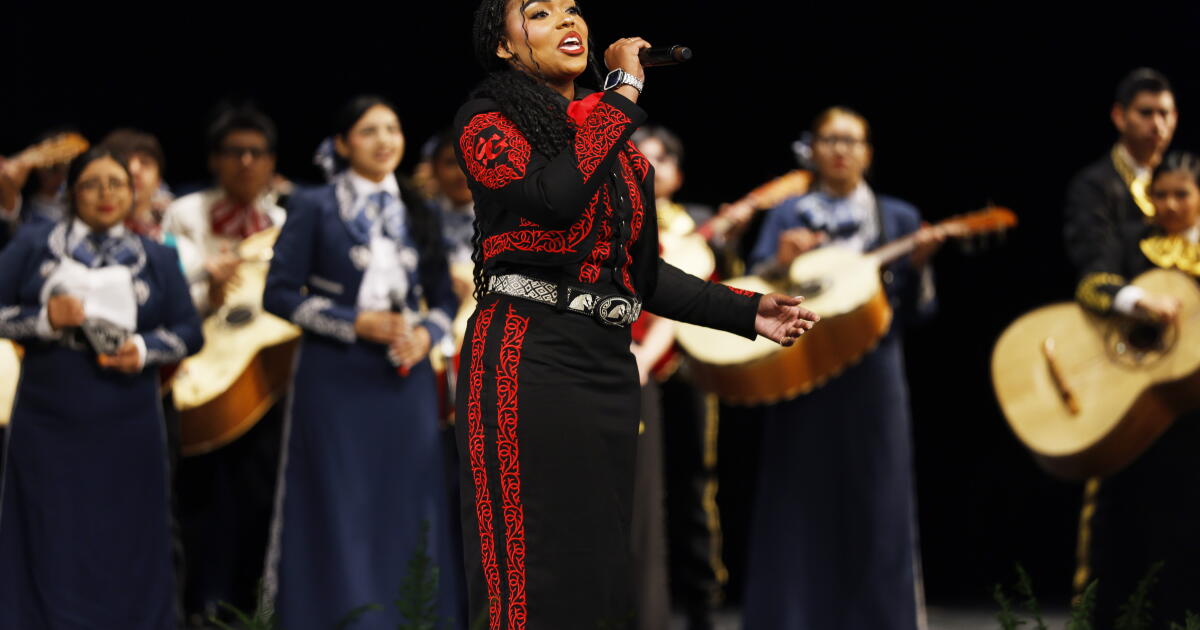
More state money to pay for arts teachers will reach local schools if legislation signed Sunday by Gov. Gavin Newsom works out as intended, but the new law will not resolve a lawsuit accusing the Los Angeles school district of misspending as much as $77 million in its share of the funding.
The aim of Assembly Bill 2440 is to encourage more school systems to use arts funding made available through Proposition 28, which voters passed in November 2022.
“The clear message we heard was that many school districts have been struggling to navigate legal ambiguity regarding compliance with Proposition 28,” said bill author Al Muratsuchi (D-Rolling Hills Estates) in a recent statement to The Times. He said his goal was to provide “statewide guidance” so that all or most school systems could use the money without concern over violations of spending rules that could result in financial penalties.
Proposition 28 sets aside an amount equal to 1% of the state’s base education funding — close to $1 billion per year — to increase arts education. This extra funding is drawn down from the state’s general fund — so it adds to the total allotted for education.
The initial funding, nearly a billion dollars statewide, went out for the 2023-24 school year and has continued annually. But millions of dollars have not yet been spent, according to early reviews of the data.
Some local officials said they were holding back over concerns that they would inadvertently violate the rules for spending the money — and would then have to pay it back, creating significant financial risk.
This bill had backing from arts organizations, education and school district officials and the California Teachers Assn. No opposition was recorded in the legislative record; nor were there any opposing votes as the bill worked its way through the legislative process.
But then Austin Beutner — the author of Proposition 28 — learned of the measure and stepped forward with concerns. He contendedthe bill would make using the arts money easier, but in wrong ways. He said the bill would undermine the guarantee that new arts funding would reach every school. Also it would in effect eliminate the provision that campuses serving low-income communities receive higher levels of new funding. Moreover — and of key importance — the legislation would allow districts to use the new arts money to replace existing arts funding, leaving students no better off than before, he said.
Beutner had structured Proposition 28 precisely to prevent this supplanting of funds. Districts not willing to provide the required increased instruction at every school would, by design, lose access to the new arts money.
Beutner began to rally opposition, including United Teachers Los Angeles, L.A. mayoral candidate Nithya Raman and San Diego school board President Richard Barrera, who is running for state superintendent of public instruction — and who has the endorsement of the California Teachers Assn.
Beutner also announced his attention to file litigation against the bill.
Muratsuchi said he had no intent to undermine the goals of Proposition 28 — and a compromise soon emerged.
The final version — which has Beutner’s approval — clarifies that small schools or small school districts can pool their money to share an arts teacher, provided that every school gets the additional arts instruction. The bill also gives some legal protection for school districts against financial penalties if their arts funding decreases as a result of factors beyond their control, such as the expiration of a grant.
An LAUSD lawsuit continues
Beutner alleges that L.A. Unified has intentionally misused the new arts money.
Beutner pursued passage of Proposition 28 after serving as superintendent of L.A. Unified. His stint ended in mid-2021 with the expiration of a three-year contract.
“LAUSD has done exactly what the law prohibits,” Beutner alleged in an ongoing lawsuit filed in February 2025. “It has eliminated existing funding sources for existing art teachers, and replaced those funds with Proposition 28 funds, thereby violating the requirement that the funds supplement rather than supplant existing sources.”
The lawsuit lists 37 elementary schools with the same or reduced money for arts instruction from 2022-23 to 2023-24 — when the new funding first arrived — and alleges that most L.A. Unified schools faced a similar funding situation.
Before the lawsuit, but in response to growing criticism, L.A. Unified officials quietly added $30 million to the elementary school arts budget for the 2024-25 school year amid ongoing accusations from Beutner, union leaders and parents.
The district has defended its actions.
“We continue to follow implementation guidance as provided by the state of California to ensure that we are fully complying with the requirements of Prop. 28,” the district said in a statement at the time of the lawsuit, a contention that it has made repeatedly.

![Bitupan Deka [Courtesy of Bitupan Deka]](https://i0.wp.com/occasionaldigest.com/wp-content/uploads/2026/10/bitupan-deka-1792487445.jpg?w=640&ssl=1)
![Dinesh Chhipa is a Rajasthan-based artisan and merchant [Courtesy of Burgoyne Original Masters]](https://i0.wp.com/occasionaldigest.com/wp-content/uploads/2026/10/Dinesh-Chhipa-1792487454.jpeg?w=640&ssl=1)
![Several classic Indian motifs used by traditional weavers [Courtesy of Burgoyne Original Masters]](https://i0.wp.com/occasionaldigest.com/wp-content/uploads/2026/10/Courtesy-of-Burgoyne-Original-Masters-1792487874.jpg?w=640&ssl=1)

![An art gallery in New Delhi displaying some weaving traditions [Courtesy of Burgoyne Original Masters]](https://i0.wp.com/occasionaldigest.com/wp-content/uploads/2026/10/Masters-in-Making-5-1792487523.jpeg?w=640&ssl=1)