Judge stops DHS from arresting, detaining Minnesota refugees

Jan. 29 (UPI) — A judge has barred federal immigration officers from arresting and detaining legally present refugees in Minnesota, handing the Trump administration a legal defeat in its aggressive immigration crackdown.
U.S. District Judge John Tunheim, in Minneapolis on Wednesday, issued a temporary restraining order that bars the arrest and detention of any Minnesota resident with refugee status as litigation on the issue continues.
“They are not committing crimes on our streets, nor did they illegally cross the border,” Tunheim wrote in his order.
“Refugees have a legal right to be in the United States, a right to work, a right to live peacefully — and importantly, a right not to be subjected to the terror of being arrested and detained without warrants or cause in their homes or on their way to religious services or to buy groceries.”
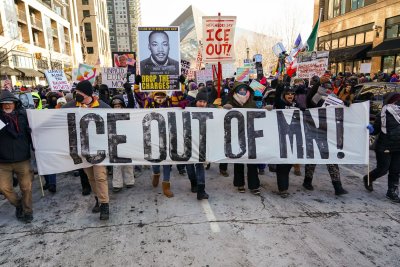
The Trump administration has been conducting an aggressive immigration crackdown in Minnesota. Agents with Immigration and Customs Enforcement and Customs and Border Protection have arrested thousands of people since December, attracting protests, which have been met with violence.
Democrats and civil and immigration rights advocates have accused the agents of using excessive force and violating due process protections.
The order issued Wednesday comes in a lawsuit filed by the International Refugee Assistance Project against Operation PARRIS, an initiative launched Jan. 9 to re-examine the 5,600 pending refugee cases in Minnesota in a hunt for fraud and other possible crimes.
IRAP said in its complaint, filed Saturday, that since the operation began, federal immigration agents have arrested and detained more than 100 of Minnesota’s refugee population without warrants and often with violence.
Those detained have not been charged with any crime nor with any violation of immigration statutes, according to the immigration legal aid and advocacy organization, which said this policy not only goes against immigration law but also ICE’s own guidance that states there is no authority to detain refugees because they have not yet changed their status to lawful permanent residents.
The organization states that the purpose of Operation PARRIS “is to use these baseless detentions and coercive interviews as fishing expeditions to trigger a mass termination of refugee statuses and/or to render refugees vulnerable to removal.”
“For more than two weeks, refugees in Minnesota have been living in terror of being hunted down and disappeared to Texas,” Kimberly Grano, staff attorney for U.S. litigation at IRAP, said in a statement, referring to the location of detention centers where refugees detained in Minnesota are being held.
“This temporary restraining order will immediately put in place desperately needed guardrails on ICE and protect resettled refugees from being unlawfully targeted for arrest and detention.”
Tunheim’s order does not interfere with U.S. Citizenship and Immigration Services’ ability to conduct re-inspections to adjust refugees’ status to lawful permanent residents nor the Department of Homeland Security’s enforcement of immigration laws. It only prevents the arrest and detention of refugees in the state who have yet to become lawful permanent residents while litigation proceeds.
“At its best, America serves as a have of individual liberties in a world too often full of tyranny and cruelty,” Tunheim said.
“We abandon that ideal when we subject our neighbors to fear and chaos.”