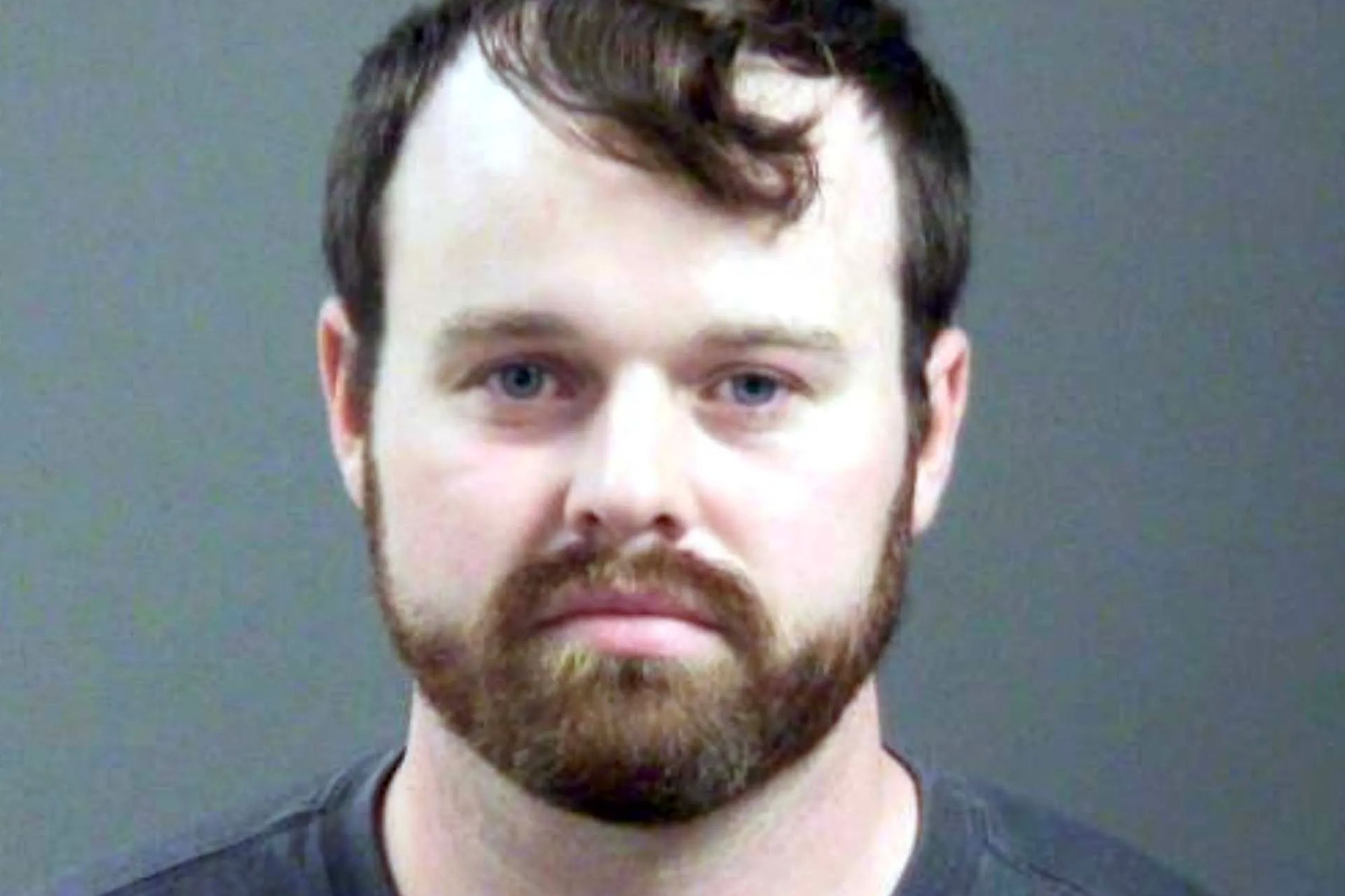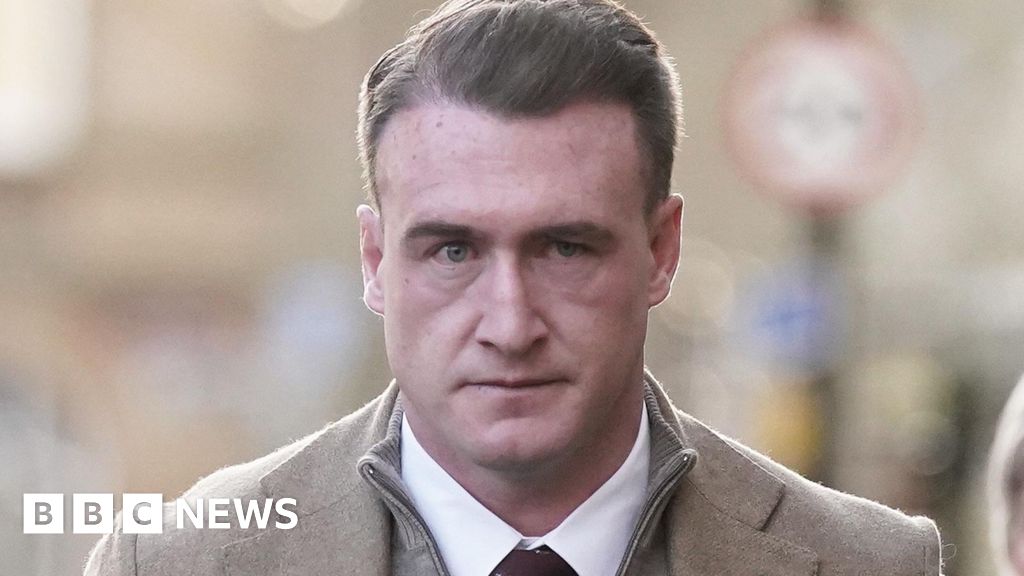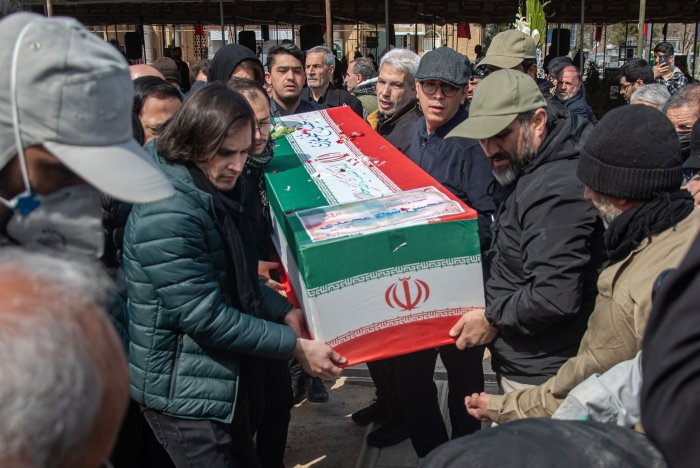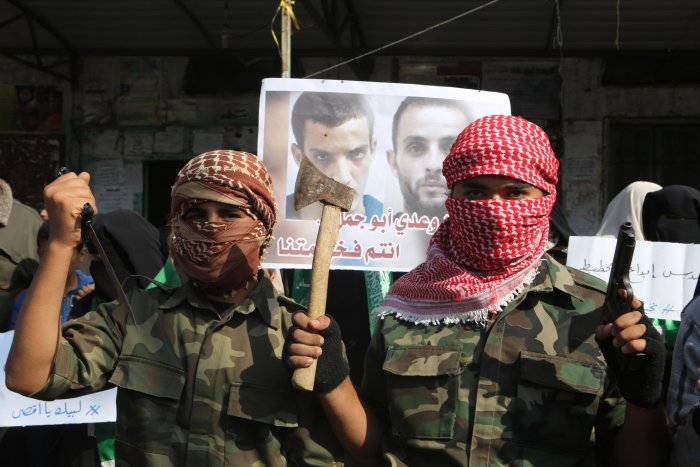
arrested

Venezuela: An Arrested Transition | Caracas Chronicles

Maduro is out, Delcy Rodríguez is in, and yet Venezuela feels no more democratic than it did three days ago, when the former president was still boasting about air defenses and bunker walls.

The change itself was not entirely unexpected. In recent months, reporting had increasingly pointed to Rodríguez as the most viable figure to ensure continuity after Maduro, alongside speculation about negotiations involving her and her brother Jorge Rodríguez, including meetings in Doha facilitated by the Qatari government, that would have secured Maduro a negotiated exit and a prolonged, carefully managed transition.

In the end, that golden exile proved unnecessary. What followed was not a rupture, but an acceleration: the same transition logic, executed without the need for Maduro’s consent—or his presence. Still, calling this a “transition” rather than a decapitation feels increasingly strained when several of the figures flanking Rodríguez as she signaled her willingness to step in, should the Supreme Court so demand, carry the same international bounties Maduro once did, and in some cases appear in the very same indictments, now sharing docket space with far more famous recent arrivals.

If this were a democratic transition, power would be moving outward, toward institutions, parties, and voters. We would have seen the unconditional release of political prisoners. The winners of the July 28 election would not be calling for international protests demanding that their victory be respected. Instead, power has moved sideways and downward. The most visible winners of the post-Maduro moment are not opposition leaders, but many of Maduro’s former allies.

Even more telling is that while the armed forces appear to have retreated to their barracks, colectivos have rapidly expanded their role in Caracas from tolerated enforcers to de facto authorities. They patrol neighborhoods, gather intelligence, intimidate opponents, and perform basic law-enforcement functions with a confidence that suggests not stabilization, but delegation. Where, exactly, the United States is exerting the control President Trump claims to hold over Venezuela’s transition remains unclear, and, for now, largely the stuff of rumor.

Rodríguez may offer a fresher, more professional face at the head of the regime, but the internal knife-fighting, the power jockeying, and the coercive architecture remain firmly in place

This is not state collapse. It is state outsourcing. The arrested transition has reproduced Venezuela’s familiar condition of managed chaos, governed by actors who require neither legal mandates nor democratic legitimacy, only loyalty and force. For ordinary Venezuelans, the result is a familiar but sharpened experience of power: surveillance that feels more granular, coercion that feels more localized, and accountability that feels even more elusive.

The irony is that this consolidation is unfolding under the language of moderation and normalization. Rodríguez’s elevation has been framed as a stabilizing move, a technocratic turn after years of bombast and paranoia. Her record as economic vice president and minister is now being repackaged as evidence of competence, pragmatism, even reform. After denouncing Maduro’s “abduction” by U.S. forces on January 3, the very next day saw a remarkable pivot in the regime’s propaganda apparatus: Rodríguez was suddenly celebrated as Venezuela’s first female president, with a speed matched only by her plane’s return from Russia and landing in Venezuelan airspace, despite official claims that the skies were under U.S. control.

If colectivos are serious about rooting out traitors, they may find better luck checking phones in Miraflores and the Capitol than stopping cars on the highways of Caracas.

That speed matters. It reveals how thin chavismo’s ideological commitments have become, and how central narrative management now is to regime survival. Maduro was not the project; he was a vehicle. Once removed, the system adapted almost instantly, swapping revolutionary mythology for managerial language without altering the underlying mechanics of control.

For Washington, this appears, so far, to have been good enough. With Maduro gone, the Trump administration’s priorities seem to have shifted from political transformation to stabilization and risk management. A loud, autonomous opposition, once instrumental to regime pressure, is now framed less as a democratic partner than as a short-term liability. The result has not been repression, but marginalization: opposition figures are tolerated, even encouraged to remain visible, while being excluded from meaningful decision-making.

Meanwhile, the regime has solved a different problem, at least temporarily: how to continue governing under legal siege. Rodríguez’s inner circle overlaps heavily with the same network of officials who defined the Maduro years, many of whom face international indictments and bounties of their own. This is not fertile ground for the trust or guarantees required to sustain a regime as complex as Venezuela’s.

Whether Rodríguez’s presidency is a durable settlement or a trial arrangement remains unclear. So does the question many within chavismo are surely asking themselves: faced with continued pressure from Washington to “deliver,” will Rodríguez lean into the combative instincts that defined her domestic record, or will Maduro and Cilia Flores soon find themselves joined by more former comrades at MDC?

Transitions are meant to reset political and legal time. What has happened in Venezuela has merely rearranged it. Rodríguez may offer a fresher, more professional face at the head of the regime, but the internal knife-fighting, the power jockeying, and the coercive architecture remain firmly in place.

What emerges, then, is not a failed transition, but an arrested one. Politics has been paused in the name of order. Democracy has been deferred in the name of stability. Venezuela is governed as if perpetually on the verge of change, never quite authoritarian enough to provoke rupture, never democratic enough to allow arrival. Maduro is gone. Democracy, once again, is told to wait.

Source link

Key Bolsonaro ally arrested in Paraguay while trying to flee to El Salvador | Jair Bolsonaro News

Ex-Brazilian police chief caught using fake Paraguay passport in attempt to board flight to Panama, sent back to Brazil.

A Brazilian former police chief, who fled the country after he was convicted as an accomplice in the attempted coup by Brazil’s far-right ex-President Jair Bolsonaro, has been arrested in Paraguay, according to the country’s immigration agency.

Silvinei Vasques was arrested on Friday at the Silvio Pettirossi International Airport in Paraguay’s capital Asuncion, the Paraguayan National Migration Directorate (DNM) said in a statement posted on its website.

Recommended Stories

list of 3 itemsend of list

The agency said Vasques was arrested for “identity theft” after “attempting to evade immigration controls by impersonating a Paraguayan citizen”.

Vasques was arrested while attempting to board a flight to Panama, declaring El Salvador as his final destination, the DNM statement said.

The wanted police chief had “clandestinely” entered Paraguay while “evading justice in his home country”, DNM added.

An image published on X by Paraguayan immigration authorities showed Vasques’s arrest and identification.

A separate video clip posted on the same account showed Vasques being turned over to Brazilian federal police at the Friendship Bridge border crossing that connects Paraguay’s Ciudad del Este and Brazil’s Foz do Iguacu.

Translation: The National Directorate of Migration (DNM) expelled Silvinei Vasques from the country. Moments ago, the DNM expelled Silvinei Vasques (50) from the country, subsequently handing him over to Brazilian Federal Police authorities at the Friendship Bridge border crossing.

Vasques, the former chief of Brazil’s highway police, was accused of deploying officers to prevent voters in left-leaning areas from casting their ballots in 2022 elections that Bolsonaro lost to left-wing candidate and current President Luiz Inacio Lula da Silva.

He was arrested in 2023 and placed under supervision with an electronic ankle monitor pending trial. Earlier this month, he was sentenced to more than 24 years in prison to be served under house arrest. He fled Brazil shortly after.

Brazilian media reported that Vasques broke his ankle monitor and drove across the border to Paraguay.

Brazil Supreme Court Justice Alexandre de Moraes ordered the fugitive’s preventive detention as a precautionary measure on  Friday, Reuters news agency reported, citing a court document and information from two people familiar with the matter.

Reached by Reuters, Vasques’s lawyer did not comment on his client’s attempt to flee.

Vasques is not the first official convicted over the 2023 coup attempt who has tried to escape from Brazil. In November, the Supreme Court ordered the arrest of the former intelligence agency director Alexandre Ramagem, who left the country in September and has since been living in the United States.

That same month, Justice Moraes also ordered Bolsonaro be detained after the former president tried to remove his court-ordered ankle monitor using a soldering iron, in what the court saw as an attempt to escape justice.

Bolsonaro, 70, is now serving a 27-year sentence in jail after being found guilty in September of having led the plot to prevent Lula from taking office.

On Thursday, the former president underwent surgery in hospital for a hernia.


Source link

Greta Thunberg arrested over Palestine Action placard

PA Media Greta Thunberg sitting on the pavement behind a temporary barrier, holding a handwritten placard reading “I support Palestine Action prisoners. Oppose genocide,” with police officers nearby.PA Media

The protest was in support of Palestine Action prisoners on hunger strike

Greta Thunberg has been arrested at a demonstration in support of the Palestine Action protesters who are on hunger strike in prison, according to the Prisoners for Palestine protest group.

The 22-year-old activist was detained in the City of London after attending the scene of the early-morning demonstration on Fenchurch Street.

In a video shared by the group, she could be seen holding a sign reading “I support the Palestine Action prisoners” and “I oppose genocide”.

City of London Police said a 22-year-old woman was arrested for displaying a placard in support of a proscribed organisation, in this case Palestine Action, contrary to Section 13 of the Terrorism Act 2000.

The force said officers were called to the area at about 07:00 GMT after hammers and red paint were used to damage a building.

A man and a woman were also arrested on suspicion of criminal damage after they “glued themselves nearby”, police said. Specialist officers worked to release them before taking them into custody.

PA Media Greta Thunberg being escorted by police officers outside a building in central London, wearing a black hat, scarf and jacket.PA Media

Greta Thunberg was arrested on Fenchurch Street in the City of London

The Prisoners for Palestine protest group said it staged the demonstration outside the offices of Aspen Insurance, which it claimed provides services to Israeli-linked defence firm Elbit Systems.

Palestine Action was proscribed under UK terrorism legislation earlier this year, making it a criminal offence to support or express support for the group.

Police said inquiries were continuing.

Ms Thunberg, who first came to prominence as a child climate activist, has been involved in several demonstrations in support of the Palestinian cause.

Source link

Macron’s silverware steward arrested for stealing from Élysée Palace

Dec. 21 (UPI) — The head steward responsible for formal silverware has been arrested for stealing fine cutlery and porcelain from Élysée Palace, the official residence of French President Emmanuel Macron, reports said.

The man, identified by French media as Thomas M., is suspected of stealing more than a hundred pieces of porcelain used for state dinners and other banquets over the course of months, Le Parisien reported.

Authorities have also charged his romantic partner — an antique dealer — as well as an acquaintance from Versailles, both accused of receiving stolen goods, the newspaper reported. The three men, who have all reportedly confessed to their crimes, are expected to stand trial in February 2026.

“My client acknowledges the charges against him and has fully cooperated with the investigators,” Thomas Malvoti, the lawyer for the Versailles man, told French television network TF1.

“He is a 30-year-old man with an atypical profile, gifted, a history buff and passionate about the porcelain of the Sèvres Manufactory; he was even about to write a book on the subject. He unfortunately let himself be blinded by his passion and regrets it today.”

The items stolen include various porcelain dishes manufactured by the prestigious Sèvres factory, some of which were part of a 2018 order placed by the palace for around half a million dollars.

Authorities allege that the steward’s Versailles acquaintance convinced him to steal the tableware. After taking the dishes home, the steward allegedly falsified the official inventory of the objects.

The thefts went unnoticed for nearly two years, only coming to light once the number of missing items became large enough to trigger an alert from palace security.

A large number of the missing items were recovered from the home of the Versailles man, whom Le Parisien reported is an employee of the Louvre Museum.

The disclosure comes weeks after the Louvre reported a separate theft involving Napoleonic jewels worth some $102 million, underscoring renewed security concerns at French cultural institutions.

A French court has banned the Versailles man from continuing his work at the Louvre, Le Parisien reported. And the silverware steward resigned from his work at Élysée Palace last month.

The three suspects have agreed to return the rest of the stolen tableware, which is still in their possession.

High-profile thefts at museums and cultural sites have made headlines since the Louvre Museum heist in October, drawing international concern and attention to security practices.

Syria’s Culture Ministry said Friday that suspects had been arrested in connection with the theft of six Venus statues from the National Museum of Damascus, Urgent Matter reported. Syrian officials said they recovered surveillance footage after reactivating a monitoring system that the thieves assumed was not functioning.

The heightened attention to security has also led to criticism levied at authorities in cases like the recent theft of artifacts from the Bristol Museum’s British Empire and Commonwealth collection in Britain.

That theft occurred on Sept. 25, but police did not publish photos of the suspects or release information about the theft until Dec. 11.

Source link

Myles Jack arrested for alleged deadly conduct after 2-story fall

Former UCLA football star Myles Jack was arrested on suspicion of deadly conduct Tuesday after an incident in which Texas police say he fell from a second-story window.

The former Jacksonville Jaguars and Pittsburgh Steelers linebacker faces charges of deadly conduct, including the third-degree felony of discharge of a firearm and the Class-A misdemeanor of discharge of a firearm in certain municipalities.

The Frisco Police Department said in a news release that officers visited a residence Tuesday at approximately 5:40 a.m. in response to a welfare concern and upon arrival heard gunshots from inside. A perimeter was established and several nearby residences were evacuated as the area was secured.

During the incident, a second-story window was broken and Jack allegedly climbed outside, then fell to the ground. He was taken into custody at 7:12 a.m. and transported to a hospital where he was treated for non-life-threatening injuries sustained in the fall. A search of the residence found no one else inside.

Charges were filed with the Denton County Sheriff’s Office. Jail records show Jack posted $100,000 bail. The investigation remains ongoing and no further details have been released.

Jack was a standout linebacker for the Bruins who also saw significant playing time at running back. He was named the Pac-12 freshman player of the year on defense and offense in 2013. After a knee injury ended his college career three games into his junior season, Jack was selected by the Jaguars in the second round of the 2016 draft. He played six seasons with the Jaguars and two with the Steelers.

In 2023, Jack and his mother, LaSonjia Jack, were announced as the majority owners of the Allen Americans, an ECHL minor league hockey team in the Ottawa Senators organization.

Source link

Louisiana man arrested for allegedly planning attack in New Orleans

Dec. 16 (UPI) — A suspect identified as Micah James Legnon has been arrested by agents from the FBI’s New Iberia office for allegedly planning an attack on federal agents.

Legnon, 29, was a member of the Turtle Island Liberation Front and had communicated with four members who were charged with allegedly planning a series of New Year’s Eve terrorist attacks in the Greater Los Angeles area on Monday, WDSU reported.

He is a resident of New Iberia and was arrested on Friday while driving to New Orleans after FBI agents saw him loading a military-style rifle and body armor into his vehicle and telling others in a Signal chat group that he was traveling to New Orleans.

New Iberia is located about 120 miles west of New Orleans, and Legnon allegedly shared a video that showed multiple firearms, gas canisters and body armor before leaving on Friday.

In that post, Legnon said he was “On my way to NOLA now, be there in about two hours,” but the FBI arrested him while driving east on U.S. Highway 90, according to WWL-TV.

In a Dec. 4 post, Legnon shared a Facebook post showing Customs and Border Protection agents arresting someone and said he wanted to “recreate Waco, Texas,” on the federal officers while referencing the 1993 federal siege on the Branch Davidians compound there.

He is a former Marine who was trained in combat and a self-professed satanist who used the alias “Black Witch” in group chats with four suspects accused of targeting locations throughout California.

Federal prosecutors filed a federal complaint against Legnon and asked the magistrate judge to seal it and related records due to an ongoing investigation.

They asked that it be unsealed on Tuesday, which is a day after the four suspects accused of planning the California terror attacks were charged with related crimes.

The FBI said Legnon had been communicating with the four suspects in California before the arrests were made and charges filed in the respective cases.

The Turtle Island Liberation Front is a far-left, anti-government, anti-capitalist and pro-Palestinian group, according to Attorney General Pam Bondi.

Source link

Who is Nick Reiner, arrested over death of his filmmaker father Rob Reiner? | Explainer News

Hollywood filmmaker Rob Reiner and his wife Michele Singer Reiner were found dead in their Los Angeles home on Sunday. The police and investigators believe the couple suffered fatal stab wounds.

On Monday, police arrested the legendary director’s 32-year-old son, Nick Reiner, in connection with the deaths.

Recommended Stories

list of 3 itemsend of list

Rob Reiner directed several United States movie classics, including When Harry Met Sally and The Princess Bride. He was also a devoted activist for liberal causes and a frequent critic of US President Donald Trump.

So, what do we know about Nick Reiner, and what was his alleged involvement in his parents’ killing?

Who killed Rob Reiner and his wife?

Nick was revealed to be in Los Angeles police custody on Monday after the bodies of his parents were discovered inside their home in the upscale Brentwood neighbourhood.

The Los Angeles Fire Department said it responded to a medical aid request shortly after 3:30pm on Sunday [02:30 GMT Monday], and found a man and woman dead inside.

Rob Reiner’s daughter was the first to find the bodies of her parents and called the authorities, according to multiple reports.

In a statement, the Los Angeles Police Department said it was treating the deaths as homicides. Police have not released a full official timeline of how the killings occurred or the motivation behind them.

Nick Reiner remains in custody without bail. On Monday, Los Angeles Police chief Jim McDonnell said Nick Reiner was “booked for murder”.

Prosecutors will receive the case on Tuesday as they weigh whether to file formal charges against him.

Who is Nick Reiner?

Nick Reiner is the middle child of Rob and Michele Singer Reiner. They have two other children, Jake and Romy.

Nick’s struggles with substance abuse were longstanding, about which he had publicly spoken.

Rob Reiner, in a 2016 interview, said his son’s heroin addiction began about age 15, leading him into a cycle of dependency that persisted for years.

He underwent multiple rehabilitation stays, at least 17, by some accounts, and experienced periods of homelessness as a result of his addiction and the difficulties he faced in recovery.

His addiction issues inspired the 2015 semi-autobiographical movie Being Charlie, co-written by the father and son duo, and directed by Rob Reiner, about the struggles of a famous father and an addicted son.

The film was seen as an attempt to explore and heal aspects of their relationship, reflecting how deeply addiction had affected their family.

“It forced us to understand ourselves better than we had,” Rob Reiner told the AP news agency in 2016. During a YouTube interview series when the film was released, Nick Reiner reflected on his upbringing with his father, stating, “We didn’t bond a lot,” and acknowledged that collaborating on the film helped them “feel closer”.

Who was Rob Reiner?

Rob Reiner was a highly influential figure in US film and television. He was the son of comedy legend Carl Reiner, who died in 2020 at the age 98.

The Emmy-winning actor first gained fame as Michael “Meathead” Stivic in the 1970s TV sitcom, All in the Family. Rob Reiner went on to become a celebrated director, responsible for such classics as This Is Spinal Tap, Stand by Me, The Princess Bride, and A Few Good Men.

Legendary actress and Oscar winner Kathy Bates, who won the coveted award as the star of Rob Reiner’s 1990 film, Misery, said she “loved Rob”.

“He was brilliant and kind, a man who made films of every genre to challenge himself as an artist,” she said in a statement. “He changed the course of my life. Michele was a gifted photographer.”

Beyond filmmaking, Rob Reiner was an active political and social voice, often engaging in public debates on issues ranging from civil rights to public policy. He was a fierce critic of US President Trump.

During Trump’s first term, Reiner repeatedly described the president as “mentally unfit” and “unqualified” to serve in office.

What was Trump’s reaction?

On Monday, Trump made a social media post in which he described Reiner as “tortured and struggling” and claimed that both he and his wife had died, “reportedly due to the anger he caused” by opposing Trump during his presidency.

“He was known to have driven people CRAZY by his raging obsession of President Donald J. Trump,” he wrote on Truth Social.

Trump, who is known for aggressively targeting critics and commending allies, did not present any proof that Rob Reiner’s political stance was linked to the couple’s deaths.

The post was met with sharp condemnation from politicians across the political spectrum, including both Democrats and Republicans.

Source link