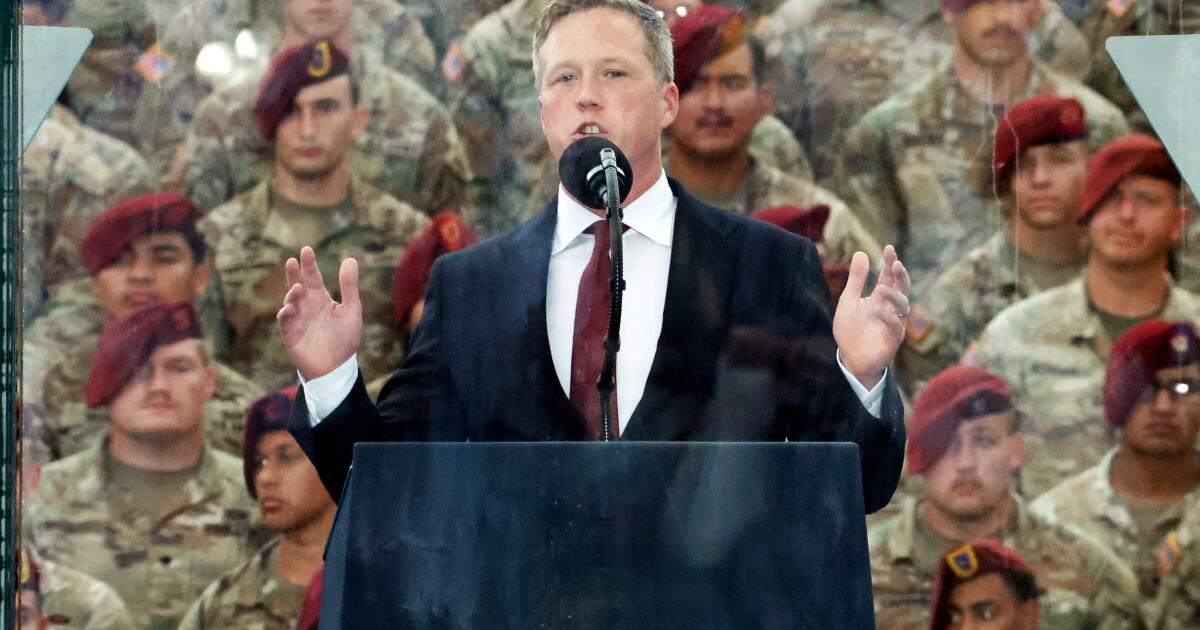
army secretary dan driscoll

Lawmakers ask Army to explain why it told a military unit to stop specializing in drone warfare

A bipartisan group of U.S. lawmakers is pressing the Army to explain why it told a unit based in Europe to stop specializing in drone warfare, an order that comes as the world’s battlefields rapidly evolve and military tactics increasingly rely on uncrewed systems to fight.

The 173rd Airborne Brigade was building its own drones and practicing the kind of warfare that Ukraine has pioneered against Russia and that Iran has fought against the U.S. — warfare that has killed and wounded American troops. The brigade of 600 soldiers was set up in November to be deployed anywhere that drones were needed.

“We have deep concerns that eliminating this specialized drone unit will limit our ability to learn from allies, particularly the Ukrainian Armed Forces, and hinder our efforts to modernize drone warfare at the speed necessary to compete on the modern battlefield,” the lawmakers said in a letter shared with The Associated Press.

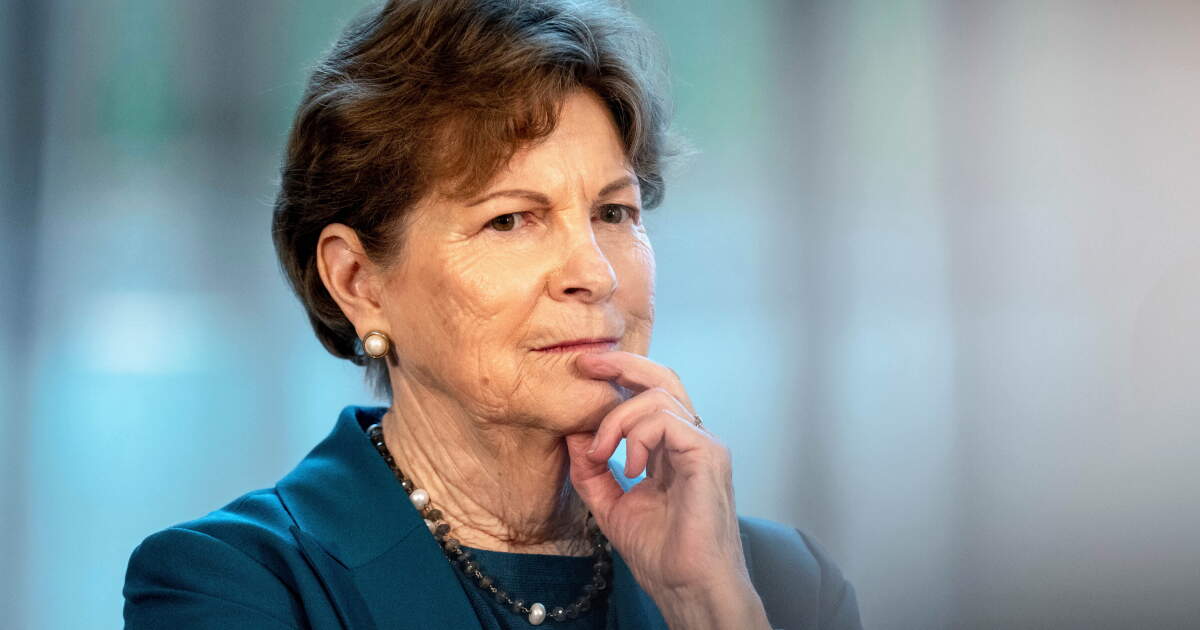
It requests a briefing from the Army to explain its decision and was sent Tuesday to departing Army Secretary Dan Driscoll and Gen. Christopher LaNeve, the Army’s acting chief of staff. It was signed by Democratic Sen. Jeanne Shaheen of New Hampshire, Republican Sen. Thom Tillis of North Carolina, independent Sen. Angus King of Maine and Republican Rep. Mike Turner of Ohio.

“This specialized unit was a prudent response in a moment when the character of warfare is changing faster than a conventional formation’s ability to adapt,” the lawmakers say.

They said they were particularly keen to understand the data, analysis and process behind the change after less than a year of the drone unit being active. They also want to know if the decision was based on guidance from Pentagon leadership or made internally by the Army.

LaNeve, who is filling in as the Army’s top uniformed officer, recently ordered the battalion to refocus on its core mission of being an airborne infantry unit. The move followed Defense Secretary Pete Hegseth’s sudden ousting of the Army’s prior chief of staff, Gen. Randy George.

Integrating drones into the Army’s tactics was a major focus for George. Last year, he and Driscoll had rolled out what they called the Army Transformation Initiative, which pushed to add “modernized (unmanned aircraft systems) into formations.”

George, who became Army chief of staff under President Joe Biden, regularly spoke about the need to accelerate development of new drone systems and get them in the hands of regular soldiers, not just specialized units. Driscoll supported such efforts and focused on cutting the red tape for military contractors to quickly develop more drones.

After George was ousted by Hegseth without explanation in April, he was replaced by LaNeve. This week, Driscoll submitted his own resignation and later said on social media that Wednesday would be his final full day on the job. A reason for his departure was not publicly revealed, but he was an ally of George, and his tensions with Hegseth have been widely reported.

“We are supportive of the transformative initiatives the Army has taken under Secretary Driscoll’s leadership in this area and would like to see that momentum maintained even as uniformed leadership changes,” the lawmakers wrote.

Toropin and Finley write for the Associated Press. Toropin reported from Nuremberg, Germany.
Source link

Army Secretary Dan Driscoll is stepping down after 18 months on the job, White House says

Army Secretary Dan Driscoll is stepping down after 18 months on the job, the White House said Monday, in the latest departure of a top military leader during the Trump administration.

No reason was given for the departure of Driscoll, who is a friend of Vice President JD Vance, but tensions with Defense Secretary Pete Hegseth have been widely reported. It marks the latest in a series of shakeups of the military leadership, with the Army especially seeing major upheaval.

“Secretary Driscoll has been highly effective in advancing President Trump’s agenda to Make America Strong Again at the Department of the Army by providing outstanding leadership during historic military operations, restoring an emphasis on readiness and lethality, assisting with negotiations between Russia and Ukraine, and more,” White House spokeswoman Anna Kelly said in a statement.

“The United States Army is more powerful than ever thanks to his work alongside the Commander-in-Chief and Secretary of War,” she added.

A U.S. Army official, who was not authorized to comment publicly and spoke on condition of anonymity, said Driscoll spoke with President Trump on the current state of the Army and submitted his resignation. The official did not provide additional details. The Pentagon referred questions to the Army. Driscoll’s resignation was reported earlier Monday by The Wall Street Journal.

Exit follows other Army departures, rollback of drone program

Driscoll’s departure follows the ouster of one of his allies from the Army as well as the rollback of a drone program he had championed. Hegseth had suddenly ousted the service’s top uniformed leader, Gen. Randy George, in April, while the Army’s commander in Europe and Africa, Gen. Christopher Donahue, unexpectedly stepped down in June.

Gen. Christopher LaNeve, who has made a meteoric rise under Hegseth, took George’s place as the Army’s acting chief of staff. Under LaNeve, the service is pulling the plug on a drone modernization program. An Army unit based in Europe was building its own drones before LaNeve directed it to end its efforts and return to being a traditional infantry battalion, officials said in August.

Driscoll was a George ally and lamented his departure, along with both Republican and Democratic lawmakers. He told Congress in April that he and his family drove to George’s house following his resignation “and we all gave him a hug.”

“That being said, the civilian leadership, the design of our system, is that they get to pick the leaders that they want,” Driscoll added.

Republicans and Democrats respond to departure news with praise for Driscoll

Rep. Steve Womack, an Arkansas Republican who had served in the Army National Guard, said on X that Driscoll is “a transformative leader who brought common sense and discipline to the Department of the Army.”

“I had the pleasure of working with him closely, and appreciated how engaged he was from mentoring cadets at West Point to leading the Army at the Pentagon,” Womack wrote. “The Army is better equipped and prepared to tackle emerging threats because of his leadership that strengthened the force while putting our Soldiers first.”

Rep. Jason Crow, a Colorado Democrat and former Army Ranger, told reporters that he worked well with Driscoll despite their policy differences.

“It was actually nice, I will say, having somebody who was smart, that knew the policy, that wanted to do the work, that had a background in these issues,” Crow said, adding that “it’s unfortunate that somebody like that can’t last in this administration.”

Crow, who serves on the House Armed Services Committee and co-chairs the House Army Caucus, said the “Pentagon right now is, in some cases, rudderless,” with so many senior leaders gone. “So, I’m gravely concerned about it,” he said.

Rhode Island Sen. Jack Reed, the ranking Democrat on the Senate Armed Services Committee, said in a statement that Driscoll “worked to transform the Army for the battlefield of the future, and he engaged with Congress candidly and consistently.”

“Secretary Hegseth is cultivating a culture where dissent is punished and competence is secondary to personal allegiance,” said Reed, a former Army officer, while noting that “hundreds of thousands of soldiers are deployed around the world, many in combat zones.”

Driscoll was an unlikely negotiator in Ukraine-Russia war

Driscoll is an Iraq war veteran, tech investor and former adviser to Vance, whom Driscoll met at Yale Law School. When nominating Driscoll in 2024, Trump called him “a disruptor and change agent.”

As Army secretary, Driscoll was tapped for the unusual role of key negotiator to try to end the war between Russia and Ukraine. He was also a major force behind trying to cut the red tape for military contractors to quickly develop more drones and counter-drone capabilities as warfare rapidly changes around the world.

The Senate confirmed him in February 2025, voting 66-28, following an Armed Services Committee hearing that was largely unconfrontational and focused on how the Army could modernize its systems, improve recruiting and beef up the military industrial base.

Driscoll noted that his father and grandfather served in the Army, and he vowed to be a secretary focused on the needs of soldiers. According to the Army, Driscoll served as an armor officer from August 2007 to March 2011, deploying to Iraq from October 2009 to July 2010.

He also ran unsuccessfully in the Republican primary for a North Carolina congressional seat in 2020, getting about 8% of the vote in a crowded field of candidates.

His departure comes after Hegseth ousted several other generals and admirals, including the head of the Navy.

The Pentagon abruptly announced in April that Navy Secretary John Phelan was leaving the job, becoming the first head of a military service to depart during Trump’s second term.

Finley and Madhani write for the Associated Press.

Source link