Riyadh postpones flagship investment conference until 2027, orders government staff to work from home.
Published On 20 Oct 202620 Oct 2026
Saudi Arabia’s Future Investment Initiative (FII) conference has been postponed until next year, according to a statement on the official website, as deadly strikes by the Iran-backed Houthis against the kingdom continue.
The annual event was due to start next week on October 26 and run through October 29, with a date next year to be announced “very soon”, the statement released on Tuesday said.
Recommended Stories
list of 3 itemsend of list
FII Institute chief executive officer Dr Maha Bint Mishari Al Saud said the decision “comes from a deep commitment to our partners, members, speakers and delegates”.
“Because this is our landmark tenth edition, we want to ensure it delivers the full scale, extraordinary quality, and unforgettable impact that our community has come to expect and truly deserves,” she said.
Informally dubbed “Davos in the Desert”, a nod to the World Economic Forum’s annual meeting in Switzerland, the state-backed conference showcases the kingdom’s ambitious investment plans in a bid to attract billions of dollars needed to fund its economic transformation away from hydrocarbons towards tourism, sport and technology.
Expected speakers included: Alphabet & Google’s president and chief information officer, Ruth Porat; Goldman Sachs Group chairman and CEO David Solomon; and BlackRock chairman and CEO Laurence Fink, according to the FII website.
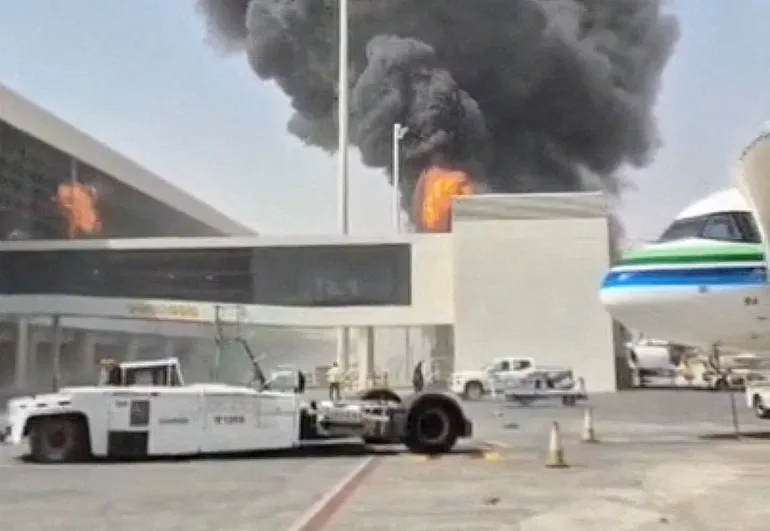
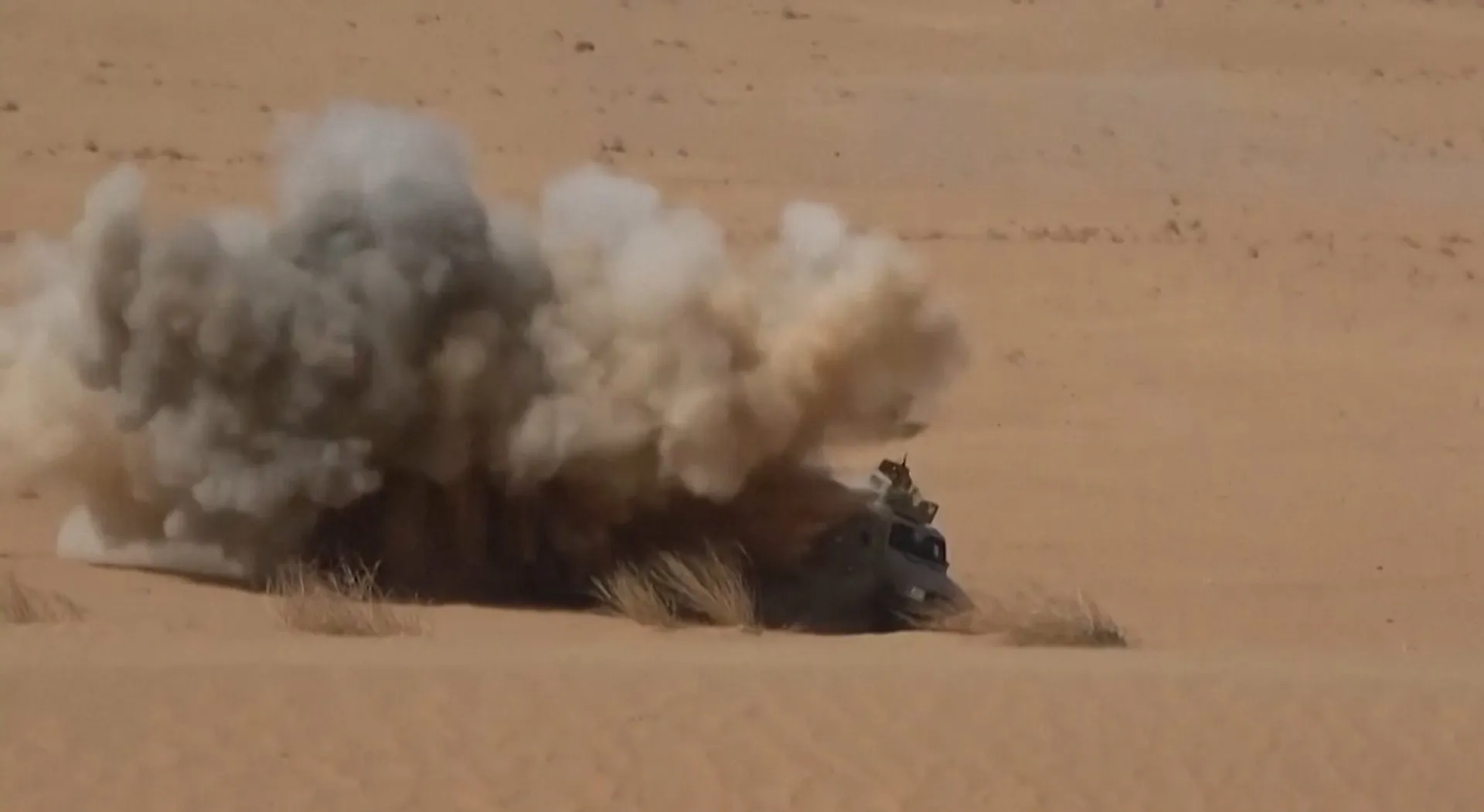
Smoke and flames rise from King Khalid International after Yemen’s Houthis said they attacked the airport in Riyadh, Saudi Arabia, on October 8, 2026, in this screengrab obtained from a social media video [Reuters]
Fighting between a Saudi-led coalition supporting Yemen’s internationally recognised government and the Iran-aligned Houthis has escalated in recent weeks.
The Houthis, also known as Ansar Allah, have hit military, energy and civilian infrastructure across Saudi Arabia, including Riyadh’s international airport, killing at least 18 people and injuring hundreds more.
Government staff to work from home
Government agencies in the Saudi capital, Riyadh, have told employees to work from home, one worker and two consultants told the AFP news agency, as the city comes under repeated attack from the Houthis.
The Kingdom Centre, a 99‑storey tower in downtown Riyadh that houses the International Monetary Fund’s regional office, also requested workers stay away until further notice.
On Sunday, an employee of a government agency in the capital received a message saying, “It has been decided to implement remote work from Monday to Thursday this week”. The message added: “We ask everyone to continue their activities as normal.”
Companies based in the King Abdullah Financial District, which hosts offices of major United States firms, have also asked employees to work from home, according to other sources.
Lawmakers adjourn second session as one party tells members to abstain over unclear commitment.
Published On 19 Oct 202619 Oct 2026
Egypt’s parliament has delayed a vote on authorising its armed forces to support Saudi Arabia, which has come under increasing attack from the Iran-aligned Houthis in Yemen.
The vote has been adjourned to October 26, the House of Representatives said on Monday. The move prolongs the debate over Egypt’s role in the Yemeni conflict.
Recommended Stories
list of 3 itemsend of list
The opposition Egyptian Social Democratic Party said it had told its lawmakers to abstain.
The party said parliament had not been given enough information about the mission’s objectives, duration, cost, or the risks to Egyptian troops.
However, the party, which holds nearly a dozen seats, said most of its lawmakers support the measure, according to two members of parliament who spoke to the AFP news agency.
The parliament has been tasked with authorising President Abdel Fattah el-Sisi to approve any request from Saudi Arabia for defence assistance amid attacks on the kingdom by Yemen’s Houthis.
The call for support came after the Iran-backed rebel group attacked Riyadh’s international airport and the state oil company Saudi Aramco last week. Saudi authorities say 13 people were killed in the October 10 attack on the airport.
El-Sisi said on Saturday that Egypt would take “any measure” needed to protect its Gulf allies.
“I’m not talking about confronting or attacking anyone,” el-Sisi said. “We’re talking only about defence.”
After approval from the National Defence Council, chaired by el-Sisi, Egypt’s constitution requires a two-thirds parliamentary majority to send troops on a combat mission abroad. The council gave its approval on Sunday.
Egypt’s rocky economy
The Grand Imam of al-Azhar urged Arab and Muslim leaders on Sunday to mediate Egypt’s parliamentary decision and avert further bloodshed.
Saudi Arabia holds an important role in financing Egypt’s rocky economy. It is due to deposit $5.3bn into Egypt’s central bank this month, plus $267.39m in interest.
Egypt’s EGX30 stock index fell early on Monday amid concerns about possible military involvement but recovered to close 0.4 percent higher.
Nematallah Choucri, head of research at HC Securities, told the Reuters news agency that geopolitical developments are the main driver of recent market losses.
Egypt is also affected by the shortage of oil and gas exports from the Middle East due to the United States war on Iran and fighting in Yemen.
Egypt’s economy is heavily dependent on remittances from Egyptians working in the hydrocarbons industry in Saudi Arabia.
Suez Canal threat
Political analyst and Gulf studies expert Thomas Bonnie James told Al Jazeera that the Houthi security threat to Saudi Arabia also threatens the Suez Canal, which Egypt’s foreign minister says has lost about $11bn since the Houthis launched attacks in the Bab al-Mandeb strait in solidarity with Gaza in 2023.
James also said Egypt does not want to be seen as the regional ally that “stood aside while others defended the kingdom”.
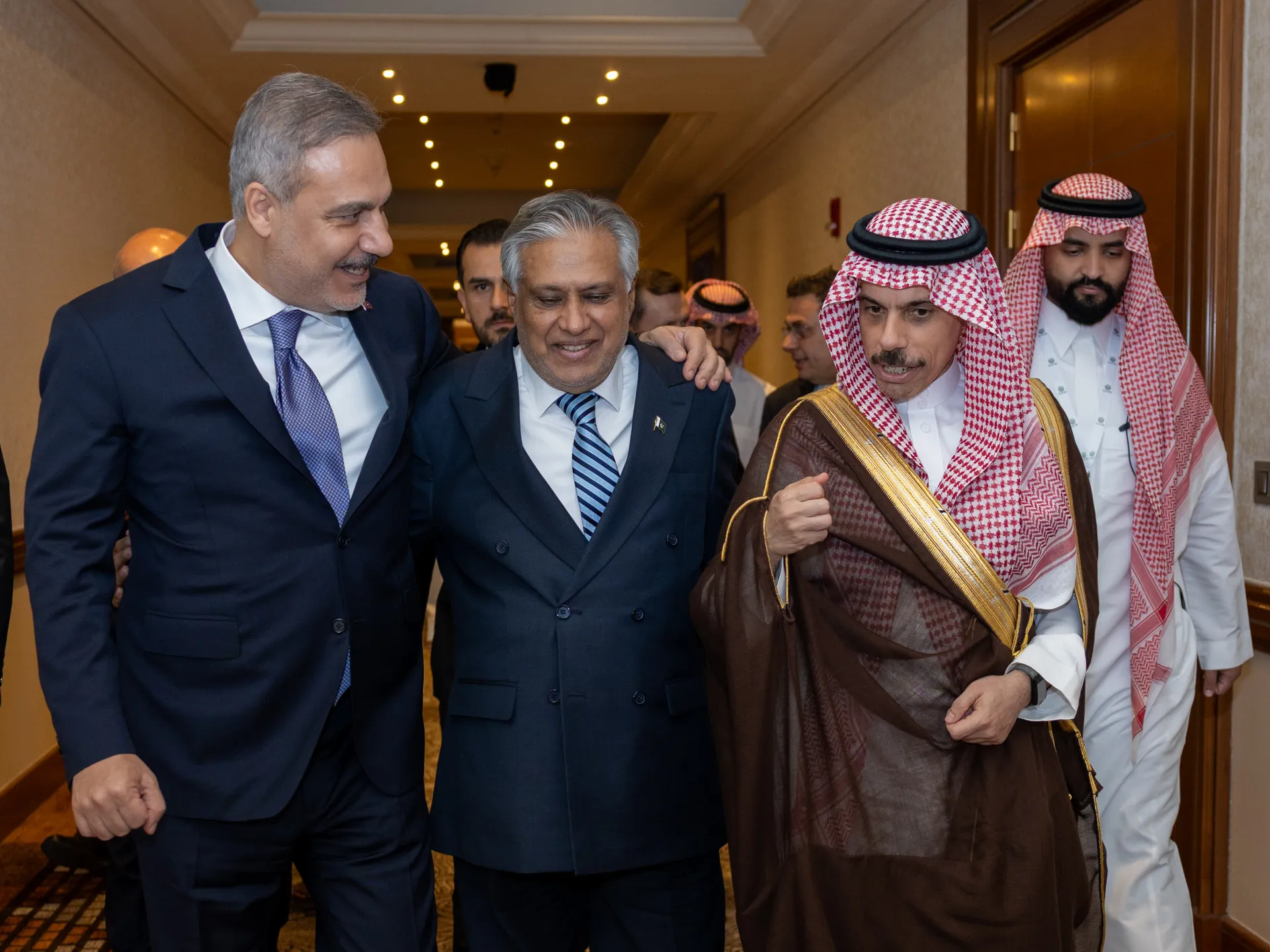
Turkiye and Pakistan have made their own pledges after activating the Mecca defence pact with Riyadh, signed in August, amid the deteriorating security situation in the Middle East.
Gulf ministers urge action against Houthis as fighting displaces more than 233,000 people across Yemen.
The Gulf Cooperation Council (GCC) has condemned repeated attacks by Yemen’s Iran-aligned Houthi fighters on Saudi Arabia and pledged support for the kingdom.
The political and economic bloc that includes Saudi Arabia, Bahrain, Kuwait, Oman, Qatar and the United Arab Emirates issued a statement on Sunday, shortly after their foreign ministers’ meeting in Manama, Bahrain.
Recommended Stories
list of 2 itemsend of list
The statement said an attack on any member affected all six, invoking a joint defence agreement and backing Saudi Arabia’s right to protect itself.
The condemnation came as the Saudi-led military coalition fighting the Houthis reported shooting down two drones near Riyadh and in Saudi Arabia‘s Eastern Province early on Sunday.
The coalition said another drone had been intercepted near the capital hours earlier, but did not identify who launched it.
Gulf ministers accused the Houthis of carrying out deadly strikes on civilian airports and vital facilities.
They also pressed for tighter enforcement of a United Nations arms embargo against the group and urged countries to formally designate it “a terrorist organisation”.
The ministers welcomed an October 15 statement from the UN Security Council (UNSC), the body responsible for maintaining international peace, which condemned Houthi strikes on Saudi Arabia and threats to Red Sea shipping.
Yemen’s internationally recognised government separately appealed to the UNSC to act against Houthi attacks on homes and state facilities.
In letters addressed to UN Secretary-General Antonio Guterres and the UNSC’s president for October, Aglaia Balta, the Yemeni government cited an attack on the presidential palace in Aden, where the government is temporarily based.
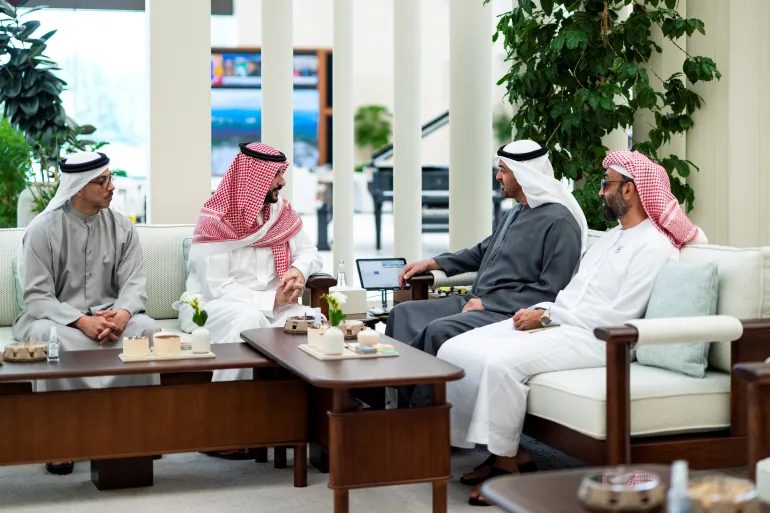
Separately on Sunday, UAE Vice President Sheikh Mansour bin Zayed Al Nahyan met Saudi Defence Minister Prince Khalid bin Salman Al Saud in Abu Dhabi to discuss regional security, the UAE’s state news agency WAM reported.
Sheikh Mohamed bin Zayed Al Nahyan, president of the United Arab Emirates, meets Prince Khalid bin Salman Al Saud, Saudi Arabia’s minister of defence, in Abu Dhabi, the United Arab Emirates, October 18, 2026 [UAE Presidential Court/Handout via Reuters]
Meanwhile, Saudi-backed Yemeni government forces press offensives on several fronts.
The Yemeni military said the Houthis fired missiles towards the central city of Marib on Sunday, while government troops reported gains in Taiz, further south.
Government-aligned commanders said eight soldiers died in fighting in Lahij province on Saturday.
Government forces also claimed to have killed 12 Houthi fighters in southern Taiz, figures that could not be independently confirmed.
This latest phase of the war followed Houthi gains along Yemen’s Red Sea coast last month.
Government forces launched a counteroffensive intended to recapture territory from the Houthis, who seized the capital, Sanaa, in 2014.
Civilians face deepening shortages
The fighting has uprooted more than 233,000 people, according to the International Organization for Migration, the UN’s migration agency.
About 121,000 are in Taiz province, where supply routes have been disrupted by the fighting.
Al Jazeera’s Hadeel al-Yamani, reporting from Taiz, said cooking gas was unavailable and food stocks were dwindling as Houthi forces blocked supplies through the city’s western entrance.
A local office tracking the siege said food prices had risen fivefold.
The World Health Organization, the UN health agency, warned that Taiz’s 12 hospitals had fuel for just four more days and had run out of surgical supplies.
Oxygen and medicines were also critically scarce as the city struggled with a cholera outbreak.
Egyptian president pledges ‘any measure’ to help defend Saudi Arabia ‘if it is requested of us’.
Published On 17 Oct 202617 Oct 2026
Egypt’s President Abdel Fattah el-Sisi has called for an emergency parliamentary session to authorise him to approve any requests from Saudi Arabia for defence assistance, if Riyadh were to ask.
Speaking at a graduation ceremony at the Egyptian Military Academy on Saturday, el-Sisi emphasised Cairo’s readiness to back the kingdom.
Recommended Stories
list of 3 itemsend of list
Egypt will “carry out any measure to protect” Saudi Arabia “in accordance with the directives of His Majesty King Salman and the directives of the Crown Prince, Mohammed bin Salman”, he said.
“I know that this matter requires the approval of the Egyptian parliament, and I hope that parliament will convene in an emergency session to give us this authorisation, if it is requested of us,” he said.
“I am not speaking in order for us to fight anyone or attack anyone. I am speaking only for defence.”
Attacks on Saudi Arabia
The request follows a barrage of attacks on the kingdom from Yemen’s Iran-backed Houthis, including airports and oil facilities.
Recent Houthi strikes on Saudi Arabia have mainly targeted key infrastructure on the outskirts of the capital, Riyadh, but they appear to be edging closer to the city centre.
Houthi attacks on Riyadh’s King Khalid International Airport earlier this month killed 14 people and wounded more than 300. Houthi attacks have also been reported on other airports, including Dammam, Abha, Jazan and Najran.
Yemen’s Saudi-backed, internationally recognised government launched a full-scale military campaign against the Houthis this month to recapture territory seized by them.
El-Sisi had backed Saudi calls for secure and unhindered navigation in the Red Sea in a meeting with the Saudi Crown Prince, known as MBS, in Cairo last month.
A statement from the Egyptian presidency then said that “the security of Saudi Arabia and the Gulf states is an integral part of Egypt’s national security”.
Red Sea security
That meeting came just days after the Houthis seized Yemen’s Red Sea coast, gaining significant control over the Bab al-Mandeb strait, the southern gateway to the Suez Canal.
Saudi Arabia already has a defence pact with Pakistan and Turkiye, known as the Mecca Alliance for Defence, which was signed in August.
Earlier this month, the three countries agreed to activate “deterrence measures” under the pact and rapidly deploy forces to the Gulf kingdom to counter attacks by Yemen’s Houthis.
Analysts say Riyadh is looking for help to protect the kingdom and Red Sea shipping and that Egypt, whose Suez Canal revenue depends on the same traffic, is an obvious partner.
They say Egypt is eager to prevent Iran and its allies from imposing control over the region, especially over maritime traffic in the Red Sea, given the direct repercussions for the Suez Canal.
Saudi Arabia has accused Iran of encouraging Houthi attacks against the kingdom, a claim Tehran rejects. Iran has offered assistance to halt the conflict between the two sides.
Asian Cup preparations continue for January, but Asian Tour delays golf’s Saudi Invitational after Houthi attacks.
Published On 16 Oct 202616 Oct 2026
The Asian Cup football tournament is on track to take place in Saudi Arabia early next year, local organisers say, but golf’s Asian Tour has postponed the Saudi International indefinitely in the aftermath of a series of attacks on Riyadh.
Yemen’s Houthi group claimed responsibility for the deadliest attack, which took place on Saturday on Riyadh’s international airport. It killed 14 people and wounded more than 300.
Recommended Stories
list of 4 itemsend of list
Australia also withdrew its team from the urban cycling World Championships on Friday, citing safety concerns over travelling to Riyadh, where the event is scheduled to take place in early November.
The Six Kings Slam exhibition tennis tournament in Riyadh has already been moved from October to December while FIFA on Thursday postponed the FIFAe Finals 2026 video game competition in Jeddah until an unspecified future date.
In that environment, serious questions were being asked about whether the 24-team Asian Cup could still go ahead in Saudi Arabia from January 7 to February 5.
Three Saudi Pro League matches, including one featuring Cristiano Ronaldo’s Al-Nassr, were postponed this week while Al-Nassr’s Asian Football Confederation (AFC) Champions League game on Monday was delayed by an hour after Saudi Arabia’s Civil Defence said it had intercepted a missile fired towards Riyadh.
AFC chief Salman bin Ibrahim Al Khalifa said earlier this week that a postponement of the continental championships until 2028 was possible if necessary, but the local organising committee (LOC) said on Friday that it was sticking to the original schedule.
“Preparations across all organisational and operational areas are progressing according to the approved schedule, including work on venues, facilities and supporting services,” it said in a statement.
The LOC “will continue to monitor developments relevant to the tournament and ensure the appropriate conditions are in place for its successful delivery”.
Attacks in Saudi Arabia disrupt sport calendar
The $5m Saudi International, which is sponsored by Saudi Arabia’s Public Investment Fund (PIF), is the flagship event on the Asian Tour and had been scheduled to take place at Riyadh Golf Club on November 18-21.
“The decision to postpone was taken following an assessment of the organisational and logistical challenges associated with hosting the tournament and ensuring the event is delivered to a standard befitting its international stature,” an Asian Tour statement said.
AusCycling said its decision to withdraw the Australian team from the urban World Championships was made “with the safety and wellbeing of our athletes and staff our highest priority”.
The Australian government is advising travellers to “reconsider” trips to Saudi Arabia in general and Riyadh’s King Khalid International Airport in particular “due to recent security incidents”.
The Saudi government has invested heavily in sport through the PIF in recent years, and the Asian Cup was pitched as an early rehearsal for hosting football’s FIFA World Cup in 2034.
Saudi Arabia’s Supreme Court has set aside the death sentence handed to a Sri Lankan migrant worker over a comment he made on Facebook, Colombo’s Deputy Foreign Minister Arun Hemachandra said.
Anojan Sivarasa, 27, was sentenced to death in September after a Saudi appellate court convicted him of blasphemy against Islam and the Prophet Muhammad over his comment.
Saudi Arabia’s top court set aside the sentence on Wednesday, Hemachandra said in a post on Facebook, where he thanked the authorities and legal teams of both nations for their efforts.
In late June, footage of a young Muslim man kicking a dog following Hindu pilgrims circulated widely on social media, triggering religious arguments online.
During the exchange, a user posted derogatory remarks about a Hindu deity, leading Sivarasa to respond in Tamil insulting the Prophet Muhammad.
Although Sivarasa promptly deleted the comment and posted an apology video, a screenshot of it was brought to the attention of his employer and Saudi officials, leading to his arrest in July.
It is not clear if there will be further legal proceedings or whether Sivarasa will remain in detention, and for how long. He was initially sentenced to five years in prison as well as a fine of three million Saudi riyals ($0.8m; £0.6m) by the Al-Ahsa Criminal Court.
Faizer Mustafa, a Sri Lankan lawmaker who is involved in legal negotiations with Saudi Arabia regarding Sivarasa’s case, confirmed to BBC Sinhala that Saudi Arabia had overturned the death sentence, adding that they are reviewing the Supreme Court’s latest ruling.
Sivarasa’s family had earlier said they have had no direct contact with him since 28 September.
International rights groups had also joined calls for Saudi to spare his life.
“Saudi authorities should end their use of abusive laws to hand out extraordinary sentences for speech-related offenses, especially against migrant workers who are already in a vulnerable position with limited protections,” Joey Shea, senior Saudi Arabia researcher at Human Rights Watch, said on Tuesday.
Saudi Arabia says it intercepted missiles targeting Riyadh and Dhahran, with falling debris injuring at least four people, and damaging homes in the capital. Meanwhile, Yemen’s Saudi-backed government says its offensive to retake Houthi-held territory is advancing.
Addis Ababa, Ethiopia – As renewed fighting in Ethiopia’s Tigray region threatens to destabilise the Horn of Africa, public backing by the United Arab Emirates (UAE) of Ethiopia’s federal government and Saudi Arabia’s record of regional diplomacy are drawing scrutiny.
Both Gulf powers have strategic interests in the Horn of Africa, but their roles differ. The UAE has publicly backed Ethiopia’s government while Saudi Arabia has previously helped broker an Ethiopia-Eritrea rapprochement and was reported to have offered to mediate between the two countries in 2025.
The renewed fighting threatens to unravel the November 2022 Pretoria peace agreement, which ended a war between Ethiopia’s federal government and Tigrayan forces. As tensions with Eritrea add to the risks of a wider confrontation, the positions of Abu Dhabi and Riyadh offer a window into the interests of external powers in the crisis.
The UAE: Clear alignment, unproven leverage
On September 25, the UAE condemned attacks by the Tigray People’s Liberation Front (TPLF) and its allied armed groups against Ethiopian federal forces, the seizure of airports in Tigray and the escalation in the neighbouring regions of Afar and Amhara.
Sheikh Shakhboot bin Nahyan Al Nahyan, the UAE minister of state, expressed solidarity with Ethiopia’s government and people, reaffirmed support for the country’s sovereignty and territorial integrity, and called for an end to hostilities, the protection of civilians and adherence to the Pretoria Agreement.
The statement made Abu Dhabi’s public position clear: It backs Ethiopia’s federal government while calling for de-escalation and dialogue. It did not establish whether the UAE was providing military assistance or had secured commitments from the parties to end the fighting.
The UAE also has commercial interests across the Horn of Africa. Dubai Ports World (DP World) operates Berbera port in Somaliland, and a shipping route launched in 2025 connects the port with Jebel Ali in the UAE, providing an additional corridor for cargo serving inland destinations, such as Ethiopia. Landlocked since Eritrea’s independence in 1993, Ethiopia relies heavily on Djibouti for access to international trade.
These commercial links help explain Abu Dhabi’s interest in regional stability and its relationship with Addis Ababa. However, they do not establish that the UAE can influence the TPLF, persuade Eritrea to de-escalate or change Ethiopia’s military calculations.
The extent to which Abu Dhabi can use its relationship with the federal government to encourage a political response to the conflict remains unclear.
Saudi Arabia: Diplomatic experience, uncertain engagement
Saudi Arabia has yet to publicly announce its position on the latest fighting in Tigray.
The kingdom has not publicly commented on the renewed war, according to an October 1 analysis by Critical Threats, although it undertook diplomatic efforts earlier this year to reduce tensions between Ethiopia’s federal government and the TPLF.
Saudi Arabia has previously sought to mediate between Ethiopia and Eritrea. In November 2025, Chatham House reported that sources said Riyadh had offered to mediate between the two countries amid rising tensions over maritime access and regional security.
A June 2026 analysis by Germany’s SWP think tank said previous Saudi mediation efforts had failed, partly because negotiations did not address Ethiopia’s interest in the Eritrean port of Assab.
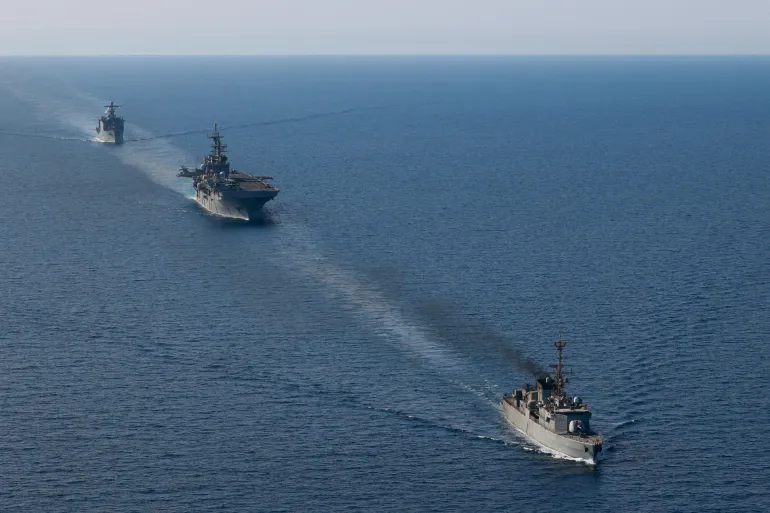
A Saudi navy frigate sails alongside US 5th Fleet ships during operations to support security in the Red Sea, where rising tensions between Ethiopia and Eritrea have raised concerns about wider regional stability [File: Reuters]
The kingdom’s broader regional alignment also matters. An August 2026 analysis by the Soufan Center described Saudi Arabia and Egypt as backing Eritrea in opposition to Ethiopia’s ambitions for Red Sea access.
This is an assessment of regional alignment, however, not evidence that Saudi Arabia is directly providing military support to Eritrea or the TPLF in the current fighting.
Saudi Arabia has a strong interest in Red Sea security, a vital corridor for international shipping and its own oil exports. Whether Riyadh will take a more public diplomatic role as tensions escalate remains unclear.
Egypt’s rivalry with Ethiopia adds to regional tensions
Egypt’s role in the crisis is shaped by its longstanding dispute with Ethiopia over the Grand Ethiopian Renaissance Dam (GERD) and its growing ties with Eritrea.
Cairo has also stressed that responsibility for the governance and security of the Red Sea rests with countries bordering the waterway, a position shared by Asmara. The issue has added to regional tensions as Ethiopia seeks reliable access to the sea.
In September, Ethiopia’s army chief, Field Marshal Birhanu Jula, accused Egypt and Sudan of supporting armed groups fighting the federal government, including the Tigray People’s Liberation Front (TPLF).
His remarks, reported by Al Jazeera on September 28, did not provide evidence substantiating the accusation. Egypt’s Foreign Ministry spokesperson, Nader Zaki, subsequently reaffirmed Cairo’s commitment to state sovereignty and non-interference, rejecting suggestions that it had departed from those principles.
He did not directly address the specific allegation of Egyptian support for the TPLF.
Egypt’s relationship with Eritrea has nevertheless become an important part of the regional picture. President Abdel Fattah el-Sisi met Eritrean President Isaias Afwerki in Cairo on June 8, 2026.
According to Egypt’s presidency, the talks covered bilateral cooperation, developments in the Horn of Africa and Red Sea security.
The two leaders also stressed the importance of coordination to maintain regional stability. The meeting highlighted closer cooperation between Cairo and Asmara, but did not establish that either country was involved in the renewed fighting in Tigray.
For Cairo, the dispute with Ethiopia extends beyond Tigray to the Nile and the balance of power in the Horn of Africa.
Its relations with Eritrea and its disagreements with Addis Ababa form part of the wider regional context, but they are not evidence of direct Egyptian involvement in the renewed conflict. Whether these regional relationships will affect the course of the fighting remains uncertain.
From Tigray to a wider regional crisis
The risks extend beyond Tigray. Ethiopia’s pursuit of maritime access has become a source of tension with Eritrea, whose Red Sea coastline includes the port of Assab. Addis Ababa argues that reliable access to the sea is a national priority while Asmara rejects any threat to its sovereignty.
Ethiopia has accused Eritrea of sending troops across the border and supporting armed groups. Eritrea denies the allegations and has called on the United Nations Security Council to intervene. The allegations remain contested, but deteriorating relations have raised the stakes of renewed fighting in northern Ethiopia.
A wider confrontation could put more civilians at risk, complicate humanitarian access and disrupt regional trade and security. It would also test whether external partners could encourage restraint without appearing to endorse either side’s military objectives.
The UAE’s close ties with Addis Ababa could provide a channel for diplomatic engagement while Saudi Arabia’s record of regional diplomacy offers a possible opening for renewed talks. However, the available public evidence does not establish that either country is currently leading an initiative to contain the crisis.
Influence must be measured by outcomes
The UAE and Saudi Arabia should not be cast as pursuing opposing strategies simply because one has publicly backed Ethiopia’s federal government while the other’s current position is less visible. Their interests and diplomatic approaches differ, but the evidence does not show that either has decisive influence over the fighting.
Their contribution should be assessed by whether they can help secure concrete steps towards de-escalation, renewed political dialogue and a reduction in tensions between Ethiopia and Eritrea. Public statements, commercial interests and past diplomatic achievements may create opportunities for engagement, but they are not substitutes for progress on the ground.
The Pretoria Agreement remains the framework for a political settlement in Tigray, yet renewed fighting underscores the difficulty of sustaining peace while underlying disputes persist. A durable settlement will depend primarily on the parties themselves. External partners could contribute by encouraging restraint and supporting credible negotiations.
For now, the UAE’s public alignment with Ethiopia and Saudi Arabia’s diplomatic record offer different potential channels for engagement. Whether either country can turn those relationships into a meaningful contribution towards de-escalation remains unresolved.
SAUDI Arabia has been targeted by missile attacks over the weekend – some of which hit the King Khalid International Airport in Riyadh.
It has led to a change in FCDO advice – so what happens if you have a holiday booked, or a flight stopover?
King Khalid International Airport was targeted in a missile attack over the weekendCredit: APAs a result, the FCDO for Brits advises against all travel to Saudi ArabiaCredit: REUTERS
What is happening in Saudi Arabia?
Over the weekend, Houthi forces in Yemen launched an attack on in Saudi Arabia’s capital city, Riyadh.
The FCDO advises against all travel to parts of Saudi Arabia.
It read: “Following a serious incident at King Khalid International Airport on 10 October 2026 at approximately 1500 (local time), we advise British nationals to stay away from King Khalid International Airport until the airport is secure and to monitor the advice of the Saudi authorities.”
It adds that it advises against:
all but essential travel to all airports within Saudi Arabia except for Medina International Airport
all travel to within 10km of the border with Yemen
all but essential travel to Aseer province, Riyadh province, Najran province, Jizan province and the cities of Taif, Jeddah and Dammam
It continued to say: “There is a heightened threat against airports, military bases, ports and energy infrastructure across Saudi Arabia, including Abha, Jizan, Najran, Riyadh, Taif, Jeddah and Yanbu, as well as Saudi shipping vessels in the Red Sea.”
“Further attacks against airports are very likely. Follow Saudi Civil Defence alerts.”
Riyadh is frequently used as a stopover destination for BritsCredit: Getty
Are flights still going to Saudi Arabia?
King Khalid International Airport closed on Saturday following the missile strikes and remains closed with flight disruption across the region.
While the Saudi Arabia air space remains open, there is a high risk of short-notice airport closures, diversions and airspace disruption.
Reuters has reported that certain airlines have suspended flights to Riyadh.
Lufthansa Group has suspended flights to Riyadh until October 16.
Air France-KLM has halted services to the Saudi capital until the end of the month.
Emirates which flies Brits to Riyadh via Dubai has been affected by cancellations.
What if I’m currently in Saudi Arabia?
The FCDO advice reads that any British national in the Middle East should prepare for flight cancellations and possible airspace closures.
The advice also states:
follow advice from the local authorities and sign up to FCDO Travel Advice email alerts
refrain from capturing or sharing images of conflict-related incidents
monitor local and international media for the latest information, including updates relating to airports and airspace which could close at short notice
stay away from areas around oil infrastructure and military facilities. Exercise caution at transport hubs
keep your travel plans under review and ensure your travel documents are up to date
before you travel, check that your route does not include travelling through areas or airports where FCDO advises against all but essential travel and, if it does, consider whether your travel is essential
if travelling by air, check that your reservation is confirmed and the status of your flight before travelling to the airport. Remain alert at airports and follow instructions from local authorities
if you are advised to take shelter, stay indoors or find the nearest safe building or designated shelter. An interior stairwell or a room with as few external walls or windows as possible may provide additional protection. The greatest risk is from falling debris caused by intercepts, and you are safest inside a secure structure
Saudi Civil Defence may issue early warning alerts to people in affected areas
Head here to read the latest guidance on ‘how to prepare for a crisis’ and what to include in emergency supplies.
What if I have a holiday booked and can I cancel my trip?
Before you cancel a flight or holiday booking, speak to your travel provider first – especially if it’s a stopover flight as it may be rerouted.
In places where the FCDO advises against all but essential travel, you may be able to cancel a package holiday and get a full refund.
Mexican boxer tells Turki Al-Sheikh he ‘fears nothing’ and will face M’billi in Riyadh on October 31 ‘no matter what’.
Published On 12 Oct 202612 Oct 2026
The world title fight featuring Saul “Canelo” Alvarez and Christian M’billi will go ahead this month in Saudi Arabia despite attacks on the country’s airports, which have killed at least 14 people in Riyadh in two days, Saudi sports promoter Turki Al-Sheikh confirms.
Alvarez vs M’billi is scheduled for October 31 in the Saudi capital, which has repeatedly come under attack from Yemen’s Houthis, but Al-Sheikh sought to allay the doubts over the bout on Sunday.
One person was killed and 11 were injured on Sunday when a projectile struck King Khalid International Airport in Riyadh, according to Saudi Arabia’s General Authority of Civil Aviation (GACA).
A Houthi strike on the same airport on Saturday killed 13 people and injured more than 300, making it the deadliest attack on Saudi Arabia in more than a decade.
The Houthis claimed responsibility for all four strikes on Saudi airports before Sunday’s attack, which has yet to be claimed by any group.
Alvarez, who has held multiple world titles across several weight classes, will face WBC super-middleweight champion M’billi in a highly anticipated bout.
“Canelo reached out and told me he’ll still fight in Riyadh this October, no matter what happens,” Al-Sheikh, chairman of Saudi Arabia’s General Entertainment Authority, wrote in a social media post. “He [Alvarez] fears nothing.”
The Mexican boxer, a former two-time undisputed super-middleweight champion, has not fought since he was beaten by American Terence Crawford in September 2025.
US, Australia, Canada, Japan, South Korea and New Zealand among countries urging citizens to avoid travel to Kingdom.
Published On 12 Oct 202612 Oct 2026
Several countries have warned their citizens against travel to Saudi Arabia following a series of Houthi attacks on airports in the kingdom.
On Monday, Australia and New Zealand became the latest to issue advisories against travelling to the kingdom, following similar warnings from the United States, Canada, the UK, South Korea, and Japan.
Recommended Stories
list of 4 itemsend of list
Australia’s Department of Foreign Affairs and Trade said Australians should avoid King Khalid International Airport in Riyadh and “reconsider” travel to other Saudi airports.
New Zealand’s Ministry of Foreign Affairs and Trade urged citizens not to travel to the Saudi capital’s main gateway and the provinces of Najran, Jazan and Asir for any reason, and to avoid “non-essential” travel to Saudi Arabia as a whole.
The US embassy in Riyadh on Sunday advised US citizens to reconsider travel to the kingdom, citing the threat of attacks by Iran and the Iranian-backed Houthis.
Global Affairs Canada issued an advisory against non-essential travel to any part of Saudi Arabia.
South Korea’s Ministry of Foreign Affairs recommended that its citizens in Saudi Arabia leave unless they are on essential business and advised anyone planning to travel to the kingdom to cancel their trip.
The UK’s Foreign, Commonwealth and Development Office urged citizens to avoid travel to Jeddah and Dammam, and to all airports apart from Medina International Airport, except for essential reasons.
The warnings come as Saudi Arabia reels from five attacks on its airports in less than a week.
One person was killed and 11 others were injured on Sunday when a projectile struck King Khalid International Airport, according to Saudi Arabia’s General Authority of Civil Aviation (GACA).
A Houthi strike on the same airport on Saturday killed 13 people and injured more than 300 others, marking the deadliest attack on Saudi Arabia in more than a decade.
The Houthis claimed responsibility for all four strikes on Saudi airports before Sunday’s attack, which has yet to be claimed by any group.
King Khalid international airport and King Fahd international airport in Dammam remain closed following the attacks, causing significant disruption to aviation across the Middle East.
The attacks have also disrupted flights to and from King Abdulaziz International Airport in Jeddah.
More than 150 flights were cancelled and 374 flights were delayed at the Jeddah airport on Sunday, according to the flight tracking website Flightradar24.
Brendan Sobie, an independent analyst and consultant in Singapore, said it was too early to predict the ramifications of the attacks for aviation across the region and beyond.
“As has been the case with the Iran war and the impact from that crisis on the UAE, Kuwait and Bahrain, the impact of this latest crisis really depends on how long it lasts, how long Riyadh airport remains closed, and how long and to what extent are the restrictions once it reopens,” Sobie told Al Jazeera.
Sunday’s strike on King Khalid International airport kills a Pakistani national.
Published On 12 Oct 202612 Oct 2026
A projectile has struck Saudi Arabia’s King Khalid International airport, killing one person and injuring 11, according to the country’s civil aviation authority.
The General Authority of Civil Aviation (GACA) identified the deceased in Sunday’s attack as a Pakistani resident and said the injured were transferred to several hospitals for medical care.
Recommended Stories
list of 3 itemsend of list
The strike on terminals 3 and 4, which serve domestic flights, occurred a day after a Houthi missile hit the airport, killing 12 people and wounding more than 300, according to the Saudi-led coalition fighting Iran-backed Houthi rebels in Yemen.
India’s embassy in Saudi Arabia said one of its citizens died on Sunday of injuries sustained in Saturday’s attack, which would bring the toll to 13.
Following Sunday’s attack, GACA said damage assessments and safety inspections of the airport were under way.
A witness on board a taxiing aircraft at the airport told the Reuters news agency that a projectile struck the tarmac next to several parked planes at about 8:30pm (17:30 GMT) on Sunday, causing a fire.
The witness said the aircraft returned to the gate, where the passengers disembarked and were told to leave.
The Riyadh airport has been struck four times in the past five days. Houthi attacks on King Khalid airport on Thursday killed at least three Saudi citizens, including a pilot, according to GACA.
The airport has been closed since Saturday’s attack, which was the deadliest in the country since the US-Israel war on Iran began in late February.
The Houthis claimed responsibility for the strikes before Sunday’s.
The airport attacks have escalated the war in Yemen and threaten to draw in the US military. US President Donald Trump says he is weighing whether to join the fight against the Houthis.
The escalation puts further pressure on global oil supplies and prices, as well as on commercial shipping through the Bab al-Mandeb strait off the Yemeni coast, a crucial alternative waterway to the Strait of Hormuz.
Trump had said he intends to speak with Saudi Crown Prince Mohammed bin Salman, who is seeking help against the Houthis, but there were no signs on Sunday that the US president had followed up on his claim.
There are fears that US intervention could prompt the Houthis to halt shipping through Bab al-Mandeb, further restricting the flow of oil out of the Gulf.
The rebels seized key areas along the strait last month. The Saudi-led coalition, backing forces loyal to Yemen’s internationally recognised government, has been trying to seize them back.
A Houthi attack on Riyadh airport killed at least 12 people and injured more than 300. The Saudi-led coalition fighting the Houthis in Yemen called the missile strike a ‘war crime’, which has been condemned by the UN, Qatar, Pakistan, Canada and others.
Goals from Hammam Al-Hammami and Firas Al-Buraikan give the hosts their fourth Arabian Gulf Cup trophy.
Published On 7 Oct 20267 Oct 2026
Saudi Arabia have ended a long wait for an Arabian Gulf Cup trophy with a 2-0 win over the United Arab Emirates amid a charged atmosphere at the King Abdullah Sports City Stadium in Jeddah.
The hosts held on to an early lead, thanks to goals from Hammam Al-Hammami and Firas Al-Buraikan, to lift the regional crown on Tuesday.
Saudi Arabia set an early attacking pace in the game and were rewarded when Al-Hammami scored the opening goal in the 11th minute from the edge of the penalty area, setting off wild celebrations in the stands.
The home team’s dream start continued as, two minutes later, Al-Buraikan doubled the score with a close-range shot after a precise assist from Nasser Al-Dosari.
Saudi Arabia’s Firas Al-Buraikan celebrates scoring their second goal [Ibraheem Abu Mustafa/Reuters]
Saleh Abu Al-Shamat almost scored the third goal for Saudi Arabia in the 16th minute, but the ball was deflected off the goalpost after a one-on-one with UAE goalkeeper Khaled Issa.
The UAE’s first attack came in the 24th minute, when Nicolas Gimenez’s shot hit the post.
Six minutes before halftime, UAE’s Bruno thought he had won a penalty, only to be reversed by the video assistant referee.
Saudi Arabia’s head coach Georgios Donis credited his team’s discipline for the long-awaited home win.
“There were many difficulties, but the players showed focus and discipline and gave their best on the pitch,” he said after the match.
“I think we turned those difficulties into a title, and that’s important. We were the best team in this tournament. This title gives us confidence for the future, and we must continue to show the same qualities.”
Saudi fans celebrate with flares after winning the Gulf Cup [Reuters]
Asian Cup boost
At the start of the second half, Saudi goalkeeper Mohammed Al-Owais saved a close-range shot from substitute Sultan Adel to maintain his impressive clean sheet in the tournament.
Despite Saudi Arabia’s wastefulness in front of goal, their coach was pleased with the team’s efforts.
“After the World Cup, we realised we made mistakes and went through bad moments, but we learned from that experience,” Donis said.
“We improved our level and developed our style of play. And I think they deserve this result. It reflects our hard work.”
Saudi Arabia have now won four Gulf Cup titles, with the last one clinched in 2004.
The Green Falcons exited the FIFA World Cup 2026 in the group stage but will look at their performance in the Gulf Cup as a foundation for the upcoming AFC Asian Cup 2027.
Saudi Arabia will host the continental tournament from January 7 to February 5, as it gears up to become the second Gulf country after Qatar to host the FIFA World Cup in 2034.
The Mecca Alliance says it has agreed to trigger collective deterrence measures in response to “heinous attacks” by Yemen’s Houthi group against Saudi Arabia.
In a statement on Monday, the Pakistani Foreign Ministry said Saudi Arabia, Pakistan and Turkiye had decided to “provide the agreed military forces and capabilities and ensure their rapid deployment” to the kingdom.
Saudi Arabia’s Defence Minister, Khalid bin Salman, said the member countries agreed to trigger the alliance in response “to the attacks and all those responsible for them”.
The announcement comes as the Saudi-backed Yemeni government has launched a counteroffensive to push the Iran-aligned Houthis back from territory captured last month.
The agreement was reached during an emergency meeting of the Strategic Political and Defence Committee under the Mecca Alliance in Riyadh.
The mutual defence pact was signed in August, shortly before the Houthis launched their offensive in Yemen, which has included attacks against Saudi targets. Questions as to whether Islamabad and Ankara would agree to trigger the agreement have persisted since.
However, with hostilities increasing in Yemen, the committee agreed to “move immediately” to implement the collective defence measures to “ensure their rapid deployment in the Kingdom,” the joint statement reads.
The defence commitments will be executed under “approved arrangements” and the national laws of the three countries, the statement added.
Crown Prince Mohammed bin Salman says the kingdom ‘will not hesitate to respond firmly to any threat’.
Published On 30 Sep 202630 Sep 2026
Saudi Arabia’s Crown Prince Mohammed bin Salman (MBS) has promised not to compromise on the kingdom’s security in the face of attacks by the Houthi armed group, saying the Yemeni rebels chose “chaos and destruction, threatening the Yemeni people and the region”.
In a speech delivered Wednesday on behalf of King Salman bin Abdulaziz Al Saud during the opening of the third year of the ninth session of Saudi Arabia’s Shura Council, Prince Mohammed said the country “will not hesitate to respond firmly to any threat or attack aimed at undermining” its security.
He pointed to the trilateral Mecca Joint Defence Agreement with Turkiye and Pakistan that was formalised in August, saying the alliance shows the Saudi leadership’s intent “to strengthen regional stability, shield it from the repercussions of tensions and conflicts and coordinate efforts”.
At the same time, the crown prince said, Saudi Arabia is making “every possible effort to de-escalate tensions and support diplomatic solutions without the slightest compromise on preserving our security”.
Maritime coalition to defend Red Sea
MBS also addressed the targeting of vessels by the Houthis in the Red Sea along the Bab al-Mandeb strait, rejecting the use of international waterways as a tool for political or economic pressure.
He said a “multinational defensive maritime coalition” was set up to ensure “common interests” are protected in international waterways.
In recent weeks, the Houthis have ramped up attacks on Saudi Arabia, as they fight Yemen’s internationally recognised, Saudi-backed government forces.
Last week, Riyadh said it intercepted six ballistic missiles aimed at Taif in western Saudi Arabia and the Yanbu port area on the Red Sea.
The Houthis also said they attacked “a sensitive target” in the Saudi capital, Riyadh, and Saudi Aramco facilities in Yanbu.
On Tuesday, Pakistan’s Defence Minister Khawaja Muhammad Asif said Islamabad will make “whatever means” available to Saudi Arabia under the mutual defence pact if the Houthi attacks on the kingdom continue.
Saudi Arabia has restarted oil exports through its East-West pipeline after repairing damage from drone attacks earlier this month, restoring an important route that allows crude shipments to bypass the Strait of Hormuz, The Wall Street Journal reported Monday.
France is sending its military to protect key Yanbu oil terminal; Pakistan and Turkiye to hold military talks with Riyadh.
By Al Jazeera Staff, AP, DPA and Reuters
Published On 25 Sep 202625 Sep 2026
Saudi Arabia’s allies are rallying to support the country as the Houthi rebels step up attacks.
France confirmed on Friday that it is sending troops to guard the major oil terminal at Yanbu. Meanwhile, Saudi officials are meeting with peers from Pakistan and Turkiye to discuss options under their mutual defence pact.
Recommended Stories
list of 4 itemsend of list
French President Emmanuel Macron told broadcasters TF1 and France 2 that Paris is to send “soldiers, radars, and defence systems” to the Red Sea port of Yanbu.
“Not to involve ourselves in any conflict, but to protect the site,” he said.
Yanbu hosts major oil storage and refining facilities and is connected by the East-West Pipeline, which can carry up to seven million barrels a day.
The Houthis, also known as Ansar Allah (supporters of God), have repeatedly fired missiles and drones into Saudi Arabia, disrupting oil flows from the world’s largest energy exporter.
On Thursday, the rebel group said it had struck the facilities of state oil firm Aramco in Yanbu, and a “sensitive target” in Riyadh. Saudi forces said they had intercepted six ballistic missiles. Authorities have not confirmed any damage.
The foreign ministers of Saudi Arabia, Pakistan and Turkiye met on Thursday to arrange an “urgent meeting” of their military chiefs of staff under the Mecca Joint Defence Agreement, which treats an attack on one member as an attack on all, the Saudi foreign ministry said in a statement.
They also condemned Houthi attacks that they claimed targeted Mecca and other civilian sites.
However, doubt persists over what action Turkiye and Pakistan might take under the pact, which is yet to be officially triggered. Both of the Saudi allies are heavily involved as mediators seeking to bring an end to the conflicts across the Middle East.
Saudi Arabia’s grand mufti called on soldiers to be ready to lay down their lives to fight the Houthis, according to the Saudi state news agency.
The Iran-aligned Houthis have been battling the Saudi-backed government of Yemen for more than a decade. That conflict has been rekindled amid Israel’s wars against the Iran-aligned Hamas group in Gaza and the Hezbollah group in Lebanon, and the United States war on Iran.
At the United Nations General Assembly in New York, Yemen’s Vice President Abdullah Abdulkader al-Alimi-Bawzer warned that the Houthis were using shipping security “as a tool for blackmail”.
“It is taking hostage the entire global economy,” he said.
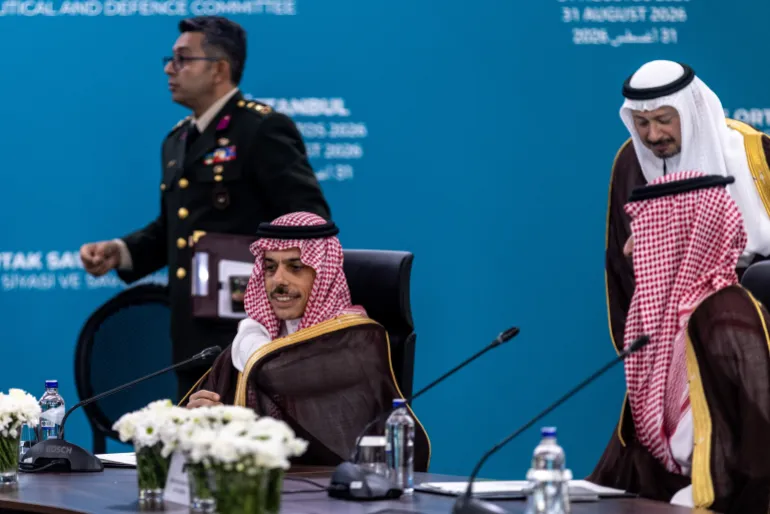
The US has not renewed military involvement, but Saudi Foreign Minister Prince Faisal bin Farhan Al Saud said the kingdom was “continuing to work with our partners in the US”.
Saudi Foreign Minister Prince Faisal bin Farhan Al Saud in Istanbul, Turkiye [Burak Kara/Getty]
The Houthi targeting of Yanbu adds to the pressure on Saudi Arabia’s oil exports.
Earlier this month, the Houthis seized the Yemeni port of Mocha and several Red Sea islands, giving them significant control over the Bab al-Mandeb strait, which usually carries about 12 percent of global oil trade.
Strikes have also disrupted the operation of the East-West Pipeline linking Yanbu to export routes. Riyadh had been using it to export crude bypassing the Strait of Hormuz, which is restricted amid the Iran-US war.
However, the Houthis have now forced the Saudis to switch some exports back to Hormuz.
Brent crude rose more than 3 percent on Thursday, briefly topping $108 a barrel, before easing to $105.77 on Friday morning.
June Goh, a senior oil market analyst at Sparta Commodities in Singapore, said oil would likely stay above $100 a barrel as long as the war on Iran continued.
“With no clear resolution in sight, the gap in oil inventories globally is getting wider,” Goh told Al Jazeera.
Ministers demand an end to maritime shipping attacks and urge Iran to stop arming the Yemeni group.
Published On 22 Sep 202622 Sep 2026
The foreign ministers of the Group of Seven (G7) nations have condemned what they called “unacceptable continued strikes” by Yemen’s Houthis against Saudi Arabia.
The ministers issued the statement on Monday following an informal meeting on the sidelines of the United Nations General Assembly in New York.
Recommended Stories
list of 3 itemsend of list
“We condemn in the strongest terms the unacceptable continued strikes carried out by the Houthis in Yemen and against the Kingdom of Saudi Arabia,” the ministers of the UK, Canada, France, Germany, Italy, Japan and the United States said in the statement.
The ministers urged the Houthis “to immediately cease all military actions, all threats and attacks against civilian shipping, and to return to the political process in good faith”.
They also called on Iran to stop arming and supporting the group, saying Tehran is in violation of past UN Security Council resolutions. They added that Iran’s backing of the Houthis constituted a dangerous pattern of escalation that risked undermining international trade and creating global instability.
The latest escalation in the Arab region’s most impoverished nation follows a period of relative calm that had largely held since the UN-brokered ceasefire in 2022 between the Iran-aligned group and the Saudi-backed Yemeni government.
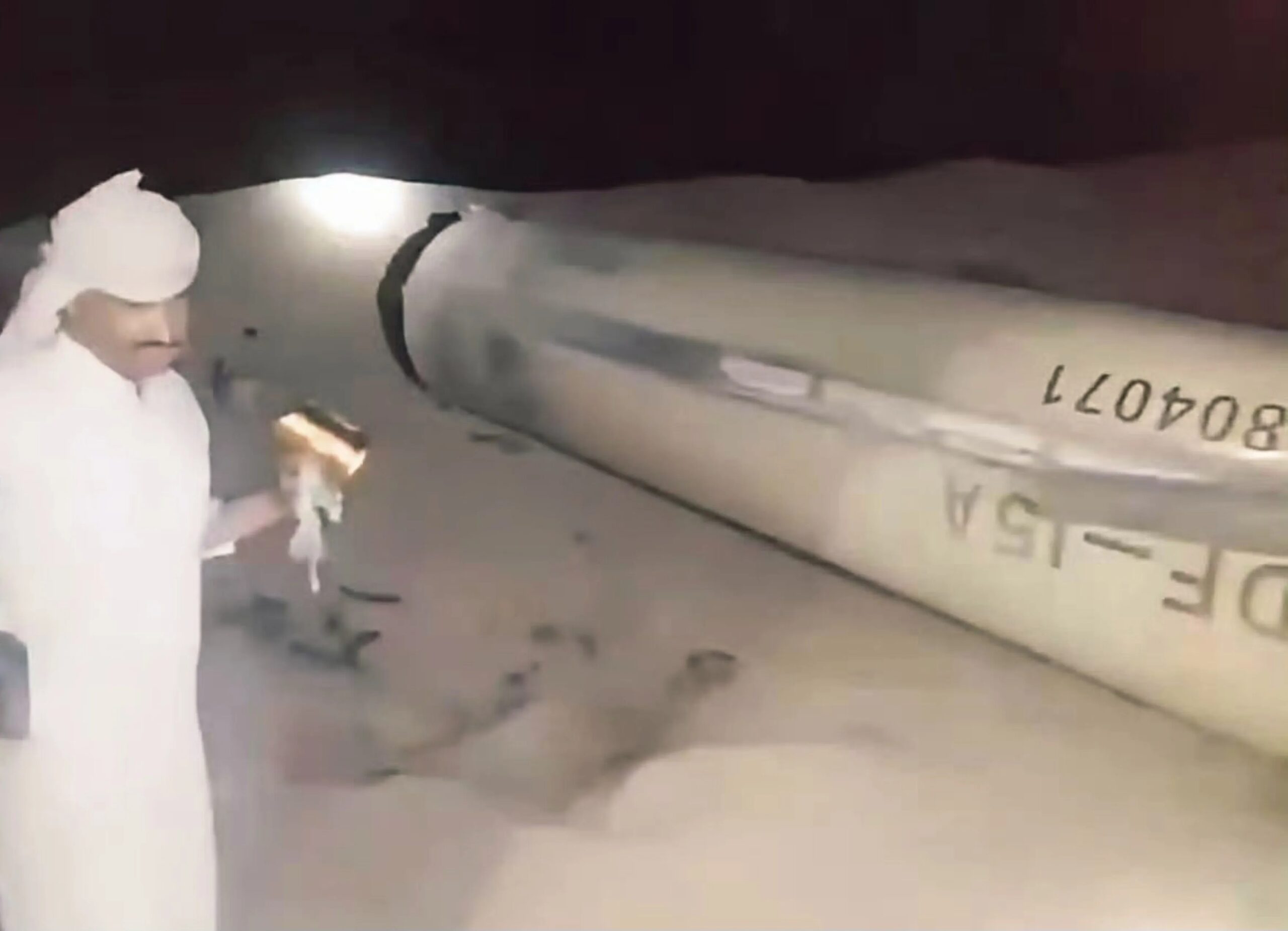
Debris from a Chinese-made ballistic missile found in Yemen could have inadvertently revealed a previously undisclosed addition to Saudi Arabia’s secretive ballistic missile arsenal. Imagery circulating online appears to show the wreckage of a Chinese DF-15A short-range ballistic missile (SRBM), potentially marking the first known Saudi combat use of a weapon in this class, although both the identification and ownership remain unconfirmed.
The booster stage of a Chinese-made DF-15A (Dong Feng-15A) ballistic missile operated by Saudi Arabia fell in Raghwan District, Marib Governorate, northern Yemen. pic.twitter.com/dfSXMOiCzQ
It is also unclear what happened to the missile itself. The debris suggests a stage separation or the missile broke apart or crashed before reaching its target. The Houthis are not known to possess any weapons that could have intercepted it.
A screenshot from a video clearly shows the DF-15A name applied on the side of the missile. via X
The development comes amid a sharp escalation in the long-running Saudi-Houthi conflict. After years of relative de-escalation following the 2022 truce, fighting has intensified in recent weeks as Houthi forces have dramatically overrun Saudi-backed Yemeni government positions, including around strategically important Marib and Taiz. The Houthis have also escalated missile and drone attacks against southern Saudi Arabia, targeting military and energy infrastructure while threatening the kingdom’s ability to move oil through the Red Sea. The group has declared the Bab el-Mandeb closed to Saudi oil traffic, adding a direct threat to one of Riyadh’s critical energy-export routes.
You can catch up with our latest coverage of the fighting here.
As for the DF-15, also known by its NATO designation CSS-6, this is a road-mobile, solid-fueled SRBM developed by China during the 1980s. The system formed part of Beijing’s effort to develop a new generation of conventionally armed mobile ballistic missiles, including systems primarily intended for export.
As you can read about here, the DF-15 family has evolved through several variants, although open-source information concerning their capabilities remains inconsistent.
The DF-15A reportedly entered Chinese service in the mid-1990s. Estimates of these missiles’ maximum range vary substantially, from roughly 600 kilometers (373 miles) for the original DF-15 to as much as 900 kilometers (559 miles) for later versions.
Among the later versions of the DF-15 family is the DF-15B. A more substantial redesign, its most obvious external change is its triconic reentry vehicle fitted with control fins, a configuration widely interpreted as incorporating a maneuverable reentry vehicle (MaRV) warhead. Photo by GREG BAKER / AFP via Getty Images GREG BAKER
China is the only confirmed operator of the DF-15 family. There have been longstanding reports of Chinese transfers of the DF-15 or the related M-9 export version to Egypt, Iran, Pakistan, and Syria, but in each case, the export record is heavily disputed, with some reports likely conflating the DF-15 with the broadly similar DF-11.
While Saudi Arabia has never publicly acknowledged operating the DF-15 family, it has a well-established history of acquiring Chinese ballistic missiles.
In 2013, Prince Fahd bin Abdullah bin Mohammed, Deputy Minister of Defense, visited the Strategic Missile Forces of Saudi Arabia, and was given this model. YEARS of speculation on the smaller missiles (The large is DF-3). Now we know – they are DF-15 and DF-15A. pic.twitter.com/oOn8qiCgye
Saudi Arabia imported Chinese ballistic missiles to expand its long-range strike options. Its desire for a land-based strategic deterrent was initially driven by concerns over Iran, regional missile proliferation, and nuclear hedging. More recently, however, it shifted toward fielding more accurate, mobile systems with greater conventional military utility.
Riyadh secretly obtained DF-3A missiles from China beginning in the late 1980s, establishing a strategic ballistic-missile capability that remained largely outside public view.
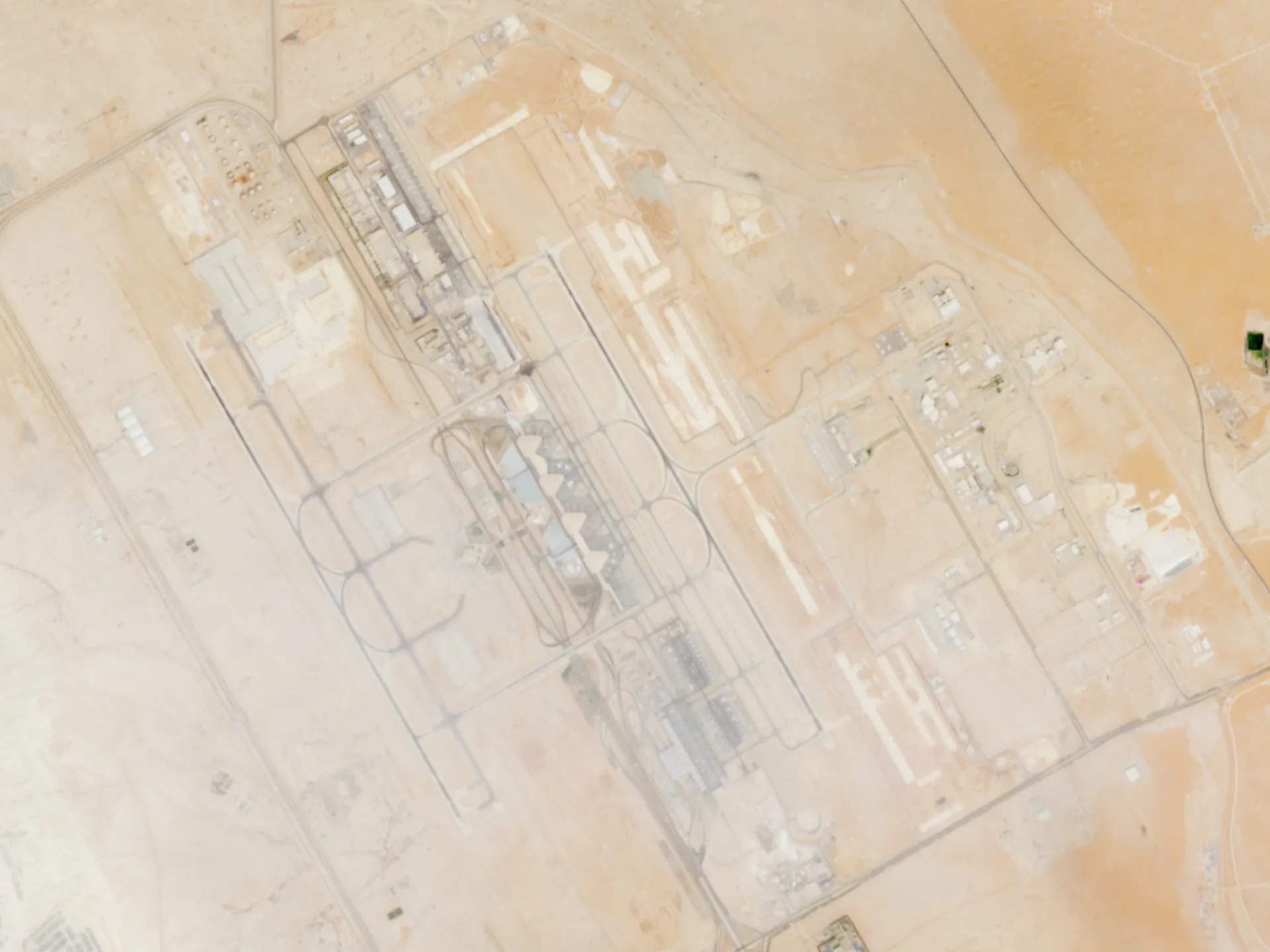
The kingdom has also subsequently been linked to the DF-21 family. Satellite imagery and other open-source intelligence have provided evidence of Chinese-designed ballistic-missile infrastructure in Saudi Arabia.
While the Houthis have their own ballistic-missile arsenal, this is principally associated with Iranian technology, captured Yemeni systems, and locally produced or modified weapons.
Saudi employment of an SRBM in the current fighting would represent a notable expansion of the kingdom’s response options. If Saudi Arabia did indeed do this, its main advantage would be speed and responsiveness. A solid-fueled ballistic missile could reach targets deep inside Yemen within minutes while keeping Saudi aircraft and crews out of the immediate engagement area, providing Riyadh with a rapid strike option against fixed Houthi targets. That could be particularly valuable as the conflict expands and Saudi forces face pressure to respond quickly to Houthi attacks on military and energy infrastructure.
Saudi F-15 Eagles Live Missile Firing in Pakistan | Naseem Al-Bahr 13 Exercise
Previous losses at the hands of Houthi ground-based air defenses could also dissuade Riyadh from relying on crewed aircraft to strike targets on the ground deep inside Yemen. Houthi air defenses, while pathed together in many ways, are capable enough to give even U.S. airpower a serious run for their money.
At the same time, a conventional SRBM like the DF-15A can deliver a large warhead at very high speed, imparting significant kinetic energy, making it particularly useful against fixed, high-value, or hardened targets.
Use of an SRBM would also be in line with the current pattern of escalation, with the Houthis conducting missile and drone attacks against Saudi military and energy targets while Saudi-backed Yemeni forces are engaged in renewed ground fighting. Riyadh’s demonstration of an SRBM capability in this campaign would also signal that it is is willing to draw more heavily on its strategic missile inventory as the conflict intensifies, potentially further raising the stakes of the confrontation.
Such a move would carry a message beyond Yemen. Using a previously unacknowledged ballistic missile capability in combat would signal to Iran that Riyadh is now willing to employ this arsenal, after decades of keeping it very much in the shadows.
If the evidence ultimately points to a Saudi DF-15A launch, the discovery would offer a rare look at the operational use of an extremely secretive part of the kingdom’s arsenal, and add a significant new dimension to the rapidly escalating Saudi-Houthi war.
![Smoke and flames rise from King Khalid Airport, after Yemen's Iran-backed Houthis said they attacked the airport, in Riyadh, Saudi Arabia, October 8, 2026, in this screengrab obtained from a social media video [Reuters]](https://i0.wp.com/www.aljazeera.com/wp-content/uploads/2026/10/2026-10-12T233040Z_1811944814_RC231OANP5EH_RTRMADP_3_IRAN-CRISIS-SAUDI-YEMEN-WARNINGS-1792451959.jpg?w=640&ssl=1)



![A Royal Saudi Navy frigate sails alongside US 5th Fleet ships during operations to support maritime security in the Red Sea, where rising tensions between Ethiopia and Eritrea have raised concerns about wider regional stability. [File: Reuters]](https://i0.wp.com/www.aljazeera.com/wp-content/uploads/2026/09/2023-08-10T091620Z_2126421058_RC2LJ2A97N2D_RTRMADP_3_GULF-SECURITY-1789646493.jpg?w=640&ssl=1)