approve

Warner Bros. shareholders approve controversial $111-billion Paramount takeover

Paramount Skydance’s proposed takeover of Warner Bros. Discovery cleared a major hurdle Thursday as Warner stockholders overwhelmingly embraced the $111-billion deal.

Approval was expected. Paramount Chairman David Ellison’s proposal would pay Warner investors $31 a share — four times the price of the company’s stock a year ago. Warner Bros. officials did not disclose the precise vote count during the nine-minute special shareholder meeting beyond saying the merger “received sufficient votes and has overwhelmingly passed.”

Paramount offered the generous premium to compete with, and ultimately triumph over, Netflix, which withdrew from the auction in late February after Ellison’s father, Oracle billionaire Larry Ellison, agreed to guarantee the financing of his son’s deal.

The merger would create a new Hollywood behemoth by giving Paramount, which owns CBS and the Melrose Avenue film studio, such valuable assets as HBO, HBO Max, CNN, TBS, Food Network and Warner Bros.’ film and television studios in Burbank. Warner controls beloved TV shows, franchises and movies, including “Casablanca,” Harry Potter, D.C. Comics, “Game of Thrones,” “Euphoria,” “The Pitt,” and “Rooster.”

“Shareholder approval marks another important milestone towards completing our acquisition of Warner Bros. Discovery, building on our successful equity and debt syndications and progress across regulatory approvals,” Paramount said Thursday in a statement. “We look forward to closing the transaction in the coming months and realizing the creation of a next-generation media and entertainment company that better serves both the creative community and consumers.”

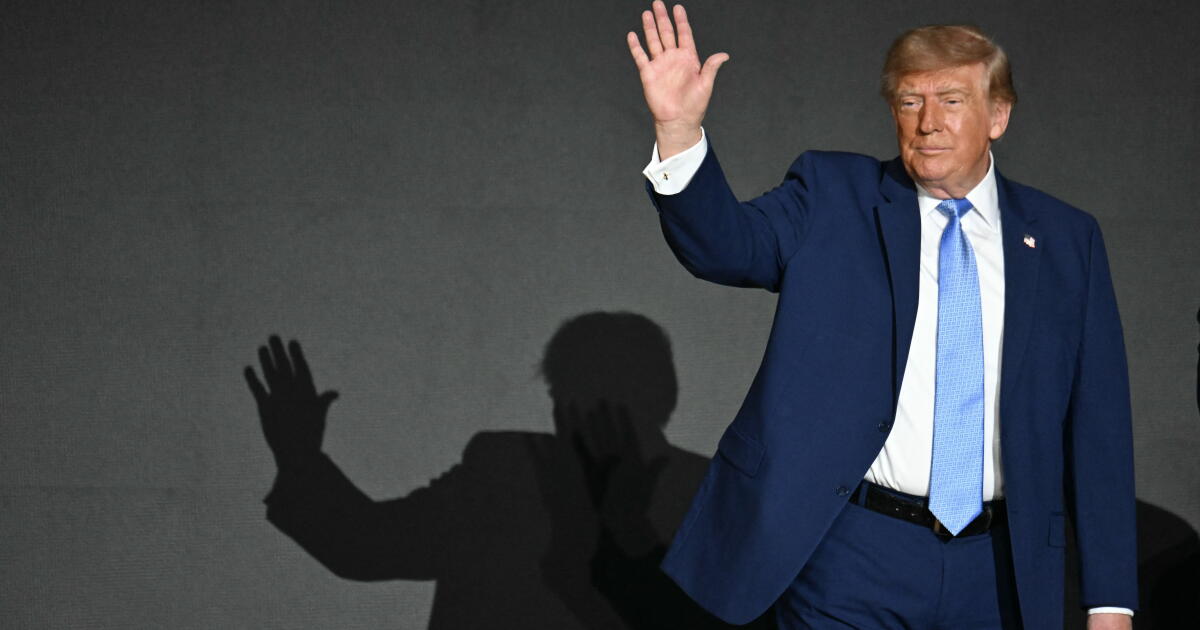
Paramount now must secure regulatory approvals in the U.S. and abroad. Ellison, who is poised to honor President Trump with a dinner Thursday evening in Washington, hopes to complete the deal by late summer.

Shareholders, however, made known their disdain for Warner Chief Executive David Zaslav’s proposed golden parachute, which could swell to $887 million, depending on when the transaction closes. His cash, stock and options would be valued at more than $550 million. Warner board members also agreed to pay his tax bill, which could approach $330 million, should the merger be completed by year’s end.

Shareholders, in a non-binding vote, voted against Zaslav’s package.

Paramount’s deal has encountered significant opposition in Hollywood and beyond.

More than 4,000 filmmakers, actors and industry workers, including Ben Stiller, Bryan Cranston, Ted Danson, J.J. Abrams and Kristen Stewart have signed an open letter asking California Atty. Gen. Rob Bonta and other regulators to block the deal.

Opponents fear the consolidation would be lead to massive layoffs and diminish the quality of programming that Warner Bros., CNN and HBO are known for. Hollywood has sustained thousands of layoffs over the last six years; the film production economy hasn’t recovered from shutdowns during the 2023 labor strikes.

“This is already an incredibly consolidated industry where writers have seen merger after merger leave fewer and fewer companies in control of what our members can get paid to write,” Michele Mulroney, president of the Writers Guild of America West, said Wednesday during a press briefing organized by Free Press and other progressive groups that oppose the merger.

“A combined Warner Bros. and Paramount would create a media behemoth with tremendous leverage to reduce content, to raise prices, to increase control of production, to suppress member compensation, worsen working conditions and silence the voices of our members,” Mulroney said.

Trump has long agitated for changes at CNN, and few expect his Justice Department to block the transaction. Defense Department Secretary Pete Hegseth echoed the sentiment. “The sooner David Ellison takes over that network the better,” Hegseth told reporters in March.

It’s unclear whether Bonta or other state attorney generals will file a lawsuit to try to stop the deal. Bonta previously told The Times that his office is reviewing the consolidation.

“This deal can get blocked. I personally think it will get blocked — or undone,” Alvaro Bedoya, former Federal Trade Commission member who now serves as a senior adviser to the American Economic Liberties Project, told reporters Wednesday. He pointed to other proposed mergers that unraveled due to fierce opposition, including the proposed combinations of grocery giants Kroger and Albertson’s.

David Ellison has promised to keep HBO entact and the Paramount and Warner Bros. movie studios humming. He promised cinema owners last week that a combined Paramount-Warner Bros. would release 30 movies into theaters each year.

“This transaction uniquely brings together complementary strengths to create a company that can greenlight more projects, back bold ideas, support talent across multiple stages of their careers,” Paramount said in a statement to push back on the opposition. The company would have the power to “bring stories to audiences at a truly global scale — while strengthening competition by ensuring multiple scaled players are investing in creative talent.”

To finance the Warner takeover, Ellison’s billionaire father, Larry Ellison, has agreed to guarantee the $45.7 billion in equity needed. Bank of America, Citibank and Apollo Global have agreed to provide Paramount with more than $54 billion in debt financing.

Paramount has enlisted a former Trump administration official, lawyer Makan Delrahim, who served as Trump’s antitrust chief during the president’s first term.

In a confident move, Delrahim filed to win the Justice Department’s blessing in December — even though Paramount didn’t have an agreement with Warner Bros. Discovery’s board at the time. In February, a key deadline for the Justice Department to raise issues with Paramount’s proposed Warner takeover passed without comment from the Trump regulators.

Source link

EU lawmakers approve trade deal with U.S., but add safeguards

The European Parliament voted Thursday to approve a trade deal between Washington and Brussels but with amendments added to protect European interests should the United States fail to hold up its end of the bargain.

The deal was negotiated last July in Turnberry, Scotland, by President Trump and European Commission President Ursula von der Leyen. It set a 15% tariff on most goods in an effort to stave off far higher import duties on both sides that might have sent shock waves through economies around the globe.

New language now says that the deal can be suspended if Washington “undermined the objectives of the deal, discriminated against EU economic operators, threatened member states’ territorial integrity, foreign and defence policies, or engaged in economic coercion.”

That clause was forged because of the tensions over Greenland, said Bernd Lange, a German lawmaker and head of the EU’s parliamentary trade committee.

Trump drew widespread condemnation across the 27-nation bloc by threatening to take control of Greenland, a semiautonomous territory of Denmark. He has backed away from the threat, at least for now.

“If this would happen again, then immediately the tariffs would be installed,” he said at a news conference after lawmakers voted. He said the protective modifications were “weatherproofing” the Turnberry deal.

The deal will now be further negotiated by EU trade representatives Maroš Šefčovič and his U.S. counterpart Jamieson Greer, who are meeting Friday on the sidelines of the World Trade Organization meeting in Yaoundé, Cameroon.

“We need the EU-U.S. deal in force on both sides — delivering real certainty for EU businesses and showing that genuine partnership gets results,” Šefčovič said after the vote in Brussels.

There were formally two votes to introduce clauses to the deal. One passed 417-154 and the other 437-144 with dozens of abstentions each.

The U.S. Ambassador to the EU Andrew Pudzer said the vote would provide “stability and predictability” for U.S. and EU businesses and drive economic growth. “We encourage all parties to think to the future and the importance of unleashing opportunities for businesses on both sides of the Atlantic,” he said.

Malte Lohan, CEO of American Chamber of Commerce to the European Union, said the vote is “the right signal for businesses that have been stuck in limbo over the past year” and “a necessary step towards a more predictable transatlantic marketplace.”

Croatian lawmaker Željana Zovko said that despite the trade spat between Brussels and Washington, trade across the Atlantic had grown over the past year. “This resilience proves the trans-Atlantic trade works, and if it works, we should strengthen it, not hold it back.”

McNeil writes for the Associated Press.

Source link