ap

L.A. County certifies 2026 primary election ballots, including Los Angeles Mayor and Governor

Twenty-four days after the polls closed on election day, Los Angeles County officials have certified the results from the 2,227,461 ballots cast. Despite questions raised about the pace of the vote count, a Times analysis found ballots this June were tallied faster than in previous cycles.

California is known to have a slow vote count, partially because of the state’s grace period for mail-in ballots. This year, counties were required to report most of the ballots by June 15, with some exceptions, including for mail-in ballots received within seven days of election day and ballots requiring additional verification such as signature curing. The process has spurred baseless claims of fraud from President Trump and others, leading the U.S. Supreme Court to take up a case on whether mail-in ballots must be received by election day to count.

The state has reported 9.4 million processed ballots. Officials estimate about 5 ballots remain to be counted and 17,650 are waiting to cure a missing or mismatched signature.

Compared with the last time both governor and Los Angeles mayor were on the ballot, county election officials counted more ballots, and tallied them faster than in 2022, The Times found.

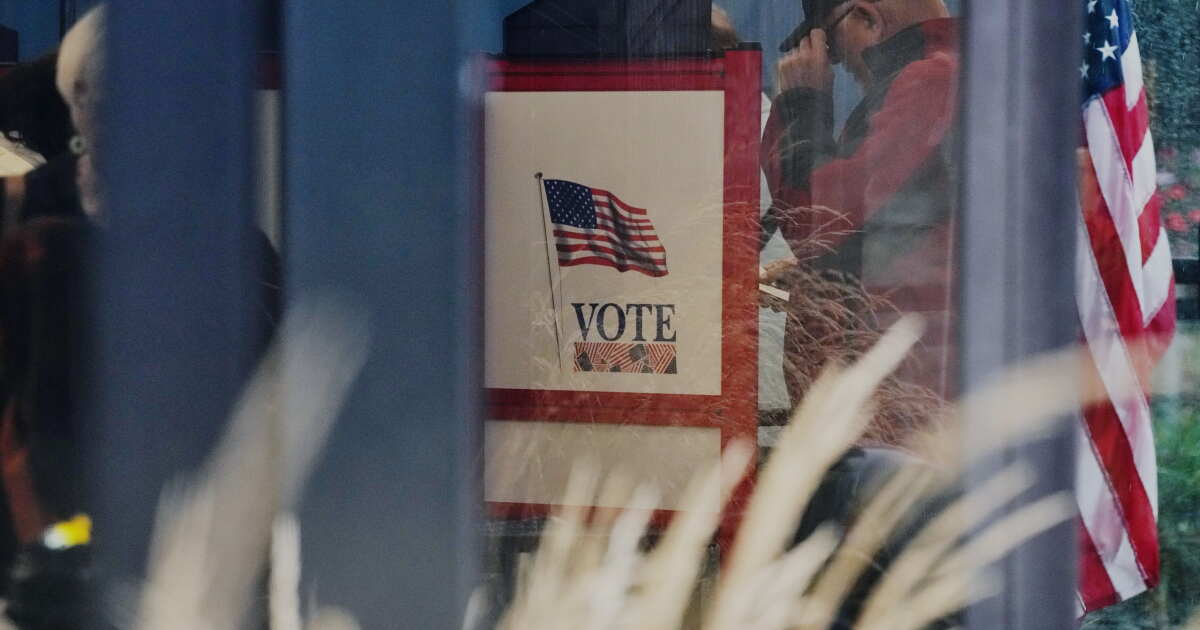
In Los Angeles County, turnout jumped from 28% of eligible voters in the 2022 primary to 38% this June, according to the county registrar. Meanwhile, the share of vote-by-mail ballots dropped about 3 percentage points to 82%, indicating a rise in in-person voting.

Statewide, early results show 41% of registered voters turned up for the June election, up from 33% in 2022, according to the secretary of state. County elections officials must report their final results by July 3, giving state officials a week to certify all election results.

The Los Angeles Times reports election results from the county clerk as well as from the Associated Press. The AP provides ballot counts, a calculation of the expected vote and race calls for statewide and national races.

The expected vote percentage, or EEVP, is an estimate of the total number of votes that will eventually be certified. That number can be adjusted based on new information over time.

“Before counting begins in California, our estimates are primarily informed by turnout in past similar elections plus pre-election data on ballot returns, with projections based on what percentage of ballots had already been received at the same point in past elections,” AP director of election analytics Emily Swanson said in an email.

In the gubernatorial and mayoral races, more than half of the votes were counted by the end of election day, EEVP data show.

Swanson’s team also observed a faster vote count this year than in the 2022 and 2024 primaries.

In January 2024, L.A. County consolidated its election operations into a new ballot processing center in the City of Industry. Dean Logan, head of the L.A. County registrar-recorder/county clerk’s office, told The Times earlier this month that the facility, which is open to observers, is designed for transparency, security and efficiency.

“It doesn’t take long to count. The counting process is very fast,” Logan said ahead of election day. “What extends the time period is those options that are provided under California law for voters — to allow everyone the opportunity to vote up until election day, and then allowing us the time to process those with the same level of security and integrity that we did the ballots that were received two weeks before the election.”

Despite the faster count, the Associated Press took longer to call winners, suggesting these races were more competitive. The AP makes such declarations by determining whether there is an opportunity for a trailing candidate to catch up to the race leader. It has been calling races for nearly 180 years.

Both the gubernatorial and Los Angeles mayoral race saw a 30% increase in votes from 2022. The governor’s race received more than 9.2 million votes compared with 7 million in 2022. The Los Angeles mayor’s race received more than 850,000 votes, an increase from nearly 650,000 in 2022.

The vote counting process for California, Washington, Oregon, Nevada and Alaska may change for the November midterm election, depending on which way the U.S. Supreme Court rules.

Data and graphics assistant editor Sean Greene contributed to this report.

Source link

What we know about the slain White House gunman

The 21-year-old man shot and killed after opening fire on U.S. Secret Service agents near the White House was a Maryland resident, according to online records.

Following Saturday’s shootout, the Associated Press identified the suspect as Nasire Best. According to virtual records, Best lived in the Prince George’s County suburb of Glenarden with his family.

The shooting occurred near a White House security checkpoint shortly after 6 p.m., according to a social media post from the Secret Service, which alleged that Best “pulled a weapon from his bag and began firing.”

Secret Service Uniformed Division officers returned fire, striking Best, who was taken to a hospital where he was pronounced dead a short time later, the post said. The Secret Service said no officers were injured, but a bystander was struck by gunfire and remained in serious but stable condition Sunday, according to the Associated Press.

The Secret Service said the bystander, who has not been identified, suffered a gunshot wound described as not life-threatening, the AP reported. It was not clear how the person was shot.

The Secret Service post also noted that President Trump was in the White House during the incident and was not harmed.

A person listed as having the same name as Best has three failure-to-pay rent cases for a dwelling in the Foundry by the Park Apartments in Dundalk, Md., from as recent as November. The Baltimore Sun could not confirm whether the cases are linked to the person killed Saturday.

The AP reported that Best was identified as the suspect by a law enforcement official who spoke on condition of anonymity due to not being authorized to discuss the investigation.

The AP noted that court documents indicated that Best was arrested in July 2025 after he attempted to enter a White House checkpoint without authorization. It wrote that the court records said Best did not heed officers’ commands to stop, “claimed he was Jesus Christ” and told officers he wanted to be arrested.

The court issued Best a “pretrial stay away order,” which typically requires defendants not to go near a person or area before a trail, the AP reported. In August, a bench warrant was issued against Best after a notice of “noncompliance.” He did not appear for a subsequent hearing, the AP reported.

The shooting remains under investigation, and additional information will be release as it becomes available, according to the Secret Service.

Saturday’s shooting was the third time in the last month that shots were fired near the president, including at the White House Correspondents’ Assn. dinner in late April and near the Washington Monument earlier this month.

Hubbard writes for the Baltimore Sun. This story was distributed by the Associated Press via Tribune News Service.

Source link

Emails show FBI Director Kash Patel’s Hawaii trip included ‘VIP snorkel’ at a Pearl Harbor memorial

When Kash Patel visited Hawaii last summer, the FBI took pains to note the director was not on vacation, highlighting his walking tour of the bureau’s Honolulu field office and meetings with local law enforcement.

Left out of the FBI’s news releases was an exclusive excursion that Patel took days later when he participated in what government officials described as a “VIP snorkel” around the USS Arizona in an outing coordinated by the military. The sunken battleship entombs more than 900 sailors and Marines at Pearl Harbor.

The swim, revealed in government emails obtained by The Associated Press, comes to light amid criticism of Patel’s use of the FBI plane and his global travel, which have blurred professional responsibilities with leisure activities. The FBI did not disclose the snorkeling session or that Patel had returned to Hawaii for two days after his initial stopover on the island.

“It fits a pattern of Director Patel getting tangled up in unseemly distractions — this time at a site commemorating the second deadliest attack in U.S. history — instead of staying laser-focused on keeping Americans safe,” said Stacey Young, who founded Justice Connection, a network of former federal prosecutors and agents who advocate for the Department of Justice’s independence.

With few exceptions, snorkeling and diving are off-limits around the USS Arizona. The battleship, now a military cemetery reachable only by boat, has stood as one of the nation’s most hallowed sites since Japan bombed and sank it in 1941. Marine archaeologists and crews from the National Park Service make occasional dives at the memorial to survey the condition of the wreck. Other dives have been conducted to inter the remains of Arizona survivors who wanted to rest eternally with their former shipmates.

Still, since at least the Obama administration, the Navy and the park service have quietly allowed a handful of dignitaries, including military and government officials responsible for management of the memorial, to swim at the site. The Navy and park service declined to provide details of those permitted to take such excursions.

Former FBI directors have visited Pearl Harbor on official business, but none going back to at least 1993 has gone snorkeling at the memorial, according to those familiar with their activities and a former government diver who spoke to AP on condition of anonymity for fear of retribution. The diver said it was unusual for a director or anyone not connected to the memorial to be granted such access because the swims come with physical risks and present security, safety and logistical challenges.

Patel has faced scrutiny over his leadership for the past year, with his use of government resources emerging as a recurring storyline of his tenure. The issue flared in February when video surfaced of Patel partying in the locker room  with members of the U.S. men’s hockey team after their gold medal win at the Winter Olympics in Milan.  Patel defended the trip as recently as this week as “purposely planned” in connection with a cybercrime investigation involving the Italian authorities.

Unanswered questions about exclusive outing

Patel’s excursion was in August as he spent two days in Hawaii on his return to the United States from official visits to Australia and New Zealand. On his way to those countries, he stopped in Hawaii to visit the Honolulu field office. An FBI spokesman did not answer questions about the snorkeling session.

The FBI said in a statement that top regional commanders hosted Patel at Joint Base Pearl Harbor-Hickam “as they commonly do with US government officials on official travel.” The Pearl Harbor visit, the spokesman said, “was part of the Director’s public national security engagements last August with counterparts in New Zealand, Australia, our Honolulu Field Office, and the Department of War.”

It was not clear how Patel’s snorkeling session was arranged. A Navy spokesperson, Capt. Jodie Cornell, confirmed the outing but said the service was not able to track down who initiated it.

Participants in Patel’s swim were told “not to touch/come into contact with” the sunken ship in any way, Cornell said. She added that the snorkelers were also briefed about “the historic significance of the Memorial as the final resting place/tomb for hundreds of service members.”

A ‘VIP Snorkel’

Government emails obtained by the AP through a public records request show military officials coordinated logistics and personnel for the “VIP Snorkel.”

The National Park Service, which administers the site in coordination with the Navy, told AP it was not involved in Patel’s swim and declined to comment on the excursion. It also declined to answer questions about any other such outings.

Among those afforded invitations to snorkel have been Navy admirals, secretaries of defense and interior, according to the former government diver. The diver added that the swims were intended to provide officials with insights into the memorial and its operations.

The Navy declined to provide examples or numbers showing how frequently it organizes such excursions. It described Patel’s outing as “not an anomaly.”

Hack Albertson, a Marine veteran, is part of a select group from the Paralyzed Veterans of America trained to dive on the Arizona annually to check on the condition of the wreck. He said it was inappropriate for Patel and other political figures to snorkel or dive at the memorial.

“It’s like having a bachelor party at a church. It’s hallowed ground,” he said. “It needs to be treated with the solemnity it deserves.”

Some family members don’t object to snorkeling

Some family members of Pearl Harbor survivors said they were not bothered by such official excursions, though some expressed a desire to also be permitted to snorkel at the site. They said they have not been permitted to do so.

“I have not heard of anyone who would object to these visits as they are very rare and there aren’t any survivors of the Arizona left alive,” Deidre Kelley, national president of the Sons and Daughters of Pearl Harbor Survivors, wrote in an email. “Their children might have some objections but I haven’t heard any.”

Patel visited Pearl Harbor several years ago during a trip he made to Hawaii while serving as chief of staff to Christopher Miller, then the acting secretary of defense, according to the former government diver.

Miller said he snorkeled over the Arizona during an official visit to the base, but Patel was not present for that excursion. Miller said he was invited to snorkel by regional military officials and was told such a tour was for “special occasions and for special visitors, of which you’re one.” He called it a “meaningful” experience.

“It was a very somber and meaningful event,” Miller said in an interview. “It was a historical tour. It wasn’t a recreational thing.”

FBI will not discuss Patel’s return to Hawaii

Beyond the snorkeling excursion, it is not clear what else Patel did during his second stop in Hawaii.

Flight tracking data for the Gulfstream G550 typically used by the FBI director show the jet remained on the island two nights during that stay before flying on to Las Vegas, Patel’s adopted hometown. The jet has a published range of about 7,700 miles, meaning the plane would have needed to refuel somewhere between New Zealand and Washington.

The snorkeling session happened one day after Patel stopped in Wellington to open the FBI’s first  standalone office  in New Zealand. The visit sparked controversy after the AP revealed that Patel had gifted that country’s police and spy bosses inoperable 3D-printed replica pistols that were  illegal to possess  under local gun laws.

Mustian, Tucker and Biesecker write for the Associated Press. Mustian reported from New York. AP writers Audrey McAvoy in Honolulu, and Konstantin Toropin contributed to this report.

Source link