Nigeria’s missing: Families in the northeast still wait for answers | News
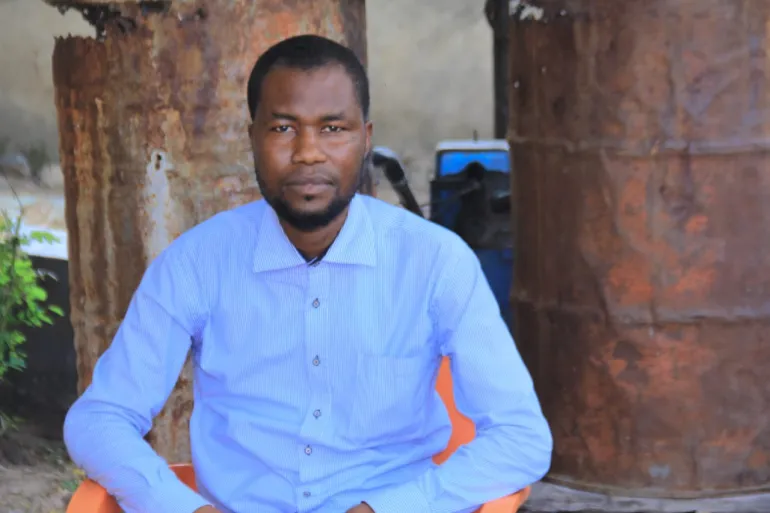
Maiduguri, Nigeria – For more than 15 years, Kashim Mohammed has hoped that his younger sister, Falmata Mohammed, is still alive.
Falmata disappeared in 2011 while travelling with her mother from Maiduguri, the capital of northeastern Nigeria’s Borno State, to Port Harcourt in the south. According to Kashim, the two women were abducted by unidentified gunmen.
Years later, a man approached Kashim at Baga Road Market in Maiduguri with news that briefly revived the family’s hopes of finding the women. He claimed Falmata had been found in Benin and was searching for her relatives.
But the man disappeared without leaving contact details. Kashim said he has never been able to establish whether the information was genuine.
“From then until now, nobody knows anything about the man who brought the information,” he said.
Kashim, 39, chairs the Association for the Well-being of Displaced and Missing Persons’ Families, a community organisation based in Bolori II, Ngarnam ward, Maiduguri. He said years of violence have torn his family apart.
“As a result of the violence, I lost my sister from the same father,” he said.
Their father, Mohammed Kolo, worked at Maiduguri’s State Specialist Hospital. Kashim said his father died at 60 from an illness he attributed to high blood pressure without learning what had happened to his daughter.
Kolo had refused to abandon hope that she would return.
“Our father always said, ‘Wherever she is, I believe my daughter is alive,’” Kashim recalled.
A brother still searching
For Muhammad Alhaji Bashir, the disappearance of his elder brother, Adam Muhammad Bashir, known as Bakura, has left a similar void.
Muhammad, 29, said Bakura went missing around 2012 or 2013 when Muhammad was about 14. His brother, then believed to be in his early 20s, sold cosmetics in a Maiduguri market and was studying civil engineering at Ramat Polytechnic, according to Muhammad.
“I sincerely lost my brother as a result of the Boko Haram crisis,” Muhammad said.
Boko Haram’s armed rebellion began in northeastern Nigeria in 2009. The conflict has devastated communities through attacks, abductions and displacement, leaving families searching for relatives whose fates remain unknown.

Muhammad said Bakura’s family searched across Maiduguri. A rehabilitation centre offered them some hope.
“Whenever we heard that rescued people had been brought to the rehabilitation centre in Bulumkutu, we went there with Bakura’s pictures, but unfortunately, nobody recognised him,” Muhammad said.
Muhammad said his father and stepmother, who was Bakura’s mother, later died from illnesses the family attributed to hypertension. He and other relatives continue to search, without confirmation of whether Bakura is alive or dead.
Thousands of families, thousands of questions
The two families’ experiences reflect the uncertainty facing relatives of people who have disappeared during more than a decade of conflict in northeastern Nigeria.
The International Committee of the Red Cross (ICRC), working with the Nigerian Red Cross Society, has supported efforts to trace missing people and reconnect separated families.
Local advocates for missing people cited an estimate of 17,000 people missing across northern Nigeria, many of them linked to the conflict involving Boko Haram and its aftermath. Kashim said his association’s records indicated that about 10,000 people are missing in Borno State alone. He added that many families have yet to register their missing relatives.
The sources for the estimates cited by advocates and the association, their geographical coverage, reporting periods and methods of compilation have not been independently established for this article.
Behind the estimates are families who have spent years searching, parents who have died without learning what happened to their children and children growing up without a parent.
Some people reportedly disappeared during attacks on their communities. Others became separated from relatives while fleeing violence or travelling between towns. Families search hospitals, displacement camps and centres receiving people rescued from conflict areas, often following leads that prove impossible to verify.
Even when names, photographs and personal details are submitted to organisations involved in tracing missing people, locating relatives can take time.
An association born out of loss
Kashim said his search for Falmata helped motivate him and other affected families to establish their association in 2023. He said the organisation obtained registration with Nigeria’s Corporate Affairs Commission in 2025.
Members meet monthly to share information and discuss their circumstances. Some families have reported losing eight or nine relatives, according to Kashim.
“In our community of Bolori II, we have many families who lost their relatives as a result of years of violence that ravaged northeastern Nigeria,” he said.
Kashim said the group sometimes receives notices from the Red Cross containing names and details of missing people. These can give families leads to pursue although they do not necessarily mean a relative has been located.
The association also supports children affected by the disappearances. Kashim said it was assisting about 600 orphaned children from affected families. Some attend school while others have dropped out because their relatives cannot afford to pay for their education or other basic needs.
“We are now suffering because of the harsh living conditions,” he said, adding that the ICRC had distributed relief items to some families.
When a missing person is a parent or breadwinner, relatives must cope with lost income while trying to provide food, shelter and schooling for children. The association’s work has consequently expanded beyond tracing missing people to helping families manage the hardships their disappearances leave behind.
Floods add to the losses
The search became harder for some families after devastating floods struck parts of Maiduguri in 2024.
Kashim said floodwaters submerged parts of Ngarnam and destroyed photographs that families had kept to help identify missing relatives.

Photographs can be vital when families try to identify people who have been rescued, displaced or found in unfamiliar communities. Without them, relatives must rely on names, physical descriptions and memories.
Kashim said some families now have little beyond remembered details and surviving records to help identify their relatives.
The floods added another obstacle to searches already complicated by years of conflict, displacement and uncertainty.
Waiting for an answer
For Kashim, finding Falmata would resolve a question that has haunted his family since 2011. His father died believing she might still return, and the family has never established whether the report of her discovery in Benin was true.
Muhammad’s search for Bakura continues without the parents who once helped him look for his brother.
Both families are appealing to anyone who may have information about their missing relatives. For them, finding an answer would mean more than ending a search: It would establish what happened to someone whose absence has shaped their lives for years.
Kashim’s message to his sister remains a plea for a reunion that his family has waited years to see.
“Falmata Mohammed, if you are alive anywhere in this world, we are the family of late Mohammed Kolo in Bolori II, Ngarnam. We are waiting for you,” he said.