Annually

Consumer prices fell 0.4% in June, up less than expected annually

July 14 (UPI) — The consumer price index for the year ending in June rose 3.5%, less than economists expected, the U.S. Bureau of Labor Statistics reported Tuesday.

For the month, consumer prices fell by 0.4% due in part to the energy index dropping by 5.7%. It was the largest decline in the energy index in more than six years, following a spike in energy prices due to the Iran war and closure of the Strait of Hormuz.

The consumer price index decline for the month followed a 0.5% increase in May, also making the decrease a six-year best for a single month.

The energy index remains high for the 12 months ending in June, up by 15.7%. This is bolstered by a 26.7% increase in the index for gasoline.

Energy services decreased by 0.7% on a per-month basis, putting the annual rate of inflation at 3.9%. Electricity fell by 1% to an annual 4% increase while utility gas service rose by 0.5% to an annual 3% rate of inflation.

June’s index beat estimates by the Dow Jones consensus, which projected a 0.2% decrease in the consumer price index with annual inflation at about 3.8%.

The index for all items not counting volatile food and energy, known as core inflation, remained steady between May and June. Core inflation measured at 2.6% for the year ending in June after reading at 2.9% in May.

The index for food rose by 0.2%, as did the indexes for food at home and food away from home. The annual index for food rose by 3%.

Tuesday’s report comes as new Federal Reserve Chairman Kevin Warsh appears before Congress. In his prepared remarks, Warsh will tell Congress that the “number one objective is to get monetary policy right.”

“That is our clear and constant aim, the star we steer by,” Warsh’s prepared statement reads. And if we get policy right — and we will — the inflation surge of the last five years will be a thing of the past.”

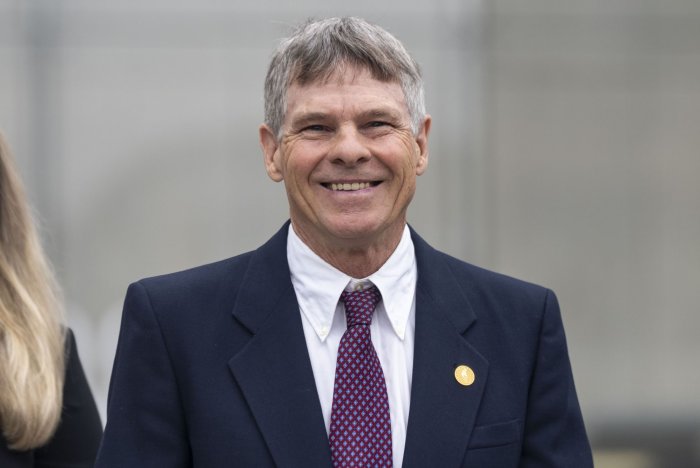
Olympic canoeist David Hearn departs the Moultrie Courthouse after pleading not guilty to damaging the Lincoln Memorial Reflecting Pool on Thursday. Hearn was indicted on July 2 on one count of destruction of property of more than $1,000 for allegedly damaging the Reflecting Pool, carrying a maximum penalty of 10 years in prison if convicted. Photo by Bonnie Cash/UPI | License Photo

Source link

Consumer prices rose 0.6% in April; gasoline up 28% annually

May 12 (UPI) — Prices for consumer goods rose faster than expected in April, with food and energy prices driving the spike, the Bureau of Labor Statistics said Tuesday.

The Consumer Price Index for All Urban Consumers increased 0.6% on a seasonally adjusted basis in April, after rising 0.9% in March, the BLS said. Over the past 12 months, the all-items index increased 3.8% before seasonal adjustment.

The energy index rose 3.8% in April, which was more than 40% of the increase. That put the 12-month rise at 17.9%. The gasoline index rose 28.4% annually.

Airline fares rose 2.8%, making the 12-month rise at 20.7%, CNBC reported.

Food prices rose 0.5% for the month. The price of food at home rose 0.7%, which is the biggest monthly rise since August 2022, CNBC reported. The price for food away from home increased 0.2%, the BLS said.

When excluding energy and food, prices rose 0.4% in April. Those prices are calculated from household furnishings and operations, airline fares, personal care, apparel and education. That number puts inflation higher than the 2% goal set by the Federal Reserve, with the monthly rate at its highest since January 2025.

But the index for new vehicles, communication and medical care decreased in April. New vehicles and communication declined 0.2%, while medical care declined 0.1%. Used vehicle prices stayed flat.

Workers are feeling the pinch, too, as real average hourly wages dropped 0.5% for the month and 0.3% annually.

“Inflation is the key drag on the U.S. economy now,” said Heather Long, chief economist at Navy Federal Credit Union, CNBC reported. “This is hurting Americans. There is a real financial squeeze underway. For the first time in three years, inflation is eating up all wage gains. This is a setback for middle-class and lower-income households and they know it.”

Whether the Fed will lower interest rates in the wake of rising inflation is a concern for economists.

“Given that inflation is heading in the wrong direction and the labor market is holding up, it’s very unlikely that the Fed will be able to lower interest rates any time soon, and it’s possible that we may start pricing in rate hikes for next year,” said Chris Zaccarelli, chief investment officer at Northlight Asset Management, CNBC reported.

President Donald Trump gives remarks during a law enforcement leaders dinner, celebrating the start of National Police Week, in the Rose Garden at the White House on Monday. Photo by Aaron Schwartz/UPI | License Photo

Source link