It is set to star Bridgerton actress Adjoa Andoh as a detective determined to pursue the truth, regardless of the obstacles in her path. ITV has teased: “This bittersweet police drama explores the pressures faced by DI Araba Dadzie, a cop, a mother and a daughter.
“She’s a woman in that squeezed middle, juggling profession, elderly parents and children, and a woman of colour in the police force, who has risen through the ranks of her profession and knows what it costs for her to stay there. Protect and Serve draws Araba into the national scandal of Britain’s unregulated children’s care homes, a scandal she cannot ignore.”
Set in Leeds, the series sees DI Araba Dadzie embark on an investigation into a tragedy after a teenage boy is shot dead, having been living in a privately owned children’s care home with his brother since his grandfather fell ill Determined to discover why he was targeted and the motives behind his death, Araba and her team piece together parts of his life.
ITV goes on to tease: “With a reputation as a fearsome investigator, it’s taken unrelenting focus, a bleak sense of humour, a passionate love for the job and personal sacrifice for Araba to stay at the top of her game. Uncompromising and often obsessive, she is driven by her desire to offer protection to the vulnerable and retribution to those criminally abusing their power in the city she loves.”
Adjoa said: “How does a woman juggle an aging father, a chippy student daughter and a non-existent sex life, while investigating murders as a black female cop. That’s the lot of DI Araba Dadzie, Senior Investigation Officer on a Homicide and Major Enquiry Team in central Leeds. It’s a job that costs, a job that we the public need, and in spite of the challenges, it’s a job Araba feels called to, much like a priest or a teacher.
“Protect and Serve our crime show is set in the great city of Leeds. I love this city and I love the city’s football club Leeds United. I lived in Leeds as a child and half my English family have been Yorkshire sheep farmers going back to the 1600’s – hence the setting.
“I am thrilled by the team behind Protect and Serve. Polly Hill at ITV, Big Talk Studios, Jenny van der Lande, and fabulous writer Helen Black of Time fame. As mothers the national disgrace of our unregulated children’s homes is something we are all shocked by.
“How do we as a society protect our children? It’s a question that drives Araba, that drives our first season and with amazing director Nimer Rashed at the helm, hot off Netflix’ Harlen Coben thrillers, the highs and lows of this propulsive cop show, we hope, will drive audiences to keep watching and caring.”
ITV Director of Drama Polly Hill added: “I’m delighted to commission Protect and Serve as I have been wanting to find a show with Adjoa Andoh for some time. We have a shared ambition, together with Big Talk, to make a great police series that also has something to say.
“Helen Black’s scripts uncover the scandal in privatised children’s care homes while Araba lets us see what cost there is to becoming a high ranking black policewoman. It’s a show we are very proud to be making for ITV with such a great team.”
After the series was announced, one fan said: “So excited for this.” Another wrote: “Yes another decent drama.” “This will be good!” another wrote, as someone else echoed: “I can’t wait!” “ITV you win,” yet another added.
During LA28, the official competitions will be just one part of the massive summer extravaganza happening in Los Angeles.
A kaleidoscope of international hubs will rise throughout the county, each hosting events such as watch parties, concerts, regional meals, immersive installations and meet-and-greets with newly crowned medalists. Known as hospitality houses, these temporary gathering places give traveling fans a home away from home beyond the competition venues, while offering Angelenos a chance to experience the cultural thrills of the Olympics, even if they weren’t able to snag tickets to the Games.
“You can go to 20 countries at the Olympic Games without ever leaving the host city,” said Tiffany Assman, founder of House Party Blog, which covers Olympic hospitality houses.
The Los Angeles Times is your guide to the 2028 Olympics and Paralympics. Follow us for expert coverage of every aspect of the LA28 Games.
At the Paris 2024 Summer Olympics, the hospitality houses were as diverse as the countries themselves: The China House opened with traditional Chinese fan and sword performances while Ireland staked its claim at a pub, hosting night-after-night parties with live music and céilí dance lessons. Los Angeles hopes to welcome about 60 to 70 hospitality houses for LA28, up from roughly 40 houses in Paris, according to Dilpreet Sidhu, the city’s deputy mayor of international affairs. At the same time, Team USA fan events will take place across the region.
The partnerships between countries and local host cities can be mutually beneficial. Paul Krekorian, Los Angeles’ executive director of major events, said hospitality houses can help generate “meaningful economic opportunities for our city by supporting nearby local businesses and investing in the workforce that makes these events possible.” In Santa Monica, Switzerland’s planned use of the Camera Obscura building has “helped us to reimagine the future” of the landmark, said Jennifer Taylor, the city’s economic development manager. In Venice, where Australia will make the venue 57 Windward its LA28 home, Councilmember Traci Park said she wants the Games to “accelerate meaningful improvements in accessibility, public spaces and neighborhood infrastructure that residents and visitors will enjoy for generations.” And in San Pedro, Councilmember Tim McOsker wants Croatia’s presence to draw visitors into the historic downtown, arts district and surrounding businesses.
In choosing a location, countries look for more than a scenic backdrop. Factors include neighborhood demographics, transportation and proximity to hotels and Olympic venues. Funding varies by house: Some countries rely on government or Olympic committee resources, others on private support and sponsorships.
While many countries are still scouting venues and negotiating agreements, several have already confirmed where their houses will be. Here’s a look at where you’ll find some of these cultural hubs in the summer of 2028. Details on programming — both free and fee-based experiences — will be announced at a later date.
The 2026 BBC Sports Personality of the Year show will be held on Sunday, 13 December – with five winners decided by public votes.
Clare Balding, Gabby Logan and Alex Scott will again host the programme, which will be hosted in Salford and broadcast live on BBC One, BBC iPlayer and the BBC Sport website and app from 17:45 GMT.
Five of the nine awards to be presented on the night will be decided by public vote.
The show will celebrate another great year of sport, including Team GB’s most successful Winter Olympics, England’s best finish at a men’s Fifa World Cup since 1966, and record-breaking displays at the European Athletics Championships.
There will be two new award categories at the ceremony this year – Men’s Footballer of the Year and BBC World Service Women’s Footballer of the Year.
The latter has been a BBC World Service award since 2015 but will now be presented as part of the BBC Sports Personality of the Year awards for the first time. Voting – for global audiences – opens on Tuesday, 10 November.
In addition to crowning the winners of both football awards, fans will also select the winners of the World Sport Star of the Year, Team of the Year and Sports Personality of the Year award itself.
An independent panel made up of industry experts, sports broadcasters, sports journalists and former sportspeople will determine the shortlists for the Sports Personality of the Year, Team of the Year and World Sports Star awards, with the winners chosen by public votes. The independent panel will also determine the winners of Young Sports Personality of the Year and Coach of the Year.
Separate panels of football experts will provide the shortlist of contenders for Men’s Footballer of the Year and Women’s Footballer of the Year.
Alex Kay-Jelski – director of BBC Sport – said: “What I love about BBC Sports Personality of the Year is that it brings together all those moments that stopped us in our tracks. The goals, the medals, the upsets, the records, the stories that had us talking at work, in the pub and around the dinner table.
“And what a year we’ve had. This year’s shortlists will be packed with athletes and teams who have achieved extraordinary things, but what’s especially exciting is that audiences will have a bigger say than ever before in who takes home the trophies.”
The nine award categories are:
BBC Sports Personality of the Year
Helen Rollason Award
Young Sports Personality of the Year
Coach of the Year
Team of the Year
Lifetime Achievement award
Men’s Footballer of the Year
Women’s Footballer of the Year
World Sport Star of the Year
Full voting details, dates and T&Cs will be announced in due course.
Eurocamp has announced a major change affecting its popular Spain holiday parks from 2026 but it could be good news for Brits looking for a sunny getaway
16:43, 04 Nov 2026Updated 16:57, 04 Nov 2026
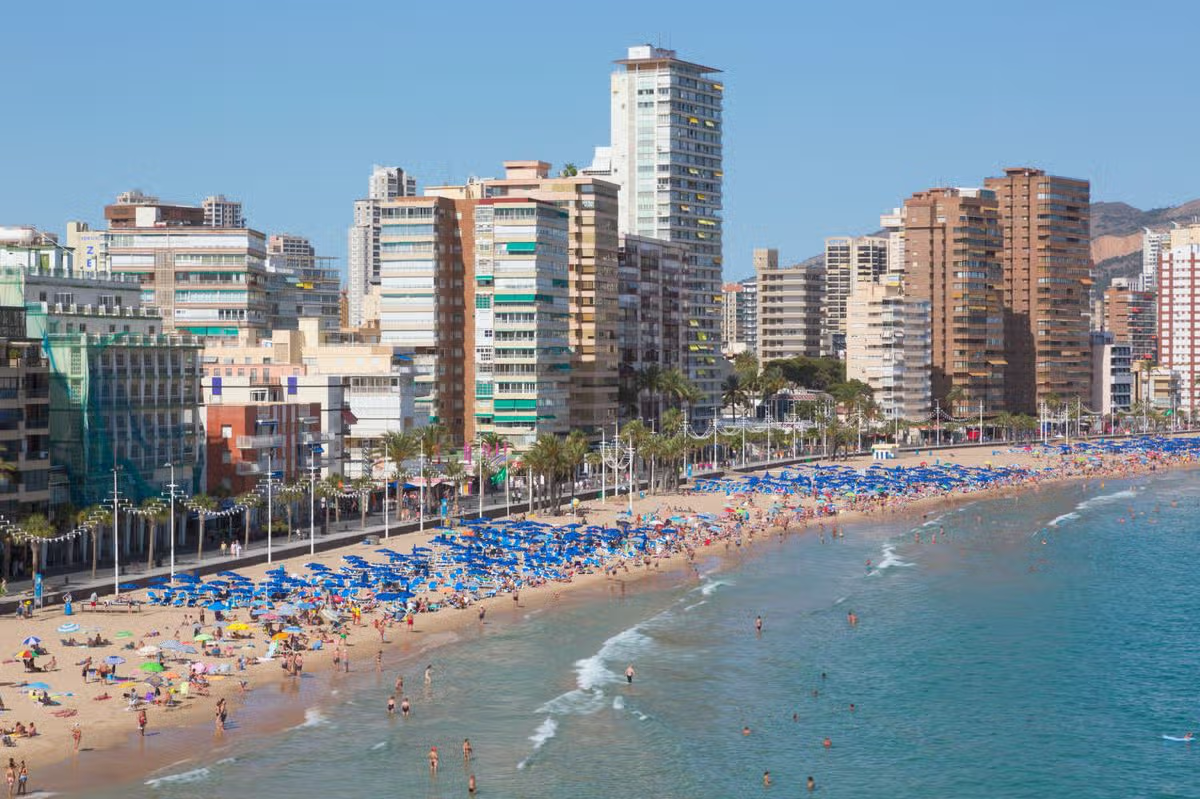
Eurocamp has announced a change to its Spain sites this winter (Image: Getty Images)
Eurocamp parks (or parcs, as they call them) are already a firm favourite with Brits looking for cheap and cheerful getaways in the summer, with sites across plenty of popular destinations including France, Italy and Spain. Now, the holidays giant has announced it will be making a major change to a number of its Spanish locations, in what could be good news for holidaymakers.
That’s because for the first time ever, Eurocamp is going to be offering winter sun holidays, kicking off in 2026. While typically Eurocamp sites close for the winter, this year there will be three parcs remaining open throughout the colder months; Alannia Costa Blanca and Alannia Guardamar in Costa Blanca (home to Benidorm), and Alannia Els Prats in Costa Dorada (home to Salou), with prices from £452 per party during the quieter seasons.
It marks the first time that Brits can opt for Eurocamp breaks in Spain during Christmas, or even for February half term. However, they’re not the only destinations on offer. Eurocamp already has sites in the French Alps which are open during the ski season, as well as its Paris-Est location which is popular with Brits hoping to visit the French capital for its Christmas markets.
It’s not the only brand to offer up holiday parks during the winter months. For example, Center Parcs has a number of sites in France, Belgium and the Netherlands, including one park just a stone’s throw away from Disneyland Paris.
For Brits who are after winter sun but don’t want to commit to jet-setting off to far-flung Caribbean islands, Spain and its islands can be an ideal compromise. In fact, the popular country has 8 of Europe’s 10 sunniest cities according to research from travel pros at Holidu. Cities such as Cordoba or Malaga, in the southern part of Spain, are where you’ll likely have more luck given temperatures average 19C in November, while Barcelona keeps a balmy 15C although it does get cooler in the evenings.
Meanwhile the Canary Islands are famed for their year-round sunshine, and can enjoy temperatures of up to 23C as late as early December. So while it may not be warm enough for swimming in the sea, it’s still pleasant enough that you can enjoy the outdoors whether you wander along the bustling promenades, or want a lunch al fresco. (Not to mention the cooler mornings are ideal for those who want to kick off the day with a hike around those volcanic landscapes).
Ensure our latest travel stories always appear at the top of your Google Search by making us a Preferred Source. Click here to activate or add us as Preferred Source in your Google search settings.
NASA Administrator Jared Isaacman says a new X-plane will be announced at the Max Power exhibition at the Kennedy Space Center in Florida this coming weekend. He insisted, however, that this is unrelated to an SR-71 Blackbird that mysteriously disappeared from public display earlier this year. Isaacman also deflected a direct question about that SR-71 and the possibility that it could fly again, quipping that “we’re just cleaning it, man.”
Isaacman made his new remarks about the SR-71 that had been on display, commonly referred to by the tail number 844, and NASA’s broader X-plane plans on a new edition of NASASpaceflight’s The Flame Trench podcast, which was posted online last Friday. 844 had been on display at NASA’s Armstrong Flight Research Center, which is co-located at Edwards Air Force Base in California, following its retirement in 1999. This particular SR-71 had been the last flying Blackbird.
SR-71 tail number 844 seen in NASA service in the 1990s. NASA
“I gotta ask, has 844 been powered on yet?” Eric Johnson, a science, technology, engineering, and mathematics educator and streamer, who was also on the podcast, asked Isaacman.
“So, we’re just cleaning it, man,” Isaacman said in response, with a smile and a small laugh. “It was so dusty out there in the desert, and it just felt like it needed a cleaning.”
“We’re just cleaning it man”
Amid speculation that it could be returning to flight, NASA Administrator Jared Isaacman teases to NSF that NASA is “just cleaning” their SR-71 Blackbird… pic.twitter.com/t8uBwaK4s1
NASA Administrator Jared Isaacman showed this image during a presentation last week while talking about plans for new X-planes. NASA
“Since I didn’t answer your question that you asked before, I will give you some insight that we will announce a new X-plane at it [Max Power], and it is not the one you’re thinking about,” the NASA director said in an ensuing discussion on the podcast about that event, which is set to kick off on Saturday. “I am gonna deliver on the promise there will be more X-planes.”
Isaacman has openly pledged to revitalize NASA’s X-plane portfolio on several occasions, including during a town hall with NASA staff on just his second day on the job in December 2025.
MAX POWER at NASA’s Kennedy Space Center | Nov. 7-8, 2026
While on The Flame Trench podcast, Isaacman also noted that he had just been out to Armstrong recently, primarily to mark the naming of Troy Asher as the facility’s new director.
“They know to speed up when we go past the outdoor museum. They definitely don’t want me out –” the head of NASA said of that recent trip, before Johnson interjected with a tongue-in-cheek remark that they didn’t want him “cleaning more planes, right?”
“I was like, is there anything else?” Isaacman added immediately afterward. “You know the F-16 VISTA, pretty cool plane. Got some cool jets.”
The “F-16 VISTA” mentioned here is the Variable Stability In-flight Simulator Test Aircraft, a heavily modified two-seat F-16D Viper fighter that is now designated as an X-plane, the X-62A. The X-62A is in active U.S. Air Force service as a testbed based at Edwards. NASA’s museum at Armstrong does have several other retired jet-powered X-planes on display, including a delta-winged F-16XL and an X-29 with its distinctive reverse-swept wings.
The X-62A VISTA test jet. USAF A stock picture of the X-62A VISTA test jet. USAFA satellite image taken in 2018 showing SR-71, tail number 844, as well as other retired X-planes, on display outside of the Armstrong Flight Research Center in California. Google Earth
As noted, Isaacman is an outspoken advocate for new X-planes, including types that could be capable of supersonic or even hypersonic flight. This has been reflected in NASA budget proposals and the prior announcement of a new Aeronautics Flight Accelerator (AFA) initiative.
At the aforementioned conference in September, Isaacman had also pushed back on the idea that the silhouette he had shown in his presentation was of an SR-71, despite it having a host of features in line with the Blackbird’s iconic shape. He declined to elaborate further at that time, but did say that “NASA is getting back in the business of flying high and fast again.”
“NASA has a long history of building and flying experimental aircraft that push the boundaries of what is possible,” NASA told TWZ at that time when asked for more information. “As Administrator Isaacman has said, we want to see more X-planes flying in the years ahead, developing the technologies that will allow us to fly higher, farther, and faster than we have in decades. We look forward to sharing more as those efforts progress.”
“NASA has a long history of pushing the boundaries of experimental aviation, and we continue to explore opportunities to build on that legacy,” the agency told us again following the initial story on the disappearance of 844 from Aviation Week. “As Administrator Isaacman has said, we want to see NASA flying higher, farther, and faster than we have in decades. We recognize the interest in the SR-71 and its remarkable history at NASA but have no additional information to share regarding the aircraft at this time.”
TWZ has reached back out to NASA today in light of Isaacman’s latest comments.
SR-71 tail number 844 during its service with NASA. This picture was taken on October 31, 1997, during a flight in support of the NASA/Rocketdyne/Lockheed Martin Linear Aerospike SR-71 Experiment (LASRE). NASA
“One of the reasons why there’s interest in this speed regime, it was neglected for a number of years. The focus was on hypersonics. If you proposed anything going back, say, 15 years in the Mach 3.5 speed regime, it was ignored,” Tim Conners, an engineer who worked on the SR-71 program at NASA, told us in an exclusive interview published last month. “The glitz and glamour was on hypersonics. Hypersonics is great tactically for certain scenarios, but the weaknesses of hypersonics are now becoming apparent.”
“And as far as countermeasures, hypersonics still has a place. Don’t get me wrong, but every system cannot be hypersonic from an affordability standpoint. So, now you’ve seen it over the last, say, five years. A lot of systems are coming back on the scene that operate in the Mach 2 to Mach 4 regime, and there’s a reason they’re all fitting in there, right?” Conners, who is now technical director for advanced weapons systems at Tiberius Aerospace, continued. “You stay below the speed limit that requires more exotic metallics. You stay in the titanium regime. You can fly, of course, up to [Mach] 3.5 with brief excursions up to about [Mach] 4, so that is tactically relevant against a lot of military targets and defensive systems. So here it is. You know we now have a potential flying test bed that can carry engines in the J58 size class.”
SR-71 LASRE in Flight over California’s Mojave Desert
“They probably are not going to do this for — or trying to do this — for aerodynamic reasons. You can do CFD [computational fluid dynamics]-based modeling in this speed regime all day long and very accurately in this day and age. It does not take a lot of time or money to do that,” he also added. “What you cannot do is an accurate representation of a new type of engine integrated into a high-speed airframe. You can do the conceptual modeling of it. Of course, it’s difficult to get the final installed answer, especially if it involves an engine that operates at long duration. That is where I think they’re going with this. I believe that they’re developing basically a high-speed engine test bed. That would make the most sense to me.”
TWZhas also laid out in detail how the process itself of making an SR-71 flyable could be immensely valuable, including for informing follow-on developments. As we have noted in the past, it is possible that what NASA is doing with 844 now could be intended as a stepping stone to a new X-plane. There is also a potential for the aircraft to re-emerge in a substantially reworked form, potentially configured for pilot-optional or even completely uncrewed operation. However, any such conversion effort would be a different kind of major undertaking.
An SR-71 undergoing maintenance. NASA
How any of this may or may not relate to the plans for the new X-plane that Isaacman mentioned remains to be seen. Even within the context of high-speed flight, NASA is publicly pursuing advanced technology developments in various different directions.
The main face of the agency’s X-plane work currently is the X-59 Quiet SuperSonic Technology (QueSST) jet, which has now flown 41 test flights since taking to the skies for the first time in October 2025. The X-59, which will also be present at Max Power, has been able to reach a top speed of Mach 1.53 and get up to an altitude of 56,000 feet in the course of that testing. The central goal of the QueSST program is to prove out technologies that could eventually enable commercial supersonic flight over land with a substantially reduced sonic boom. With this in mind, the X-59 has been in no way designed for the kind of extreme speeds the SR-71 is capable of reaching.
Max Power is “turning into a big exposition. I think you’re going to have a lot of stuff on display there, from space to VTOLs [vertical takeoff and landing designs], [and] drones. And for sure an air show will be a component to it,” NASA’s Isaacman said on The Flame Trench podcast. “From here forward, we might be trying to make a run at putting some real infrastructure on that next to that runway [at the Kennedy Space Center], and trying to create our own kind of Paris/Farnborough type, Dubai type, event here.”
In the meantime, what we do know now for sure is that we are set to get details about at least one new NASA X-plane this coming weekend at Max Power. There may also be new hints about what the future holds for SR-71 tail number 844.