Officials said today ‘don’t try to smuggle them across the border in your luggage’

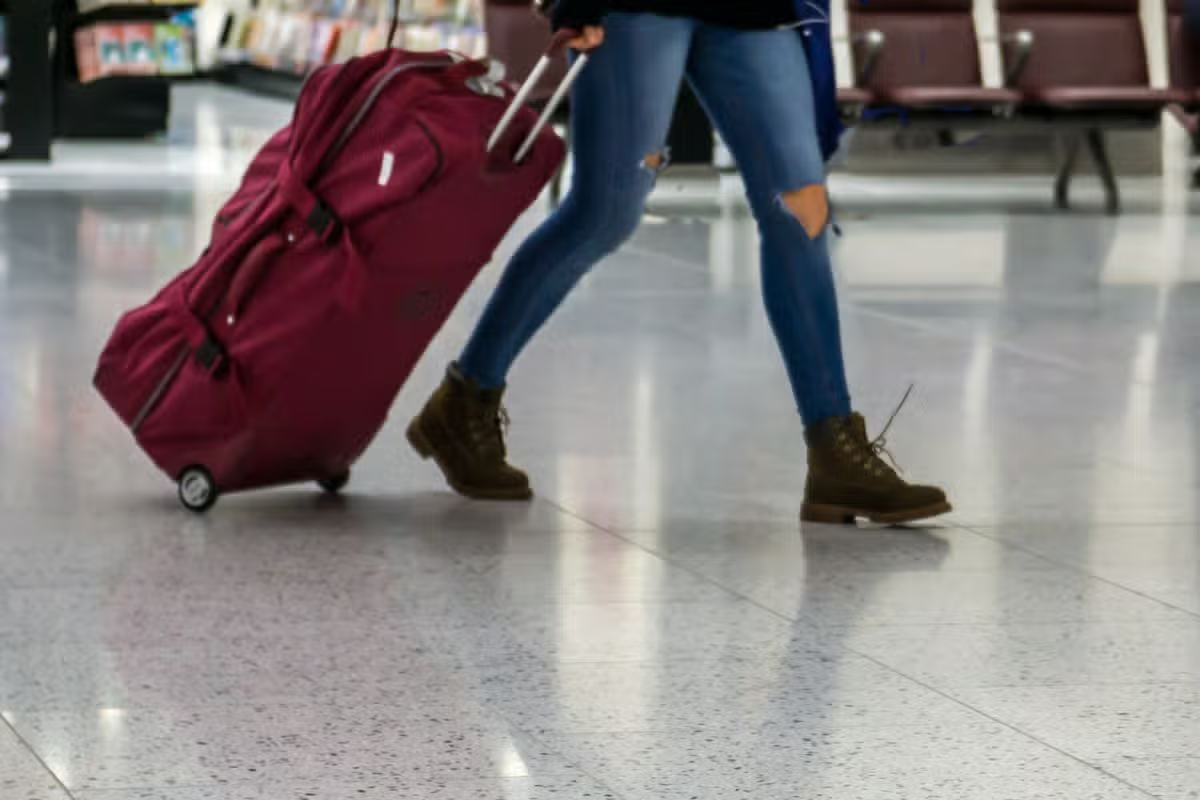
Because of recent and ongoing animal disease outbreaks in the EU, there are restrictions in place for bringing in most meat and all dairy products.(Image: Getty)
A new warning has been issued for anyone bringing food into the UK from the EU – even if it was bought at the airport. In an update today the Department for Environment, Food and Rural Affairs issued an alert for anyone going to Eurpean hotspots like Spain, France, Greece and Italy this half term.
An outbreak of disease on the continent means that a number of foood items are banned – and there is a high chance anyone buying a sandwich, or bringing back produce will infringe the laws. Since last April, those arriving risk having goods seized at UK borders and may face penalties reaching as much as £5,000.
In a new post on X today DEFRA said: “Meat and dairy products from the EU can spread animal diseases. Stay faithful to our biosecurity and don’t try to smuggle them across the border in your luggage.” It’s against the law for travellers entering Great Britain from any EU country to carry items including sandwiches, cheese, cured meats, raw meats, or milk. Therefore, picking up a sandwich at a Spanish airport and taking it into the UK could get you into trouble.
Officials have confirmed that the new rules, which came into force last year, continue to apply as the holiday season gets underway with the start of June. The current legislation states that anyone discovered importing banned products such as sandwiches, cheese, cured meats, raw meats, or milk into Great Britain will face enforcement measures at customs.
These measures have been put in place following a foot and mouth disease outbreak affecting Europe. In a recent development, those travelling to Greece have been alerted to a newly identified outbreak in the country. This recent information confirms that the prohibition on all food products – including duty free purchases – will continue for an extended period.
Border officers will be on the lookout for illegal food products, with offenders given the option of handing over their items or having them seized and disposed of. Officials warn that “In serious cases, those found with these items run the risk of incurring fines of up to £5,000 in England.”
As confirmed cases of foot and mouth disease (FMD) continue to increase across Europe, the UK Government has introduced bans aimed at halting its spread.
The restrictions, intended to protect domestic animal health, farmers’ livelihoods and UK food security, prohibit the personal importation of meat and dairy products from cows, sheep, goats and pigs originating from the EU, reports Wales Online.
Authorities have confirmed that Foot and Mouth Disease (FMD) presents no danger to humans, and there are currently no recorded cases within the UK. Nevertheless, it remains a highly contagious viral illness affecting cattle, sheep, pigs and other cloven-hoofed animals, including wild boar, deer, llamas and alpacas.
Labour MP Ben Goldsborough has questioned whether adequate steps are being taken to inform the public through a parliamentary written question. He asked Environment, Food and Rural Affairs Secretary Emma Reynolds: “If she will make an assessment of the potential merits of funding public awareness campaigns, including advertisements at airports and ports, on (a) foot and mouth disease and (b) African swine fever.”
DEFRA minister Dame Angela Eagle detailed the extensive actions recently taken to publicise the ban: “Biosecurity is a priority for this Government. To protect UK farmers and animals from serious diseases like Foot and Mouth Disease and African Swine Fever, we used the Christmas period as an opportunity to remind the public about the personal imports ban on travellers from the EU and EEA countries bringing dairy and meat products to GB, that came into force last year.”
She further stated: “This included promoting awareness of the rules to the travelling public and extending our reach through partnership channels across Government and with industry. Our insights survey results indicate that over 90% of respondents are aware that they should not bring back meat and dairy products from these countries.”
Dame Angela added: “Any decisions on funding paid campaigns will be made based on the current threat level, evidence of effectiveness and available resources, ensuring maximum impact in protecting UK biosecurity.”
The outbreak on the continent represents a considerable threat to farming businesses and livestock. FMD can trigger significant economic losses through reduced production in affected animals, as well as restricted access to overseas markets for livestock, meat and dairy products.
Following confirmed outbreaks of FMD in Germany, Hungary, Slovakia and Austria earlier this year, the Government has already prohibited personal imports of cattle, sheep and other ruminants, pig meat and dairy products from those nations.
The new measures apply exclusively to travellers entering Great Britain, and will not be enforced on personal imports arriving from Northern Ireland, Jersey, Guernsey or the Isle of Man. Speaking at the launch, Farming Minister Daniel Zeichner said: “This government will do whatever it takes to protect British farmers from foot and mouth. That is why we are further strengthening protections by introducing restrictions on personal meat and dairy imports to prevent the spread of the disease and protect Britain’s food security.”
Restrictions on meat, dairy and animal products for human consumption
You cannot bring in any of the following:
- cheese, milk and dairy products like butter and yoghurt
- pork
- beef
- lamb
- mutton
- goat
- venison
- other products made from these meats, for example sausages
You can bring the following into Great Britain from any country without any restrictions:
- bread, but not sandwiches filled with meat or dairy products
- cakes without fresh cream
- biscuits
- chocolate and confectionery, but not those made with a lot of unprocessed dairy ingredients
- pasta and noodles, but not if mixed or filled with meat or meat products
- packaged soup, stocks and flavourings
- processed and packaged plant products, such as packaged salads and frozen plant material
- food supplements containing small amounts of an animal product, such as fish oil capsules
Dr Jorge Martin-Almagro, UK Deputy Chief Veterinary Officer for international and trade affairs, issued a stark warning: “Following the detection of foot and mouth disease in EU countries resulting in a rising risk of introduction into Great Britain, we have extended restrictions on the personal imports of food products that pose a risk in FMD transmission.”
He went on to emphasise the Government’s preparedness, adding: “Robust contingency plans are already in place to manage the risk of this disease to protect farmers and Britain’s food security. This biosecurity measure combined with all others we have implemented are critical to limit the risk of FMD incursion. I would urge livestock keepers to continue exercising the utmost vigilance for signs of disease, ensure scrupulous biosecurity is maintained and to report any suspicion of disease immediately to the Animal and Plant Health Agency.”
Nevertheless, Dr Martin-Almagro points out that certain exceptions to these restrictions do exist, explaining: “A limited set of exemptions from these rules in place. For example, a limited amount of infant milk, medical foods and certain composite products like chocolate, confectionery, bread, cakes, biscuits and pasta continue to be allowed.”
For further details click here.