


Anger

New video on Minnesota ICE shooting emerges as public anger grows across US | Donald Trump News

A new video has emerged showing the final moments of a Minnesota woman’s encounter with an immigration officer before she was killed, as public uproar grows in the United States over the shooting and exclusion of local agencies from the investigation.

A Minnesota prosecutor on Friday called on the public to share with investigators any recordings and evidence connected to the fatal shooting of Renee Nicole Good, 37, who was fatally shot by an Immigration and Customs Enforcement (ICE) agent.

Recommended Stories

list of 4 itemsend of list

A new, 47-second video published online by a Minnesota-based conservative news site, Alpha News, on Friday, and later reposted on social media by the Department of Homeland Security, shows the shooting from the perspective of ICE officer Jonathan Ross, who fired the shots on Wednesday.

With sirens blaring in the background, Ross, 43, approaches and circles Good’s vehicle in the middle of the road while apparently filming on his cellphone. At the same time, Good’s wife was also recording the encounter and can be seen walking around the vehicle and approaching the officer.

A series of exchanges occurred.

“That’s fine, I’m not mad at you,” Good says as the officer passes by her door. She has one hand on the steering wheel and the other outside the open driver’s side window.

“US citizen, former f—ing veteran,” says her wife, standing outside the passenger side of the SUV holding up her phone. “You wanna come at us, you wanna come at us, I say go get yourself some lunch, big boy.”

Other officers approach the driver’s side of the car at about the same time, and one says, “Get out of the car, get out of the f—ing car.”

Ross is now at the front driver’s side of the vehicle. Good reverses briefly, then turns the steering wheel towards the passenger side as she drives ahead, and Ross opens fire. The camera becomes unsteady and points towards the sky, then returns to the street view showing Good’s SUV careening away.

“F—ing b—-,” someone at the scene says.

A crashing sound is heard as Good’s vehicle smashes into others parked on the street.

Minnesota officials slam federal agencies

President Donald Trump’s administration has defended the ICE agent who shot Good in her car, painting her as a “domestic terrorist” and claiming Ross – an Iraq War veteran – was protecting himself and the fellow agents. The White House insisted the video gave weight to the officer’s claim of self-defence – even though the clip does not show the moment the car moved away, or him opening fire.

Local officials in Minnesota have condemned federal agencies for excluding them from the probe, and a local prosecutor said on Friday that federal investigators had taken Good’s car and shell casings from the scene.

“This is not the time to bend the rules. This is a time to follow the law… The fact that Pam Bondi’s Department of Justice and this presidential administration has already come to a conclusion about those facts is deeply concerning,” Minneapolis Mayor Jacob Frey, a Democrat, told a news briefing on Friday.

“We know that they’ve already determined much of the investigation,” he said, adding that the state’s Bureau of Criminal Apprehension, within its department of public safety, has consistently run such investigations.

“Why not include them in the process?” Frey said.

Good was the fourth person to be killed by ICE agencts since Trump launched his immigration crackdown last year.

Good’s wife, Becca Good, told local media that they had gone to the scene of immigration enforcement activity to “support our neighbours”. “We had whistles. They had guns,” she said.

The Minneapolis killing and a separate shooting in Portland, Oregon, on Thursday by the Border Patrol have set off protests in multiple US cities and denunciations of immigration enforcement tactics by the US government.

Protests in Minneapolis continued on Friday, with hundreds gathered at a federal facility that has become a focal point of anti-ICE demonstrations. Hundreds of weekend protests have been planned across the US over the killing, according to organisers.

Source link

Anger at Swiss ski bar resort at failure to protect people

In the wake of the devastating fire at a bar in Crans-Montana, many Swiss citizens are asking themselves if their political system is fit for purpose.

Switzerland, often praised for its efficiency, has a very devolved system of government, in which villages and towns are run by local officials elected from and by the community.

It is a system the Swiss cherish, because they believe it ensures accountability.

But there are inherent weaknesses: hypothetically, the official approving a bar license or passing a fire-safety check is the friend, neighbour, or maybe even cousin of the bar owner.

When the news of the fire emerged on New Year’s Eve, first there was shock. Such devastating fires are not, people thought, supposed to happen in Switzerland.

Then there was grief – 40 young people lost their lives, 116 were injured, many of them very seriously. Questions followed – what caused such a catastrophe?

And finally, this week – fury when Crans-Montana’s Mayor, Nicolas Feraud, revealed that Le Constellation bar had not been inspected since 2019.

Crans-Montana is in the Swiss canton of Valais, where fire-safety inspections are the responsibility of Mayor Feraud and his colleagues, and they are supposed to happen every 12 months.

Not only had the checks not taken place, the mayor said, he had only become aware of this after the fire. And, he revealed, of 128 bars and restaurants in Crans-Montana, only 40 had been inspected in 2025.

Asked why, Feraud had no answer, though he did suggest Crans-Montana had too few inspectors for the number of properties that needed checking.

This was echoed by Romy Biner, the mayor of neighbouring upmarket resort Zermatt, who told local media that many communities in the canton of Valais did not have the required resources to inspect so many premises. This is not a line that plays well with many Swiss, who know that Crans-Montana and Zermatt are two of the richest winter resorts in the country.

So when Feraud faced the press, there were pointed questions from Swiss journalists: How well did the mayor know the bar’s owners? Had he ever been to the bar? And, was there any possibility of corruption?

“Absolutely not,” was his indignant answer to the last question.

The mother of two brothers who survived the fire also had questions. “We urgently need complete, transparent answers,” she wrote on social media.

When they escaped the burning bar, each of her sons had thought at first that the other was dead.

“They escaped, but they are deeply traumatised. They will carry the emotional scars forever.”

Those questions, from journalists and families, reveal the problems of Switzerland’s devolved political system.

Elected officials in towns like Crans-Montana have many responsibilities as well as fire safety – running schools and social services, even collecting taxes.

Most of these officials work part-time and, once elected, continue with their day jobs.

Nowadays some communes may be over-challenged trying to supply and oversee all the services a 21st-Century population expects, but Swiss voters expect better than what they heard from Mayor Feraud.

The headlines after his press conference were savage. Many demanded Mayor Feraud and his colleagues resign. Feraud ruled this out, saying, “we were elected by the people. You don’t abandon ship in the middle of a storm”.

“A failure right across the board”, wrote the broadsheet Tagesanzeiger. “Now Switzerland’s reputation is on the line.”

“An utter disaster”, wrote the tabloid Blick, “a total failure of fire safety checks.”

Reputational damage is something the Swiss both hate and fear. Switzerland is a rich country, in part because of its reputation for safety, stability, reliability, and, among its own citizens, accountability.

If those in charge damage that reputation, and put the country’s success at risk, the Swiss are unforgiving.

Heads rolled two decades ago when Swissair, the much-loved national airline, went bankrupt.

Once nicknamed affectionately “the flying bank”, Swissair’s management had made a series of risky financial investments that left the airline dangerously over-extended.

In 2008, banking giant UBS, in which many Swiss, especially pensioners, had shares, had to be bailed out by Swiss taxpayers to prevent not just its own downfall, but disastrous consequences for the global economy.

When the bank’s reckless over-exposure to subprime mortgages was revealed, there was outrage. At the bank’s annual general meeting that year, normally sedate elderly shareholders hissed and booed.

One even jumped on to the stage, demanding the management give up their generous bonuses, ironically waving a string of Swiss bratwursts under their noses “in case you go hungry”.

Crans-Montana, too, has aroused that same angry feeling of trust betrayed. But this is much worse than Swissair or UBS. Forty people, many of them teenagers, are dead. Dozens more have suffered life-changing injuries.

The Swiss authorities know there must be answers, quickly.

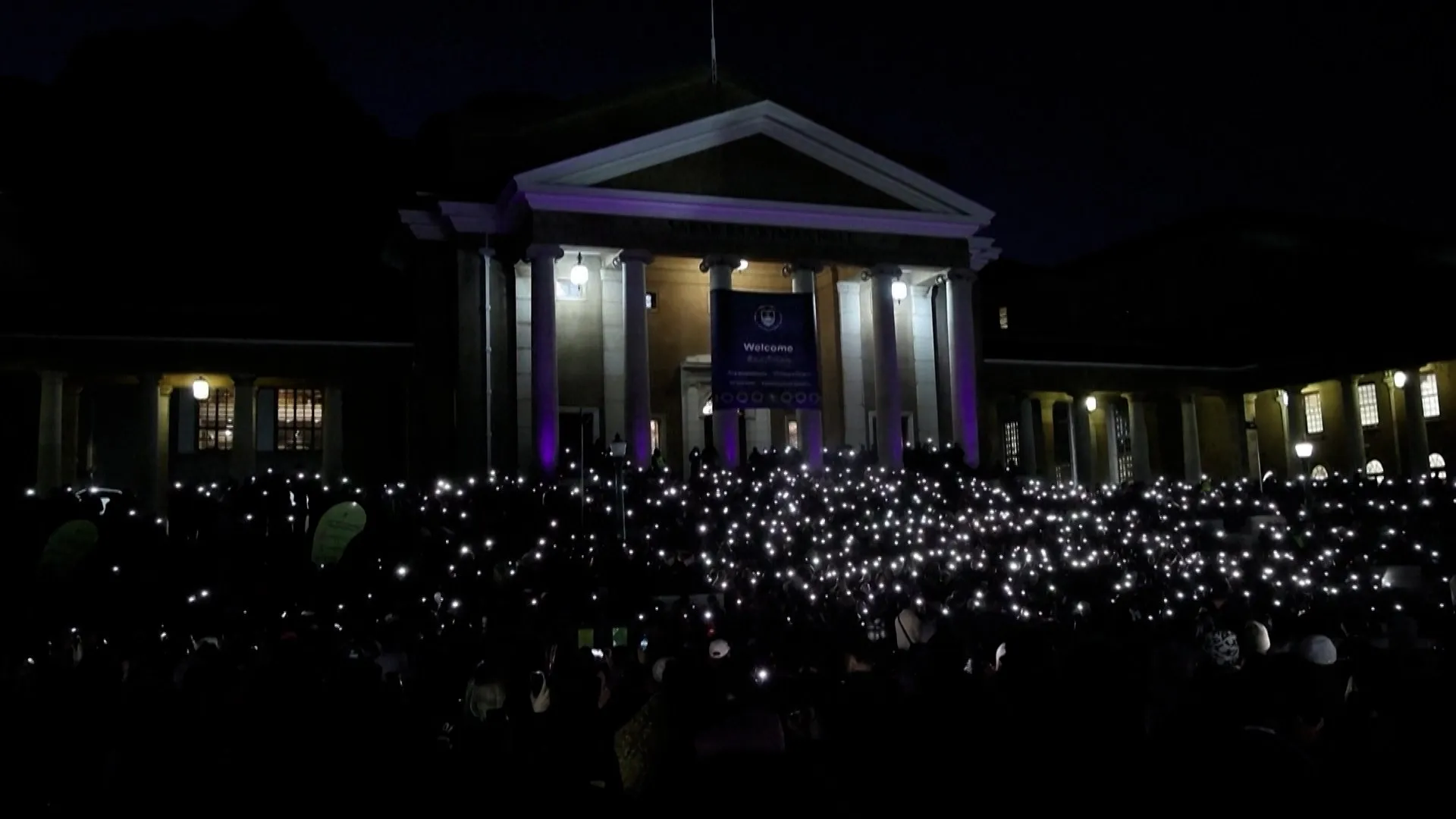
At Friday’s memorial service, the president of Valais, Matthias Reynard, was close to tears as he promised a “strict and independent” investigation, warning that “relevant political authorities” would be held accountable.

Switzerland’s president Guy Parmelin said he expected justice “without delay and without leniency”.

The owner of the bar is now in custody, subject to a criminal investigation, but the role of the local government is sure to be examined, too. There are already calls for fire-safety inspection in Valais canton to be taken away from local town councils and given to the cantonal authorities.

Romain Jourdan, a lawyer acting for some of the families, has announced plans to file a case against Crans-Montana’s town council. The families, he said, “are demanding that all local officials be questioned, so that such a tragedy never happens again”.

There is a deeper, nationwide soul-searching going on as well. The Swiss want to know why their beloved devolved system, which many, perhaps complacently, believed to be near perfect, went so catastrophically wrong.

In the first hours after the fire, many people, along with their shock and grief, felt a certain quiet pride that their emergency services had responded so quickly.

Firefighters, ambulances crews, and even helicopters were at the scene within minutes. The emergency services were present at the memorial service. Many openly wept.

The shock and grief still sits deep, but the pride has evaporated.

What good are top-of-the-range, highly professional emergency services, the Swiss are asking themselves, if basic fire safety checks are neglected?

Switzerland’s government says finding answers is a moral responsibility – to the families above all, but also to its own voters.

Source link

‘Dead Man’s Wire’ review: A 1970s Bill Skarsgård is mad as hell

In between such pistol-packing antiheroes as Bonnie Parker and Luigi Mangione, financially-squeezed Americans rooted for Tony Kiritsis, a working stiff who took his mortgage lender hostage in 1977 Indianapolis, claiming that the loan company cheated him out of his land. “Dead Man’s Wire,” the title of Gus Van Sant’s wonky true crime caper, comes from Kiritsis’ weapon: a shotgun tied to a noose looped around the neck of his prisoner, Richard Hall. His hair-trigger homemade contraption pressured all three major networks into giving Kiritsis airtime to explain his grievances to the public. Pressing a sawed-off barrel to Hall’s head, the hot-tempered chatterbox told the cameras, “I am sorry I humiliated this man this way, even though he must’ve surely had it coming.”

To the establishment’s horror, many viewers sided with Kiritsis. “How about some Tony Kiritsis t-shirts, some Tony Kiritsis badges, a Tony Kiritsis fan club?” one supporter wrote to the local paper, the Indianapolis News.

Or how about a biopic that fires blanks?

Van Sant has long taken aim at the intersection of violence and mass media culture. Over his career, he’s attacked it from several angles, including the fame-seeking satire of “To Die For,” his elegy for the publicly out politician of “Milk” and the clinical ennui of “Elephant,” his take on the Columbine massacre, in which his pair of teen killers numb themselves with grisly entertainment. Kiritsis’ story is an irresistible target: an ignored man thrilled to have the attention of the spanking new Action News squads who barge onto the scene unprepared for the risk they might broadcast an on-air murder.

But this time, Van Sant seems more interested in the period-piece décor and the aesthetics of early video footage (the cinematography is by Arnaud Potier) than he is in the bleak humor of Kiritsis’ televised tirade cutting to a burger commercial. The result is a faintly comic curio that hurtles along without much impact.

The mishaps start when Kiritsis (Bill Skarsgård) storms Meridian Mortgage’s office only to discover his intended captive, the ruthless M.L. Hall (Al Pacino), is away vacationing in Florida. Hall’s cowed and coddled son Richard (Dacre Montgomery) will have to do, even though the real estate scion is so passive that he barely bothers to fight for his life. If you’ve seen the original footage of the bizarre press conference where Hall, a twitch from assassination, stares blankly past the flashbulbs, then you know that Van Sant and Montgomery (the “Stranger Things” bully cast against type) get their victim exactly right while robbing Kiritsis, and the audience, of a worthy adversary. In one cold yet weightless moment, the boy-man realizes his own dad might not care whether he survives.

At least the younger Hall’s dull demeanor — then coded as dignity, now as soullessness — makes Kiritsis seem more alive. The real Kiritsis was short-statured with a car salesman’s sideburns; he had the kind of face you only see onscreen during competitive bowling. Lanky, hunched and fragile, Skarsgård’s version isn’t quite as salt-of the-earth, although he’s captured his rapid patter and the burning menace in his eyes. He plays the role somewhere between a soapbox preacher and a “Scooby-Doo” episode that imagines Shaggy unmasking a money-grubbing bad guy and threatening to beat him to death.

Kiritsis is so convinced of his righteousness that he genuinely believes the mortgage company’s manipulations, not his own murder threat, to be the big story. When Hall proves too mute to debate, Kiritsis vents to a radio disc jockey named Fred (Colman Domingo), even though Fred is more interested in smooth tunes than hard news. (Springboarding from this and his perky TV host role in “The Running Man,” Domingo needs to star in his own comedy stat.) Won’t someone, even an inessential young reporter played by Myha’la, poke into the alleged scam?

Yet despite how often Austin Kolodney’s script has Kiritsis say he just wants to be heard, the soured mortgage deal is so impossible to follow that even the movie itself deems it unnecessary. Our attention pivots to the futility of this self-described “little guy” trying to get someone with clout to take him seriously. In this period, criminal psychology was just starting to go mainstream. An FBI agent (Neil Mulac) instructs the Indianapolis cops to think deeper about Kiritsis’ motivations, wielding chalk to illustrate how anger is rooted in humiliation and disrespect. Kiritsis is screaming mad and the police’s yawns aren’t helping.

Today, Kiritsis would have a podcast. But cranks like him seem especially at home in the 1970s — the mad-as-hell decade — when their polyester button-downs make them look extra itchy around the collar. It’s easy to picture Kiritsis exiting a double-feature of “Network” and “Dog Day Afternoon” and vowing that he, too, isn’t going to take it anymore.

Van Sant sees the parallels between Kiritsis and “Dog Day Afternoon’s” populist bank robber Sonny Wortzik — heck, he’s even stunt-cast Pacino as the fat-cat financier — but the film doesn’t appear to have the budget to examine how Kiritsis’ anger fires up the cash-strapped masses. It certainly can’t afford to include the real-life scene at an Indianapolis Pacers game where an arena of basketball fans cheered for his not-guilty verdict, although I would have settled for even a bit player who helps us understand why a jury of his peers let him off the hook.

Instead, the movie inexplicably squanders its energy on needle drops that act against the mood: the watery irony of Donna Summer’s “Love to Love You Baby” cooing over an image of Hall handcuffed in a bathtub. Better is Danny Elfman’s spartan and fraught score, particularly the dyspeptic drums.

Was Kiritsis a narcissistic madman or a schmuck who’d put too much trust in the American ideals of hard work and fair treatment? Van Sant alludes to the latter when the televisions keep showing John Wayne on other channels, the gunslinging Duke setting things right in a classic western or winning the 1977 People’s Choice statuette for best actor.

It’s no wonder that Kiritsis figured he’d be a hero, too — and that, in real life, many of the people watching at home agreed — although as obvious as that point is, it would have been nice if Van Sant explored it. At least we get Kiritsis’ sentimental, expletive-laden version of an awards speech which devolves into him thanking his family, Hall’s family and even the police academy before he gets hustled offstage. Kiritsis is certain he’s accomplished something great. We’re glumly aware of how many others are waiting their turn in the wings.

‘Dead Man’s Wire’

Rated: R, for language throughout

Running time: 1 hour, 45 minutes

Playing: In limited release Friday, Jan. 9

Source link

US approves $11bn in arms sales to Taiwan in deal likely to anger China | Weapons News

Huge US arms package for Taiwan includes HIMARS rocket systems, howitzer artillery, antitank missiles, and drones.

The United States has approved $11.1bn in arms sales to Taiwan, one of Washington’s largest-ever weapons packages for the self-ruled island, which Beijing has promised to unify with mainland China.

The US State Department announced the deal late on Wednesday during a nationally televised address by President Donald Trump.

Recommended Stories

list of 4 itemsend of list

Weapons in the proposed sale include 82 High Mobility Artillery Rocket Systems, or HIMARS, and 420 Army Tactical Missile Systems, or ATACMS – worth more than $4bn – defence systems that are similar to what the US had been providing Ukraine to defend against Russian aerial attacks.

The deal also includes 60 self-propelled howitzer artillery systems and related equipment worth more than $4bn and drones valued at more than $1bn.

Other sales in the package include military software valued at more than $1bn, Javelin and TOW missiles worth more than $700m, helicopter spare parts worth $96m and refurbishment kits for Harpoon missiles worth $91m.

In a series of separate statements announcing details of the weapons deal, the Pentagon said the sales served US national, economic and security interests by supporting Taiwan’s continuing efforts to modernise its armed forces and to maintain a “credible defensive capability”.

Taiwan’s defence ministry and presidential office welcomed the news while China’s foreign ministry did not immediately respond to a request for comment from the Reuters news agency.

Washington’s huge sale of arms to Taiwan will likely infuriate China, which claims Taiwan is part of its territory and has threatened to use force to bring it under its control.


“The United States continues to assist Taiwan in maintaining sufficient self-defence capabilities and in rapidly building strong deterrent power,” Taiwan’s defence ministry said in a statement.

Taiwan presidential office spokesperson Karen Kuo said Taiwan would continue to reform its defence sector and “strengthen whole-of-society defence resilience” to “demonstrate our determination to defend ourselves, and safeguard peace through strength”.

China’s Taiwan Affairs Office said on Wednesday that it opposed efforts by the US Congress to pass bills “related to Taiwan and firmly opposes any form of military contact between the US and Taiwan”.

“We urge the US to abide by the one China principle and the provisions of the three Sino-US joint communiques : Stop ‘arming Taiwan’, stop reviewing relevant bills, and stop interfering in China’s internal affairs,” the office’s spokesperson Zhu Fenglian said in a statement.

Zhu said Taiwan’s political leaders were pursuing “independence”, and were “willing to let external forces turn the island into a ‘war porcupine’,” which could result in the population becoming “cannon fodder” and “slaughtered at will, which is despicable”.

Taiwan’s President William Lai Ching-te last month announced a $40bn supplementary defence budget, to run from 2026 to 2033, saying there was “no room for compromise on national security”.

Source link