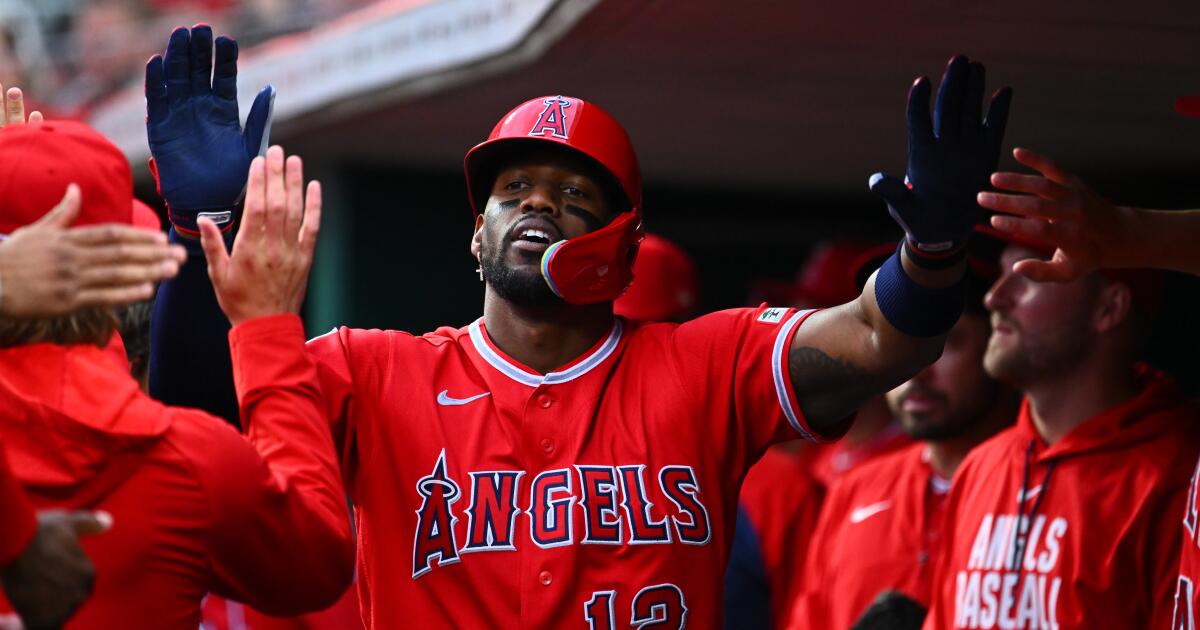
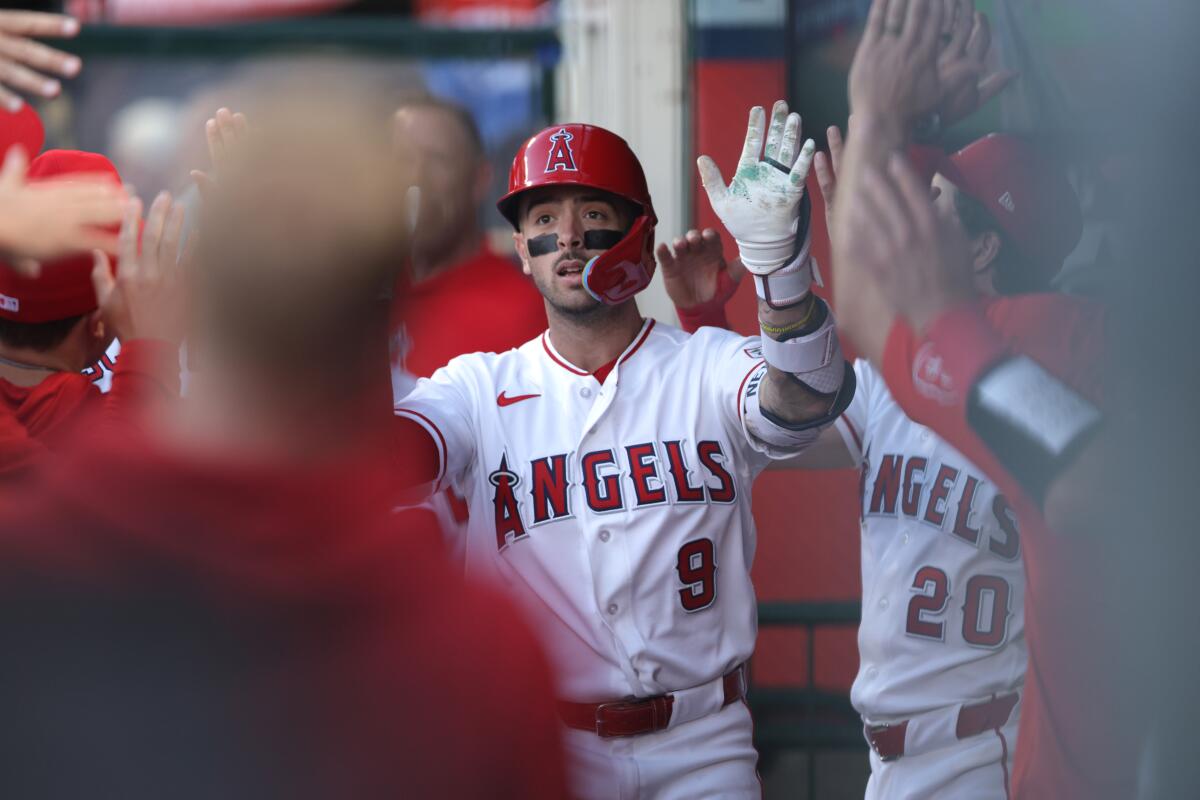
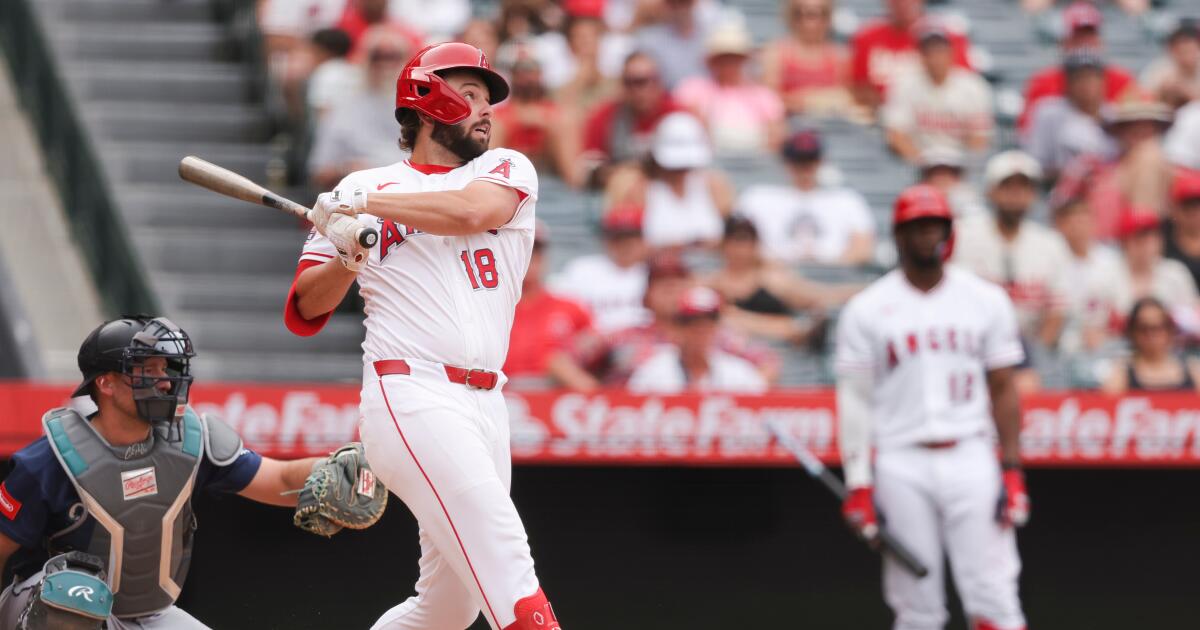
CINCINNATI — Jorge Soler hit a grand slam in a five-run eighth inning, Zach Neto and Josh Lowe also homered, and the Angels beat the Cincinnati Reds 10-2 on Friday night to snap a seven-game losing streak at Great American Ball Park.
Jack Kochanowicz (2-0) yielded just one run and two hits over seven innings.
Soler also had a two-out double in the third before scoring on Yoan Moncada’s infield single for a 2-0 lead.
Neto’s fifth home run of the season made it 4-0 and Lowe, who was batting .091 (three for 33) coming in, homered over the left-field wall in the sixth for a 5-1 lead.
The Angels improved to .500 or better after 14 games for a sixth straight season, and eighth of nine.
Cincinnati’s Chase Burns (1-1) gave up five earned runs, seven hits and four walks over 5⅓ innings.
Sal Stewart entered leading all rookies with 16 hits, eight extra-base hits, and 32 total bases before going 0 for 3 against the Angels.
Eugenio Suárez had Cincinnati’s only hit through four and he added the Reds’ second hit on a single in the sixth. Elly De La Cruz hit his fourth homer of the season in the ninth.
The Angels’ last win in Cincinnati came on April 1, 2013, in the first interleague opening day game in MLB history.
Up next: Angels RHP George Klassen (0-0, 6.75 ERA), who took a no-decision in his major league debut on April 5, goes against Cincinnati LHP Brandon Williamson (1-1, 4.76), who picked up his first major league victory on April 6.
Neto launched a leadoff shot on Chris Sale’s first pitch, and Soriano (3-0) struck out 10 as the Angels won their third consecutive game. The right-hander gave up one run and three hits without issuing a walk, throwing 69 of his 96 pitches for strikes.
Soriano gave up a solo homer to Drake Baldwin and a single to Matt Olson in the first, then retired 19 straight batters before Mike Yastrzemski led off the eighth with a single.
Mauricio Dubón homered off Angels reliever Chase Silseth in the ninth. Atlanta put two on with two outs before Jordan Romano replaced Silseth and got Yastrzemski to fly out for his fourth save.
The Angels played without star center fielder Mike Trout, who exited Sunday’s game against Seattle after getting hit on the left hand by a 94-mph fastball in the eighth. Trout’s hand swelled so quickly he struggled to remove his batting glove, but X-rays were negative and he is listed as day to day.
Sale (2-1) entered 8-0 with a 1.24 ERA in 11 career games against the Angels, but Neto slammed the left-hander’s first pitch, a 95-mph fastball, for a homer to left field.
Angels star Zach Neto celebrates in the dugout after hitting a home run in the first inning against the Braves on Monday.
(Joe Scarnici / Getty Images)
Sale retired his next nine batters but fell apart during a three-run fourth in which the Angels drew two walks, were twice hit by pitches, had two runners forced out at the plate and hit one ball out of the infield.
Logan O’Hoppe walked and Yoán Moncada was hit by a pitch, both with the bases loaded, to account for two runs. Bryce Teodosio drove in a run with an infield single for a 4-1 lead.
Jorge Soler opened the fifth with a single, and Adell drove a first-pitch fastball 411 feet to left for a two-run homer — his first of the season — and a 6-1 advantage.
Up next: Braves RHP Reynaldo López (1-0, 1.64 ERA) opposes Angels LHP Yusei Kikuchi (0-1, 6.52) on Tuesday night.
Mariners left-hander Gabe Speier (0-2) walked Zach Neto intentionally to open the bottom of the 11th, and both runners advanced on Oswald Peraza’s sacrifice bunt.
Schanuel, who grounded into a double play with runners on first and third to end the eighth, lofted a fly ball to left fielder Randy Arozarena, whose throw home was off line.
Shaun Anderson (1-0) struck out Cal Raleigh with the bases loaded to end the top of the 11th. Anderson gave up a run in two innings.
Mike Trout, who doubled and scored in the third, exited in the eighth after being hit on the left hand by Casey Legumina’s 94-mph fastball. X-rays were negative, and Trout is listed as day-to-day.
The teams exchanged runs in the 10th, Seattle scoring on Randy Arozarena’s single and the Angels (5-5) on Logan O’Hoppe’s sacrifice fly.
The Angels were one out away from victory in the top of the ninth when Raleigh blooped a two-out double and Julio Rodríguez poked Sam Bachman’s 91-mph slider to left for a single and a 6-6 tie. Mariners closer Andres Munoz threw a 1-2-3 bottom of the ninth.
Cole Young hit a three-run homer to give the Mariners (4-6) a 5-4 lead in the fifth, but Jo Adell and Frazier drove in runs with singles in the home half.
Seattle’s Leo Rivas hit a two-run single in the second.
Jorge Soler hit RBI singles in the first and third before the Angels took a 4-2 lead in the fourth when Josh Lowe scored on Rivas’ fielding error at third and Schanuel hit a two-out RBI single.
Up next for Angels: José Soriano (2-0, 0.00 ERA) will oppose Atlanta’s Chris Sale (2-0, 0.75 ERA) at home Monday to kick off a three-game set.
The Angels celebrated their 2026 home opener on Friday, and the fans booed the ceremonial first pitch.
Magic Johnson, the Dodgers’ co-owner and the foremost winner in Los Angeles sports history, threw out the ceremonial first pitch before the Dodgers’ opener. Jeff Kent, just elected to the Hall of Fame, did the honors for the San Francisco Giants.
In Anaheim, John Carpino tossed the first pitch, even with popular alumni such as Torii Hunter and Tim Salmon in the house. Carpino is the Angels’ president, retiring Monday after 16 years in that role and 23 years in all as a loyal executive under Angels owner Arte Moreno.
Moreno thought it would be lovely for Carpino to throw out the first pitch and, under different circumstances, it would have been.
So Carpino, as a proxy for Moreno, was booed loudly. Then a few modest choruses of “sell the team” broke out.
Behind the Angels’ dugout, Dave and Chris Bloye of Upland wore red T-shirts. His shirt listed five priorities, in order: Affordability, good experience, safety, peanuts, fan surveys. Her shirt listed five priorities too, starting with “sell the team.” The Bloyes said they have had season tickets for more than 20 years.
“We’ve never had a survey,” Chris Bloye said.
Moreno is competitive, a hardcore fan who regularly attends even spring training games. Perhaps he did not mean his words to come out the way they did.
Moreno declined an interview request from The Times at the owners’ meetings in February. A team spokesman said last week that Moreno would pass on an opportunity to clarify his remarks about fan priorities.
But, if those were indeed the priorities, they would have been reflected by the fans that showed up more than six hours before game time for the free fan festival the Angels throw before the home opener every year.
Surely, the man in the jersey that read “FAN SINCE 81” and the Angels tattoo on his left leg would be here win or lose.
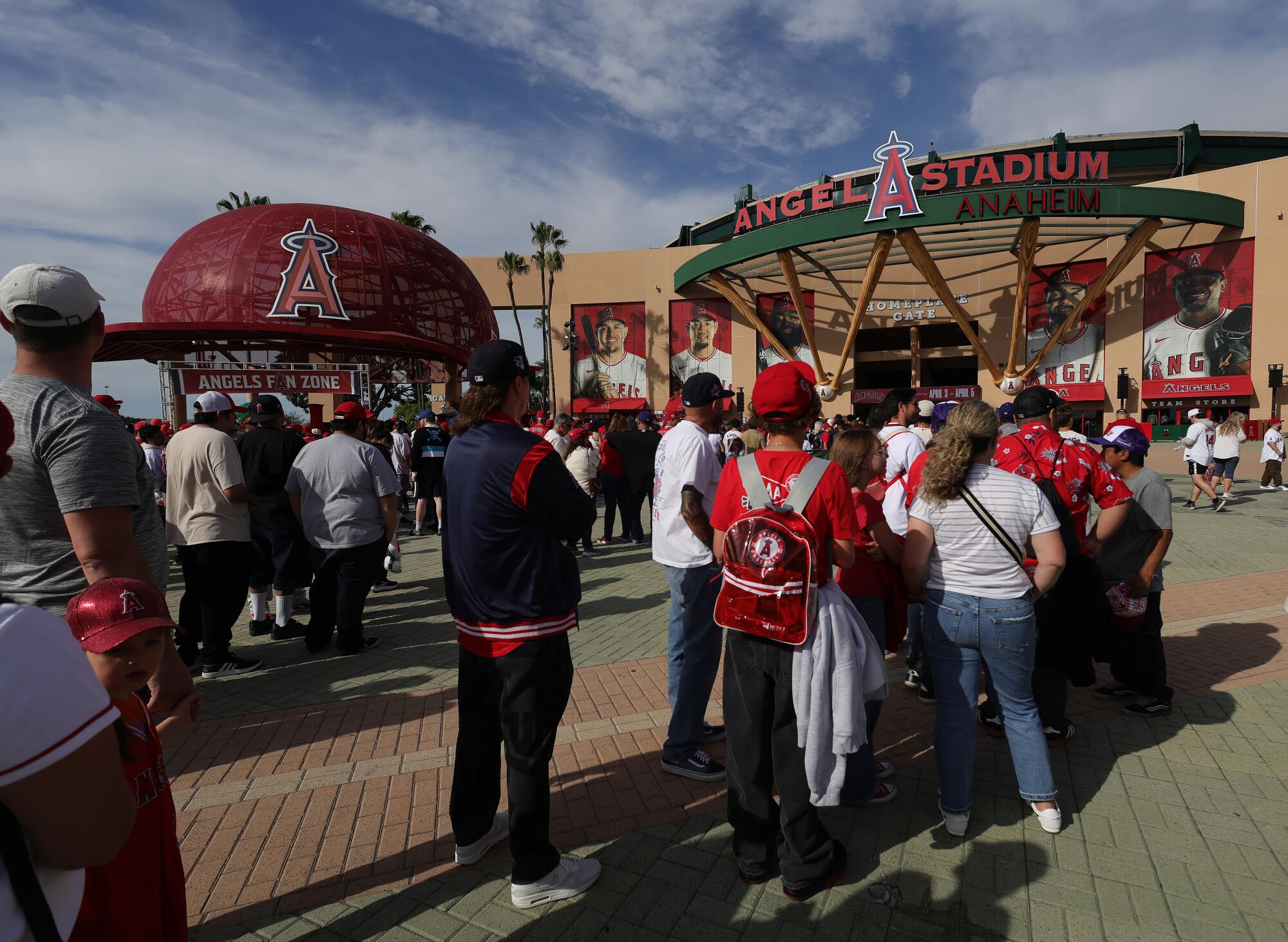
Angels fans stand in front of the stadium before the team’s home opener against the Seattle Mariners on Friday night.
(Ronald Martinez / Getty Images)
Yes, Jose Bocanegra of Chino said, he would be. But for Moreno to say winning was not a top fan priority?
“That’s crazy,” Bocanegra said. “If you’re not in it to win it, then what are we doing?”
How about the fan in the Nolan Ryan jersey? He held his 7-year-old daughter atop his shoulders. She wore a Mike Trout jersey, smiled broadly, and clutched a cup of ice cream.
His name was Nate Ryan, from Hemet. He and his daughter attend Dodgers and Angels games, but they particularly like visits to Angel Stadium. His daughter loves the rally monkey and the free games in the Pac-Man arcade, and he appreciates Moreno’s focus on affordability.
“The Angels are more economical,” Ryan said. “We have a good time.”
Jarod Venegas of Corona dressed in a white wrap, wearing a red cap topped by a gold halo. He was about to spend nine innings as — you guessed it — an angel in the outfield.
“I believe we have a team that can be the best,” he said.
What exactly do you mean by best?
“I mean World Series champions,” he said.
Venegas had something to say about fan priorities.
“Winning is our No. 2 priority,” he said. “No. 1 is getting a new owner.”
Johnny Estrada of Corona wore a T-shirt with eight lines on the back. All eight lines read the same: “Sell the team.”
He said he loves the team, supports the players, and does not believe Moreno chose his words poorly.
“I don’t necessarily feel it came out wrong,” Estrada said. “I feel he hasn’t cared for a while.”
Anaheim Mayor Ashleigh Aitken, who remains irked by Moreno branding the team with a Los Angeles name, has been a season-ticket holder far longer than she has been mayor. She’ll give Moreno a pass on his comments.
“I think it was a misstep,” Aitken said. “I’m willing to give him the benefit of the doubt. He knows that winning, for a true fan, is one of the most important things. Winning is a priority for our players. Winning is a priority to the loyal fan base.”
Even more so, perhaps, to the casual fans, the ones that determine whether the Angels sell three million tickets in any given year.
The Angels sold 2.6 million tickets last year, a testament to the strength of the market amid a second consecutive last-place finish.
The “Big A” sign outside Angel Stadium on Friday during the team’s home opener.
(Ronald Martinez / Getty Images)
However, attendance has fallen 20% over the past 20 years, a span that includes one postseason series victory and the current streaks of 10 seasons with losing records and 11 seasons without a playoff appearance.
Friday’s home opener was sold out. However, as of Friday afternoon, resale markets listed tickets for as little as $7 for Saturday’s game and $4 for Sunday’s game.
This is a great fan base, to me much more frustrated than angry, waiting to erupt in joy. The fan festival was dominated by fans wearing “sell” jerseys but a variety of Trout jerseys — home white, road gray, alternate red, City Connect, All-Star, World Baseball Classic, even one from the Salt Lake Bees.
Trout’s loyalty has been reciprocated by the fans. Moreno could feel that love too, with a renewed commitment to the excellence the Angels he displayed in his first decade as owner.
In Anaheim, the thunder sticks were glorious. Moreno does not want to sell at the moment, so best to demonstrate a dedication to returning October to the Angels’ schedule, lest their fans take home their giveaway calendars from the home opener and start the countdown to “wait ‘til next year.”
CHICAGO — Matthew Boyd struck out 10 while pitching into the sixth inning, and the Chicago Cubs beat the Angels 6-2 on Wednesday.
Nico Hoerner had three hits for Chicago on a chilly and windy afternoon at Wrigley Field. Matt Shaw had two hits and two RBIs, and Alex Bregman reached three times in the rubber game of the three-game series.
Boyd (1-1) yielded two runs, one earned, and two hits over 5 2/3 innings in his second start of the season. The left-hander was tagged for six runs in 3 2/3 innings in a 10-4 loss to Washington on opening day.
Zach Neto had two of the Angels’ four hits. Yusei Kikuchi (0-1) was charged with five runs and six hits in 5 1/3 innings.
Chicago grabbed control with five runs in the third inning. Miguel Amaya walked and scored from first on Hoerner’s double into the gap in left-center. Bregman singled in Hoerner, and Dansby Swanson drove in Ian Happ with a sacrifice fly. Shaw and Pete Crow-Armstrong contributed two-out RBI singles.
It looked as if first-year Angels manager Kurt Suzuki wanted a replay review of the play at the plate when Amaya scored but was denied because he took too long to decide on the challenge.
The Angels chased Boyd while scoring two runs in the sixth. Jo Adell singled in Neto, and Mike Trout scampered home on an error on Bregman at third.
The Cubs tacked on an unearned run in the seventh. Trout dropped Carson Kelly’s leadoff fly ball to center for an error, and Kelly scored on Shaw’s one-out single.
Up next
Angels: Following an off day, LHP Reid Detmers (0-0, 5.79 ERA) starts for the Angels in their home opener on Friday night. RHP Bryan Woo (0-0, 3.00 ERA) takes the mound for Seattle.
Cubs: RHP Cade Horton (1-0, 2.84 ERA) starts the opener of a weekend series at Cleveland on Friday. LHP Joey Cantillo (0-0, 4.91 ERA) gets the ball for the Guardians.
CHICAGO — Edward Cabrera pitched six shutout innings, Ian Happ hit a solo homer and the Chicago Cubs beat the Angels 7-2 on Monday night.
Cabrera gave up one hit and walked one in his Chicago debut, delighting the crowd of 36,702 on a picturesque night at Wrigley Field. The 6-foot-5 right-hander was acquired in a January trade with Miami.
Carson Kelly and Moisés Ballesteros each drove in two runs for the Cubs (2-2) in the opener of a three-game series.
Yoán Moncada hit a two-run homer for the Angels (2-3) in their third consecutive loss. Ryan Johnson (0-1) yielded six runs and seven hits over 3⅓ innings in his first career start.
Angels star Mike Trout went 0 for 4 with two strikeouts after collecting six hits and walking seven times over the first four games of the season.
Johnson struggled with his control in the first, walking the bases loaded. Pete Crow-Armstrong reached on an 11-pitch walk ahead of Nico Hoerner’s sacrifice fly. Kelly made it 3-0 with a two-out fly ball that landed just out of the reach of a lunging Trout in shallow right-center for a two-run single.
The Cubs added three more in the third. Happ extended his homer streak to three games, and Ballesteros grounded a two-run single into right field.
Cabrera (1-0) struck out five while throwing 80 pitches, 49 for strikes. Colin Rea worked three innings for his first save of the season, striking out Moncada with two runners on for the final out.
HOUSTON — Isaac Paredes hit a tiebreaking two-RBI double with two outs in the eighth inning to help the Houston Astros to a 9-7 win over the Angels on Sunday despite a disappointing major league debut from starter Tatsuya Imai.
There were two outs in the eighth when the Angels intentionally walked Yordan Alvarez to give Houston runners at first and third. Alvarez stole second before Paredes hit a line drive off Drew Pomeranz (0-1) to put Houston on top 8-6.
Jose Altuve followed with a double to push the lead to 9-6.
Imai gave up three hits and four runs with four walks and four strikeouts in 2⅔ innings.
The Astros (2-2) are banking on him to have a big year after signing the right-hander to a three-year, $54-million contract following a stellar career in Japan where he was a three-time All-Star in eight seasons with the Pacific League’s Seibu Lions.
The Angels (2-2) had two on with one out in the ninth when Bryan King took over for Bryan Abreu. Nolan Schanuel hit an RBI single to cut the lead to two, but King struck out the next two batters for his first save.
Jorge Soler drove in three runs and Zach Neto hit a two-run homer for the Angels as they split the season-opening series.
The score was tied with one on and one out in the fourth inning when Neto made it 6-4 with his shot to the seats in left field.
Christian Walker’s two-RBI double with two outs in the fifth inning tied it 6-6.
Christian Vázquez drove in two runs with a single in Houston’s four-run second inning to give the Astros an early lead.
There was one out in the third when Imai walked Neto before he moved to third on a single by Mike Trout. Schanuel walked to load the bases and Soler cleared them with his double to the corner in left field to get the Angels within one.
Jo Adell’s two-out RBI single tied it at 4-4 and chased Imai.
Angels starter Jack Kochanowicz yielded four hits and six runs with five walks in four innings.
HOUSTON — Carlos Correa and Isaac Paredes each drove in two runs and sparked an eight-run sixth inning for the Houston Astros in an 11-9 victory over the Angels on Saturday night.
Trailing 6-4, the Astros tied it on a single by Correa and a throwing error by Angels catcher Logan O’Hoppe. Houston took a lead on a single from Christian Walker.
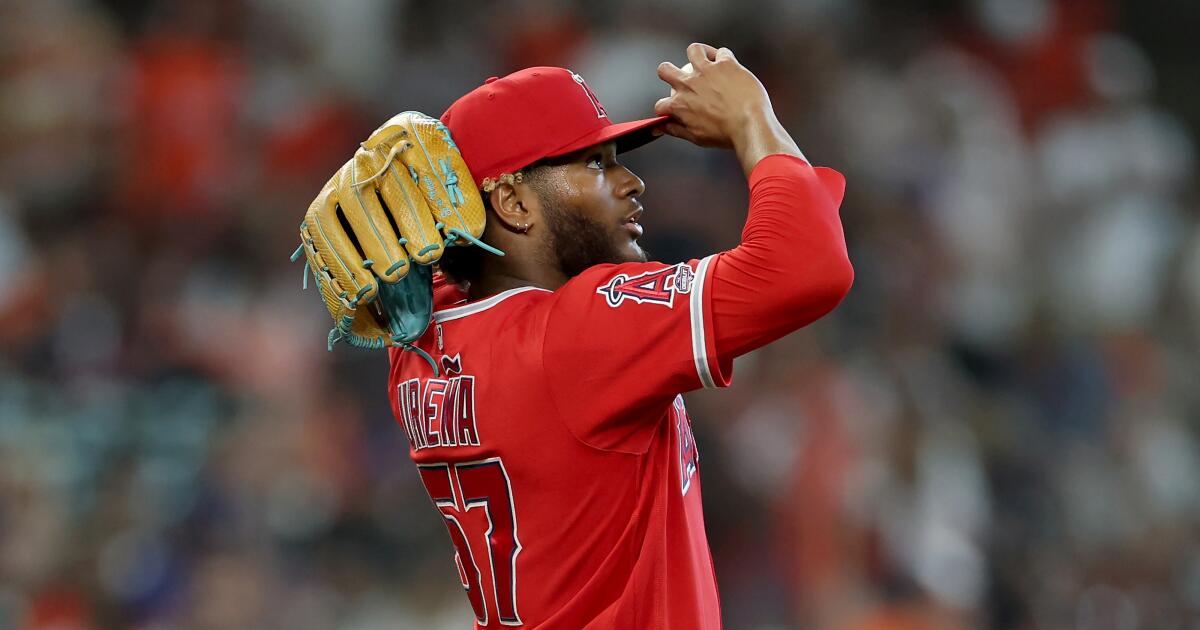
The Astros tagged Angels reliever Walbert Ureña (0-1) for six runs on four hits in one inning.
Houston blew it open off a two-run single by Yainer Diaz and a two-run double off the right field wall from Jake Meyers to make it 11-6. The eight runs is the most scored in the sixth inning by Houston since scoring 10 against the Dodgers on July 4.
An Angels bullpen that had registered 7⅔ innings of scoreless baseball to start the season gave up eight runs between Ureña and Joey Lucchesi in the sixth inning alone.
Houston trailed 6-0 in the fifth, but a two-run double by Paredes chased Angels starter Reid Detmers.
Detmers, who was making his first regular-season start since Sept. 27, 2024, gave up three runs on six hits and struck out nine in 4⅔ innings.
Kai-Wei Teng (1-0) made his Astros debut in the fifth inning. Teng was acquired from the San Francisco Giants in January. He gave up no runs on one hit, struck out two and walked one in 2⅓ innings to register his first win.
Oswald Peraza and Jorge Soler homered in back-to-back innings to make it 3-0. Nolan Schanuel hit a three-run homer in the ninth to make it 11-9. The Angels have eight homers as a team, which tops the majors.
Cristian Javier gave up six runs on four hits, striking out one and walking four in 4⅔ innings.
In his second game with the Angels, Lowe broke a 1-1 tie in the second when he hit a first-pitch fastball from Mike Burrows for a three-run homer. Lowe was acquired by the Angels in a trade from the Tampa Bay Rays on Jan. 16.
Trout’s fifth inning solo home run was part of a three-hit game, and it marks the first time in his 16-year major league career that he’s gone deep in his first two games of a season.
Neto added a solo shot leading off the ninth inning for his second extra base hit of the night.
The long balls were in support of an Angels staff led by Yusei Kikuchi, who allowed two runs on eight hits over 4⅓ innings. The bullpen quartet of Chase Silseth, Ryan Zeferjahn (1-0), Sam Bachman and Jordan Romano combined for 4⅔ scoreless innings.
Burrows (0-1), who was making his Astros debut after he was traded from the Pittsburgh Pirates on Dec. 19, surrendered five runs on nine hits over 5⅔ innings. He struck out six.
Yordan Alvarez hit a home run for the Astros, while Carlos Correa went two for three with a walk.
The Angels are off to a 2-0 start for the first time since 2007. The Astros have started 0-2 for the second time in three seasons under manager Joe Espada.
Up next: Astros RHP Cristian Javier faces Angels LHP Reid Detmers when the series continues Saturday.
HOUSTON — Mike Trout homered to launch what he hopes will be a bounce-back year, leading the Angels to a season-opening 3-0 win over the Houston Astros on Thursday.
Trout also walked three times and played center field for the first time since April 2024. The three-time MVP played 130 games last season, his most since 2019 because of various injuries.
Making his franchise-record 14th opening day start, the 34-year-old Trout broke a scoreless tie in the seventh inning when he sent a 96 mph fastball from reliever AJ Blubaugh (0-1) 403 feet onto the train tracks in left center. It was his fifth opening day homer, also a club record.
The Angels snapped an eight-game road losing streak in season openers, starting 1-0 on the road for the first time since 2013.
Oswald Peraza hit an RBI single in the eighth and Nolan Schanuel homered in the ninth.
José Soriano (1-0) allowed two hits and four walks in six innings while striking out seven. Four relievers completed the three-hitter, with Jordan Romano working the ninth to earn the save in his Angels debut.
Hunter Brown started for Houston and allowed four hits and four walks in 4⅔ innings. He struck out nine.
The Astros went 0 for 7 with runners in scoring position while stranding nine runners.
Houston designated hitter Yordan Alvarez may have been robbed of a home run in the first inning because the retractable roof at Daikin Park was closed. Alvarez hit a towering shot toward the right-field foul pole, but it ricocheted off a horizontal rafter and landed in foul territory.
It was ruled a foul ball. The Astros challenged, and the call was upheld after a review. Alvarez later struck out swinging.
Up next: The teams resume the four-game series on Friday, with lefty Yusei Kikuchi starting for the Angels opposite right-hander Mike Burrows.
This is the golden age of baseball in Southern California. The Angels heralded its dawn.
In 2002, the Angels won the World Series, the first of six postseason appearances within eight years. The Dodgers had played pretty good ball for more than a century, but they never had done that.
Angel Stadium was the place to be. The rally monkey was all the rage. The team nurtured a wave of young talent to surround Hall of Famer Vladimir Guerrero. In 2009, the final year of that run, the Angels drafted future Hall of Famer Mike Trout. In 2011, for the first and only time, the Angels sold more tickets than the Dodgers.
Neither the Angels nor the Dodgers made the playoffs in 2010, 2011, or 2012. Since then, the Dodgers have made 13 consecutive postseason appearances, with three World Series championships to show for it. The Angels have made one, and they did not win a game.
Never — and this includes the Dodgers’ time in bankruptcy court — have the fates of the two Los Angeles franchises been so disparate. In 2026, the Dodgers could win their third consecutive World Series championship, and the Angels could finish in last place for the third consecutive year.
At a time major league owners would like you to believe market size equals destiny, the team with baseball’s longest postseason drought plays in the second-largest market in North America.
Today, however, we come not to bemoan the bad times but celebrate the good times, for the Angels and Dodgers.
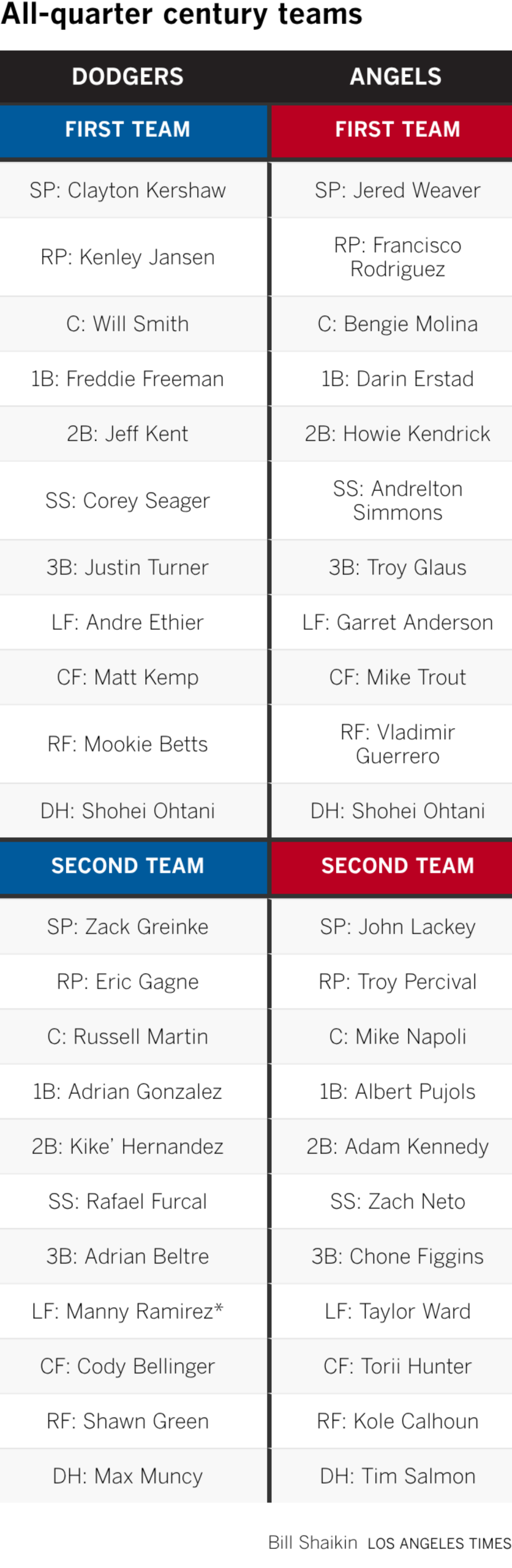
The century is a quarter old. So here are our quarter-century teams for both the Angels and Dodgers, based solely on performances for those teams. In a few places, we included a deserving player at a secondary position, if his primary position was fully stocked. Let us know where we got it right, and where we didn’t.
And, while you’re there, you’ll see the story of our golden age in a nutshell. Of the 22 players on the Dodgers’ first and second teams, 11 were on at least one of the World Series championship teams this decade. Of the 22 players on the Angels’ first and second teams, only four played for the Angels this decade.
One was Shohei Ohtani, the first-team designated hitter for both teams.
*We considered how long someone played for the Dodgers or Angels during this century, as well as how well someone played, but we’re making an exception here for two reasons: one, left field has not been a position of strength and depth for the Dodgers; and, two: Manny Ramirez’s two-month “Mannywood” run after the Dodgers traded for him in 2008 was simply astonishing: He played 53 games and drove in 53 runs, batting .396 with 17 home runs and a 1.232 OPS. In the playoffs, he batted .520 in eight games, hitting four home runs and driving in 10 runs, with a 1.747 OPS. The two-month “Mannywood” run was good for 3.5 WAR — the same WAR Freddie Freeman delivered over the entire 2025 season. (And, yes, in May of the following year, Ramirez was suspended for violating baseball’s drug policy.)
At the dawn of the 2025 season, we published a column with the headline, “What’s the future for aging Angel Stadium? It feels like an increasingly uncertain one.”
With opening day 2026 upon us, we’d like to update that: “What’s the future for the Angels? It feels like an increasingly uncertain one.”
I don’t mean to be an alarmist. Nothing is happening today, or tomorrow, or in the very near future.
However, the Angels’ stadium lease expires in six years, so what might happen beyond then is starting to come into focus. Angels owner Arte Moreno turns 80 this summer. Moreno — or a new owner, if Moreno eventually sells the team — could simply exercise options to extend the lease for another six years.
But that would not resolve the larger issue of replacing or renovating Angel Stadium. In the coming months, the city expects to release an assessment of what it would take to keep the stadium up and running for years to come, and that could trigger a debate between the city and the Angels about who should pay for what.
The Angels are frustrated by all of this, and in particular by what they consider the curiously timed skirmishes over their 21-year-old Los Angeles name. They are annoyed that, for the second consecutive season, city issues have detracted from the hope and faith and joy that surrounds opening day. It is the city, after all, that walked away from two deals that would have secured the Angels’ long-term future in Anaheim.
During negotiations for the last deal, city officials made clear that keeping the Angels was the top priority, even if Anaheim could make more money selling the stadium property to a developer that would not need to retain the stadium.
Now, with six years left on the lease and no commitment beyond then, the mayor of Anaheim says it is time to prepare for a future with or without the Angels.
“We need to plan for what we see as a vision for that property when the lease has expired,” Mayor Ashleigh Aitken told me. “That’s going to take time. No matter how that deal goes, we’re not breaking ground on any project next year.
“But what we need to do, whether it includes the Angels — which I hope it does — or not, is come up with a vision that includes everything residents want to see happen on that land. And only then can we truly advocate for a project that makes sense for us.”
On the day of the home opener last season, Aitken issued an open letter inviting Moreno to meet with her for “an open and honest conversation about the future of baseball in Anaheim” and listing eight starting points for negotiations on a new deal, including the Angels’ restoration of the Anaheim name.
“They have not reached out to us about reopening negotiations for potential development around the property,” Aitken said.
Moreno previously explored other potential ballpark sites, including Tustin in 2014 and Long Beach in 2019.
In Tustin, the targeted land is no longer available. In Long Beach, the proposed waterfront lot remains vacant, but the challenge remains too: Over 81 games each season, how would tens of thousands of fans drive into and out of a ballpark primarily accessible by a single freeway?
For the Los Angeles Angels, perhaps the solution could be found in Los Angeles County.
The Dodgers could bar every other major league team from moving into L.A., but not the Angels. Under MLB rules, neither team could stop the other team from moving anywhere within Los Angeles County or Orange County.
The logical landing spot would be Inglewood, where the Rams, Chargers and Clippers have moved since 2020. Inglewood Mayor James Butts said Sofi Stadium and Intuit Dome have helped to revitalize the city, with unemployment down, home prices up, and municipal revenue up.
“Before, we were known for gangs and crimes and poverty,” Butts told me.
“Now, we are known as the sports and entertainment capital of the western United States.”
How about a baseball stadium in place of the Forum?
“The Forum parcel is absolutely not large enough for a baseball stadium,” Butts said.
Butts said he believes a baseball stadium there would require about 170 acres for the stadium and surrounding parking. Angel Stadium and its surrounding parking lots cover about 150 acres.
On the other hand, the Athletics are building a ballpark on a nine-acre site in Las Vegas, where nearby parking, entertainment and dining options already exist, with more on the way, and with the A’s not responsible for any of that. The same could be true for the Angels in Inglewood, with Rams owner Stan Kroenke and Clippers owner Steve Ballmer developing the land around the sports facilities.
However, Butts said he did not envision baseball coming to Inglewood, at least so long as he remains the mayor. Not enough room in town, he said.
“We’re maxed out when it comes to sports,” Butts said. “We are not going to reduce the housing stock and move residents out to have a baseball team.”
Anaheim has one, plus a 150-acre site perfect for a new stadium surrounded by restaurants and shops and homes. There will be days to be anxious and worried about the Angels’ future in the city they have called home for 60 years. Today is not one of them.
Take it from the mayor of Anaheim, who told me that even after telling me why she wants the city attorney to look into whether the Angels are violating their stadium lease.
“Opening day, to me, is nothing about clauses in a contract,” Aitken said. “It’s about family traditions. It’s about kicking off summer. And it’s about getting so many factions and neighborhoods of Anaheim together for a singular purpose, which is cheering on our hometown boys. That’s the beauty of baseball.”
And, as a lifelong Angels fan, she had one more thing to say.
“Right now,” Aitken said, “we’re tied for first place.”
Two decades after owner Arte Moreno decided the Angels should play under the Los Angeles name, elected officials representing Anaheim are pursuing two paths toward getting their hometown back into the team name.
Assemblyman Avelino Valencia, whose district includes Angel Stadium, has introduced state legislation that could require any sale or new lease of the stadium property be conditioned upon the team reverting to the Anaheim Angels name.
Meanwhile, Anaheim Mayor Ashleigh Aitken has asked the city attorney to explore whether the Angels have violated their current lease by dropping the Anaheim name from legal documents.
Valencia’s bill — dubbed the “Home Run for Anaheim Act” — aims to mandate what the city of Anaheim could not negotiate in its ill-fated deal with Moreno in 2019: If a team owner wants to develop the parking lots around the city stadium, the team should carry the city’s name.
“The Angels have been supported by the city and its residents for 60 years,” Valencia said. “I think it’s rightfully owed to the residents that, if the team wants to play in Anaheim and be in partnership with Anaheim when it comes to future developments of that stadium and surrounding property, then the name should also resemble that.”
Angels spokeswoman Marie Garvey said the team had no comment.
The Angels’ current stadium lease extends through 2032, with the team holding options to extend the lease through 2038.
The city and team had agreed on a deal in which the Angels would remain in Anaheim through 2050, with the team buying the 150-acre stadium property for $150 million, renovating or replacing the stadium, and building a ballpark village atop the parking lots.
The state objected, however. The Surplus Land Act requires public property up for sale must first be made available for affordable housing, and the city negotiated only with the Angels. The city agreed to a $96-million settlement.
The Anaheim City Council ultimately killed the deal three years later, after an FBI investigation uncovered — and former mayor Harry Sidhu acknowledged in a plea agreement — that Sidhu provided confidential information to the team “so that the Angels could buy Angel Stadium on terms beneficial to the Angels” and that he “expected a $1,000,000 campaign contribution from the Angels.” The government has not alleged any wrongdoing by the Angels.
Valencia’s bill was developed in consultation with city leaders and publicly endorsed by Aitken and former mayors Tom Daly and Tom Tait.
Under the bill, if the city can obtain an exemption from the Surplus Land Act, the team could not buy or lease Angel Stadium unless “materials refer to that team as the Anaheim Angels.”
The bill would only apply to Anaheim, and its provisions would not take effect “if the city of Anaheim is able to come to an agreement with the Major League Baseball team known as the Los Angeles Angels about their affiliation.”
Valencia said the city could make a case for an exemption because he believed the Surplus Land Act was designed for smaller properties like school sites and municipal office buildings. He said the community should have the primary say in how such land should be used, even if that might mean less housing on the Angel Stadium site.
“We definitely need more housing because it’s so dang expensive to live, but the amount of housing (in Anaheim) that has gone up in the last 10, 15 years, I think, mitigates some of that,” Valencia said.
“I think folks in Anaheim think that Anaheim is doing their fair share of developing housing. I don’t want to muddy the concept by saying Anaheim is saying, ‘We don’t need any more housing. We have been so proactive in that space. But I think people are going to be thrilled that we want to make the Angels have Anaheim back in the name.”
In 2005, after city officials declined Moreno’s request to change the team name from Anaheim Angels to Los Angeles Angels, the owner adopted the “Los Angeles Angels of Anaheim” name. The city sued and lost, with a jury finding that the Angels had not violated a stadium lease requirement that the team name “include the name Anaheim therein.”
When the city sued the Angels and asked for an injunction to stop the name change pending trial, Orange County Superior Court Judge Peter Polos denied the request. He did, however, warn the Angels he would grant the injunction if the team dropped the “of Anaheim” and simply called themselves the Los Angeles Angels.
“When it comes to official designations, and to how they’re registered, I want us to look into how Anaheim is being used by the team in any official filings,” Aitken said, “and what their requirements are to do so.”
When Aitken asked City Attorney Robert Fabela to investigate, Fabela said the matter would be discussed in closed session as a “potential litigation item.”
The Astros had been a mainstay atop the AL West for eight years — claiming seven division titles during that time — but now the division appears to be under new management.
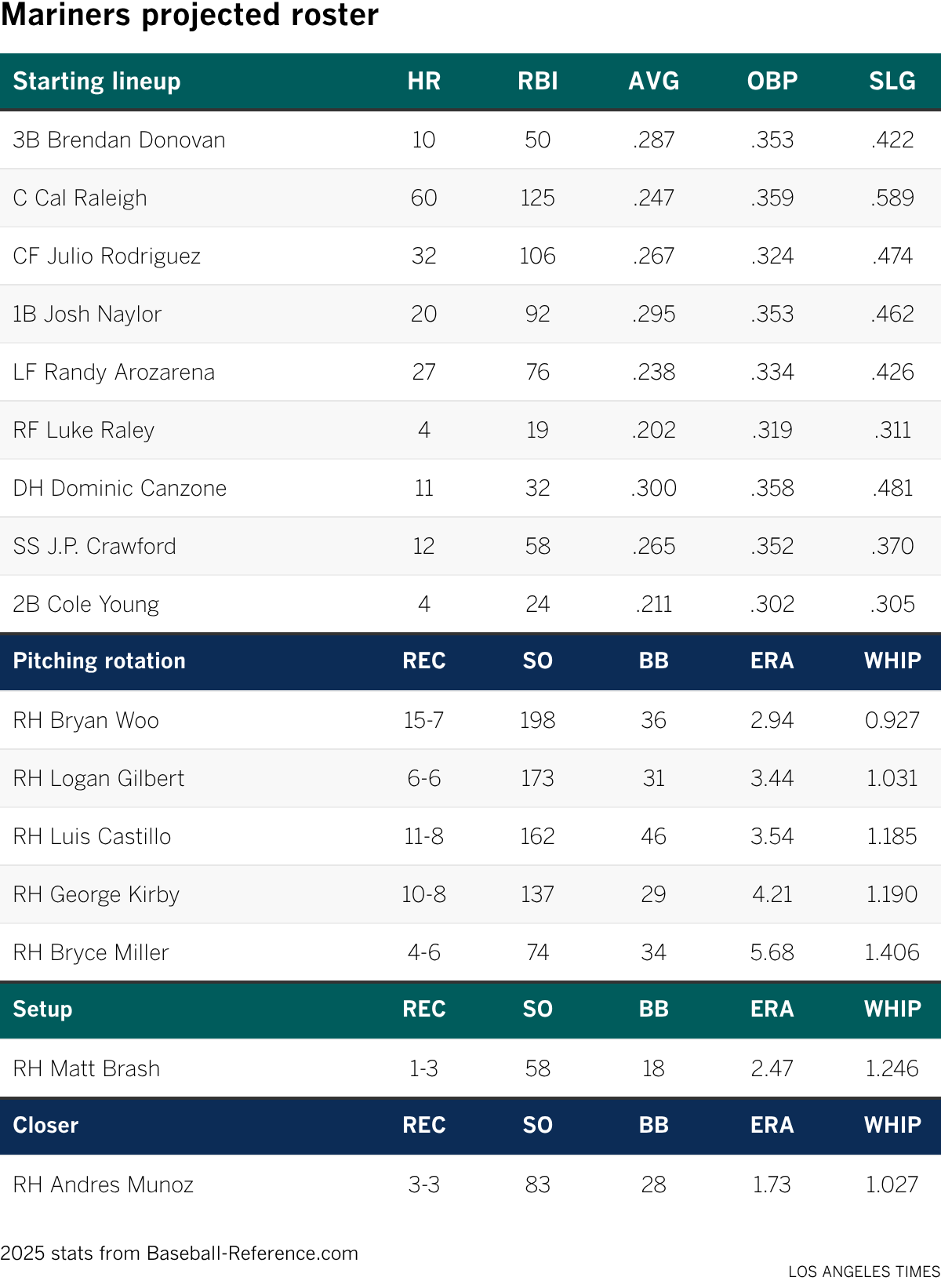
Last season, the upstart Mariners finally broke through after years of promise, winning 90 games and claiming their first division crown since 2001. This season, the club hopes to take the next step forward and reach the World Series for the first time in franchise history. Seattle locked up cleanup man Josh Naylor to a five-year, $92.5-million contract, solidifying their lineup. The M’s also traded for super utilityman Brendan Donovan, who, as a member of the St. Louis Cardinals, was named an All-Star for the first time in his career last season.
The Astros, in their third year under manager Joe Espada, are hoping to return to the top of the division. They’ll have their work cut out for them, with just seven players remaining from the Astros’ 2022 World Series team.
Even after a pair of mediocre seasons, the Rangers remained aggressive this winter, making a pair of blockbuster trades, acquiring frontline starter MacKenzie Gore from the Nationals and outfielder Brandon Nimmo from the Mets. Ex-Marlins manager Skip Schumaker will take the reins from four-time World Series champion Bruce Bochy, who did not return as the club’s skipper.
Entering their second season playing in Sacramento, the Athletics grabbed veteran Jeff McNeil from the New York Mets in a trade, while locking up promising youngsters Tyler Soderstrom and Jacob Wilson to long-term extensions. The Angels installed rookie manager Kurt Suzuki, replacing Ron Washington.
1 | Seattle Mariners
2025 | 90-72, 1st in West
Last year in playoffs | 2025
After bidding farewell to Eugenio Suárez and Jorge Polanco, the Mariners are betting on young infielders Cole Young and Colt Emerson. Newcomer Brendan Donovan should provide a nice spark to the M’s lineup. 26-year-old Bryan Woo emerged as the club’s ace last season while George Kirby missed the first two months with shoulder inflammation and was never quite right. A healthy Kirby could make a huge difference this season for an already formidable M’s rotation.
2 | Houston Astros
2025 | 87-75, 2nd in West
Last year in playoffs | 2024
Even after an offseason in which the Astros lost stars Kyle Tucker, Alex Bregman and Justin Verlander, the team still led the West for most of the season in 2025. One player to watch will be second-year outfielder Cam Smith, who the Astros acquired as the centerpiece of the Tucker trade. It was a tale of two seasons for Smith, who dazzled with a .297/.357/.443 slash line through his first 75 big league games, but hit a snag over his next 59 games, slashing just .153/.248/.232.
3 | Athletics
2025 | 76-86, 4th in West
Last year in playoffs | 2020
Two years after losing 112 games, the A’s showed encouraging progress in their first season in Sacramento. First baseman Nick Kurtz ran away with AL rookie of the year honors, winning the award unanimously, with shortstop Jacob Wilson placing second. Between Kurtz (36), catcher Shea Langeliers (31), designated hitter Brent Rooker (30), left fielder Tyler Soderstrom (25) and right fielder Lawrence Butler (21), the A’s had five players hit for 20 or more homers last season.
4 | Texas Rangers
2025 | 81-81, 3rd in West
Last year in playoffs | 2023
The Rangers have posted just one winning season over the last 10 years, and it came in 2023, the same year that the club won its first-ever World Series. In order for new manager Skip Schumaker to return the Rangers to form, he’s going to need his position players to bounce back in a big way. Freshly-acquired MacKenzie Gore should add length to the Rangers’ rotation, while former Vanderbilt teammates Jack Leiter and Kumar Rocker will have an opportunity to establish themselves as formidable major league starters.
5 | Angels
2025 | 72-90, 5th in West
Last year in playoffs | 2014
The Angels upped their win total by nine games from 2024 to 2025, and the club could continue to progress in its first season under rookie manager Kurt Suzuki. General manager Perry Minasian enters the final year of his contract, after the Angels failed to post a winning record in each of his first six seasons.
The Dodgers’ rotation order is set for the first homestand of the season.
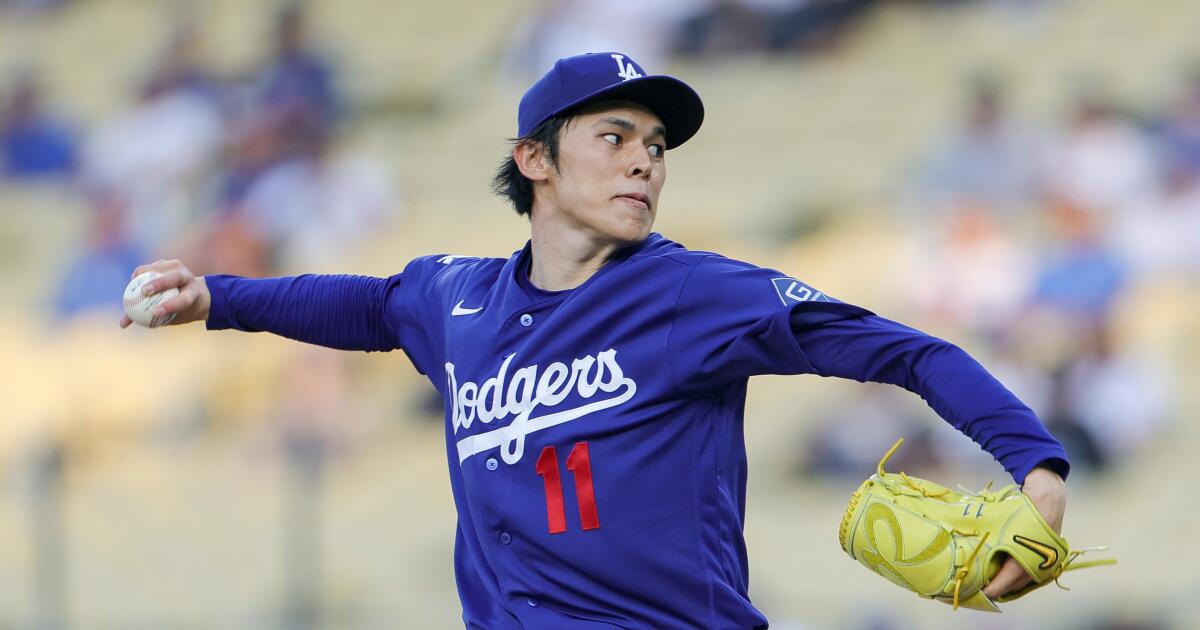
To round out the series against the Arizona Diamondbacks, after Yoshinobu Yamamoto takes the mound Thursday on opening day, he’ll be followed by Emmet Sheehan and Tyler Glasnow. Roki Sasaki is penciled in for Monday against the Cleveland Guardians, followed by Shohei Ohtani on March 31.
Off days on Sunday and April 2 make it possible for the Dodgers to give all their pitchers at least five days’ rest between their first and second starts without needing a sixth starter.
Left-hander Justin Wrobleski is pegged to be that additional starter when the schedule features less frequent days off. In the meantime, he’ll be available to throw multiple innings out of the bullpen.
After starting the season for the Dodgers in Tokyo last year, Yamamoto is looking forward to opening day at Dodger Stadium.
“It’s going to be a different game, and with a different atmosphere,” Yamamoto said through an interpreter. “And then we’re coming off the championship year, then this is the first time I’ll be pitching in front of the Dodgers fans [since then].”
Yamamoto, who was on the mound for the final out of the 2025 season, hasn’t pitched at Dodger Stadium since Game 3 of the National League Division Series against the Philadelphia Phillies.
Sheehan claimed a regular spot in the rotation after returning last June from Tommy John surgery rehab. He had a 2.82 earned-run average through 15 appearances last season.
“I was maybe throwing bullpens right now a year ago,” Sheehan said after his last spring start. “So it’s definitely nice. That’s the main thing, to have my health. Grateful for that every time.”
Sheehan wrapped up Cactus League play with a 5.91 ERA in three starts, but he was encouraged by the progress he made in syncing up his delivery.
Glasnow capped his strong spring with five innings of one-run baseball against the Angels on Sunday.
“When everything’s lined up and feeling good … I think a lot of the other stuff follows,” Glasnow said. “And I was just able to go out and be myself.”
He recorded 11 strikeouts against the Angels, leaning on his curveball as his putaway pitch. It generated a 72% whiff rate, according to Statcast.
“Having my curveball feel so good, I kind of just leaned on it,” Glasnow said. “I’m sure things will change in-season, game to game. But tonight, it was a pretty obvious game plan for me.”
ANAHEIM — Dodgers infielder Alex Freeland punctuated his case to make the opening day roster with a home run in the team’s last Cactus League game Saturday.
Then on Sunday, before the first game of the Freeway Series with the Angels, the Dodgers announced the results of the spring training position battle between Freeland and Hyeseong Kim: the team optioned Kim to Triple-A Oklahoma City.
“It’s one of those things that you could argue both sides of either decision, as far as Alex or Hyeseong,” manager Dave Roberts said Friday. “And so I just don’t think it’s clear cut. We still haven’t seen Hyeseong a bunch. Alex, I think he’s taken great at-bats, the numbers, the surface line certainly isn’t there, but it’s still spring training. There’s just deeper conversations that are going to be had.”
Kim started off the spring swinging a hot bat. But he went 1-for-12 in the World Baseball Classic. Freeland finished Cactus League play with a .116 batting average.
Taylor, 35, hit .186 with a .256 on-base percentage, two homers, 12 RBIs and two steals in a combined 58 games with the Dodgers and Angels last season.
He batted .248 with a .327 on-base percentage, 110 homers and 443 RBIs during a 12-year career. Taylor made the NL All-Star team while playing for the Dodgers in 2021.
Strickland, 37, went 1-2 with a 3.27 ERA and one save in 19 relief appearances for the Angels last season. He has a 26-25 record with a 3.39 ERA and 30 saves in 499 career major league appearances, all in relief.