Brad Pitt and Angelina Jolie‘s youngest daughter, Vivienne, is seeking to drop “Pitt” from her name, according to People.
The 18-year-old filed a petition in Los Angeles County Superior Court to remove her father’s surname from her legal name, Vivienne Marcheline Jolie-Pitt. The reason for her request was listed as “personal.”
The request is a common theme among the Jolie-Pitt siblings since the couple’s marriage was formally dissolved in 2019 and divorce became finalized in 2024 after a long legal battle.
In August 2024, the court granted Shiloh’s request to drop the surname. Zahara and Maddox have both asked for the same, but their petitions are pending hearings.
Before her request, Vivienne had already informally dropped the last name. In May 2024, the youngest of six was credited as “Vivienne Jolie” on the Playbill for “The Outsiders,” a play she co-produced with her mom.
The couple wed on Aug. 14, 2014, nine years after they met while filming their movie “Mr. and Mrs. Smith.” Jolie filed for divorce in September 2016 after the couple allegedly had a physical altercation aboard a private plane, which also involved several of their children.
The Los Angeles County’s Department of Children and Family Services and the FBI investigated the alleged physical altercation between Pitt and his son Maddox. No charges were filed against Pitt.
The court has scheduled a hearing for Vivienne’s request for Nov. 2.
Hello! I’m Mark Olsen. Welcome to another edition of your regular field guide to a world of Only Good Movies.
I have been writing this newsletter, most weeks, for more than 10 years now. I wouldn’t even want to do the math on how many of them that would be, or just how many movies I have written about. That count is about to come to a close as this is the last one.
Don’t worry: I will still be covering the world-class scene of moviegoing in Los Angeles as well as writing about a broad swath of films and filmmakers, just finding new ways to go about it.
When this newsletter began, it was a catch-all for movie coverage and related events from The Times and eventually settled into a curated survey of the best new releases each week. We helped figure out what you should go see. As theaters reopened following the closures forced by the pandemic, the repertory scene in Los Angeles exploded, with new audiences turning out for old movies in astonishing numbers.
We followed their lead, flipping the focus of the newsletter to the rep scene while still keeping an eye on new releases. Venues around the city had a newly revived energy to match audiences’ enthusiasm. The Academy Museum opened with two gold-standard theaters, while the American Cinematheque expanded the number of screens it programs. (Just recently, it added the historic Village Theater in Westwood.) The Vista began bringing first-run films in 35mm and 70mm, along with classic movies. Vidiots opened in Eagle Rock, helping to redraw the map of L.A.’s movie-loving community.
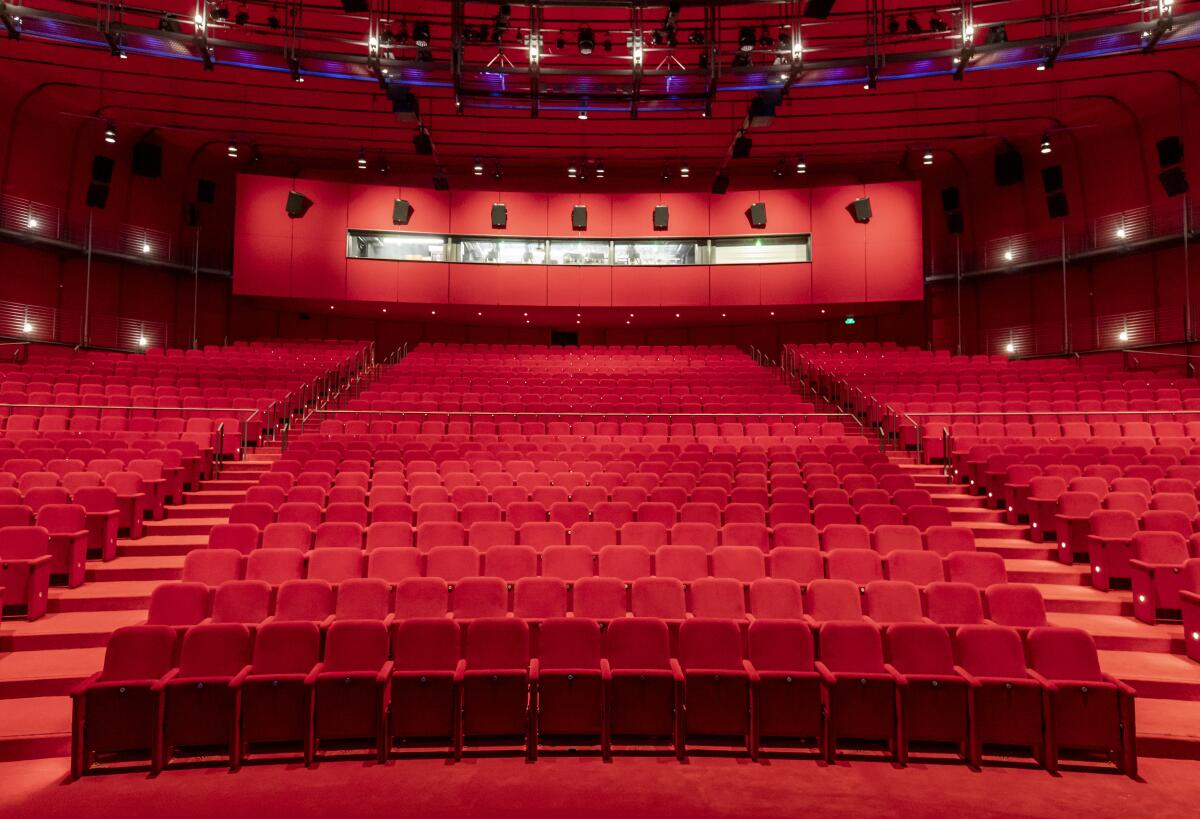
The David Geffen Theater at the Academy Museum seats a thousand and is often fully attended.
(Ricardo DeAratanha / Los Angeles Times)
The city has also seen the rise of itinerant pop-up series such as Mezzanine, Acropolis Cinema and Hollywood Entertainment pulling off must-see events. Smaller venues such as Now Instant Image Hall, 2220 Arts + Archives, Eastwood Performing Arts Center, Brain Dead Studios and the Philosophical Research Society have made a home to all kinds of movies. The Laemmle and Landmark chains have continue to play traditional arthouse releases and international films, while the Frida and Gardena theaters bring great movies to the South Bay.
Entities such as Revival Hub and MovieTown do a vital job of collating extensive listings info. (We will also continue to give monthly overviews of the best movies to see.) This is simply an incredible time for going to the movies in Los Angeles, arguably the best ever.
My main takeaway from the experience of working on this newsletter is confirmation of my belief in the movies themselves and the community of people around them. I was recently at a sold-out screening of Akira Kurosawa’s “Ran” and the idea of sitting with nearly a thousand other people watching a Japanese movie from the 1980s, each connecting to the events on screen in their own way, was deeply inspiring.
Among my favorite recent developments is how many venues now name the show’s projectionists as part of a screening’s introduction, which is always met with an enthusiastic round of applause. It is a reminder that what this is really about is people, dedicated to something we love.
And since this isn’t really a goodbye, it seems fitting to turn to the movies once again, as another week demonstrates why the scene here in Los Angeles is so truly special.
A tribute to Sam Neill
Sam Neill and Nicole Kidman on the set of 1989’s “Dead Calm.”
(Michael Ochs Archives / Getty Images)
Anyone looking for an example of just how intimate the screening scene in Los Angeles can be should make their way to the New Beverly Cinema on July 24. The theater already had a three-night double-bill of Rob Reiner’s “Misery” and Phillip Noyce’s 1989 thriller “Dead Calm” booked when news broke last weekend that actor Sam Neill had died at age 78.
The New Bev quickly announced that it would make one of those screenings into a tribute to Neill, who co-stars in “Dead Calm.” Director Noyce, along with co-star Billy Zane and filmmaker Roger Donaldson (who worked with Neill on 1977’s “Sleeping Dogs”) will all be there to celebrate their friend and colleague.
“Dead Calm” is a tight thriller set within the confines of a small sailing boat. Reviewing the movie when it was first released in 1989, Sheila Benson wrote, “Neill is probably one of the screen’s most underrated actors … ‘Dead Calm’ was probably far and away his nastiest assignment physically, yet his presence, sexuality and all, is absolutely vital to the balance of the story.”
Remembering the actor as part of a rundown of his greatest performances, Glen Whipp described Neill in “Dead Calm” as “part Cary Grant, part MacGyver.”
Two by Ross McElwee
Documentary filmmaker Ross McElwee in his 1986 movie “Sherman’s March.”
(Music Box Films)
Documentary filmmaker Ross McElwee helped to reinvent the form with his 1986 film “Sherman’s March,” which comes with the explanatory subtitle of “A Meditation on the Possibility of Romantic Love in the South During an Era of Nuclear Weapons Proliferation.”
Ostensibly a film about Union General William Tecumsah Sherman’s campaign of destruction during the Civil War, the movie actually ends up being about McElwee revisiting old girlfriends and forging a few new ones along the way, reflecting on his own campaign of romantic misadventure. As charming as it is revelatory, the movie is being rereleased in a new 4K restoration.
McElwee’s latest film, “Remake,” reflects on the death of his son Adrian and whether the director himself had a detrimental effect on the boy’s life. Reviewing “Remake,” Tim Grierson calls it “especially revealing — both in terms of the glimpses we get of this father-son relationship and of unsolved mysteries that linger just outside the frame.”
A weekend with Robert Rodriguez
Quentin Tarantino, George Clooney and Salma Hayek in the horror movie “From Dusk Till Dawn.”
(Academy Museum)
The Academy Museum will present “A Weekend with Robert Rodriguez” to celebrate the 30th anniversary of “From Dusk Till Dawn” and the 25th anniversary of “Spy Kids.” It speaks to Rodriguez’s undersung range as a filmmaker that one movie is a bawdy, gory comedy about a criminals on the run who encounter an ancient den of vampires, while the other is a family-friendly tale of two siblings who discover their parents are secret agents and must rescue them from a supervillain.
Rodriguez will not only be present to talk about both movies, he will be performing music each day with a different band.
Reviewing “From Dusk Till Dawn,” which was scripted by Quentin Tarantino, Jack Matthews said it was “a film nerd’s fever dream, a Frankenstein’s monster of used movie parts, deliberately mismatched styles, and deliriously implausible characters.”
Elaine May’s secret success
Dustin Hoffman and Jessica Lange in the movie “Tootsie.”
(Everett Collection / Columbia Pictures)
One of the most exciting things about the ongoing revival of L.A.’s repertory scene is the upheaval of the notion of the “canon.” What are the most lauded movies of all time and who gets to do the lauding? Case in point is the now widely accepted coronation of Elaine May as a towering creative figure, no longer relegated to being merely a fringe character unfairly saddled with the commercial failure of “Ishtar.”
May is credited as director on only four feature films, though she’s an uncredited writer on a number of other projects, perhaps most notably 1982’s comedy “Tootsie,” starring Dustin Hoffman as a struggling New York City actor who finds success when he lands a part by secretly posing as a woman. Directed by Sydney Pollack, who also makes a tremendous turn as Hoffman’s agent, the movie will be playing at Vidiots on Saturday.
Finding new moves
Wiley Wiggins and Patrick Riester in the movie “Computer Chess.”
(Kino Lorber)
The very first thing I ever wrote under the banner of Indie Focus was about how independent filmmakers such as Andrew Bujalski and Alex Ross Perry were working on 35mm at a time when mainstream Hollywood was very much forcing the idea of shooting on digital. So it only seems appropriate that this final edition of the newsletter should include something on Bujalksi, who has long been one of my favorite contemporary American filmmakers.
“Computer Chess,” Bujalski’s oddball experiment in using antiquated video equipment to tell a heady, offbeat story about a weekend chess tournament in the early ’80s, will screen in a 35mm print at Brain Dead Studios on July 24, presented by Mezzanine. Bujalski will be present, along with Blair Barnes, a filmmaker who will be showing the L.A. premiere of his short “sitrep,” also shot on an analog-era tube camera.
New this week
Matt Damon and Zendaya in the movie “The Odyssey.”
(Melinda Sue Gordon / Universal Pictures)
Sure to be one of the biggest movies of the year, Christopher Nolan’s adaptation of “The Odyssey” opens today. Los Angeles audiences have multiple venues to choose from that are showing the film in Nolan’s preferred Imax 70mm format — these theaters are among only a small number across the world that are doing this. Presenting a movie in Imax 70mm isn’t the easiest endeavor. Eloise Rollins-Fife has a report on how that’s actually done. Get your epic on.
Reviewing the movie, Amy Nicholson wrote, “Nolan refuses to tremble before the canon. Grabbing mighty scissors, he cuts and rejiggers Homer and a bit of Virgil to transform these classical texts into his type of tale: one fixated on memory, self-identity, destructive genius and the slippage of time. As ever, it’s light on sex, heavy on wine-dark angst.”
Kenneth Turan spoke to Nolan about the movie’s origins, saying, “I’ve been telling this story in all my films for years. It’s a family story, a love story, a revenge story, a war story, a coming-of-age story. It’s a very strong foundational text for me.”
Hello! I’m Mark Olsen. Welcome to another edition of your regular field guide to a world of Only Good Movies.
One of the big discoveries for me at this year’s Sundance Film Festival was the erotic thriller “Night Nurse,” which opens in theaters this week. A remarkably confident feature debut from writer-director Georgia Bernstein, the film is hypnotic and entrancing, with a powerfully sustained sense of mood and menace. Brought to life by two assured lead performances, the story is about a young woman (Cemre Paksoy) who takes a job as an attendant at a senior living community and is assigned to help a man (Bruce McKenzie) who quickly ensnares her into an ongoing phone scam in which he swindles other residents.
Taking cues from the likes of Catherine Breillat and David Cronenberg, there are moments where you start to feel turned on and then feel weird about feeling turned on. It’s delightful stuff, full of the unexpected and unnerving, with shifting power dynamics that destabilize everything. See it with someone you maybe aren’t so sure about.
‘Hudson Hawk’ will have its day
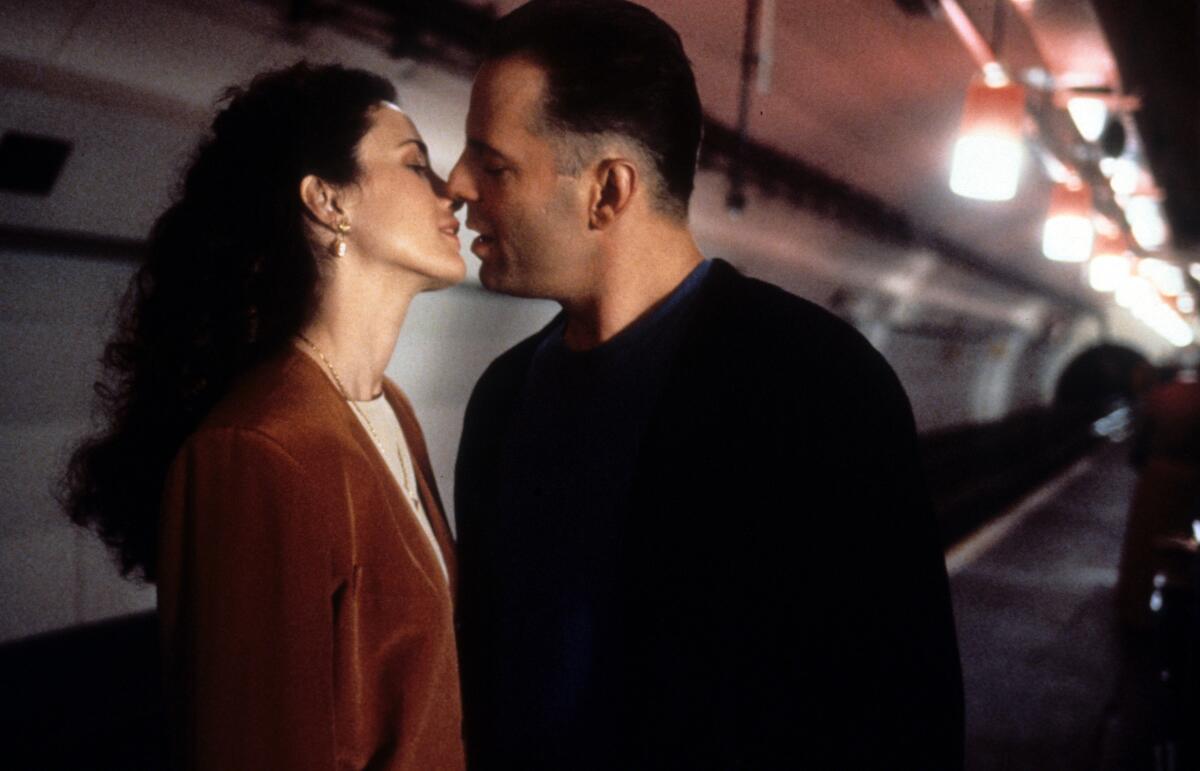
Andie MacDowell and Bruce Willis in the 1991 movie “Hudson Hawk.”
(Columbia TriStar / Getty Images)
Its name has become synonymous with box office bomb, with tales of an out-of-control production leading to terrible reviews and rejection by audiences. Yet 1991’s “Hudson Hawk” is one of those movies that over the years has seen its reputation slowly turn around and is now en route to becoming a cult classic in the vein of “Ishtar” or “Showgirls.”
On Monday at Brain Dead Studios there will be a 35th anniversary screening of the film in 35mm with director Michael Lehmann and co-writer Daniel Waters in-person. Presented by Hollywood Entertainment, the evening could be ground zero for the next stage of the misbegotten movie’s revival.
The movie is a playful buddy-comedy / caper-heist hybrid, starring Bruce Willis as the title character, a master thief newly released from prison who reteams with his old partner (Danny Aiello) as they are drawn into a convoluted conspiracy involving the CIA, a villainous ultra-rich couple (played with maniacal, scene-stealing glee by Richard E. Grant and Sandra Bernhard) and ancient designs by Leonardo da Vinci. Upending action movie conventions, “Hudson Hawk” is simply a fun hang.
On a recent video call together, there is a certain gallows humor shared by Lehmann and Waters over the film, which at the time threatened to derail both of their careers. Waters was already working on the script for Tim Burton’s “Batman Returns” by the time the movie came out, while Lehmann admits he spent some time in director jail — “I was in director federal penitentiary and death row for a while,” he says — before going on to direct films such as “Airheads” and “The Truth About Cats and Dogs.”
“You can’t escape a big failure in Hollywood,” he adds. “You have to be good-natured about the fact that you’ve made something that so many people hated when it came out, but that you feel still has some value — quite a bit of value, I think. And that eventually people would start noticing that.”
The project began as an idea between Willis and his friend Robert Kraft that snowballed into having action super-producer Joel Silver attached and a screenplay draft by “Die Hard” writer Steven E. De Souza. Eventually Lehmann became involved to direct and he helped bring on Waters, the two having worked together on the hit black comedy “Heathers.” (Waters had also worked with Silver on “The Adventures of Ford Fairlane.”) The reunited writer-director team set about subverting what began as a more conventional action movie.
“My intention was to turn that kind of movie on its head,” says Lehmann. “I thought people have seen these things so many times, they must be ready to see the truly odd version of it.”
“In the Olympics you can’t just go up and make any dive,” says Waters. “You tell the judges what dive you’re going to do and then they grade you. And ‘Hudson Hawk,’ we never told the judges what dive we were doing. I think people got angry: Wait a minute, you didn’t give us a Bruce Willis action movie.”
Leading up to the film’s release, there were reports of a shoot hijacked by a star whose ego was getting the better of him as he rode the wave of the success of the first two “Die Hard” movies. Lehmann admits the clash of personalities made for a complicated shoot.
“Of course, when you’re hired by Bruce Willis and Joel Silver to do what is essentially a vanity project of Bruce’s, you’re not going to have the kind of control that you have when you make a piece of personal filmmaking,” says Lehmann. “But it was really difficult to deal with somebody who, in theory, was one of my bosses as producer on the film and a big star, which is always a thousand-pound gorilla.”
Author David Hughes recently published “The Unmaking of Hudson Hawk,” a book on the film’s production, reception and afterlife. Calling from England, Hughes thinks the critical reappraisal and resuscitation of the movie has gained a bit of momentum — and is in danger of slipping.
“I feel like any day there’s going to be a headline that says, ‘Nope, despite what you’ve heard, “Hudson Hawk” is still s—.’ The pendulum is about to swing back the other way and people are going to start saying that it’s bad again. And when that happens, I think that will be the most perfect life cycle of the film.”
But for now two of the key people behind making the film in the first place want to enjoy a moment they have rarely been allowed.
“People are finally laughing with the movie, not at the movie,” says Waters.
Celebrating a fallen friend
Harry Dean Stanton, photographed in Los Angeles in 2013.
(Jordan Strauss / Invision / AP)
To celebrate the centennial of the birth of the beloved character actor Harry Dean Stanton, Vidiots will screen the 2013 documentary “Harry Dean Stanton: Partly Fiction” on Tuesday. Director Sophie Huber will be joined in conversation by actor Logan Sparks for an evening hosted by Cherry Jones.
The film is a tender portrait of Stanton, who found relative fame later in life with roles in films such as “Alien,” “Paris, Texas,” “Repo Man” and “Pretty in Pink.”
“He makes it look really easy,” said Stanton’s friend and frequent collaborator David Lynch around the time of Stanton’s death in 2017. “But it’s not that easy to be looking like it’s easy.”
A flaky love story
Gena Rowlands and Seymour Cassel in the 1971 movie “Minnie and Moskowitz.”
(Michael Ochs Archives / Getty Images)
One of my most memorable moviegoing experiences of the last few years was seeing John Cassavetes’ 1971 “Minnie and Moskowitz” for the first time. The movie has a joyful, unpredictable energy thanks to the openhearted, dynamic performances of its two leads, Gena Rowlands and Seymour Cassel, as two mismatched strangers who find temporary solace in each other. Romantic, funny and with lots of great L.A. locations and moments — I often think of a perilous U-turn across La Brea by Cassel — this is a singular gem.
It was just announced that a new restoration of the film will premiere later this year at the Venice Film Festival, but there is no reason to wait. The movie is showing tonight at the Philosophical Research Society as part of its “YesterdayLA” series celebrating the city. On Saturday there will also be a rare theatrical screening of 1972’s “Columbo: Étude In Black,” starring Cassavetes as an L.A. symphony conductor who may have committed the perfect crime until he catches the attention of Peter Falk’s rumpled detective.
On the road again
Maribel Verdú, left, Diego Luna and Gael García Bernal in the movie “Y Tu Mamá También.”
(Criterion Collection)
Playing as part of the American Cinematheque’s “Summer Breakdown” series, which, true to its name, features movies about car trouble, Alfonso Cuarón’s 2001 “Y Tu Mamá También” is showing tonight and tomorrow at the Los Feliz Theater in 35mm.
It stars Gael García Bernal and Diego Luna as two teenage best friends who set off on a road trip with an alluring older woman (Maribel Verdú) they don’t know particularly well. Emotions fly fast and furious among all three of them, as the film seems at times like a horndog teen comedy and at others like a subtle exploration of class and sexual dynamics. Of course, it is all of those things, made with a fresh sense of style.
As Kenneth Turan put it in his 2002 review, “Nominally a simple road movie about two Mexican teenagers taking off to look for a mythical beach in the company of a suddenly available woman of 28, ‘Y Tu Mamá’ manages to be comic, dramatic, erotic, sociological and even political, all without breaking a sweat.”
Less positively, Amy reviewed the live-action adaptation of “Moana,” noting “Every one of Disney’s remakes and spinoffs of its animated hits has been a naked cash grab.”
The new “Evil Dead Burn” is brutal and not much else, per our reviewer Joshua Rothkopf: “The gore comes like a tide, shockingly for a mainstream studio wide release.”
Hello! I’m Mark Olsen. Welcome to another edition of your regular field guide to a world of Only Good Movies.
July is another month absolutely packed with essential repertory screenings at venues all over Los Angeles. It’s genuinely impossible to attend everything that feels like a must-see. Joshua Rothkopf and I compiled a list of the 10 movies you need to see in L.A. this month to help in making some tough decisions.
On Monday at the Academy Museum will be a 30th anniversary screening of Wes Anderson’s debut feature, “Bottle Rocket,” which introduced the world to his still-evolving mix of whimsy and melancholy with an unmistakably specific sense of style. Anderson will make a rare Los Angeles appearance at the event, along with actor Luke Wilson and producer James L. Brooks.
The New Beverly will have a double bill on July 9 and 10 of Paul Brickman’s “Risky Business” and Steve De Jarnatt’s “Miracle Mile,” two neon-drenched artifacts of the 1980s that both feature scores by the German electronic group Tangerine Dream. (Be sure to also note the screening of “Sorcerer,” featuring another of their pulsing scores, below.)
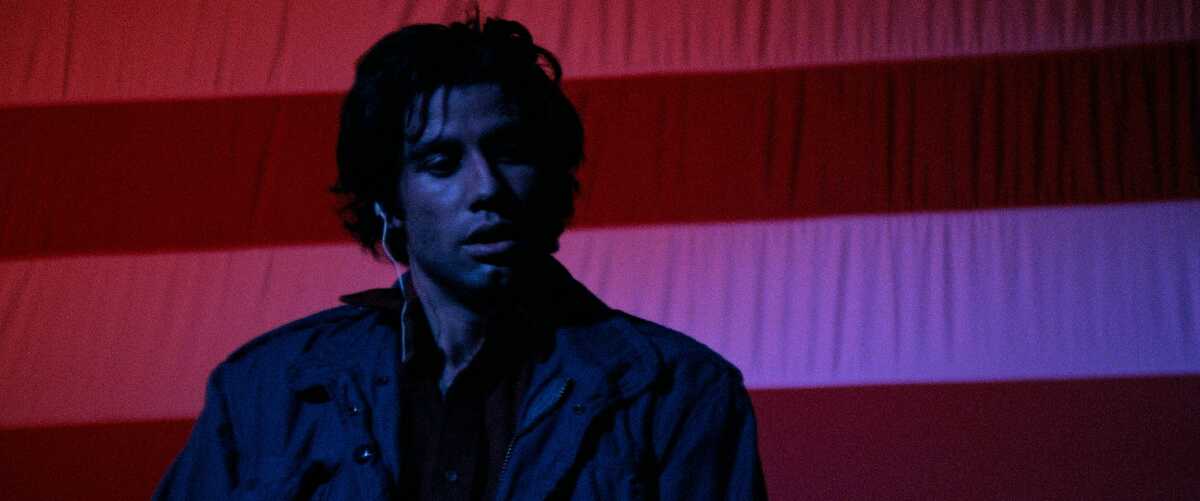
John Travolta in Brian De Palma’s 1981 thriller “Blow Out.”
(Criterion Collection)
On July 10 there will be a 35mm screening at the Academy Museum of Brian De Palma’s paranoid 1981 thriller “Blow Out,” starring John Travolta as a sound recordist who accidentally captures a political assassination. Anyone who still hasn’t gotten enough from the Fourth of July will want to see this for the thrilling fireworks display as part of its finale.
On July 12 at the American Cinematheque’s Los Feliz Theatre will be a screening of Alexander Mackendrick’s show-biz noir “Sweet Smell of Success” in 35mm with an introduction from filmmaker Shane Black, who presumably learned a thing or two about snappy, acid-drenched dialogue from the film. Black will also be appearing at the Culver Theater on July 22 for a 10th anniversary screening of his crime comedy “The Nice Guys.”
As part of the American Cinematheque’s ongoing 70mm festival, on the 22nd there will be a screening of Damien Chazelle’s 2022 “Babylon,” a bold and ambitious look at the early days of Hollywood starring Margot Robbie and Brad Pitt. It was a box office disaster when it came out but has already seen a passionate fan base grow around it.
Have a killer holiday
Richard Dreyfuss, left, Roy Scheider and Robert Shaw in the 1975 movie “Jaws.”
(Universal Pictures)
There is something rather wholesome about the fact that Steven Spielberg’s 1975 seaside horror-thriller “Jaws” has become the official unofficial movie of the Fourth of July. Set amid a beach community suddenly beset by a great white shark as the town prepares for the holiday, the movie is a mix of ’70s-style ramshackle, good-natured ease and precison-tooled action that prefigures the blockbuster era of the ’80s. Even now at more than 50 years old, there is something undeniable about the movie’s ability to entertain, delight and terrify an audience.
An image from Ken Jacobs’ 2004 movie “Star Spangled to Death.”
(Los Angeles Filmforum)
When acclaimed avant-garde filmmaker Ken Jacobs died last year at age 92, the world lost one of its most singular voices. In tribute to Jacobs and as a celebration of the 250th anniversary of America, on Sunday at 2220 Arts + Archives, Los Angeles Filmforum will show his “Star Spangled to Death,” a six-and-a-half-hour masterpiece that took decades to complete.
Beginning work on the project in the 1950s, Jacobs would eventually premiere the film in 2004. It is an epic compilation of his own imagery, some of it of his longtime friend and colleague Jack Smith, along with found footage that coalesces into a grand statement on nothing less than the state of the nation. Jacobs himself described the film as a portrait of “a stolen and dangerously sold-out America, allowing examples of popular culture to self-indict.”
A tribute to Marjane Satrapi
An image from the 2007 movie “Persepolis,” directed by Marjane Satrapi and Vincent Paronnaud.
(Sony Pictures Classics)
In tribute to Iranian French cartoonist and filmmaker Marjane Satrapi, who died at age 56 last month, the Los Feliz 3 will have a 35mm screening of her 2007 animated film “Persepolis” on Thursday. Director Ana Lily Amirpour will introduce the movie, which was nominated for an Oscar for animated feature.
Based on Satrapi’s own autobiographical graphic novel, “Persepolis” is about a young girl coming of age during Iran’s Islamic Revolution told with bold line drawings and a belief in the freedom of the imagination.
Love, crime and sweat
Katy O’Brian, left, and Kristen Stewart in the 2024 movie “Love Lies Bleeding.”
(Anna Kooris / A24)
Some movies arrive seeming ready made as cult revival objects. Ross Glass’ 2024 “Love Lies Bleeding” was overlooked when it was first released but seems ripe for rediscovery. In a story that knowingly plays with the motifs of classic film noir and crime dramas, Kristen Stewart plays a hapless, easily manipulated loner in a small dead-end town who falls in with a mysterious and charismatic drifter played by Katy O’Brian. Their chemistry is electric and gives the film a real charge.
The film will show on Thursday at the Frida Cinema as part of its ongoing Nu-Classics series, along with a conversation between actors and online personalities Maggie Mae Fish and Abigail Thorn.
In an interview at the time of release, Glass talked about the film’s appeal, saying, “It’s people meeting each other and falling in love for the first time and those whirlwind sort of first few weeks. Going into it, I don’t think I was specifically thinking of it as horny, but I definitely knew going into it that I wanted it to feel sweaty and intense.”
Road to nowhere
An image from William Friedkin’s 1977 adventure movie “Sorcerer.”
(Criterion Collection)
Though it is a movie we have talked about here before, it is always worth mentioning when there is a screening of William Friedkin’s 1977 “Sorcerer.” It will be playing tonight in the main room at the Academy Museum in a recent 4K restoration, which should be big and loud. The score by Tangerine Dream should be even more brain-rattling than usual in that venue.
The film notoriously first opened a week after “Star Wars” in 1977 and was left in the dust, though it has more recently become revered as one of Friedkin’s best — a movie of relentless, ratcheting tension. An adaptation of the novel that also inspired 1953’s “Wages of Fear,” Friedkin’s film is about a group of desperate men, each on the run from something, who must transport a truckload of nitroglycerine through a dangerous South American jungle.
New this week
Amy Nicholson found “Minions & Monsters” to be a “delightful dingbat homage to Tinseltown set during the transition from silents to sound.”
Carlos Aguilar spoke to Minions creator Pierre Coffin about all the old-school movie homages in the new film and its cameo from no less a film figure than George Lucas.
Katie Walsh reviews Jon Erwin’s “Young Washington,” calling it “propaganda in the form of a history lesson wrapped in a summer blockbuster.”
Tim Grierson reviews “Romería,” an autobiographical tale from Spanish writer-director Carla Simón starring newcomer Llúcia Garcia, noting “Simón and her star bracingly recall the electricity of youth.”
Hello! I’m Mark Olsen. Welcome to another edition of your regular field guide to a world of Only Good Movies.
Two of my favorite movies of the year so far are opening in Los Angeles today and they both benefit from being seen with a proper audience. You will find yourself surprised by what you are laughing at, curious about what other people are laughing at and then feel the air in the room collectively shift as both films take unexpected turns toward more genuine emotional moments.
The third feature directed by Olivia Wilde, “The Invite” is a biting look at modern relationships. Wilde stars as one half of a struggling couple, unhappily married to a character played by Seth Rogen. She invites over a couple from the apartment upstairs, played by Penélope Cruz and Edward Norton, and soon all sorts of feelings start flying around.
I reviewed for the paper, noting, “It feels daring for how it wants to actually examine the emotional costs of contemporary grown-up life, bringing wincing laughs of recognition.”
Wilde will be making appearances around L.A. over the weekend, including at the Vista, where the movie is playing in 35mm.
Also opening this weekend is “Maddie’s Secret,” the debut feature as writer-director from comedian and actor John Early, who also stars as the title character, an aspiring L.A. food influencer battling bulimia. It is a truly astonishing performance, one that walks a difficult tightrope between sincerity and parody. Early will appear for Q&As around town this weekend.
I spoke to Early about the film when it played as part of the Los Angeles Festival of Movies about its unusual tone — somehow earnest, tender and very funny all at once. Joshua Rothkopf reviewed the film, which he calls the indie arrival of the year, comparing it to movies by John Waters, Todd Haynes and Douglas Sirk.
Jack meets the maestro
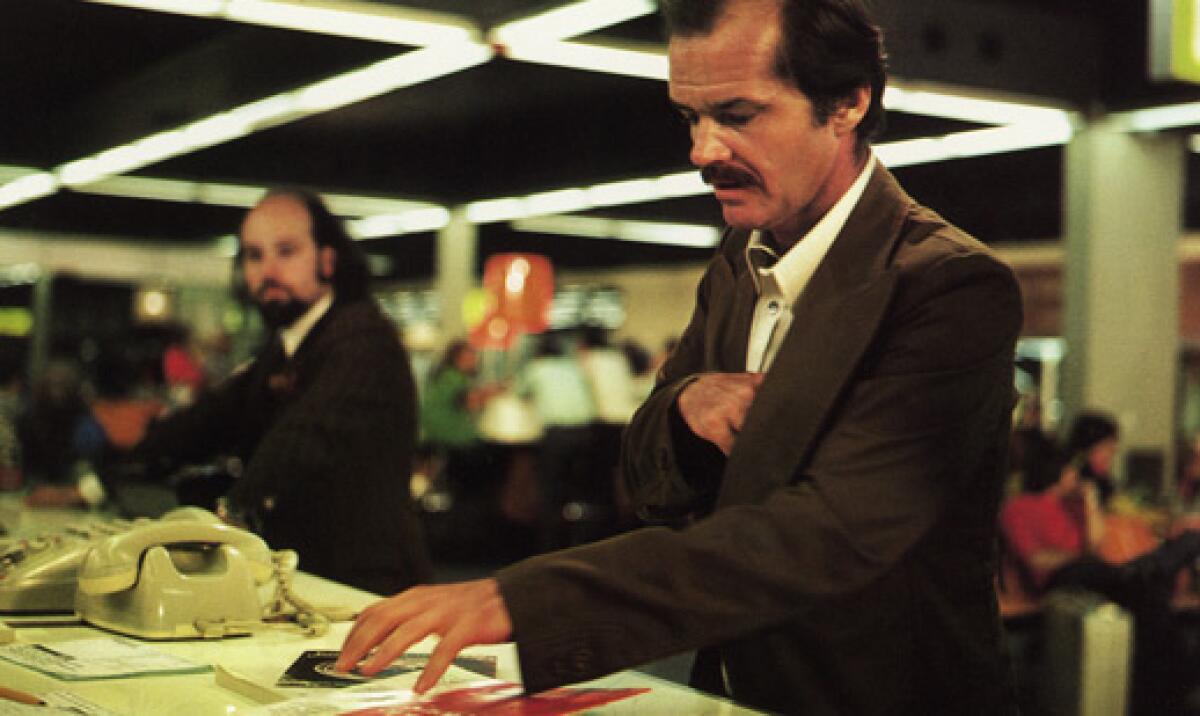
Jack Nicholson in the 1975 movie “The Passenger.”
(Sony Pictures Classics)
One movie I feel obligated to note whenever it plays it Michelangelo Antonioni’s “The Passenger.” Jack Nicholson stars as a disaffected journalist who assumes the identity of a dead man in an attempt to start over, only to find that his new life is even more complicated than his own. It is a powerful examination of middle-aged malaise that has Antonioni’s trademark mystery but, thanks to Nicholson, also has a directness that makes it accessible to wider audiences.
Nicholson made the film in between “Chinatown” and “One Flew Over the Cuckoo’s Nest,” at the height of his fame in the 1970s, a time when going to Europe and Africa to shoot a movie with an esoteric art-house filmmaker was a huge risk. He would personally purchase the rights to the film in the early 1980s and essentially treated it like owning an art object, very rarely allowing it to be shown publicly. It reentered circulation in 2005 with a rerelease but still has a certain air of rarity around it. The film will be showing at the New Beverly in 35mm on Saturday and Sunday.
Nicholson sat for an extended interview with The Times’ Patrick Goldstein around that 2005 reissue of the film, calling the production “the most vivid filmmaking adventure I’ve ever had.” He described his relationship to Antonioni by saying, “He’s been like a father figure to me. I worked with him because I wanted to be a film director and I thought I could learn from a master. He’s one of the few people I know that I ever really listened to.”
When the Italian filmmaker died in 2007, Nicholson got on the phone with us to say, “I don’t know how to put this: He’s just a maestro, and everybody loved him. … He was a man of joy and impeccable taste. His whole life was dedicated to modestly being a brilliant artist.”
Truffaut’s humanist warmth
Delphine Seyrig and Jean-Pierre Léaud in the movie “Stolen Kisses.”
(Janus Films)
Richard Linklater’s “Nouvelle Vague” last year didn’t exactly start a renewed wave of interest in the French New Wave of the 1960s, but then again, those movies never really went away. They’ve been inspirational to generations of film fans for more than 60 years now.
But one French director who has perhaps fallen out of favor slightly is François Truffaut. Long seen as one of the quintessential New Wave filmmakers, he has become taken for granted a little of late. Which is why it is exciting to see Brain Dead Studios showing his 1968 film “Stolen Kisses” in 35mm on Sunday.
The third in the series of films Truffaut returned to throughout his career, including his 1959 breakthrough “The 400 Blows,” the film again stars Jean-Pierre Léaud as Antoine Doinel, Truffaut’s alter ego through the stages of his life. Discharged from the army, Antoine drifts through a series of jobs. His real concern is juggling his busy love life, making the film something of a male-centered rom-com while capturing Truffaut’s warm, humanist worldview.
Rohmer’s caustic cynicism
Jean-Claude Brialy in the 1970 movie “Claire’s Knee.”
(Janus Films)
Conversely, a filmmaker of the French New Wave who has seen his stock rise during the last few years is Eric Rohmer, championed by Noah Baumbach among others. His more caustic view of the world may resonate better with more cynical modern audiences.
The American Cinematheque will begin showing Rohmer’s cycle of “Six Moral Tales” at the Los Feliz Theatre this weekend with a 35mm screening of “My Night at Maud’s” and continuing with other screenings through the end of July. Other films in the series include the sultry, summertime tale “La Collectionneuse,” the ethical dilemma of “Claire’s Knee” and the tale of infidelity “Love in the Afternoon.”
Writing about “Claire’s Knee” in 1971, Charles Champlin noted, “What redeems Rohmer’s films from a defeating sameness is the quite extraordinary charm, believability and complexity of his characters and his meticulous attention to detail and his refusal to go for gross events at the expense of the subtle shadings of human relationships.”
Honestly, if a trip to France isn’t happening for you this summer, this series makes for a not-bad substitute.
Reconsidering ’90s comedy
An image from the 2025 documentary “We Are Pat.”
(The Film Collaborative)
Fresh off its world premiere at the recent Tribeca Film Festival, Ro Haber’s documentary “We Are Pat” will screen at Vidiots on Sunday. Haber will be there along with comedians Julia Sweeney and Harper Steele and, for good measure, Alan Cumming.
“We Are Pat” examines the afterlife of Sweeney’s character from “Saturday Night Live,” a confusingly genderless person who no one can ever quite figure out how to engage with. The way Pat has been picked up by a new generation of genderfluid comedians shows how influence and inspiration can come from the unlikeliest of places, and also how comedic ideas can transform over time.
Ali in Africa
Muhammad Ali fights George Foreman in the 1996 documentary “When We Were Kings.”
(Gramercy Pictures)
Released in 1996, “When We Were Kings” depicts the 1974 boxing match in Zaire between Muhammad Ali and George Foreman known as “The Rumble in the Jungle.” Director Leon Gast was unable to complete the film at the time, so the footage languished for years until he got an assist from filmmaker Taylor Hackford in shooting contemporary interviews with the likes of Norman Mailer, George Plimpton and Spike Lee. “When We Were Kings” would go on to win the Academy Award for documentary feature. It will be screening at Vidiots on Saturday.
The core of the movie is watching the thrilling, inspiring footage of Ali training and interacting with the locals. As Kenneth Turan wrote in his original review, “Because a classic heavyweight championship fight, especially with these protagonists, epitomizes the drama inherent in sport, ‘When We Were Kings’ always compels our interest.”
Johnny Knoxville and friends are back for another round of stunts and pranks in “Jackass: Best and Last.” Age has finally caught up with them, Amy Nicholson laments.
It seems a little odd that a movie starring Angelina Jolie, “Couture,” is just sort of sneaking into theaters, but that’s movie business in 2026. We spoke to Jolie at last year’s Toronto International Film Festival about the film.
Hello! I’m Mark Olsen. Welcome to another edition of your regular field guide to a world of Only Good Movies.
Recently, I don’t exactly know why, I was overtaken by a concern that because of the impending merger of Paramount and Warner Bros., Olivier Assayas’ 2022 series adaption of his own film “Irma Vep” would be removed from the HBO Max streaming platform. With no official physical release, the series — starring Alicia Vikander as a Hollywood movie star making a project in Paris — could be effectively vanished from existence.
This is sadly inevitable, though some superfans have gone to extra-legal measures to ensure otherwise (not that we would ever endorse this). Most famously it’s happened with the original “Star Wars” trilogy. Billed as the “Grindhouse Edition,” these are discs of the first three “Star Wars” films sourced from scans of original film prints before the digital fixes and polish of the more recent official releases. Reengaging with these works in this way, scratches and all, is (I’m told) a strong reminder of why they hit so hard in the first place, similar to how it might be to reread a text in the original language instead of a more recent translation.
‘Indiana Jones’ marathon
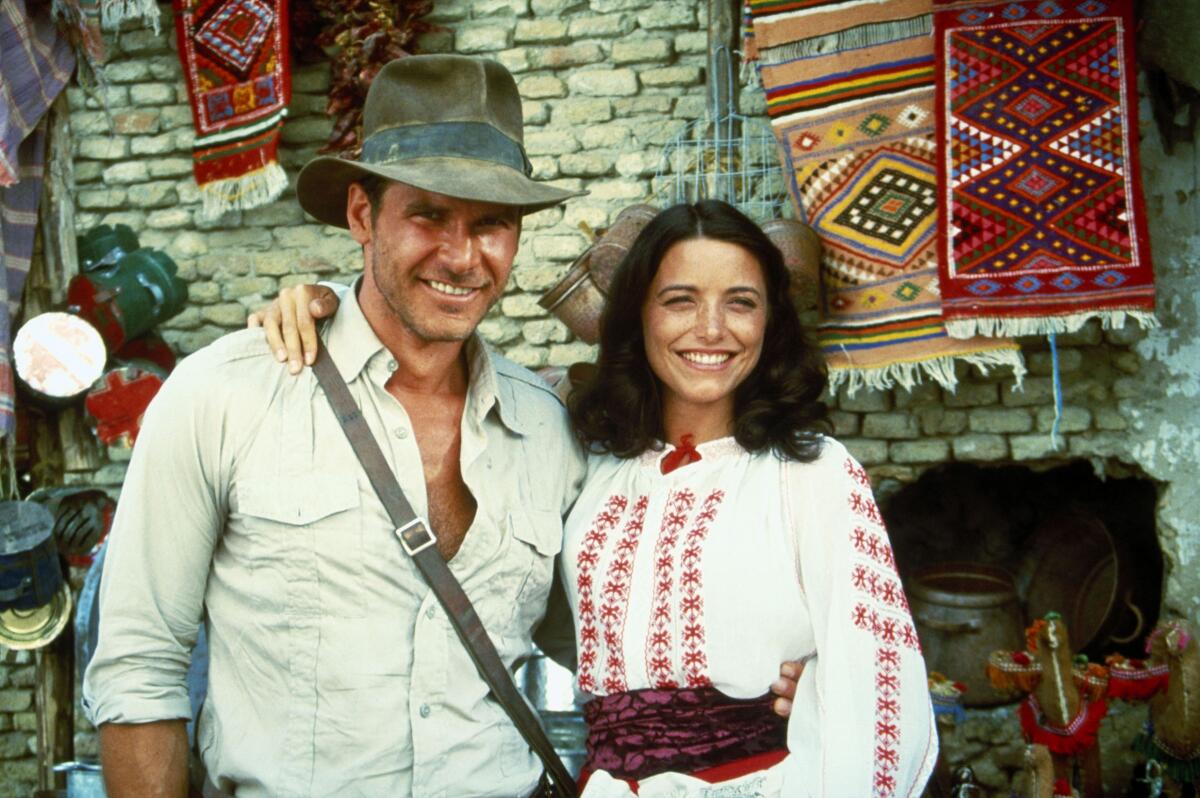
Harrison Ford and Karen Allen on the set of 1981’s “Raiders of the Lost Ark.”
(Lucasfilm Ltd.)
The same deep understanding of genre filmmaking that went into the original “Star Wars” also went into “Raiders of the Lost Ark,” the first adventure of the character of Indiana Jones. Directed by Steven Spielberg from a script by Lawrence Kasdan and story by George Lucas and Philip Kaufman, the film is playful, thrilling and self-aware. It is made with such care, attention to detail and sense of fun that I remember how disappointed I was to discover not all movies would be like this.
There have of course been diminishing returns with the more recent run of Indiana Jones sequels, but the first three installments all have a real spark. And so the Secret Movie Club will present “Raiders,” 1984’s “Indiana Jones and the Temple of Doom” and 1989’s “Indiana Jones and the Last Crusade,” all on 35mm at the Million Dollar Theater in DTLA on Sunday in celebration of Father’s Day.
In her original review of the first film, Sheila Benson described that while watching it, she felt “a rush of gratitude which almost brought tears of contagious joy and — not to be corny about this — the strength of the film’s positive vision. If this is an era in which the heroic is lacking and the mediocre threatens us from every side, then ‘Raiders,’ which has no pretensions to importance, which is unabashedly wide-eyed and exaggerated and true blue but somehow cherishes the best in life and filmmaking — is a high-water mark.”
Plenty of jokes could be made about the movies having settled into what might be thought of as part of the dadcore canon: action-adventure movies that play well on TV and maybe you can take a short nap and not miss anything. So be it.
From one master to another
Cary Grant and Eva Marie Saint in Alfred Hitchcock’s 1959 thriller “North by Northwest.”
(Sunset Boulevard / Corbis via Getty Images)
Filmmaker Guillermo del Toro has been making waves of late for his strong public stance against the use of AI in feature filmmaking. But it is worth remembering that he is also a deep and incisive thinker about older movies, a true fan, which makes his upcoming appearances at the Academy Museum a special occasion.
Del Toro will present five films by Alfred Hitchcock — 1946’s “Notorious,” 1943’s ‘Shadow of a Doubt,” 1959’s “North by Northwest,” 1953’s “I Confess” and 1972’s “Frenzy” — along with delivering a lecture on each of them. To see one great filmmaker reflect with such depth into the work of another is just remarkable. This is some genuine only-in-L.A. type stuff.
Comedy + politics = good fun
A scene from the 1976 movie “Car Wash.”
(Margaret Herrick Library / Academy of Motion Picture Arts and Sciences)
A raucous comedy set around the location of the title, “Car Wash” is also a sharp, politically minded satire about labor and money. Directed by Michael Schultz from a screenplay by Joel Schumacher, the film has an extended ensemble cast that includes Richard Pryor, Franklyn Ajaye, George Carlin and many others.
In his original review Charles Champlin compared “Car Wash” to films such as “American Graffiti” and “Nashville” and called it “light but not foolish. … The experience is exhilarating.”
A 50th anniversary screening at the Academy Museum on Saturday of a new 4K restoration will include a panel with Schultz and actors Bill Duke, Antonio Fargas, Melanie Mayron, Garrett Morris and Pepe Serna.
Collision report
James Spader in the 1996 movie “Crash,” directed by David Cronenberg.
(Jonathan Wenk / Fine Line Features)
The controversy that surrounded David Cronenberg’s “Crash” when it premiered at Cannes in 1996 and received a U.S. release in 1997 tended to overwhelm the actual movie. Shockingly explicit, the film is about a secret underground world of people who create a sexual fetish out of car crashes. An adaptation of the novel by J.G. Ballard, Cronenberg’s movie explores the cinematic obsession with sex and violence.
Over time, “Crash” has been evolving from a seemingly cursed object dogged by scandal into something that audiences can come to appreciate and admire — even if it is not a movie you can ever exactly fully understand. Part of Cronenberg’s brilliance is how enigmatic and unknowable his work can be: strange, inviting and enveloping while refusing easy or direct analysis.
The movie is playing twice locally this week, on Saturday at Vidiots in partnership with the Cinegogue, with special giveaways and exclusive merch, and again on Monday at the Academy Museum in 4K. Who will be brave (or perverse) enough to go twice?
A different view of Rio
Milton Gonçalves, center, in the 1974 movie “The Devil Queen.”
(Kino Lorber)
A drag queen (Milton Gonçalves) rules the criminal underworld of Rio de Janeiro in Antonio Carlos da Fontoura’s 1974 gangster drama “The Devil Queen,” an unlikely mix of camp aesthetics and gritty violence. Among the film’s many fans is Kleber Mendonça Filho, the filmmaker behind the recent Brazilian hit “The Secret Agent,” who referred to “The Devil Queen” as “bloody, nasty and full of personality.”
The movie is playing in a new 4K restoration at the Lumiere Cinema in Beverly Hills.
A musical melodrama returns
Raul Julia, left, and Teri Garr in Francis Ford Coppola’s 1981 movie “One From the Heart.”
(Rialto Pictures / American Zoetrope)
We have talked before about Francis Ford Coppola’s “One From the Heart,” a movie of such delirious audacity that it nearly ruined the filmmaker‘s career. A throwback musical about two lovers who break up in search of more excitement, the film stars Teri Garr, Frederic Forrest, Nastassja Kinski and Raul Julia.
On Saturday the film will screen at the American Cinematheque’s Aero Theater in a 70mm print for the first time in L.A. since 1990. The event is being dedicated to Dean Tavoularis, Coppola’s longtime production designer, who died in April. For “One From the Heart,” Tavoularis re-created the Las Vegas Strip on a studio back lot.
New this week
Amy Nicholson is not a fan of the new “Toy Story 5,” writing in her review, “Pixar has continued adding shades to the same plot outline like a child with a box of 128 crayons (or a company clinging to its billion-dollar idea).”
Glenn Whipp cast back into the “Toy Story” universe for a highly personal ranking of his 10 favorite “Toy Story” toys.
Two gay teenage boys attempt to survive a supernatural entity and conversion therapy in Adrian Chiarella’s debut feature “Leviticus.” Jen Yamato spoke to the filmmaking team.
I spoke to writer-director Michael Sarnoski about his new “The Death of Robin Hood,” starring Hugh Jackman in a subversively revisionist telling of the last days of the medieval bandit.
Hello! I’m Mark Olsen. Welcome to another edition of your regular field guide to a world of Only Good Movies.
It seems odd that the biggest news of the week was the fact that tickets for a movie went on sale, but apparently Christopher Nolan’s upcoming “The Odyssey” is no typical movie. Having already made tickets available for some shows a full year in advance, Universal put more of them on sale for the July 17 opening weekend of the Oscar-winning filmmaker’s ancient epic. There were reports of long online wait times, crashing ticketing systems and the kind of problems more often associated with pop stars than movie nerds.
“The Odyssey” will be playing in a variety of formats, with the Imax 70mm screenings among the most coveted. More venues than usual have also been announced as playing the film in 70mm, including the Village Theatre in Westwood. (A handy visual guide to the different fomats is on the film’s website.) While there is a hint of the ridiculous to some of this mania — popcorn buckets in the shape of Imax cameras and movie tickets going on the resale market for hundreds of dollars — there is no denying how exciting it is to see this kind of anticipation building around any movie.
Back to a ’90s phenomenon
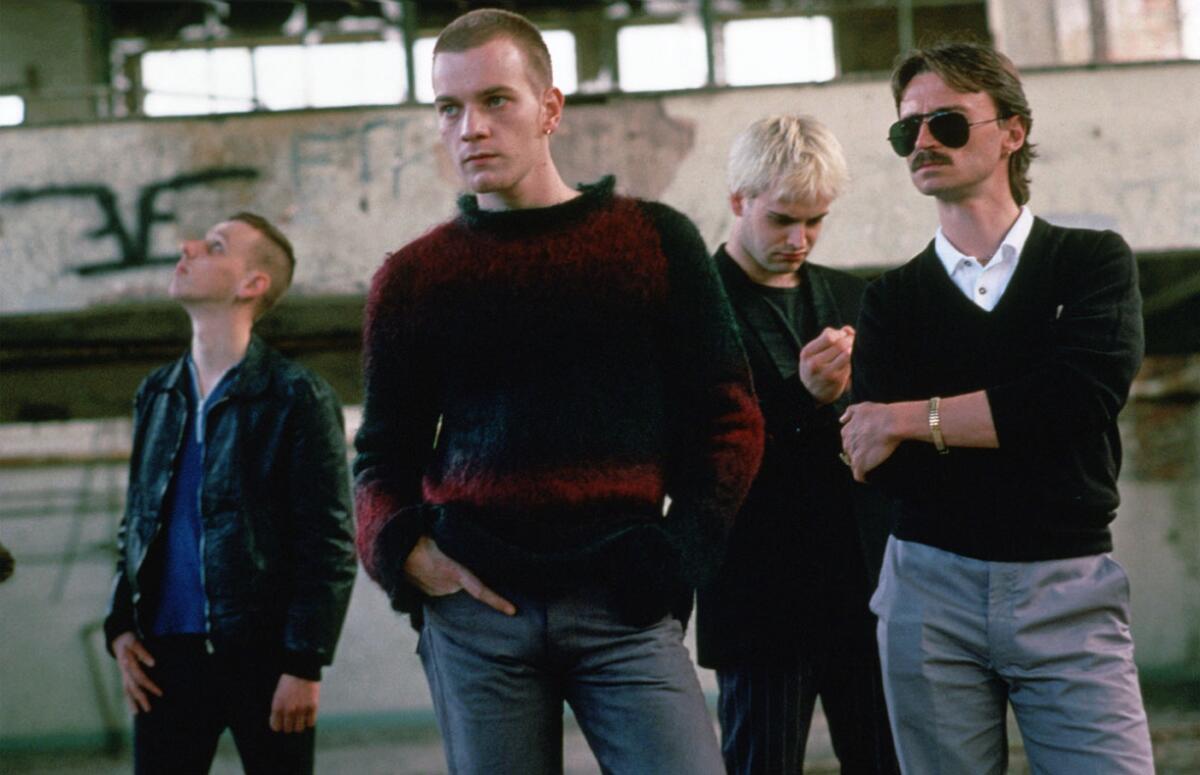
Ewen Bremner, left, Ewan McGregor, Johnny Lee Miller and Robert Carlyle in the movie “Trainspotting.”
(Liam Longman / Sony Pictures Classics)
When it first came out in 1996, “Trainspotting” was an instant cultural phenomenon, capturing the vibes of the “Cool Britannia” moment with its sparkling soundtrack, inventive, high-energy style and cast that included up-and-coming talents such as Ewan McGregor and Kelly Macdonald. It was only the second feature directed by Danny Boyle, who would go on to be an Oscar winner, mount an Olympics opening ceremony and remain a reliably exciting filmmaker all the way to his recent “28 Years Later.”
“Trainspotting” is now back in theaters in a 4K restoration for its 30th anniversary, having lost none of its brash vigor. In his original review, Kenneth Turan said of the film, “Exuberant and pitiless, profane yet eloquent, flush with the ability to create laughter out of unspeakable situations, ‘Trainspotting’ is a drop-dead look at a dead-end lifestyle that has all the strength of its considerable contradictions.”
Appearing like magic
Kathy Najimy, left, Bette Midler and Sarah Jessica Parker in the 1993 comedy “Hocus Pocus.”
(Disney)
Directed by Kenny Ortega, “Hocus Pocus” is one of those movies that has seen its fanbase grow steadily over the years — it is now much more beloved than it ever was on initial release. (It even inspired a 2022 sequel.) Bette Midler, Sarah Jessica Parker and Kathy Najimi play the Sanderson sisters, 17th century witches who find themselves inadvertently brought to modern day by a group of teenagers messing around with casting spells.
The film will play Saturday at the Gardena Cinema, featuring a live commentary from cast members Omri Katz, Thora Birch, Larry Bagby, Tobias Jelinek and Vinessa Shaw followed by a Q&A. This is a rare appearance by Katz in particular, who has retired from acting. Fans of the movie should make the effort to attend.
The Gardena, the last family-owned single-screen theater in Los Angeles, suffered a blow last weekend when a burst pipe flooded the venue. Though they are operational, a campaign has been started to help them recoup repair costs.
Examining the life of the mind
John Turturro in the 1991 movie “Barton Fink.”
(20th Century Fox)
Ranking the films of Joel and Ethan Coen has become a cottage industry of its own. Personally, I go back-and-forth on where to place 1991’s “Barton Fink,” which won the Palme d’Or at Cannes, as well as prizes for director and actor. The movie is by turns funny, disturbing and inscrutable (all good things), with John Turturro in the title role as an intellectual New York playwright who goes to Hollywood to write screenplays — and slowly goes insane.
The movie will play Friday in 35mm at Vidiots with an introduction from Noah Segan, who directed Turturro in one of the breakout titles from this year’s Sundance, “The Only Living Pickpocket in New York.” Hopefully, this will turn into a year in which Turturro gets some long-deserved accolades.
Christmas in June
Elliott Gould on the set of 1978’s “The Silent Partner.”
(Anwar Hussein / Getty Images)
There is something particularly charged about watching a Christmas movie at other times of year — an odd sense of dislocation and maybe even something a little naughty, a circuit-scrambling frisson. So it is particularly notable that as part of their salute to the independent studio Carolco Pictures (behind such films as “Basic Instinct,” “Terminator 2: Judgment Day” and “Reservoir Dogs”), the Vista will be showing 1978’s “The Silent Partner.”
Just the kind of tight and gripping thriller that people pine for all year round, “The Silent Partner” has a screenplay by Curtis Hanson, who would go on to make “L.A. Confidential.” Elliott Gould plays a Toronto bank teller who tries to rip off the thief (Christopher Plummer) who robs his branch wearing a Santa costume as a disguise. Soon they are both scheming against each other.
In his original review of the film, Kevin Thomas called it “tense and ingenious.” In a reconsideration of the film some months later, Charles Champlin called it “a stylish crime-suspense story, a cat-and-mouse game between Christopher Plummer as a clever, sadistic bank robber and Elliott Gould as a bored bank teller who sees a way out of his boredom and into riches.”
So much beauty
Brooke Adams and Sam Shepard in the 1978 movie “Days of Heaven.”
(Criterion Collection)
Terrence Malick’s 1978 “Days of Heaven” is still strikingly singular: a love story told with a stirring visual style. The film’s beauty — aside from its impossibly good-looking lead actors, Richard Gere and Brooke Adams — in part comes from gifted Spanish cinematographer Néstor Almendros, who made his American debut after a career in Europe that saw him working with filmmakers such as Eric Rohmer and François Truffaut. Almendros would win an Academy Award for the film.
The New Beverly will show “Days of Heaven” in 35mm Tuesday through Thursday as a double bill with Truffaut’s 1970 “The Wild Child,” shot by Almendros in black-and-white. Writing about “Days” in 1978, The Times’ Charles Champlin called it “an extraordinary and original visual experience and a movie which is thrilling in its uncompromised purity.”
Perverse fun
Ha Jung-woo, left, and Kim Min-hee in the 2016 movie “The Handmaiden.”
(TIFF)
Korean filmmaker Park Chan-wook was just president of the Cannes jury and has become a much-beloved figure on the international circuit for his wicked sense of humor and sharp sense of style. Nowhere is that on better display than his 2016 film “The Handmaiden,” which is somehow at once a period drama, a con-man thriller and an erotic lesbian romance. Vidiots will be showing the movie Sunday.
As Justin Chang wrote when the film was released, “Without sacrificing his taste for psychosexual perversity or his flair for violent grace notes, Park has given us a teasingly witty and elegant puzzle-box of a thriller whose pleasures are rooted not in visceral shock but in narrative surprise, and which wisely opts to seduce rather than pulverize its audience.”
In an interview at the time, Park said the film’s unpredictability was part of the project’s appeal. “That’s the exact kind of fun to be had with this film and the reason why I chose to make this film. Everything becomes a game of perception. Rather than to say it’s a difficult thing to navigate, it is fun to deal with. Not only for me as a filmmaker but for the audience to see that and engage in that game.”
New this week
Amy Nicholson reviews the latest attempt to make a movie out of a popular Mattel toy with the lightly-tongue-in-cheek “Masters of the Universe.”
Amy also reviewed the revival of the satirical “Scary Movie” franchise, with original stars Anna Faris and Regina Hall returning to make fun of such recent hits as “Sinners,” “Weapons” and “The Substance.”
The documentary “Time and Water” looks at climate change through the life and work of Icelandic writer Andri Snaer Magnason as directed by Sara Dosa, who had a hit with her last film “Fire of Love.” Robert Abele reviews.
One last thing…
This week, our colleagues at De Los launched a podcast hosted by Fidel Martínez and Suzy Exposito. The interview-style video podcast will feature conversations with the people shaping Latino culture in the United States.
The first episode features singer and actor Leslie Grace, who talks about her experiences working on the film “In the Heights” as well as being the star of the canceled “Batgirl.”
Hello! I’m Mark Olsen. Welcome to another edition of your regular field guide to a world of Only Good Movies.
Both made by 20-something directors who emerged from the world of YouTube, the horror movies “Obsession” and “Backrooms” are dominating the conversation. They could come to represent a pivotal moment for how Hollywood engages with young talent and audiences alike.
I saw Curry Barker’s “Obsession” this week at a packed holiday matinee and Kane Parsons’ “Backrooms” is on track for a huge opening weekend — maybe the largest in A24’s history. The fact that audiences are responding to these films is exciting and one has to hope that Hollywood takes the right message from their successes: to give young filmmakers the space to create the projects they want to make, rather than shoehorn them into preconceived notions of what people want. Audiences right now seem to be proving themselves to be adventuresome when given the opportunity to try something new.
Marilyn at 100
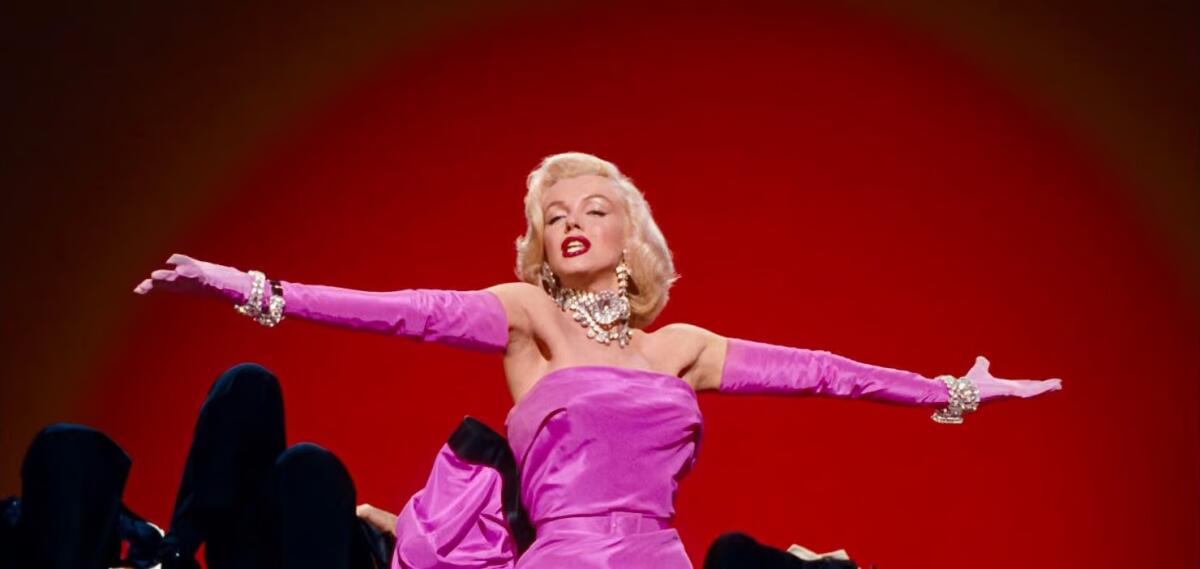
Marilyn Monroe in the 1953 classic “Gentlemen Prefer Blondes.”
(Academy Museum)
When Marilyn Monroe’s death was first reported in The Times on Aug. 6, 1962, the news read, “Marilyn Monroe, a troubled beauty who failed to find happiness as Hollywood’s brightest star, was discovered dead in her Brentwood home of an apparent overdose of sleeping pills.”
That intertwining of the glamour and sex appeal of her public persona with an air of doomed tragedy would permanently attach itself to her image, making her one of the most unforgettable stars Hollywood has ever created.
Monday marks the 100th anniversary of Monroe’s birth in L.A.’s Boyle Heights, where she was born Norma Jeane Mortenson. In celebration of Monroe’s centennial, the Academy Museum will open a new exhibition on Sunday, “Marilyn Monroe: Hollywood Icon,” featuring hundreds of objects including personal materials never before displayed and a number of her most memorable costumes.
The museum will also launch a 17-film series spotlighting Monroe’s remarkable career, including her versatile talent as both a comedian and a more dramatic performer. Highlights include the 1953 thriller “Niagara,” 1950’s backstage drama “All About Eve” in a new 35mm print with an introduction from journalist Lorraine Nicholson and 1955’s “The Seven Year Itch” with writer Kim Morgan introducing. Elsewhere, “Some Like It Hot” from 1959 and Monroe’s final completed film, “The Misfits,” will both show in 4K.
On Sunday, “Gentlemen Prefer Blondes” will play in the Academy’s David Geffen Theater in 4K. There are also other Monroe screenings and events around the city, including multiple shows of “Gentlemen” at the Gardena Cinema on Saturday.
Marilyn Monroe and photographer Bruno Bernard backstage at the Hollywood Bowl in 1953.
(Bernard of Hollywood Foundation Archive)
Authors Mark A. Fortin and Joshua John Miller have collaborated on a new book, “The Marilyn Monroe Century: From Norma Jeane to Icon — A Story in Photographs.” The culmination of a seven-year-long research process, the book unearths original negatives of pictures of Monroe taken by Miller’s grandfather, acclaimed photographer Bruno Bernard. Bernard, who died in 1987, shot with her before she had even adopted the name Marilyn Monroe and took the best-known images of her, standing on a subway grate with her white dress billowing up while in production on “The Seven Year Itch.”
“One of the stories I’m trying to tell with a lot of these pictures is to counter the narrative that Marilyn didn’t have agency in the creation of her persona,” says Miller in a recent Zoom call from a room at the Chateau Marmont. “The truth is she was very much instrumental in constructing her image. And Bruno was a big part of that. Photographers at that time were not only the photographer — they were the best friend, the therapist, the agent, the stylist. I think it’s really important to have context for these pictures because this kind of history gets lost.”
The book does a remarkable job of providing additional atmosphere around images that might already be familiar, giving a fuller sense of what was going on both inside and outside of the frame. The notorious subway-grate scene was actually shot twice, first in New York and again in Los Angeles.
“I think what I’ve been trying to do is not rewrite the narrative, but thread [Bruno] correctly back into the stitching of Marilyn’s mythology,” Miller says. “He is one of the only photographers who deeply knew both Norma Jeane and Marilyn. I know everyone says they know the ‘real Marilyn,’ but he was part of the construction with her to create that.”
The joy of sadness with ‘Bleak Week’
Joseph Gordon-Levitt and Brady Corbet in the movie “Mysterious Skin.”
(Tartan Films)
“Bleak Week: Cinema of Despair” has become the signature program of the American Cinematheque, expanding beyond its L.A. footprint for editions at other theaters not just around the country but around the world. Turning sadness, depression and defeat into group activities to be enjoyed together has been an ingenious masterstroke of programming.
Now in its fifth edition, this year’s highlight will be a series with Isabelle Huppert, who will be present for screenings of such downbeat fare as “The Piano Teacher,” “Le Cérémonie,” Violètte Noziere,” “Elle,” “Time of the Wolf” and “Heaven’s Gate.”
Filmmaker Ari Aster will also be present for a complete retrospective of his four features. Other guests include Denis Villeneuve with “Incendies,” Allen Hughes with “Dead Presidents,” Al Pacino with “The Godfather Part II,” Gregg Araki with “Mysterious Skin,” Robert Englund with “Buster and Billie,” Werner Herzog with “Heart of Glass” and Theresa Russell with “Bad Timing.”
I will be introducing the U.S. theatrical premiere of a 4K restoration of Carlos Saura’s 1966 “The Hunt” and moderating Q&As with filmmaker Richard Kelly for the 20th anniversary of the Cannes cut of “Southland Tales” and actor Haley Joel Osment for a 25th anniversary 35mm screening of “A.I. Artificial Intelligence.” And The Times’ Joshua Rothkopf will moderate a Q&A with Aster for “Eddington,” while Amy Nicholson will talk to Aster for “Midsommar.”
UCLA’s Festival of Preservation
Leslie Uggams in 1972’s “Black Girl.”
(UCLA Film & Television Archive)
The UCLA Festival of Preservation is one of the city’s most-longstanding and venerated events for film lovers, celebrating revered classics and rediscovered obscurities alike. This year’s edition, the 22nd, opens with the West Coast premiere of a new restoration of Ossie Davis’ 1972 “Black Girl,” an adaptation of J.E. Franklin’s successful play about thee generations of Black women.
Jose Luis Ruiz’s groundbreaking 1975 documentary on Latino immigrants, “The Unwanted,” will have a restoration world premiere. The restoration of Budd Boetticher’s 1955 melodrama “The Magnificent Matador,” starring Anthony Quinn and Maureen O’Hara, brings back the film’s stunning look in Cinemascope and Eastmancolor.
Andre de Toth’s 1948 thriller “Pitfall,” starring Dick Powell and Lisbeth Scott, will have a world premiere restoration. The series concludes with De Toth’s stylish romantic drama “The Other Love” from 1947 starring Barbara Stanwyck. The restoration reinstitutes the original ending of the film unseen by audiences since the 1940s.
Vincent Spano and Rosanna Arquette in the movie “Baby, It’s You.”
(Paramount Pictures)
Produced by Amy Robinson and Griffin Dunne between their work on Joan Micklin Silver’s “Chilly Scenes of Winter” and Martin Scorsese’s “After Hours,” the 1983 movie “Baby It’s You” captures a number of rising talents at just the right moment. Only the third feature written and directed by John Sayles (and still his only movie made at a Hollywood studio), the film is a particularly smart take on the coming-of-age romance, with a sharp sense of time and place. It’s even shot by cinematographer Michael Ballhaus, fresh off his collaborations with Rainer Werner Fassbinder but before his long collaboration with Scorsese.
Set in late-1960s New Jersey, the story involves a good-girl high schooler preparing for college (Rosanna Arquette, who lights up the screen) who falls for a bad boy with few future prospects (Vincent Spano). The film will show on Wednesday in a 4K restoration at the Academy Museum with Arquette and Spano both scheduled to attend.
In a 1983 Times review, Shelia Benson said the film “explores questions of class and unequal opportunity with humor and tender insight,” adding that Spano and Arquette “together conjure up every improbable, love-struck couple who ever dazzled us ordinary mortals in the halls or at the senior prom.”
New this week
Kane Parson’s horror film “Backrooms” stars Renate Reinsve and Chiwetel Ejiofor in an adaptation of Parson’s own popular YouTube videos. As Amy Nicholson wrote, “Given that backdrop, ‘Backrooms’ would be one of the year’s most significant releases even if the movie itself was merely fine. But it’s better than fine — it’s a work of honest-to-goodness art.”
Katie Walsh reviews the crime thriller “Tuner,” starring Leo Woodall as a piano tuner who gets in over his head with the wrong people. The film is the fiction feature debut from Oscar-winning documentary filmmaker Daniel Roher.
The latest music-themed film from Irish writer-director John Carney, “Power Ballad” is about a failed-to-launch songwriter (Paul Rudd) trying to get credit for the tune he co-wrote with a boy band star (Nick Jonas). Amy Nicholson reviews.
Hello! I’m Mark Olsen. Welcome to another edition of your regular field guide to a world of Only Good Movies.
There are, it goes without saying, a lot of movies out there. And so even for someone like myself, whose job is just to stay on top of them, sometime a title slips by. I had not taken much notice of “Is God Is” before it opened last week without playing any festivals in advance, but the reviews and conversation around it grabbed my interest. Once I realized that Tessa Thompson and Janicza Bravo were involved as producers, I made sure to carve out time to see the movie this week. And am I ever glad I did.
The debut as writer-director for Aleshea Harris (adapting her own play), “Is God Is” is among the most exciting movies released so far this year. Kara Young and Mallori Johnson are absolutely electric as twin sisters who set out to find the estranged, abusive father who abandoned them after leaving them and their mother horribly scarred in a fire. There is a volatile unpredictability to the storytelling that gives it a fresh energy. I saw it at a more-or-less empty matinee, but I’m glad I did. Catch this in theaters while you can.
35 years of ‘T2’
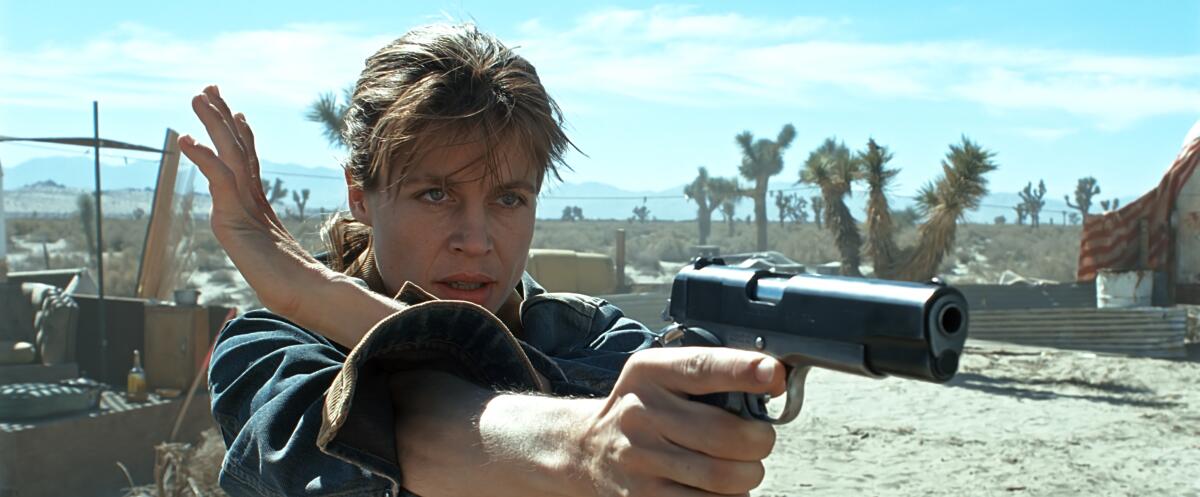
Linda Hamilton in the movie “Terminator 2: Judgment Day.”
(Rialto Pictures)
As far as I’m concerned, James Cameron’s 1991 “Terminator 2: Judgment Day” is the quintessential summer movie. You can pay close attention or not, the special effects and action are amazing, the villains are sentient machines (shades of our AI-addled present) and it has a song by freaking Guns N’ Roses.
The main cast of Arnold Schwarzenegger, Linda Hamilton, Robert Patrick, Edward Furlong and Joe Morton are all perfectly tuned into the movie they are making, full of chaos, mayhem and just the right amount of thoughtfulness. (Morton and Hamilton in particular give the film an unexpected soulfulness.)
To celebrate the film’s 35th anniversary, the American Cinematheque is screening the film in 70mm, 35mm, 3D and DCP at different venues on different days. (Check carefully, as there have already been some schedule changes.) The Academy Museum will show the film on Wednesday in 4K with visual effects supervisor Dennis Muren and special effects creator Shane Mahan present. The film is also playing the Vista in 70mm June 6 and 7.
In his original 1991 review, Kenneth Turan wrote, “Most of all, what makes ‘Terminator 2’ come alive in a major way is Cameron’s intuitive understanding of the mechanics and psychology of action films. Unlike many of the wanna-bes who find themselves in charge of pictures these days, this is one director who really knows how to direct. … Cameron flamboyantly underlines, for those who may have forgotten, why the pure adrenaline rush of motion is something motion pictures can’t live for very long without.”
Lena Dunham before ‘Girls’
David Call and Lena Dunham in the movie “Tiny Furniture.”
(Joe Anderson / IFC Films)
Lena Dunham recently published her second memoir, “Famesick,” a portrait of her rise to cultural prominence and media ubiquity and subsequent retreat from it, which makes this a perfect moment to revisit a key component of her initial ascent, the micro-budget 2010 feature “Tiny Furniture.” Made when Dunham was in her early 20s, the film is a deadly accurate portrait of post-collegiate ennui, shot partly in her parents’ NYC apartment, and remains fresh and startlingly insightful.
The Eastwood Performing Arts Center will be screening the film Friday and Saturday. The film is showing along with the “Welcome to Bushwick a.k.a The Crackcident” episode of Dunham’s series “Girls.”
I profiled Dunham at the time, having first encountered her at SXSW the year before when she was there with her film “Creative Nonfiction.”
“That movie is so personal,” Dunham said of “Tiny Furniture” during an interview from the New York production office of the pilot for what would become “Girls.” “It’s like I wrote it, I directed it, I star in it — if you don’t like the movie you don’t like me.”
With the lacerating self-awareness that made her a star, she added, “And I also understand there is something essentially unappealing about ‘girl makes movies about being a loser and then gets un-loserly things to happen to her.’ It’s a little absurd.”
More onscreen Bob Dylan
Rupert Everett, Fiona Flanagan and Bob Dylan in a production still for 1987’s “Hearts of Fire.”
(Skinner / Mirrorpix / Getty Images)
It was just a few weeks ago that we wrote about a program of Bob Dylan live concert footage. In honor of his 85th birthday, the American Cinematheque will be putting on another program of two oddball rarities from his long career.
Rarely screened in theaters, the 2021 film “Shadow Kingdom,” directed by Alma Har’el, was originally released to a pay-per-view streaming site. Though it purports to be a performance at the Bon Bon Club in Marseille, France, the film was actually shot on a soundstage in Santa Monica. The musicians on screen are not playing live and are not even the same musicians who played on the prerecorded tracks.
The whole thing is very confusing in a very Bob Dylan way, but also kind of incredible. With its Dust Bowl “Twin Peaks,” last-nightclub-on-Earth vibes and spare, haunting arrangements of many Dylan classics that he rarely plays at his own concerts anymore, it is a truly one-of-a-kind document.
The same could be said of the 1987 film “Hearts of Fire,” directed by Richard Marquand (who also helmed “Return of the Jedi!”) and screening in 35mm. In a rare acting turn, Dylan plays a reclusive musician who takes a young singer (Fiona) under his wing, only to have her fall for a pop star played by Rupert Everett. Let’s charitably call Dylan’s performance singular as he delivers every line as if he isn’t sure why he is in the movie. It’s still fascinating.
Kurosawa’s late masterpiece
Mieko Harada in Akira Kurosawa’s 1985 epic “Ran.”
(Rialto Pictures)
One of the highlights of the Academy Museum’s ongoing series on Japanese filmmaker Akira Kurosawa will be this weekend’s 35mm showing of 1985’s “Ran,” a retelling of Shakespeare’s “King Lear” shifted to 16th century Japan. Playing in 35mm in the big David Geffen Theater, it’s a chance to see a truly epic-scaled film under ideal conditions.
Reviewing the movie on its initial release, Kevin Thomas wrote, “‘Ran’ is a heroic saga of human destiny, a war movie with some of the greatest battle scenes in the history of the cinema, a costume drama of the utmost magnificence — and a crackling good samurai movie chock full of swordplay and palace intrigue.”
David Fincher’s secret soft heart
Gary Oldman and Amanda Seyfried in the movie “Mank.”
(Netflix)
The last couple months have been a real feast for Fincher-heads out there, with high-profile screenings of “Seven,” “Fight Club” and “Zodiac.” Now, David Fincher’s 2020 film “Mank” will be playing this weekend at the Vista. Because it came out during the pandemic (and was launched by Netflix), the film has only ever played a limited number of theaters, let alone in 35mm, which should do wonders for its black-and-white photography.
From a screenplay by Fincher’s father Jack, the film stars Gary Oldman as writer Herman J. Mankiewicz, working on the script for “Citizen Kane” with Orson Welles. Amanda Seyfried gives a vibrant performance as actor Marion Davies, who attempts to save Mankiewicz from his own worst instincts when it comes to her own paramour, mogul William Randolph Hearst.
In his review Justin Chang called the movie “very much a story about class divides and clashing egos, outsiders and insiders, striving and ambition, creation and authorship, and the thrill and loneliness of being the smartest guy in the room. … The off-kilter rhythms feel both immersive and agitated, as if Fincher were trying to both hypnotize you and jolt you awake with his lustrous Old Hollywood homage.”
New this week
Director Boots Riley, photographed in Los Angeles in May.
(Ian Spanier / For The Times)
Amy Nicholson and Joshua Rothkopf finished out their time at this year’s Cannes Film Festival. (The awards will be announced over the weekend.) Amy took a look at what many have felt to be a weak program this year, while Josh spoke to Korean filmmaker Na Hong-jin, whose sci-fi action film “Hope” has a cast that includes Michael Fassbender and Alicia Vikander as space aliens.
I spoke to Boots Riley, a musician and political activist turned filmmaker whose new movie is “I Love Boosters.” Riley maintains a deep sense of political commitment in his work, one which he does not feel he has to betray by also making things that are entertaining and enjoyable.
The first new “Star Wars” movie in theaters since 2019, Jon Favreau’s “The Mandalorian and Grogu” is now playing. As Robert Abele put it in his review, “The brand is back together for ‘The Mandalorian and Grogu,’ which is a movie, a hoped-for franchise revival, a fourth season of sorts and an affable throwback. But it’s never quite riveting enough as canon or fodder to supplant anyone’s memories of [insert favorite “Star Wars” film here].”