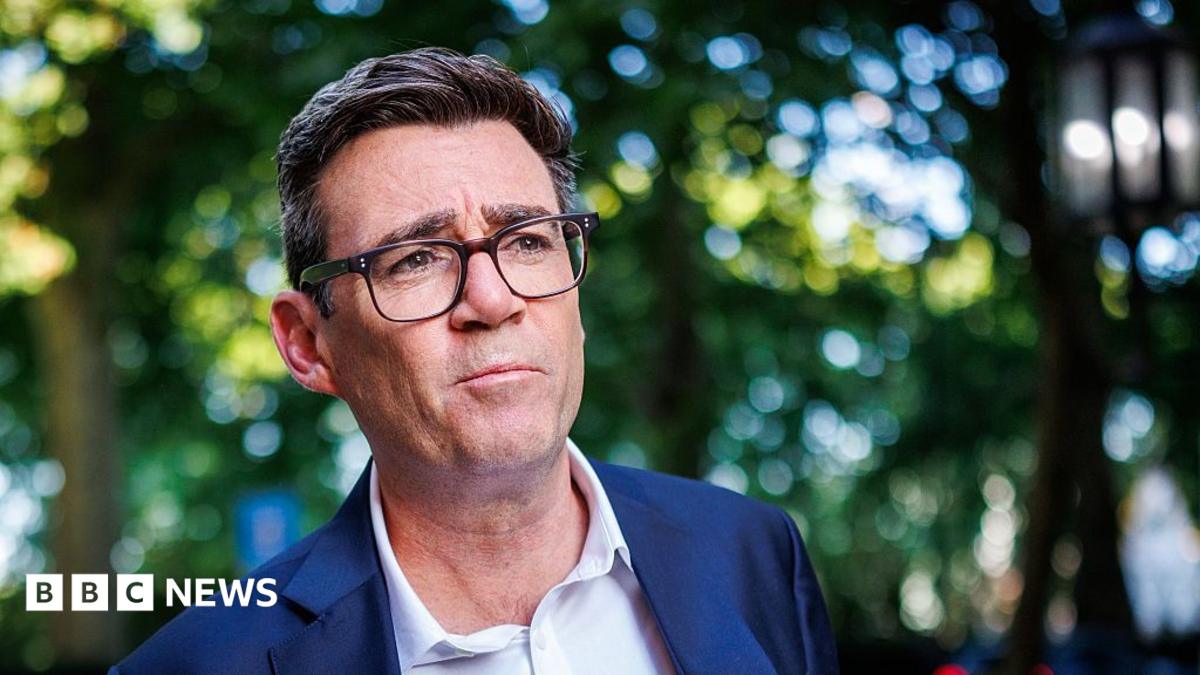
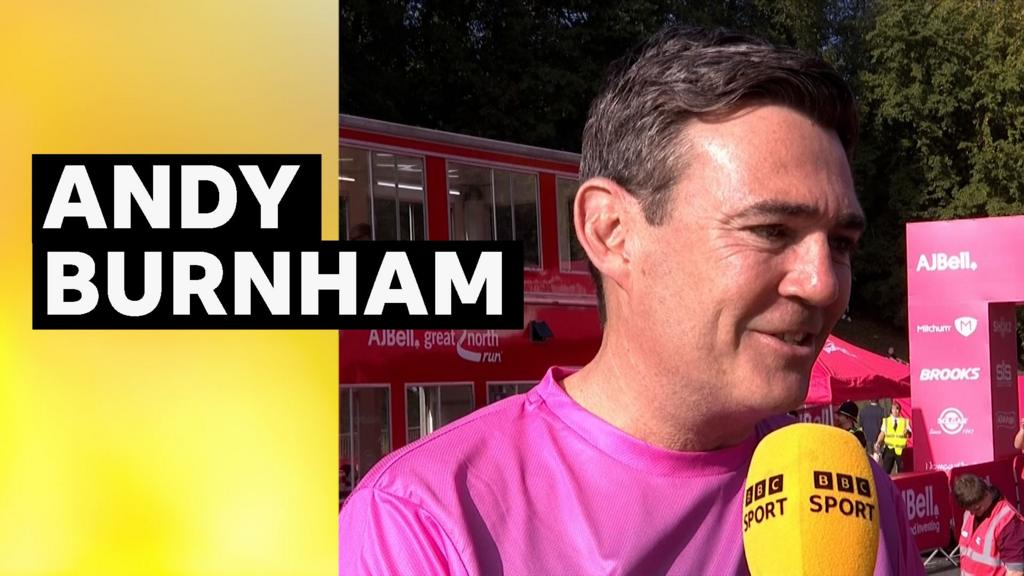
Burnham was mayor of Manchester from 2017 until earlier this year and his tenure took place during a sustained period of success for City.
As mayor, he championed investment from the Gulf as a way of growing Manchester’s economy, a strategy which was initially pursued by the city’s leaders before Burnham became the inaugural elected mayor of the Greater Manchester Combined Authority.
“I don’t think I misspoke,” said Burnham of his past comments on Man City’s owners.
“What I would say is my mind hadn’t been on all of the issues. My mind had been on Labour Party conference and I was doing interviews in relation to it.
“And also, I didn’t link those two things. You know, the questions linked those two things. What I would say is they’re very separate.
“The football issues are different from the investment issues. People will try and conflate those two things, but they shouldn’t, in my view.
“The football issues, the findings of the independent commission are serious, as I said in the interview.”
The entire process involving the charges against Manchester City is independent of the Premier League.
An independent commission held a 42-day hearing in 2024 which led to the verdict announced last month, with City also guilty of all charges except one relating to non-cooperation with the Premier League investigation.
The commission’s report said that “a number of important club witnesses gave false evidence in key respects and that some knowingly gave untrue and dishonest evidence”.
A separate independent appeal board will hear City’s appeal. The club continues to deny any wrongdoing.
His October track record suggested he was an unlikely hero. He entered Wednesday with a .123 playoff batting average. He was benched in Game 5 of the World Series last year. He’d even started this postseason hitless in the first two games of the National League Division Series against the Atlanta Braves, and was given the red light on ABS challenges.
He didn’t carry any of that up to the plate with him in the seventh inning, with the score tied, the bases loaded and hard-throwing Braves reliever Robert Suarez entering the game to face him.
“I like being in those at-bats,” Pages said in Spanish after the Dodgers’ 4-1 win in Game 4 of the NLDS. “There are times the result comes, sometimes not, but I prepare to be in those spots. And today I was able to get the result.”
He was patient, working a full count as he fouled off and then foul-tipped a pair of fastballs in the zone.
The next one, he sent through the middle of the infield for a two-run single to finally give the Dodgers the lead in the deciding moment of the series.
The Dodgers are headed to the NL Championship Series for the ninth time in 14 seasons. They will play the Milwaukee Brewers, who finished off the San Diego Padres in four games, starting Sunday. And they came one step closer to their goal of winning a third straight World Series.
Pages has contributed to the last two titles with his regular-season play and his glove. The game-saving catch he made in Game 7 of the World Series last year, trampling Kiké Hernández in the process, has been immortalized in bobblehead form. But now, he has a big moment with his bat.
“There’s never been a doubt about him, his talent,” Hernández said. “You can’t carry previous postseasons into this postseason. Everything is a new chapter. Every time you take the field in October, you get an opportunity to rewrite your story. So the fact that he struggled in the previous couple postseasons doesn’t mean that was going to happen again this year.
“I mean, during the regular season, you have two bad games and nobody freaks out about it, but because people are adding up previous postseasons, they’re going to freak out. But nobody doubted him. That’s why he stayed in the lineup. And I’m really happy that he was the one that won us a series.”
The signs of a potential breakout were there. When Pages came back from a fractured left hand for the final week of the season, he didn’t miss a beat.
Then he went 0 for 7 in the first two games of the NLDS, and manager Dave Roberts said he wanted to see him “slow down a little bit.”
“I’m going to continue to give Andy leash,” Roberts said. “I believe in him. I feel that for us to win the World Series this year, we’re gonna need him to be an active part of our team.”
Pages recorded two hits in Game 3 and logged another single in his first at-bat Wednesday.
Share via
“Everybody really forgets how young Andy Pages is, you know?” veteran infielder Miguel Rojas said of the 25-year-old. “He’s just starting his career. He’s still like a rookie in this clubhouse for us, because he’s one of the youngest. But at the same time, we see his potential, we see what he can do on the field and we feel so proud of him because … whenever he has the opportunity to contribute to this team, he does it in different ways. Defensively, offensively and on the bases.”
On Wednesday, Pages already had showed off his range in center field when he tracked down a fly ball off Matt Olson’s bat in the left-field gap. But the Dodgers desperately needed someone to contribute with runners in scoring position.
The game had been tied at one run apiece since the second inning.
The lone run Dodgers starting pitcher Tyler Glasnow gave up was made possible by Braves leadoff hitter Michael Harris II’s speed. He got on top of Glasnow’s first pitch, a fastball up and out of the strike zone, to shoot a single through the right side.
Harris then stole second and advanced on a groundout. Then, in an 0-and-2 count to Ozzie Albies, Glasnow spiked a curveball in front of the plate. Catcher Will Smith managed to block the ball, despite the high bounce, but it rolled back toward the mound, giving Harris time to dash home.
Glasnow limited the Braves to one hit in 4-2/3 innings. But five walks prevented him from pitching deeper into the game.
The Dodgers couldn’t get anything going against Braves starter Tyler Mahle, either.
They hadn’t faced Mahle since April, when he was with the San Francisco Giants and racking up a 5.13 ERA. But he’d been lights out since the Braves acquired him, authoring a 1.99 ERA. In his postseason debut, he limited the Philadelphia Phillies to one run in seven innings.
The Dodgers saw that new and improved version of him on Wednesday.
The one run the Dodgers scored against him was something of a fluke.
In the second inning, Shohei Ohtani, who moved up to the cleanup spot after hitting fifth the day before, drew a five-pitch walk without taking a swing. He then stole second base, drawing an errant throw that allowed him to advance to third. So, he was in position to score the tying run when Braves shortstop Mauricio Dubón, who robbed Freddie Freeman of a home run as the left fielder the day before, dropped a popup in shallow left.
The Dodgers recorded only three hits against Mahle in 6⅓ innings. So, the game would come down to the bullpens.
In the seventh, the Dodgers loaded the bases with a single from Teoscar Hernández, a walk from pinch-hitting rookie Josue De Paula, and a five-pitch walk from Kyle Tucker.
The Dodgers had gone 0 for 15 with runners in scoring position for the series when Pages stepped to the plate.
“It’s been incredible, especially the way he’s working, just to be ready for these big moments,” Teoscar Hernández said. “I think he was a little bit off his timing at the beginning of the series. Now that he understands he doesn’t have to do too much to help this team win games, I think everything is coming back to the way it was before he got hurt.
“He’s one of the best on the team. We get to this point because of him, the regular season he had. This is not a surprise for me that he’s having this kind of moment in the playoffs.”
Pages didn’t seem surprised, either.
“What happened last year, happened,” he said. “It’s in the past now. All I can do now is be in the moment. And being in the moment today, I was able to get the result.”
He pounded his chest twice as he left the batter’s box, and all of Dodgers nation rocked to the beat.
Andy Pages did it. He finally did it. He finally broke out of his baffling two-year October slump with a hit so powerful, he didn’t even have to climb over Kiké Hernández to get it.
How powerful? With one smooth swing he broke a tie by scoring two runs while sending two teams packing, the Atlanta Braves trudging home for the winter and the Dodgers charging into the National League Championship Series.
Yeah, it was a blast, both figuratively and literally, Pages’ two-out, two-strike bases-loaded single in the seventh inning Wednesday night silencing the lame tomahawk-chopping fans at Truist Park and giving the Dodgers an eventual clinching 4-1 victory against the Braves in the National League Division Series.
Dodger Andy Pages hits a two-RBI single against the Braves during Game 4 of the NLDS Wednesday in Atlanta.
(Kevin C. Cox / Getty Images)
Certainly, it only gets tougher from here. In winning this best-of-five series three games to one, the Dodgers can now prepare for a best-of-seven showdown task against either the mighty Milwaukee Brewers or blazing San Diego Padres.
Yes, they will need to hit better, they will need Blake Snell to find his focus, they will need Shohei Ohtani to show up.
But… Andy Pages! Seriously! If a guy who was seven for 66 in the last two postseasons and was so helpless last year he was benched for the last three games of the World Series… if that guy can drive in the winning run from the bottom of the order? The once-fallible Dodgers may just be unbeatable.
“There’s no more talented team than the Los Angeles Dodgers,” manager Dave Roberts shouted in the postgame clubhouse. “We’re the best organization in sports, top to bottom. We’re smarter, we’re better, and we’re tougher.”
At that point, someone referenced a recent comment from Padres owner José E. Feliciano insinuating that the Dodgers, baseball’s oldest team, was composed of dinosaurs.
“And we’re dinosaurs!” shouted a voice above the clubhouse din.
If they’re dinosaurs, their first initial is “T” and their last name is ‘Rex.”
It’s OK to start seriously thinking about a three-peat now. They’re now just eight wins away but, given how mediocre the American League playoff teams appear, they could realistically be just four wins away.
Here’s guessing that the NLCS will be the real World Series. And here’s guessing the Dodgers will be ready.
Pages, who won the hearts of Dodger fans last October when he made a leaping game-saving catch over the back of Kiké Hernández, was granted his first big October swing thanks to the Braves largess.
In the seventh inning of a 1-all tie, Teoscar Hernández redeemed himself for another fielding blunder with a single that finally drove dizzying Tyler Mahle from the game.
In came Game 2 rookie sensation Didier Fuentes, only this time, he was all rookie and zero sensation, walking Josue De Paula and Kyle Tucker to load the bases. Considering De Paula is just a kid and Tucker has been struggling, the fact that both showed such patience in such a pressure situation was pretty cool. And moments later, it got even cooler.
In came veteran reliever Robert Suarez, and Pages was ready for him, working the count full before lining the two-run single up the middle.
The Dodgers added a run two innings later on a Max Muncy home run — has there ever been a playoff game when he hasn’t homered? — to finalize the score.
Dodger Max Muncy celebrates after hitting a home run in the ninth inning of Game 4 of the NLDS against the Braves in Atlanta Wednesday.
(Kevin C. Cox / Getty Images)
When the game ended on an Austin Riley fly out to right field, Pages celebrated in center field by taking off his cap, turning his face to the sky and pounding the cap three times into his glove.
It was a series that was worth the emotion, the Dodgers famous starting rotation giving up just four runs in 21 ⅓ innings, the bullpen solid behind a revived Edwin Díaz, and the offense doing just enough to beat Braves aces Chris Sale and Mahle.
In the fifth inning of a tie game, starter Tyler Glasnow issued walks to Riley and Michael Harris II. With two out, in came Alex Vesia. Up stepped slugger Matt Olson. The fans climbed to their feet. This was the Braves’ big chance.
Dodgers closer Edwin Díaz throws the ball against the Braves in the ninth inning Game 4 of the NLDS Wednesday in Atlanta.
(Kevin C. Cox / Getty Images)
But Olson swung at the first pitch and lined it directly to second baseman Kiké Hernández to end the threat and quiet the joint. Díaz threw a hitless ninth for his second save of the series and…who’s going to beat them?
Afterward, Roberts referenced nearly half of his team when talking about his pride. He talked about Pages’ hit, about De Paula’s walk, about reliever Edgardo Henriquez’s 1 ⅔ shutout innings, about Muncy’s bat and Freddie Freeman’s glove.
Share via
“I guess, amazement,” he said. “Our guys just continue to fight, persevere. You never know who the guy’s going to be.”
The only glaring weakness was, once again, the superstar who used to be their strength. Ohtani scored the Dodgers’ first run after drawing a walk but went hitless in three ensuing at-bats. He only got two hits in the four-game series and you have to wonder if his injury-wracked body would be better out of the lineup.
How well are they playing without the full services of their most historic player? On the verge of making history, the Dodgers don’t even miss him.
“I thought coming into this camp, Pocognoli would probably need a period of grace,” Halliday said on Sportsound. “I think that period of grace is now over.
“That was as poor a Scotland performance as I can remember for a while against an opposition you are expecting us to go and beat.”
Slovenia got in behind Scotland’s high defensive line repeatedly and former national team captain Willie Miller is unsure if Pocognoli will stick with his back three.
“This is Pocognoli’s preferred system and he’s had time to work with the system, it was just all over the place,” Miller said on Sportsound.
“Time and time again there were huge gaps appearing and Slovenia were taking advantage.
“Our situation is we’ve got a new manager in, he’s got a preferred system, what does he do? Does he just bin it? Are we back to a back four?
“His preferred system is a back three, but it was unbelievably poor.”
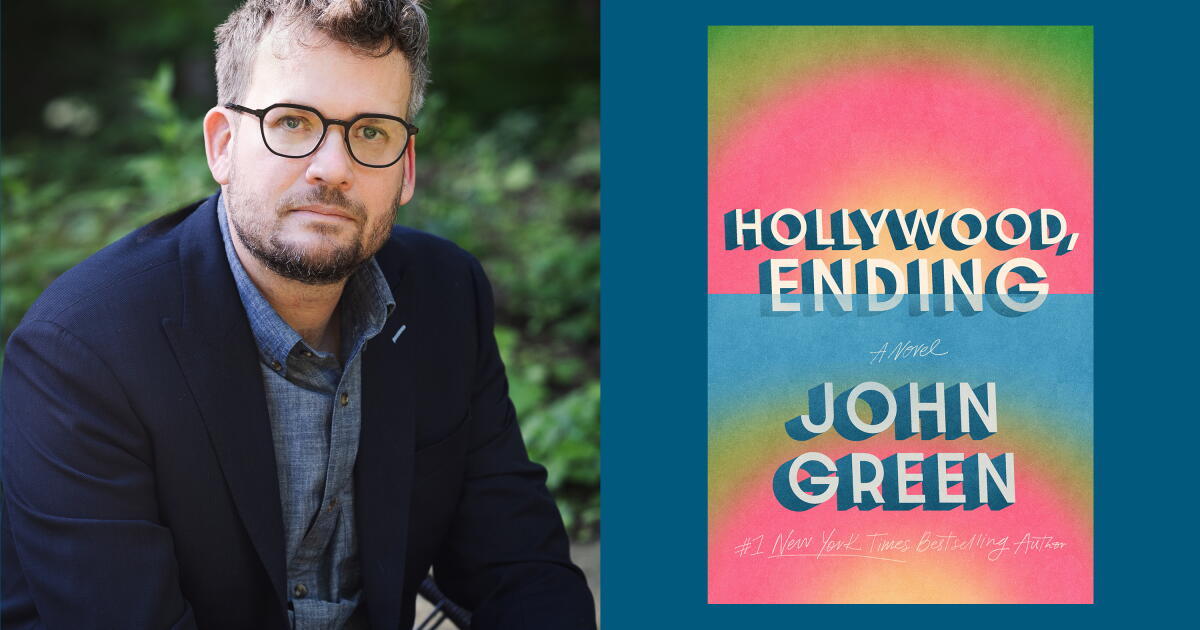
John Green’s nine-year hiatus from fiction has ended, and his adult debut, “Hollywood, Ending,” comes right on time to explore the dark side of fame.
The novel centers on former child actor Juniper Castillo and Hollywood newbie Kai Laramie, who are cast in the artsy biopic “Andy Warhol Never Gets Old,” with hotshot movie star Matthew Malone in the title role. It’s Juniper’s chance to establish herself as an adult actor and Kai’s first foray into the spotlight, a position he quickly realizes doesn’t come without a personal cost.
“There’s no way I could have written this book without spending a lot of time on film sets,” Green told The Times in a recent call.
On the Shelf
Hollywood Ending
By John Green Dutton: 304 pages, $32
If you buy books linked on our site, The Times may earn a commission from Bookshop.org, whose fees support independent bookstores.
Over the last two decades, several of the author’s bestselling young-adult novels have been adapted for the screen. His debut, “Looking for Alaska” (2005), was adapted as a Hulu limited series in 2019, the same year Netflix released the feature film adaptation of his co-authored holiday anthology, “Let It Snow” (2008). On the big screen, “Paper Towns” (2008) made its film debut in 2015, while his bestseller “The Fault in Our Stars” (2012) became a box-office hit in 2014. Most recently, his 2017 novel, “Turtles All the Way Down,” received a feature film adaptation in 2024.
“I hope the book is a love letter to movies. But I also wanted to be honest about how difficult it is to make a work of art that, in order to be commercially successful, has to be loved by millions of people,” Green said. That’s where the Hollywood machine comes in. “It’s really hard to figure out how to get millions of people to pay to watch something, and that challenge leads to all kinds of compromises and sacrifices.”
While Green’s young-adult novels have often explored the teenage experience, he never felt confined by the YA genre. “I think teenagers have infinite intellectual capacity,” he said, adding that he doesn’t really think about which shelf will hold his novels inside a bookstore. In “Hollywood, Ending,” his main characters are navigating their early 20s, a period which Green finds especially interesting.
“The questions in this novel explore how it feels in those early years of adulthood when there are still so many possibilities, so many directions you might go,” he said.
The following conversation has been edited for length and clarity.
How did you land on Andy Warhol as a celebrity figure and metaphor to use in telling this story about Kai and Juniper?
I think Andy Warhol saw so much of our world coming. He saw that three-dimensional experience was going to be rendered in two dimensions. He’s most famous for taking cylindrical soup cans and making them flat, but he also saw celebrity culture coming.
There’s the famous quote about everybody being world-famous for 15 minutes. I think he understood that normal people were going to experience celebrity, and he also saw the way that the repetition of images, as I write about in the novel, would lead to a certain desensitization. So I think everything from screen-based experience to the ways that technology was going to reshape our lives, he was the patron saint of all of that.
One of the images that really struck me is when you talk about him dying wigless and being too uncomfortable with that to have friends come and visit him in the hospital.
I think Juniper says at one point that fame is a kind of armor. I don’t know how Warhol thought of his wigs, but I wanted it to be a sort of emblem of protection for him.
Your wife, Sarah, is an Andy Warhol scholar. Was that a major strength while you were writing this?
There’s a huge advantage to being able to fact-check something by shouting down the hall. I also wanted to include Warhol partly as a love note to Sarah … She co-wrote a book about Andy Warhol’s relationship with money and business called “Andy Warhol Enterprises.” After 25 years, our way of looking at art and the art that we’ve shared together is so deeply intertwined that anything I write is unimaginable without her. She’s my first reader and most important reader … It’s only thanks to her that Warhol’s in the book.
You really humanize the young actors in “Hollywood, Ending,” which, unfortunately, is a unique thing. This is an intimate, vulnerable portrayal of behind-the-scenes Hollywood — why was that important for you to examine?
I wanted to write about the machine that takes private experience and commodifies it, and I think that machine is especially challenging to navigate when you’re young, when you’re in early adulthood, because you don’t yet have those relationships that are going to carry you through. You don’t have the love that you need to survive all that you’ve got to survive. When my work became very successful, I was in my 30s. I was married. I had two kids. I lived in Indianapolis. I had best friends. I was pretty grounded, and it was still very disorienting.
How so?
It’s a completely different life to have everybody have opinions about your work than it is to take your kids to school every day. So I was thinking partly about that, but I was also thinking about the influencers I’ve known, and the actors I’ve known who’ve had to go through that [while] much younger, and what that’s been like for them as well.
You do a really good job of examining the dark side of the attention economy. Why was this especially of interest?
Well, it used to be that the attention economy was mostly a problem for actors and other celebrities, but now the attention economy is something we all participate in. We’re all taking our private experiences and packaging them up for public consumption on Facebook and Instagram and Twitter and Reddit, and I think we gain something from that, or we wouldn’t do it. But we also lose a lot.
I wanted to try to be honest about what we gain, and also be honest about what we lose. My last novel, nine long years ago, was about a young woman with OCD. I also have OCD, and I had to make a decision when I was promoting that book, about whether I would talk about having OCD, and I decided that I would, and that became a huge part of talking about the novel — talking about my own experiences with mental illness, and it was a gift in many ways because so many people have said to me that it helped them to see that it’s possible to have a good and fulfilling life while living with a serious mental illness, and it was helpful for me because it helped me feel less alone in it.
But it was also complicated because there are real costs when you share something. It’s not yours anymore in ways that are a relief, but also in ways that are difficult.
You’re offering it up for scrutiny in a way that can be really scary.
It is really scary to have your private life scrutinized in that way, right? And there’s an element of judgment that comes with creative expression that’s a natural and healthy part of conversations about what art is and what art should be, but being in the middle of those conversations isn’t always fun.
I think you capture that in Kai’s experience.He is really pressured to come out and talk about his traumatic experience, and he doesn’t want to. The “machine” wants to sell tickets and exploit his trauma in the process.
It’s one thing to try to make good art. It’s another thing to try to make good art that lots of people interact with, and a portion of that second issue is inevitably finding ways to interest an audience, and nothing interests an audience quite like a personal story, especially a personal story of overcoming difficulty.
Was the movie star Matthew Malone based on anyone specifically?
I have aphantasia, this brain condition that causes me not to be able to imagine anything visually. I have no visual imagination, and so I can’t see actors when I’m writing. I can’t see characters when I’m writing. I can’t see anything. Everything’s made out of language, and so there’s no way I could have cast the movie in my mind or had somebody in mind for the character. It’s been great to hear all the folks who people were thinking of. I’m curious who you were thinking of.
I thought of Tom Cruise a couple of times. Have other people said that?
A couple people have said that as well. Yeah.
That’s so interesting about your work with language solely. Do you think that’s been a strength with you as a writer? Because you create such vibrant visuals for your readers.
It’s the only way I’ve ever been. I never knew that other people had this vibrant visual imagination until I was in my 40s, and my wife said I think maybe the reason you don’t have a sense of direction and you have to open up all the cabinets when you put away the dishes and you don’t know whether there’s a rug in the living room is because you don’t have a visual imagination, and I was like, of course I don’t. Nobody does, and she was like, you can’t picture an apple in your head? And I was like, no, nobody can picture an apple in their head. They say they can, but they mean it metaphorically … And Sarah explained to me that, in fact, the vast majority of people can see an apple, which still seems fictional to me, like science fiction stuff.
Some people don’t have that inner voice in their head (anendophasia).
I do have an inner voice. I think. But this all gets to something really interesting about being a person, though, which is that you’re stuck the whole time you’re here inside of one consciousness and looking at the world through one set of eyes. And I have no idea what it’s like to be you. The great thing about writing fiction for me is that act of imagination, that attempt to empathize, that attempt to escape the self and imagine what it would be like to be somebody else with some clarity, but of course, there’s always a limit to my ability to do that, and that problem has fascinated me my whole career.
Your books have meant so much to so many people, and in recent years, I’ve reported quite a bit on your book, “Looking for Alaska,” being one of the most commonly banned books. How do you feel about that?
I’m really concerned about attempts to limit intellectual freedom in the U.S., especially when it comes to libraries and schools. We have professionals we’ve trained to make collection decisions and to make curricular decisions in schools, and those professionals are teachers and librarians, and I’m very disturbed when other people come into that conversation and try to usurp the work that teachers and librarians are doing. I think a lot of times authors get most of the credit for the fight against book bans, and the truth is, all the credit should go to the teachers and librarians who are often putting their jobs on the line, making really difficult decisions to try to do the best by the kids that they’re representing and working with.
John Green will be in conversation with Julia Whelan to discuss “Hollywood, Ending” at 7 p.m. Tuesday, Oct. 13, at a ticketed ALOUD event hosted at Saban Theatre. 8440 Wilshire Blvd., Beverly Hills.
At 69, I had never hiked with a backpack and I had no idea what land art was. Nonetheless, when my friend Jackie, a nature documentary film-maker, invited me to join her and her friends Wendy and Sasha on a hiking trip to Refuges d’Artin the mountainous countryside of Haute-Provence, I said a resounding “yes”. We would be sleeping alongside sculptures by the renowned land artist Andy Goldsworthy.
First, I watch Rivers and Tides, a documentary on Goldsworthy’s work, and discover he has built exquisite ice sculptures and stone cairns in my own country, Canada. His work seems to speak to an older part of the soul. Then, I start walking up hills, gradually adding weights to my backpack until I can comfortably carry 9kg (20lb).
We meet in Digne-les-Bains, a bustling mountain town in the centre of the Unesco geopark of Haute-Provence, and the starting point for a 10-day, 150km (93-mile) hiking route that includes the possibility of staying overnight at seven reservable but free off-grid sleeping cabins. Goldsworthy worked alongside local teams to restore the abandoned shepherd huts, farmhouses, chapel and stone shelters, and created a site-specific artwork for each one. Over four days, we will visit three of these refuges and hike about 45km (28 miles).
Our first stop in Digne-les-Bains is Maison Alexandra David-Neél, a museum dedicated to the adventurous, peripatetic life of a woman who, in 1924, disguised herself as a beggar to become the first western woman to enter the Forbidden City of Lhasa in Tibet. The keys to the refuges are kept here, no doubt, to inspire hikers for the adventures that lie ahead.
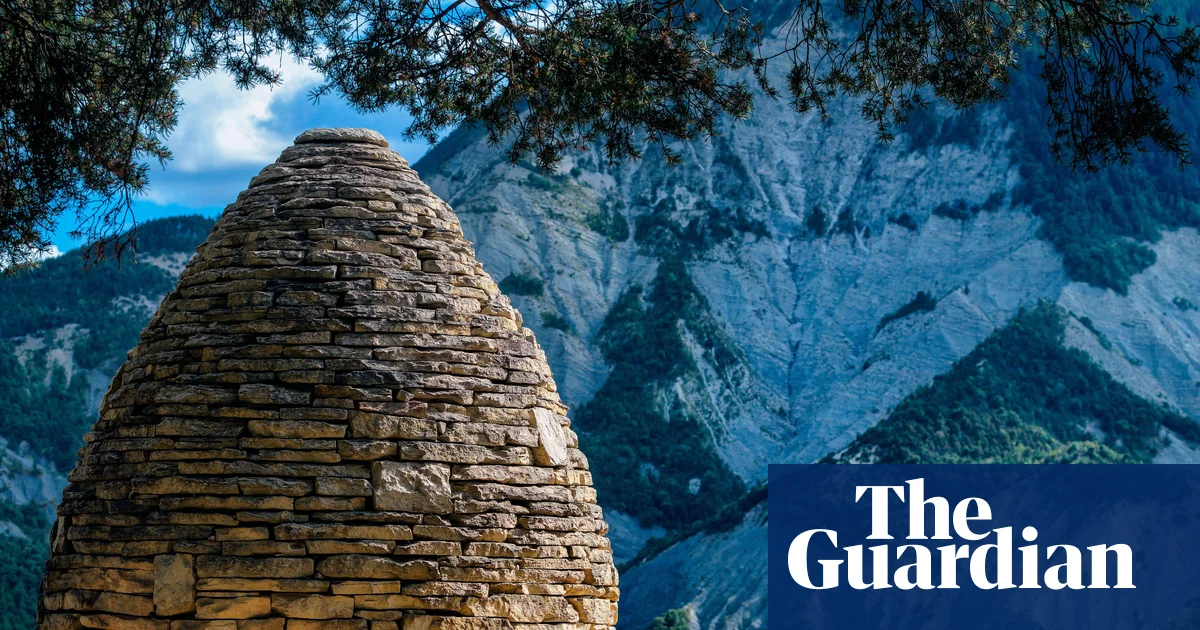
On the first day, we encounter one of three sentinels that sit like giant mysterious eggs watching over the route. These 2 to 3-metre tall cairns were made by Goldsworthy without mortar or cement and rely on fitting the right shapes and weights of the stones.
La Forest by Andy Goldsworthy, illuminated by natural light. Photograph: Hemis/Alamy
Jackie has told us the trail is mostly flat and indeed, we start on even gravel, chatting and laughing, getting used to the weight of our packs. After 5km, she says we should look for a path leading up the hill on our right. She checks her satnav and points to a goat path going straight up the rocks. I panic. My backpack suddenly feels extremely heavy. In desperation, I check further down the road and, to everyone’s relief, find a path marked with white and red horizontal lines signifying a granderandonnée, a trail certified by the French government.
We begin our ascent, pausing to photograph curlicued and wispy plants right out of Dr Seuss, yellow, scarlet and blue wildflowers, an orange moth sitting on purple brush. Spanish broom perfumes the air. We lift our gaze and see multiple valleys and unique geological formations. It’s easy to imagine our ice-age ancestors walking these trails 15,000 years ago and it’s gratifying to be travelling under our own steam, as they did.
We arrive at the first refuge, La Forest, as the sun is setting. The key unlocks the door. Inside, the air is cold. Our eyes adjust to the dark. A table and benches stand in front of us. To the left, a stairway leads to sleeping platforms. To the right, a doorway into a dark, empty room. From its depths glows a cylindrical obelisk, light falling on one large stone where someone could sit. It’s concave, constructed of light grey stone ending in a porthole to the sky. It’s illuminated by natural light and changes with the time, the weather, the season. This art is living and feels sacred.
That evening, we eat freeze-dried mushroom risotto in the flickering candlelight, play cards, eat chocolate, laugh and share stories. Sasha, who works in film in Germany, teaches us two words: der salzlose – someone who is bland and without flavour; and extrawurst – someone who always demands more. Neither apply to our group. The camaraderie and conviviality bring pure pleasure.
We climb the stairs to the sleeping platforms. Wendy and Sasha have brought sturdy sleeping mats on Jackie’s recommendation. We lay them out and say goodnight. The quiet is complete. Then, a tidal wave of sound erupts. Wendy and Sasha have rolled over. The friction on the technical fabric of their sleeping mats is deafening. The price of comfort has been revealed; they must lie like mummies.
Claudia and friends Jackie and Sasha (left to right) in Le Vieil Esclangon art refuge. Photograph: Wendy Reeves
The next day, we descend, picnic by a river on crackers, avocados and cheese, then start climbing again. Sasha and I subversively agree that it’s psychologically better to be told something is going to be hard and then it turns out easier. I console myself that climbing with a backpack is good for bone density and way less boring than lifting weights.
The next refuge, Le Vieil Esclangon, is in a mountain-top meadow. A majestic fan of lifted rock shines across the wide valley. Everywhere we turn there are more mountains and valleys. The first floor of the refuge is a large dark room split in two by a massive fireplace. Upstairs, the sleeping platforms look out on to a sunlit verge. Across from the fireplace, a tall serpentine shape made of dried mud loops back and forth like a meandering river, ending at the top in the source.
The wind picks up and the temperature drops. We gather wood and light a fire. In the flickering orange light, the sculpture comes to life, looking like one of Plato’s eternal forms. We eat our freeze-dried pad thai, the art and the hikers transient and temporary but together in this warm and cosy moment.
Later, we sleep to the sound of wind and rain, woken only by a mouse rave in the middle of the night.
La Ferme Belon, where ‘huge interlinked semicircular stone arches look like a dragon’s body swimming through earth’. Photograph: B Warluzel
We arrive at the third refuge, La Ferme Belon, in time for a late lunch. In the basement, huge interlinked semicircular stone arches look like a dragon’s body swimming through earth. Upstairs, the sleeping platforms are lovely except for one small detail. A colony of bats hang above. I can feign nonchalance because I know Wendy, who is quietly uber-capable, will find us a delightful B&B for the night. Over pizza and cold rosé, Sasha and I confess to Jackie that we would have rather known how challenging the hikes were going to be. “But you wouldn’t have come if I’d told you,” she answers with a twinkle in her eye.
Andy Goldsworthy said: “To me there is a tremendous difference between works of art that we observe in a museum just for a few minutes and works of art in which we live for a short while, in which we sleep. To sleep in a sculpture is a wonderful idea.”
In Digne-les-Bains we return the keys and soak our stronger bodies in the town’s hot springs. We’ve already said yes to Jackie’s next adventure, sight unseen.
Claudia Casper’s novelThe Mercy Journals won the Philip K Dick award for distinguished science fiction in 2017(Arsenal Pulp Press)
Asked about the state of the relationship between the UK and US, the prime minister said he believes it is “as strong as it’s ever been”.
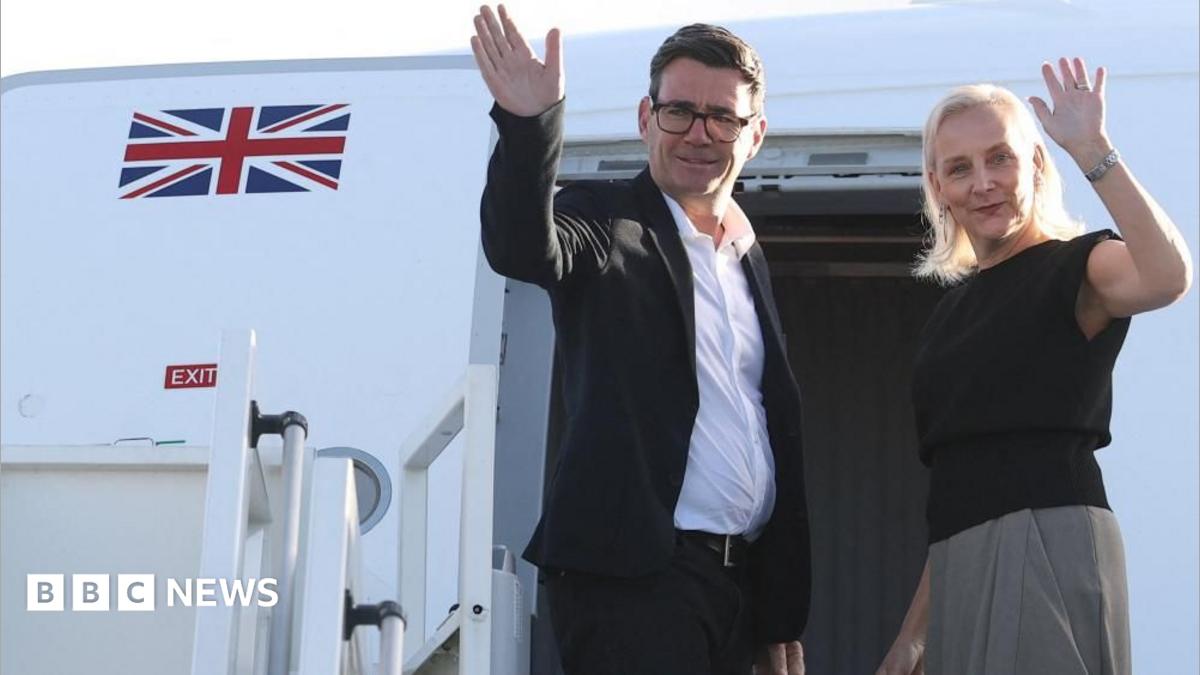
Burnham has travelled to New York with his wife, Marie-France Van Heel, for a day of diplomacy and a speech to the UN General Assembly, which is expected to focus on the opportunities and dangers associated with artificial intelligence (AI).
He said: “I will be making the case for closer international co-operation on AI, a just and lasting peace in Ukraine, and renewed efforts to bring an end to the conflict in the Middle East because what happens abroad impacts each and every one of us at home.”
The prime minister will also announce the start of work on a new AI and Autonomy partnership between the UK and the US, focused on protecting critical national infrastructure using AI tech.
Lib Dem leader Sir Ed Davey is expected to criticise this plan at the final day of his party’s conference, saying it “doesn’t come close to meeting the scale of the threat” and “only risks making us more dependent on a Trump administration in the pocket of the tech bros”.
He will also call for a global pause on superintelligent AI and propose a new International AI Safety Agency.
For a new British prime minister, the first meeting with a US president has always been a pivotal encounter, but officials are well aware of the added jeopardy of a public appearance alongside the most unpredictable president in American history.
In advance of the meeting, the UK revealed that the UK and the US have, for the first time, fired an American torpedo from a British undersea drone in a military exercise.
The torpedo, described as “heavyweight” by UK officials, is “designed to sink ships and deep diving submarines”, Downing Street said.
It was launched in UK waters last week from a 12-metre long undersea drone called Excalibur, made in Plymouth.
It is the first time either the UK or the US have launched a torpedo from an uncrewed underwater vessel, rather than a crewed submarine, and is seen as a breakthrough in attempts to protect vital infrastructure such as deep sea data cables.
“Our work together already shows what can be achieved when our two countries combine our expertise and innovation,” the prime minister said.
Burnham was also asked by reporters about the UK government seeking to hand over the Chagos Islands to Mauritius and pay to lease back the joint US-UK military base on Diego Garcia.
Burnham spoke to the Mauritian prime minister, Navin Ramgoolam, on Monday.
He was asked by reporters to outline what he had told Ramgoolam, whether he supported the deal and if he had a plan to convince Trump to back it.
Burnham replied: “I said that we remain determined to secure the long-term operation of the base, which is crucial to our security and that of our allies.
“The assurance I gave was I will work towards a resolution, at the moment we don’t have that, but I gave an assurance that I would commit to working towards one.”
The UK needs a “culture shift” in how it does business, Andy Burnham has said ahead of a meeting with some of Britain’s biggest bosses.
The prime minister said those who take risks in business should be backed by government and local leaders should have the power to work with companies.
The Labour government has been criticised for increasing costs for firms, such as with the employer national insurance and minimum wage changes under Burnham’s predecessor Sir Keir Starmer.
The meeting comes as Chancellor John Healey prepares for his first Budget next month, with rising borrowing costs in recent weeks adding to the pressure on government finances.
Downing Street said Burnham will meet the chief executives of BP, Shell, HSBC, Morrisons, Sainsbury’s, BT, Vodafone, Rolls-Royce and several others at Number 10.
Ahead of the meeting, Burnham said he would give people “the confidence that if they have a great idea, they’ll get all the support they need to bring it to life”.
“When local leaders have the tools to get things done and government works in partnership with business, you can pull in investment, create jobs and transform communities,” he said.
He added the government would be “a partner for growth to make every part of Britain better off”.
Burnham will host a reception for the business community where local leaders are invited before a private engagement with senior chief executives at Downing Street on Monday evening.
The meeting comes as higher borrowing costs in the UK and other countries present problems for governments looking to spend money on business support or investment.
Separately, hundreds of hospitality businesses have written to the prime minister, calling on him to cut VAT for the sector.
More than 800 pub, restaurant and hotel bosses – include celebrity chefs Heston Blumenthal and Tom Kerridge – signed the letter asking for the hospitality VAT rate to be reduced from 20% to 10%.
When he was still Mayor of Greater Manchester, Burnham said he would argue for the tax to be in line with the lower rates seen in other European countries.
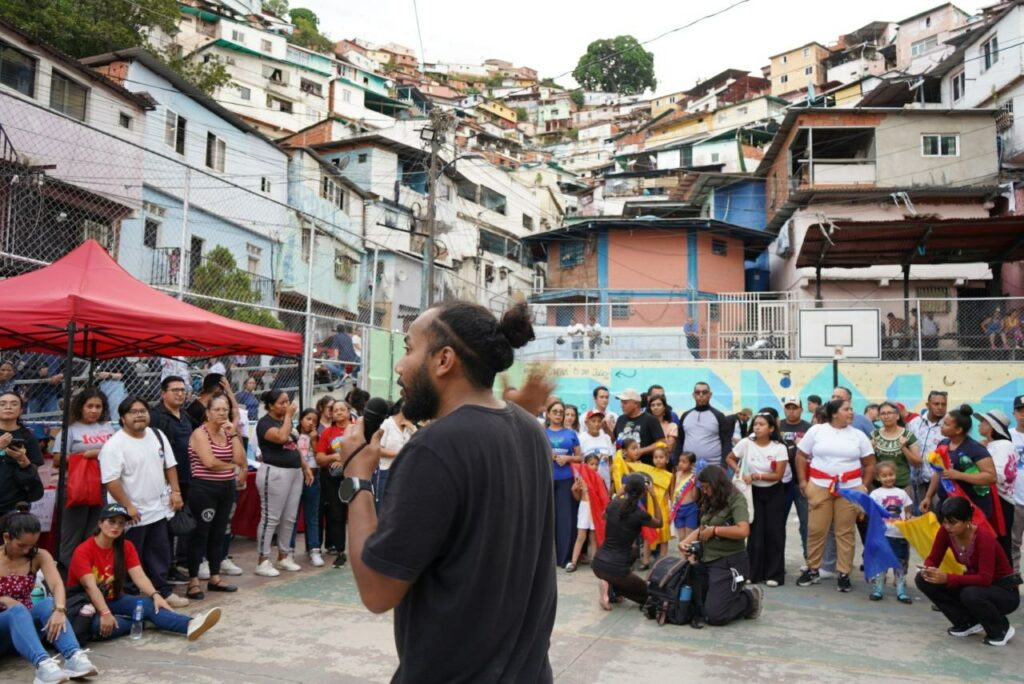
Andy Hernández is a Venezuelan economist and grassroots activist. He currently serves in the parliament of the 5 de Marzo Comandante Eterno Commune in El Valle, Caracas, and has played an active role in theCommunard Union, a national alliance of communes. In this exclusive interview, Hernández offers his perspective on local, state-backed projects within the current context of undermined sovereignty.
The 5 de Marzo Comandante Eterno Commune immediately mobilized in response to the double earthquake on June 24. Tell us a little about this and other recent initiatives by the commune.
After the twin earthquakes on June 24, community organizations sprang into action immediately. Collection centers were set up even before the government announced them. In our case, we set up a collection center on the premises of our communal social enterprise (EPSDC) Somos Karive.
At the same time, we noticed that around Somos Karive, many elderly people began leaving their homes, frightened, and taking to the streets. We brought them coffee, talked with them, and before we knew it, we had 300 people inside Somos Karive. There, with the support of the Ministry of Communes and the Caracas Mayor’s Office, we set up a shelter for a few days, until the panic subsided and people felt calm enough to return to their homes.
Somos Karive is one of the community’s main projects. How is it currently operating?
This initiative originally arose from a need to have a space to store food and expand our collaboration with the Pueblo a Pueblo Plan, a rural collective that organizes with urban counterparts to deliver produce at fair prices. The project then grew and now has several branches. The main operation, which generates the most cash flow, partly because it’s coordinated with the Ministry of Commerce, is the meat-processing plant. There, various cuts of meat are cleaned and portioned, vacuum-sealed, and then sold retail and wholesale to about 30 grocery stores in El Valle.
The second most important activity is our supermarket, which sells groceries and other products. There’s also the café, a space at the entrance that serves coffee, breakfast, and lunch. In fact, we also prepare large-scale lunches on demand. Another project here is a water treatment plant. And finally, a Family Production Unit (UPF) operates here, selling screws and other tools. This UPF contributes to the community through the social reinvestment fund. For now, that fund is used to support community activities. But according to the Law of Communes, the fund must be managed by the communal bank, which we are currently reactivating.
In short, Somos Karive has had its successes and failures, but it is a key initiative. I believe the most complex issue is establishing a management model. While all economic activity must generate a surplus, social property companies propose a different framework for labor relations. There is no boss; rather, there is administrative coordination that answers to the commune. No taxes are paid; instead, contributions are made to the social reinvestment fund. There are no social security contributions, but there must be a fund to support producers and a fund for necessary reinvestments. So we’ve been facing these challenges, in addition to the difficulty of operating EPS in the city, where retail activity makes sense but there is a lot of competition.
Hernández in a communal activity in Caracas. (MinComunas)
The Venezuelan government announced a new popularconsultation[for communities to select state-funded projects] for October. What has been the outcome of previous consultations in the commune?
The consultations have led to progress and also provided valuable lessons in our territory. Before the first consultation in 2024, we drew up a wish list without asking ourselves whether those items were feasible or not. Now, after several votes, and with some tools provided by the Venezuelan government for systematic planning, such as the Concrete Action Agenda or the Map of Solutions, we’ve been able to ground the projects in reality. Today we can say that we manage the proposed initiatives and the resources obtained much more effectively. Sometimes we even prepare two reports: one institutional and one community-based.
The most recent one was an extremely complex water project. Our community has gone 30 years without a regular water supply. There are no formal water supply connections, just hoses everywhere. First, the project was formulated: to fix the problem for 291 families without service, and it really did have a significant impact.
Other initiatives proved more difficult. For example, with a project to purchase water tanks, the funds raised were enough for only 10 tanks, yet hundreds of families needed them. The same thing happened with the project from the last consultation, which was to replace gas cylinders. We’ve managed to replace about 500, but there are 2,700 in total that need replacing. And the biggest challenge was with the rooftops. We needed 16,000 zinc sheets, but the project funds only allowed us to purchase about 850. So in situations like these it is difficult to manage everyone’s needs. In the end, we identified the most vulnerable homes, but we were only able to assist 65. No matter how well we manage the resources, they simply aren’t enough.
So we’ve had our share of setbacks, along with a lot of lessons. People now understand that we have to identify the scope of the problems that can actually be solved through these consultations. Rather than having a wish list, we’re learning to formulate real, concrete, and feasible projects.
What do you think of Acting President Delcy Rodríguez’s proposal to extend consultations to condominium boards and neighborhood associations?
To be honest, I find it interesting. The initial reaction, which I’ve seen in discussions with comrades, is to view it with suspicion, thinking of middle-class condominiums that have never believed in popular power.
The central issue is that a condominium board merely manages infrastructure, whereas the commune must implement policies on health, education, recreation, etc. It must act as the government in the territory, even if we aren’t fully exercising that role. So it might seem that by extending the consultation to condominiums, our presence is being undermined. However, our legislation doesn’t prevent condominium boards from participating in these processes.
Ultimately, the commune is the structure that defines the methodology for these consultations. Perhaps if, at some point, the consultations begin to prioritize the perspective of condominium boards, this concern would be justified. To me, that would indeed be a colossal mistake because it would violate the principle that the citizens’ assembly is the body that decides and has the final say on local projects.
The Somos Karive social property company is one of the 5 de Marzo Commune’s main economic initiatives. (MinComunas)
Turning to the national scene, some analysts describe the situation in Venezuela as “tutelage,” while others call it a “protectorate,” where the country’s fate is essentially decided in Washington. In this context, what role should grassroots organizations play? Is it justified to maintain unconditional support for the government?
Here I will speak in a personal capacity, not on behalf of my commune or the Communard Union, because this is a complex and highly contentious debate taking place within social movements, with many different perspectives.
There are several positions: some speak of tutelage, others of a protectorate, and others of a new form of neocolonialism. I believe we must ask ourselves what defines sovereignty. For me, there are two models of sovereignty currently clashing worldwide: one defined by corporations and the other by organized peoples. Now, in more concrete terms, I defend the Venezuelan revolutionary process, our history, and our struggle. I do not agree with some of the government’s decisions, but it remains my government nonetheless.
However, this is a very complex context in the wake of a foreign military intervention. How can a government be evaluated while under military coercion? That is a difficult question to answer. Regardless of whether or not one supports the government, January 3 [US military strikes and kidnapping of Maduro] is a turning point in our process. For me, the central issue is not whether to defend the government or not, but rather to defend our institutions. For example, I do not agree with reestablishing relations with Israel, nor do I agree with the terms of our relationship with the United States. But this is still my government.
I know this may sound illogical or contradictory, but as a popular movement we must understand that sovereignty is being contested on a global scale. Our goal is to build a new form of state, one that has the commune as its foundation. We must strive to ensure that these 5,400 communal circuits form a network for the defense of the territory, fighting for a new hegemony, and with a leadership that allows us to advance and influence national politics. However, this begins with exercising power from the territories in a coordinated manner, managing resources, and sustaining new social relations.
The communes are not even at 10% of our potential. Public consultations, for example, are a glimpse of what we can do, but they account for less than 1% of the national budget. This means that social organizations are not managing oil revenues, which are our primary source of wealth. We must develop political awareness not only to identify imperialist interests in our resources but also to create economic models that can scale up so we can challenge the status quo on different terms. For example, we could envision a communal corridor to exploit minerals in an alternative way. This would turn us into a real threat to those who seek to impose corporate sovereignty.
But returning to the more practical question: should we support the government or not? I believe we must support it because it is the government that establishes our institutional framework, even if it takes the form of a bourgeois state that we want to transcend. Now, should we support every decision? Of course not. But defending sovereignty means defending our institutions against foreign powers that seek to impose themselves upon them. For example, the assassination of Niño Guerrero struck me as a very dangerous precedent.
Finally, I believe it is important to have these discussions, both individually and within our organizations. In the case of the Communard Union, we are preparing a congress where we will need to collectively establish positions regarding this reality and, from there, define the actions we will take to try and revert the situation we are currently facing.
In recent months, we have seen a series of measures and reforms clearly geared toward the interests of transnational capital, such as the reform of the Hydrocarbons Law. What stance should communards take on these issues of national interest?
The reform of the Hydrocarbons Law is an example of this advance of the corporate sovereignty model. And in our context, the coercion and plundering began immediately after January 3. The attacks against Venezuela to seize its resources did not begin a few months ago, but before there was some care about appearances. Now the United States has moved on to directly stealing the country’s export revenues. This is like going back to the 19th century.
It is a complex time for the world. We are sometimes a bit chauvinistic; we believe that Venezuela determines what happens everywhere else. Although we certainly have an impact. We have the world’s largest energy reserves, minerals, fresh water, and other resources. Naturally, without independence there is no commune, and defending the process means defending national independence in order to envision a different world.
Now, what steps should we take to defend ourselves against this plundering? We have our Constitution, but this scheme falls outside even the international legal framework. Some might say the solution is to sabotage our own oil industry, but others would ask whether that would help shift the correlation of forces. Because we’re not just interested in being right. We want to change reality. We could issue a statement from the Communard Union right now, outlining everything we disagree with, and perhaps we should do so, but we must collectively decide what our coherent course of action will be, in terms of politics, communication, and so on, to defend our national project.
“Always loyal / Never gringos / Venezuela is not a colony” mural in Caracas. (Archive)
Venezuelan communes have also been characterized by their internationalism. How do you assess recent events, ranging from “joint” military operations with the US to the reestablishment of ties with Israel?
We believe that the commune is a civilizational project that we are implementing in a specific territory: Venezuela. Elsewhere, people may call it something else or pursue it with a different strategy, but we believe it is a civilizational project that is being debated around the world. So, based on that, the commune is obviously anti-Zionist and anti-imperialist. However, we are being subjugated and subdued. Not just the communes, but the country as a whole.
I believe that in the aftermath of January 3, elements such as the rapprochement with Israel were imposed on us. January 3 and the subsequent coercion were decisive in shifting the balance of institutional power, both within the Venezuelan state and in its foreign relations. The United States violated the Constitution, subdued our armed forces, and killed more than 200 people, including those extrajudicially murdered at sea, not to mention the piracy of hijacking our oil tankers. Thus, these disastrous changes are an imposition based on the logic of the military victor getting the spoils. In fact, US officials have openly stated this.
But the concept of the commune is and always will be anti-imperialist, anti-Zionist, and in support of the self-determination of peoples, with a vision of how resources and community life should be organized, the full exercise of our sovereignty, and so on. In this context, the communes must resist by demonstrating their existence, their socially owned enterprises, their assemblies, and their impact on the territory. Demonstrating that another way of life is possible is a way to fight back both locally and internationally.