Andrew

Anne Robinson ‘splits with Queen Camilla’s ex Andrew Parker-Bowles’ after moving to London from Cotswolds

ANNE Robinson has split from Queen Camilla’s ex-husband Andrew Parker Bowles after moving from the Cotswolds to London, it has been reported. 

In a recent podcast appearance, Anne, 81, told how she’s been forced to sell her £4million mansion in the countryside “because my eyes aren’t good and I can’t drive”

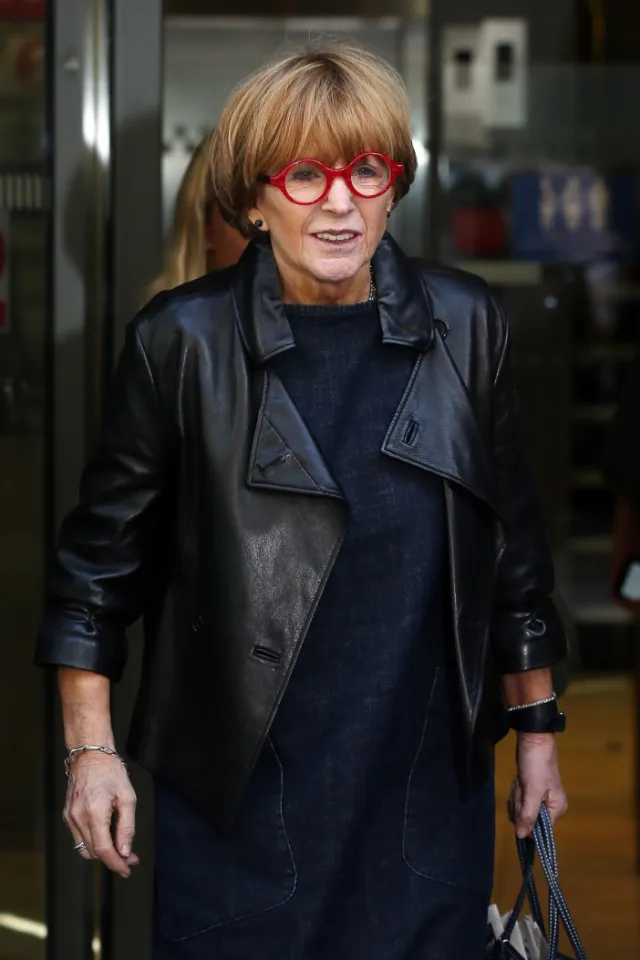
Janet Street-Porter walking while wearing a black leather jacket and red glasses.
Anne is said to have split from Andrew Parker Bowles after around four years of dating Credit: GC Images
Mark Shand, wearing a navy suit with a purple boutonnière and carrying an umbrella.
The retired brigadier, 86, has never been photographed with Anne or spoken publicly about their relationship Credit: Getty Images

Now the Daily Mail have alleged the TV presenter has called time on her relationship with Andrew, 86 – who still lives in the Cotswolds – after around four years of dating. 

The publication reports that, when asked if she’d been going out with the retired brigadier, Anne replied: “I might have done.

“It’s very difficult to talk about a relationship where part of it is owned by somebody else, so out of politeness I don’t talk about it.”

Anne and Andrew have never been photographed together and he’s never confirmed their relationship. 

SAD BLOW

Anne Robinson reveals health issue behind ‘heartbreaking’ decision to sell mansion


WEAKEST LINK

Inside the incredible love life of Weakest Link star Anne Robinson

He and Camilla, 79, were married from 1973 until 1994 and are parents to Tom, 51, and Laura, 48. 

During a recent appearance on the Experience is Everything podcast with Lorraine Kelly, Anne opened up about ageing and said: “I do Pilates twice a week, I run and I do exercises. 

“I don’t mind the Pilates. The keep fit trainer is very nice but that’s quite boring.

“And I just try not to be ill. But you don’t know. 

“I mean, I’m just selling my house in the country because my eyes aren’t good and I can’t drive, and I can’t be really isolated anymore.

“But you know, and I don’t hear that well. Otherwise I’m OK.”

Anne confessed that leaving the Cotswolds after 40-odd years was a “heartbreaking decision.”
Source link

‘The Uprising’ review: Andrew Garfield kicks off a revolution

Filmmaker Paul Greengrass is often associated with a cinematic aesthetic colloquially known as “shaky cam” — handheld cinematography enabled by lightweight digital cameras that function a lot like another character in the room, on foot, at eye-level, responding and reacting to action and dialogue the way a person would.

It’s a style that has served him well in modern action thrillers like his installments of the “Bourne” franchise, and films depicting recent real-world events like “Captain Phillips” and “The Lost Bus.” Now, Greengrass applies his signature style to the Middle Ages — can shaky cam work in a medieval movie?

It may seem odd, but it’s a brilliant creative choice when considering that while “The Uprising” is technically about the 1381 Peasants’ Revolt in England, that’s not really what it’s about. It’s about right now.

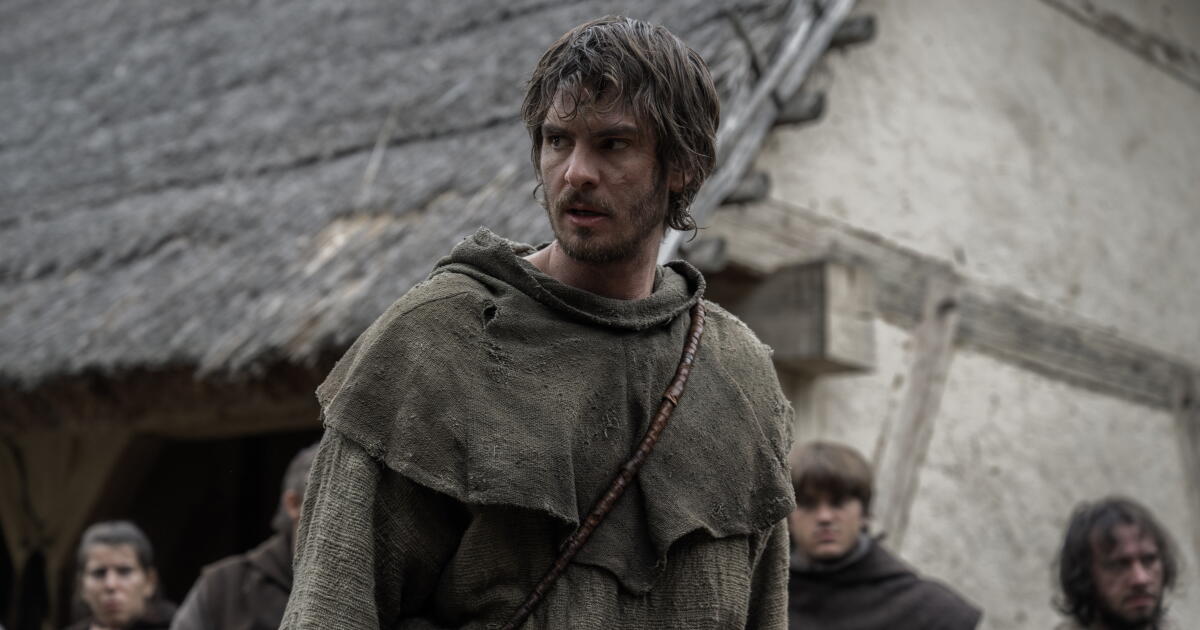
The shaky cam is intended to jolt us into that awareness. When we pick up with our protagonist, a pathetic ploughman (Andrew Garfield) living a grief-filled and wretched existence, a plague has wiped out half the population. A small group of men hoards wealth and resources, while the peasant class is heavily taxed, laws brutally enforced. As Greengrass lays out the bare facts of this situation with a cinematic style that’s more news documentary than stuffy period piece, the parallels to our own current situation are laid bare.

“The Uprising,” which Greengrass wrote and directed, is told in a fairly simple fashion, with an emphasis on visual storytelling and visceral sensation (the disparate English accents are also lost in the melee of the mob). All we need to know is that the council advising the 14-year-old King Richard II (Woody Norman) conspires while the young royal prays and his mother (Katherine Waterston) glowers. Outside, a bloodthirsty mob armed with farm tools marches on London, led in part by Garfield’s ploughman, who started his own local uprising when he fought back against the taxman. He joins forces with Wat Tyler (Cosmo Jarvis), a former soldier, and John Ball (Jamie Bell), a priest deemed heretic, as the crowd demands an audience with the king.

As the chaos unfolds, Greengrass doesn’t pontificate on the morality of these events and, in fact, maintains a rather neutral stance on them for most of the film, withholding judgment. A revolution is not right or wrong for most of “The Uprising.” It is simply inevitable under the conditions the film presents.

The ploughman wants to play by the rules, but it’s how the revolt plays out that radicalizes him. While Greengrass shows us the uprising in all its messy confusion as the logical outcome of oppression, by following our protagonist as he witnesses treachery and deceit, Greengrass ultimately arrives at the belief that revolution is necessary, even in failure, and that freedom is worth more than anything.

The opening and closing of “The Uprising” are bracing and stark in their storytelling — the middle is a bit mushy and confusing. But it’s the performances that carry us through. Garfield, sensitive and earthy, is our bellwether as the events descend into bloody carnage dictated by muddled agendas. When he turns, we turn, and the anguish that Garfield wordlessly conveys is our compass.

Greengrass surrounds Garfield with actors who deliver bigger performances, like Jarvis as the brutish but shrewd Tyler, and Bell as the fervent Ball. Thomasin McKenzie plays a young woman, Alyce, steeped in her own trauma and loss, who attaches herself to the ploughman, and her ability to express wide-eyed, barely contained hysteria and fear is unmatched. Young Norman is riveting as the increasingly dastardly king.

The Peasant’s Revolt of 1381 is a fascinating moment because it’s a time when the notion of democracy wasn’t even a twinkle in a feudal servant’s eye. The mob’s actions are frustrating because they’re religiously bound to the king, who they believe is an emissary of God, and desperate to change their day-to-day existence. When those two instincts collide, it’s bound to be complex and conflicting, and Greengrass delivers that with a boots-on-the-ground style.

The murkiness of it all clarifies by the end of the film, not just in terms of its heroes, villains and message, but Greengrass also situates this story within a recognizable cinematic and storytelling history. There’s a thrill as it all comes together. Greengrass might be taking a big swing (of the scythe), but his blade finds its target nevertheless.

Walsh is a Tribune News Service film critic.

‘The Uprising’

Rated: R, for violence/bloody images

Running time: 2 hours, 8 minutes

Playing: Opens Friday, Sept. 11 in wide release

Source link

Andrew Scott on ‘Elsinore’ and his go-to movie when he’s sad

Do you believe in ghosts?

Andrew Scott considers the question and looks at me with a mischievous grin, retreating to a corner of the restaurant booth where we’re catching up a few hours before his new movie, “Elsinore,” the most personal film he has ever made, premieres at the Telluride Film Festival.

Scott turns over the question again. “Do I believe in ghosts?”

It feels like a reasonable thing to ask. Three years ago at Telluride, the yearning romantic fantasy “All of Us Strangers” memorably premiered, featuring Scott playing a character who worked through unresolved trauma by talking to the dead. Ghosts are elsewhere in his work, metaphorical (“Vanya”) and literal (“Hamlet”).

“If I had a gun put to my head — which you don’t have to — I would say that I don’t believe in them,” Scott says. “But the idea of the afterlife and where we will go is still really fascinating to me. Dreams and the subconscious, too. I don’t know what went on consciously in the world outside my hotel room here last night. I was perfectly content to be asleep. And I like the idea of thinking about death that way. I’ll just be asleep. It’ll be OK. It’s the undiscovered country.”

A man sits deep in thought, holding a skull.

“The movie for me is about time,” says Andrew Scott. “What are you going to do with your time? Ian decided to to live and to be a light and to be around people for the glory of the theater.”

(Anthony Dickenson / Focus Features)

Dropping a line from Hamlet’s “to be or not to be” soliloquy in this context feels unavoidable. In the powerfully moving “Elsinore,” Scott plays the real-life actor Ian Charleson, who, as he was secretly dying from AIDS, played Hamlet in a 1989 Royal National Theatre production, still considered one of the great performances in London theater history. Charleson was 40 at the time, known for playing Scottish Olympic athlete and missionary Eric Liddell in “Chariots of Fire.” He died eight weeks after leaving the National Theatre stage. “Elsinore” captures that journey in all of its glories and taxing challenges.

“That he would go for treatment in the morning and then play this Olympian role is just endlessly moving,” Scott says. “I don’t know how he did it.”

With our pint glasses filled with water as we adjust to Telluride’s altitude, we try to figure it out.

Charleson playing Hamlet, scaling the Everest for actors, reminded me of David Bowie making “Blackstar” as he was dying. As an artist, you’re not often given the chance to shape the narrative of your own end.

Being offered Hamlet doesn’t happen to every actor. To take it and turn it into something generous and useful — useful is a word I love about acting, that it’s useful to people.

When people are feeling down, they can watch a movie they love.

And see themselves. That can’t be underestimated.

What’s your go-to movie?

I will always watch “Bridesmaids” when it comes on TV. Comedy is precious to me. Laughing is precious to me. I don’t see it as the antithesis of tragedy. I think they’re one and the same.

The last time we talked, around the time of “Ripley,” you wanted to put out into the universe the idea of starring in a musical or a comedy. That hasn’t happened by the strictest definition. But you seem to be saying that genre labels don’t matter.

The reason, hopefully, that “Elsinore” is moving is that we approach some of the stuff with quite a bit of lightness. The effect is tragic and there are some heavy things in it. But my job, what I prioritized, is keeping it light.

You are seen dancing to Ethel Merman’s disco album. It doesn’t get much lighter than that.

My favorite actors are the ones that are funny. I worked with Lisa Kudrow last year on “The Comeback,” and yes, of course, she’s very funny. But if you look at that performance she gives toward the end, it’s so moving. People come away from things that are labeled comedies and go, “I just laughed at that.” Or people come away from things that maybe were really sad and say, “I was just devastated by that.” I think the job is to get rid of categorizing and make it more fluid.

Like life. Sometimes you eat the bear and sometimes, the bear, he eats you.

Exactly! I don’t love things that are overly serious. One of my big dreams for this film — and I do wish so much for this film because it’s so personal — is that people don’t feel like that they’re going to see something that’s depressing. I didn’t want to fetishize Ian’s death.

What do you hope audiences take away from watching it?

That they see themselves in it. You know, it doesn’t end well for any of us. The movie for me is about time. What are you going to do with your time? Ian decided to to live and to be a light and to be around people for the glory of the theater.

Speaking of time, next month you’re going to be celebrating a milestone, turning 50. Or not celebrating. I don’t know how you feel about birthdays.

I don’t love my birthday.

Any year?

My friends have said to me, “You gotta make some plans.” I love a party. Which is to say, I love other people’s parties. What I usually do is I leave it to the last minute and send texts around, saying, “I understand if you don’t want to come, but I might do this.” And then you do something small. I read something yesterday where you should go to your own parties like you’re a guest. I think that’s a very good way to to do it.

What about just being around for half a century? Is that in your head? You’re the one who just said it doesn’t end well for any of us.

I’ve definitely thought about it more. Sometimes in the middle of the night, I’ve thought, “Jesus, what?” I’m sure that’s because of my mom dying and that I’m approaching my mortality. Again, how am I going to use my time? One of the reasons I was so ferocious about getting “Elsinore” made was that I would put all of myself into this and then maybe I can chill out a bit more.

An actor steps onto a darkened stage.

Andrew Scott in the movie “Elsinore.”

(Anthony Dickenson / Focus Features)

The personal aspects of this movie are striking. In addition to producing “Elsinore,” you yourself have played Hamlet on stage. You’re also a gay actor portraying someone who, at the time, would have torpedoed his career by coming out.

When I was a kid, I was obsessed with the movies and would read Premiere and Empire magazine. Around 16 or 17, I started to realize that maybe if you’re gay, you wouldn’t be invited to movies. And I wasn’t wrong in thinking that, because there weren’t many examples. So I would omit things in interviews. I wouldn’t lie, but I really understood that about Ian’s generation.

There’s a melancholy moment in the movie where he says, “I wanted to be in the movies. I didn’t scale the heights.”

What a gorgeous little dream. A young boy goes, “I want to be in the movies.” And then to have that knocked out of you bit by bit. You’re not even going to be seen for the audition. Or, “Are you being a little fruity there?”

Did people tell you not to talk about being gay?

Very well-meaning people said to me, “Just keep that [private] because you’re not obviously gay,” which I often think is such an insult to say to people. “So maybe you can get away with it.” And I was like, OK. And I did that for awhile. But it was so insidious. When audiences think of acting, they think of actors pretending, like you’re putting yourself in somebody else’s shoes. So the fact that there was this whole section of gay actors who weren’t allowed to do that is awful. I’m so grateful that I get to do that.

What do you remember about the late ’80s and early ’90s in terms of navigating the AIDS epidemic?

It makes me emotional. It was extraordinary just to to have lived through that time and to be completely abandoned by your government, who wouldn’t even say the name of the illness. When I was a young adult, that’s what I was scared of. If you go for a sexual health screening, you go, “My God, am I going to die?” I remember going into those situations, and with no cause for such concern, feeling like I’m going to be punished for expressing myself in that way, because that’s the way the world was set up.

Let’s get back to Ethel Merman.

Please! [Laughs]

There’s that stanza in “There’s No Business Like Show Business” that goes: “There’s no people like show people / They smile when they are low.” Would you say that sums up the spirit of “Elsinore” about as well as any couplet could?

Yes, it’s so much about the power of community and show people. It’s about show people and smiling and getting on with the show.

When did you first feel that power of community?

Putting on “The Wizard of Oz” in a school play when I was about 10.

What part did you play?

Guess.

Dorothy?

[Laughs] No, a friend of Dorothy. Oh, come on. One more guess.

The Cowardly Lion?

No. The Tin Man. My mom sprayed me silver, in my hair and everything. We had a probably bit of aluminum foil and I had a funnel. I loved it so much. And I remember having a really extraordinary feeling of surprise, knowing the audience was there. For such a shy boy, when I had to do the big number, “If I Only Had a Heart,” it went to another level, better than rehearsal. I suppose the little showman, the little 10-year-old silver showman, came out.

Source link