Hispanic voters are twice as likely to favour Democratic Party over Trump’s Republican Party in the November elections.
Published On 5 Oct 20265 Oct 2026
A new poll from the news agency Reuters and the research firm Ipsos has found that United States President Donald Trump’s approval rating remains at a record low as the midterm elections approach in November.
The six-day survey, completed on Monday, found that just 32 percent of US voters approve of the job Trump is doing as president.
Recommended Stories
list of 3 itemsend of list
While that low rate has held steady since September, the latest Reuters-Ipsos poll suggests his support among Latino voters is continuing to slide.
Trump’s approval rating shrunk this month to 24 percent among Hispanic voters, its lowest point in either of his two terms in office.
The Republican leader had previously made substantial inroads with that constituency.
The Pew Research Center estimated that Trump and his Democratic rival, Kamala Harris, were within three percentage points of each other in the 2024 presidential race, earning 48 percent and 51 percent of the Hispanic vote, respectively.
That rate marked a significant jump for Trump over the 2020 election, when he only earned 36 percent of the Hispanic vote.
Experts have credited the boost in Hispanic support with helping Trump win the 2024 race. His 2020 bid, by contrast, ended in defeat to Democrat Joe Biden.
The Monday poll found that Trump’s gains among Hispanics have largely evaporated.
About 52 percent plan to vote for the Democrats in the November midterms, compared to 26 percent for Republicans.
The upcoming midterm is largely viewed as a referendum on Trump’s second term and will decide whether the Republicans maintain their majorities in the US House of Representatives and the Senate.
Democrats have seized on Trump’s low approval ratings, hoping to translate frustration with the president into voter momentum for their party.
A Democratic majority in one or both houses of Congress would place substantial constraints on Trump’s agenda for the remainder of his time in office.
But Trump has also faced rumblings from within his Republican Party as the November 3 midterms approach.
One Republican incumbent, Representative Maria Elvira Salazar of Florida, released a campaign advertisement last month that addressed Trump directly, saying, “The same Hispanics who helped you get to the White House in 2024 feel betrayed today.”
She cited Trump’s hardline immigration crackdown as a source of tension. “Some of your immigration enforcement efforts have gone too far,” she said, pointing to the detention and deportation of immigrants with no criminal record.
Experts have also warned that the president’s shrinking popularity, driven in part by concerns about the cost of living and his decision to launch a war on Iran, could weigh down Republican candidates in key races across the country.
Still, Trump has continued to express confidence about the prospects of his Republican Party in the upcoming midterms.
He has also defended his decision to place himself at the centre of the Republican election campaign strategy. Trump recently launched a 32-day blitz of cross-country rallies ahead of the November 3 midterms.
“Just so you understand, they all want me to go,” Trump said, denying that some Republicans would prefer he keep his distance. “They all want me to go campaign.”
IT’S out with the old and in with the new, as holiday-makers seek out less visited destinations.
This year will see growing interest in “Cinderella destinations”, previously overshadowed by more heralded neighbours, finds research for operator Riviera Travel.
Romania’s Bran Castle, inspiration for the Dracula taleCredit: GettyDracula, played by Christopher Lee in 1958Credit: Alamy
Bookings for South Korea are up 167 per cent, year on year, while those for Uzbekistan have risen by 42 per cent.
So, before securing next year’s getaway, take a look at Sophie Swietochowski’s alternative suggestions . . .
Sign up for the Travel newsletter
Thank you!
TRANSYLVANIA
You might think Transylvania, a Romanian region strongly linked to vampires, should only be visited at this time of year as we approach the spooky season.
But there’s so much culture and fascinating history to be explored, beyond the Dracula myths.
Glorious hiking trails make it a rambler’s paradise while animal lovers should keep their eyes peeled for brown bears, which are highly concentrated in this area of Romania.
GO: The eight-day trip costs from £1,749pp based on two people sharing and including return flights and transfers, accommodation in four-star hotels, daily breakfast, two lunches and two dinners, and 12 experiences. For details, check out rivieratravel.co.uk.
SRI LANKA
Go Bananas and spot monkeys in Sri LankaCredit: Getty
While Sri Lanka is not exactly an undiscovered destination, it has become more popular in recent years as more and more travellers favour it over the much-visited Thailand.
Tourist numbers are lower than for other nearby destinations, meaning prices are still cheaper and travellers can get more bang for their buck.
Also, you won’t be dealing with mega crowds and tourist traps.
Instead, you can expect high-end accommodation and loads of wildlife (a half-day safari trip should be top of your list of things to do).
If wildlife is what you’re after then a stay at the 5H Sun Siyam Pasikudah offers great value for money — and you’re likely to spot monkeys and cows strolling the beach or elephants in the backstreets nearby.
GO: Seven nights’ half-board at the 5H Sun Siyam Pasikudah is from £1,379pp including flights from Gatwick and transfers on April 13. Book by October 15. See travelbag.co.uk or call 0203 393 9620.
SLOVENIA
Peak time viewing in the Slovenian AlpsCredit: Getty
Those on the hunt for glorious alpine views and vast lakes tend to make a beeline for Switzerland or Austria.
These destinations can make a heavy dent in the wallet, though.
Its glacial rivers and snow-drenched peaks could rival those in the fanciest resort towns of popular holiday countries, with the dramatic Lake Bled offering the most glorious backdrop for tourist snaps.
Make sure to visit the Vipava Valley, too.
It’s Slovenia’s answer to Tuscany and home to some unique white wines that you won’t find anywhere else.
GO: Seven nights’ room-only at the 4H Triglav Bled is from £459pp including flights from Luton on February 22. See loveholidays.com.
UZBEKISTAN
The Shah-i-Zinda in Samarkand, which was built between the 11th and 15th CenturiesCredit: Getty
Brits can visit Uzbekistan visa-free for up to 30 days, which is more than enough time to indulge in the country’s fascinating architecture.
Turquoise domes and colourful mosaics are a key feature of many notable buildings, including the Shah-i-Zinda in Samarkand, which was built between the 11th and 15th Centuries.
The ancient trading route that makes up the Silk Road passes through the heart of the country and, if you have got cash to splash, you can soak up the best of it on an 11-day adventure.
The trip starts in Tashkent before heading to the Ayaz-Qala desert fortress, Khiva (a Unesco World Heritage city), Bukhara and Samarkand.
GO: The Silk Road trip is from £3,249pp based on two people sharing, including return flights and transfers, nine nights in three to four-star accommodation, daily breakfast and nine meals, plus ten experiences. For details, check out rivieratravel.co.uk.
SOUTH KOREA
The wondrous Gyeongbokgung Palace in South KoreaCredit: thianchai sitthikongsak
Forget Japan, South Korea’s K-pop music, quality beauty products and fascinating culinary scene have the younger generations hooked.
And with the recent launch of direct Virgin Atlantic flights from Heathrow to South Korean capital Seoul, the country is now easier than ever to reach.
So if this sounds like your cup of tea (or bowl of kimchi), book now before visitor numbers skyrocket.
Seoul, in particular, blends history and culture with modern-day living — palaces sit between skyscrapers, and traditional markets are close to contemporary shopping areas.
GO: Eight nights’ room-only at the 5H Grand Hyatt Incheon is from £1,458pp including flights from Heathrow on May 12. Check out virginatlantic.com/holidays.
A GALAXY of stars flocked to the L’Oréal show at Paris Fashion Week — and proved they were definitely “worth it”.
Models, actresses and singers with a combined net worth of well over £2billion descended on the French capital for a string of shows.
Brit model and actress Cara Delevingne striding the catwalkCredit: Shutterstock EditorialBillionaire singer and businesswomen RihannaCredit: Shutterstock Editorial
L’Oréal Paris — whose slogan is “because you’re worth it” — kicked things off on Monday with a multi-billion-pound runway.
Guests striding the catwalk included British model and actress Cara Delevingne, US reality star and entrepreneur Kendall Jenner, Desperate Housewives’ beauty Eva Longoria and German supermodel Heidi Klum.
Sign up for the Showbiz newsletter
Thank you!
There was also a surprise performance from Canadian singer Celine Dion, who belted out her 2002 hit I’m Alive in the show underneath the Eiffel Tower.
Dion, worth an estimated £500million, is currently in a run of sell-out shows in Paris after suffering from a devastating neurological disorder.
The annual L’Oréal display was followed by an equally lavish spectacle yesterday afternoon for the Dior show.
Barbadian singer and businesswomen Rihanna — worth an estimated £1.2billion — topped the bill, wearing a slashed black dress and shawl combo as she sat in the front row.
Victoria’s Secret model Miranda Kerr in ParisCredit: GettyUS reality star and entrepreneur Kendall JennerCredit: Splash
British fashion legend Kate Moss was also in attendance, snapped in a pale green dress and large sunglasses as she left The Ritz for the VIP event.
The star has £55million to her name thanks to deals with countless global brands over the years including TopShop and Rimmel.
Taking place at Le Bassin Octogonal in the Jardin des Tuileries, the show saw British designer Jonathan Anderson display his spring/summer womenswear collection.
Desperate Housewives star Eva Longoria struts her stuffCredit: Shutterstock EditorialActress Jennifer Lawrence at the eventCredit: Getty
In a quirky twist, guests received a pair of polished walnuts as their invitation.
The move was a nod to Chinese culture, where rotating them in the palm is meant to bring good health, calmness, and high social status.
Bosses were no doubt relieved that nine-time Grammy winner Rihanna made it on time for the bash.
She was said to have left guests waiting more than an hour on Monday night before she arrived at the Matières Fécales SS27 show.
Other stars at the Dior event included Wicked actress and singer Cynthia Erivo, South Korean rapper and singer Hyunjin, and American-Chinese Olympic skier Eileen Gu.
Fresh from Milan Fashion Week, actress and singer Jennifer Lopez, worth around £300million, was also snapped out and about shopping in the French capital.
Kate Moss was also in attendance—snapped in a pale green dress and large sunglasses as she left The Ritz hotel for the VIP eventCredit: GettyNetflix favourite, The Queen’s Gambit star Anya Taylor-JoyCredit: AFPJennifer Lopez was seen shopping in Paris during Day TwoCredit: Getty
Two women reportedly injured in blast in Athens’ historic Plaka district, buildings evacuated.
Published On 26 Sep 202626 Sep 2026
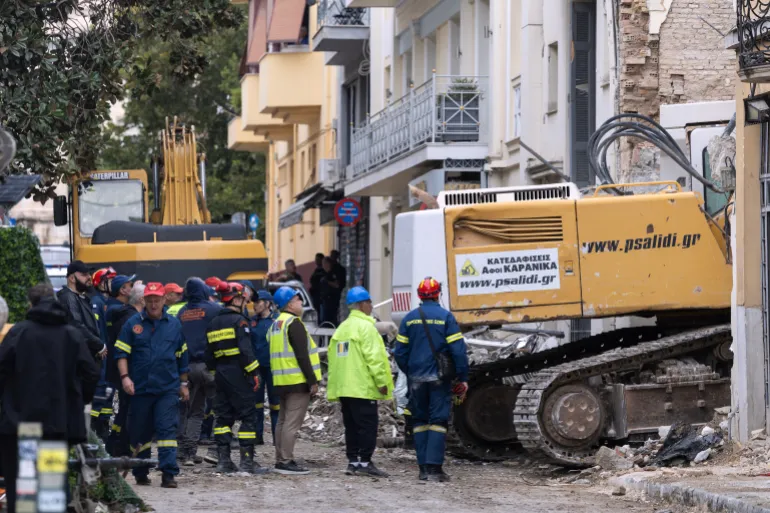
Rescue teams have recovered the bodies of six people killed in a building collapse following a a blast in the historic centre of Athens, Greece, according to local authorities.
Documents and belongings found with four of the victims – two men and two women – on Saturday indicated they were United States citizens, Greek state broadcaster ERT and other local media reported.
Recommended Stories
list of 3 itemsend of list
The other two victims were reportedly an elderly couple, a British man and a Greek woman, who lived on the building’s second floor.
Two women were injured in an adjacent building, according to the fire department.
The blast that brought down the small, two-storey building in the popular tourist district of Plaka on Friday was believed to have been caused by a major gas leak, Athens Mayor Haris Doukas said. Neighbouring buildings were damaged and evacuated, he said.
“The damage extends to the entire street as well as the street behind [the building],” Doukas said. “We are talking about an unimaginable catastrophe.”
Two adjoining buildings severely damaged might have to be demolished, he said.
The Greek daily newspaper Kathimerini reported on Friday that the four tourists, who were due to leave their accommodation at about 11:00am (08:00 GMT), failed to board their flight back to the US.
Rescuers work at the scene on September 26, 2026, one day after a powerful blast hit Athens’ Plaka district [Yorgos Karahalis/AP]
Plaka residents issued warning
A group of Plaka residents had alerted the municipality and the managers of the electricity and gas networks about the risks of short circuits or gas leaks in the area a year ago.
In a letter published by Kathimerini, the group called for the organisation of a security exercise to identify any potential shortcomings in the emergency response system.
The citizen movement “We Remain Active” also stated on social media that a resident of the street where the explosion occurred had reported a smell of gas for several weeks and had warned the authorities.
A Greek police spokeswoman confirmed on ERT that residents had made the report. However, the nature of the substance and its origin have not yet been determined.
Plaka lies at the foot of the Acropolis, Greece’s most visited ancient monument.
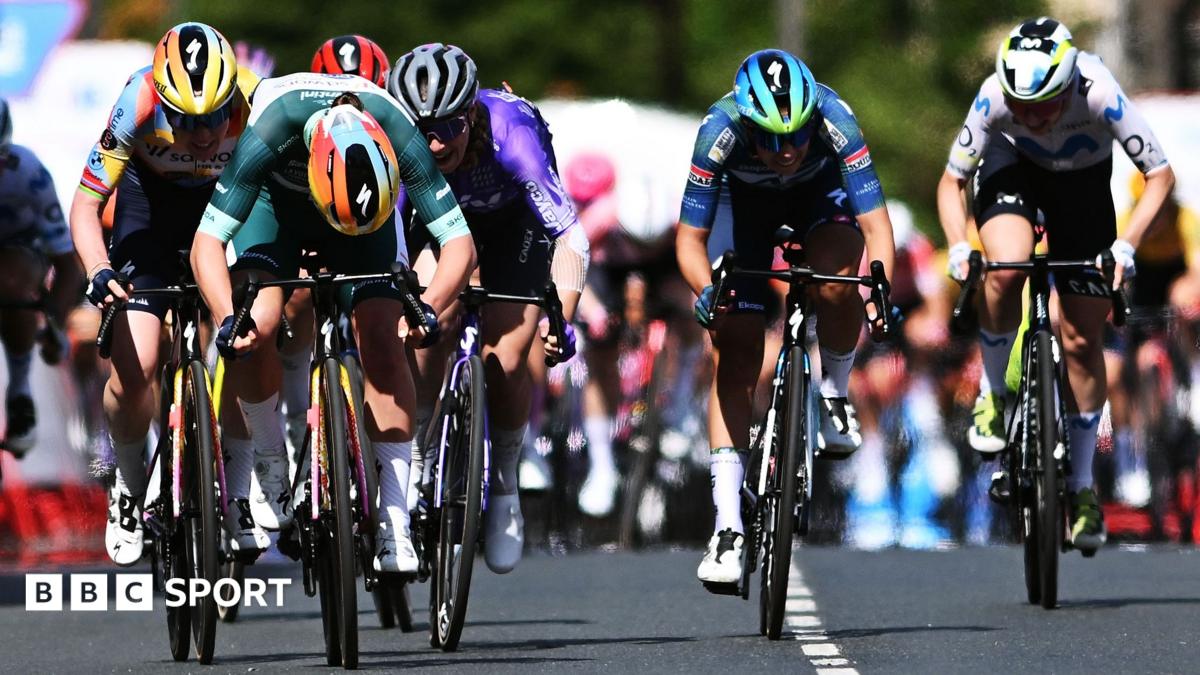
Transfer windows, team budget caps and drones replacing convoy vehicles at races are three of the ideas to boost cycling in a new report from the sport’s global governing body.
The Union Cycliste Internationale’s (UCI) report, entitled “Future of Cycling”, examined road cycling and heard from 55 stakeholders including professional teams, national federations, race organisers and some riders.
It aims to turn a “large but passive audience into active, loyal fandom”, admitting cycling’s under-35 audience was “under-represented” and there was a need to “strengthen its appeal”.
“While the sport today enjoys strong and growing popularity across five continents, its media exposure and the revenue it generates for its stakeholders do not yet fully reflect its potential,” it said.
Among the most frequently referenced recommendations were:
A more coherent race calendar based on geography with fewer overlaps
More predictable rider participation in races alongside transfer windows and fees
Simplifying the ranking and category system
A stronger second division with clearer pathways
Continued growth of women’s cycling
A financial fairness mechanism, such as a budget cap on teams
The combined total budget of professional UCI tour teams in 2025 was £731m (850m euros), but individual team budgets vary.
Long-discussed budget caps, aimed at evening out the peloton and increasing “financial fairness”, would improve the attractiveness of the sport for investors according to the UCI.
But it admitted any such mechanism remains the biggest point of difference for stakeholders and would be at the heart of upcoming discussions.
Meanwhile work on a new transfer system and rider-agent regulation was already under way, it said.
Tino Livramento, Kobbie Mainoo, Cole Palmer, Marcus Rashford and Declan Rice have all pulled out of England’s squad for forthcoming Nations League matches.
Nottingham Forest midfielder Morgan Gibbs-White and Everton‘s James Garner have been called into the squad by manager Thomas Tuchel and will join the squad on Tuesday.
Tuchel said on Friday that 26-year-old Gibbs-White, who has six international caps, was close to being included in the initial squad.
Palmer, 24, had been recalled by Tuchel after being controversially left out of England’s World Cup squad but has withdrawn with a minor injury.
Tuchel previously said Palmer had a “point to prove” and needed “to step up” to “keep his shirt and justify the nomination”.
The Three Lions face World Cup winners Spain at Wembley on Saturday, 26 September, then travel to the Czech Republic (29 September) and Croatia (3 October) before hosting the Czechs on 6 October in an extended international break.
Manchester United duo Rashford and Mainoo were assessed by their club after being taken off in the closing stages of Sunday’s 1-1 draw at Fulham.
Rice, who played the full game for Arsenal in their 3-0 defeat by Brighton, will also be unavailable to Tuchel, along with Livramento, who has been limited to three substitute appearances for Newcastle United this season.
The England medical department and all their counterparts at each of the clubs have agreed the five players can withdraw. No specific details have been released to the media on the nature of the injuries.
This week, insider transactions were seen across firms like CrowdStrike (CRWD) and Uber (UBER). The following deals occurred between September 14 and September 18.
CrowdStrike (CRWD) director Roxanne Austin sold 50,000 shares in the price range of $237 to $238 each
Tripadvisor has revealed its 2026 Travellers’ Choice Awards: Best of the Best Restaurants and 12 of the top spots in the world are in the UK
All the spots featured were decided on by millions of reviews for the past year.
Here is a rundown of the top places to head for a bite in the UK:
Sign up for the Travel newsletter
Thank you!
Coming out eighth in the world in the Casual Dining category was Casa Brazilian Rodizio in York.
The family-run Brazilian steakhouse – also named the top spot in the UK in the category for a second year in a row – is more of a dining experience than your usual sit-down-and-eat restaurant.
Diners have to flip a card on their table to green if they want the chef, who is doing loops of the room, to carve spit-roasted meats at the table.
For a breather, visitors must turn the card to red.
Dinner costs £36.95 per person and is available every evening from 4pm and includes premium cuts such as flank steak and chilli beef.
Next up, longtime Travellers’ Choice favourite Makars Gourmet Mash Bar, Edinburgh was named twelfth in the world on the same list.
Makars Gourmet Mash Bar in Edinburgh was named twelfth in the world on the Casual Dining listCredit: Instagram/makarsmashbar
Diners are meant to pick a meat or plant-based alternative, with one of nine mash options including Scottish cheese and black pudding.
When it came to the Hidden Gems list, Hampstead-based spot Bonoo Indian Tapas which serves Indian small plates was named 13th in the world.
Prices range between £20 and £40 per person.
A few UK destinations were named on the best Date Nights spots in the world, as well.
London Steakhouse Co., which was opened by chef Marco Pierre White in 2008 and typically ranges from £40 to £100 per person, secured fourth place.
Another steak spot – The Herd Steak Restaurant in Bath – was then named in eleventh place.
Modern family-run British bistro 1863 Restaurant in the picturesque village of Pooley Bridge in the Lake District came in at 19th for the best Date Night spots in the worldCredit: 1863 Restaurant with Rooms
The top 10 hidden gem restaurants in the UK
Bonoo Indian Tapas Hampstead – London
Saffron Kitchen & Bar – Northampton
The White Hart Inn, Hawes – Hawes, North Yorkshire
Sarthi – Authentic Indian Restaurant – Bath
Baqueano – Brighton
The Saddle Room Restaurant – Leyburn, North Yorkshire
Bar eS – Ambleside, Cumbria
Kapadokya 50 – York
Thewitchez Restaurant – Brighton
Diego’s Rotisserie – Southampton
And finally, modern family-run British bistro 1863 Restaurant in the picturesque village of Pooley Bridge in the Lake District came in at 19th.
Up in Glasgow, Indian spot Green Gates Merchant City made the world list for the first time, ranking sixth in Vegan & Vegetarian restaurants category.
When it comes to immersive food and drink experiences, the Royal Historic Pubs Walking Guided Tour in London, costing from £32 per person, was named tenth in the world on the World Wine & Beer Experiences list.
The tour usually includes heading to different historic pubs and learning about their history and famous visitors including former Prime Minister Winston Churchill, King Charles II and pop icon Ed Sheeran.
Dishoom was first on the Viral Right Now list, with London hotspots Mad Hatter’s Tea at Sanderson’s following in third and Borough Market Food Tour London named twelfth.
If you don’t mind splashing the cash, in Edinburgh, Scotland, The Witchery was named fourth in the World in the Fine Dining category.
Dishoom came out on top on the Viral Right Now listCredit: Alamy
The top 10 casual dining spots in the UK
Casa Brazilian Rodizio – York
Makars Gourmet Mash Bar – Edinburgh
Lavang Shirley – Solihull, West Midlands
Green Gates Merchantcity – Glasgow
Vincenzo Trattoria – Manchester
Andy’s Greek Taverna – London
Balti Curries – Falmouth, Cornwall
Copper Mahal Contemporary Indian Cuisine & Bar – Andover, Hampshire
Momo Hub Mother Nepal – Glasgow
Tower Tandoori Restaurant – London
The Witchery also claimed the top spot in Europe and the UK, for Fine Dining.
The well-known restaurant is a Gothic-style luxury restaurant which originally opened back in 1979 and can be found inside a historic building dating back to the 16th century.
Inside, diners can expect candlelight and oak panels with meals usually costing over £100 per person.
The Witchery in Edinburgh secured a spot on the Fine Dining listCredit: The Witchery
The top 10 food tours in the UK
Winner 2026 London East End Food Tour: 10 Year Anniversary – London
Edinburgh Food Tour with Scotch, Haggis, a Secret Dish and More – Edinburgh
London Borough Market and London Bridge Food Tour – London
Eating Edinburgh: Old Town Food & Drinks Tour – Edinburgh
NEW London Notting Hill Food Walking Tour by Eating Europe – London
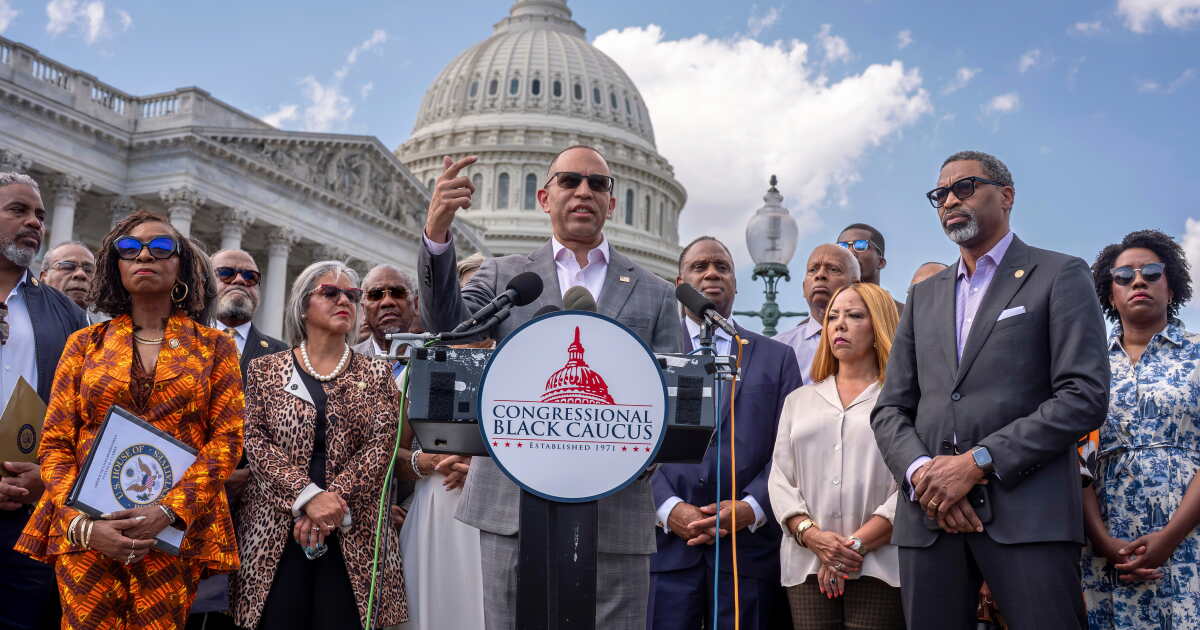
WASHINGTON — A nonprofit run by Black federal lawmakers launched a multimillion-dollar effort Tuesday to engage lower-propensity voters in key districts in the midterm elections, following years of dissatisfaction over traditional efforts to reach such voters.
The Congressional Black Caucus Institute’s “SO VOTE” campaign will seek to register and mobilize young voters, as well as voters in majority-Black and rural communities, across the South, Midwest and West. The campaign involves partnerships with dozens of local organizations, the institute said, with in-person and online outreach to voters often sidestepped by major political campaigns.
“For decades, as far as I can remember, there are those of us who have always complained about the fact that neither party spends the significant and requisite time with Black and brown and poor and rural communities,” said Marcia Fudge, a former Democratic congresswoman from Ohio who served as the secretary of Housing and Urban Development during the Biden administration.
“So we finally decided to take it upon ourselves to do something that we didn’t think anybody else in the industry was doing,” said Fudge, who is spearheading the new effort alongside former Black Caucus colleagues.
Effort blends old tactics with new technologies to boost turnout
Voter engagement efforts will cover outreach across Georgia and Mississippi, as well as target voters in 16 congressional districts that are likely to determine control of the House.
Instead of traditional television advertising, the campaign will convene local civic groups and houses of worship, as well as fraternities and sororities. The effort will also use some now-widespread techniques in political campaigns, such as geotargeting online ads and partnerships with local content creators for audiences who mainly receive their news online.
While the voter engagement efforts are officially nonpartisan, the Black Caucus’ targeted races are in many regions where Black voter turnout could prove key to whether a Democratic candidate prevails in closely divided House districts. Cedric Richmond, a former Louisiana Democratic congressman who served as a senior adviser to President Joe Biden, said the effort would focus on repeatedly engaging voters in rural communities who feel alienated from Democratic campaigns.
“If you’re not happy with the way things are going, then voting is part of the solution, but it takes constant communication,” Richmond said.
The Black Caucus’ institute has raised about $1 million for the campaign, primarily from individual donors, and plans to spend at least $4.5 million in the midterm election cycle.
Campaign responds to GOP redistricting and disappointing turnout in the past
The new outreach effort follows years of disappointment and frustration among some in the Black Caucus at the broader Democratic Party’s efforts to court Black, rural and younger voters.
Rep. Jim Clyburn, an influential South Carolina Democrat who decried the lackluster voter turnout in the 2024 election, said the campaign “allows us to put to practice that which we have been proposing, and we have never had the resources to do it. But this year we do.”
The effort is also a response to Republican-led redistricting efforts in multiple states, said Rep. Bennie Thompson, a Mississippi Democrat.
“These Southern states are trying to minimize Black political participation and ultimately Black political strength,” he said. “So what we have to do is take that low-propensity voter and elevate their participation so they become an additional voice to be reckoned with.”
SAN FRANCISCO, California: Anthropic said Thursday it shut down multiple cases of state-sponsored surveillance operations that used its artificial intelligence (AI) models, and warned that governments and state-aligned actors are increasingly using AI to spy on ethnic minorities and dissidents.
The incidents were found and disrupted between January and July, and they originated in China, Iran and west Africa, Anthropic said in a report about misuse of its models.
These surveillance campaigns “targeted the same diaspora and dissident communities these regimes have historically targeted. These include pro-democracy figures in Hong Kong, Tibetan and Falun Gong communities across Asia, and Iranian minority communities and opponents of the Iranian regime abroad,” the report said.
In one case, Iranian actors developed a way to identify people through their social media accounts; in another, a contractor working for Malian national security authorities used Claude “to design the underlying software that enabled the intelligence gathering.”
“AI is now being used in place of an engineering workforce,” the report said.
Anthropic also disrupted efforts by users to design weapons, conduct questionable biological research, and create dating scams.
The San Francisco-based AI lab also accused Chinese developers of deceptively using Claude to produce responses to user queries while simultaneously “distilling” that data to improve their own models.
Distilling is an industry term that refers to a process where one AI model is used to train another one.
Chinese developers have previously been accused of using that technique without permission, essentially stealing resources from American labs such as Anthropic and OpenAI.
Now Anthropic alleges that China’s Moonshot and Deepseek have also secretly used Claude to generate answers given to its users.
“In one instance, over a ten-day period, Moonshot relayed almost 300,000 customer requests to Anthropic” through a “network of 5,380 fraudulent accounts, most of which appeared to be located in Singapore and Japan,” the report said.
Some of that data contained sensitive user information, potentially in violation of privacy agreements.
“We do not know if Moonshot notified their customers that their requests were being rerouted to Anthropic and exposed to a third party,” the report said.
Deepseek used similar techniques.
When it comes to the research Anthropic detected and blocked that was related to biological weapons, the intent of the actors was less clear-cut and the AI lab did not identify them.
“The individuals implicated in these case studies are working scientists. We do not assert that they intended harm, and identifying them or their labs could expose them to harm,” the report said.
The scientific research in those cases involved work around the mosquito-born chikungunya virus, a “highly-pathogenic” strain of the bird flu, a family of viruses that include smallpox and mpox, venoms and other toxins.
The holiday park chain is one of the most popular in the UK, offering a vast array of activities and family fun, but there’s one common issue in reviews that has seen it criticised, especially by parents
12:29, 09 Sep 2026Updated 08:46, 10 Sep 2026
Its six holiday parks have serene lake and forest settings(Image: Center Parcs)
One of the UK’s most popular holiday park chains has been hit by a low score in a national ranking, with visitors particularly irked about one thing in particular.
Center Parcs has six holiday villages across the UK, and in a recent Which? survey, it was the most-visited holiday park on the list, especially popular for short breaks in its car-free forest locations.
Which? said: “You like that you know what you’re getting, from the acres of forest trails to the swimming pool in a heated glass dome – a subtropical paradise even in the soggiest of British summers. It also earned praise for appealing to all ages, whether that’s with the treetop aerial adventure or the thermal spa (with a volcanic steam room and an igloo-inspired ice cave).”
Have a story you want to share? Email us at webtravel@reachplc.com
The parks were also praised for their accommodation, with higher grades including facilities such as hot tubs, saunas, and games rooms, making it a solid “family favourite” according to Which?. But customers were particularly unhappy with one thing.
“However, it’s extraordinarily expensive, at more than twice the price of budget rival Haven. Activities cost even more on top, and you need to secure your preferred slots weeks in advance. The two-star rating for value for money is the joint lowest in our survey. You could save a fortune by choosing a better-rated rival,” the Which? survey noted.
In most aspects, Center Parcs performed well. It was awarded four stars for activities, entertainment and facilities, as well as quality of accommodation and cleanliness. It achieved three stars for customer service and food and drink. But its place in the rankings, fifth from the bottom, came due to its value for money score at just two stars. It was the third most expensive of all the holiday parks surveyed.
It’s not the first time the chain has been criticised for its high prices. In a viral social media post, one fed-up mum showed the difference in prices between a school holiday and September dates at the parks, commenting: “If anyone’s unsure when their kids return to school after the holidays, Center Parcs have this handy tool.” A four-night break in August was priced at £1,049, while the same holiday a week later, post-school holidays, was £529.
Even positive reviews of the parks often mention the price. One recent review of Center Parcs Woburn Forest said: “Amazing place to holiday. Personally, I felt the prices of things on-site were a little high, and that was even going outside of term-time; however, you cannot fault the fun and wonder of being at these parks.”
Another was more blunt: “Badly overpriced, we only paid £799 for a family of 4 and it still felt like a rip off. You get a good room, yes, but it’s nothing you can’t get at a hotel in the countryside for half the price. Every single other activity charged extra (except swimming which is decent but you can get a similar quality just slightly more warm out at Butlin’s for 1/10th of the price).”
Center Parcs has been contacted for comment.
The UK’s best and worst holiday parks
(Name of resort, overall customer score)
Potters Resorts – 83%
Hoburne Holidays – 81%
Darwin Escapes – 80%
Landal Parks – 80%
Waterside Holiday Group – 80%
Shorefield Holidays – 76%
Away Resorts – 75%
Bluestone Wales – 75%
Park Leisure UK – 75%
Highland Holidays – 74%
Lyons Holiday Parks – 74%
Largo Leisure – 73%
Park Holidays UK – 73%
Warner Coastal Villages – 73%
Forest Holidays – 72%
John Fowler Holidays – 72%
Center Parcs – 69%
Haven Holidays – 68%
Parkdean Resorts – 68%
Butlin’s – 63%
Pontins – 61%
Based on a survey of 2,221 Which? Connect panel members and general public conducted in February and March 2026.
It’s not your imagination. Political discourse on Twitter really has grown meaner in recent years, according to a new study.
The research, published Thursday in the journal Social Psychological and Personality Science, found that the level of incivility in tweets by members of Congress increased by 23% between 2009 and 2019 — a change the study’s authors attribute in part to how Twitter’s “like” and “retweet” buttons reinforce the spread of toxic content.
Its findings mark “the first robust evidence that incivility is rising among American politicians on Twitter,” wrote the study’s authors, hailing from several U.S. and Canadian universities.
Researchers examined 1.3 million tweets from official congressional accounts between 2009 and 2019. To quantify the levels of incivility, they used artificial intelligence to analyze the messages and assign a toxicity score from 0 to 100, reflecting the likelihood that someone would consider the text to be rude or disrespectful.
The analysis classified a 2009 tweet by then-Sen. Arlen Specter (D-Pa.) with a high incivility score of 45.1 for accusing a rival of “going AWOL” from his congressional post. And a 2019 tweet by Rep. Kevin Hern (R-Okla.) — which said another politician was “endorsing infanticide & proudly doing it!” — scored at 47.6.
To some degree, the increasingly antagonistic tone is due to more civil members of Congress being replaced by less civil ones, the study says. But the findings attribute more of the shift to members themselves changing over time and posting more provocative tweets.
The increase in incivility was most pronounced among liberal Democrats, especially in the first half of President Trump’s term.
“They were much more likely to be reacting negatively to Donald Trump — both his behaviors and his tweets,” said Robb Willer, a co-author and director of the Polarization and Social Change Lab at Stanford University.
The study analyzed tweets during President Obama’s two terms and the first two years of Trump’s presidency. (The sample did not include posts from the contentious 2020 election or the start of President Biden’s term.)
The analysis also evaluated Obama’s and Trump’s tweets. Obama’s posts had an average incivility score of 13.4, which remained fairly steady over his two terms. In Trump’s first year, his score was 18.8, and it climbed to 23.0 by 2019.
The study didn’t place any moral judgments on Twitter incivility, Willer said. People sending harshly worded tweets “might have all sorts of explanations that might be morally well-founded and valid for why they engaged in the speech they did.”
Whatever the motivation, the more toxic tweets stand out in Twitter’s crowded online platform. The average congressional tweets were not especially uncivil, with relatively low scores. But the tweets with higher toxicity scores tended to get much more attention, via retweets and likes, which increase the public’s exposures to such messages and make incivility seem more prominent than it actually is, according to the study.
The study’s results indicate “the people running these accounts are learning from these metrics they can see and doing more of whatever gets likes and retweets,” Willer said.
But, as the common Twitter disclaimer goes, retweets and likes don’t equal endorsement. People may retweet a message to draw attention to content they dislike, for example. Willer said their research indicated that users are largely not fond of toxic tweets, despite appearances to the contrary.
“There’s a possibility here that the Twitter platform, with its pretty spare metrics, may be misleading people that certain tweets are more popular with people … than they really are,” Willer said.
Just as congressional Twitter feeds have grown more toxic, so have the tweets of the general population, the authors said, based on a rough sample of civilian posts.
Rep. Ted Lieu (D-Torrance), one of the most prolific tweeters of California’s congressional delegation, said he wasn’t surprised to hear that incivility has grown on the platform — which he blamed partly on anonymous users and bots. His own feed has plenty of pointed messages to Republicans, often delivered with dry humor, as well as standard fare highlighting his work in Congress.
After 13 years on the platform, Lieu said it’s still hard to predict what will take off in the Twittersphere.
“Sometimes I’ll write what I think is an amazing tweet about a very important policy point and get only a few” likes or retweets, he said. But an evening observation that Scotch and peanut butter make a tasty combination will yield “astronomical” engagement.
One consistent factor for a viral tweet: Trump.
“What I’ve found is in the last five years, when the former president would say something stupid or say something false, and I responded to that, that would get higher engagement,” Lieu said. “If the former president is going to say 27 false things a week, I’m going to try to highlight all 27 false things he said.”
While Twitter has not been seen as a hub of civility for some time, some on the platform expressed fears this week that the tone may worsen now that Tesla Chief Executive Elon Musk is set to take the reins. Musk says Twitter’s current system of content moderation clamps down on speech. He has said he wants fewer restrictions on what can and cannot be posted, although he has not given many specifics; users have warned that loosening the rules could lead to upticks in harassment, abuse or pornographic images.
Republicans, meanwhile, have celebrated Musk’s takeover, anticipating he will lift moderation that they see as silencing their views. Among other issues, they object to Trump and other prominent right-wing politicians being blocked or suspended from the site. And Twitter’s fact-checking of false claims of election fraud and COVID-19 misinformation has had a disproportionate effect on right-leaning accounts.
“The most uncivil aspect of Twitter is the company’s transparent censoring of free speech and silencing of conservatives,” said Rep. Darrell Issa (R-Bonsall). “Additionally, the platform will not reach its potential or best serve its users until it demonstrates a commitment to fundamental fairness. I’m optimistic that may soon happen.”
LONDON: The stabbing of a Saudi visitor during an attempted robbery in one of London’s wealthiest districts this week has sparked new discussions about the safety of Gulf tourists in the British capital and the precautions travelers should take in major European cities.
The man, in his 40s, was stabbed in Berkeley Square, Mayfair, on Thursday. Metropolitan Police officers and London Ambulance Service crews attended the victim, who was treated and taken to hospital. His injuries are said to be not life-threatening.
A 58-year-old man was arrested at the scene on suspicion of grievous bodily harm, possession of an offensive weapon and attempted robbery.
“This appears to be an isolated incident and there is currently nothing to suggest an ongoing risk to the wider public,” a Met spokesman told Arab News. “We recognize that this will cause concern among the community. Tackling knife crime and serious violence remains a priority for the Metropolitan Police.”
The Saudi embassy in London said it was coordinating with British authorities, supporting the victim and monitoring his condition until he is discharged.
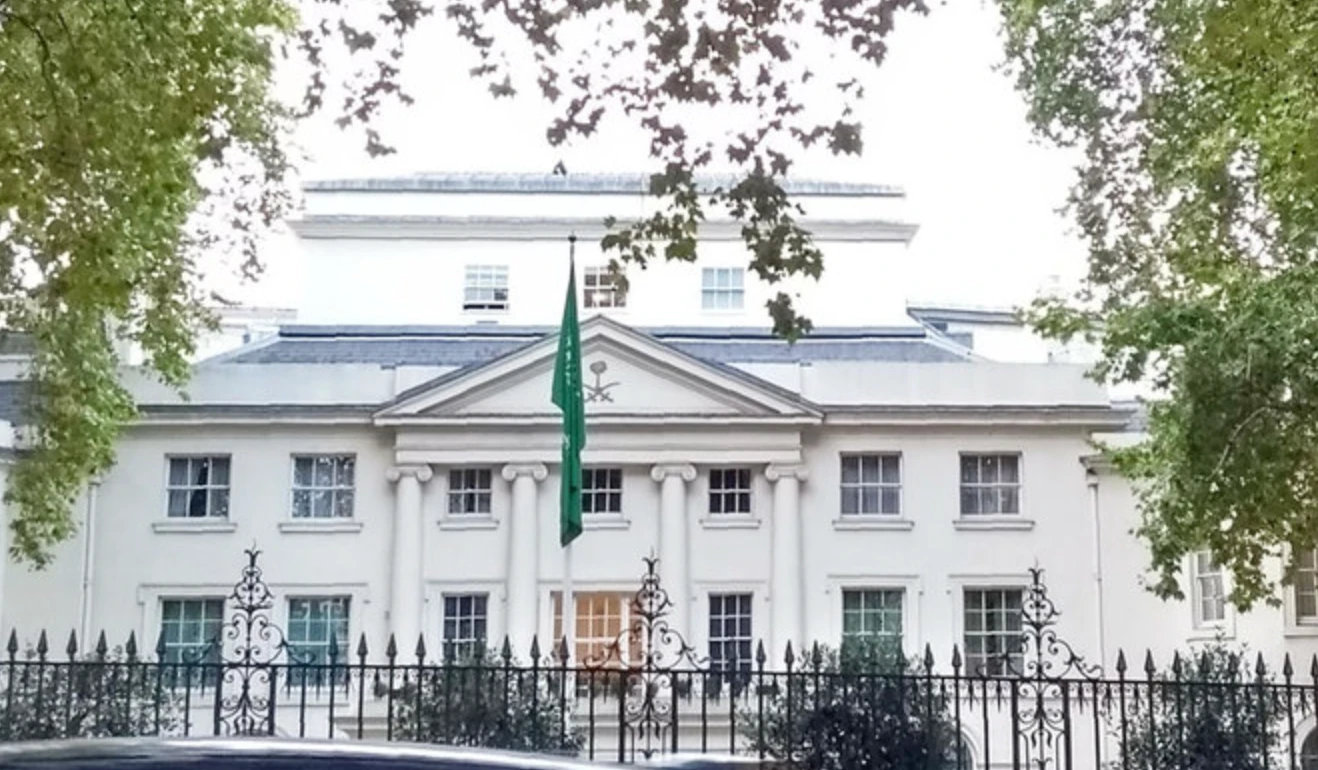
The Saudi Arabian embassy in London, featuring its distinctive green flag, is seen through the surrounding trees, highlighting its architectural elegance amidst the urban landscape.
It called for the investigation to be completed swiftly and for those responsible to be held accountable, while urging Saudi citizens in Britain to exercise caution and avoid carrying valuable possessions openly in public.
Arab News understands the embassy is expected to release the victim’s name shortly.
Reports indicate the attempted robbery may have been motivated by a luxury watch inside the man’s backpack, although it was not visible and nothing was ultimately stolen.
The incident has nevertheless resonated among Gulf travelers for whom London has long been a home-away-from-home and one of their favorite European destinations.
Jocelyne Elia, travel editor at Asharq Al-Awsat, said high-profile incidents could influence how visitors perceive the city even when they are statistically rare.
“Incidents like the recent stabbing are understandably concerning and can affect how safe Gulf visitors feel when travelling to the UK,” she told Arab News. “The Gulf is an extremely important tourism market for Britain, so repeated incidents could damage confidence and influence people’s decisions about where they travel, stay and shop.
The Mayfair stabbing means travelers should take extra precautions in areas known for luxury shopping, restaurants and nightlife. (AFP file)
“It is important that UK authorities respond strongly to these crimes while making clear that they are isolated incidents and that the UK remains a welcoming destination for Gulf visitors.”
Saudi tourism alone is a significant market for Britain.
The UK received a record 344,000 visits from the Kingdom in 2024, during which Saudi travelers spent about £771 million — an average of more than £2,200 per visit according to VisitBritain, citing data from the Office for National Statistics’ International Passenger Survey.
Figures obtained from the Metropolitan Police provide a partial picture of the crimes experienced by Saudi and other Gulf nationals in London. Records show 35 Saudi nationals were recorded as crime victims in 2021, rising to 65 in 2022 and 85 in 2023 — a total of 185 over the three years. Of those cases, 97 involved theft, 41 violence against the person and 12 robbery.
Across the six Gulf Cooperation Council nations, 498 people were recorded as victims during the three-year period, including 219 involving theft and 137 violence against the person.
The Met says some 92 percent of total recorded victims do not have a first nationality recorded. The figures also do not distinguish tourists from residents, students or other people, and so cannot be used to calculate the risk of a Saudi or Gulf visitor becoming a crime victim.
The Mayfair attack also comes little more than a year after the death of a Saudi national in Britain in another stabbing attack, although the circumstances were very different.
Mohammed Yousef Algasim, 20, was attending a 10-week English-language course in Cambridge when he was stabbed in the neck in an unprovoked attack outside his accommodation on Aug. 1, 2025.
His killer, Chas Corrigan, was convicted of murder in March and sentenced in June to life imprisonment with a minimum term to be served of 22 years and six months.
CCTV showed Corrigan, who had been drinking and had taken drugs, approach Algasim before walking away, turning back and stabbing him with a kitchen knife.
Police cordon off a street in central London as officers respond to an unspecified incident, drawing a crowd of onlookers nearby.London remains highly ranked for overall tourist safety and several forms of street crime are falling after intensive enforcement. (AFP file)
Such cases have contributed to concerns over violent crime, while the much more common experiences of pickpocketing, phone snatching and theft has increasingly shaped tourists’ perceptions of some European capitals.
The picture, however, is more nuanced than individual incidents might suggest.
Berkshire Hathaway Travel Protection’s 2026 ranking of the safest cities for travelers places four European cities among its top five; in order, they are Reykjavik, Copenhagen, Zurich, Amsterdam and Honolulu. London is ranked 13th safest overall and eighth specifically for safety from violent crime.
The company cautions that the survey measures conditions and traveler perceptions at a particular point in time rather than providing a guarantee that visitors will not encounter crime.
At the opposite end of the spectrum, a 2024 Forbes Advisor study of 60 international cities ranked Caracas as the riskiest destination for tourists, followed by Karachi, Yangon, Lagos and Manila.
Its assessment went beyond street crime to consider personal and health security, infrastructure, natural-disaster exposure, digital safety and government travel advisories.
However, a city can rank comparatively highly for overall safety while still experiencing particular forms of crime at levels noticeable to visitors. In London, mobile-phone theft is perhaps the most visible example.
A Metropolitan Police data series recorded 117,211 mobile phones stolen in London in 2024, the highest annual figure in the series and equivalent to about 321 phones a day. That followed 115,261 recorded stolen phones in 2023 and 90,810 in 2022.
The Met said it moved to a new crime-recording system in February 2024, meaning care must be taken when making direct comparisons. A newer offence series recorded 81,365 mobile-phone theft offences in 2024 and 71,391 in 2025, a decline of 12.3 percent. The difference reflects different police datasets and recording methodologies.
Police have since mounted their largest crackdown on phone theft to date. Earlier this summer, the Met released footage showing officers pursuing suspected phone thieves on high-powered e-bikes, conducting raids, arresting alleged handlers and recovering stolen devices as part of Operation Reckoning.
One raid on a shop in northwest London recovered more than 1,000 suspected stolen phones.
An earlier four-week phase of the operation resulted in 248 arrests and the recovery of 770 devices, while another investigation dismantled what the Met described as the UK’s largest mobile-phone smuggling network, responsible for trafficking as many as 40,000 stolen devices to China during 2024 and 2025.
Police said the network was handling the equivalent of about 40 percent of phones stolen in London at the time.
The crackdown appears to be having an effect, something London Mayor Sadiq Khan has been quick to capitalize on.
Across London, the Met said theft-from-the-person and robbery offences involving stolen mobile phones fell by 18 percent in the 12 months to May, representing around 14,000 fewer offences. Those falling figures provide an important counterpoint to perceptions of London as a city experiencing an unchecked crime wave.
But Elia said the Mayfair stabbing demonstrated why travelers should still take practical precautions, particularly in areas associated with luxury shopping, restaurants and nightlife.
She rejected the suggestion that Arab visitors should change traditional clothing or conceal their nationality because of safety concerns.
The attack in London’s upscale Mayfair district presents a dilemma familiar to visitors to many of Europe’s largest cities. (AFP file)
“The advice should simply be to be discreet with expensive watches, jewelry and designer bags, and phones, particularly in crowded areas or late at night,” Elia said.
“Keep valuables covered where possible, stay aware of your surroundings and avoid openly displaying expensive items. This is sensible advice for all tourists, not just Arabs.”
She added: “Saudi-British relations are strong, but the British government must do more to tackle rising crime, especially phone theft and robberies.”
For Gulf travelers, the latest attack presents a dilemma familiar to visitors to many of Europe’s largest cities.
London remains highly ranked for overall tourist safety and police data suggest several forms of street crime are falling after intensive enforcement.
At the same time, the stabbing of a Saudi visitor in the heart of Mayfair — coupled with the prevalence of phone and luxury-item theft — is a reminder that relative safety does not eliminate individual risk.
For the hundreds of thousands of Saudi visitors who travel to Britain each year, the message from both the embassy and travel experts is therefore one of vigilance rather than avoidance: London remains open to them, but valuables, surroundings and personal security cannot be taken for granted.
The recent stabbing of a Saudi visitor in London has raised safety concerns among Arab tourists, as the Met Police report a significant rise in crime against Gulf nationals, including theft and violent incidents.






![Rescuers work at the scene following Friday's powerful blast in Athens' Plaka district, Saturday, September 26, 2026 [Yorgos Karahalis/AP]](https://i0.wp.com/www.aljazeera.com/wp-content/uploads/2026/09/AP26269443758394-1790459604.jpg?w=640&ssl=1)