Pope Leo XIV affirms need for media to cover public figures when asked about Trump ban
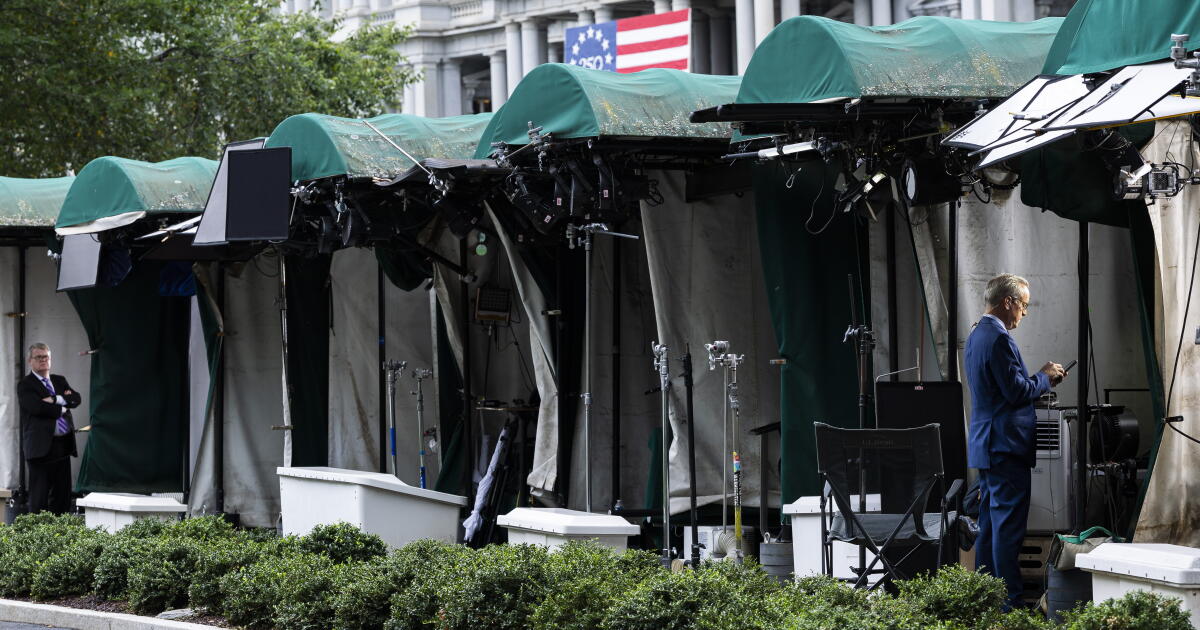
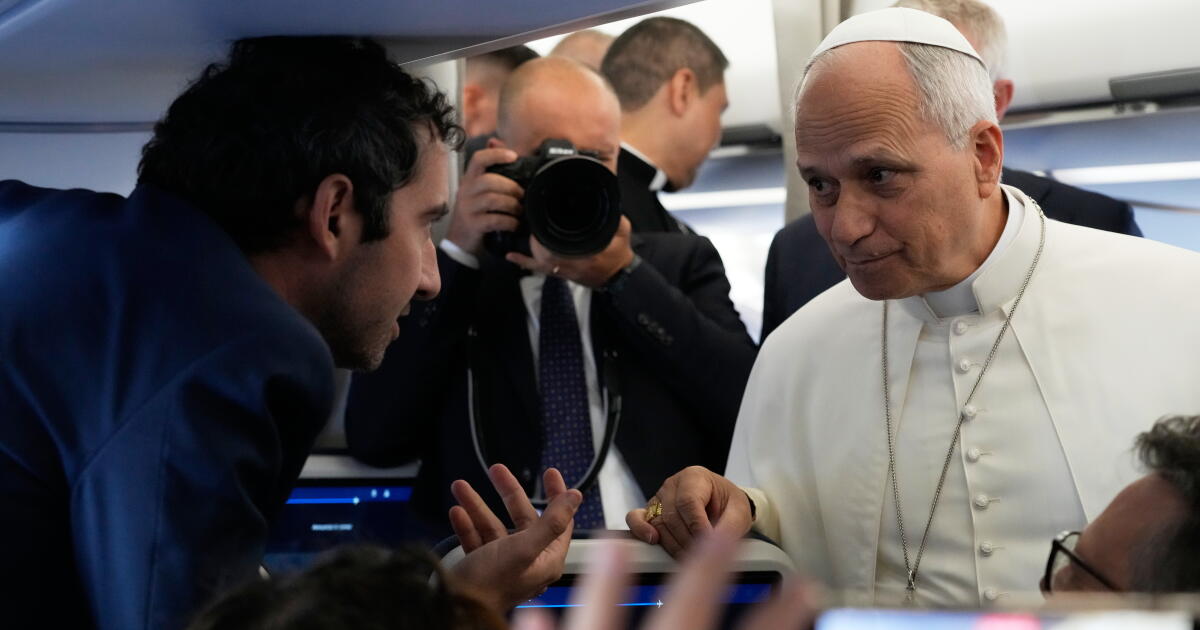
ABOARD THE PAPAL PLANE — Pope Leo XIV told journalists they were welcome to report on him, as he responded to the Trump administration’s attempt to bar U.S. media from the White House and affirmed the importance of journalists covering public figures.
Leo spoke to reporters Friday on his way to France for a four-day visit. Asked by a CNN reporter about the Trump administration’s attempt to bar CNN and other reporters, Leo said the media was welcome on his plane.
“I am very happy that here, you are all welcome,” he said. Good media coverage is important, he said, and equally important “that we have it all the way around, for everyone”
CNN, MS NOW and Politico were back at the White House on Thursday after a judge handed them a reprieve from President Trump’s ban, but the extraordinary showdown between him and outlets whose coverage he dislikes continued.
On a high-profile day when Chinese leader Xi Jinping was visiting Washington and attending a state dinner, no major American network was airing live coverage, and both CNN and MS NOW said their journalists were denied access to Xi’s state dinner arrival.
The American pope has long affirmed the need for free and independent press, a point he made in one of his first audiences as pope. Speaking to journalists who covered the 2025 conclave that elected him, Leo called for the release of imprisoned journalists and affirmed the “precious gift of free speech and the press.”
That said, since the COVID-19 pandemic, independent media have been prevented from covering photo opportunities inside the pope’s private studio when heads of state visit. Additionally, many of the pope’s private audiences with other groups and individuals are closed to non-Vatican press.
Leo had opposed Trump on the war
Leo’s airborne comments about Trump followed his April back-and-forth over the American president’s criticism of his opposition to the Iran war. Leo’s position won him points with some Parisans opposed to Trump’s policies who came out in droves to celebrate the first official state visit by a pope in 18 years.
“He dared, at his level, to oppose the American president,” said retiree Thierry Marien, who lined up hours early to grab a spot on the popemobile route to Notre Dame cathedral, where Leo was to celebrate vespers later Friday. “Not because he is opposed to the American president but because he’s opposed to countries where we can see there’s a risk of their political systems becoming a bit more dictatorial and there are already enough of those in the world.”
“I appreciated that he did that. He could quite easily have said to himself, ‘In my situation, I won’t criticize any heads of state,’” he said.
Leo took further distance from the Trump administration policies later Friday by making a lengthy visit to UNESCO, the U.N. cultural and educational agency, from which the U.S. has withdrawn as part of its retreat from the international organization.
Leo, who has championed multilateral diplomacy, toured the UNESCO grounds inside and out, greeted its employees and received a guided tour of some of its art collections. He then delivered a speech on the values UNESCO espouses to promote peace through culture and education.
Leo apologizes to reporters
Also on the flight Friday, Leo also apologized for missing an opportunity to speak with the press the last time he traveled internationally, when his Iberia charter broke down in Spain’s Canary Islands and he returned home solo on the king’s private jet, skipping his traditional airborne press conference.
More than 70 reporters and the Vatican delegation waited for several hours at the airport for a replacement plane to arrive. Leo addressed the media’s disappointment when he came to the back of the plane to greet reporters.
“A special mention I would like to make for those of you who were traveling with me when we returned to Rome from Spain,” he said. “I want to apologize personally for an incident, that I had nothing to do with, but which I know left a number of you unhappy with the fact that we couldn’t have the flight back together back to Rome.”
In other comments to reporters, Leo said he believed his alma mater Villanova would be the fan favorite when the Augustinian university plays the Catholic University of Notre Dame’s basketball team in Rome on Nov. 1.
“They tell me that the people coming to the match, 90% are Villanova and 10% Notre Dame, so the voice of the people of God will be very strong on the Villanova side,” Leo said.
Winfield writes for the Associated Press.