“America will never be a communist country,” states the 30-second television ad.
Never mind that socialism is a more probable scenario given the rise of New York Mayor Zohran Mamdani and Nithya Raman’s healthy lead in the Los Angeles mayoral race. This commercial is not about semantics, political systems or the health of the nation.
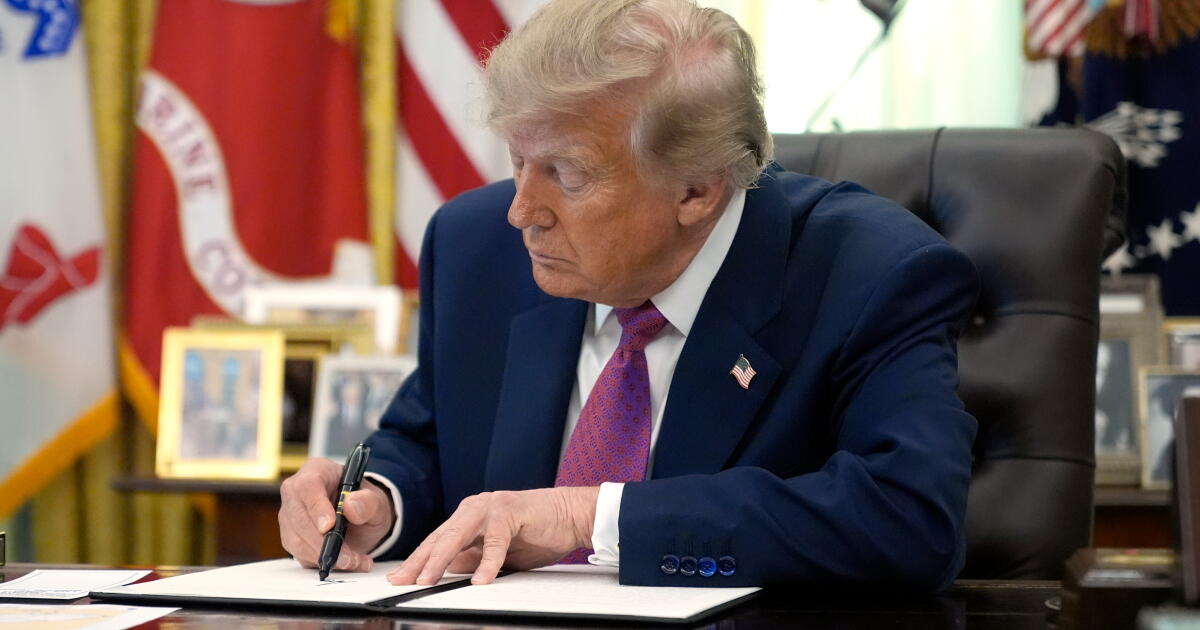
It’s about touting the alleged achievements of President Donald Trump, from “reigniting American manufacturing” to “defend[ing] law and order” and giving Americans the “largest tax cuts in history.”
One can argue the legitimacy of such claims if they still have the energy to do so after 10 years of relentless MAGA puffery, but the real issue here is that this particular piece of bluster is produced and funded by the U.S. government.
Laws prohibit taxpayer funds from being used for “publicity or propaganda,” even if the White House is referring to its new ad campaign as a PSA.
“This is the sort of government propaganda one might expect in North Korea, not the United States of America, and it is an egregious and utterly illegal misuse of Americans’ hard-earned tax dollars,” wrote Democratic House and Senate Appropriations Committee members in a letter sent Friday to Trump’s Chief of Staff Susie Wiles.
They demanded that the ad be immediately taken off the air and that “Federal employees who knowingly violated Federal law in working on and paying for this advertisement” be disciplined. “The law is not complicated,” they wrote. “You cannot use taxpayer dollars for political advertisements.”
The spot, which first aired Wednesday on conservative media outlets Fox News and Newsmax, cost $14,000, according to the firm AdImpact, which tracks media spending. By Friday, that number had jumped to $430,000 as the ad hit multiple markets across the country.
And it isn’t the only instance of American tax dollars at work — for Trump. A second ad paid for by you aired Thursday night on CBS.
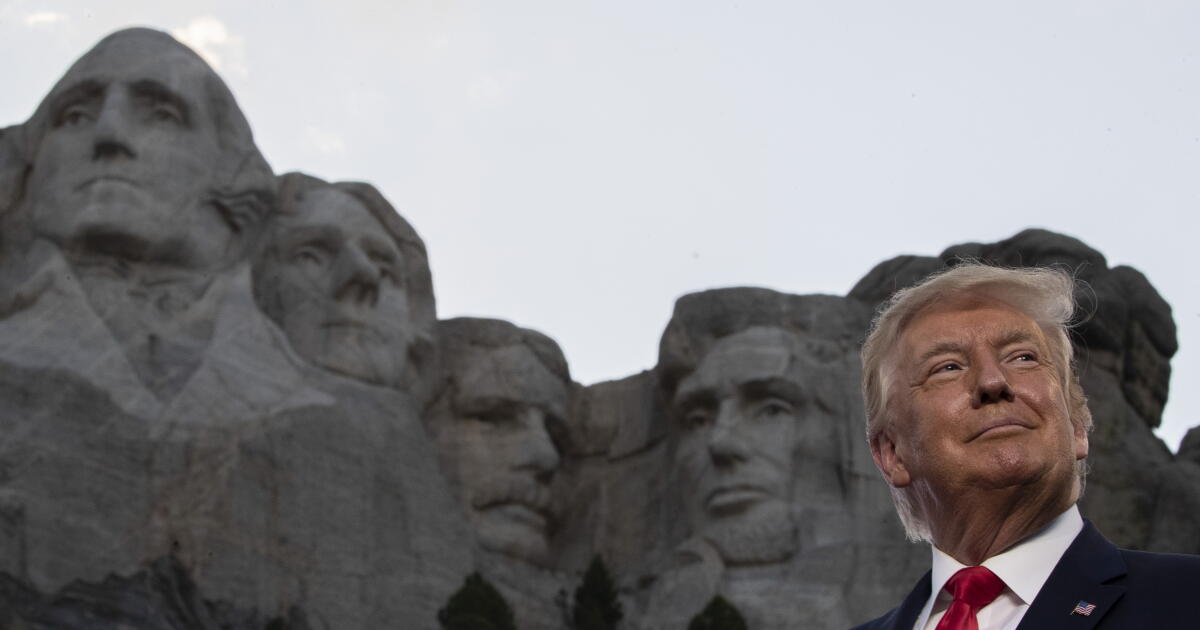
The minute-long commercial featured footage of the president speaking against the backdrop of Mount Rushmore in an audacious display that might have turned George Washington, Thomas Jefferson, Abraham Lincoln, and Theodore Roosevelt to stone if they weren’t already immortalized in granite.
It included clips from the U.S. military’s Jan. 3 capture of Venezuelan President Nicolás Maduro and his wife, snippets from Trump’s Independence Day weekend speech, a voiceover from UFC CEO Dana White praising the president as “the toughest, most resilient person” he’s ever met, and a montage of images featuring Trump, Trump and more Trump. It ends with the star of the show proclaiming, “This is only the beginning of the golden age of America,” then comes the written disclosure: “Paid for by the U.S. Government.”
Anyone who has lived in or traveled to countries with state-run media will recognize the similarities between Trump’s ads and those of, say, former Iraqi dictator Saddam Hussein or current strongmen like North Korea’s Kim Jong Un: the intense leader-like gaze, the baseless claims, substandard production quality and music that suggests the subject of the ad should be worshipped. (Trump’s choice for the first ad was “Love Me” by R&B singer JMSN, who opposed the use with an emphatic “I would never…”)
But on U.S. television, the ad feels more desperate than dictatorial. The whiff of desperation coming from the ad blitz may have something to do with the president’s dismal polling numbers headed into November’s midterms.
The administration has argued its ads are “educational and unapologetically patriotic” public service announcements. The White House said in a statement, “These public service announcements are about reminding Americans to love their country and understand what makes it worth defending, at home, at our borders, and abroad.”
A White House official reportedly said that the PSAs “are clearly not political” and noted that “the President is not on the ballot and the ads don’t have a call to action.”
Trump has repeatedly told his base to vote like he was on the ballot.
With propaganda like this coming out of the White House, communism is hardly the biggest threat facing the country.
NEW YORK — Earlier in the month, President Trump warned voters that democratic socialists — extreme, crazed, lunatics, he called them — were threatening to transform America into “a communist country.”
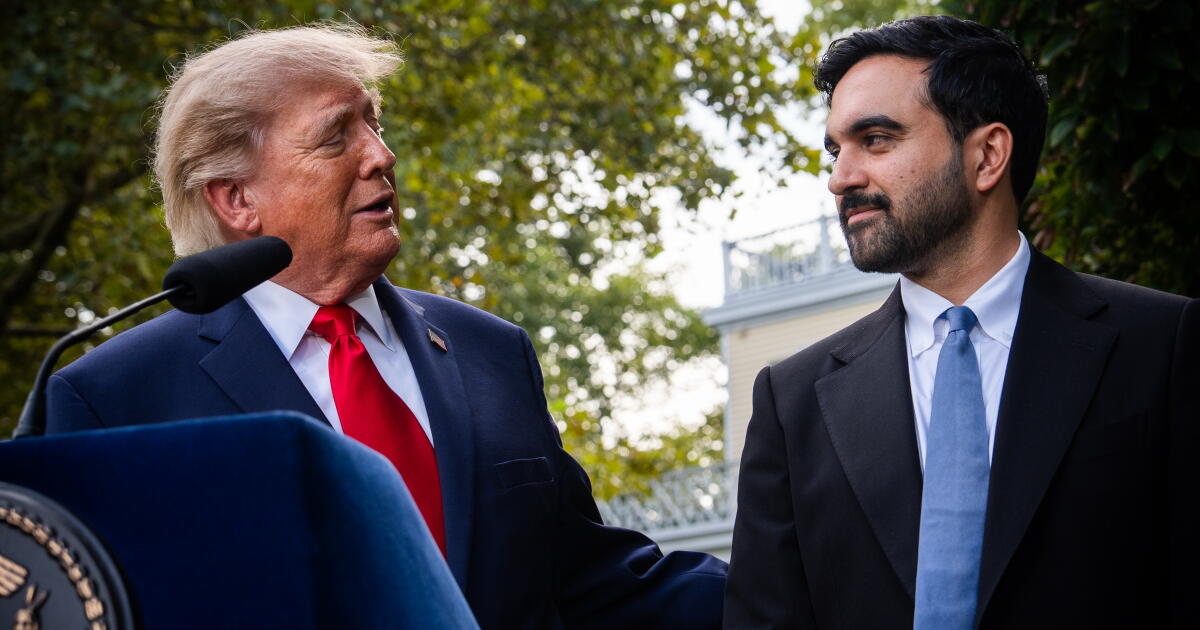
This week, a smiling Trump patted on the shoulder one of the nation’s best known democratic socialists, shook his hand, and said he was “off to a start” to being a great mayor of the country’s largest city.
Trump’s cozy relationship with New York City Mayor Zohran Mamdani, which began last year, has confounded people across the political spectrum. But with the midterms approaching, Republicans are increasingly frustrated by the unexpected bromance, which threatens the party’s message about Democratic radicalism.
“You’re trying to say, ‘Here’s how extreme they are,’ and the president’s saying, ’I love this guy,’” said veteran Republican strategist Doug Heye. “It doesn’t help.”
It’s hard to overstate the extent to which Republicans are focused on the rise of democratic socialism in the midterm season. At a moment when the party is saddled with Trump’s weak approval ratings on virtually every major issue — the economy and the war in Iran chief among them — Republicans from Georgia and Texas to New York and Michigan are working to scare voters away from Democratic candidates by warning that the party is controlled by far-left extremists.
At Trump’s unusual midterm convention in Texas earlier in the month, Mamdani’s name was evoked over and over again.
Texas Sen. Ted Cruz called the New York Mayor “Comrade Mamdani.” Rep. Tom Emmer, the No. 3 House Republican, called him “Mamdani the commie.”
Trump sent a similar message although he didn’t mention Mamdani.
“They call themselves democrat socialists, but actually they’re communists,” he said in his keynote address. “They’re crazy.”
In all, the words socialist or socialism were referenced dozens of times during the convention.
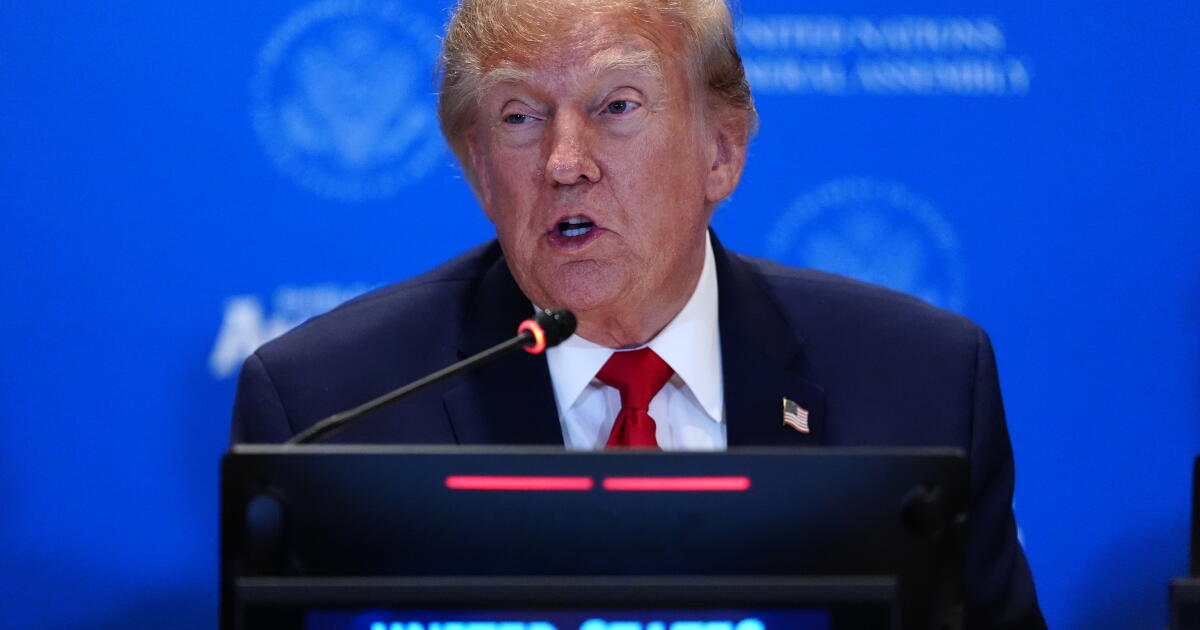
Trump did not mention those words while standing alongside Mamdani in New York on Monday, however. The president was in town for the United Nations General Assembly and made time to swing by Gracie Mansion.
Instead, the president highlighted efforts underway to work together, noting that he’s worked with numerous mayors over the years — “some great ones and some not so great ones.”
“Hopefully you’re going to be a great one,” Trump said while looking at Mamdani. “I’ll be able to say you’re going to be a great one. And you’re off to a start.”
Trump grew up in Queens, which Mamdani represented in the New York Assembly before running for mayor and winning a startling upset. He has since expanded his political power in the city, helping to push three candidates to victory in Democratic congressional primaries earlier this year.
It’s possible that Trump’s tone on Mamdani will shift again. After they had two surprisingly convivial meetings in the Oval Office, Trump started criticizing the mayor again.
“Sadly, Mayor Mamdani is DESTROYING New York! It has no chance!,” Trump wrote on social media in April in apparent response to a plan to create a new tax on luxury second homes in the city. “The United States of America should not contribute to its failure. It will only get WORSE. The TAX, TAX, TAX Policies are SO WRONG.”
Republicans in New York were quick to downplay the latest example of Trump’s friendliness with Mamdani.
David Laska, a spokesperson for the New York Republican Party, said, “President Trump is the greatest dealmaker in history, and he has proven repeatedly that he can deal from a position of strength with America’s enemies, be they foreign dictators or the mayor of New York City.”
Mamdani faced his own questions about why he was playing nice with a president that he’s previously described as a fascist.
“The president and I have both been very frank about the many disagreements that we have,” he said Monday. “I will continue to have conversations with the president, and frankly, anyone who can deliver relief to the people of this city.”
Peoples and Izaguirre write for the Associated Press.
WASHINGTON — The Trump administration plans to limit the number of refugees admitted to the country to 17,500 mostly white South Africans, the administration told Congress on Tuesday, as it continues to transform a program that at one point served as a pathway to safety for people fleeing war and strife from countries around the world.
In a notice to Congress obtained by the Associated Press, the administration said the white South Africans faced seizures of their land and other forms of persecution and would be likely to assimilate when they come to America. The South African government has repeatedly rejected the idea that the white South Africans, who are Afrikaners, are a persecuted minority in the home country.
The Trump administration has dramatically altered a refugee program that historically enjoyed strong bipartisan support as it welcomed tens of thousands of refugees from countries around the world to new lives in America, and instead the administration has transformed it into a vehicle to resettle white South Africans in America.
The administration told Congress in the announcement that it intended to spend about $500 million to resettle the new arrivals to the U.S.
Presidents set the cap on how many refugees the U.S. will approve through the program each year, and historically, they’ve allocated those numbers across various geographic regions while factoring in wars or conflicts that spark humanitarian needs around the globe.
In the second week of the college football season, in a clash of titans, the University of Texas scored 21 unanswered points to surge past Ohio State in the fourth quarter and win, 24-23.
The comeback, Gov. Greg Abbott decreed, was the greatest home victory in more than 130 years of Longhorn football.
A screen grab of one celebratory moment showed a group of students ecstatic beyond belief. They were clad in the university’s signature burnt orange. Two wore cowboy hats. One flashed “Hook ‘em Horns,” the university’s proud hand signal.
To see the picture earlier this month was to witness pure, untempered joy.
Most of the students were darkly complected and apparently of South Asian heritage. French posted the photo and wrote on X, “I heard UT graduation this year looked like this. I didn’t believe it. The problem is now obviously far worse than anyone imagined.”
“Like body-cams exposed criminals, social media is exposing how many Americans have been displaced by foreigners,” French spewed. “It’s everywhere and far worse than any of us could imagine.”
In many places, French’s unapologetic, unvarnished bigotry would be disqualifying. But given Texas’ strong Republican leaning he stands a better-than-even chance of being elected in November to the state Railroad Commission, which, despite its name, oversees Texas’ vast oil and gas industry.
The hateful gibe was perfectly in character. “In some ways in Texas this is old news,” said Brandon Rottinghaus, who teaches political science at the University of Houston.
Last year, as chairman of the Tarrant County GOP, French posted an online poll asking, “Who is a bigger threat to America?” The choice on offer: Muslims or Jews.
Speaking in March at a political conference, he urged President Trump to round up and deport every Muslim in the country, calling the Islamic faith subversive and a clear and present danger to America.
“The Republican Party is used to Bo French making these kinds of outrageous statements,” Rottinghaus said.
Still, the response to French’s latest acrid emission was telling, not least for what it says about reflexive partisanship and today’s political reward structure.
As you’d expect, his Democratic opponent, state Rep. Jon Rosenthal, was scathing. “I spent 25 years as an oil and gas engineer,” he wrote on social media. “Bo French spent Sunday morning sorting our student section by skin color … A man who can’t tell a Longhorn from a foreigner has no business regulating anything in TX.”
The state’s outgoing U.S. senator, Republican John Cornyn, was also quick to denounce French. “This is the Republican nominee for statewide office,” Cornyn said in a post. “Are other Republican elected officials going to condemn the intolerance and racism, or look the other way while it becomes normalized.”
“That is not my message,” Abbott said in a written statement, summoning the moral clarity and political courage of a puff pastry. “We all support our college football teams. The way we win the state is the same way we win football games. We unite under the brand of Texas.”
Then, just to have it both ways, Abbott suggested “that doesn’t mean that Texas cannot also lead in having the toughest immigration laws of any state in America and freezing H1B visas at our universities.” (The overwhelming majority of those holding H1B visas are Asian nationals from India and China.)
Paxton responded by attacking his Democratic opponent, state Rep. James Talarico, for saluting Cornyn for taking a stand against French’s prejudice. “I condemn racism in all its forms,” Paxton wrote on X, adding, “Only one person in this race has a history of dividing Texans by race, and it’s James Talarico.”
A simple, straightforward condemnation shouldn’t have been hard. Lacey Hull, a Republican state representative from Houston, was among those in the GOP who showed how.
“Please delete this,” she urged French on X. “This post breaks my heart. I see college kids cheering on their football team. I see Texans.”
Both need a robust GOP turnout to win in November and neither wants to risk alienating too many within the party’s xenophobic, anti-immigrant wing.
“They’re concerned about turnout,” said Mark Jones, a political scientist at Rice University. “Texas is a red state, but one thing that Republicans are concerned about is that the base may not turn out in as large a number as they need.”
Given French’s loathsome history, Abbott and others in the party establishment worked hard to keep him from winning the Republican nomination, Rice noted. But not Paxton. He headlined the kickoff to French’s campaign and has good reason to be glad he won and is now part of the GOP ticket.
His presence means that Paxton is only the second most odious figure seeking statewide office in Texas in November.
Lisandro Brusco is an Argentine political scientist and Palestine solidarity activist with a track record in geopolitical analysis and journalism focused on Global South struggles. He has contributed as a columnist to international media outlets such as Hispan TV, El Salto, Alma Plus TV, and Huellas del Sur, and is a prominent organizer at Masar Badil. In this exclusive interview, Brusco shares his perspective on the genocide in Palestine, analyzes the expansion of Zionism in Latin America, and outlines the challenges facing anti-imperialist internationalism.
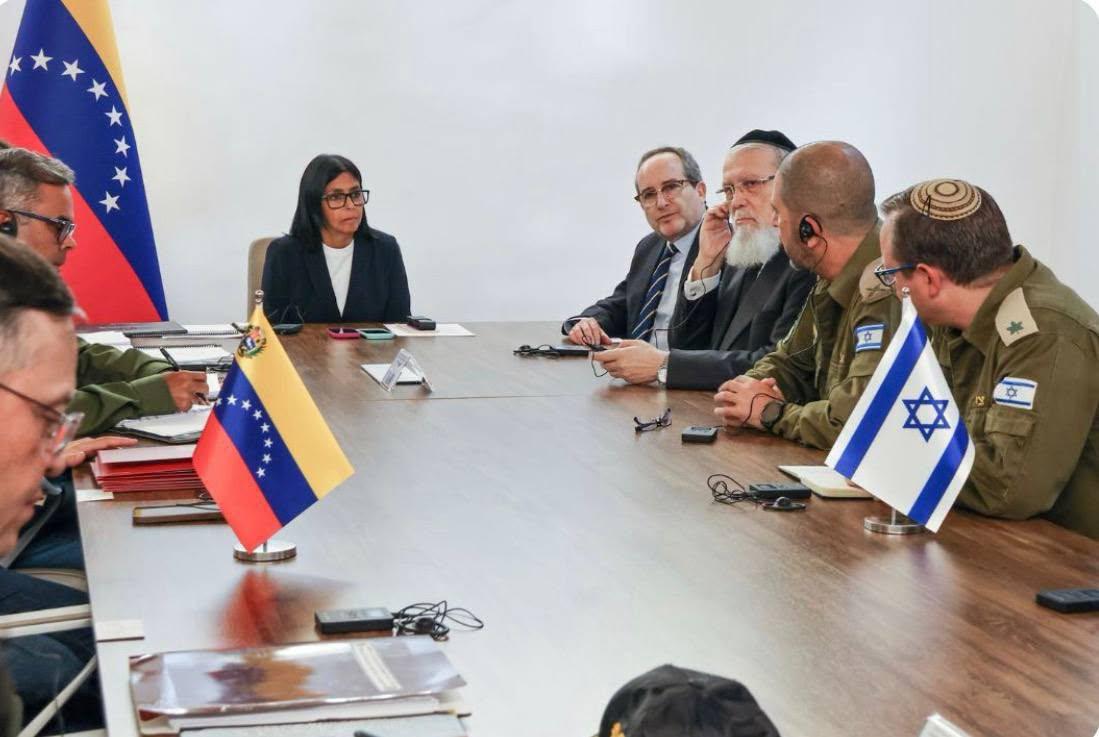
Venezuela recently announced the establishment of consular relations and “technical cooperation” with Israel. The rapprochement began with the arrival of a military-humanitarian contingent days after the June 24 earthquake. How can we explain that an army that destroys hospitals and schools and murders people in Gaza would travel to other countries to portray itself as a lifesaver?
What we saw in Venezuela after the double earthquakes, and in Colombia as well, is part of the Israeli colonial regime’s “humanitarian washing” policy. This involves sending humanitarian contingents to aid the civilian population following a natural disaster. The genocidal state of Israel seeks to restore the image it has lost, especially since October 7. On a global scale, its mask has slipped. People began to see, especially in the West, what the State of Israel was doing to the Palestinian people, even before October 7. After October 7, what we call a “televised genocide” became even more evident. Much credit goes to the press and grassroots journalists, many of whom have been killed, especially in the Gaza Strip.
Israel has lost the legitimacy it once enjoyed in global Western opinion as a democratic state, as a state constantly under attack by neighboring nations, by Arab countries. All those myths are crumbling.
“Humanitarian washing” is an attempt to say, “Here are the good guys coming to show solidarity with this population.”
How is it possible that a regime – which has destroyed more than 70% of the infrastructure in the Gaza Strip, which blows up hospitals, schools, and mosques, which has destroyed the agricultural production capacity, the very little the Gaza Strip had, which blocks the entry of humanitarian aid, could turn around and send so-called humanitarian contingents to other regions?
Some of these contingents include soldiers who have even been accused of genocide and are wanted for arrest.
How can this happen? Because governments complicit in this genocide allow these troops to enter their territories. Unfortunately, this is happening in Latin America.
This entire whitewashing mechanism is also applied on social media. In 2025, Israel invested $1 billion in PR firms, influencers, digital diplomacy, artificial intelligence, and so on. The settler-colonial regime needs to control search engines to steer information in its favor and create a permanent stranglehold on social media, so that the public consumes fake news it produces.
Venezuelan Acting President Delcy Rodríguez held multiple meetings with the Israeli military-diplomatic mission. (Presidential Press)
Israel’s influence in Latin America has been linked to the sale of surveillance technology and “combat-tested” weaponry used against the Palestinian people and on other fronts. As Venezuela normalizes its relationship with Israel, what are the main risks you see?
The Zionist lobby in Latin America operates in tandem with imperialist interests in the region. It is very important to highlight this premise in order to analyze the situation correctly and implement sound political strategies.
This is not a recent development: that organic link already existed between the Israeli colonial entity and the ecclesiastical-civil-military dictatorships that were imposed by blood and fire across Latin America in the 1960s and 1970s.
They were not individual Zionist links with each dictatorship, but with the imperial project being imposed on the region: Operation Condor, the US policy toward Latin America and the Caribbean aimed at quelling the revolutionary movements that were taking shape. Israel sold weapons and provided military training to those dictatorships.
The process continued with the so-called democratic transitions of the 1980s and gained new momentum following the US “War on Terror” offensive beginning in 2001. Today we also see this expressed in a clear strengthening of the ties between the Zionist movement, the State of Israel, and US imperialism.
This is not about particular interests, nor is there any intention to create a situation in Latin America similar to that in Palestine. Israel has no plan to build settlements in the region. Here, Zionism continues to support the capitalist imperialist interests of the United States.
We see this in the trade agreements that various governments have signed with Israeli surveillance, arms, and extractive companies.
For example, the Israeli state-owned water company Mekorot advises various provincial governments in Argentina on water management. Similarly, the Israeli company XtraLit is involved in the extraction of lithium, a strategic mineral for contemporary capitalism. Another example is Navitas Petroleum, an oil company that also extracts resources in Argentina.
The focus of these Israeli companies is the same as that of global capitalism: resources. And to ensure the extraction of resources, they need repression; that is why they have military companies, surveillance software, and so on.
Because what Israel has historically sold to the world is repressive technology tested on the ground. Who can better vouch for military tools than the genocidal regime par excellence?
Obviously, there is a political landscape in the region that facilitates all of this: governments like we have in Argentina, Colombia, Chile, and Ecuador. These are governments subservient to imperialist interests, which even create regional and global political structures such as the Isaac Agreements – signed by the Milei administration – that are set to expand to other nations. All of this goes hand in hand with military initiatives such as the Shield of the Americas.
The presence of Zionism in Latin America is a political concern for anti-imperialist activists: there is a hegemonic bloc that is coming for our resources, our territories, to plunder, pollute, and destroy our land. We must fight this bloc.
Having been on the ground in the West Bank, you describe how the machinery of home demolitions, checkpoints, and the violent expansion of settlements operates on a daily basis. How is the settler-colonial project sustained economically and militarily, and what role does the complicity of the international community play?
Israel is sustained, to a great extent, by the United States, international banks, and European powers such as Germany. Without US support, Israel would not have lasted a week in the recent war against Iran. The US Congress, driven by the Zionist lobby, had to approve emergency funds to support Israel’s military defense.
On the other hand, the settlements in the West Bank are sustained economically by state support from the Israeli regime, through subsidies – largely contributions from multinational corporations, ranging from investment funds to Zionist foundations such as the Jewish National Fund.
And the international community, such as the United Nations, has historically legitimized and normalized this occupation, not only through the resolution that allowed for the establishment of the State of Israel, but also by failing to take action against Jewish settlements in the West Bank, despite declaring them illegal.
It is worth noting that when the Oslo Accords were signed in 1993, there were just over 150,000 settlers in the West Bank. Today there are approximately 700,000. There are entire cities that are illegal settlements, with industries, schools, police stations, and so on.
The UN member states are also doing nothing. They could sever trade and diplomatic ties with this genocidal entity, but even the powers that proclaim themselves anti-hegemonic fail to do so.
The only sovereign state that has no ties to the Israeli regime and whose political goal is the destruction of this colonial entity is the Islamic Republic of Iran. It is the only country that has advocated for the destruction of the Israeli occupation of Palestine since 1948.
In short, there is no political initiative by the international community to at least halt the advance of illegal settlements in Palestine. Recently, although the systematic aggression against Gaza continues, the Zionist entity is making much greater inroads in the West Bank through its settlers.
Settler civilians – the vast majority of whom are armed – set fire to Palestinian homes and fields, kill grazing animals, and prevent Palestinian children from going to school. All of this takes place under the protection of the Israeli occupation army. The situation is desperate, and often – with a few honorable exceptions – Palestinians feel that they are on their own.
Brusco has witnessed the brutality of the Israeli occupation first-hand. (Archive)
In the West Bank, you spent time alongside local families. In the face of Israeli violence, how do the Palestinian people sustain their daily lives, their culture, and their resistance in the face of this ongoing occupation?
It is a question as important as it is difficult to answer, because from our perspective it is hard to understand how the Palestinian people sustain their daily lives, their culture, and their resistance in the face of such genocide and ongoing occupation.
As with all anti-colonial struggles, there is a fundamental factor that the colonizers fail to consider as a variable: the Palestinian people’s deep connection with their land. This goes far beyond a purely utilitarian view; it is an ancestral, cultural, social, and historical bond. That is why, despite the brutal attacks of the Zionist occupation, the Palestinian people have no intention of leaving their territory.
Getting them to leave is the primary objective of the Zionist movement: a project of ethnic cleansing that has failed to do so for over 100 years, despite Western support. As time goes on, the Israeli regime faces increasingly severe crises, while the Palestinian population remains steadfast on its land.
We must bear in mind that there is also a deliberate effort to destroy written historical records, civil registries, libraries, and universities. All of this is part of a very clear mission to erase the written history of the Palestinian people. In the face of this, memory is preserved and expressed through oral history – the stories that refugees pass down to new generations.
Therein lies the idea of return and liberation, symbolized by the key. This goes far beyond the material property that families once owned in what is now the State of Israel. The key embodies the history of a people, of a family, their tradition of struggle, their connection to the land, and their origins. It is not conceived in terms of private property, but rather from a social and historical perspective.
That is why, in every refugee camp – whether in the West Bank, Gaza, Lebanon, Jordan, or Syria – each family preserves not only the key but also its customs and identity. If we ask a third- or fourth-generation Palestinian refugee, born in Beirut, where they are from, they will immediately name the Palestinian village razed in 1948 from which their family hails. That identity remains extremely strong even several generations later. That is why there is such brutal repression against the refugee camps, because that is where the revolutionary spirit is preserved.
This tradition is sustained in large part by the daily efforts of families and, in a very special way, by the educational role of women. They are the ones who pass down oral history to children and take charge of their education, especially in contexts where children are prevented from attending school due to Israeli checkpoints or settler attacks.
Alongside this collective memory, Palestinian society draws on solidarity and community resilience. Facing daily policies of apartheid, displacement, torture, home demolitions, and mass incarceration, the community responds collectively. Committees of prisoners’ family members are organized, and when a home is slated for demolition, the community mobilizes to ensure that the family is not left homeless.
In the face of apartheid and ethnic cleansing, resistance is practiced in daily life.
In your writings, you address the essence of the Zionist colonial project and the imposition of permanent control structures in Gaza. What plans does the Israeli government have in store, together with Trump’s Board of Peace, for Gaza?
The Board of Peace is yet another of the many tools of the Israeli colonial regime. In this case, it was proposed by the United States, just as others came from the British Empire, just as the UN hatched a plan to create the State of Israel on Palestinian territory.
These are proposals imposed by the West to ensure the expansion of the State of Israel – as a Zionist project – across all Palestinian territory and beyond.
Thus, the Board of Peace is a strategic policy of the Zionist movement, a tool for administering this occupation, denying the genocide, and imposing a supposed stability built upon the total massacre of the Palestinian people.
We’ve seen this story before, even in Oslo in 1993. At that time, there was talk of building a Palestinian state, of economic growth, of foreign investment, of an economy integrated into the region, and of the creation of a so-called Palestinian Authority.
Far from that, the result was a territory that became even more controlled, more occupied, more fragmented, and more bombed. The Palestinian Authority, it is now undeniable, serves the occupation, collaborating in the repression of those who oppose normalization and the recognition of the State of Israel.
So, I’ll say it again: Trump’s Board of Peace has nothing to do with peace. It serves to uphold the policy of exterminating the Palestinian population and destroying homes, farmland, water supply systems, roads, hospitals, schools, markets, refugee camps, and so on. All the infrastructure that supported daily Palestinian life in the Gaza Strip has now been destroyed.
And this Board of Peace proposes the reconstruction of this territory. Reconstruction for what purpose and for whose benefit? Who will manage this reconstruction? Who will control food supplies and productive land? This Board of Peace goes hand in hand with a plan for the total colonization of the Gaza Strip and total control over its territory, with the possible establishment of a Palestinian governing body in the future.
But in reality, just like the Palestinian Authority in the West Bank, what it will guarantee is the occupying power’s control over that territory, along with a supply of cheap labor.
“Yankees and Zionists out of Venezuela” banner in a recent protest. (Leo Fernandes)
For years, progressive governments in Latin America firmly condemned Israel, and in some cases even severed ties. In the current climate, where realpolitik prevails and the normalization of the Zionist regime is advancing, what challenges do solidarity movements face in sustaining support for the Palestinian cause?
From a communications perspective, the role of grassroots solidarity movements with Palestine is central. We saw this beginning on October 7, 2023, when Palestinian journalists and media workers in Gaza and Lebanon became military targets of the Israeli colonial regime, in response to the threat that was beginning to emerge in the battle of ideas, in the battle for the hearts and minds of the people.
Communication work is strategic when it comes to fostering critical thinking and a revolutionary, solidarity-based practice that breaks with the commodified conception of news to uphold the basic principles of informing the public.
On the other hand, the role of international movements – both in the West and in West Asia, as well as in the countries of the Global South – is fundamental. What the Al-Aqsa Flood operation did was precisely to mobilize and awaken many peoples who were dormant and to show that the enemy is not invincible.
We can launch our own political initiatives, including military ones, to create crises in these genocidal, criminal, and occupation projects that exist today in West Asia and throughout the world.
One key question to address from a solidarity perspective is: How do we bring these national liberation resistance movements together? We must approach this from an internationalist perspective. For example, any victory for the movements organized around the Axis of Resistance that directly confront imperialism – the United States and Israel – is a victory for the peoples of Latin America who face the same enemy. This is the Guevarist conception that any defeat of imperialism anywhere in the world is a victory for the peoples.
It seems to me that this solidarity bond must be organic and strategic when considering the building of international fronts that break the capitalist domination that prevails in much of the world.
If revolutionary governments came to power in Latin America and truly severed ties with the Israeli entity, that would weaken all those fronts involved in the sale of arms, technology, etc,. and set a precedent for other peoples around the world.
And that is the way to support the Palestinian cause, which is the cause of liberation and return. We, too, must instill in public opinion and in our discussions with all organizations the conviction that Palestine will be free from the river to the sea. Today, we cannot reconcile the liberation of the Palestinian people and their return with the existence of the State of Israel.
We need to build political, organic, and genuine solidarity that focuses on projects of national liberation and collective emancipation. And it seems to me that the Al-Aqsa Flood has, in a way, established precisely that: that the best way to change the status quo is by dealing real and tangible blows to colonialism and imperialism.
Brusco interviewing Georges Abdallah, a Lebanese militant who was released in 2025 after more than four decades as a political prisoner in France. (Resumen Latinoamericano)
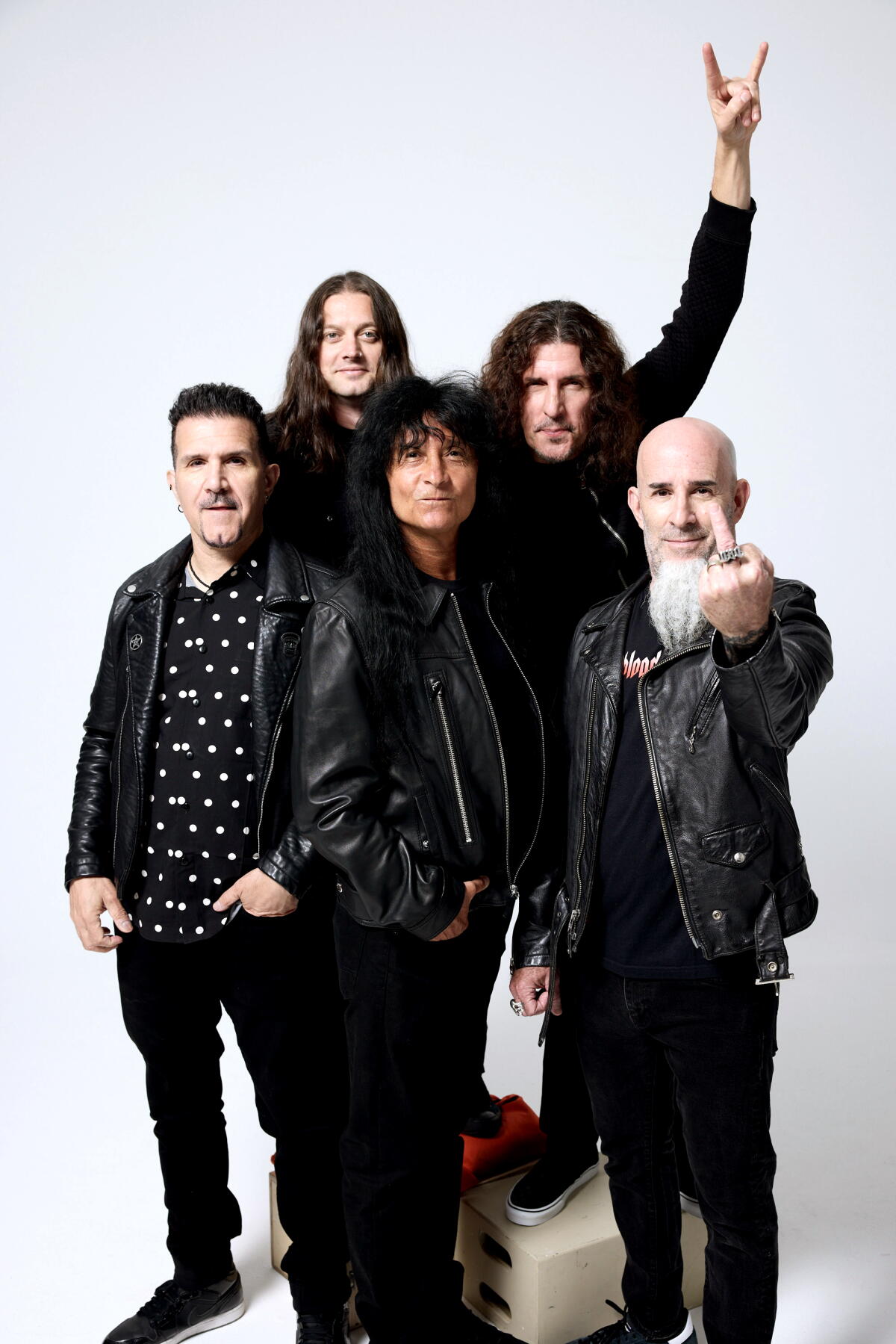
Moments after the final rapid-fire rhythm of Anthrax’s opening number “Caught in a Mosh” fades from the open air of the Sports Illustrated Stadium in Harrison, N.J., shaggy-headed vocalist Joey Belladonna addresses the audience. “I gotta ask everybody out there right now. Who’s never seen Anthrax before?” Around half of the 6,000-or-so crowd members who showed up by 6 p.m. for the three-band bill, headlined by heavy metal legends Iron Maiden, raise their hands. “Ah, yeah! We got a lot of new friends here today. Thank you for being here.”
Some bands with a four-decade career would be disappointed by the turnout, or by the realization that many fans not wearing Maiden shirts are dressed in Megadeth merch. But for Anthrax, preaching to the unconverted is an opportunity to expand their fan base beyond the somewhat insular community of thrash metal, a style of music that took the aggression of bands like Iron Maiden and turbocharged it with the speed and fury of hardcore punk. As much as Anthrax cherish being one of the “Big Four” — Metallica, Megadeth, Slayer and Anthrax — playing a 35-minute set well before dark is a great way to reach new listeners.
“We have a strong base of fans that are deeply into this band, but we know there are also people that have never listened to this type of music before,” says bald-headed, gray-bearded rhythm guitarist and lyricist Scott Ian from his home office outside of L.A. a week before the show. “They’ve heard band names, but maybe they haven’t dipped their toe in the water. So, it would be great to reach them and give them something they didn’t even know they wanted and then they’ll fall in love with it.”
A full 10 years have passed since Anthrax released their last studio album, “For All Kings,” which helps explain why they’re not as well-known as some metal veterans. Instead of rushing out an album after the pandemic, Anthrax took their time writing and fine-tuning new songs before entering Dave Grohl’s Studio 606 in L.A. in 2022. Then, they wrote more songs and massaged those for another two years before finishing the recording and sending the album to be mixed in 2025.
“I nitpicked over every detail of these songs before I even sent the demos to the other guys to put their two cents in,” says drummer and main songwriter Charlie Benante, clad in a black T-shirt and blue jean shorts, and sporting cropped black hair and a slanted mustache. “I wanted them to be as good as they could possibly be. Being good enough wasn’t OK.”
The 11 tracks on “Cursum Perficio” (Latin for “I complete my journey”) encapsulate the finessed brutality, incisive melodies and experimental flourishes from Anthrax’s years with Belladonna (from 1984-1992 and 2005 to the present), during which the band wrote its fastest, most aggressive songs. As much as Anthrax were driven this time by the desire to attract new fans, they were also motivated by many popular new metal albums — and not in a good way.
Anthrax’s meticulously crafted album was recorded at Studio 606, using Iron Maiden support slots to court new listeners beyond the thrash faithful.
(Travis Shinn)
“I hear bands with new records out, and they’re horrible,” Benante says, squinting his eyes and grimacing. “The genre has gotten stagnant to the point where you see a social media post by some band mentioning they have new music coming out, and you can tell exactly how it’s going to sound just by the way they look.”
While “Cursum Perficio” may be a bit heavy for some metal fans, it’s neither dull nor predictable. The album is loaded with Anthrax trademarks — serrated, crunchy riffs, soaring lead vocals, bludgeoning beats, and scorching guitar — but there are also galactic noise effects, angular song structures and atypical chord configurations. The most striking number, “The Edge of Perfection,” starts with chiming ethereal guitars and gently tapped cymbals, then detonates in a conflagration of feral blast beats, minor-key tremolo guitar picking (redolent of black metal), and chanted tribal vocals before climaxing in a slithering riff and ebullient chorus.
“After 30 years as a band, I can honestly say that’s the best song we’ve ever done,” says Ian, the most voluble member. “I feel like it’s genre-defying and can appeal to fans of atmospheric stuff and extreme metal, and anyone who likes aggressive music or even just guitar rock.”
For such a bruising cut, the lyrics of “The Edge of Perfection” are surprisingly optimistic. “It’s about striving for perfection, which, of course, is impossible. But that doesn’t mean you can’t reach for it,” says Ian. “To me, true perfection is happiness and health, and that comes from love, and it isn’t a given. I work hard at being an empathetic person and I only do things out of love and wanting to make everybody around me feel good as well.”
Lest Ian’s Zen-like proclamation color him a romantic, the guitarist stresses that much of the energy and anger of “Cursum Perficio” stems from the political, social and economic turmoil of the last decade. The problems, he stresses, are cutthroat capitalism, rampant partisanship and mankind’s seemingly innate instinct to destroy.
“Humans are really good at one thing and that’s murder, and we’ve excelled at it over the centuries,” Ian says, shattering the good vibes that flowed like a clean mountain spring just a minute ago. “Every year, we get better at treating each other terribly, which I can’t understand. I mean, there are people on this planet who, if they wanted to, could end world hunger. But I guess there’s no money in that. They would rather make the world a s— place by draining the resources. I swear to God, it’s just like [the 1971 Dr. Seuss book] ‘The Lorax.’”
While Ian purposely scrapped any early lyrics he wrote about politics in the age of Trump (“that would have been boring”), on “Everyone’s Got a Plan” he addresses the partisan strategy of “divide and conquer,” and in the first single, “It’s for the Kids,” he writes about the ubiquity of school shootings. Neither song has stopped naysayers from characterizing Anthrax as left-wing.
“I’m not a liberal,” he plainly states. “I’m a centrist. I like skeet shooting and I enjoy going to a range and shooting at targets. But I believe in common sense. And no matter what your political leanings, I think everybody can agree that nobody wants to see an 8-year-old shot in the face, which happens all too often.”
“I love this country,” interjects Benante. “But that doesn’t mean I don’t have some problems with it…. The way we go about things in this country is just wrong, and it makes me frustrated to the point where I’m like, ‘F— it. I’ll just put my head down and write a song.’”
“Cursum Perficio” delivers classic Anthrax crunch with experimental flourishes, anchored by genre-defying centerpiece “The Edge of Perfection.”
(Travis Shinn)
Much of “Cursum Perficio” caters to neither the left nor the right. “NYC 93” is about the celebratory chaos of band life in the early ’90s, “The Long Goodbye” addresses the horrors of dementia, and the title track is about closure, whether positive or problematic. The Latin translation of the phrase, along with Benante’s past comments that he can’t imagine writing another full Anthrax album anytime soon, have led to speculation that the band is nearing the end of the line; the theory is seemingly supported by lines like, “The journey’s over/ The threads that hold it all together.” But while there are no plans now to write any new songs, and four of the members are in their 60s (lead guitarist Jonathan Donais is the baby at 47), growing too old to headbang isn’t even a notion.
“I truly believe that going out and playing shows keeps us young,” concludes Benante. “We get in a zone, and the music takes over and the energy going through our bodies is the same as it was when we were 20. Why would we ever want to give that up?”
Wiederhorn is the co-author of Scott Ian’s 2014 autobiography, “I’m the Man: The Story of That Guy From Anthrax.”
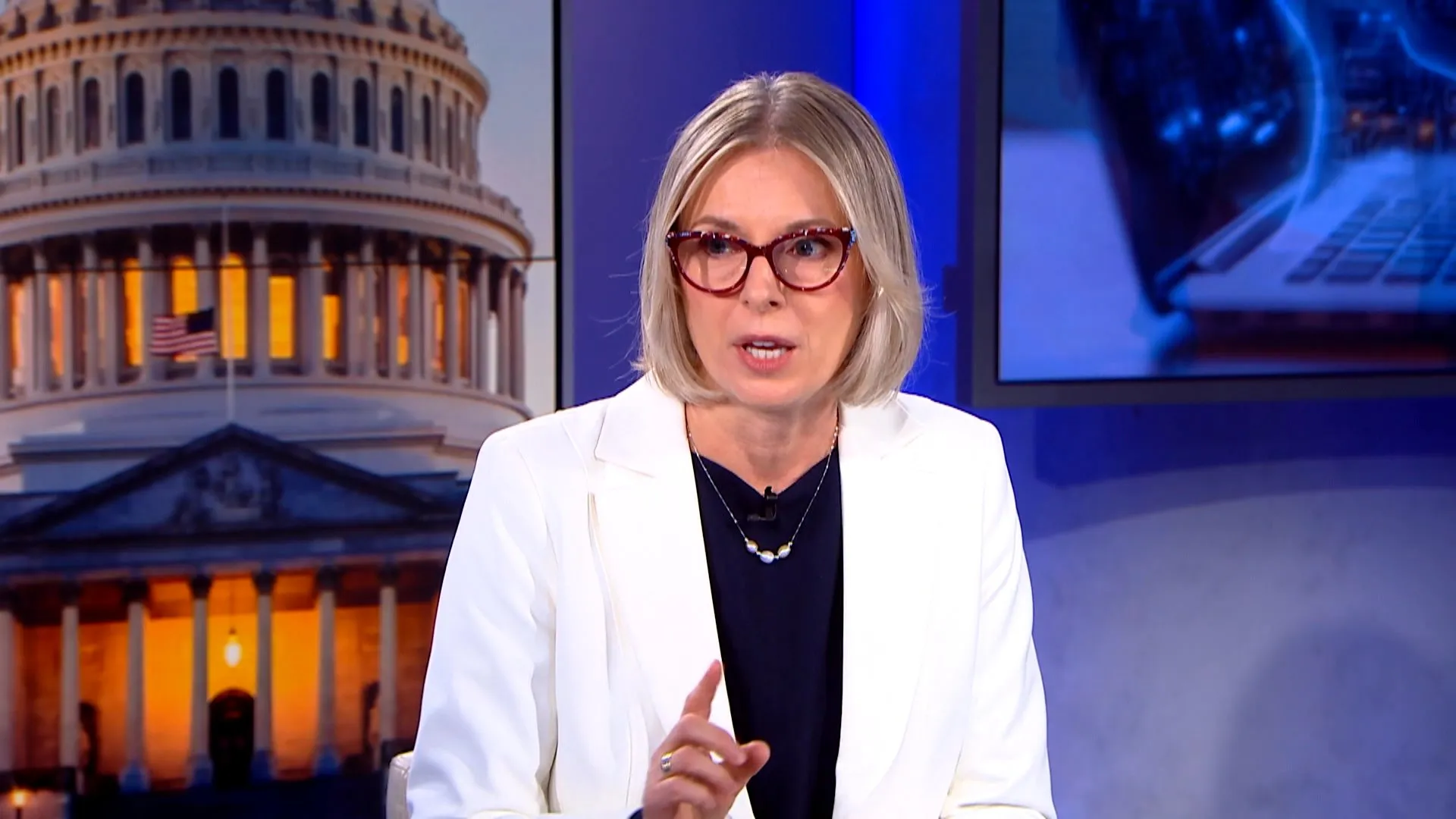
As Washington debates how to regulate AI without falling behind China, industry experts say that governance doesn’t have to mean hitting the brakes. Al Jazeera’s ‘This is America’ explores whether rules managing AI’s risks can also give American companies room to innovate.
MEXICO CITY — He’s been called the “MAGA man” of Latin America, a brash political provocateur whose social media assaults boosted right-wing campaigns from his native Argentina to Central America.
His career as political consultant and co-founder of an ultra-right online outlet made him a rich man and helped elect Trump-aligned politicians across the region. The Economist gave him the “MAGA Man” label, while political commentators gave him another nickname — the “Steve Bannon of Latin America” — a nod to the longtime Trump ally and advisor.
Now, however, Fernando Cerimedo, 45, sits in a maximum-security prison in Bolivia, accused of masterminding a murder-for-hire plot: The attempted femicide of his pregnant mistress, Nadia Beller, 33, a Bolivian lawyer and activist.
It’s a stunning collapse for a onetime ad man with a dodgy reputation who rose to become the go-to digital campaign guru for Latin America’s ascendant right wing. Cerimedo’s signature boasts, exaggerations and peddling of false election-fraud narratives reflected those of his political model, President Trump.
Cerimedo also is another example of how right-wing political operatives outside the United States — as recently in Colombia and Germany — have adopted Trumpian tactics and messaging.
The fall of the “King Midas of the Latin American right,” said Daniel Matamala, a prominent Chilean journalist, stunned “the ecosystem of fake news, bots, trolls and disinformation that has taken this region by storm in recent years.” Speaking on his podcast, Matamala added, “The name of Cerimedo looms like a ghost over the summit of the radical right.”
The Aug. 17 attack on Beller was a seemingly well-planned ambush that was captured by security cameras, the grainy images widely disseminated on social media.
One of two would-be assassins dressed as fast-food deliverymen pulled out a pistol and shot Beller point blank outside a hotel in the eastern Bolivian city of Santa Cruz. She fell to the ground and, according to her account, feigned death. The next day, at dawn, Cerimedo was arrested as he was about to board a plane to Buenos Aires.
Cerimedo set up the hit, prosecutors charge, in a nefarious attempt at damage control. Beller had threatened to expose his alleged criminal behavior and physically abusive behavior toward her while revealing Cerimedo, a married man with two children, as the father of her unborn child.
Cerimedo is also under investigation for alleged illegal enrichment and potential links to cocaine trafficking.
He has denied any wrongdoing.
Even before Cerimedo’s arrest, Latin American journalists had begun unmasking Cerimedo as a prodigious purveyor of fake news — about himself. New reports revealed that his frequent boasts about U.S. connections — that he attended Harvard, trained with U.S. Navy SEALs, worked in the Obama White House — were fanciful.
“He certainly exaggerated things,” said Damian Merlo, a Miami-based consultant who worked with Cerimedo on the 2023 campaign of Argentine President Javier Milei, a Trump favorite. “I never really got the impression that Cerimedo was ‘MAGA’s man in Latin America.’ The guy could hardly speak English! But that’s how he sold himself.”
Many times, the sales pitch worked. It was Cerimedo who helped broker then-candidate Milei’s celebrated 2023 interview with Tucker Carlson, at the time a Trump confidant, an appearance that thrust Milei into the international spotlight.
Like Milei, Cerimedo seemed to relish any proximity to Trump-land.
In February, at the inaugural “Hispanic Prosperity Gala” — a right-wing pep rally held at Trump’s Mar-a-Lago estate — Cerimedo was honored as “Hispanic Political Consultant of the Year.’” From the podium, he spoke of Latin America’s “culture war” and the need to ensure that “the left never again returns” to governments that have elected conservative leaders.
Switching to heavily accented English, Cerimedo gave a shout-out to Brad Parscale, Trump’s former campaign manager, whom Cerimedo thanked for “believing [in] me all the time and giving me your technology.”
Parscale declined to comment.
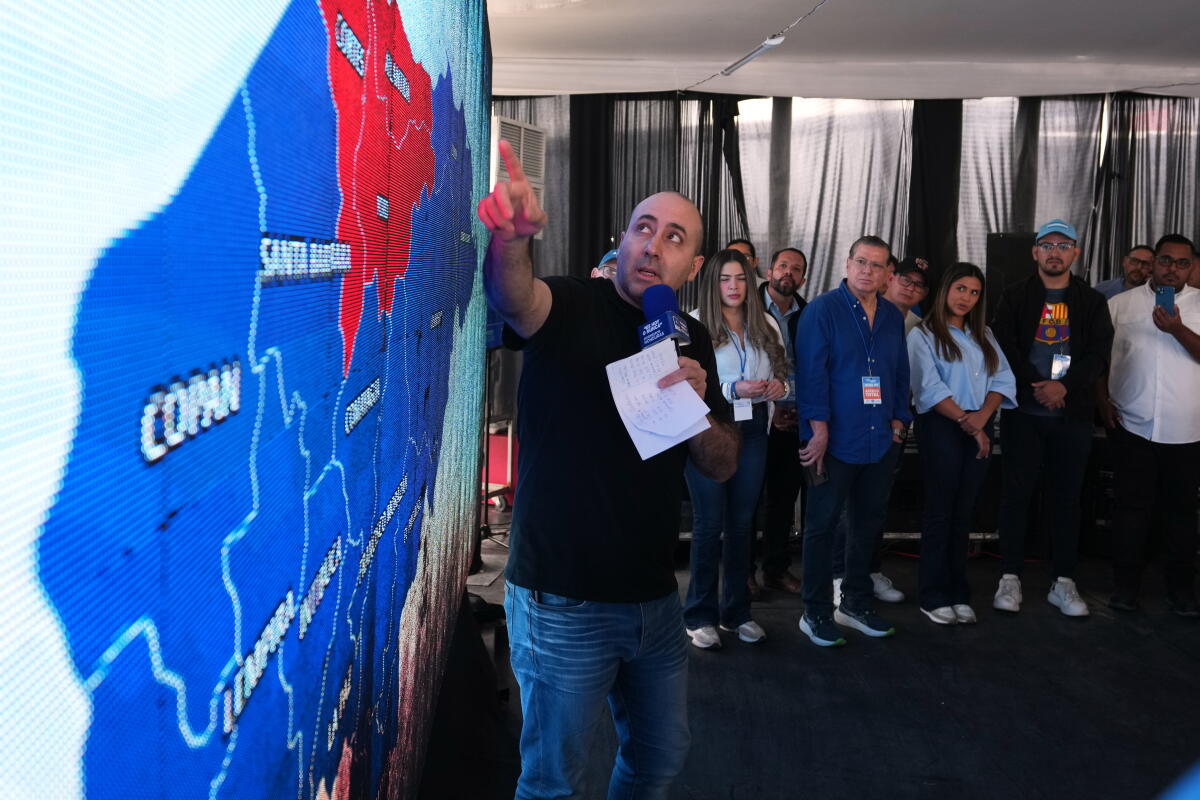
Fernando Cerimedo, an advisor to the National Party, points at a map of Honduras on Dec. 1, 2025, one day after voters went to the polls to elect Nasry Asfura president.
(Moises Castillo / Associated Press)
Both Cerimedo and Parscale were involved in last year’s campaign that resulted in the election of Honduran President Nasry Asfura, whom Trump backed publicly.
Last year, Cerimedo was a key player in the election of Bolivian President Rodrigo Paz, the center-right, U.S.-educated son of a former president who transitioned from Marxist firebrand to moderate. The ascension of Paz broke almost two decades of leftist rule by the Movement for Socialism party of ex-President Evo Morales.
Cerimedo had no official capacity in Paz’s government, but he enjoyed insider status. He accompanied Paz in March to Trump’s anti-narco “Shield of the Americas” summit, a confab of mostly conservative leaders at Trump’s Doral resort in south Florida.
Among the items found in searches of Cerimedo-linked properties, authorities say, was a business card listing him as Paz’s “chief adviser” — a nonexistent post.
“Mr. Cerimedo never had the authorization to represent … the presidency, the government or my family,” a deeply discomfited Paz said in Facebook message last month.
How exactly Cerimedo got into politics — and how he became a right-wing rabble-rouser — remains somewhat opaque. According to media accounts, he worked a series of uninspiring jobs — including stints as a taxi driver, a schoolteacher and an employee of insurance and computer firms — before veering into advertising. In 2019, he assisted the campaigns of several leftist Peronist candidates in provincial races in Argentina, and later founded his own consultancy, Numen.
Cerimedo first gained prominence in neighboring Brazil. That’s where he championed false election-fraud narratives following the narrow reelection defeat in 2022 of President Jair Bolsonaro — a MAGA stalwart — in his reelection bid against Luiz Inácio Lula da Silva, a leftist. Cerimedo’s “Brazil Was Stolen” livestream exacerbated the sense of outrage among Bolsonaro loyalists, who took to the streets in mass protests.
The Brazil exposure helped catapult Cerimedo into successful presidential campaigns in Argentina (Milei), Honduras (Asfura) and Bolivia (Paz). His arrest prompted Chilean lawmakers to create a commission to investigate Cerimedo’s possible role in that nation’s recent electoral shift to the right.
With Cerimedo’s name now toxic, Paz, Milei and other former allies have distanced themselves.
Also ditching Cerimedo was his close partner, Javier Negre, a right-wing Spanish media entrepreneur who, in 2024, purchased 50% ownership of Cerimedo’s La Derecha Diario (The Daily Right), an online, Spanish-language MAGA megaphone. The site strongly backed Colombian President Abelardo de la Espriella — who had Trump’s support — during his tight campaign this summer.
Following Cerimedo’s arrest, Negre announced that he had bought out his former partner in La Derecha Diario.
In Bolivia, the Cerimedo scandal has taken on the character of a Latin American telenovela.
A recovering Beller, shot three times in her upper body, granted interviews from her hospital bed, dishing on her lover’s alleged brutality and criminality.
According to Beller’s testimony to authorities, Cerimedo tricked her into the near-fatal rendezvous outside the hotel. He told her that a source was waiting to share details about the purported rape of a 13-year-old, she said. The supposed rapist? Bolivian ex-President Morales — a despised figure on the Latin American right.
The case has seen the once high-flying Cerimedo reduced to a slumping presence in a hoodie as authorities have shuffled the baldish, heavyset figure to hearings and lockups. Last week, he was transferred while awaiting trial to Bolivia’s maximum-security Chonchocoro prison, infamous for its high-altitude, ill-heated confines.
“I want to see my children!” a sobbing Cerimedo declared at one point in earshot of the media.
His legal team has pushed back. A defense lawyer, Margarita Arce, questioned whether Cerimedo had impregnated Beller and asserted to reporters that Beller staged a “self-inflicted attack” to smear Cerimedo and undermine the Bolivian government.
But prosecutors have sided with Beller, who told the Argentine daily Clarín: “Fernando Cerimedo wanted to kill me because I can tell everything that I know.”
Times staff writer Ana Ceballos in Washington and special correspondents Andrés D’Alessandro in Buenos Aires and Cecilia Sánchez Vidal in Mexico City contributed to this report.
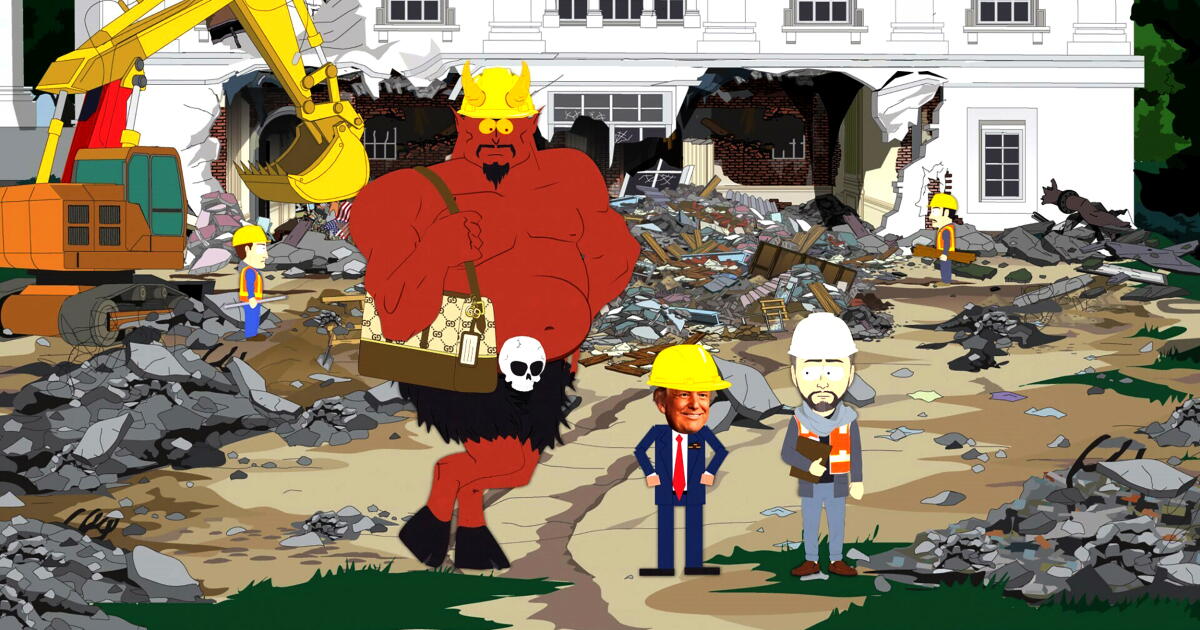
Billionaire comedy duo Trey Parker and Matt Stone are unveiling a new name for “South Park” ahead of the show’s 29th season: “South America.”
The satirical series’ name change follows President Trump’s renaming of Lake Ontario to Lake America amid the escalating U.S.-Canada trade war. Last week, tech behemoths Apple and Google honored Trump’s executive order and renamed the Great Lake on their maps for U.S. users.
Parker and Stone made the announcement on social media on Tuesday, writing, “Inspired by the bravery and patriotism of Apple and Google, we are changing the name of South Park to SOUTH AMERICA. We especially want to thank our parent company Paramount — a Skydance Capitulation.”
The duo also jabbed at their parent company and its new owner, Skydance Media, for what media critics have characterized as caving to the Trump administration’s Federal Communications Commission. The “capitulation” involved controversial corporate and programming adjustments as well as agreeing to a $16-million settlement over a lawsuit brought by Trump involving a “60 Minutes” segment to get Paramount’s $8-billion merger with Skydance approved.
Last year, following a particularly incendiary episode of the show — in which a parody of Trump has an X-rated fling with Satan, and the president is portrayed as having an animated micropenis — the White House issued a statement to Variety slamming the series.
“The Left’s hypocrisy truly has no end — for years they have come after ‘South Park’ for what they labeled as ‘offense’ [sic] content, but suddenly they are praising the show,” White House spokesperson Taylor Rogers said in a statement to the outlet. “Just like the creators of ‘South Park,’ the Left has no authentic or original content, which is why their popularity continues to hit record lows.”
Last week, “South Park,” won an Emmy Award for outstanding animated program. And last summer, Parker and Stone reached a five-year, $1.5-billion deal with Paramount to secure exclusive global streaming rights on Paramount+, making the series one of television’s most valuable shows and its creators two of the highest-paid comedy writers in the biz.
The 29th season of “South America” premieres Sept. 16 at 10 p.m. on Comedy Central.
Canada’s tariffs, which came into force just after midnight, cover roughly $20 billion in U.S. goods and impose duties of as much as 50% on products, from steel and aluminum to farm equipment, clothing and electronics. The list also reaches into the everyday commerce that binds the two economies, including cheese, seafood and cosmetics.
It was the latest sign that relations between the two neighbors have reached their lowest point in decades, after Trump dismissed Canada as the 51st American state, moved to rename Lake Ontario and mocked its armed forces.
Ottawa’s latest measures are a response to tariffs imposed by President Trump last month on Canadian exports. The two governments had appeared close to a trade deal just a month ago. But talks broke down in dramatic fashion, leaving both sides aggrieved and accusing the other of negotiating in bad faith.
In a post Tuesday, Trump said Canada “has been ripping us off for years” and threatened to respond by removing access for Canadian businesses to key American markets.
“What many do not realize is that the Canadian Government, including Canadian Provinces, have banned American Small Businesses and Companies from selling into their Government Procurement Markets,” Trump wrote. “This is the case even though Canada gets broad access into the massive American Government Procurement Market, including those of our States.
“That is not reciprocity, it is a Canadian Trade Scam. From now on, NO RECIPROCITY — NO ACCESS!” he continued. “I am hereby directing the [General Services Administration], working with the [U.S. Trade Representative], to take all necessary steps to REMOVE Canadian-origin products from GSA’s Multiple Award Schedules unless Canada restores full and fair reciprocity for American Farmers and Companies.”
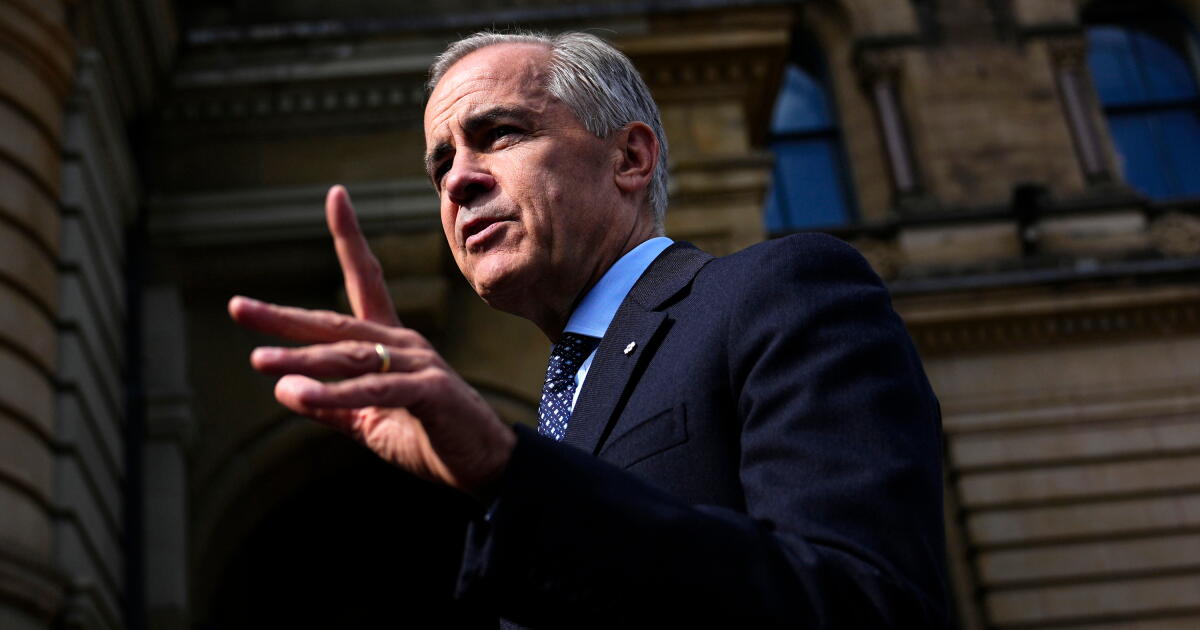
Canada’s prime minister, Mark Carney, has characterized the confrontation as more than a dispute over tariffs, arguing that demands by a bullying Trump administration threaten Canada’s economic independence.
In a video released Tuesday, Carney argued that in the past, the United States has tried to use tariffs to “break us,” only to have Canada’s economy grow stronger and more diversified. He urged Canadians to buy Canadian and break economic dependency from the United States.
“This won’t be easy, and I won’t pretend otherwise,” Carney said. “But Canadians have faced difficult stretches before, and what has carried us through has never ever been any one measure. It’s always been Canadians looking out for each other.”
Trump, meanwhile, has pressed Canada to make concessions on trade and has warned of further tariffs, including potentially higher duties on Canadian automobiles. He also threatened to ban the sale of aircraft from Canada’s Bombardier unless its products are manufactured in the United States.
“If they want our Market, they must build here, and stop treating America like a ‘piggybank,’” Trump wrote on Truth Social on Monday. “BUY AMERICAN. FLY ON AMERICAN AIRLINERS. ENJOY AMERICAN LIQUOR AND BEVERAGES. SAIL ON LAKE AMERICA. AMERICA FIRST!”
Earlier Monday, Trump posted an image showing Mexico, Canada, Central America, Greenland and Caribbean nations with the colors of the American flag. He also posted a caricature of him and Carney playing hockey in which Trump tells him: “Get up, Governor.”
Both sides stand to lose in a trade war poised to hurt businesses large and small across the world’s longest international border.
A prolonged economic conflict poses long-term risks for Canada, which faces price hikes and investment losses from the United States, by far its largest trading partner.
But Americans may also confront higher costs at a time when inflation is already a stubborn problem for the Trump administration. And the trade war may be felt most in northern border states set to hold midterm elections that could swing control of the U.S. Senate, becoming yet another political challenge for embattled Republican lawmakers.
In Maine, Republican Sen. Susan Collins, who is seeking reelection, has called Trump’s tariffs “a mistake.” In Michigan, Democratic Senate nominee Abdul El-Sayed released a video Tuesday highlighting everyday goods that have risen more than 30% over the last year, including Tide Pods, toilet paper and Tim Hortons coffee, as the trade conflict and war in Iran drive up costs.
American alcohol has also been the target of boycotts imposed by several Canadian provinces since March 2025 in response to earlier tariffs on Canadian goods by Trump.
The boycotts since then have erased roughly $360 million in revenue for the U.S. wine industry, according to a Wine Institute report, which represents California wineries. Canada makes up more than 35% of the export market for U.S. wine, more than the EU, U.K. and China markets combined.
For some California winemakers, the impact was even greater. One Sonoma winery referenced in the report said Canada made up about 85% of its international sales. Multiple wineries have had to lay off employees because of hits to their business.
“It’s had a tremendous negative impact,” said Julie Berge, vice president of communications at the Wine Institute.
Wine is not the only California business that has taken a hit — tourism has also seen a sharp decline in arrivals from Canada. In 2025, visitors from the country dropped by 20%.
Canada also targeted the agriculture, electronics and transportation equipment industries with its tariffs announced Tuesday, all of which have a presence in California.
Soon after the World Cup brought positive international attention and tourists to the United States, Trump escalated trade tensions with Canada.
“You went from this really high, exciting moment for the U.S. in terms of international attention, to the next week, it’s negative again,” Deborah Friedland, a hospitality consultant at financial services firm Eisner Advisory Group, told the Associated Press. “It’s one step forward and two steps back.”
Times staff writers Wilner and Ceballos reported from Washington and Duneja from Los Angeles.
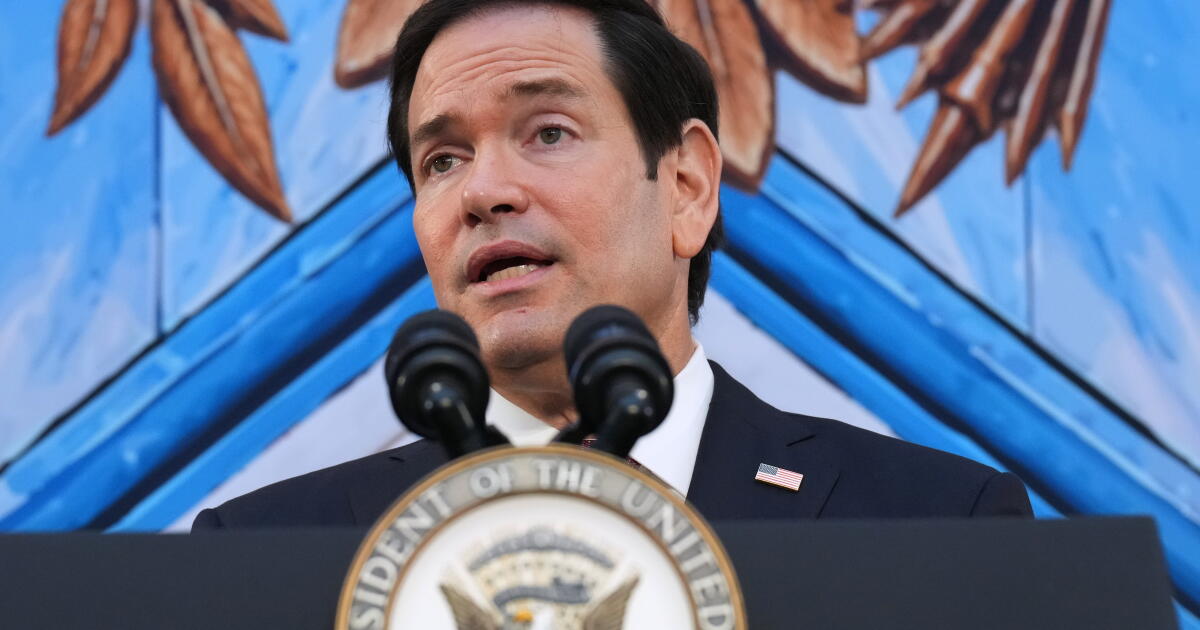
MIAMI — Secretary of State Marco Rubio begins a three-nation tour of Latin America on Tuesday, visiting U.S.-aligned conservative leaders as the Trump administration steps up military operations to combat drug trafficking and seeks further inroads in the Western Hemisphere aimed at improving America’s energy standing and combating illegal migration.
Just a week after sealing a massive oil deal with Venezuelan leaders after a U.S. military operation in January deposed then-leader Nicolás Maduro, Rubio was traveling to neighboring Colombia to meet President Abelardo de la Espriella. Colombia’s new leader has embraced President Trump’s policies on issues ranging from drugs to immigration and energy.
De la Espriella is one of a new generation of right-wing conservatives to win election and show support for Trump’s muscular approach to a region that had tilted leftward in recent decades.
In announcing the trip last week, which also will take Rubio to Ecuador and Peru, the State Department said Rubio and all three leaders would be discussing “enhanced cooperation in the shared fight against narcoterrorism, which threatens our hemisphere.”
Rubio visits as Latin American allies help expanded efforts to fight drug trafficking
The trip comes a day after U.S. forces intercepted and sank another Ecuadorian vessel that Washington accuses of links to the criminal group Los Choneros.
It was the latest action by the U.S. against boats and vessels in Latin America that it says are involved in drug trafficking. Expanded operations in the Caribbean Sea and eastern Pacific Ocean began a year ago, coinciding with an extreme crackdown on migrants in the U.S. illegally, many of them from Latin America.
The vessel sunk Monday was the fifth targeted by U.S. forces in the region in less than two weeks — in most cases with the cooperation or at least tacit support of the conservative leaders with whom Rubio will meet.
But unlike strikes on alleged drug-trafficking boats in Latin American waters that began in September 2025, those on board the vessel were removed and transferred to Ecuadorian authorities. It appears to be a shift after a series of strikes on boats over the year have killed at least 227 people, which the Trump administration accuses of being “narcoterrorists” but without providing evidence.
The U.S. military carried out at least two of those deadly strikes last month before starting to intercept floating refueling stations that it says support illicit drug trafficking operations at sea.
Colombia’s president vows to crack down on drug trafficking and immigration
Colombian Foreign Minister Omar Bula said in a video released Tuesday that Rubio’s visit marks the beginning of “rebuilding a strategic alliance with the United States, our main partner in the region.” He affirmed that Colombia will focus on discussing security, which includes combating drug trafficking, trade, and the defense of “shared values.”
De la Espriella has promised to take a hard line against drug traffickers and pledges to deport thousands of migrants who are in Colombia without residence permits, mainly Venezuelans, as he tries to make significant changes to the nation’s immigration policies that he says will reduce crime.
After taking office last month, De la Espriella brought Colombia into the Americas Counter Cartels Coalition and strengthened long-standing security cooperation with the United States, following strained relations during the 2022-2026 administration of progressive Gustavo Petro.
In just a month in office, De la Espriella has carried out at least three bombings against illegal armed groups and increased military operations. However, several minors have died during the bombings, which has drawn criticism from opposition leaders.
As part of his security strategy, he has focused his efforts on showcasing the results of military operations. However, there was criticism from the opposition and the state-run Ombudsman’s Office after De la Espriella displayed the bodies of alleged criminals wrapped in white bags on the ground alongside seized ammunition.
After winning the election, De la Espriella identified several leaders of Colombia’s illegal armed groups as “military targets.” Last week, he announced that the first of these, Naín Andrés Pérez Toncel, alias “Bendito Menor,” one of the leaders of the Self-Defense Forces of the Sierra Nevada, an illegal armed group in the north of the country, had been killed by police.
Nicknamed “El Tigre,” or The Tiger, the president has shifted the country’s security policy, closing the peace negotiations initiated by Petro during his administration, which he considers a failed effort that only increased violence in Colombia.
Colombia grapples with illegal armed groups vying for control of territories strategically important for drug trafficking and illegal mining, despite the fact that a decade ago the state signed a historic peace agreement with the FARC rebel group.
After meeting De la Espriella in Barranquilla on the Caribbean, where he will sign a civil nuclear cooperation deal and a critical minerals agreement, Rubio will make a brief stop in Quito.
He will meet Ecuadorian President Daniel Noboa whose government has steadily increased counternarcotics operations conducted with the U.S. military.
Rubio will round out the visit with a stop in Lima, Peru, where he will meet new President Keiko Fujimori — the daughter of former leader Alberto Fujimori — as the government also has taken a rightward turn.
Lee and Suárez write for the Associated Press. Suarez reported from Bogota, Colombia.
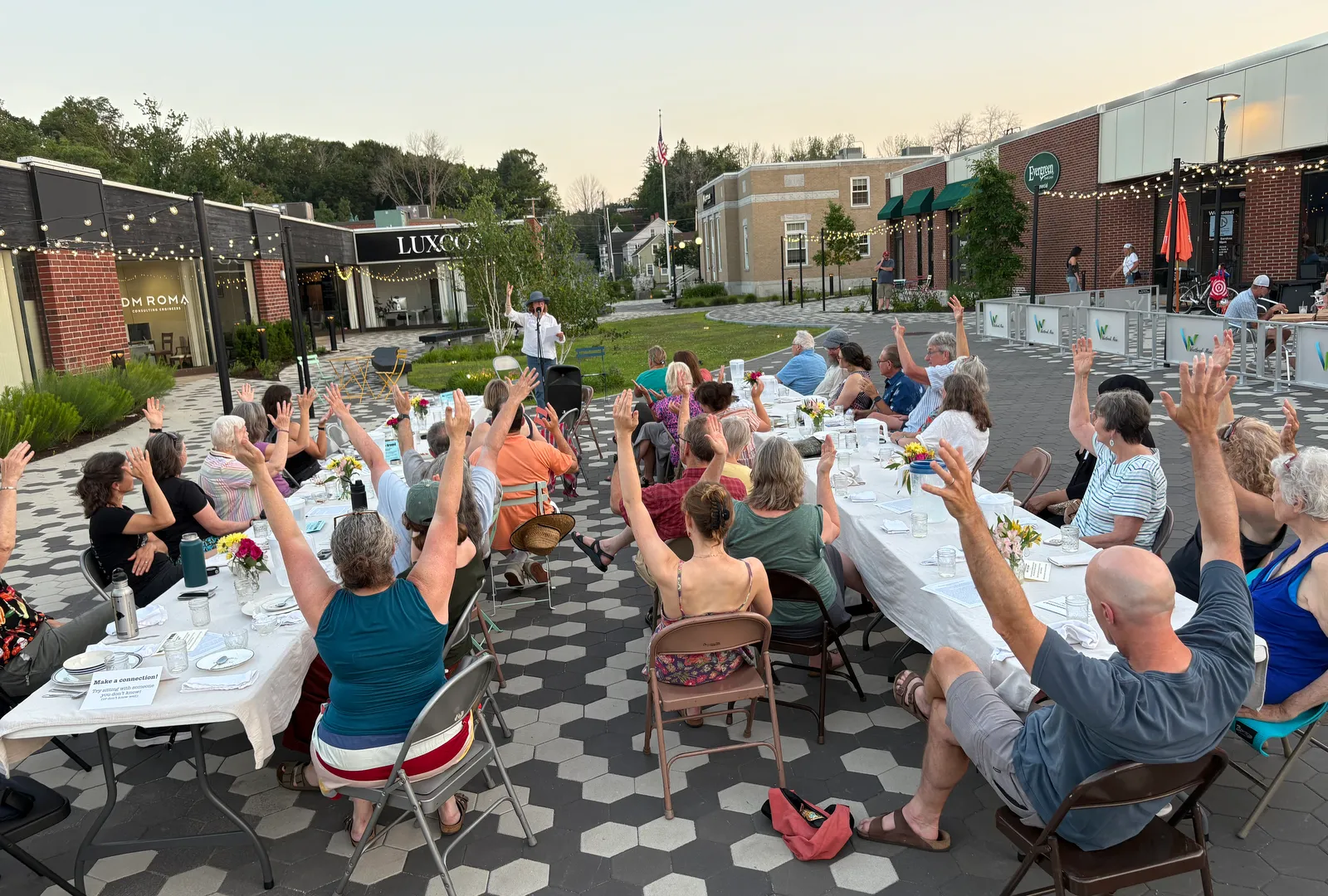
The association uses its website, email lists, newsletters and neighbourhood flyers, and it enlists volunteers who walk around to make sure residents know about upcoming events. The association also has a welcome wagon to greet new neighbours and tell them what’s happening.
Kathi Eckert, a retired teacher who has lived in Hiltonia for more than 10 years, said personal contact still matters. Wearing a grey 250th-anniversary T-shirt and baseball hat, she chatted with people around the lawn before settling in with the group gathered along the street.
“We are so inundated with media, emails, ‘noise’ that it is hard to focus on what’s going on in our little world. A personal ‘reaching out’ to someone is so much more meaningful than just sticking a flyer in their screen door,” said Eckert, who informally lets neighbours know about upcoming events. “It’s not always possible, but we try.”
Even with those efforts, reaching people who are not already involved can be a challenge. Eckert said some neighbours may hesitate to attend because they assume the group is already well-established.
“We do tend to see a lot of the same people here, because I think we all have that same intent to keep community,” Eckert said. “But I have also heard that some people won’t come because they think we’re a clique. We’re not a clique unless we exclude people, and we don’t do that. We open this to everybody.”
The challenge is not only getting people through the door but creating the conditions for them to feel they belong once they arrive. For Reese, inclusivity means thinking beyond who is invited to how you’ve curated the space for the people who are there.
“If you are trying to host a gathering with the intent of getting a wide variety of people, some folks are going to have a question of, am I going to be safe there? And have you done your due diligence to make sure that I am?” she said. “These things don’t just happen, and I do think that we are in a moment where intentionality feels even more important.”
To create a space where people feel welcome and able to participate, Community Plate works to remove economic and other barriers. Guests can share a story or listen, bring a dish, buy something simple, or just come and eat. Organisers also encourage people to take leftovers home for themselves or neighbours who could use a meal. Their toolkit outlines ways to make community meals more accessible.
“We do our best to meet people where they are,” said Schatz.
But even the most intentional gatherings won’t work for everyone. Carter Florence, vice president of programmes at Meals on Wheels America, said there’s “no one silver bullet” when it comes to creating social ties. Through community dining and home-delivered meals, her organisation uses food as an entry point for social support, helping to build relationships and reduce isolation.
“For some people, the idea of eating with a group of people they may not know is actually really uncomfortable, and that wouldn’t be a very positive situation,” she said. “But the idea of someone that I’ve maybe seen periodically coming by and delivering a meal may be more beneficial.”
The individual nature of connection is what makes scaling these programmes complex. “You really want to be able to offer the type of connection that’s going to be most beneficial” for each person, Florence explained.
The idea has also made its way into policy. A report by the Organisation for Economic Co-operation and Development, published in July, highlighted how food-based activities are appearing in national and local strategies to strengthen social ties.
The report shows, for example, how Japan’s national loneliness plan includes community cafes and meal-delivery programmes. Seoul has introduced convenience stores where residents can prepare and share meals alongside accessing other forms of support. Several European countries have also backed communal-eating initiatives. The programmes differ, but they reflect a recognition that food can function not only as nutrition but also as a way to create social connections.
Back in Hiltonia, by early evening, people were folding up their chairs and packing the remains of their dishes to take home. The community’s next gathering was already planned for August: a National Night Out, where neighbours would block off the street and share another potluck.
Green and Kroon stayed until the end, helping clean up before leaving about 7pm. While at the event, their next-door neighbours introduced them to a couple who recently moved into the area. The two couples chatted about life in Hiltonia and the house the newcomers were moving into. Green and Kroon hope to get to know their new neighbours better and plan to visit them once they have finished unpacking.
It was a small example of what organisers hoped the potluck would accomplish: turning neighbours who might otherwise remain strangers into people with a reason to meet again.
While they are still building relationships in the area, Kroon said they have made some close friends here.
“It’s hard to start forming these things,” she said. “But if there’s already something established that you can show up to, it’s a lot easier.”
Good vibes weren’t invented in Marin County. But reading “Morning in Marin,” David Perlis’ history of the place and its outsize cultural influence for much of the 20th century, you get the sense it served as America’s leading countercultural way station.
Book Review
Morning in Marin
By David Perlis Heyday Books: 384 pages, $35
If you buy books linked on our site, The Times may earn a commission from Bookshop.org, whose fees support independent bookstores.
Hosts of spiritual-minded sorts called it home: Alan Watts popularized Zen Buddhism in the ’60s, alongside poets Gary Snyder and Kenneth Rexroth. Francis Ford Coppola decamped there to write his script for “The Godfather,” and it’s where his compatriot George Lucas conjured up the “Star Wars” universe. (The cuddly Ewoks in “Return of the Jedi” were named after the region’s Miwok tribe.) Jack Kerouac sought enlightenment there; his compatriot Neal Cassady was imprisoned there, in San Quentin. It was the Grateful Dead’s retreat, Robin Williams’ launchpad, and the solid ground upon which Philip K. Dick questioned reality.
Why all these people, in this place, at that time? Perlis, an artist, radio host and Marin native, doesn’t strive for sociological or demographic explanations. His strategy is to sinuously move from moment to moment, artist to artist, as if in one continuous tracking shot, pausing only for a moment to catch some of the interesting characters he spots along the way. Over there, film critic Pauline Kael; and there, poet and sitcom star Suzanne Somers; and look, there’s bar-band singer Hugh Cregg, who’ll eventually use the stage name Huey Lewis.
Author David Perlis
(Jordan Blackman)
Still, Perlis breaks the flow just enough to offer a few reasons why the region became America’s affluent bohemia. It is, of course, gobstoppingly gorgeous, with Mount Tamalpais, Stinson Beach, Point Reyes and Bolinas practically designed to be edenic retreats. (Fairfax, he writes, is “ribboned with waterfalls, tufted with moss.”) Its isolation made it a counterculture haven for those looking to avoid San Francisco’s bustle: Gay poet Elsa Gidlow made her home there in the 1940s, among the first of many misfit pioneers. Wreckage from the 1906 earthquake was used to build the first “arks,” houseboats in Sausalito, providing a quirky infrastructure. Add some slow-growth initiatives, and you get artsy scrimping arrivistes; add LSD, legal until 1966, and you have a party.
So by the late ’60s, Marin had become a haven for a particular type: creative, interested in Eastern spirituality and profoundly disinterested in social convention (not to mention conspicuously white). Perlis’ portrait of the county at the height of the decade suggests a region that had escaped — or at least refused to look at — the worst of America’s turmoil. “Despite atomic bombs, rampant racism, political violence, and the war in Vietnam and Marin, there is hope, a sincere, emphatic belief, in an imminent inner revolution,” he writes. “When Zen, acid, or whatever your trip is, opens enough minds that people can outgrow this absurd, unwinnable conflict with nature and themselves.”
Perlis writes that with a slight smirk — of course nobody outgrew the conflict. Sure, a lot of people made a mint on the dream of transcendence: The Grateful Dead became a premier touring act, Lucas taught the country the ways of the Force and Sausalito’s Record Plant became the studio of choice for Sly Stone, Fleetwood Mac and more. But in the process, Marin became a kind of parody of itself, satirized by the writer Cyra McFadden in her 1977 novel, “The Serial.” In a world of what Perlis calls “swimmable wealth,” enlightenment sure looked a lot like narcissism in caftans. “I have no idea how I manage to do it,” Dick muses about his productivity at one point, prompting Perlis to bluntly break into the narrative: “I do. Drugs.”
Perlis could have gone further than that. One of the peculiarities of the Marin cultural scene, at least in Perlis’ reckoning, is that it hardly seems like a scene at all. Otis Redding and Frank Herbert and Linda Ronstadt and Anne Lamott and Shel Silverstein and Van Morrison all had little in common and interacted even less; if Marin was an incubator, it’s one where every egg hatched a different, brand-new species. Communal activity seemed relegated to the checkout aisles where locals kibbitzed over “The Serial,” or druggy extravaganzas that would in time claim Dick and various Dead members and associates as victims.
The irony, as the region stumbled into the ’80s, is that between its wealth and carefully cultivated isolation, Marin came to exemplify the ethos of conformist America: every man for himself. The actor Peter Coyote resisted: “When a Buddhist is thinking about shooting out traffic lights, it’s time to leave,” he quips. Others dug in: Huey Lewis and the News climbed the charts with a song titled “Hip to Be Square,” though to his credit, he explains to Perlis that it was meant to be a song about the difficulty of reconciling affluence and bohemian values. The man knows where he lives.
Perlis’ book isn’t a dismissal of Marin’s cultural moment, or even really a critique of it: His story is more something to be wondered at, like fog rolling over Mount Tamalpais. And Perlis’ storytelling skills make it seem like good fun as he pingpongs from artist to artist, each somehow inventing a meaningful, or at least recognizable, cultural touchstone. Marin gave us New Age music and Pablo Cruise; it also gave us Jim Carroll’s indelible punk classic, “People Who Died.” But one of the things to wonder at amid the good vibes is whether a different, more coherent, more sober scene would have been more meaningful, more enduring.
A regular contributor to The Times, Athitakis is a writer in Arizona and the author of “The New Midwest.”
Wendell Berry, a Kentucky farmer and writer whose work advocated fiercely for working landscapes and working people, died “suddenly and peacefully” on Monday at his home in Port Royal, Ky., according to his family. He was 92.
His daughter, Mary Berry, confirmed his death. On Thursday, she told The Times that her father, until about six months ago, was still writing regularly in his cabin on the banks of the Kentucky River, a place he called “camp,” where many of his more than 50 volumes of poetry, short stories, essays and novels were written.
Berry championed sustainable farming and rural community preservation and railed against industrial agriculture and corporate agribusiness.
“He was fierce and he was fearless, and he remained fearless,” she said, explaining that her family taught her the erosion of rural places wasn’t inevitable but “destruction by design,” engineered by corporate interests and political policies.
Berry, whose writings were often fueled by an anger toward the forces that have driven the destruction of the rural land and communities that he dedicated his life to defending, softened in his final years, according to his daughter. “He was always a tender man, and that part of him got stronger. He was rereading a lot of books that he had loved in his life, and he told me he was looking for the tenderness in the books, and that’s a lovely thing.”
Berry’s most influential work began with a list of the problems he’d observed in modern agriculture, scribbled onto a legal pad as he traveled the long stretch of road between Kentucky’s Henry County and Spokane, Wash., where Berry would deliver a speech at the “Agriculture for a Small Planet” symposium in 1974.
“I was asked to talk about labor-intensive microsystems agriculture. That’s not my language, and it’s not the sort of language that I wish to use because it’s the way people speak when they don’t want to be understood by most people,” he began.
Berry spoke of the six generations of farmers who worked his land before him, and the concerns for farming communities and their agricultural economy that he inherited from his father. He decried “the experts and politicians who have prescribed, encouraged, and applauded the disintegration of such farming communities all over this country into our allegedly miraculous modern American agriculture.”
The speech would later become Berry’s 1977 manifesto “The Unsettling of America: Culture & Agriculture,” which launched a sustainable-farming movement and cemented Berry’s authority on agrarian issues on the national stage.
Beyond his cultural critiques, Berry wrote notable novels including “The Memory of Old Jack,” “Jayber Crow” and “Hannah Coulter.” He was a prolific poet as well. His verse included his debut collection, “The Broken Ground,” and his celebrated Sabbath Poems series, which explored living in harmony with the land.
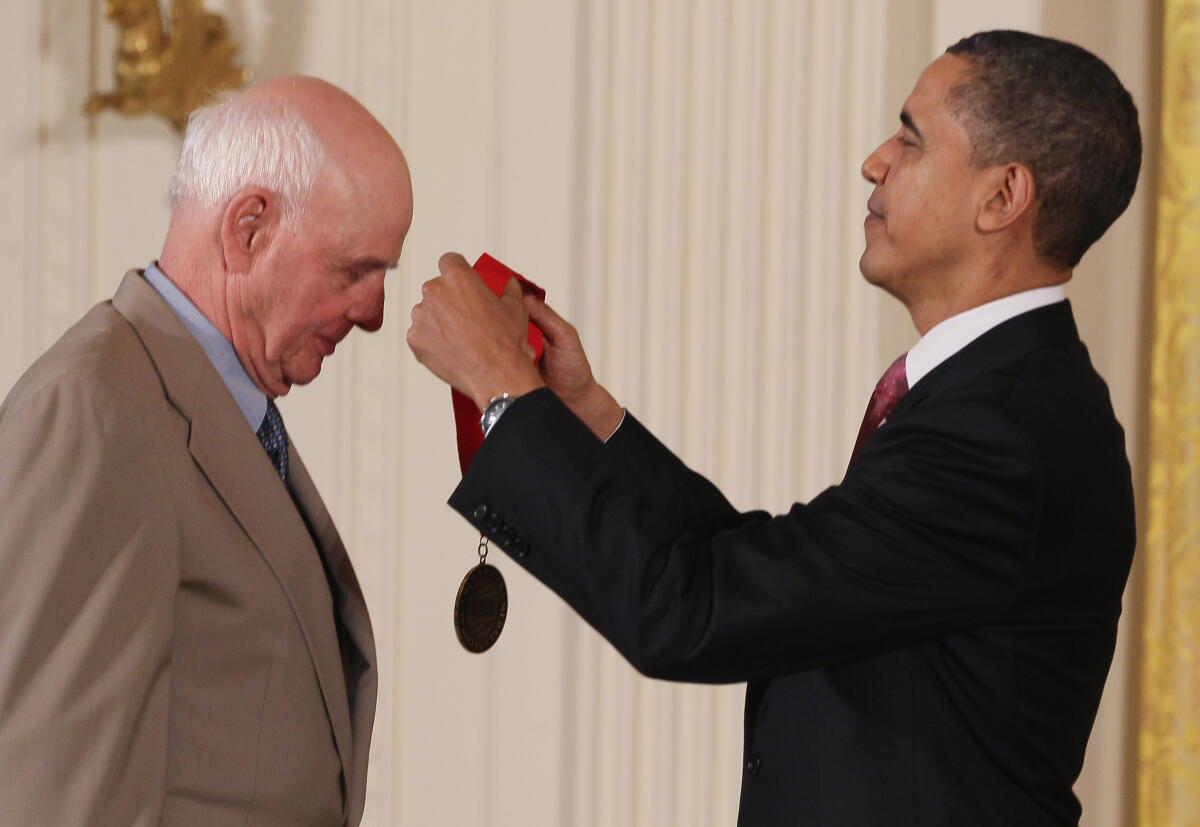
Over the course of his career, he was honored with the T. S. Eliot Prize, the Aiken Taylor Award for Modern American Poetry and the Richard C. Holbrooke Distinguished Achievement Award from the Dayton Literary Peace Prize, among other accolades. In 2010, Berry was awarded the National Humanities Medal by then-President Obama for his achievements as a poet, novelist, farmer and conservationist. In 2016, he was the recipient of the Ivan Sandrof Life Achievement Award from the National Book Critics Circle.
Wendell Erdman Berry was born on Aug. 5, 1934, in Louisville, Ky., to John Marshall Berry Sr., a lawyer and tobacco farmer, and Virginia Perry Berry. Wendell was the eldest of four children, two boys and two girls. In high school, his parents shipped him off to Millersburg Military Institute, a former military boarding school in Kentucky, where rather than conform to the teachings, he later wrote that his takeaway was, “Take a simpleton and give him power and confront him with intelligence — and you have a tyrant.”
He went on to study English and creative writing at the University of Kentucky. There he met and wooed Tanya Amyx, who would become his wife and the mother of his two children, Mary and Pryor. He landed a Wallace Stegner writing fellowship at Stanford in 1958, and in 1961 he was granted a Guggenheim Fellowship, which allowed him to pack up the family and live in Tuscany and southern France.
After Berry’s scholarly pursuits took him to the West Coast, then Europe, then the East Coast, where he taught at New York University, he accepted a job at the University of Kentucky, allowing him to return home and back to his roots, on a farm near the river.
Then-President Obama presents the 2010 National Humanities Medal to Wendell Berry during a ceremony March 2, 2011, in the East Room of the White House.
(Mark Wilson / Getty Images)
“Within a few years, Mom and Dad were raising 85% of the food we were eating,” Mary told The Times. “We had a milk cow, raised hogs for our own use, and by the time I was a teenager, I resented the whole thing pretty seriously, and I remember saying to them more than once, ‘I did not choose to live this way, and I don’t know why we have to do everything the hardest way possible.’ We had no television. … But I was in a heck of a position with my parents because I never really thought they were wrong about anything, and I still don’t.”
When Mary would gripe, she said, her dad would laugh or “just keep working.” But “he talked about what we were doing and why we were doing it,” she said. “He told my brother and me from the time I can remember to look and see that this is good and don’t forget, and I have not forgotten.”
In 2011, when Berry was nearly 80 years old, he joined a high-profile sit-in at the office of Kentucky’s then-Gov. Steve Beshear to protest the destructive mountaintop strip-mining of coal. In an interview with Bill Moyers shared by the Berry Center in 2025, Berry said that he and his compatriots had had enough of the state government ceding control of resources to the coal companies. “In our society,” he said, “people with money are bigger and more powerful and more noticeable and count more as citizens than people without much money. … So we did confront the governor and tell him we weren’t going to leave.”
His attempt at civil disobedience was turned on its head when the governor invited Berry and the Kentucky Rising activists to stay.
“We did stay,” he said. “The whole weekend.”
“We were beautifully treated by the security staff and people who sent us food and bedding and good wishes and even came in and gave us massages. And it was altogether one of the loveliest weekends I’ve ever spent in my life.”
Berry continued writing into his old age.
Next month, Counterpoint Press will posthumously release “Dispatches From Rural America,” a collection of 15 essays. In one, “The Problem Is Industrialism,” Berry wrote about a 2021 conversation he had with a friend of more than 40 years, author Wes Jackson.
“To the extent that we were talking in earnest, our subject was the set of calamities that the media and the commentators frequently take up, typically dealing with each one in isolation from the others and representing each as an emergency more or less apocalyptic, and in tones recalling a number of vernacular alarms, from ‘Last chance for beer’ to ‘Prepare to meet God.’”
He continued later that the two discussed how industrialism “grows only by consuming, once and for all, the living world.”
Mary said she wanted people to know that, yes, her father was worried and wouldn’t have written so much if he weren’t terribly concerned about the future of rural America, but she wants people to understand that he was a man of great hope.
“Hope he felt was a duty, and I learned that from him,” she said. “As he said in one of his many poems, hope is what we owe people younger than ourselves.”
Mary said she was continuing her father’s work through the Berry Center, a nonprofit that aims to put Berry’s writings to work and advocates for farmers, land-conserving communities and healthy regional economies.
Berry is survived by his wife of nearly 70 years, Tanya, his daughter Mary, son Pryor, five grandchildren and four great-grandchildren.
Erin Piacenti, 32, died following an unprovoked attack in Midtown Manhattan on Monday, police said.
NEW YORK—Erin Piacenti, a 32-year-old Bank of America vice president, was killed Monday in a Times Square stabbing that left another person injured.
“We are shocked and deeply saddened by the tragic loss of our colleague. She was a valued teammate who will be greatly missed. Our hearts go out to her family and all of her loved ones,” the Charlotte, North Carolina-based bank said in a statement to Global Finance on Tuesday.
The alleged perpetrator reportedly charged at NYPD officers and was fatally shot moments later. A second victim remains hospitalized but in stable condition.
Erin Piacenti, Bank of America
Piacenti began her career as a legal intern with Major League Baseball before taking M&A roles at Morgan Stanley and law firm Davis Polk & Wardwell, respectively. She joined Bank of America’s business selection and conflicts unit in 2025, per her LinkedIn profile.
New York City Mayor Zohran Mamdani addressed the incident during a press briefing Monday: “I want to thank the NYPD officers who stepped in and prevented a horrific attack from becoming even worse. This is what the men and women of this department do every single day to keep our city safe.”
NYPD Commissioner Jessica Tisch stated that the unprovoked attack began near West 41st Street and 7th Avenue when a woman pulled two knives from a Target bag. Responding NYPD officers first deployed a Taser and fired their weapons at the alleged perpetrator, fatally wounding the alleged attacker.
Both victims and the suspect were transported to Bellevue Hospital.
Piacenti is reportedly from Chester, New Jersey.
Mamdani, NYPD News Conference
Though violent crime is at historically low levels in New York City, another fatal stabbing occurred around the same area back in May.
Monday’s attack is the latest high-profile attack involving financial executives and corporate leaders in Midtown Manhattan over the past two years.
In July 2025, Blackstone Inc. executive Wesley LePatner was among four people killed in a shooting at the firm’s office on Park Avenue.
Before that, in December 2024, UnitedHealth CEO Brian Thompson was shot and killed outside the New York Hilton Midtown.
Anthony Noto covers corporate finance and private credit. Contact him at anoto@gfmag.com
WASHINGTON — For the last six months, President Trump has attempted to control the narrative of the Iran war.
As days, weeks and months passed, he repeatedly said that an agreement to end the conflict was close at hand and that Iran was already defeated. Between fraught negotiations, Trump has gone from conciliatory to antagonistic, characterizing Iran’s new leadership as more “rational” than their predecessors, only to later call them “sick individuals.”
There have even been times the commander in chief contradicted himself and his own Cabinet in the same week — and sometimes, the same day.
Friday marks the sixth month of the war launched by the U.S. and Israel. Among U.S. forces, there have been at least 18 killed and 758 wounded, according to Pentagondata. The Human Rights Activists News Agency puts the death toll in Iran at 3,636. In Lebanon, officials, say more than 4,300 have died. The Israeli military reported 72 deaths, and at least 50 civilians have died, according to news reports.
Here is a recap of notable comments Trump made in public remarks and on social media during half a year of war:
What he said: “The United States military has undertaken a massive and ongoing operation to prevent this very wicked, radical dictatorship from threatening America and our core national security interests.”
In announcing the start of Operation Epic Fury from the White House, Trump called Iran the world’s No. 1 state sponsor of terror and recalled actions by Iran or its proxies, such as the hostage crisis of 1979 and the bombing of a Marine barracks in Lebanon in 1983 that left 241 dead.
The goals of the operation, Trump said, were to destroy Iran’s nuclear ambitions, its naval capabilities and missile industry and to ensure that Iranian proxies — including Hezbollah and Hamas — were thwarted. He implored Iranian citizens to rise up against the government.
Women carry the casket of a teacher from Shajareh Tayyebeh Elementary School toward the cemetery in Minab, Iran, on March 30. The teacher was among those killed in a missile strike on Feb. 28, the first day of the war on Iran.
(Zohreh Saberi / For The Times)
What happened: That morning the U.S. and Israel conducted airstrikes on Iran, killing Supreme Leader Ayatollah Ali Khamenei as well as other key military and government figures. According to Iran’s Red Crescent, 24 of Iran’s 32 provinces were hit in the first day of bombings, with more than 200 deaths and 700 injuries reported. Iranian officials said that at least 120 students and 26 teachers died in a missile strike on Shajareh Tayyebeh Elementary School in Minab.
Iran retaliated by launching missiles at Israel and U.S. bases in Saudi Arabia, Iraq, Jordan, Kuwait, Bahrain, Qatar, United Arab Emirates. The Islamic Revolutionary Guard Corps also warned ships to not travel through the Strait of Hormuz, the passageway for 20% of the world’s oil and energy supplies.
What he said: “We grieve for the true American patriots who have made the ultimate sacrifice for our nation, even as we continue the righteous mission for which they gave their lives. Sadly, there will likely be more.”
In an interview with the New York Times, Trump was asked how long the U.S. and Israel could sustain its offensive in Iran. “It won’t be difficult,” he replied. “We have tremendous amounts of ammunition. You know, we have ammunition stored all over the world in different countries.”
What happened: An Iranian one-way drone attack was launched against the industrial Port Shuaiba in Kuwait, where American soldiers set up an operations center after abandoning the larger Camp Arifjan military installation.
What he said: “We projected four to five weeks, but we have capability to go far longer than that.”
At a Medal of Honor ceremony at the White House, Trump assessed the progress of the attacks on Iran, saying the U.S. was “already substantially ahead of our time projections.”
Retired Command Sgt. Maj. Terry P. Richardson is presented the Medal of Honor by President Trump on March 2, the same day Trump said progress in the war on Iran was exceeding projections. ..
(Win McNamee / Getty Images)
What happened: The conflict expanded, with Iran-backed militant group Hezbollah in Lebanon launching drones against Israel.
Israel’s counter-strike would ultimately decapitate Hezbollah leadership, but strikes between the two forces would continue through the first week of war.
U.S. Central Command increased the number of U.S. troop deaths in the Kuwait strike to six from three.
What he said: “The war itself is going unbelievably. It’s as good as it can be.”
He said that the U.S. “wiped out” the Iranian navy, air force, drone manufacturing capabilities and “every form of leadership you can have,” adding that he was interested in being a part of the selection of Iran’s new leader.
He also said that he believed the strike on the Minab school was a misdirected missile launched by Iran. He offered no evidence.
The family of 8-year-old Reza Habashian, a second-grader killed in the strike on Shajareh Tayyebeh Elementary School, observes the Persian New Year at his graveside in Minab, Iran, on March 20.
(Zohreh Saberi / For The Times)
What happened: Iranian drone and missile strikes on gulf neighbors continued.
The day after Trump said Iranians had no existing leadership prospects, Mojtaba Khamenei, one of Ayatollah Ali Khamenei’s sons, would become the new supreme leader.
U.S. officials familiar with the preliminary findings of an investigation into the Minab school strikes leaked information to the New York Times that indicated the U.S. had bombed the school as a result of a “targeting mistake.”
What he said: “Watch what happens to these deranged scumbags today. They’ve been killing innocent people all over the world for 47 years, and now I, as the 47th President of the United States of America, am killing them. What a great honor it is to do so!”
In a Fox News radio interview with Brian Kilmeade, Trump said that an uprising by Iranian civilians appeared likely. “It’ll happen, but it probably will be, maybe not immediately,” he said.
What happened: Iran and Hezbollah continued joint attacks against Israel, while Israel continued its own large-scale strikes on Beirut and Tehran.
On March 13, a U.S. Air Force KC-135 Stratotanker — a refueling and airlift plane — crashed over Western Iraq without being attacked, resulting in the death of six more U.S. service members, Central Command announced. The U.S. death toll increased to 13.
What he said: “I think we won. All they’re doing is clogging up the Strait [of Hormuz], but from a military standpoint, they’re finished.”
Lightning streaks across the sky over an oil tanker on March 21 at Sultan Qaboos Port in Muscat, Oman.
(Elke Scholiers / Getty Images)
That same afternoon, in a post on his social media website, Trump said the U.S. was considering “winding down” military efforts in Iran.
What happened: The Pentagon said in a statement that it would send three warships and roughly 2,500 Marines to the Middle East for “routine training.”
What he said: “I am pleased to report that the United States of America and the country Iran have had, over the last two days, very good and productive conversations regarding a complete and total resolution of our hostilities in the Middle East.”
Trump also postponed military strikes against Iranian power plants and energy infrastructure after threatening to do so if Iran did not open access to the Strait of Hormuz.
What happened: Mohammad Bagher Qalibaf, Iran’s parliament speaker, responded to Trump’s claims in a post on X. “No negotiations have been held with the U.S.,” Qalibaf wrote, adding that he believed the U.S. was using the prospect of an accord to ease strain on financial and oil markets.
What he said: “The United States of America is in serious discussions with A NEW, AND MORE REASONABLE, REGIME to end our Military Operations in Iran.”
Iranian Foreign Ministry spokesman Esmail Baghaei, addressing journalists in Tehran on March 30, said a truce plan proposed by the United States contained “very excessive, unrealistic and unreasonable” demands.
(Shadati / Xinhua / Getty Images)
While saying in a social media post that progress had been made, Trump leveled additional threats if a pact wasn’t reached shortly. “We will conclude our lovely ‘stay’ in Iran by blowing up and completely obliterating all of their Electric Generating Plants, Oil Wells and Kharg Island,” he wrote.
What happened: Iranian Foreign Ministry spokesperson Esmail Baghaei once again rejected that direct talks with the U.S. had taken place, describing the proposed terms as “unrealistic, unreasonable and excessive.”
What he said: “We’re gonna hit them hard over the next two to three weeks. We’re gonna bring them back to the stone ages, where they belong.”
In an address to the nation, Trump also denied that a change of governments was ever a goal in attacking Iran.
What happened: Thousands more U.S. troops arrived in the Middle East amid continuous back-and-forth strikes. Iran hit an oil tanker off Qatar’s coast and fired missiles and drones at Jordan, which were intercepted. Israel carried out strikes on a Beirut neighborhood.
What he said: “A whole civilization will die tonight, never to be brought back again. I don’t want that to happen, but it probably will.”
Vice President JD Vance holds a cellphone up to a microphone while on a call with President Trump at an event on April 7..
(Jonathan Ernst / Pool Photo)
What happened: Trump’s post about a whole civilization dying went live around 5 a.m., but later in the day the U.S. and Iran announced a two-week truce. Iran’s Supreme National Security Council said in a statement that the truce did not “signify the termination of the war.”
What he said: “Effective immediately, the United States Navy, the Finest in the World, will begin the process of BLOCKADING any and all Ships trying to enter, or leave, the Strait of Hormuz.”
What happened: U.S. Central Command announced that the blockade of Iranian ports began at 10 a.m. Eastern. Central Command said the blockade would be “enforced impartially against vessels of all nations” entering or departing Iranian ports and coastal areas.
People pass in front of a pro-government political mural in Tehran on April 12.
(Majid Saeedi / Getty Images)
What he said: “I think it’s close to over, yeah. I view it as very close to being over.”
Trump’s comment to Fox Business anchor Maria Bartiromo on “Mornings with Maria” came two days after he announced the blockade of Iranian ports.
What happened: Though the ceasefire continued to hold, Iran officials had not relented on their right to enrich uranium, to maintain conventional defensive capabilities and to police traffic through the Strait of Hormuz.
What he said: “I didn’t guarantee no war. Why would I have built the strongest military in the world?”
In an interview with Kristen Welker of NBC on the 100th day of the conflict, Trump claimed that he had never promised during his campaign that he would not engage in new wars in the Middle East.
President Trump sits for an interview with NBC’s Kristen Welker.
(Adam Bettcher / NBC / Getty Images)
What happened: On multiple occasions during his 2024 presidential campaign, Trump suggested that he wouldn’t start new “endless wars.”
In a social media post in late June 2024, he framed the election as a choice between “peace and prosperity or war and no war.”
What he said: “It’s a memorandum of understanding, and if I don’t like it, we’ll go back to shooting at them, dropping bombs on their head.”
Trump spoke the same day he signed a 14-point Memorandum of Understanding with Iran to cease hostilities for 60 days. Trump put his signature to the memorandum while attending a dinner with French President Emmanuel Macron in Versailles.
French First Lady Brigitte Macron, President Emmanuel Macron and President Trump meet at the Palace of Versailles in France on June 17.
(Mustafa Yalcin / Anadolu / Getty Images)
What happened: The document set out a series of conditions, including the release billions of dollars in Iranian assets that were frozen and restricted by the United States “upon the implementation” of the memorandum.
Some issues, such as the future of Iran’s nuclear program, were set aside for negotiations down the road.
The White Housed pushed back on bipartisan criticism of the deal, arguing its concessions were contingent on Iran’s conduct.
What he said: “There may come a point when we are no longer able to be reasonable, and will be forced to militarily complete the job that we very successfully started. If that happens, the Islamic Republic of Iran will no longer exist!”
President Trump boards Air Force One on Aug. 9 at Morristown Airport in Morristown, N.J.
(Eric Lee / Getty Images)
What happened: Trump’s social media post came as Iran and the U.S. continued to carry out strikes in the Middle East despite the memorandum. CENTCOM announced that military surveillance, air defense sites and drone storage facilities were struck after an Iranian attack on a container ship, the Ever Lovely.
What he said: “Iran has been very, very badly damaged. They’ve lost everything, almost, militarily. … They’ve got very little left; They’ve got some missiles; They’ve got some drones; They’ve got some manufacturing ability, not much; We control the Strait.”
People gather July 19 on a bridge rendered unusable in a U.S. airstrike in Iran’s Hormozgan province. Iranian authorities said the United States carried out attacks on 95 locations in Iran over the previous 10 days.
(Amir Hossein Khorgooei / Anadolu / Getty Images)
What happened: According to a CENTCOM press release, the U.S. completed 13 nights of consecutive strikes against Iran by July 23, adding to an earlier announcement that Iran had attacked more than 30 commercial vehicles in the previous three months of conflict.
Trump made the comment in the Oval Office while back-and-forth strikes — primarily over control of the Strait of Hormuz — continued.
What happened: According to a report by NPR, Iran’s parliament aimed to block U.S. and Israeli access to the Strait of Hormuz, despite Trump’s assertion that the waterway was under his control.
What he said: “We are only semi-negotiating with them. We are just watching Iran with its huge inflation and the fact they have no money.”
Trump’s comments reflected how U.S. officials sought to readjust wartime strategy after multiple rounds of failed negotiations. Trump told Axios that he would not proceed with expanded strikes against Iran, as the U.S. was “low-keying” its approach to the conflict.
What happened: As the war approached its six-month mark, both sides mostly ceased military attacks, but shifted to economic pressure.
“ANY country that allows its financial institutions, businesses, airports, or government entities to provide any type of lifeline to Iran will itself face TREMENDOUS Economic Consequences,” Trump wrote in an Aug. 19 post, threatening “ECONOMIC D-DAY” if Iran did not comply with his demands.
According to Reuters, Qalibaf, the Iranian parliament speaker, said that the Strait of Hormuz would remain closed until military threats ceased and sanctions on Iran were lifted.
What happened: In a post on X three days before Trump’s “completely collapsing” post, the hard-line leader of Iran’s Supreme National Security Council had noted economic sanctions placed on Iran by previous presidents, including Obama and Biden, and said they had all failed.
“We have seen this movie before,” he wrote. “Same bull. Different bullies.”
Iranian President Masoud Pezeshkian and other officials attend an event at the mausoleum of Ayatollah Ruhollah Khomeini, the founder of the Islamic Republic of Iran, in Tehran on Aug. 23.
WASHINGTON — President Trump said Thursday he is renaming Lake Ontario to be known as “Lake America” in the United States as he exacerbates his trade war with Canada.
The Republican president signed an executive order directing the Interior Department to update the lake’s name in the U.S. geographic naming service. Trump cannot force Canada to follow his preferred naming convention, however.
Trump has been floating the idea of the name change in recent days as the U.S. announced it was imposing 50% tariffs on $20 billion worth of Canadian goods over the weekend after talks between the countries broke down. Trump has been needling America’s northern neighbor since he returned to the White House last year, suggesting the ally with whom the U.S. once had warm relations instead should be absorbed as the 51st state.
Canada responded to Trump’s import taxes this week by imposing retaliatory tariffs on $20 billion worth of American goods, including steel, dairy products, appliances and farm equipment.
Trump, who signed the order as he was sitting at the Resolute Desk in the Oval Office, had a large sign behind him propped on a stand with a map of the Great Lakes. Over Lake Ontario, in big red letters, the map read “Lake America.”
On the other side of the president was another map with the words, “MAKING THE GREAT LAKES EVEN GREATER.”
The lake is one of multiple Great Lakes that the U.S. and Canada share borders along.
The office of Canadian Prime Minister Mark Carney did not immediately respond to a request for comment.
There is no single international body that determines names of international bodies of water, and Trump has wide latitude over how the U.S. government recognizes geographic places and landmarks.
Ontario Premier Doug Ford, who has traded insults with Trump, this week brushed aside the prospect of Trump changing the lake’s name as “a lot of rhetoric.”
The name Lake Ontario comes from the Huron Indigenous people’s word “oniatarí:io,” that means “lake of shining waters.” The province of Ontario, founded in 1867, took its name from the lake.
Trump said that while his action was not meant to send any particular geopolitical message, “Canada’s been ripping us off for a long time” on trade and military issues.
“They wanted to be treated like a state and they’re not a state,” the president said. “We just can’t do that anymore.”
“We love the people of Canada,” Trump added. “I don’t think their representatives do an appropriate job. Maybe they’ll change. I really don’t know. It doesn’t make much difference.”
The move is reminiscent of his move last year to rename the Gulf of Mexico as the “Gulf of America.”
Trump scribbled his name with a Sharpie pen on the executive order, then held it up for the cameras, offering, “And we filed all the necessary papers, documents, everything else.”
“We’ve notified all of the various people that we have to notify. So, we’ve done everything that you have to do,” he said. “And this is official, effective immediately.”
The executive order Trump signed shows that the changes, in fact, are supposed to be made within 30 days.
He also suggested his push to rename bodies of water may not be finished.
“So, if you think about it, we have a gulf and we have a lake. Now, all we need is an ocean,” Trump said. “So maybe we’ll have to change the name of the Atlantic and or the Pacific. Maybe we’ll change them.”
Price and Weissert write for the Associated Press. AP writer Rob Gillies in Toronto contributed to this report.