Amalfi

I toured the Amalfi coast and found less crowded restaurants and world-famous beaches

LEMONADE, lemon beer, lemon cocktails, lemon tea, lemon cakes and, of course, that dangerously tasty liqueur, limoncello.

There is no escaping lemons on Italy’s Amalfi Coast.

The wonderful  Amalfi coast is like heaven Credit: Getty – Contributor
The elegant town of Ravello with its cobbled streets lined with pottery and linen shops leading off the main square Credit: Getty

They adorn tea towels, shirts, skirts, dresses, trousers, and bags galore.

Our base on Travelsphere’s eight-day tour of the Amalfi Coast, Pompeii and Capri was the charming, laid-back seaside village of Minori, at the excellent family-run 4* Hotel Villa Romana.

Just three miles and a glorious 15- minute boat ride from Amalfi itself, Minori is quieter and classier, with stylish and affordable restaurants and bars.

Surprisingly for a village of its size, Minori has an 18th-century neoclassical domed cathedral. Surrounded by lemon groves, of course.

WAIL OF A TIME

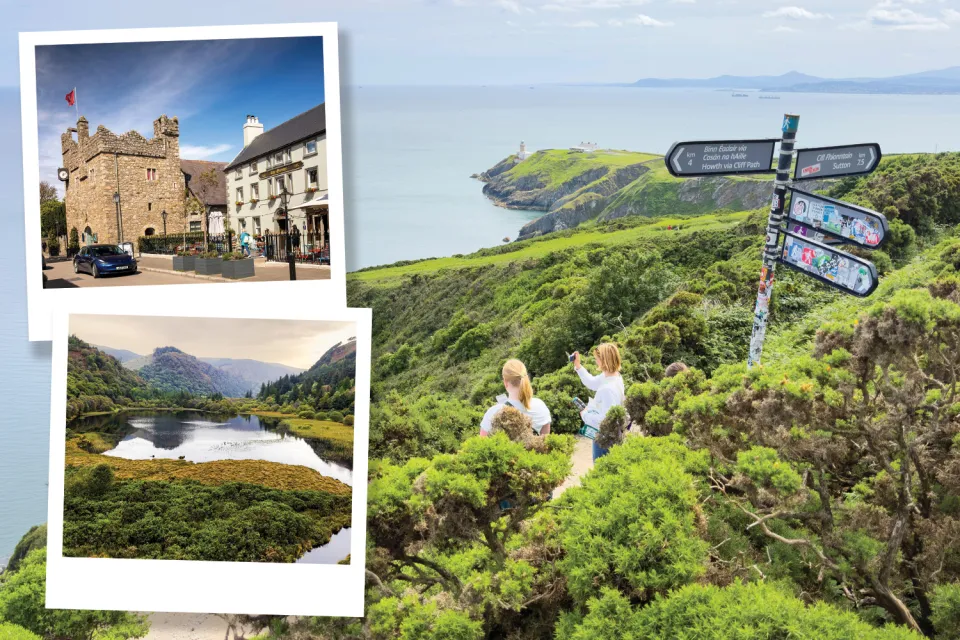
I drove Irish Route 66 with deserted golden beaches and pirate-like islands


SANDS GREAT

New £20m English beach hotel that’s ‘like the Amalfi Coast’ to open next month

One of my highlights was walking the Path of Lemons, which connects Minori to the larger neighbouring village of Maiori.

The trek takes around 90 minutes, with an initial climb up several hundred steps and a similar descent.

But the view of the village and sea is spectacular and worth every straining leg sinew.

The beauty of our schedule is that there is still plenty of free time for you to pursue your own holiday agenda.

You’ll get the chance to indulge at Minori’s sumptuous Sal De Riso patisserie or watch the famed limoncello being made at the Liquorificio Mansi Carlo.

Alternatively, stop by at one of Minori’s beachside bars and watch the tide roll in.

But the best place to see the Amalfi Coast is from the sea and the area is served by efficient, reasonably-priced ferry operators.

It is only from the clear blue waters that you fully appreciate the stunning coastline and its tumble-down towns with pastel-coloured houses perched precariously atop majestic cliffs.

Our first trip was to the historic town of Amalfi itself, dramatically set below those same cliffs.

On arrival at Amalfi, we had the freedom to see the town for ourselves.

The main square and its streets were packed with sightseers.

But climb a few steps up one of the alleyways and you will find peace and quiet and cheaper restaurants.

Amalfi Town and beach Credit: Getty
The undoubted gem of the tour was our visit to Pompeii, destroyed when Mount Vesuvius erupted in 79AD

A lunch of cured meats and seafood, in cool stone surroundings behind a church, cost £21.50 a head with drinks.

By the time we had finished, the crowds had thinned out at Amalfi’s magnificent medieval cathedral, which holds the remains of St Andrew.

But there was no escaping the crowds at Capri, a gorgeous 90-minute boat trip from Minori.

The island has been home to the international jet set for decades and it’s not difficult to see why.

A walk down to the gardens of Capri Town was followed by a look, from outside anyway, at the amazing designer boutique shops.

A glass of fresh orange and lemon juice from a stall was a cheaper alternative to buying a designer Patek Philippe watch — and then it was time to get our minibus to Anacapri.

This village, with views of the Bay of Naples, is much quieter and more affordable than Capri Town.

We got the chairlift up to the highest point of the island, almost 1,800ft above sea level with a view to die for.

There are optional tour trips to the lively lemon-filled town of Sorrento and the gorgeous cliffside village of Positano.

Or you could take the 45-minute ferry from Minori to Salerno, a bustling coastal city where we had a superb fish lunch at Mama Rosa.

The undoubted gem of the tour was our visit to Pompeii, destroyed when Mount Vesuvius erupted in 79AD.

The last agonies of victims frozen in time when they suffocated from poison gases are captured in plaster moulds created from their remains.

Sun man Mike Sullivan with a cool lemonade Credit: Supplied
Walking through stunning lemon orchards Credit: Getty

It is a powerful experience.

And yet the humanity of this once prosperous and thriving coastal Roman city, discovered in 1748, shines through from the haunting remains.

The municipal buildings, public baths, grand villas, lead pipe water system and amphitheatres paint a picture of an advanced society on which much of our own world today is based.

Our last scheduled trip was to the gorgeous medieval mountainside village of Ravello, with its cobbled streets lined with pottery and linen shops leading off the main square and 11th-century cathedral.

The journey up to the 1,200ft-high village involves navigating hairpin bends with sheer drops below.

It was not a drive I would have relished but in the expert hands of our driver I felt safer than being on the M25.

A delicious lunch followed at the Il Rifugio family-run restaurant in Tramonti, a 15-minute drive from Ravello up into the Lattari “Milk” Mountains — so-named because of the goats which graze there.

After taking in the spectacular view of the sea, and sampling local wines, we were then driven to a small local vineyard to see how it was produced.

All too soon it was time for the journey home from Naples Airport, with its abundance of lemon gifts and souvenirs.

Fortunately, you don’t get a hangover from vitamin C.

GO: AMALFI COAST

GETTING / STAYING THERE: Travelsphere’s eight-day escorted tour of the Amalfi Coast, Pompeii and Capri starts in Naples and visits Amalfi, Capri, Minori, Sorrento, Pompeii, Positano, Ravello and the Amalfi Hills.

Seven nights is from £1,699pp, including return flights from London, overseas transfers, seven nights’ half-board in a 4* hotel, select meals and a welcome drink as well as Travelsphere holiday director and specialist local guide.

See travelsphere.co.uk.

Source link

Salerno: the charming and affordable gateway to Italy’s Amalfi coast | Amalfi coast holidays

The ferry from Salerno to Amalfi town was set to take about 35 minutes, and we were debating whether to risk the windswept top deck, fearful our packed lunches might fly into the Tyrrhenian Sea. (My father and I were taking a pragmatic approach on our Italian holiday, opting for light midday meals to save space for the primo and secondo courses at dinner, and ample lemony desserts.)

As our ferry sped across glittering water, we admired the views as the Amalfi coast unfolded, incandescent with charm. But we could also see the crawling traffic on the narrow roads that cling to the cliffs. That could have been us, up there in one of those toy-sized rental cars, squeezed between a tourist coach and a fed-up local leaning on their horn. Thankfully, we were on a boat instead, sea breeze in hair and coffee in hand.

Illustration: Guardian Graphics

The Amalfi coast has a reputation that draws tourists from all over the world. It seems everybody wants to see this string of sorbet-coloured towns, to wander the narrow streets where houses climb the hills like stacked blocks, and to sip limoncello while gazing out across the impossibly bright, blue waters. But as eager as I had been to experience these famous graces, the idea of white-knuckling it on hairpin turns in a Fiat 500, inches from certain ruin, didn’t seem like my idea of fun. That’s when an Italian friend gave me some priceless advice: stay in Salerno – it’s a nice town with good restaurants, and you can do all your excursions via public transport from there.

Salerno is tucked just under the Sorrentine peninsula and about half an hour south of Naples on the fast train. It’s an ideal base for jumping on trains to inland attractions such as Pompeii and Paestum, but also for catching ferries to every destination along the Amalfi coast, as well as Capri and Sicily. What’s more, Salerno is a more affordable base than the honeypot towns of Positano or Ravello, where accommodation and restaurant prices are around double what you’d pay here.

Ornately decorated streets in Vietri Sul Mare. Photograph: Sean Pavone/Getty Images

Originally a Roman colony, Salerno was reshaped by the Normans in the 11th century. It’s a pleasant and relaxed town to wander, its wide and luxurious promenade dotted with palm trees, benches and street performers. What it lacks in Amalfi glamour, it makes up for with a more authentic tableau of local Italian life. (After a day of eating overpriced ice-cream from hollowed-out Amalfi lemons, we found Salerno’s lack of performance refreshing.)

Dad and I got a holiday rental on the edge of the historic centre, near Salerno Cathedral, which houses the relics of Saint Matthew. We wandered in one morning and were surprised to find that although the duomo is on the modest side, the crypt is a real showstopper, with intricate marble details from top to bottom. The town is also home to the Schola Medica Salernitana, which dates back to the 9th century and was the pre-eminent source of medical knowledge in its heyday, before closing in 1811. Today, the adjacent Garden of Minerva botanical terrace is the city’s most picturesque attraction. Its organising principle is the four humours of man (the Ancient Greeks theorised that our temperament and health are dictated by a balance of blood, phlegm, black bile and yellow bile). That’s certainly something to think about while wandering the gardens, where the plants are labelled according to which “mood” they affect.

But Salerno is all about the food for me, most notably the glistening, black squid ink pasta dish I ate at La Botte Pazza and still salivate over months later. The menu, scribbled on a tiled wall, described the dish simply as spaghetti mare. The wine came out of taps in the wall, and the buzzy atmosphere only got louder as the evening progressed. The bonhomie was all the more welcome after spending the day wandering among the ghosts of Pompeii (40 minutes up the coast by train), which was buried in ash when Mount Vesuvius erupted nearly 2,000 years ago.

Ihe intricate marble detail of the crypt at Salerno Cathedral. Photograph: Francis Canker/Getty Images

Another worthwhile rail excursion is to Vietri sul Mare – the first town in the string of pearls that make up the Amalfi coast, and the only one that can be reached by train. We hopped on an eight-minute service out of Salerno for a wander through the town famous for its colourful ceramics, but also because I wanted to swim – Salerno’s seafront has a nice promenade, but beach lovers are left wanting.

You can swim in Amalfi town too, but the beach in this more famous spot was already getting busy when we visited in late March. As much as I enjoyed Amalfi, I felt relieved to be there early in the season – its narrow streets weren’t built for crowds.

Vietri sul Mare is sleepy in comparison, and I was thrilled to find a peaceful stretch of sand, where I changed quickly under the arches before running in for a bracing dip in the turquoise water.

For Dad, who takes a dim view of anyone who goes in the sea in March, Paestum was more of a highlight. After speeding south for about half an hour, the train dropped us off in the middle of nowhere, by a gravel road that promised a 10-minute walk to the ruins of the once-great Greek city. We were in our element now – at Paestum, visitors can wander about freely as the approximately 27-hectare (66 acre) site unfolds, with the occasional noticeboard sharing a story of what used to be here, but mostly leaving it to your imagination.

Paestum’s crown jewels are the three temples looming large and golden in the landscape; they are about 2,500 years old yet very well preserved. Dad was pleased to find a working model of Archimedes’ screw, an ancient hydraulic tool for elevating water, while I was tickled by the Tomb of the Diver, with its fresco of a gentleman diving into a pool, starkers.

The 2,500-year-old Temple of Athena at Paestum. Photograph: Nick Brundle/Getty Images

Osteria Canali gave us our last meal in Salerno, and again we had the pleasure of being surrounded by local people in an inviting neighbourhood taverna. The regional menu was rich with aubergine and mozzarella, and then came the main course of baccalà – a piece of white fish with figs, wrapped in paper and simmering in its own juices. More creamy Amalfi lemon desserts to finish, of course, and we figured we should try the limoncello as well – when south of Rome, right? But as much as I like a citrus tang, this was finally too much lemon for me.

Choosing Salerno as our base opened up a different side of the Amalfi coast, allowing us to come and go by boat and train without the stress of traffic jams and impossible parking situations. We only missed a train once, but another came along half an hour later, and while we waited there was nothing to worry about except where to go for ice-cream.

Intercity trains run from Naples Central to Salerno and take about 35 minutes (€9.50). Regional trains from Salerno central take about 40 minutes to Pompeii (€2.80); 30 minutes to Paestum (€3.40); and eight minutes to Vietri sul Mare (€1.40). Timetables at trenitalia.com. Several ferry companies run year-round services from Salerno to the towns along the Amalfi coast. The Travelmar passenger ferry sails direct to Amalfi town from Salerno’s Concordia terminal (35 minutes, €26 return). Plan your journey with FerryHopper

Source link

The new £20million English beach hotel that’s ‘like the Amalfi Coast’ to open next month

A GRAND new multi-million hotel is opening in Cornwall right by the beach and it will transport you straight to Italy.

Officially opening on June 15, The Nici in Newquay is “inspired by the sun-soaked glamour of the Amalfi Coast” and has the “indulgence of a Mediterranean escape”.

The Nici Newquay will open on June 15 Credit: Nici
The hotel has an Amalfi feel, with indoor and outdoor pools Credit: Nici

The clifftop heated pool is the star of the show, with amazing views over the ocean as well as a poolside bar.

But the hotel will also have a spa described as a “coastal cocoon” with a heated indoor pool, hot tub, an aromatherapy sauna, a steam room and a hydrotherapy suite.

A cinema room and kids club will also be on-site to both adults and kids occupied.

In the restaurant – aptly named Amalfi’s – guests will be able to enjoy Italian-inspired such as handmade pizzas and salads.

Read more on travel inspo

CHEAP BREAKS

UK’s best 100 cheap stays – our pick of the top hotels, holiday parks and pubs


ALL IN

I found the best value all inclusive London hotel… just £55pp with free food & booze

A second restaurant is planned for 2027, called Tucker Rocks – a more casual dining spot meant to resemble a “clifftop Italian cafe” with live music and even a gelato counter.

And a unique feature at the hotel is the rare Victorian bathing lift that has been restored, so guests can get to Great Western Beach directly from the clifftop hotel.

Inside the hotel there will be 82 refurbished bedrooms and suites, some of which will have sea views.

Otherwise they will all be kitted out with the extras from Nespresso machines, Bluetooth speakers and fancy toiletries in the bathroom.

For those who like to keep fit, the hotel has a fully-equipped gym and fitness studios and juice bar for post-workout refreshments.

Guests can sign up to The Nici Club and get unlimited access to the spa, as well as exclusive events, too.

Inside there is also a spa with an aromatherapy sauna and steam room Credit: Nici
The hotel also has a restaurant and cafe as well Credit: Nici

Rooms at The Nici Newquay cost from £155 per night.

The destination used to be called Hotel Victoria before The Nici took it over and spent £20 million on transforming it.

The hotel is just a five-minute walk from Newquay train station, as well as a five minute walk from Great Western Beach.

If you want to head to one of the most popular beaches in the area – Fistral Beach – then it is just a six minute walk away.

There’s plenty to do in the surrounding area as well, with the hotel just steps away from Great Western Beach – a golden cove which is great for both surfing and rock pooling.

And if you fancy a cheap £1.99 pint, right by the hotel is The Towan Blystra, a Wetherspoons pub.

There’s direct access from the hotel to Great Western Beach too Credit: Alamy

The Nici Newquay isn’t the only one to open in June, as The Nici New Forest will also open on June 15.

Sitting at the edge of the New Forest in the historic town of Lymington, the hotel is “inspired by the laidback sophistication of the Hamptons”.

Around the hotel, guests can explore woodland trails as well as heading down to the beach.

The Nici already has one hotel open in Bournemouth, which Sun Reporter Catherine Bennion-Pedley recently stayed at.

Another Nici hotel will also be opening in the New Forest on June 15 Credit: Nici

She said: “Its chic-as interiors are super-Instagrammable – rooms are fresh white with bold, palm-print textiles and brass lighting, while ice-cream pastels, glitterballs and eye-catching artwork adorn the communal areas.

“But really, it’s the outdoor heated pool that steals the show.

“As well as the beautiful pool, there’s a dinky cinema showing four films each day and a petite playroom with table football, giant Jenga and board games.

“Some rooms come with hot tubs, while others have freestanding baths – bag one with a sea view and you’ll wake up thinking you’re in the South of France!”


Source link