
Alzheimers

Suzi Quatro, 75, reveals first husband & father of her children has Alzheimer’s and she’s now in charge of his finances

SUZI Quatro has revealed how her first husband, and the father of her children, has Alzheimer’s and that she’s now in charge of his finances.

The American rock star, 75, who is now married to her second husband Rainer Hass, revealed the sad news whilst speaking to Kaye Adams.

Suzi Quatro has opened up about her first husband’s Alzheimer’s diagnosisCredit: instagram/@kayeadamsfanpage
Suzi revealed her ex-husband Len Tuckey is battling the devastating diseaseCredit: Alamy
Suzi revealed she is in charge of Len’s finaces now, following his diagnosisCredit: instagram/@kayeadamsfanpage
Suzi shot to fame in the 70s and has enjoyed an incredible careerCredit: Rex Features

Michigan-born Suzi, who is credited with helping women break into the world of rock and roll music, opened up on the Loose Women star’s podcast, How To be 60.

In a candid interview, the singer talked about how her first husband Len Tuckey is battling Alzheimer’s Disease.

Suzi married Len, who was her long-time guitarist, in 1976, but they divorced in 1992.

During their relationship they had two children together, Laura, 44, and Richard, 42.

double take

Star of hit 70s TV show looks very different as she makes rare appearance


golden boy

70s film star looks unrecognisable 52 years after career-defining role

Speaking to Kaye’s podcast, Suzi, who is now married to her second husband Rainer who she wed in 1993, talked about the breakdown of her first marriage to Len.

She then talked about how despite their divorce they remained good friends, and how she became his “power of attorney” because of his Alzheimer’s diagnosis.

Suzi made the admission when she talked about when she decided to leave Len, and how she came about that decision.

“When I did leave, I was sure. I wasn’t doubting. I was sure that it’s time to go,” she revealed to Kaye.

“So I gave it the six years to turn it around. You know, that’s fair.

“You got two kids together, you know. Don’t break it up if you don’t need to. I really tried, but I can’t lie to myself. Nobody can lie to themselves.”

Suzi is now married to her second husband, Rainer HassCredit: Getty

Continuing Suzi said: “I remember saying to him one time during Andy Get Your Gun, actually when that had finished, so it would have been 87, I remember we were sitting in the room here talking. And I said to him, ‘Do you realise how far away you’ve let me go?’

“So I gave him hints along the way, many, many hints, but he didn’t take them.

“And I’m his executor and power of attorney, so we’re still close.

“And he lives in my son’s house because he’s got Alzheimer’s.”

Suzi and her first husband Len divorced in 1992Credit: Alamy

American singer-songwriter Suzi shot to fame in the 70s as the first female bass player to became a major rock star.

The star is known for singles like Can the Can and Your Mamma Won’t Like Me, and has sold more than 50 million albums.

She is credited with helping women become part of the rock and roll era.

Speaking about this, Suzi once told the Metro Times: “Before I did what I did, we didn’t have a place in rock ‘n’ roll.

What are the early signs of Alzheimer’s disease?

IN the early stages, the main symptom of Alzheimer’s disease is memory lapses.

For example, someone may:

  • forget about recent conversations or events
  • misplace items
  • forget the names of places and objects
  • have trouble thinking of the right word
  • ask questions repetitively
  • show poor judgement or find it harder to make decisions
  • become less flexible and more hesitant to try new things

There are often also signs of mood changes, such as increasing anxiety or agitation, or periods of confusion.

And trouble with language, thinking and reasoning difficulties, and a shift in how things are seen and heard are also common.

Source: The NHS

“Not really. You had your Grace Slick and all that, but that’s not what I did. I was the first to be taken seriously as a female rock ‘n’ roll musician and singer.

“That hadn’t been done before. I played the boys at their own game.

“For everybody that came afterward, it was a little bit easier, which is good.

“I’m proud of that. If I have a legacy, that’s what it is. It’s nothing I take lightly. It was gonna happen sooner or later.”

Over the years Suzi has also dabbled in acting, and was famously on Happy Days.
Suzi continues to perform to this dayCredit: Getty

Source link

Simple blood tests can predict Alzheimer’s onset, researchers say

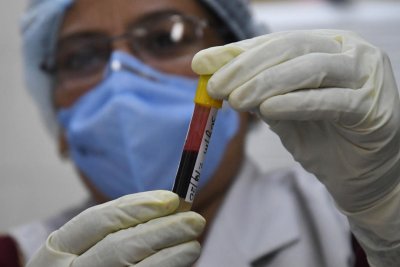
Alzheimer’s disease researchers say they have developed a way to predict when a unimpaired person may develop dementia symptoms within three to four years through a single blood test. File Photo by EPA

ST. PAUL, Minin., Feb. 27 (UPI) — A team of U.S.-based scientists say they have developed a model using a “biological clock” to predict — with just a simple blood test — when someone is likely to develop symptoms of Alzheimer’s disease.

The results of a study published this month in the journal Nature Medicine demonstrate how, by measuring blood plasma levels of a protein in people who are not yet impaired by Alzheimer’s symptoms, researchers can predict when cognitive decline will begin within a margin of three to four years.

While there is no single, stand-alone test to diagnose Alzheimer’s today, the new method works by leveraging how levels of the protein “p-tau217” in the blood closely reflect how much amyloid plaque has built up in the brain over time. This provides doctors with a “clock” that points to when a patient may begin to experience symptoms.

Amyloid buildup in the brain may begin up to 20 years before a person starts to experience symptoms of memory and thinking issues. The plaques are a key pathological hallmark and contributing factor in Alzheimer’s disease, and, much like looking at the rings of a tree, p-tau217 levels can reveal the age of the buildup.

The authors, based at the Washington University School of Medicine in St. Louis, say their new blood test method will have immediate applications in ongoing clinical trials seeking answers to the vexing questions about what causes and what can prevent Alzheimer’s and dementia, which affect more than 7 million Americans at an estimated cost of nearly $400 billion in 2025.

Eventually, with further refinement, researchers hope the blood test could one day be used in clinical settings to easily and quickly provide predictions about the timeline of symptom onset for individual patients. The only feasible ways of doing so now are through costly brain imaging scans and invasive spinal fluid tests.

The study was part of a project headed by the Foundation for the National Institutes of Health Biomarkers Consortium, a public-private charitable partnership established by Congress in 1990 whose roster includes schools such as Washington University, life science companies including Johnson & Johnson and the Alzheimer’s Association.

Dr. Suzanne Schindler, senior author of the study and associate professor in the WashU Medicine Department of Neurology, said that while current blood tests for p-tau217 are already capable of identifying cognitively unimpaired people who might develop Alzheimer’s symptoms, they have no ability to estimate when.

Thus, they are used only for research studies and clinical trials due to legal and ethical considerations, such as the risk of causing undue stress from uncertain results.

“Our study, however, suggests it’s possible to predict when symptoms might develop using blood p-tau217,” she told UPI. “The prediction is very rough and so is still only useful in research or trials.

“We believe these predictions can be refined, but it’s unclear if they’ll become reliable enough for individual guidance without more invasive tests like spinal fluid analysis,” she cautioned.

Still, the potential of uses of the blood test are immediate when it comes to Alzheimer’s research. For instance, they could allow clinical trials of potentially preventive treatments to be performed within a shorter time period.

“Clinical trials are currently underway that are treating cognitively unimpaired individuals who test positive for blood p-tau217,” Schindler noted. “We must wait to see if these treatments delay or prevent symptom onset, but I’m hopeful based on our understanding of the disease’s biology.”

Beyond clinical trials, the blood test will aid broader Alzheimer’s research “by linking p-tau217 levels to specific brain changes, helping us disentangle whether those changes are driving cognitive impairment amid its overall complexity,” she added.

The new study “provides evidence that plasma p‑tau217 may be a reliable tool for estimating the future onset of Alzheimer’s disease symptoms,” agreed Rebecca Edelmayer, vice president of scientific engagement for the Alzheimer’s Association.

“This could transform how researchers design clinical trials and, eventually, how clinicians identify people at highest risk for cognitive decline associated with Alzheimer’s years before decline begins,” she told UPI.

While the blood test method represents a “very intriguing discovery,” it’s important to note it is not yet ready for everyday use by doctors or patients, Edelmayer cautioned, noting that its three- to four-year margin of error effectively rules out its utility for individual decision-making.

Broadly speaking, blood tests are not yet recommended for cognitively unimpaired individuals outside research settings, but even so, “this finding is an important research step because a blood test is generally much less expensive and easier to administer than a brain scan or spinal‑fluid test,” she said.

“In the future, it could help doctors and researchers identify people who may benefit from early treatments, and make clinical trials for new Alzheimer’s therapies run faster and more efficiently.”

The possibility of making a difference in the long-running battle against one of the most feared and intractable diseases in the world holds a special meaning for Schindler.

“As a memory specialist, I’ve diagnosed over 1,000 people with Alzheimer’s and witnessed firsthand its devastating effects on patients and families,” she said. “These results make me hopeful, and it’s rewarding to think this research could improve diagnosis and treatment of Alzheimer’s.”

Source link