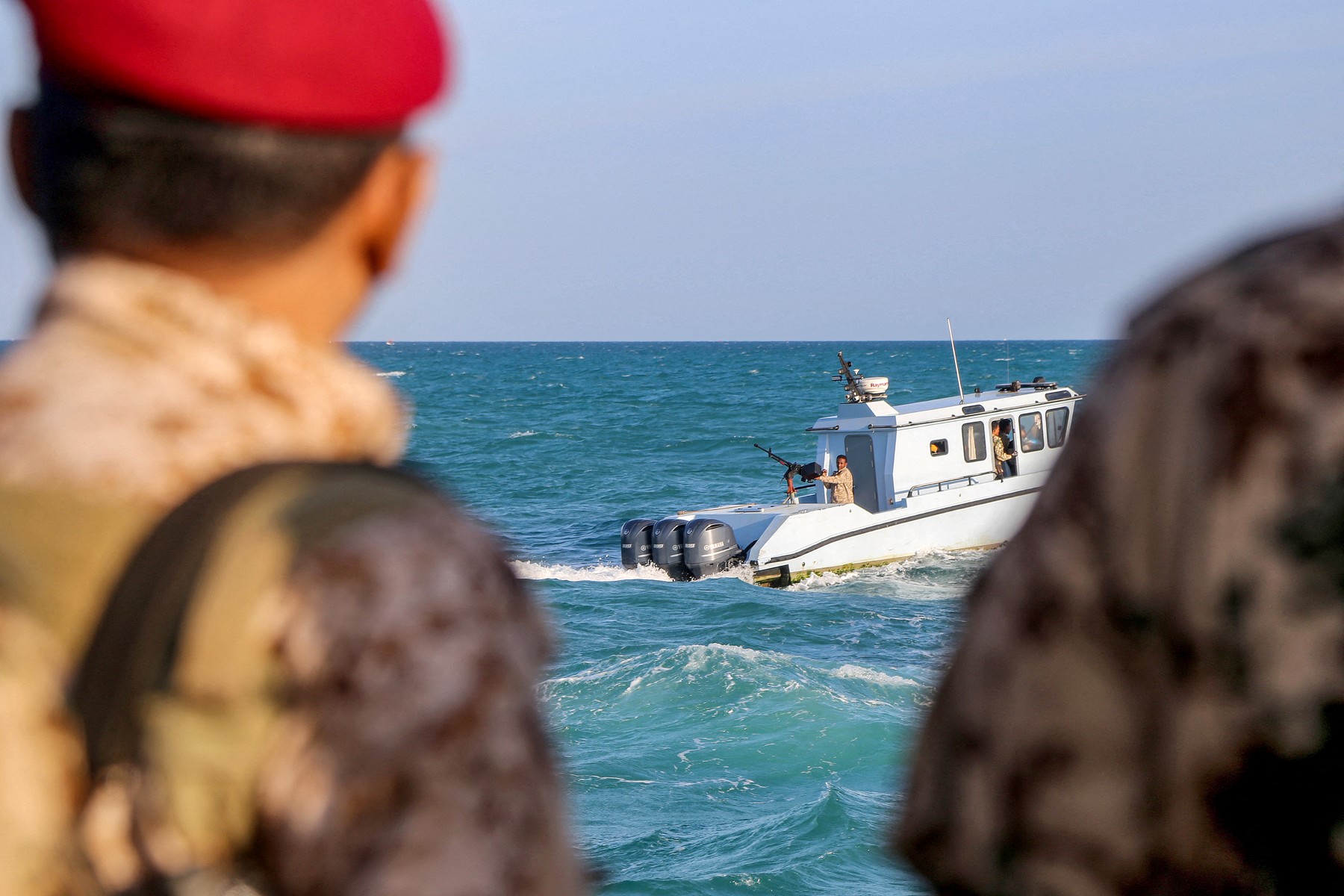
Arab News | Why Bab Al-Mandab matters as Yemen fighting intensifies

DUBAI: Renewed fighting along Yemen’s Red Sea coast has put the strategic Bab Al-Mandab Strait back in focus, raising concerns over a key maritime route linking Europe and Asia.
The strait is a narrow passage between Yemen and the Horn of Africa that connects the Red Sea with the Gulf of Aden and the wider Indian Ocean.
For ships travelling between Asia and Europe, it forms part of the route linking the Indian Ocean to the Red Sea and the Suez Canal, making it one of the world’s most important maritime chokepoints.
Why is it so important?
Bab Al-Mandab is the southern gateway to the Red Sea. Ships travelling through the Suez Canal between Europe and Asia generally pass through the Red Sea and then Bab Al-Mandab before entering the Gulf of Aden.
The route has ships carrying oil, fuel and other commercial goods.
Oil flows through the strait fell sharply after Houthi attacks on shipping began disrupting Red Sea traffic.
The US Energy Information Administration said oil trade through Bab Al-Mandab averaged about 4 million barrels per day in the first eight months of 2024, compared with 8.7 million barrels per day in 2023.
Why does the latest fighting matter?
Yemen’s western coastline runs alongside the strait, making control of nearby territory strategically important.
The port city of Mokha lies north of Bab Al-Mandab, while Dhubab is close to its entrance. Any expansion of Houthi control along this stretch of coast could increase the group’s ability to threaten or monitor shipping through the waterway.
Reuters reported on Thursday that Houthi forces were moving toward Mokha and Dhubab as they sought greater control of Yemen’s Red Sea coast. Yemeni government military sources said this could give the Houthis significant leverage over Bab Al-Mandab.
The reports have not been independently verified, and they do not mean the Houthis control the strait. But any further Houthi advance toward the coast could increase the risk to commercial shipping.
The Houthis have previously targeted commercial vessels in and around the Red Sea, forcing many ships to avoid the route.
What happens if shipping is disrupted?
Ships can avoid Bab Al-Mandab and the Red Sea by sailing around the Cape of Good Hope in South Africa.
But that can add thousands of kilometers to some journeys, increasing sailing times, fuel consumption, insurance costs and freight rates.
The consequences can therefore extend well beyond Yemen, affecting the movement and cost of energy, manufactured goods and other products travelling between Asia, the Middle East and Europe.