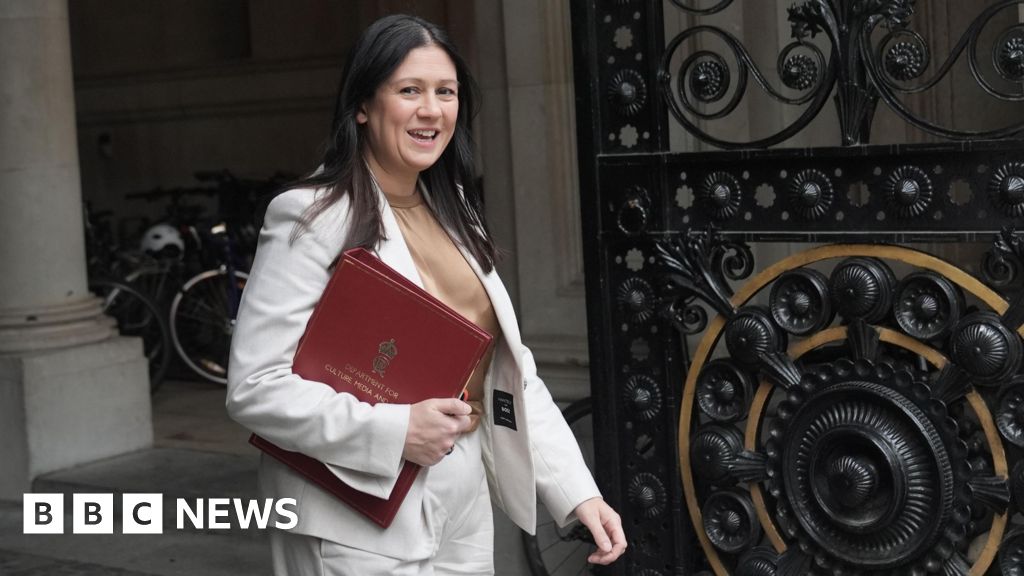
Burnham should be allowed to stand as an MP, says Nandy
The culture secretary questions her party’s decision to block the Greater Manchester mayor from standing in a by-election.
Source link
The culture secretary questions her party’s decision to block the Greater Manchester mayor from standing in a by-election.
Source link
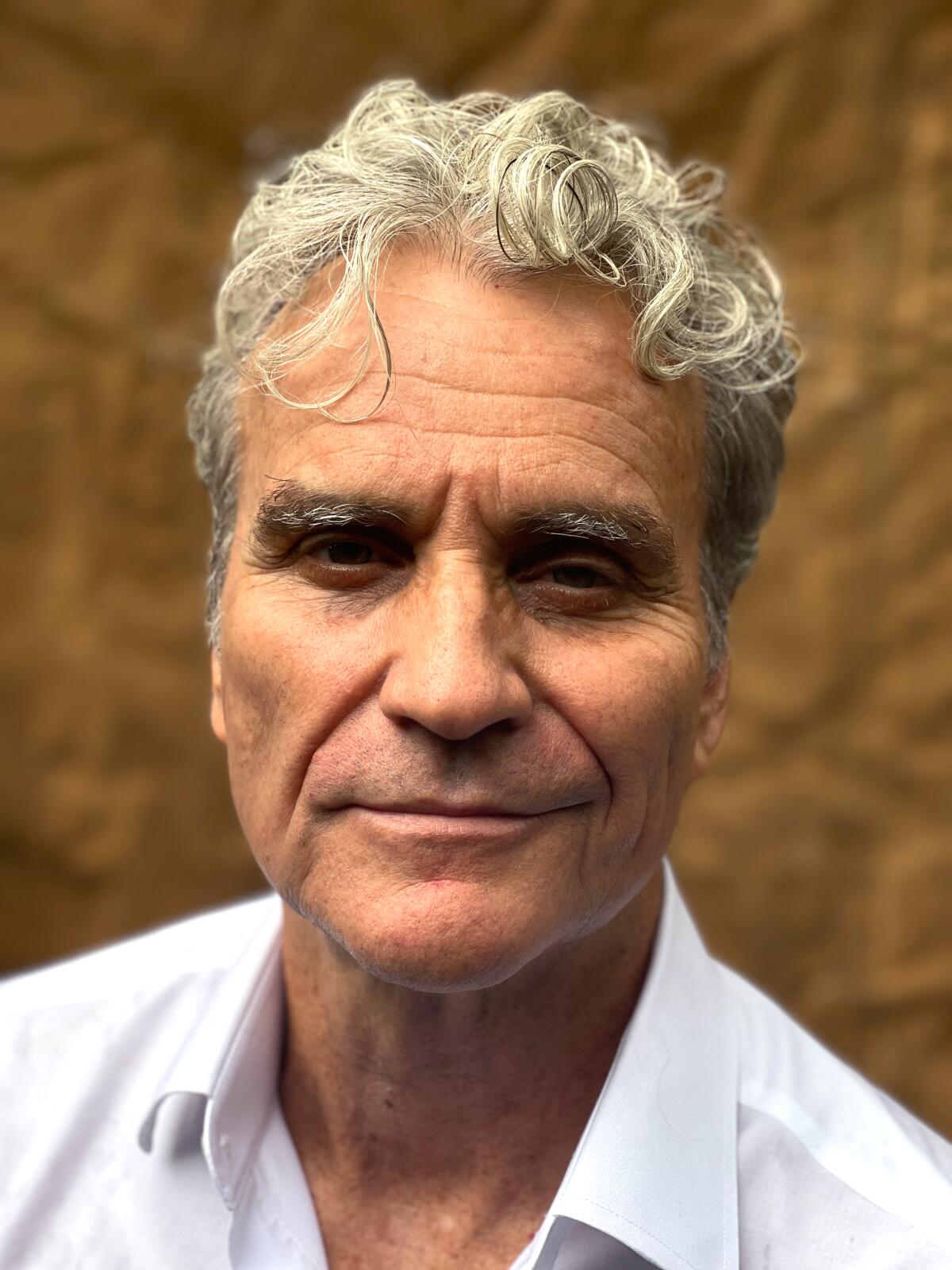
Tom Junod has devoted his long and distinguished career to writing about other people. He won two National Magazine Awards as a star feature writer for Esquire, GQ and ESPN: The Magazine, covering everything from athletes and movie stars to the victims of 9/11 with his elegant prose style. However, it took Junod years before he could tackle the toughest subject of all: His father, Lou, a decorated World War II veteran who fashioned himself as a kind of suburban Sinatra.
He was a hard-drinking philanderer who carried with him a complicated legacy that Junod untangles in his memoir “In the Days of My Youth I Was Told What It Means to Be a Man.” I spoke with Junod about fathers and sons, and the difficulty of excavating his family’s fraught history.
An exclusive look at what we’re reading, book club events and our latest author interviews.
By continuing, you agree to our Terms of Service, which include arbitration and a class action waiver. You agree that we and our third-party vendors may collect and use your information, including through cookies, pixels and similar technologies, for the purposes set forth in our Privacy Policy such as personalizing your experience and ads.
You pondered this book for years. Was there a moment when you finally said, “Right, time to write this now”?
There was definitely a moment, when my brother Michael had lunch with a woman named Muntu Law, who was one of my father’s lovers. It was the late summer of 2015. She told him, “Of course, you know your Dad and I had an affair for 11 years.” And he didn’t know that. He called me immediately after and asked me if I knew about the affair and I said yes. He asked me why I hadn’t told him, and I responded that I both knew and didn’t know. I knew it the moment Muntu stood up at my father’s funeral.
You intuited it?
Yes. There was a split there that I needed to reconcile and explore. There was too much unresolved stuff.
Your father’s story is shot through with a lot of tragedy. What is the writing process like for you? Was it an unburdening, a catharsis or something else?
When you unburden yourself, what you wind up doing is taking up much heavier burdens, which is what the book was. But it’s very interesting, because now I’m talking about my father with people in my family, and some of these discussions are difficult, but at least I’m talking about him with them. It was mostly pain, writing the book. Exposing your secrets isn’t particularly a relief, but it allows you to carry on your life without the necessity of being silent.

Tom Junod untangles his father’s complicated legacy in his memoir “In the Days of My Youth I Was Told What It Means to Be a Man.”
(Lee Crum)
Your Dad is emblematic of this kind of postwar American male that served in the war and came home flush with triumph and a kind of male privilege. Would you agree?
To the absolute max. My dad was an extreme character, and I think what the war did for a lot of men was it allowed them to reinvent themselves and create themselves. I look at my dad as a completely self-created phenomenon.
He clearly carried himself like a star.
There’s a line in the book where I say that Dad was the only celebrity I’ve ever known.
What’s remarkable is that you broke the cycle. You write about your marriage to your wife, Janet, in the book, whom you met in college. You have been together for over 40 years.
I think a lot of people are surprised by that when they read the book. People just thought I had it, you know — that I was successful and I was able to handle difficult situations. Back in the summer, I gave a copy to my friend, Lisa Hanselman, who I worked with at Esquire and GQ for a long time. And she called me up one morning and just said, “I didn’t know.” And that meant a lot to me. In my mind, it’s one of those things that justifies the effort it took to write the book.
(This Q&A was edited for length and clarity.)

(Evelyn Freja / For The Times)
Mark Athitakis is agog over Lauren Groff’s new story collection “Brawler,” a book that “blends the depth of the long view and the drama of the pivotal moment.”
Acclaimed nonfiction writer Daniel Okrent has written “Stephen Sondheim: Art Isn’t Easy,” a short, sharp biography of Stephen Sondheim for Yale’s “Jewish Lives” series, and Julia M. Klein approves. “[Okrent] seeks to liberate Sondheim’s reputation from the encrustation of myth and to demystify his relationships, while offering a succinct analysis of his achievements,” she writes.
Actor Gina Gershon has written a freewheeling memoir called “AlphaPussy,” which looks back on her San Fernando Valley childhood as a proving ground for dealing with male toxicity as a woman in Hollywood. “I’m not that tough,” Gershon tells Cat Woods. “But I’d learned how to maneuver a lot just from growing up in the Valley, and it was a crazy time to be living there. So I thought about the stories that led me to be able to steer myself through toxicity.”
Finally, Yvonne Villarreal sat with Christina Applegate to discuss her new memoir, “You With the Sad Eyes.” “This book is not cathartic for me — let’s just go there,” Applegate says. “I just needed to dump this s— out somewhere.”

Casita Bookstore in Long Beach prioritizes stories from unrepresented and marginalized voices, says owner Antonette Franceschi-Chavez.
(Antonette Franceschi-Chavez)
An inviting literary haven in Long Beach, Casita Bookstore prioritizes stories from underrepresented and marginalized voices from the BIPOC, immigrant, LGBTQ+ communities and what store owner Antonette Franceschi‑Chavez calls “other historically silenced communities.” I spoke with Franceschi‑Chavez about what readers are excited about now.
What kind of clientele do you get in the store, typically?
Our clientele is wonderfully diverse, but they share a common desire for stories, knowledge and community that center voices often underrepresented in mainstream spaces. We see a strong mix of local community members, educators, families and young readers, along with writers, activists and creatives who are drawn to our focus on books by [underrepresented and marginalized writers].
What’s selling right now?
That’s a difficult question, because we get a wide range of reader personalities. I can say that one of the top-selling trends in adult reading right now is dystopian fiction. Some of the top sellers in our bookstore are “Parable of the Sower” by Octavia Butler, “Chicano Frankenstein” by Daniel Olivas and Agustina Bazterrica’s “Tender Is the Flesh.”
Is there still a place for bookstores as community builders?
Of course! Indie bookstores are vital community hubs. Even in the digital age, bookstores provide physical spaces for connection, conversation and shared experience. You can’t replicate that type of connection online. We’re also living in a time when voices are being silenced or punished for speaking out about social justice, oppressive actions and, overall, what’s right. Bookstores are here to lend their spaces, share those stories and bring attention to needed causes. I’ve seen many bookstores, including ours, function as fundraising and donation hubs, protest art spaces, open-mic venues to allow for communities to unite in shared social causes.
Casita Bookstore in Long Beach is located at 272 Redondo Ave.
(Please note: The Times may earn a commission through links to Bookshop.org, whose fees support independent bookstores.)
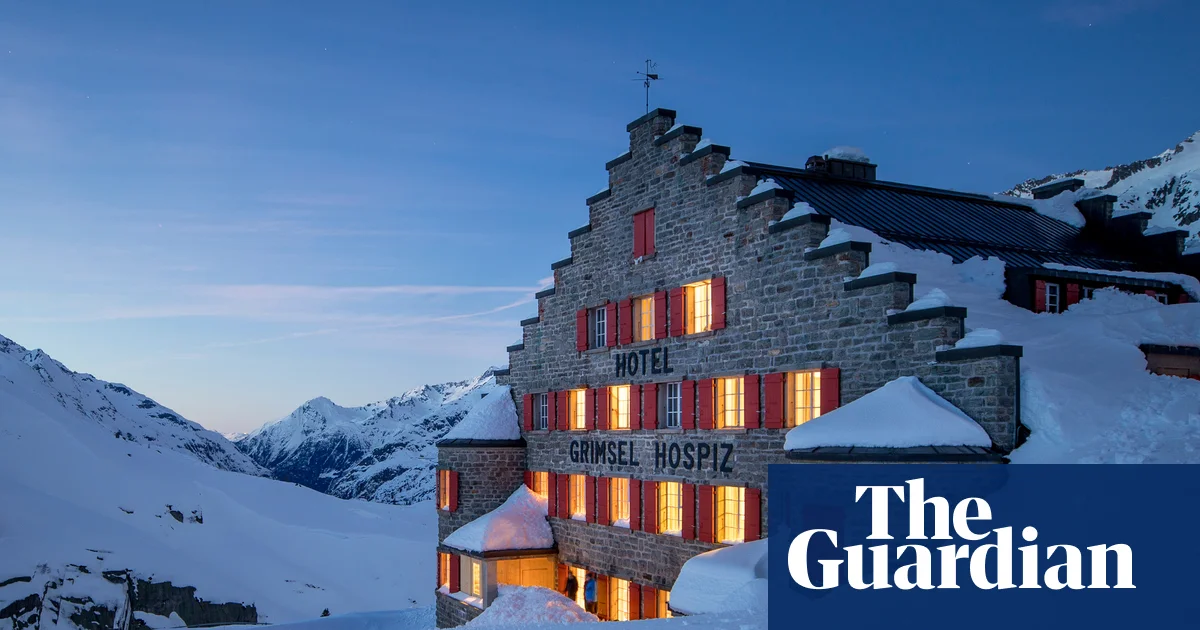
Near the top of the Grimsel Pass in Switzerland’s Bernese Oberland, a small crowd had gathered to take photographs. We were surrounded by bulky mountains and rippling glaciers, but all eyes were focused on a silvery granite chalet with apple-red shutters, its foundations deep in snow.
It was early February and, one after another, we posed in front of it as if standing beside a celebrity. Which in a way we were, because the proud building was the Grimsel Hospiz, the country’s oldest recorded mountain inn and a place that predates Westminster Abbey.
First documented in 1142 and originally built as a simple hostel – either by the Order of Saint Lazarus or the Augustinian monastery of Interlaken, no one is quite sure – today’s much-modernised Grimsel Hospiz is marooned on a spur of sheer rock and snow at 2,000 metres (6,562 ft). Over the centuries it has been inhabited by monks, used by shepherds, needy travellers and soldiers, ravaged by fire and buried by an avalanche. The mountains reach up, but it is surrounded on three sides by plunging ravines and the frozen Grimselsee, which thaws to turquoise ice floes in spring. The scenery is stupendous.
My visit began on a PostBus, the yellow stagecoaches that reach the parts of Switzerland that the railways can’t. I was south-east of the village of Meiringen, having taken a train to Innertkirchen Kraftwerk, a station built 100 years ago to service the hydroelectric power plants hidden deep in the mountains. The towering stone pines, the tumbling cliffs, the dripping snow, the sky only peeking through – it might have been the landscape of JRR Tolkien’s Middle-earth.
As the bus worked its way higher up the Aare Gorge, we saw that the road ahead was closed for winter. Instead, we were dropped at a high-security shutter leading to an underground hydropower station operated by Kraftwerke Oberhasli AG. The renewable energy plant opens for public tours and, moments later, a minibus appeared from behind the steel door to take us deeper into the mountains. We hopped on board.
A road blasted into the granite, dark and narrow, then crept through a maze of tunnels, ending four miles (6.4km) later at a tiny cable car station that opened to daylight. We looked up at the Grimselsee reservoir and Spitallamm Dam, a 113 metre-tall arch of stone above which we were soon to soar. For a century, the high-altitude lake has stored glacier meltwater to generate green electricity. Now, for visitors like me, it forms part of Grimselwelt, a Swiss Alpine tourist region, serving as a backdrop to a great tract of lonely winter wilderness.
The picture of the Grimsel Hospiz developed as we rose on the cable car, like a photo going from faded to sharp. The uninhabited valleys beyond led to the Unteraargletscher, an eight-mile leviathan of ice and the Alps’ fifth-largest glacier. From the cable car, I made out a group of horned ibex as they clambered with ease over the col.
It was the Celts, then Romans, who first used the Grimsel Pass, but it has been an important locus in Alpine culture for centuries: a trade route between Berne and Upper Valais in the middle ages, a strategic camp for raids and war campaigns between Swiss, French, German and Austrian armies, a setting for pioneering glacier research. All these aspects combine in a single story at the Grimsel Hospiz.
What lends the mountain inn so much credibility today is its environmental outlook. Located within the Unesco World Heritage Swiss Alps Jungfrau-Aletsch region, the 28-room hotel is in the midst of a critical wildlife habitat, meaning all winter sports are banned. Ski gear is prohibited by the hotel’s management and it cannot be transported on the cable car. The Alps have always been the preserve of travellers keen on activities that take serious effort, but here is an antidote to every other winter destination, a rare meditative place where doing nothing is the only thing to do.
The only activity on offer is snowshoeing and even that is restricted to a 500-metre loop around the inn’s tower-like granite porches and wooden and copper-roofed chapel. It might be “the shortest winter trail in Switzerland”, as manager Markus Meier put it, but it still took me an hour as I kept stopping to take photos.
Inside is a fantasy mountain inn, the result of sensitive restorations: a huge wooden door creaks open and you step into corridors leading to cosy double rooms, intimate lounges, fireplaces and a restaurant where dinner is accompanied by one of 250 bottles from one of Europe’s highest-altitude wine cellars. Back in 1932, the guesthouse caused a sensation as the continent’s first electrically heated hotel. Now, the building is sustainably powered by clean energy and waste heat from the hydroelectric plant below.
As evening fell, it was time for the inn’s only other activity: staring at the flaring sunset and night sky from its outdoor wooden barrel sauna and hot tub. The air was bracingly cold, the constellations appeared and it was just me, the burbling water and the mountains stretching away into darkness. Forget any thoughts of Alpine heroes such as George Mallory or Edward Whymper. That night, down to my cossie in -10C (14F), tiptoeing across the snow in a pair of felt slippers and dwarfed by mountains, I was the bravest man in the Alps.
At nearly 2,000 metres, dinner is another event. The four-course menu produced by Slovakian chef Roman Crkon is hardly the stuff of traditional refuges. I’ve had my share of mountain meals, but I’ve never had veal sweetbreads, scallops, chicken with truffle cream and a cheese board at high altitude. In 1544, a local chronicler wrote that the Grimsel Hospiz was all about “good wine, brought by pack animals across the mountains”. Looking at the card games and excessive drinking around me, little had changed.
Later, just before bed, I slipped outside to gaze again at the stars. It was pine needle-drop quiet. Though I was separated from some of Switzerland’s most popular resort towns by only a few miles as the eagle flies, I felt engulfed by the Alps in their entirety. Tomorrow, another day with nothing to do beyond the confines of the inn awaited. But in a landscape like this, I was thrilled to have fallen off the map, out of time, into winter’s grasp.
The trip was provided by Jungfrau Region and Historic Alpine Hotel Grimsel Hospiz (Wednesday to Sunday only; grimselwelt.ch). Rooms from £165pp a night, including breakfast, afternoon tea, hot tub and wooden barrel sauna. A four-course dinner costs £85. Return bus, tunnel and cable car transfers cost £70
The blanket ban imposed on Russian and Belarusian athletes in 2022 was reduced to a partial ban in 2023, allowing athletes from the two nations to compete as neutrals at the 2024 Paris Paralympics.
In September 2025, the IPC lifted that ban entirely but the four individual governing bodies in charge of the six sports contested at the Winter Paralympics decided to keep their bans in place.
In December, Russia and Belarus won an appeal against FIS – the governing body for skiing and snowboarding – at the Court of Arbitration for Sport (Cas), permitting their athletes in those sports to compete and accumulate ranking points.
As a result, 10 athletes were then awarded bipartite commission invitations to compete at the Winter Paralympics.
Bipartite commission invites are granted to individual athletes, rather than their international federation, and allow the participation of top athletes “who may not have had the opportunity to qualify through other methods due to extraordinary circumstances”, among other factors.
Ukraine’s president Volodymyr Zelensky called the decision “awful” while the country’s sports minister Matvii Bidnyi said it was “both disappointing and outrageous”.
“The general assembly lifted the suspension in September so we need to respect the democracy of our movement. The majority voted that way, so we need to implement their decision,” said Parsons.
“But I fully understand the disappointment, I understand the different opinions, and especially [those] coming from Ukraine.”
Asked what he would say to Ukrainian athletes, he said: “My message to them is that the best way to show the strength of Ukraine is on the field of play, by winning medals and by making sure their national anthem is played as many times as possible on Italian soil.”
In addition to Ukraine, teams from the Czech Republic, Estonia, Finland, Latvia, Lithuania and Poland are boycotting Friday’s opening ceremony in Verona in protest against the decision.
Officials from other nations, including the British government, will not attend for the same reason.
The Great Britain team will also not go to the Verona ceremony, but for logistical reasons – a decision that was made some time ago.
Many of the 25-strong British squad – including flagbearers Menna Fitzpatrick and Scott Meenagh – are in competitive action on Saturday morning, several hours’ drive from Verona.
Athletes from Belarus are expected to be in attendance at the opening ceremony, but at the time of BBC Sport’s interview with Parsons, no Russians were due to attend.
“Different countries, National Paralympic Committees, governments, athletes, they have been able to express their views freely, and that’s what we stand for as a democratic organisation,” said Parsons.
“We would like the focus to be more on sport rather than politics and this is what we are trying to do.”